The sap runs when nights freeze and days thaw, and nobody can schedule that.
A crop that depends on a freeze-thaw alternation begins when the weather decides, may stop and restart, and gives no notice – so a household had to be ready to work very hard in the coldest, muddiest weeks of the year. And the sap does not drain out of the hole: the thaw cycle pressurises the trunk and the tree pushes it out, which is why the best runs follow the sharpest freezes.
Getting it out is close to trivial – a hole bored at a slight upward angle, a short spout, a covered bucket. Everything difficult happens afterwards, because the overwhelming majority of what comes out is water and all of it has to be boiled away. Here are sixteen things every American family knew.
1. The Sap Only Runs in a Narrow Window
Sap moves when nights fall below freezing and days rise above it, which happens for a few weeks in late winter and not reliably on any particular date.
Unchanged, and the window is monitored closely.
Start with the timing because it governs everything else. A crop that depends on a freeze-thaw alternation cannot be scheduled – it begins when the weather decides, it may stop and restart, and a household had to be ready to work hard with no notice, in the coldest and muddiest weeks of the year.
Like our content? Follow us for more.
2. The Pressure Comes From the Tree, Not From Gravity
Freezing and thawing generates pressure inside the trunk that pushes sap out through any opening, which is why a tapped tree runs rather than merely leaking.
The same mechanism, now often assisted by vacuum on commercial operations.
This is the physical fact people most often get wrong. The sap is not simply draining downhill out of a hole – the tree is pressurised by the thaw cycle and is pushing, which is why the flow starts and stops with the temperature and why the best runs follow the sharpest freeze.
3. A Tap Was a Hole and a Spout
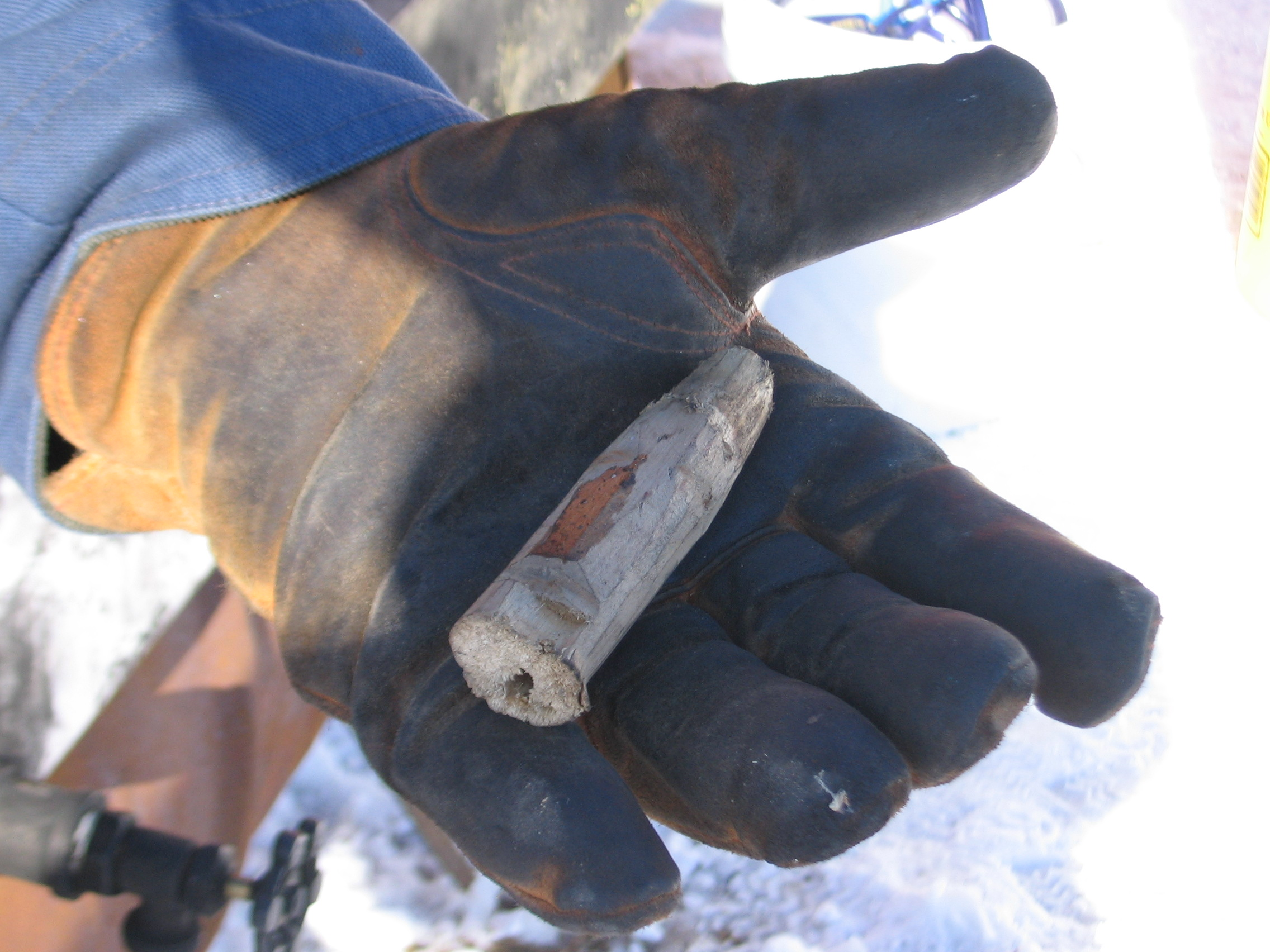
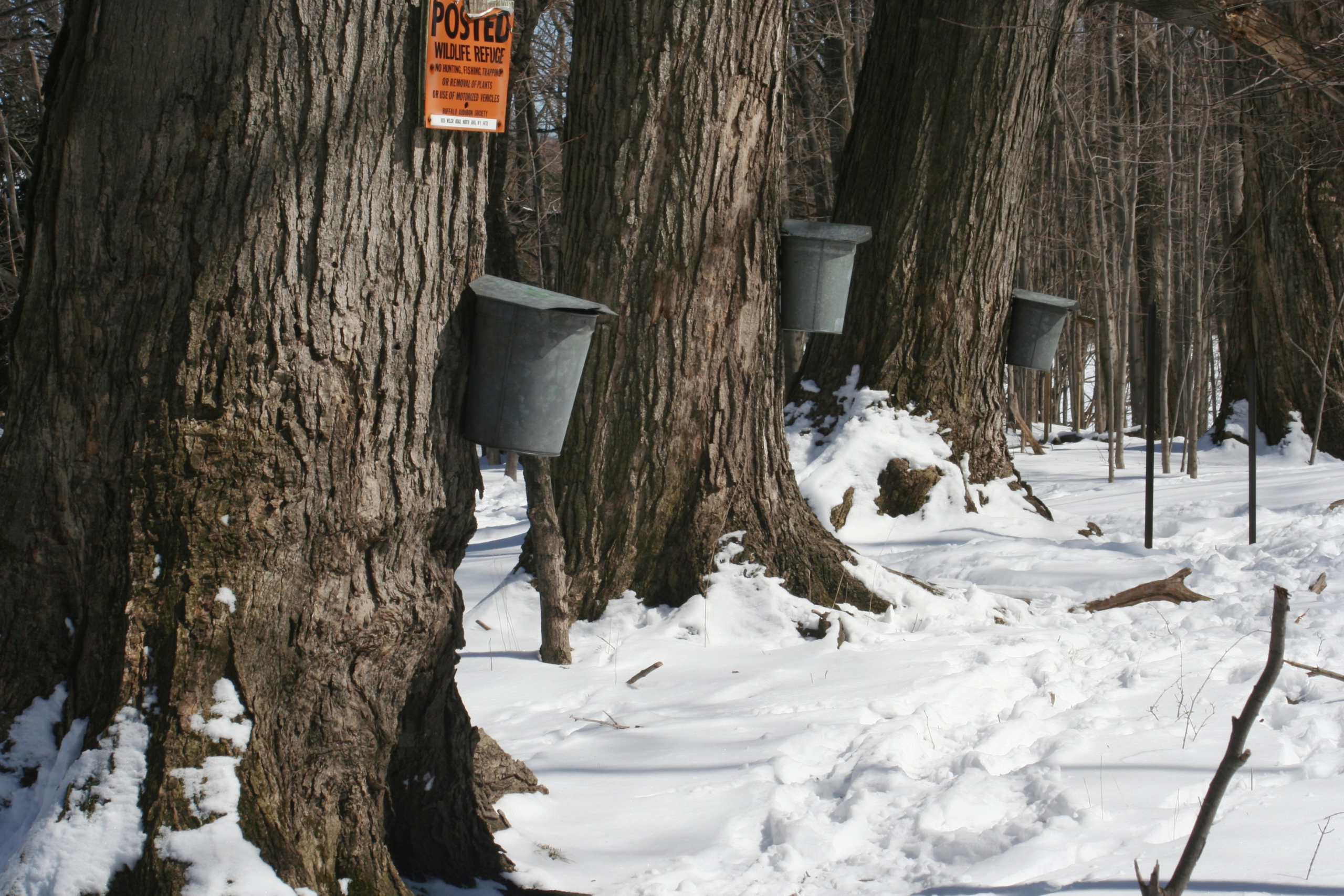
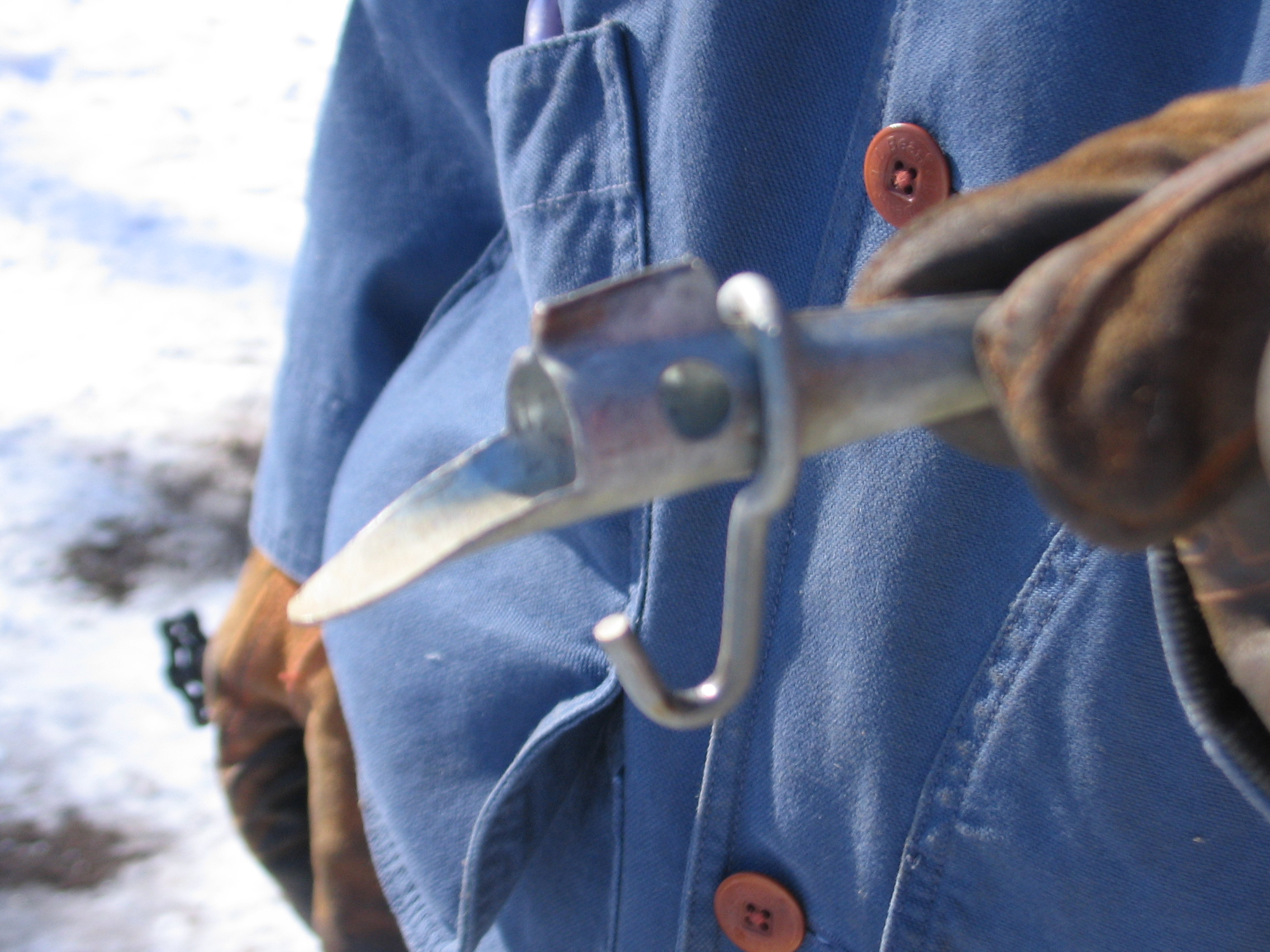
A hole was bored into the trunk at a slight upward angle and a short metal or wooden spout driven into it, from which the sap dripped into a hanging bucket.
Metal spouts and plastic tubing feeding a central tank.
The whole apparatus is a hole and a tube, which is worth stating because the operation sounds more elaborate than it is. Everything difficult about sugaring happens after the sap is in the bucket; getting it out of the tree is close to trivial.
4. The Bucket Had a Lid for a Reason
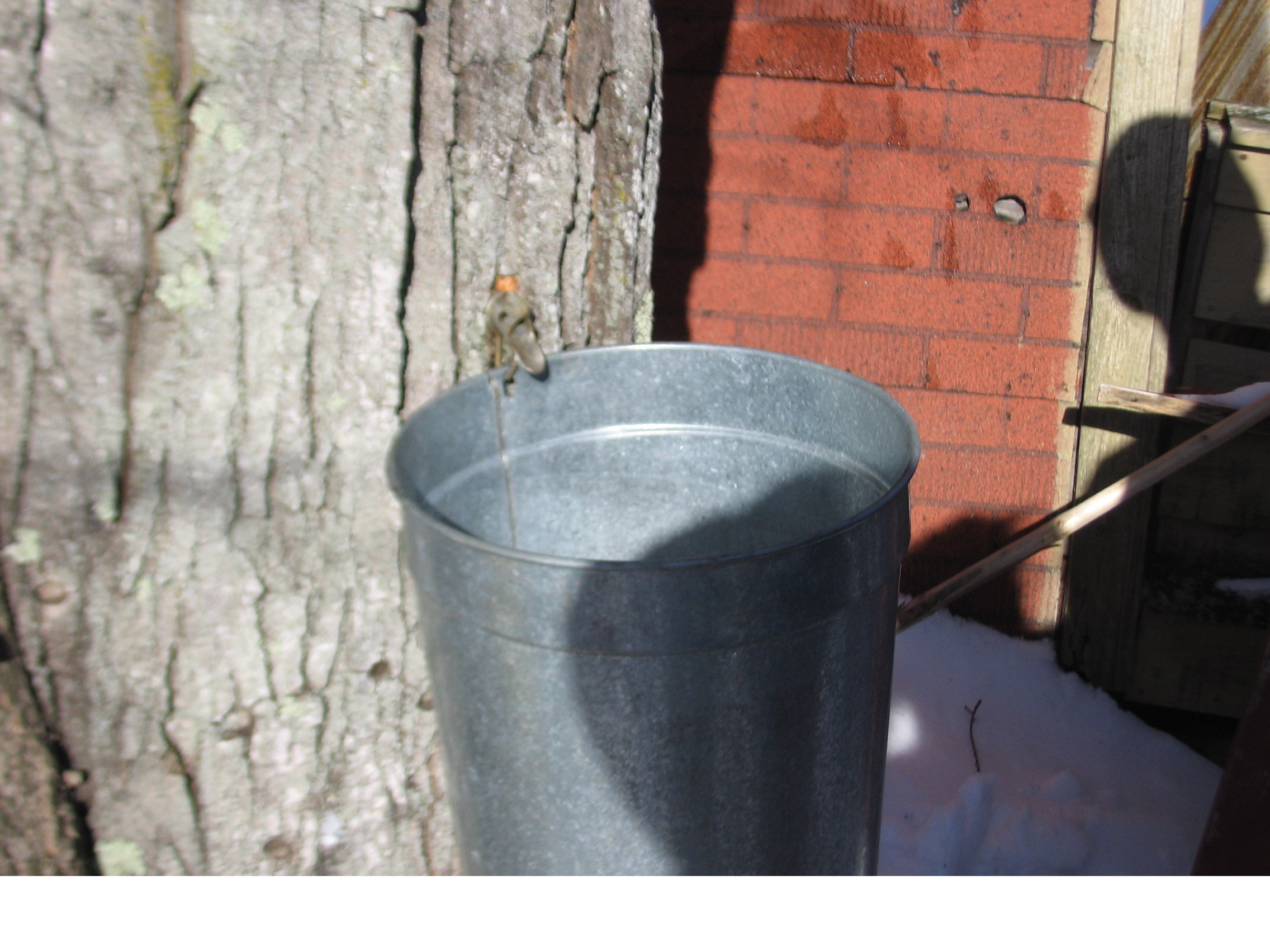
Covers kept rain, snow, bark and insects out of the sap, because anything that falls in has to be dealt with later or spoils the batch.
Closed tubing removes the problem.
The lid is a small detail that reveals the real constraint. Sap is a dilute sugar solution sitting in the open in mild weather, which means it will not keep – so cleanliness at the bucket and speed getting it to the fire are not fastidiousness but the difference between syrup and waste.
5. Gathering Was the Hard Labour
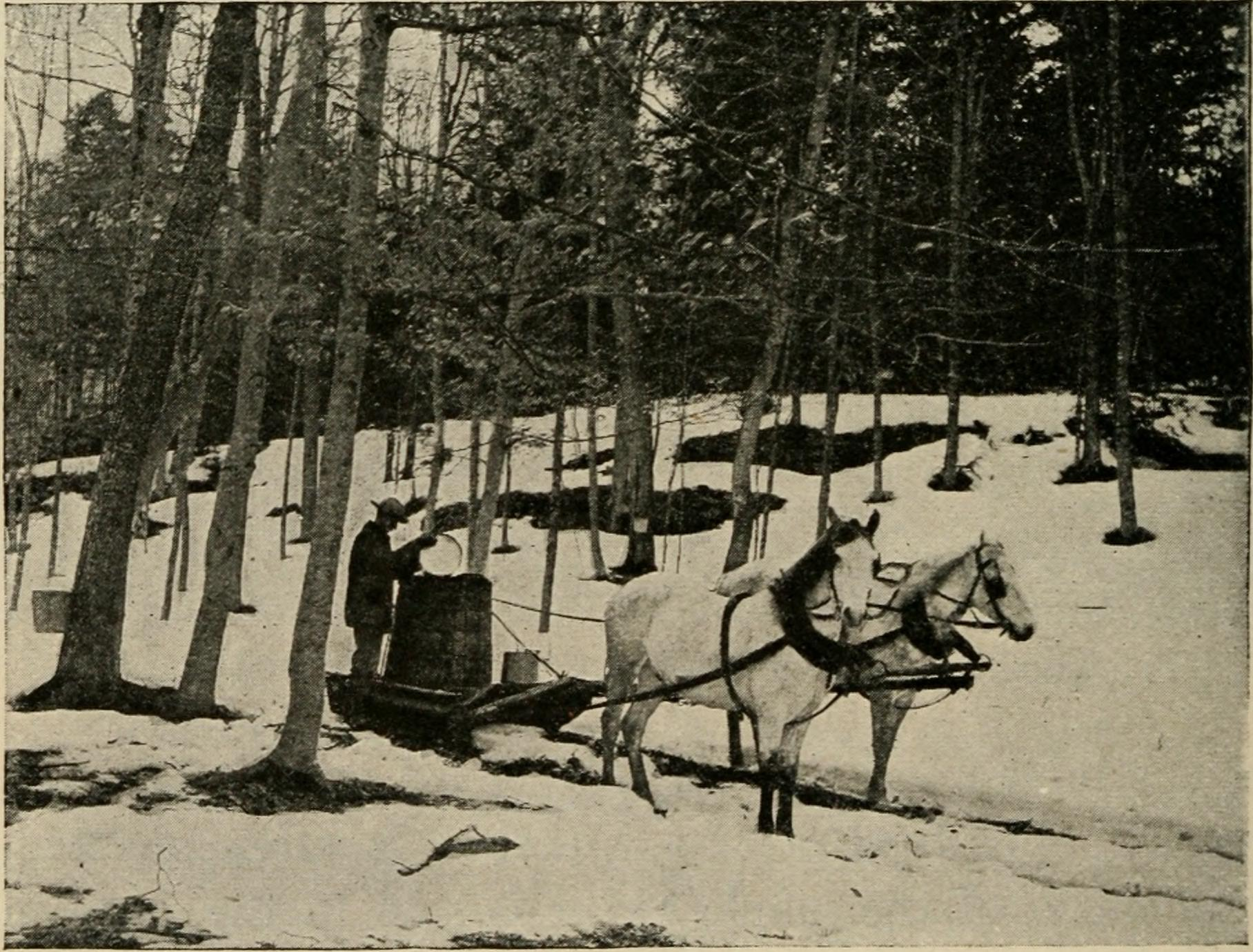
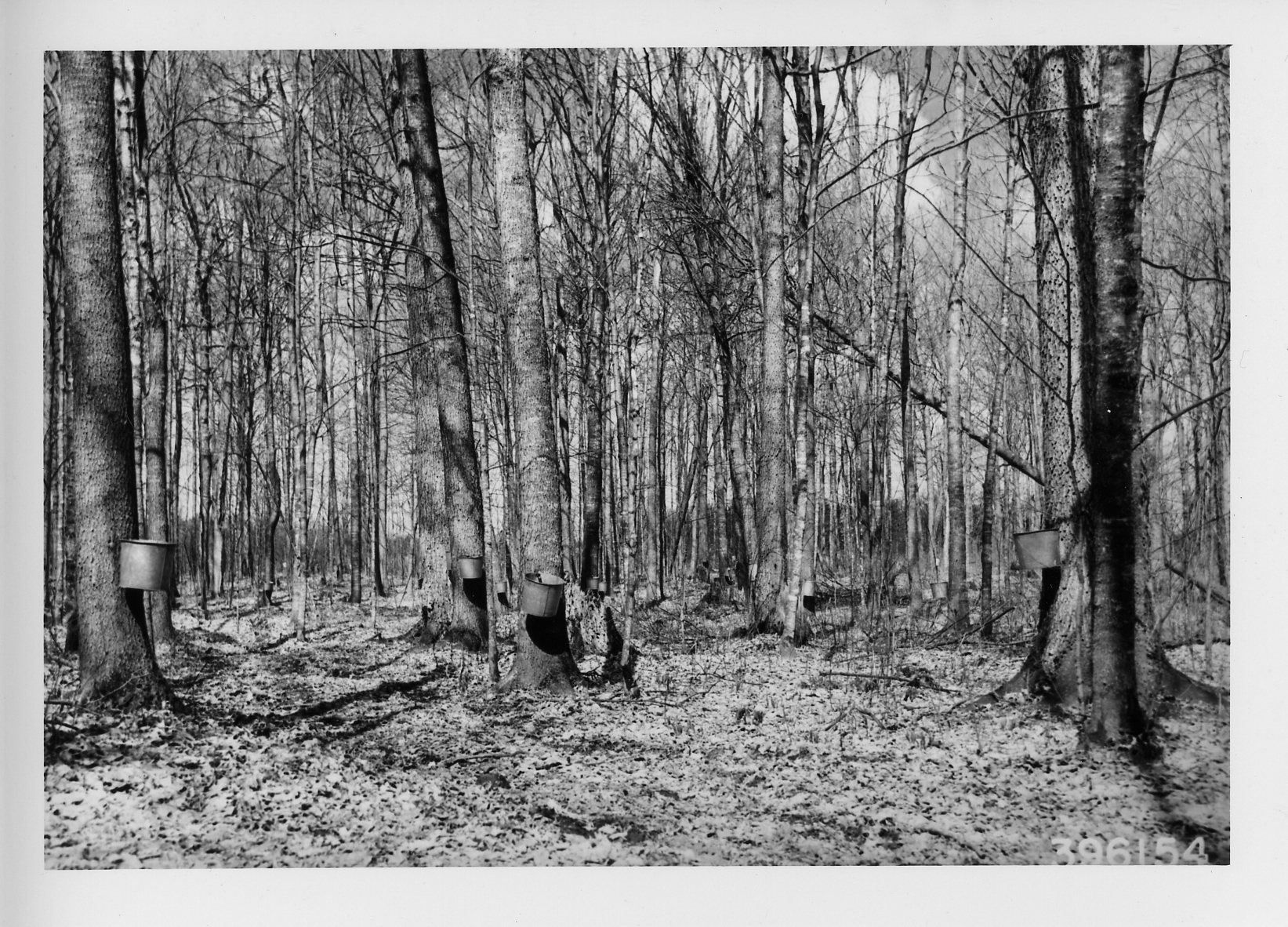
Somebody walked the whole sugar bush emptying buckets into a larger container on a sled or wagon, through deep snow, mud and standing water, every day the sap ran.
Tubing delivers sap to one point with no carrying at all.
The gathering is the part that broke people and it is usually skipped. Full buckets are heavy, the ground is at its worst, the walk is repeated hundreds of times, and it has to be done every single day of the run regardless of how little anybody has slept.
6. Almost All of It Is Water
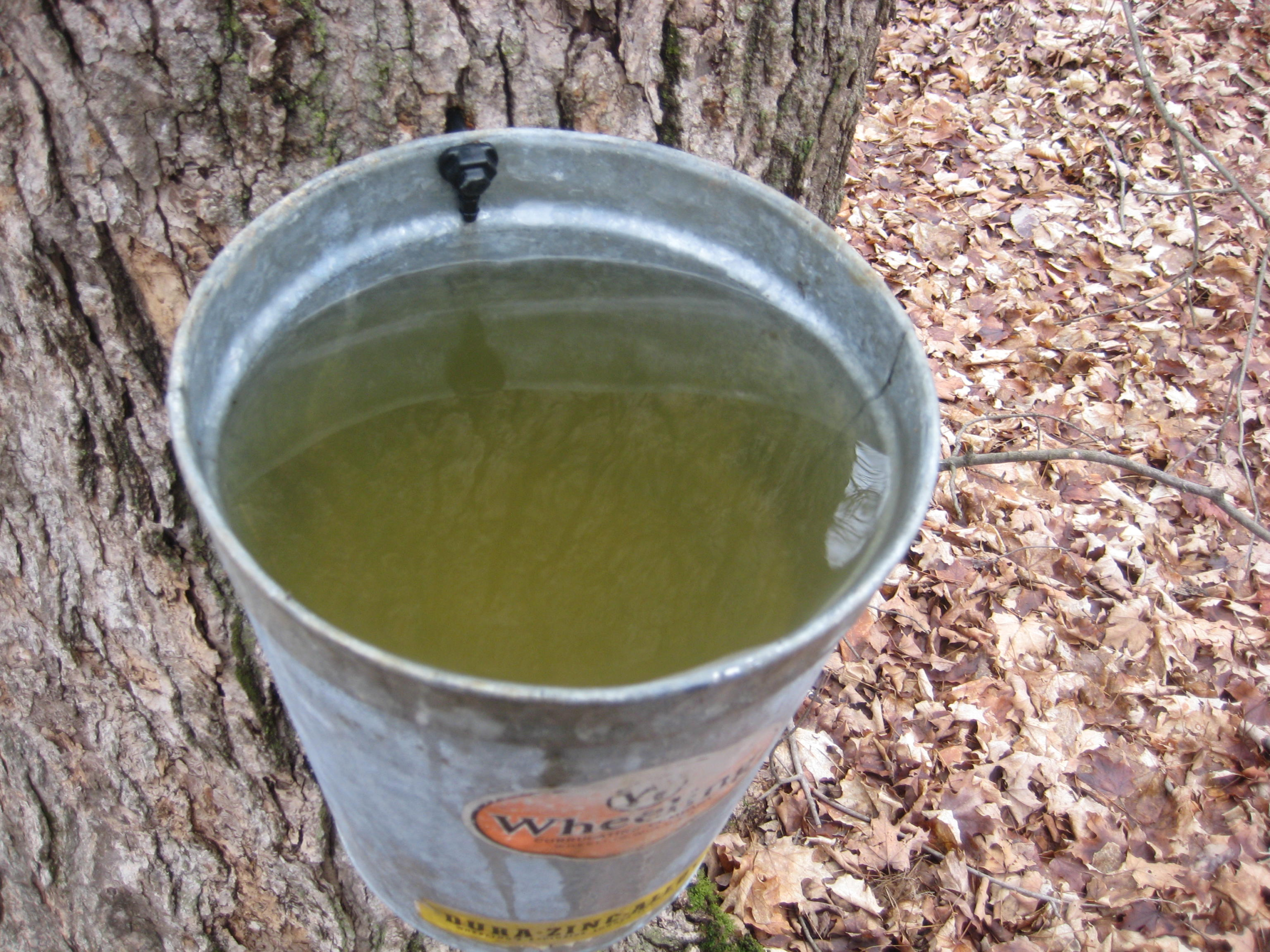
Sap is overwhelmingly water with a small percentage of sugar, which means an enormous volume has to be boiled away to leave anything behind.
Reverse osmosis removes much of the water before boiling.
This single ratio is the whole economics of maple sugar. Because the great majority of what comes out of the tree has to be evaporated, the fuel, the time and the labour all scale with the water rather than with the product – and that is why sugaring is remembered as days of fire rather than as a harvest.
7. The Boiling Ran Day and Night
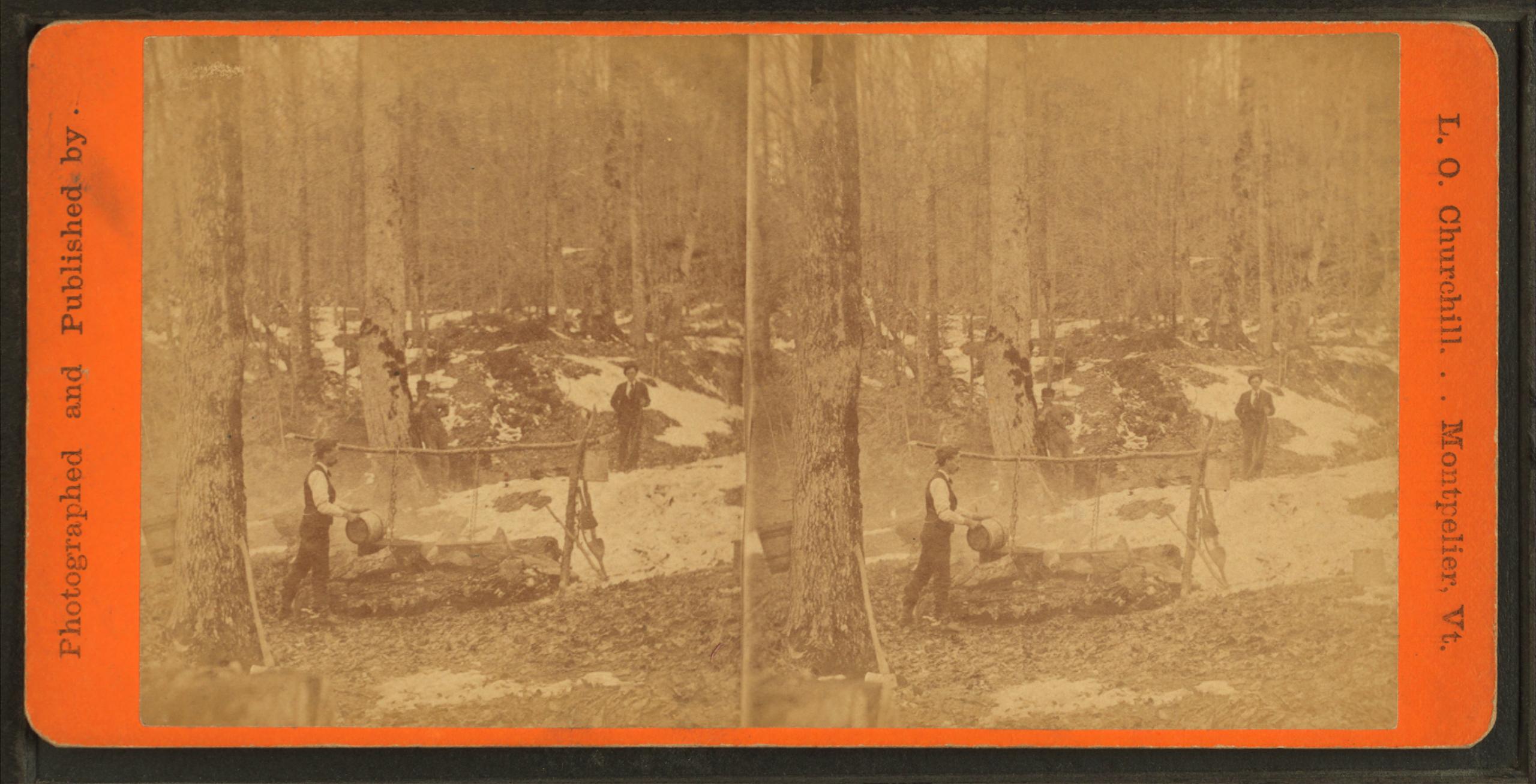
Once sap was coming in it had to be boiled continuously, which meant somebody tending a fire around the clock for as long as the run lasted.
Mechanised evaporators with controlled firing.
The round-the-clock aspect is what made this a communal and memorable event rather than a chore. A fire that cannot go out requires shifts, shifts require more than one household, and a group of people sitting up all night in late winter beside a fire produces exactly the kind of occasion that gets remembered for sixty years.
8. The Shallow Pan Was the Key Improvement
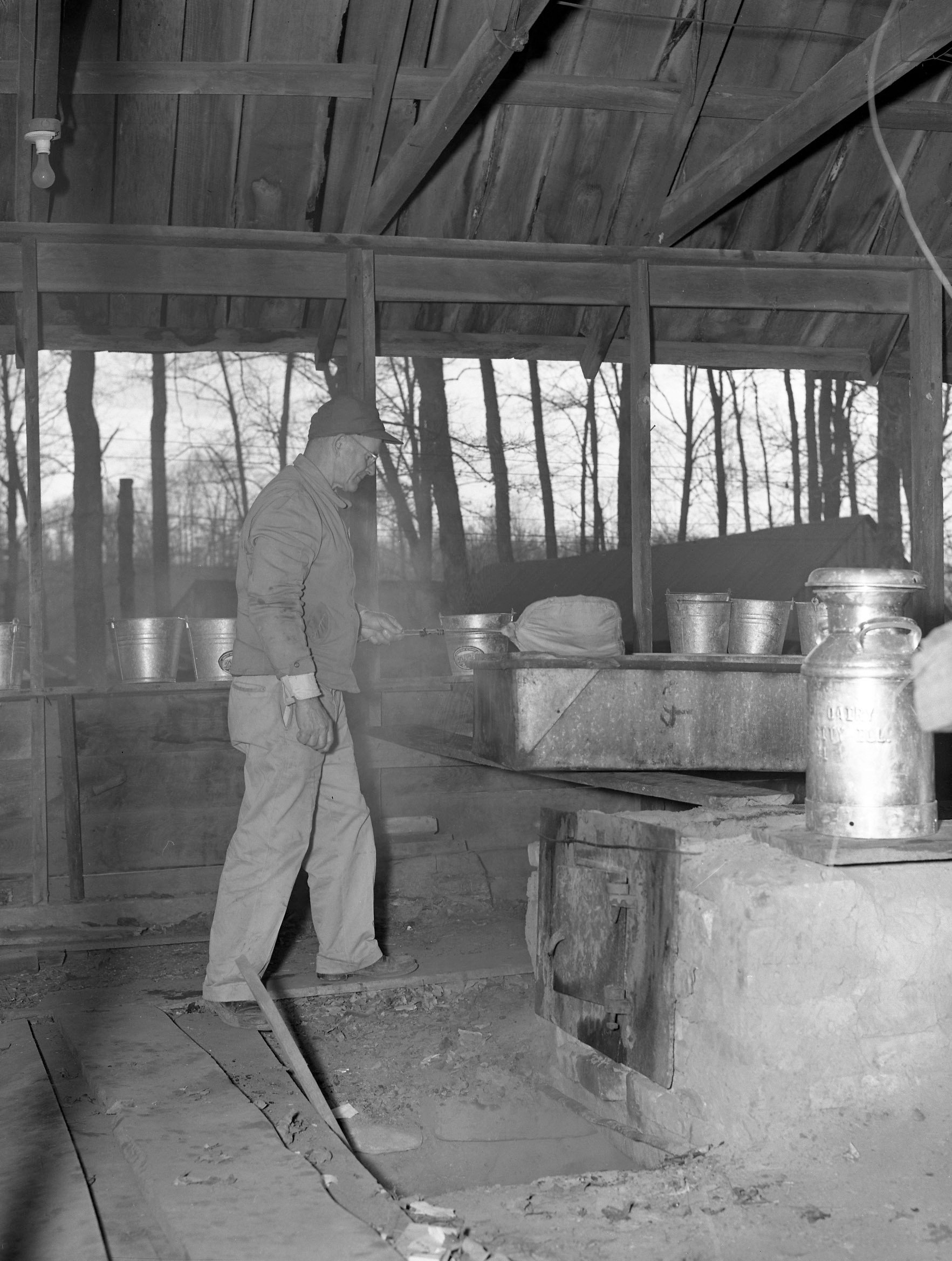
Boiling in a wide shallow pan rather than a deep kettle exposes far more surface to the air and the fire, which evaporates water much faster.
The same principle in engineered evaporators with multiple compartments.
The pan is the one genuine piece of engineering in the whole business. Evaporation happens at a surface, so for a given fire the rate depends on area rather than volume – which means the move from a hanging kettle to a long flat pan over a firebox transformed how much a family could make in a season.
9. Everything Smelled and Tasted of Smoke
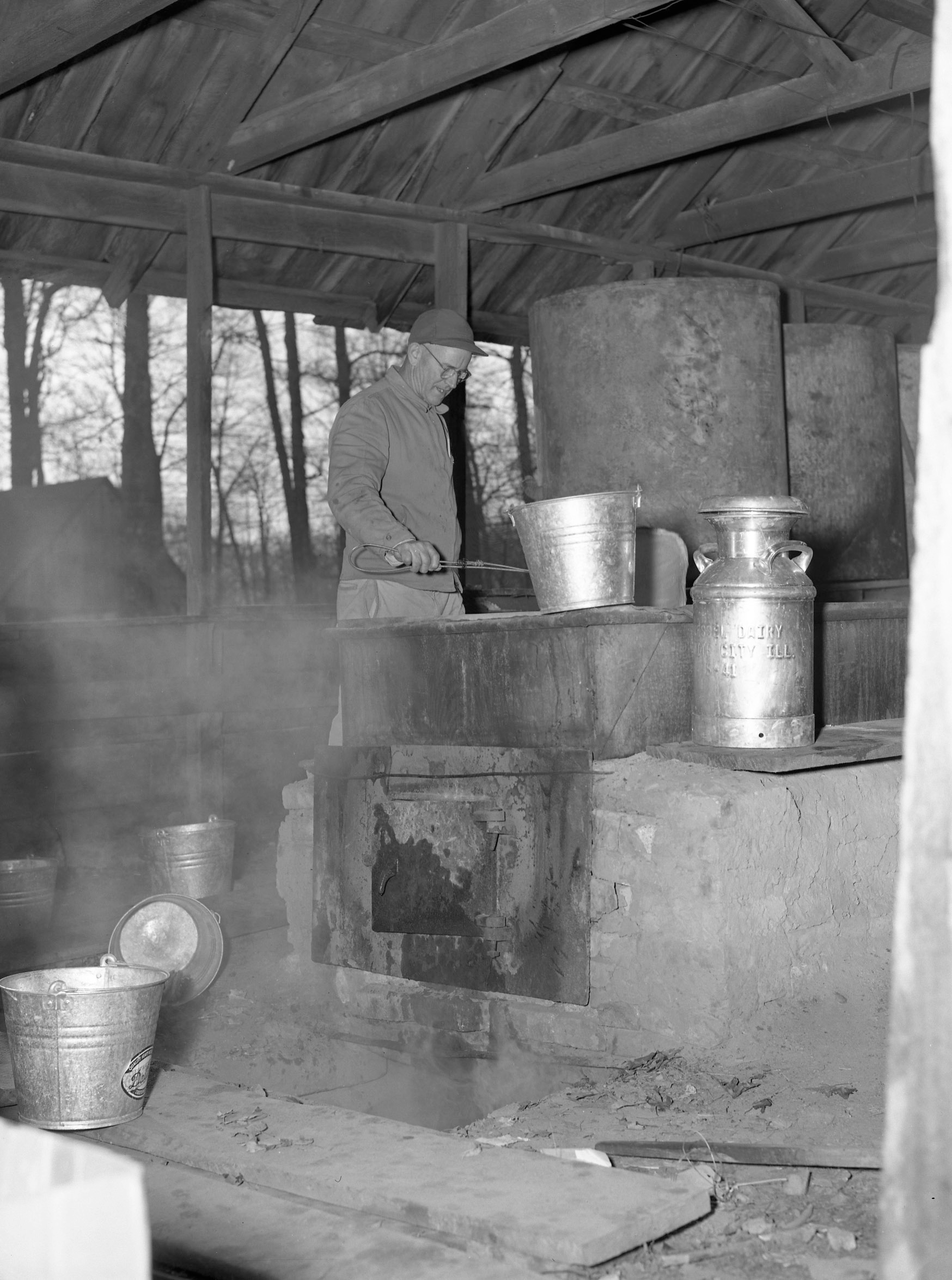
Open fires under open pans put smoke into the product, and avoiding it was a matter of fire management, pan design and luck.
Closed fireboxes and flues removed it.
The smoke is why old accounts argue about quality. A controlled fire drawing properly under a pan gives clean product, and a smoky or gusting one does not, so two neighbours working the same trees in the same week could end up with noticeably different results – which made the man tending the fire the person responsible for the whole season’s output.
10. The Last Stage Had to Be Watched Constantly
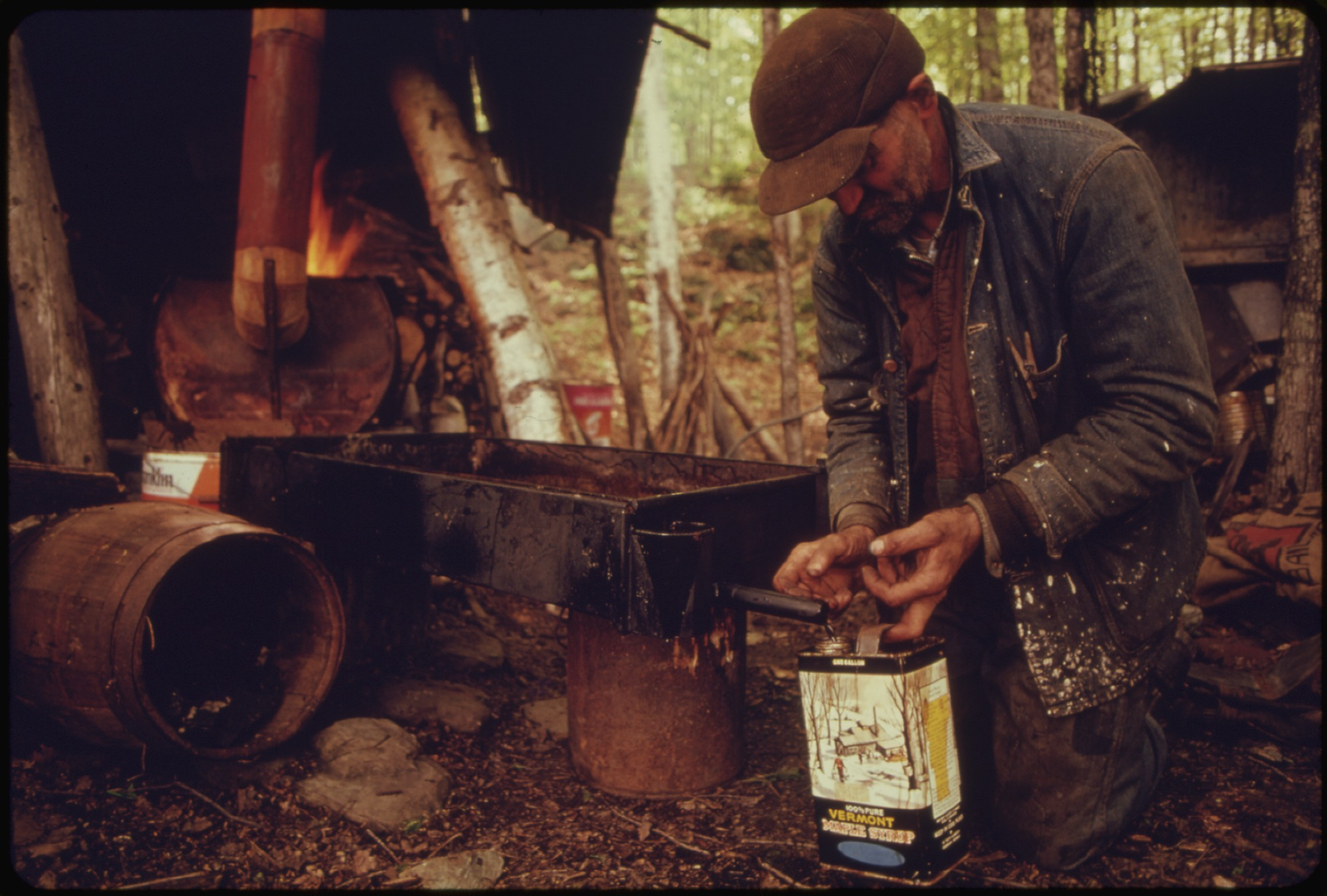
As the liquid concentrates, its boiling point rises and the margin between finished and ruined narrows to almost nothing, so the end of a batch could not be left alone.
Thermometers, hydrometers and automated draw-off.
The physics here is unforgiving and explains the tension in every account. A concentrated sugar solution boils hotter than water and the temperature keeps climbing as it thickens, so the difference between syrup, sugar and a scorched pan is a matter of a few degrees and a couple of minutes near the end.
11. Syrup, Sugar and Everything Between Were Different Products
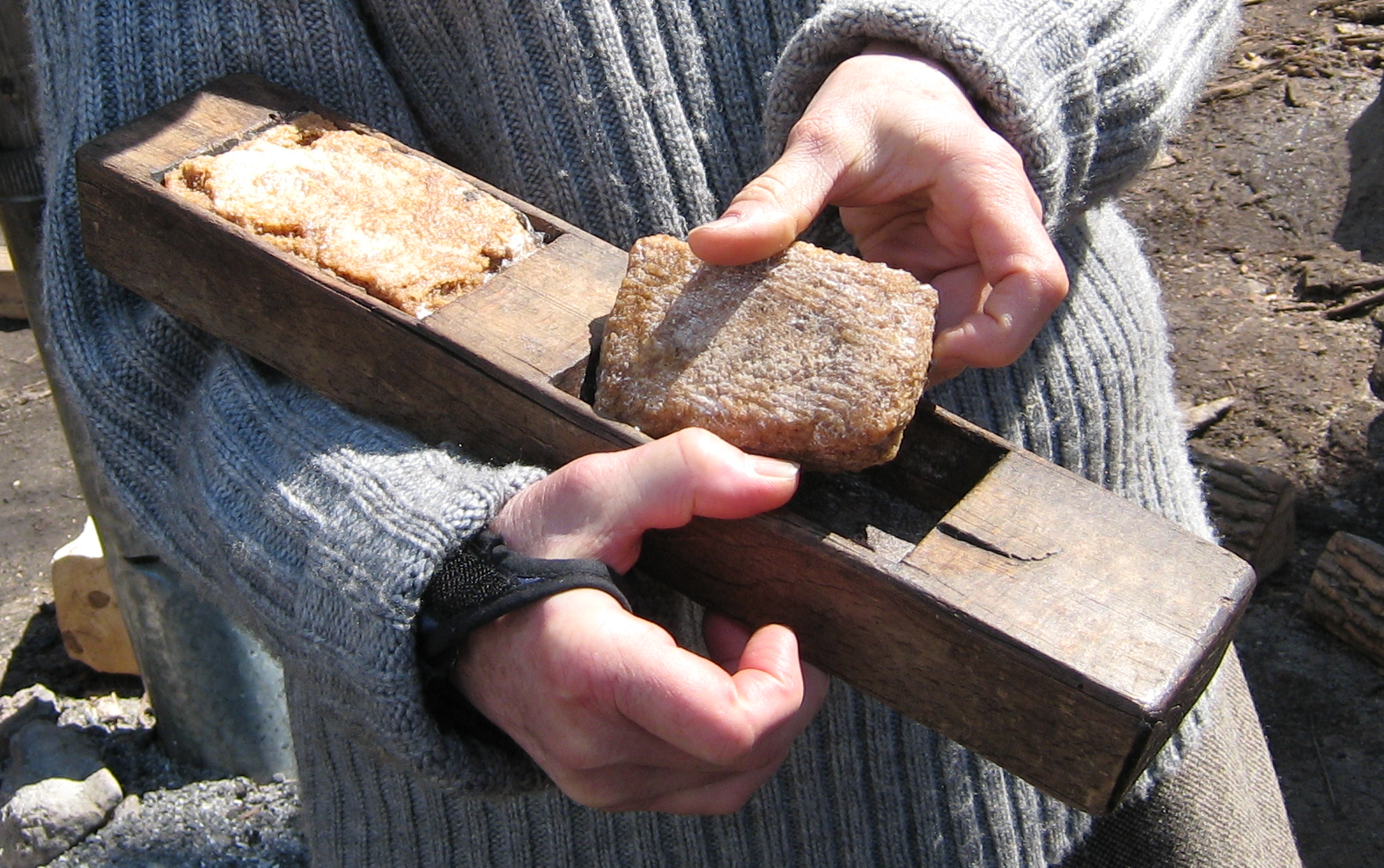
Stopping early gives a pourable syrup; carrying on gives a soft sugar; carrying on further gives a hard cake that keeps indefinitely and can be scraped or broken off as needed.
Syrup dominates, with sugar and candy as specialty products.
The choice between them was practical rather than culinary. Syrup is heavy, needs tight containers and does not keep as well, while hard sugar is light, stable and portable – so a household far from anywhere made sugar and one with a market nearby made syrup, and that decision was about storage rather than taste.
12. It Was the Only Sweetening Many Households Had
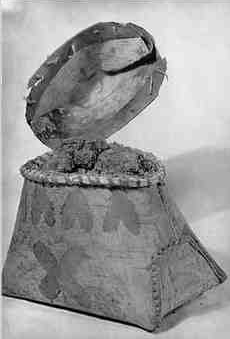
Where cane sugar had to be bought with money, a sugar bush produced a year’s sweetening from labour and firewood alone.
Sugar is cheap and universally available.
This is the reason the work was worth doing and it is easy to miss from a present where sugar is trivial. A household with trees and no cash could make its own sweetening, which converted a few weeks of brutal labour into a commodity it would otherwise have had to buy all year.
13. The Surplus Was Money
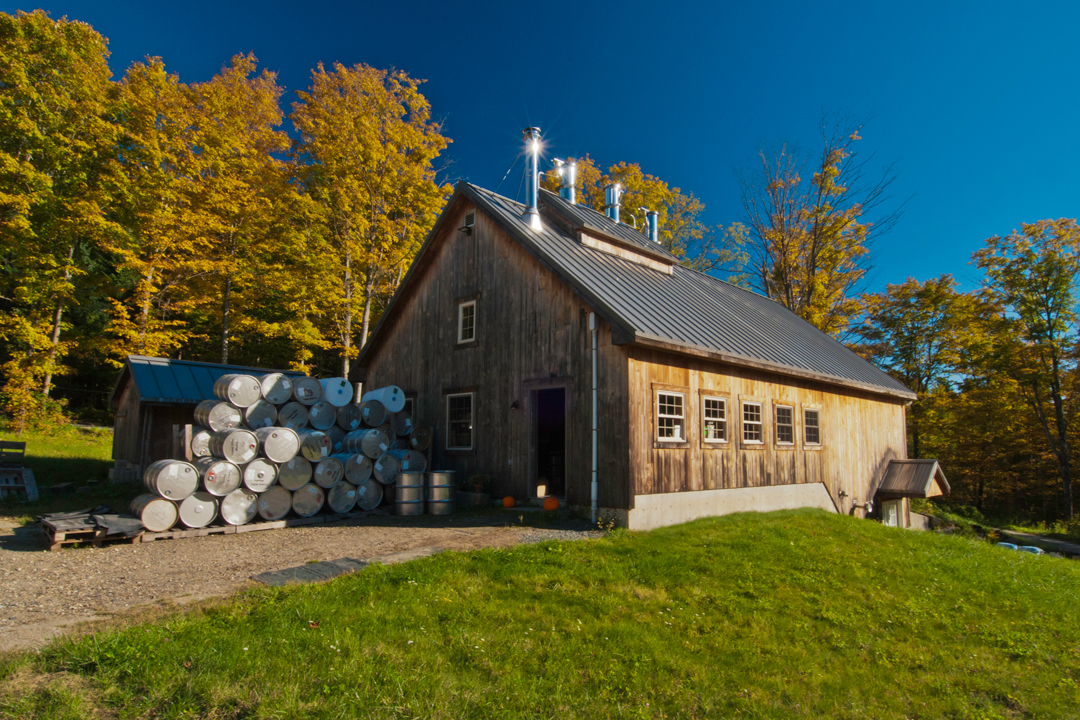
Sugar and syrup beyond a household’s own needs were sold or traded, arriving at exactly the point in the year when a farm had no other income at all.
A commercial industry.
The timing of the income is the underrated part. Late winter is the leanest moment on a farm – nothing has been planted, nothing is ready, and last year’s money is spent – so a crop that can be turned into cash in March was disproportionately valuable regardless of how much of it there was.
14. Children Were Central to the Whole Operation
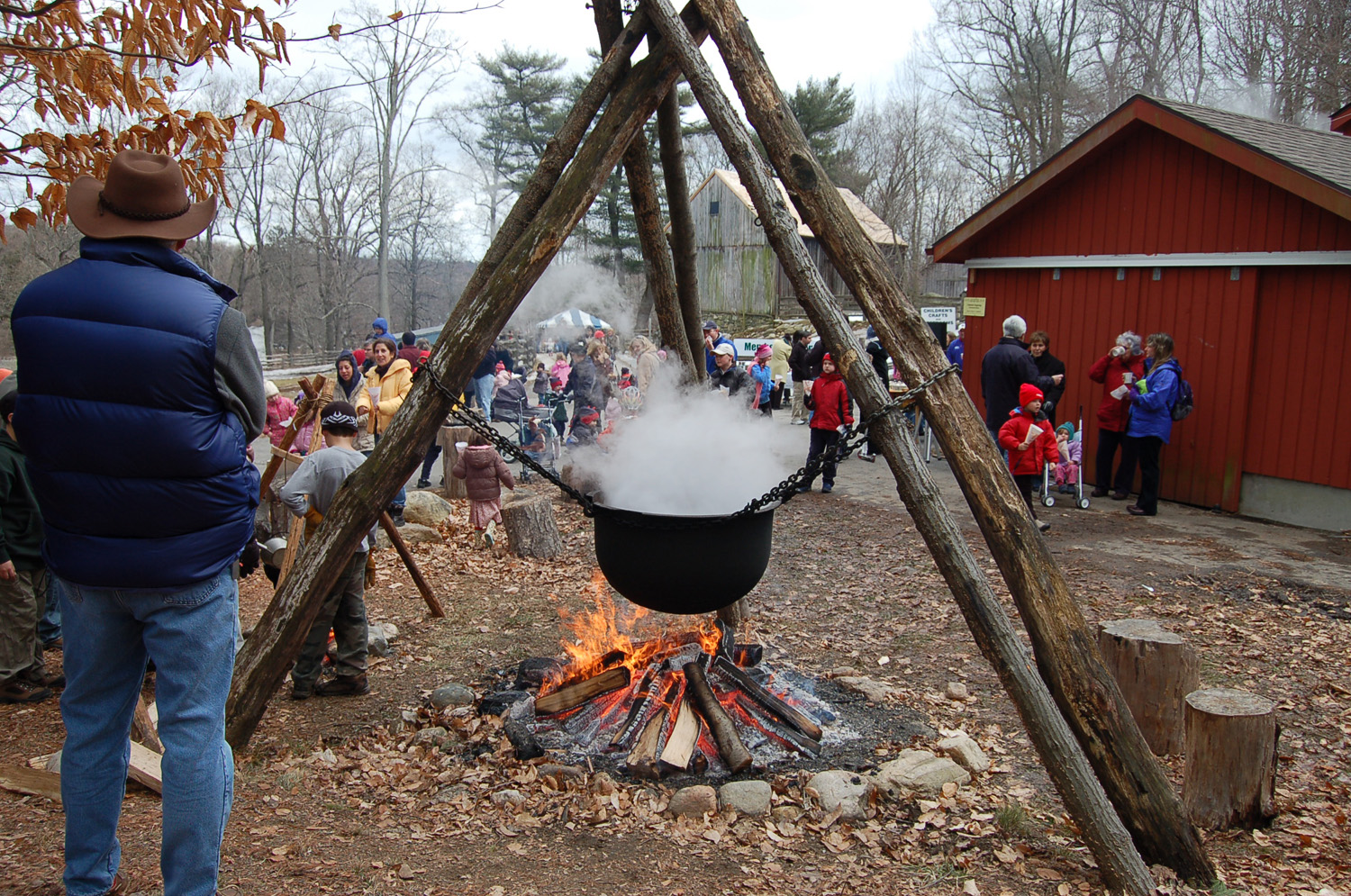
Young people gathered sap, carried wood, watched the fire and were given the finished product poured on snow, and every account of sugaring is told partly from their point of view.
Not applicable at that scale.
The children’s version is why this subject is remembered so warmly, and it is not sentimentality. A child who spends a week in the woods with a fire that never goes out, adults awake at odd hours, and something sweet at the end of it has had an experience with no equivalent in the rest of the year.
15. Then Tubing and Equipment Changed the Work Entirely
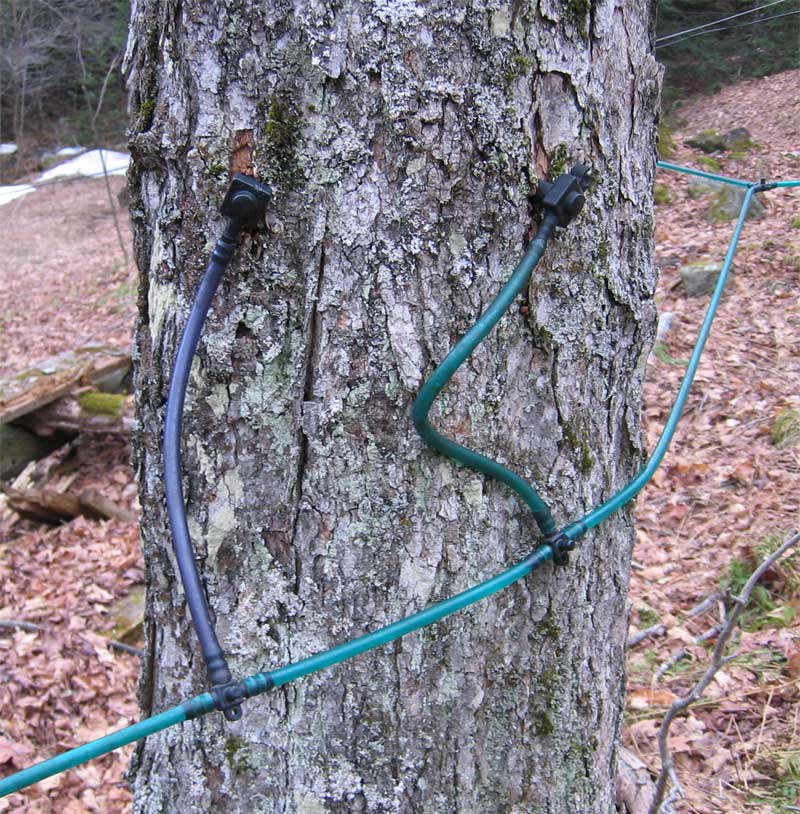
Plastic tubing running from tree to tank removed the gathering, and engineered evaporators, closed fireboxes and water removal before boiling transformed the processing.
Standard.
Mechanisation here is a genuine improvement and the industry is larger than it has ever been. What changed is not that the product declined but that the labour that made it a communal event disappeared – nobody carries buckets, and a fire does not need six people sitting up with it.
16. And by 1964 Most Farm Sugaring Had Stopped
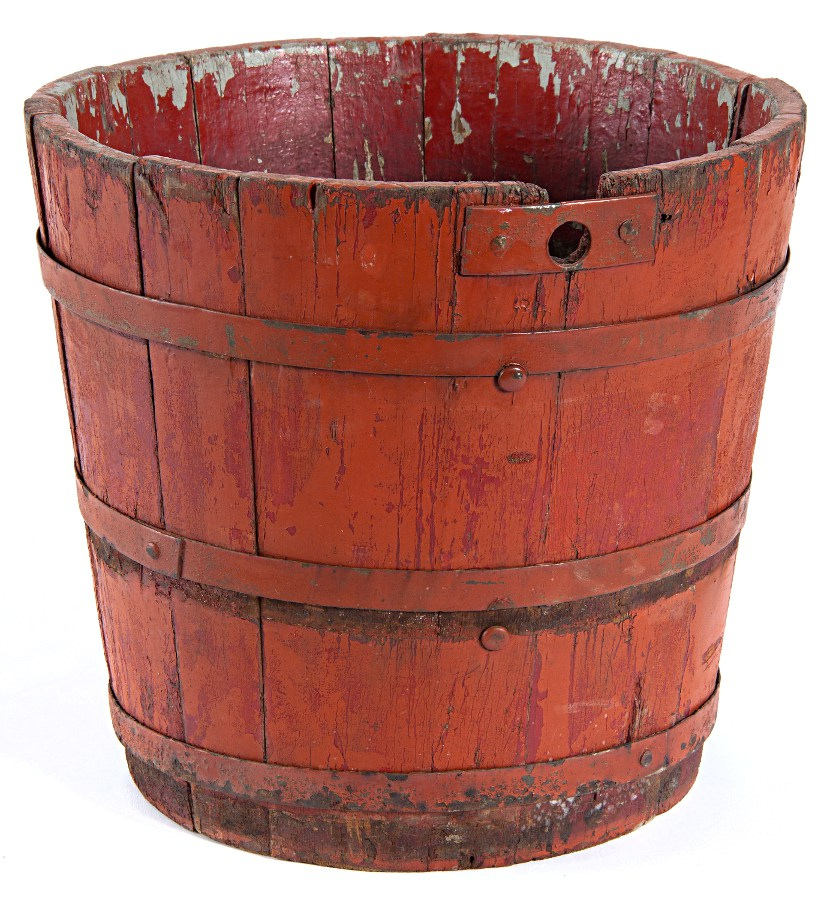
Buckets, spouts and pans went into barns, the bush grew up or was cut, and sugaring survived as a commercial operation and a tradition in particular regions rather than as something most households with maples simply did.
A substantial commercial industry alongside many small producers and hobbyists.
And what deserves the last word is the arithmetic that drove all of it. The overwhelming majority of what comes out of a maple is water, and it has to be boiled off, which means the entire character of the work – the fire that never goes out, the shifts through the night, the wood hauled all winter in preparation, the six people it took – follows from one ratio. An American household wanting a year’s sweetening with no money had to turn that ratio into labour and firewood, in the coldest weeks of the year, in deep snow, with no notice of when it would start. And they did it, every spring, and the children were given the result poured onto snow. The equipment that replaced all this is better in every measurable way. But the thing that made sugaring an occasion was never the maple – it was the fact that a fire burning for three days straight needs more people than one family has.
The Whole Occasion Followed From One Ratio
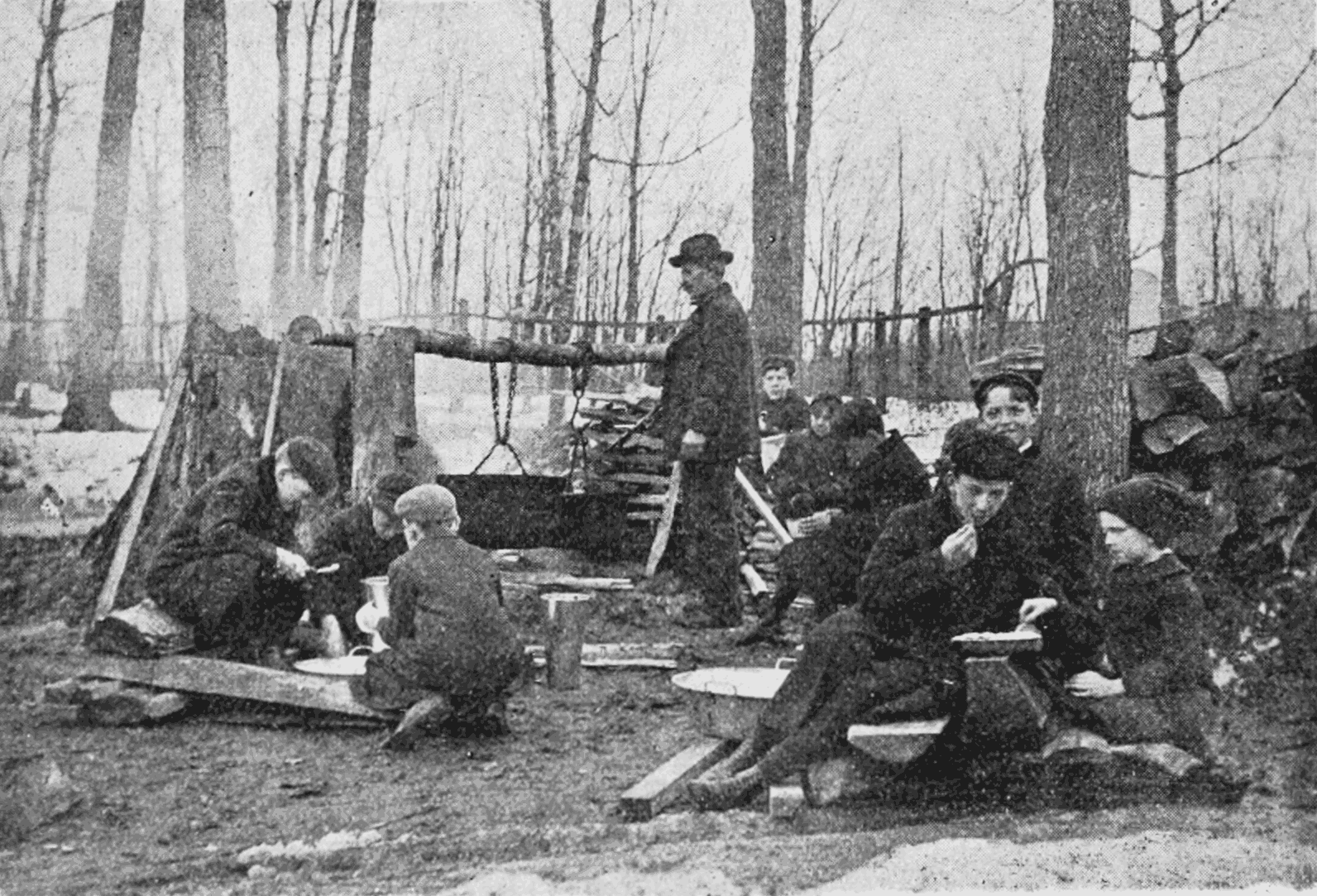
Maple sugaring is remembered as a fire in the woods and something sweet poured on snow, and both of those are consequences of a single number.
The number is how much of sap is water. Almost all of it. Which means that to get anything at all, an enormous volume has to be evaporated – and the fuel, the time and the labour all scale with the water rather than with the product.
Everything else in the operation follows.
Start with the timing, which nobody controls. Sap moves when nights fall below freezing and days rise above it, for a few weeks in late winter, on no reliable date. It may stop and restart. So the household had to be ready to work hard at no notice, in the worst weeks of the year.
And the sap does not drain. Freezing and thawing pressurises the inside of the trunk, and the tree pushes sap out through any opening – which is why a tapped tree runs rather than leaks, why the flow starts and stops with the temperature, and why the sharpest freeze gives the best run.
Getting it out of the tree is almost nothing: a hole bored at a slight upward angle and a short metal or wooden spout driven in, with a bucket hung beneath. The bucket had a lid, and the lid matters more than it looks – sap is a dilute sugar solution standing in the open in mild weather, so it will not keep, and cleanliness at the bucket and speed to the fire are the difference between syrup and waste.
Gathering was the labour that broke people, and it is the part usually skipped. Somebody walked the whole bush every day the sap ran, emptying buckets into a larger container on a sled, through deep snow, mud and standing water, hundreds of times, regardless of how little anybody had slept.
Then the fire, which could not go out.
Once sap was coming in it had to be boiled continuously for as long as the run lasted. A fire that cannot go out requires shifts; shifts require more than one household. Which is how a brutal piece of agricultural processing became the occasion everybody remembers: a group of people sitting up all night in late winter beside a fire.
The one real piece of engineering is the pan. Evaporation happens at a surface, so for a given fire the rate depends on area rather than volume – which means moving from a hanging kettle to a long shallow pan over a firebox transformed how much a family could make in a season.
Fire management decided quality. Open fires under open pans put smoke into the product, so a controlled fire drawing properly gave clean results and a gusting smoky one did not. Two neighbours working the same trees in the same week could end up with noticeably different product, which made the man tending the fire responsible for the whole season.
And the last stage could not be left. As the liquid concentrates its boiling point rises and keeps rising, so the margin between syrup, sugar and a scorched pan is a few degrees and a couple of minutes. Every account of sugaring has that tension in it.
What you stopped at was a practical decision rather than a culinary one. Syrup is heavy, needs tight containers and keeps less well. Hard sugar is light, stable and portable, and can be scraped or broken off as needed. So a household far from anywhere made sugar and one near a market made syrup – a choice about storage, not taste.
Two reasons made the work worth it.
Where cane sugar had to be bought with money, a sugar bush produced a year’s sweetening out of labour and firewood alone. And the surplus was money arriving in late winter – the leanest point on a farm, with nothing planted, nothing ready and last year’s cash spent. A crop convertible to money in March was disproportionately valuable however little of it there was.
The children were central, and that is not sentimentality. A child who spends a week in the woods with a fire that never goes out, adults awake at odd hours, and something sweet at the end has had an experience with no equivalent in the rest of the year.
Tubing and engineered evaporators changed the work completely, and the industry today is larger than it has ever been. Nothing about the product declined. What disappeared is the labour that made it communal: nobody carries buckets now, and a fire does not need six people sitting up with it.
Which is the whole conclusion. The thing that made sugaring an occasion was never the maple.
It was that a fire burning for three days straight needs more people than one family has.
If your family has old sap buckets in a barn, count them.
That number tells you how many miles somebody walked carrying them full.
Like our content? Follow us for more.