

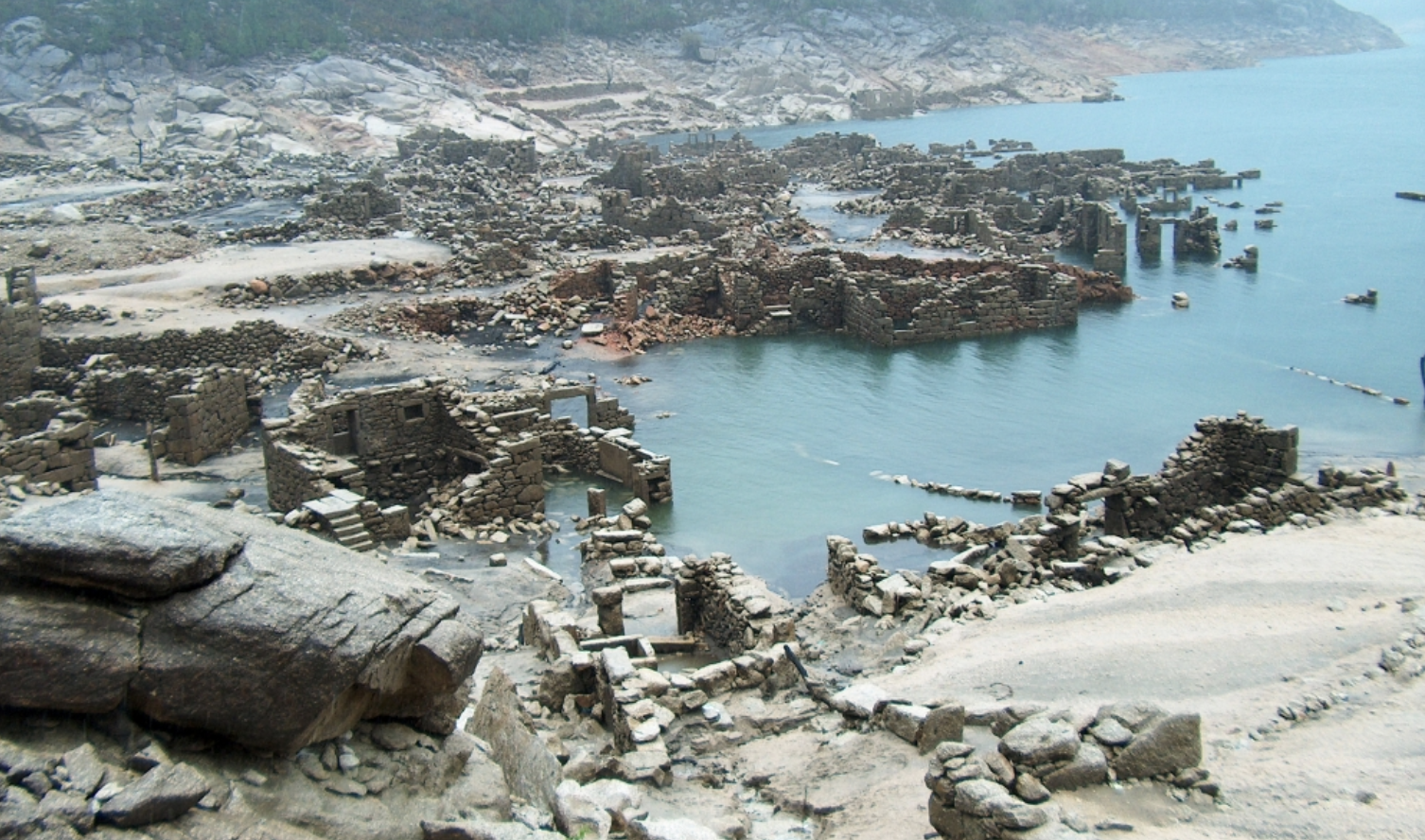
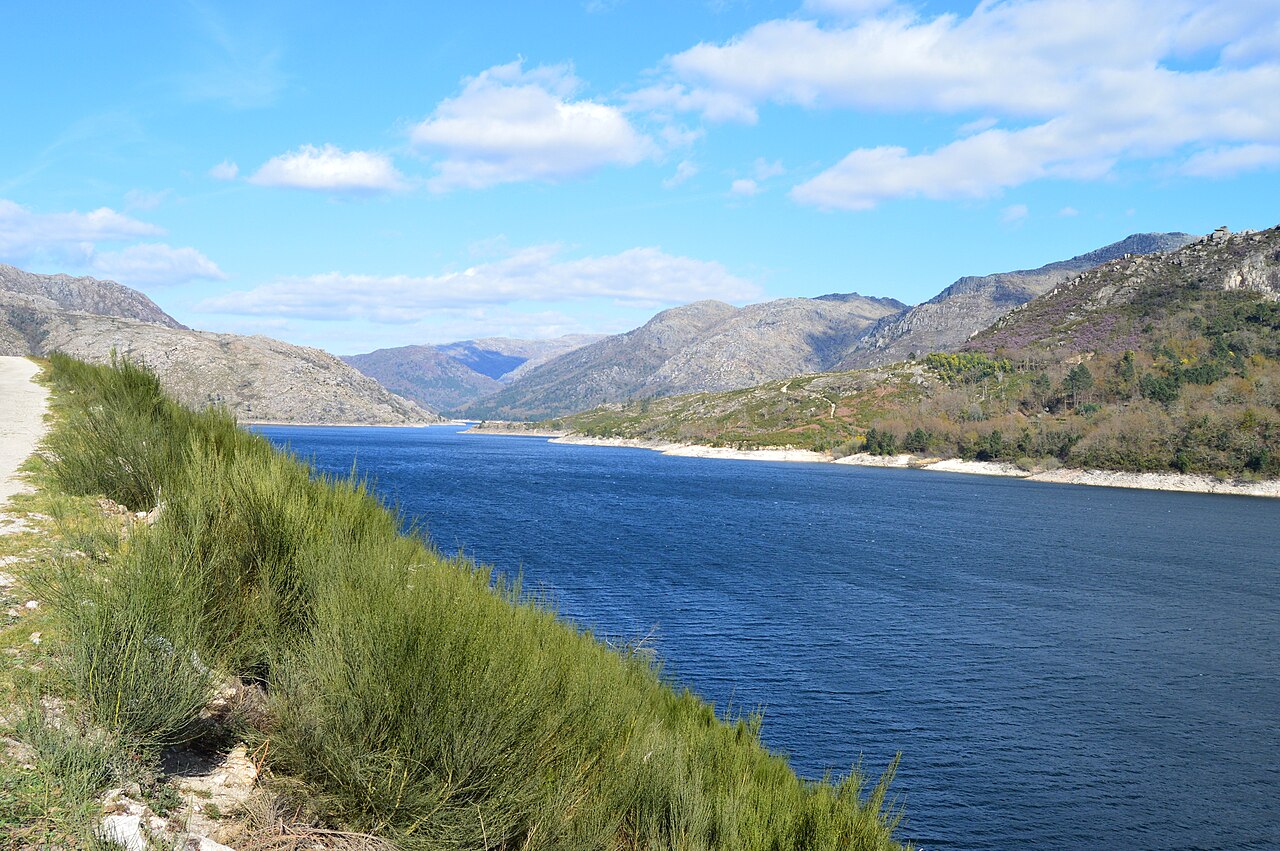
Vilarinho da Furna in northern Portugal was a self-governing community with roots in the 1st century AD when, in 1972, the Portuguese government flooded it for a hydroelectric reservoir. The villagers were paid the equivalent of half a sardine per square meter for their ancient land. The ruins still emerge during severe droughts.
In the rugged mountains of northern Portugal’s Minho region, where the Serra Amarela mountains meet the rivers Homem and Ribeira do Eido, a small village existed continuously for nearly 2,000 years. Vilarinho da Furna had been founded by Visigothic settlers in the 1st century AD. By the 20th century, it was home to about 300 people in 57 families, governed by a 1,500-year-old democratic council system that scholars believe descended directly from Roman-era practices.
In 1972, the Portuguese government flooded it.
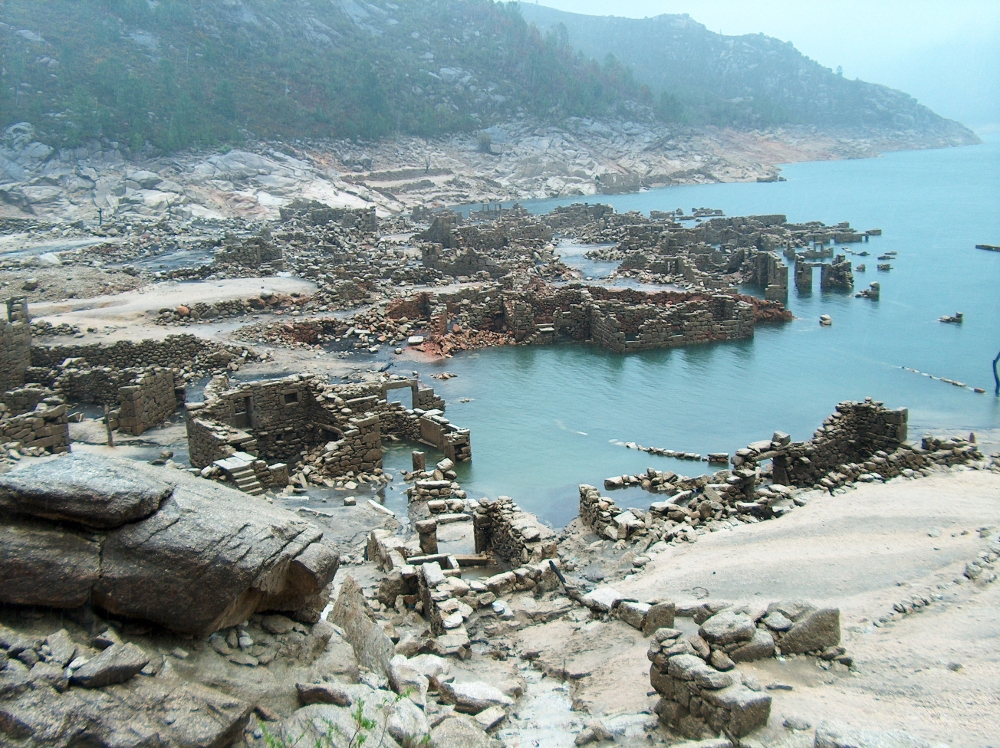
Today, the village lies beneath the waters of an artificial reservoir — visible only when severe droughts cause the water to recede. When it emerges, the stone walls, doorways, and pathways of one of Europe’s oldest continuously inhabited villages reveal themselves briefly, like an Atlantis that resurfaces every few decades to remind Portugal of what it deliberately destroyed.
1: A village 2,000 years in the making
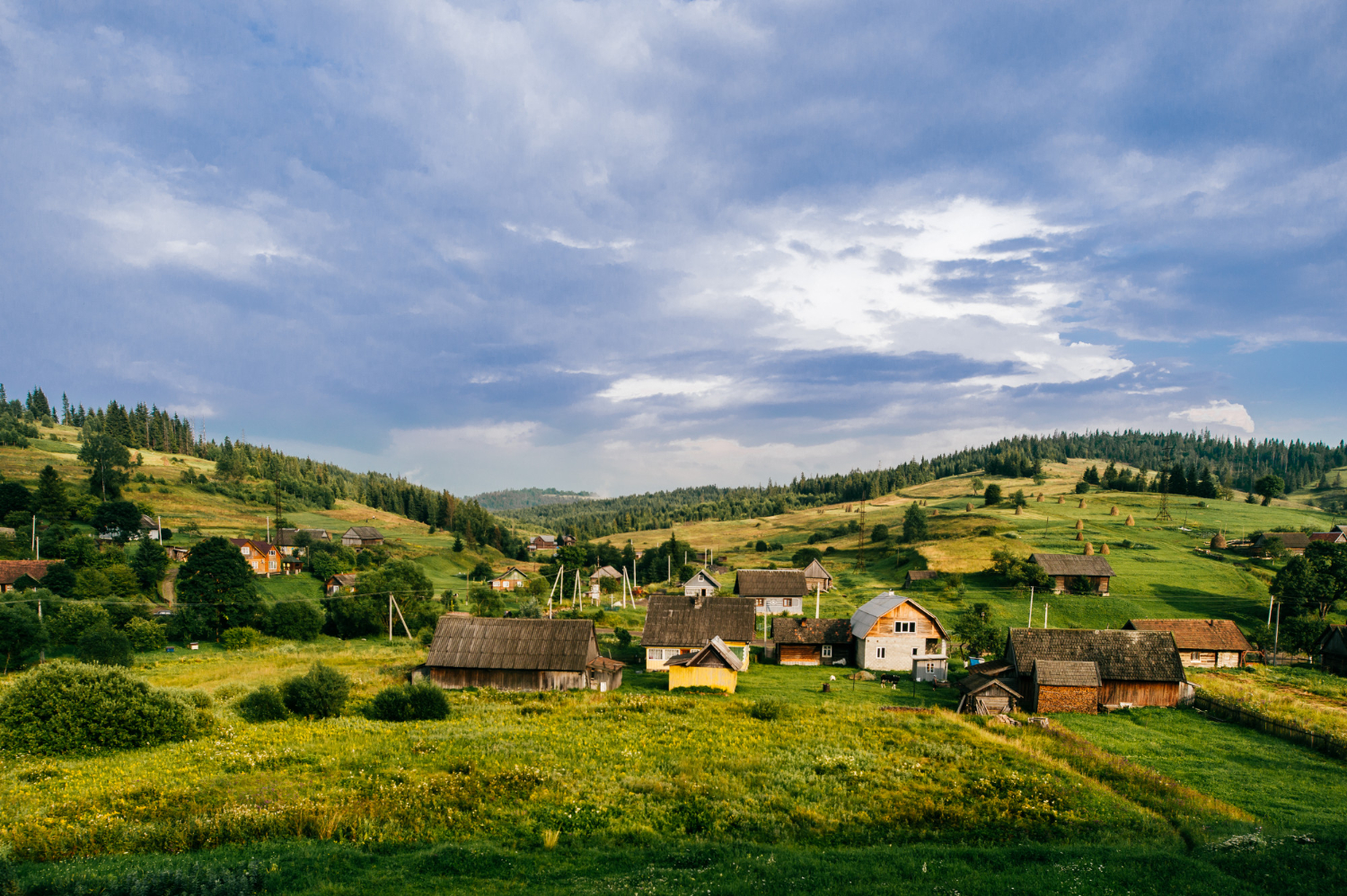
Oral tradition places Vilarinho da Furna’s founding in the 1st century AD, during the Visigothic settlement of the Iberian Peninsula. The location — in the southern slopes of Serra Amarela, near a Roman road called Via Nova XVIII — was deliberately chosen for good solar exposure, protection from northerly winds, fertile soils, and reliable springs that didn’t dry out during summers. According to the local legend, seven men originally settled the area at Portela do Campo. After a dispute, four of them moved downstream of the Rio Homem and established Vilarinho da Furna. The village survived as a recognizable community for almost two millennia.
2: The democratic council that ran for 1,500 years

What made Vilarinho da Furna especially remarkable was its system of self-governance. The village had a council called the Junta, with one member for each family. The Junta was led by a Zelador (Caretaker, also called Juíz or Judge), chosen from among the married men, who served a six-month term alongside a six-member legislative chamber called Os Seis. This communitarian system is believed to descend directly from the Visigothic conventus publicus vicinorum (public assembly of neighbors) — making it one of the longest continuously practiced democratic traditions in Europe. By the 20th century, this system was unique enough that anthropologists studied it as a living relic of pre-medieval European governance.
3: A community that ate well
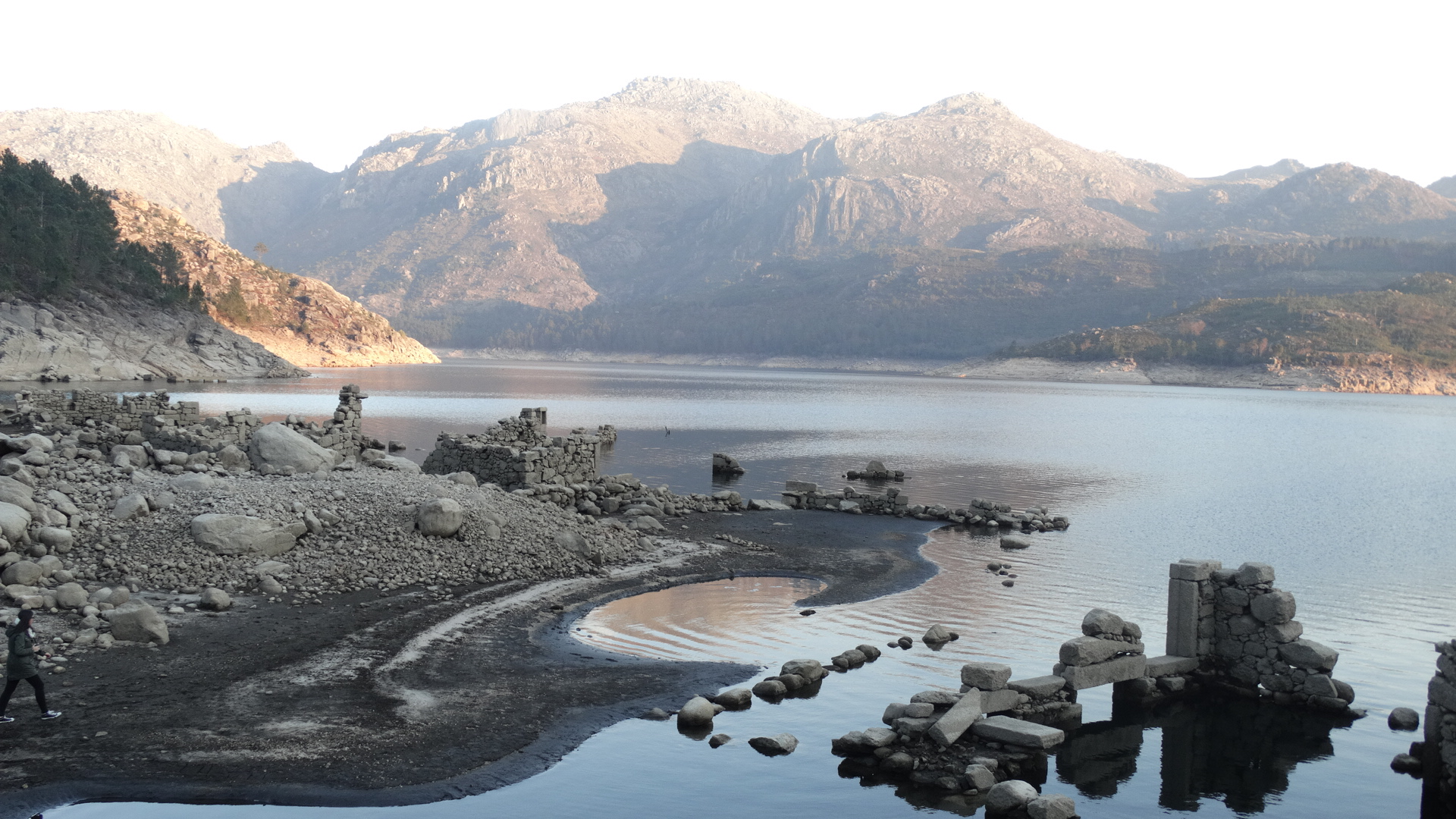
A German traveler who visited Vilarinho da Furna in the late 18th century recorded an observation that surprised him: the houses were comparable to those of other peasants in the region, but the standard of living was unusually high. His large host family lived comfortably; in contrast to many other places, they had no shortage of food, and their beds were clean and made-up with white linens. He noted that many German peasants would envy the Portuguese villagers’ standard of living. The village’s communal land system — where pastureland and forest were held collectively rather than divided among families — produced a more equitable distribution of resources than was common in 18th-century rural Europe.
4: The 1950s plans that the villagers couldn’t stop
Planning for the reservoir began in the 1950s, when Portuguese authorities conducted surveys and test drilling for a hydroelectric dam project. The project was led by the Companhia Portuguesa de Electricidade (Portuguese Electricity Company). The chosen location for the reservoir would inevitably submerge Vilarinho da Furna — its position on the rivers Homem and Ribeira do Eido was ideal for capturing water for the dam. The villagers protested the plan throughout the 1950s and 1960s. Their protests were ignored. The Portuguese government had decided that hydroelectric power for the region was more important than a 2,000-year-old village and its 300 inhabitants.
5: Half a sardine per square meter
Construction of the dam began in 1967. At this point, Vilarinho da Furna had almost 300 inhabitants in 57 families spread across 80 houses. The villagers had to be evicted to facilitate the filling of the reservoir. The compensation offered was insulting. The land was valued by the Cavado Hydroelectric Company (Companhia Hidroeléctrica do Cavado, or HICA) at just 0.5 escudos (the Portuguese currency of the time) per square meter. For comparison, this was the price of half a sardine. The villagers received a total of 20,741,607 escudos for everything — land, houses, and structures combined. The exodus formally began in September 1969 when HICA started paying the indemnity fees. The villagers had no choice in the matter.
6: The last inhabitant left in 1971

Throughout 1969, 1970, and 1971, families gradually packed up their belongings — 2,000 years of accumulated household goods, religious items, agricultural tools, family heirlooms — and left for new homes in surrounding villages or in larger cities like Braga and Porto. The last inhabitant of Vilarinho da Furna left in 1971. In 1972, the rising waters of the new reservoir submerged the village completely. Where 300 people had lived just a few years earlier, a vast artificial lake now reflected the sun. Within a year, the village that had stood for nearly two millennia was beneath the surface.
7: The ruins that emerge during droughts
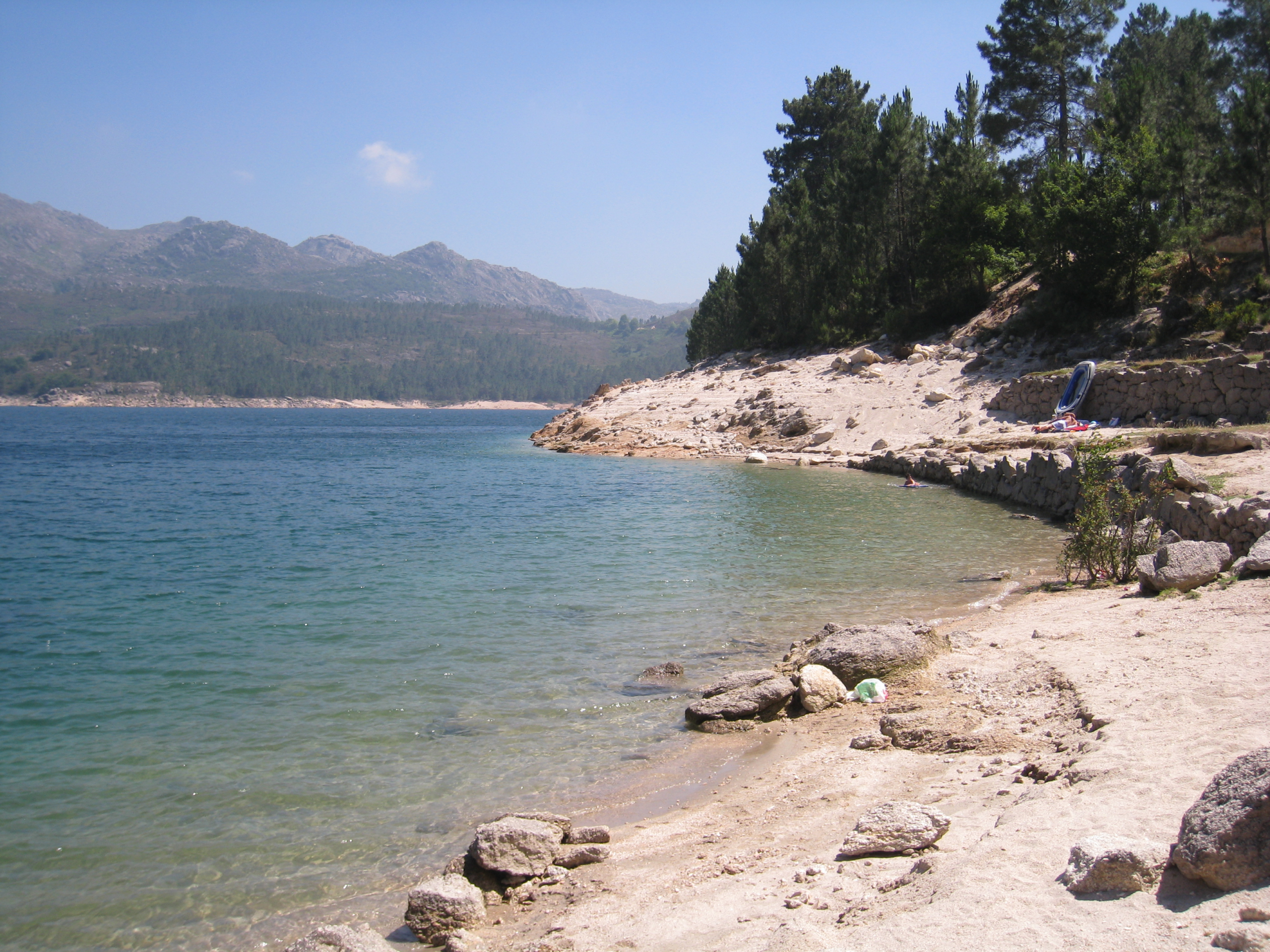
The reservoir covers approximately 344 hectares (37 million square feet) with a maximum power capacity of 125 MW. For most of any given year, Vilarinho da Furna remains underwater. But during severe droughts — which occur every few years in the region — the water levels drop low enough that the village’s ruins emerge from the lake. The stone walls, the doorways, the pathways, even parts of the village chapel rise above the surface, drawing visitors and history enthusiasts alike. The most dramatic emergences happened during the severe droughts of 1990, 1992, 2017, 2022, and most recently 2024. Walking through the exposed ruins feels like stepping back in time.
8: The lawsuit that lasted decades

The Portuguese state has never resolved the legal status of Vilarinho da Furna’s land. According to records dating back to 1895 — after a dispute with the Portuguese Forest Services (Serviços Florestais) — much of the village’s surrounding land had become the shared private property of the descendants of the villagers who signed a contract ending the dispute. When the reservoir was built, the state submerged the land but never acquired clear title to it. Technically, the descendants of the original villagers still own the property at the bottom of the reservoir — making them owners of land that no one can use or visit, except during droughts.
9: The museum built from village stones
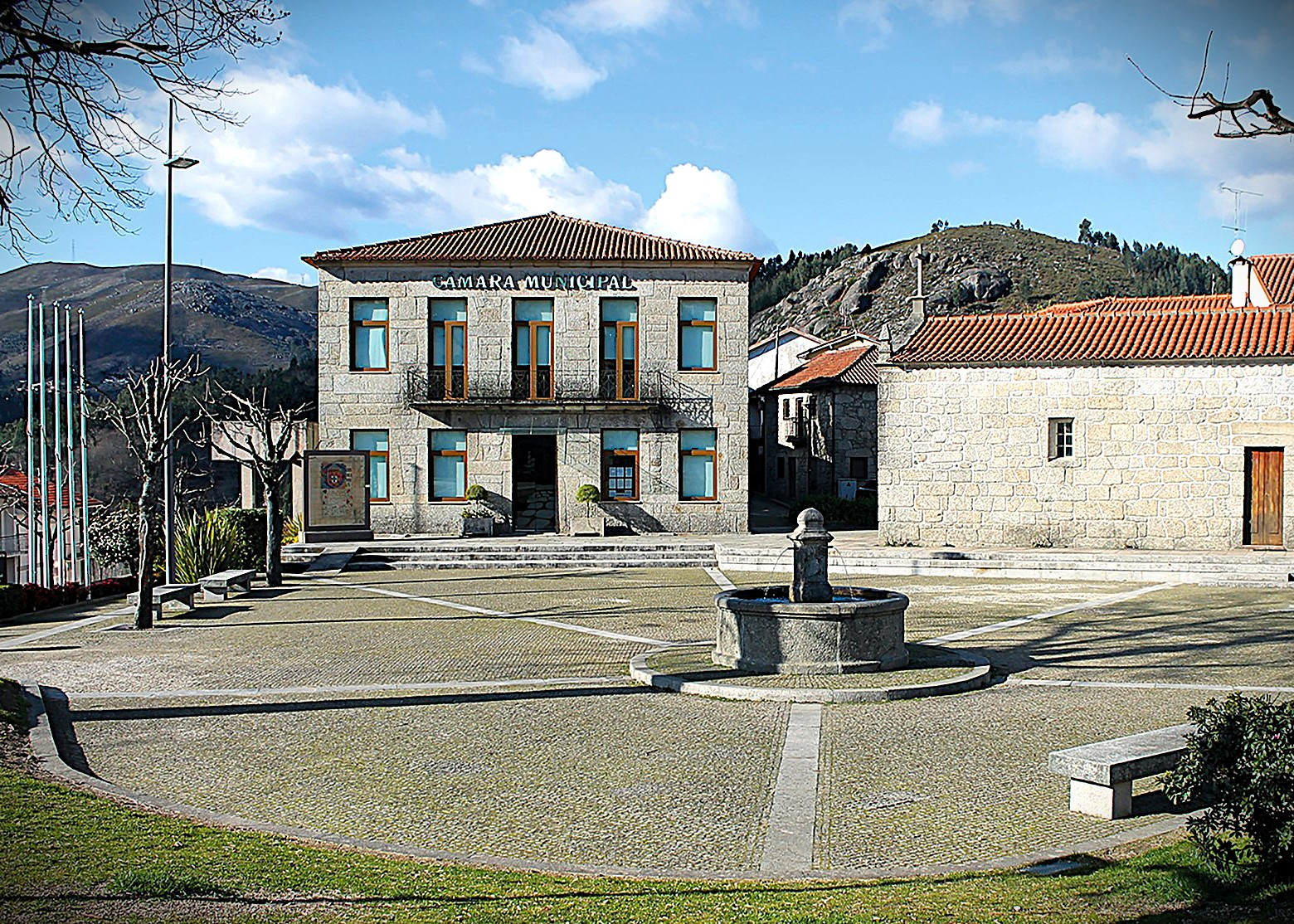
In 1981, the municipality of Terras de Bouro built an Ethnographic Museum in São João do Campo dedicated to commemorating the history of Vilarinho da Furna. The museum was deliberately constructed using stones from two of the original village houses — meaning that fragments of the submerged village now exist above water again, embedded in a museum dedicated to remembering them. The collection includes traditional clothes, agricultural tools, photographs, and paintings depicting daily life in the village before the flood. The museum was opened by Portuguese Prime Minister Aníbal Cavaco Silva on May 14, 1989. It remains open to visitors today, providing the most complete record of village life.
10: The Association of Former-Inhabitants
In 1985, former villagers formed the Associação dos Antigos Habitantes de Vilarinho da Furna (Association of Former-Inhabitants of Vilarinho da Furna) to promote and defend their collective and cultural heritage. The association continues to operate today, organizing reunions of former villagers and their descendants, maintaining the museum’s collection, and advocating for greater recognition of the village’s history. Many of the original inhabitants who were forcibly displaced lived long enough to see their village emerge during droughts in the 1990s and 2000s — a haunting experience for people who had been told their birthplace was permanently gone.
11: How to actually visit
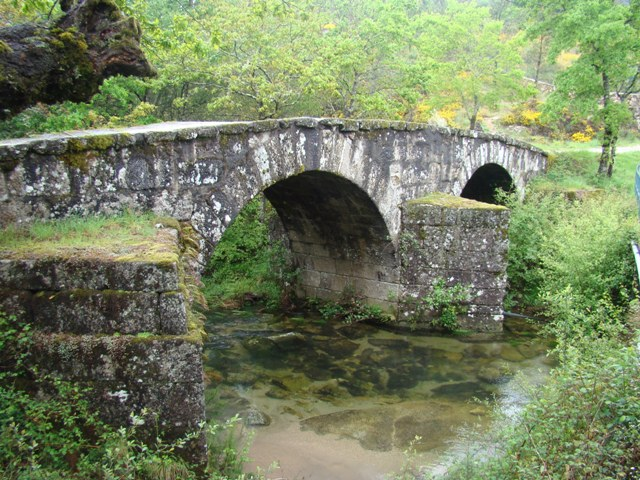
For visitors interested in seeing Vilarinho da Furna, the practical logistics depend entirely on water levels and weather. The village is located within Peneda-Gerês National Park in northern Portugal, accessible from the town of Campo do Gerês. The Ethnographic Museum at São João do Campo is open year-round, Tuesday through Sunday. Boat tours of the reservoir are available, with some operators using transparent-bottomed boats that allow glimpses of the submerged ruins when conditions permit. Diving expeditions to the village ruins are also possible, though they’re risky due to fluctuating water levels and unpredictable currents. The most rewarding visits happen during droughts, when the water level drops enough to expose the ruins themselves. Local tourism boards announce when significant emergences occur.
12: What Vilarinho da Furna represents
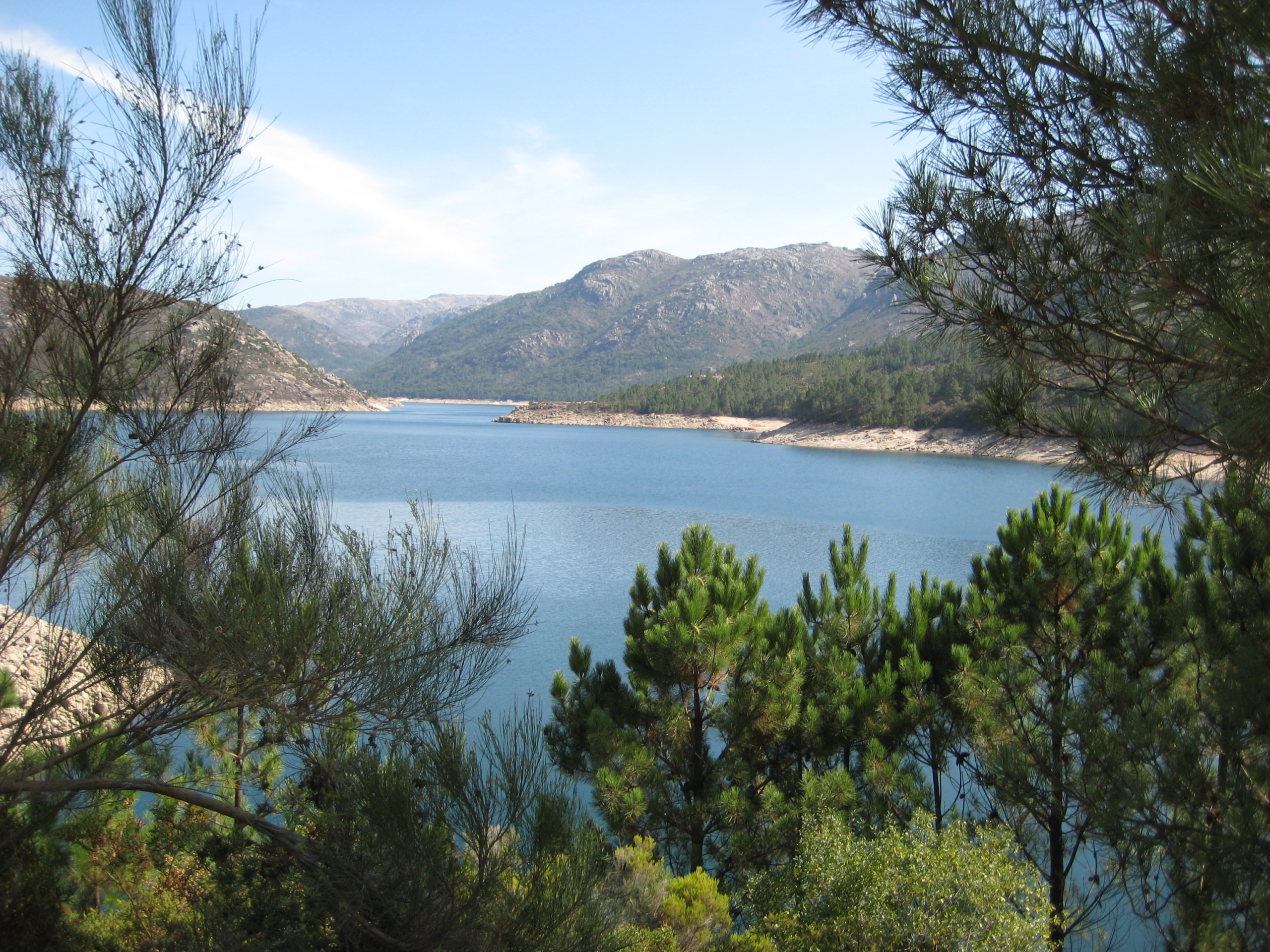
Vilarinho da Furna is a particular kind of monument — a village that demonstrates what 20th-century industrial development was willing to destroy. The Portuguese government’s decision to drown a 2,000-year-old self-governing community for a 125-megawatt hydroelectric dam reflects a specific era’s calculus, when the perceived value of progress outweighed the value of preserving ancient communities. Similar decisions were made across Europe and the Americas throughout the 20th century, drowning hundreds of villages beneath new reservoirs. Vilarinho da Furna is unusual primarily because it occasionally returns. The droughts that bring its ruins back to the surface have, in recent years, become more frequent and more severe — likely a consequence of climate change. The village that the Portuguese government tried to permanently submerge is reappearing more often than it once did. Whether this is geological coincidence or environmental warning depends on perspective, but the ruins themselves remain — accusing the country that drowned them, every time the waters recede.
