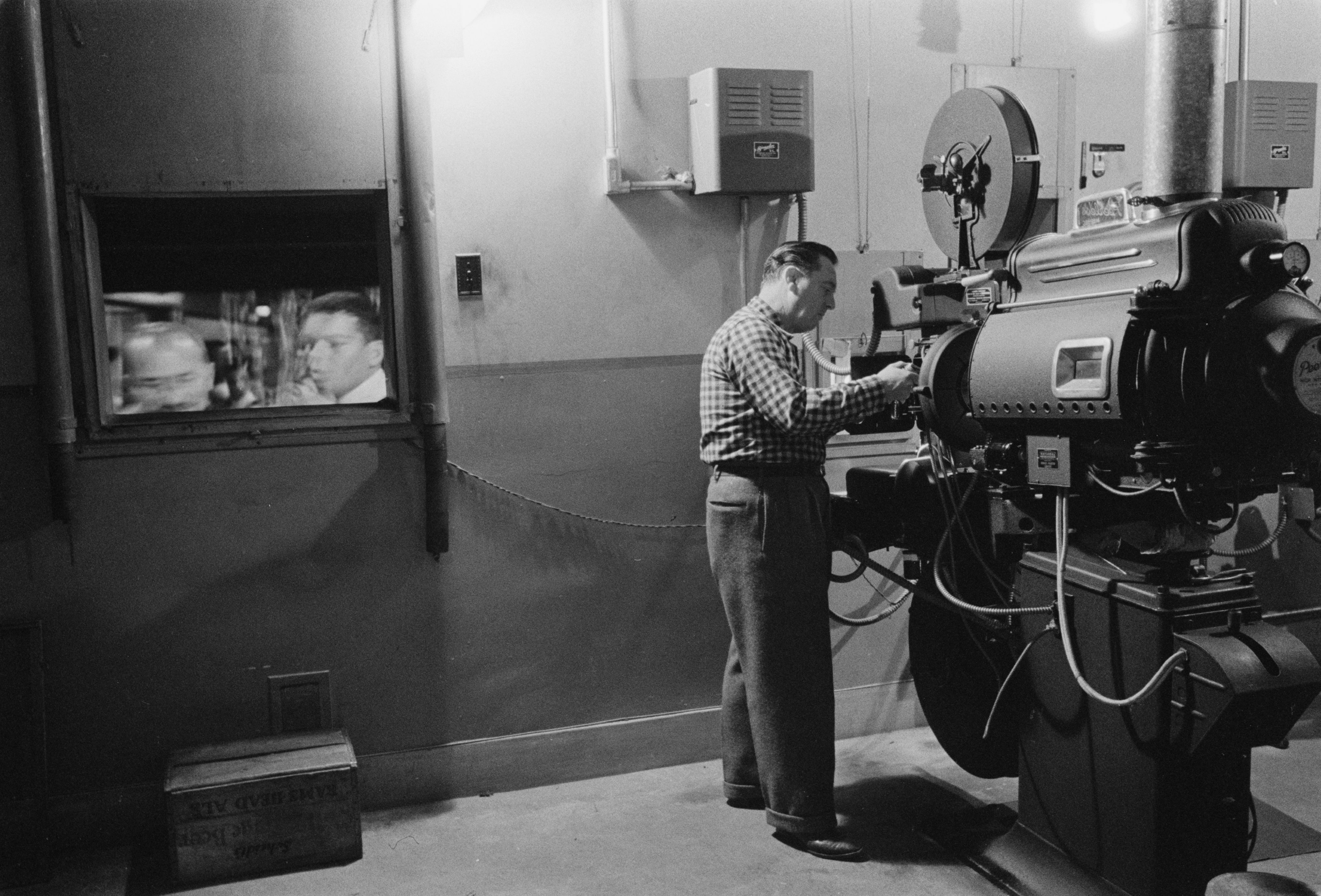
For about eighty years every film anybody saw in a cinema reached the screen because somebody was standing in a hot, loud, fireproof room at the back of the building, feeding two burning carbon rods and switching between two machines every twenty minutes without the audience noticing.
It was a licensed trade with an apprenticeship and a union card, and it has been almost completely erased – not reduced or relocated, but removed, in the space of roughly thirty years.
Here are ten things the projectionist did in 1965, and what happened to each.
1. The Light Came From Two Carbon Rods Burning in Open Air
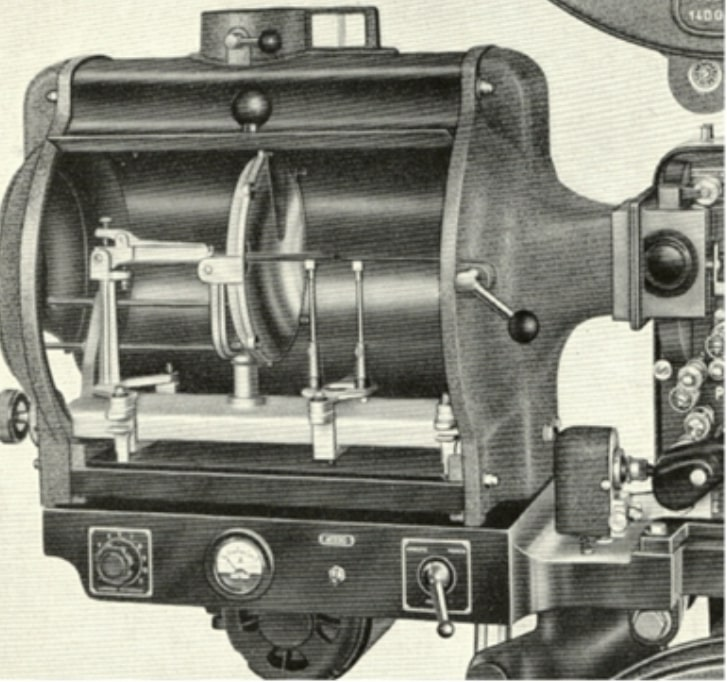
A carbon arc lamp produces light by striking an electric arc between two carbon rods, which burn away as they work. The projectionist adjusted the gap continuously to keep the arc stable, fed the rods forward as they were consumed, and replaced them between reels. The lamp produced intense heat, ultraviolet light and fumes that had to be ducted out of the building.
Xenon arc lamps began replacing carbon in the 1960s and 1970s – sealed, consistent, requiring no feeding and no changing mid-performance – and modern projection is a laser or LED light engine that needs no attention at all. The carbon arc required a skilled person in the room continuously for the whole show, which is the single reason the job existed in the form it did.
Like our content? Follow us for more.
2. The Film Was Flammable Enough to Have Its Own Building Code
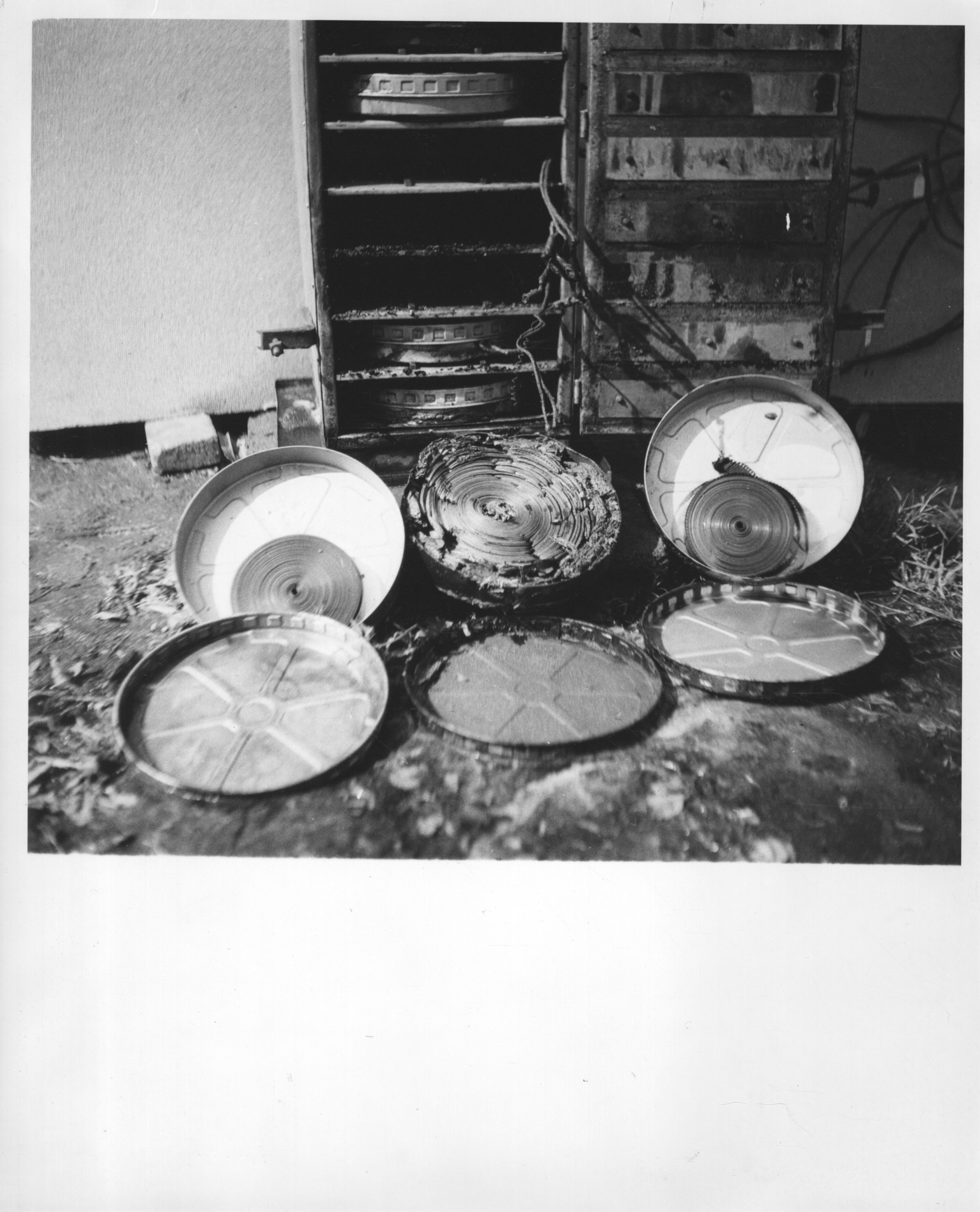
Nitrate film burns fiercely, produces its own oxygen as it does so, and cannot be extinguished by smothering. It had been largely replaced by acetate safety stock by 1965, but the projection booth was still built to the nitrate-era rules: fireproof walls, a steel door, shutters that dropped automatically over the ports, and film stored in metal cabinets.
The famous projection box fires of the silent and early sound era killed audiences as well as operators and produced some of the earliest and strictest building regulation applied to any workplace. Nitrate was withdrawn from general release in the early 1950s. The booth’s architecture outlived the hazard by decades, which is why so many old booths look like a vault.
3. A Feature Ran on Two Machines and Somebody Had to Switch Between Them
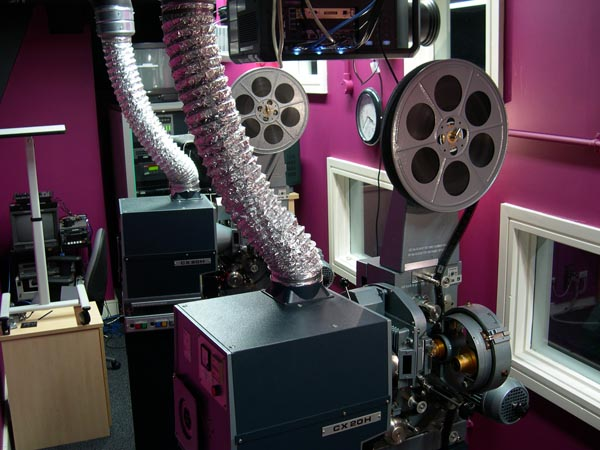
A film arrived in six or seven reels of about twenty minutes each. Two projectors ran alternately, and at the end of each reel the projectionist performed a changeover – starting the second machine, switching the light and the sound, and closing down the first – inside a window of a couple of seconds.
The cue was a small mark scratched or printed in the top right corner of the frame, flashing for a fraction of a second. First cue: start the other motor. Second cue, seven seconds later: change. A missed changeover put blank screen in front of a paying audience and everybody in the auditorium knew whose fault it was. Platter systems in the 1970s joined the whole film into one continuous reel and ended the skill; digital ended the reel.
4. The Projectionist Assembled and Inspected Every Print by Hand
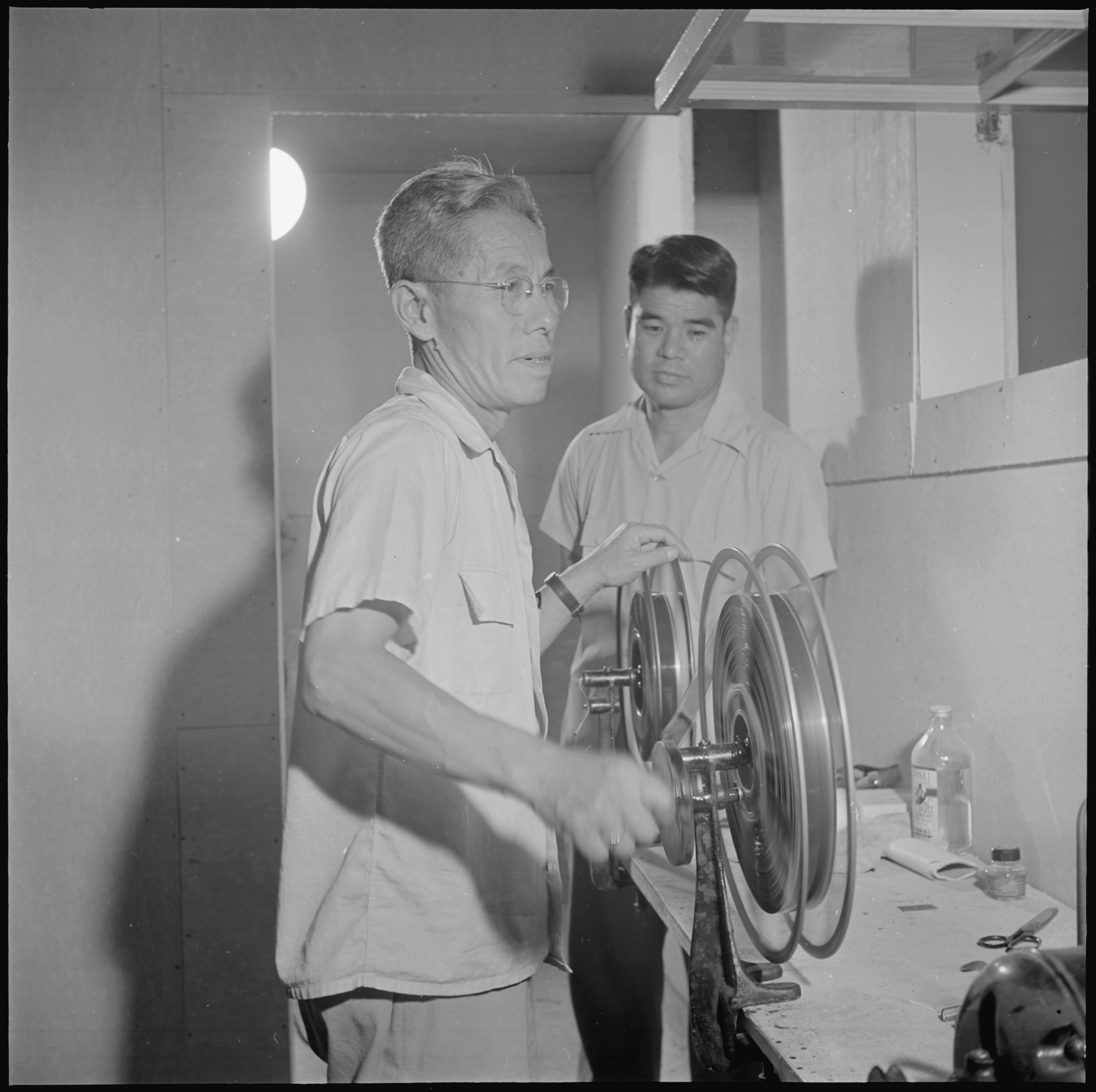
A print arrived in cans and had to be built up – reels joined, checked for damage, torn perforations repaired, splices verified, trailers and certificates attached in the right order. It was all wound through by hand or on a bench rewinder, with the operator feeling the film for faults.
A badly maintained print tore in the gate and stopped the show; a well-maintained one ran for hundreds of screenings. The whole craft of print handling – the splicer, the bench, the cement, the practised judgement about whether a perforation would hold for another week – vanished completely, first into the platter and then into a hard drive delivered by courier or satellite.
5. It Was a Union Trade With a Formal Apprenticeship
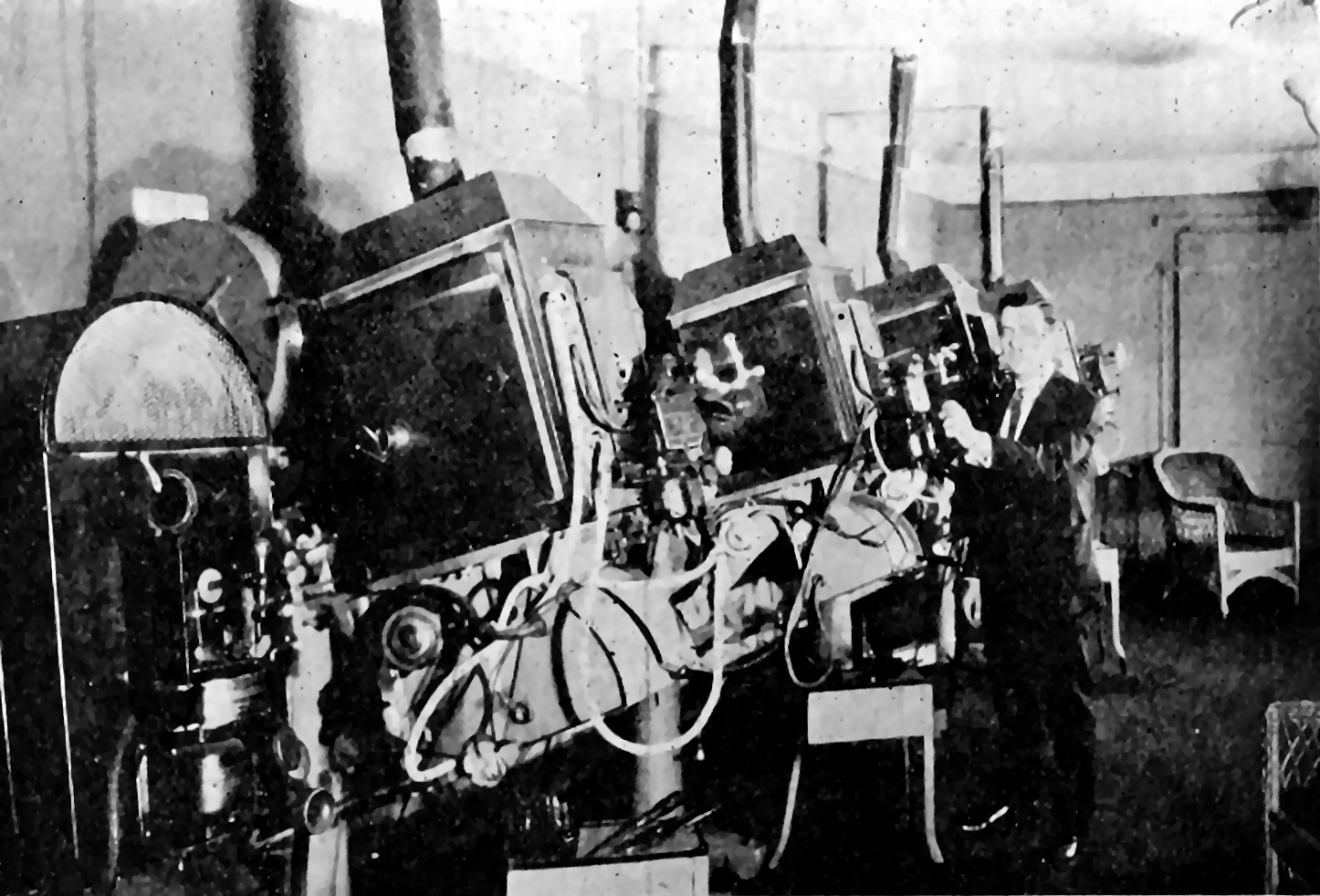
Projection was a licensed, organised craft in much of the country. In many cities an operator needed a municipal licence, obtained by examination, and the union controlled entry and apprenticeship. A projectionist was a tradesman with a card, not an usher who had been shown which button to press.
Automation dismantled this across the 1970s and 1980s. Once a platter and an automation system could start a show on a timer, a multiplex could run a dozen screens with one or two technicians, and the licensing and apprenticeship structure had nothing left to protect. It is among the most complete disappearances of a skilled urban trade in the period.
6. The Booth Was Hot, Loud and Nobody Visited
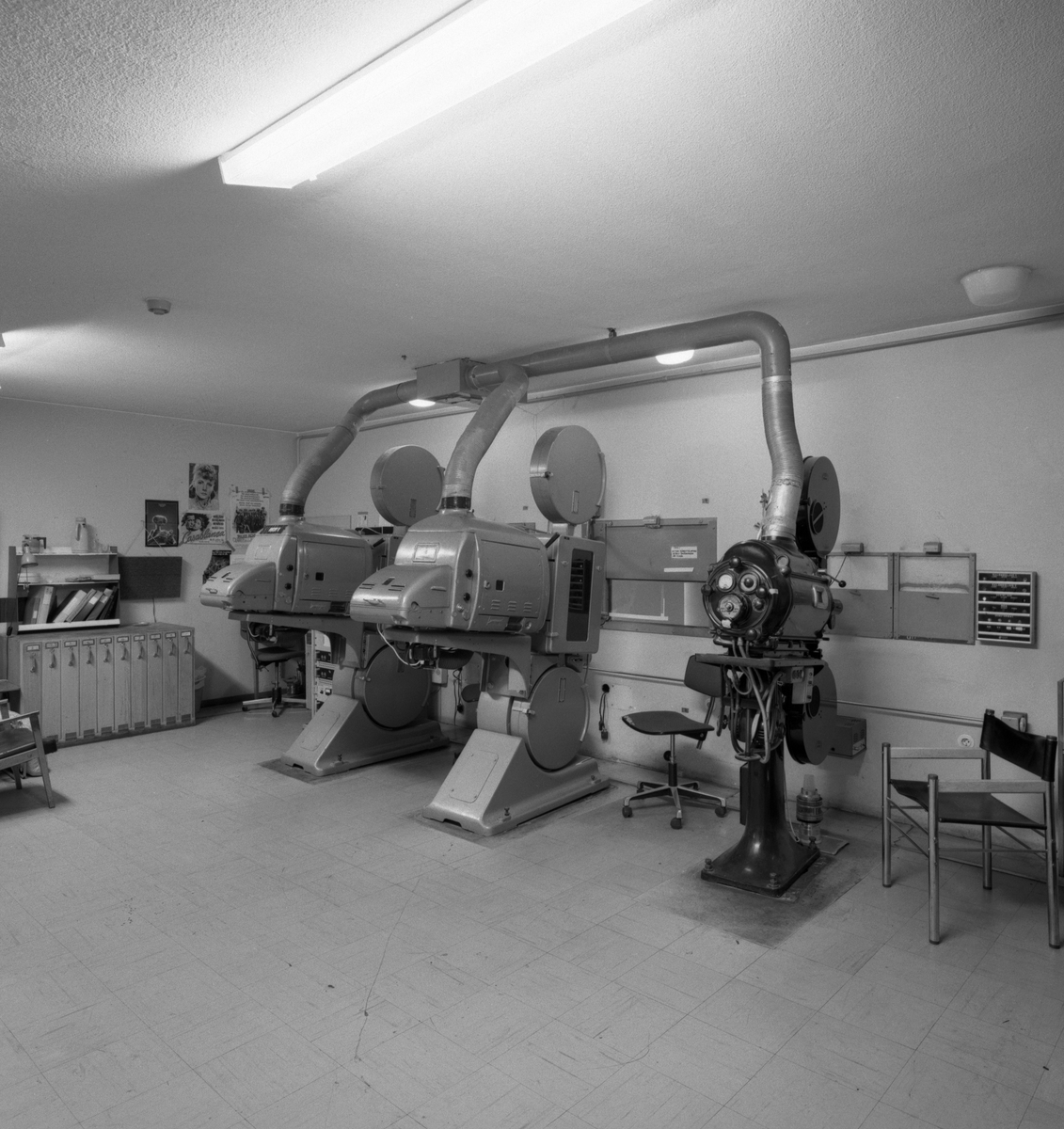
Two arc lamps, two motors, an amplifier rack and no air conditioning in a small room with the door shut. It was loud enough to make conversation difficult and hot enough that operators worked in shirtsleeves in winter. For the length of the show, the projectionist was alone.
The isolation is what every former projectionist describes – a job in a building full of people, performed entirely by yourself, in a room the public never entered and the manager rarely did. The modern equivalent is a cool, quiet, dark corridor of servers that is visited once a day, and the person responsible for it is probably managing several buildings remotely.
7. You Watched the Same Film Several Hundred Times
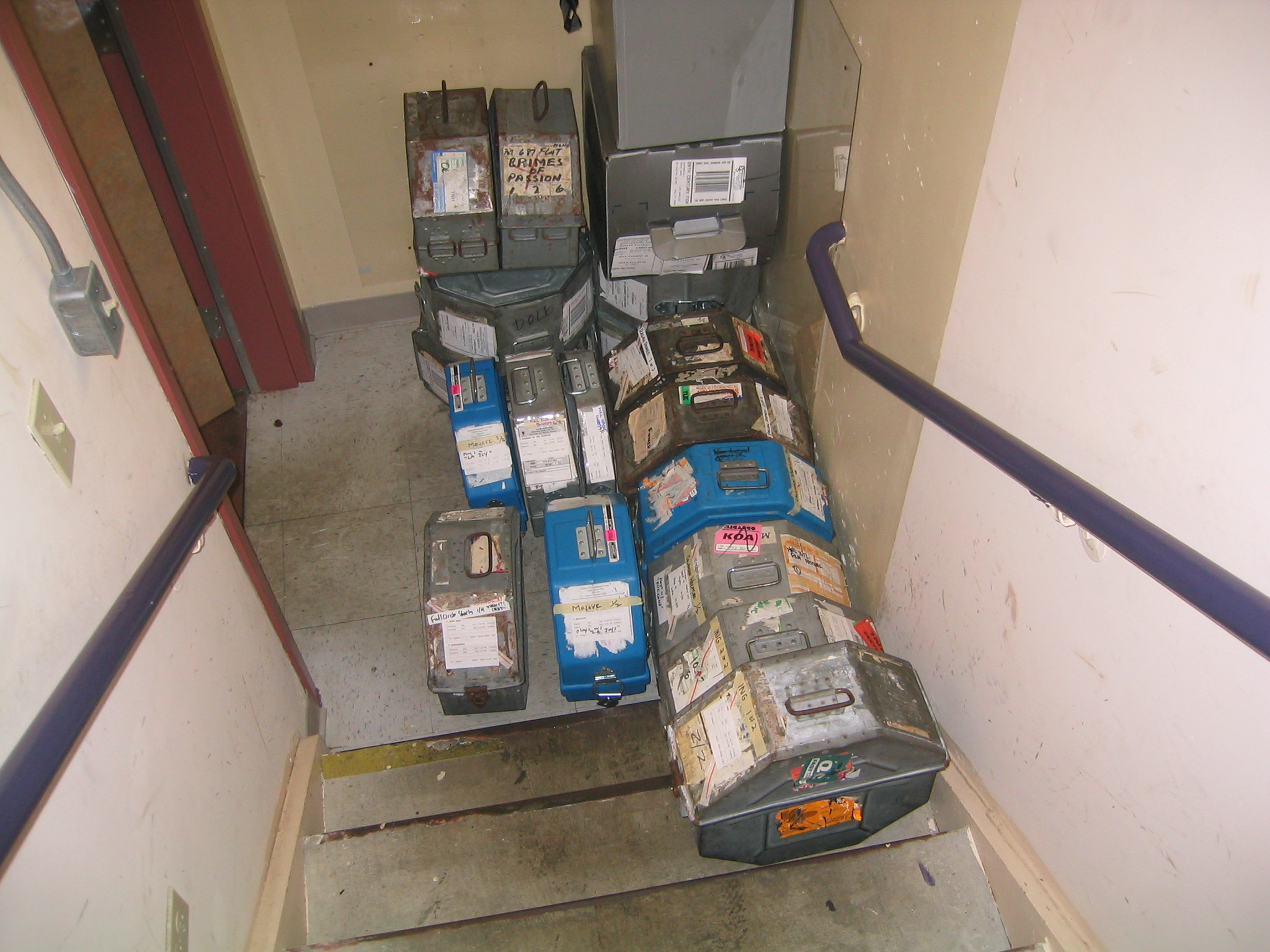
A print stayed for a week or several, two or three shows a day. The projectionist heard every line of dialogue dozens of times through the monitor speaker, knew the cue marks by heart, and could tell from the sound alone whether the show was running properly.
Every account of the job includes the moment of knowing a film too well, and most include at least one film the operator could not bear by the end of its run. It also produced an unusual expertise: a projectionist who had watched a film two hundred times from the back of the room knew exactly where an audience laughed, where they went quiet, and where they got up – which nobody measures now.
8. The Sound Came Off the Edge of the Film as a Strip of Light
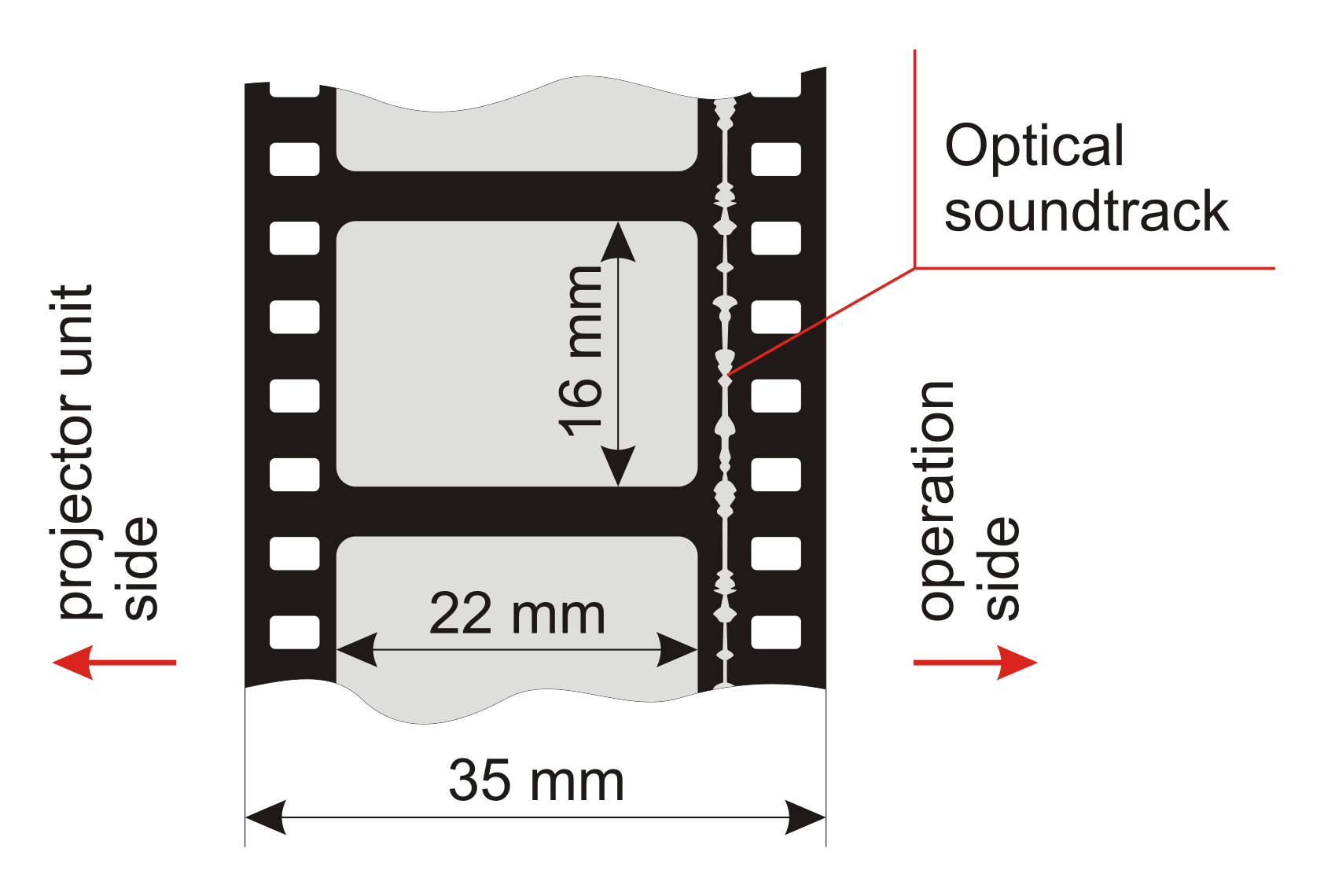
An optical soundtrack is a wavy or variable-density stripe printed beside the picture. A small lamp shone through it onto a photocell, and the varying light became a varying current and then sound. It was elegant, entirely analogue, and vulnerable to dirt, scratches and a misaligned lamp.
Keeping the sound right was a real part of the craft – cleaning the sound gate, checking the exciter lamp, adjusting the azimuth. Magnetic stripes, then digital tracks printed between the perforations, then wholly separate digital audio replaced it. Optical sound ran as the industry standard for roughly sixty years, which makes it one of the longest-lived formats in the history of recorded media.
9. The Projectionist Could Cut the Film and Frequently Did
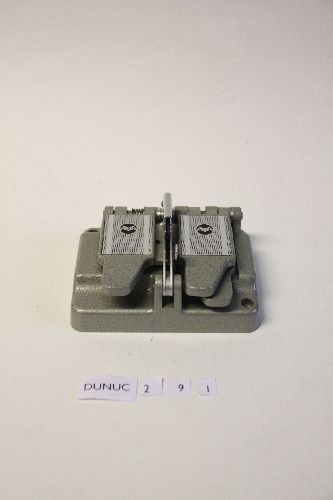
Prints were physically edited in the booth – to remove damaged frames, to cut a sequence a local censor or a manager objected to, or occasionally because an operator thought a scene was too long. A splice is permanent, and the print went on to the next cinema in that condition.
This is why surviving prints of some films differ, and why film archivists treat a single print as evidence rather than as the film. Local cutting was not supposed to happen and plainly did. Digital distribution ended it absolutely: a modern cinema receives an encrypted file it cannot alter, playable only within a licensed window, which solved the problem and removed the last piece of the operator’s authority over what the audience saw.
10. One Person Decided Whether the Show Looked Right
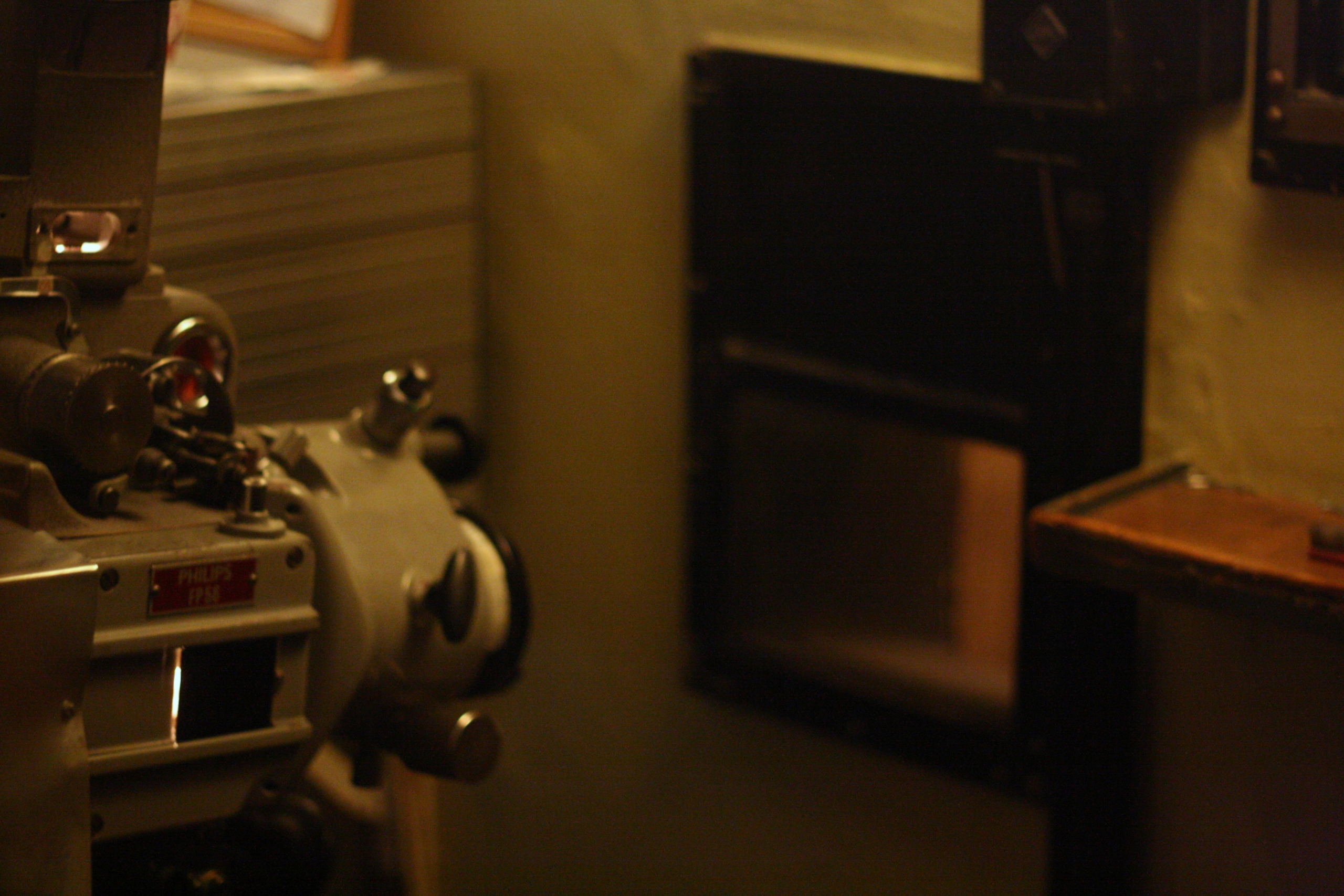
Focus, framing, brightness, lens and aperture plate for the correct ratio, masking, sound level, the state of the gate – all of it was set and adjusted by the person in the booth, by eye and ear, during the performance. A good projectionist made an ordinary print look right, and a careless one could make a good print look terrible.
That judgement has been designed out, deliberately and for good reasons: the result is far more consistent and does not depend on who is working. What was lost is the ceiling as well as the floor. A great presentation in 1965 was a craft performance by somebody who cared, and audiences in cinemas with a reputation for projection knew whose work they were watching – which is not a thing anybody can say about a building any more.
What Replaced the Whole Trade
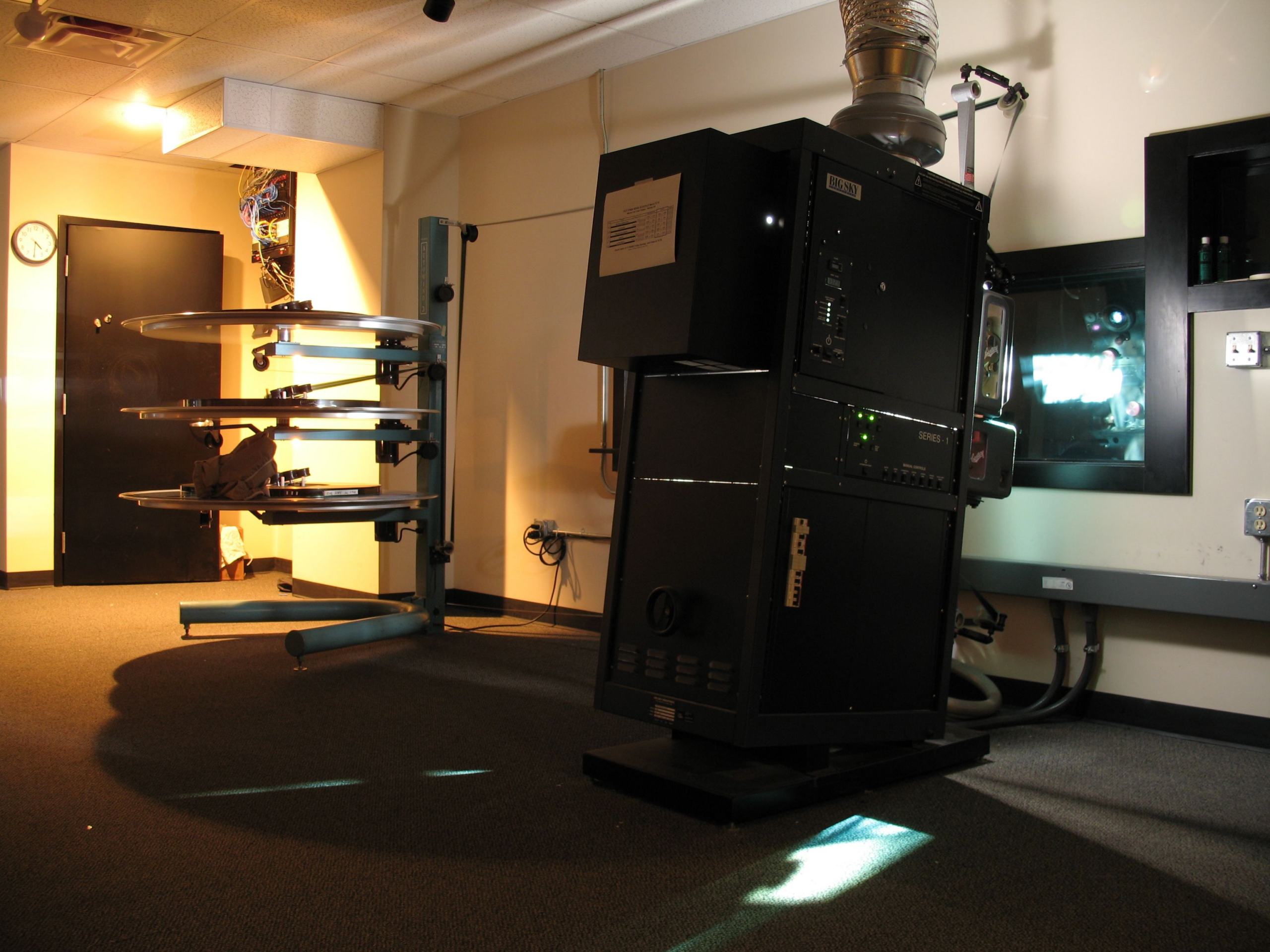
Three technologies did it, in order.
The platter system in the 1970s joined a feature into one continuous reel, which ended the changeover and therefore ended the requirement for somebody to be in the room for the whole show. Automation then allowed a show to start on a timer. Between them they turned a tradesman’s shift into a task that could be covered by one technician across a dozen screens, and the licensing and apprenticeship structures collapsed because there was nothing left for them to govern.
Digital projection in the 2000s finished it. A modern cinema receives an encrypted file, plays it inside a licensed window on a sealed projector, and the building’s technical staff maintain equipment rather than operate it. Presentation is more consistent than it has ever been, nothing is scratched, no reel is shown out of order, and no local manager cuts a scene.
What went with all of that is a craft, a licensed trade and a career, and one specific thing worth naming: there is no longer anybody in the building whose job is to watch the screen and decide whether it looks right. That function has not been automated so much as abolished, which is why the complaints about dim screens and wrong aspect ratios go to a website rather than to a person upstairs.
If you ever got taken up into a booth as a child, the heat and the noise are probably what you remember, not the film.
Did anybody in your family run a booth, and which cinema was it?
Like our content? Follow us for more.