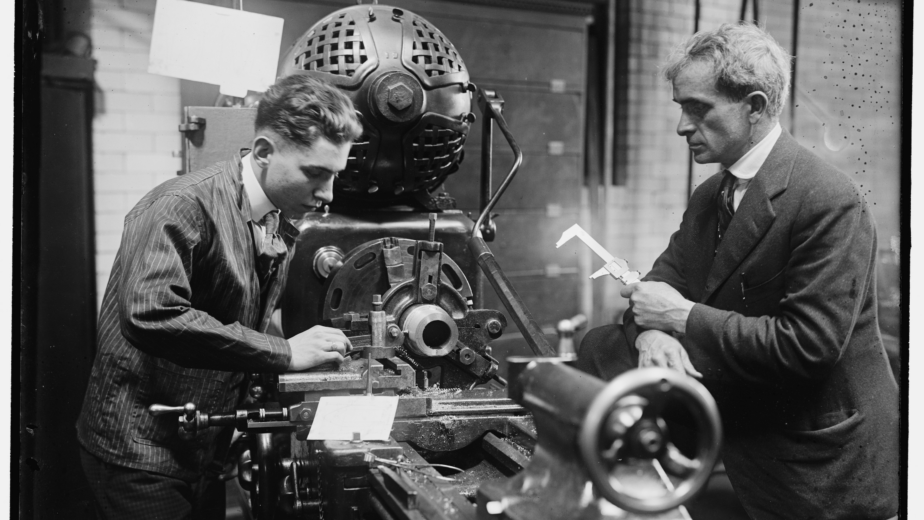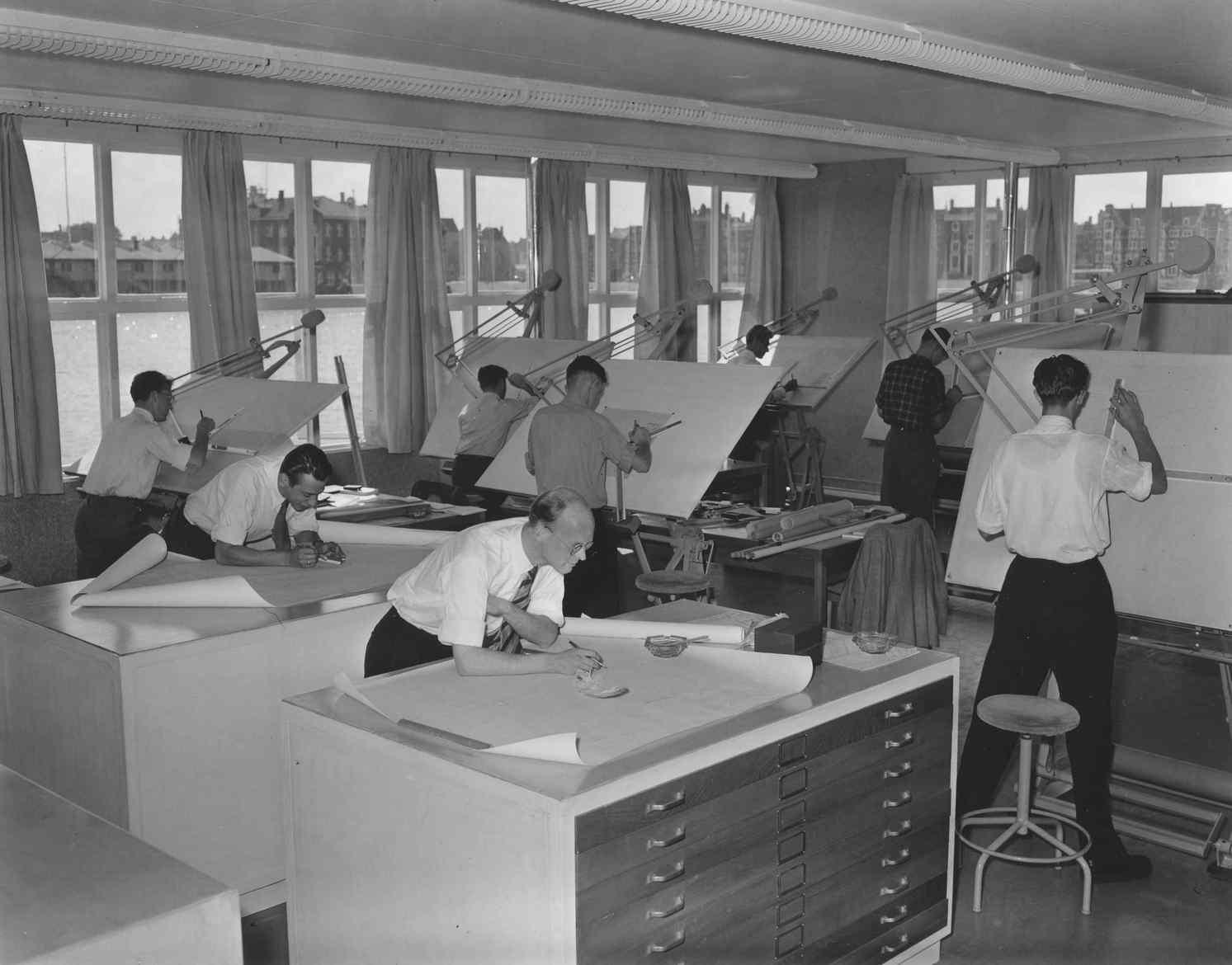
In 1965 every manufactured object in the world began as lines drawn by hand on a board the size of a door. A draughtsman worked with a tee square, a set square, a scale rule and a pencil, traced the result in ink onto translucent linen, and lettered every note by hand to a standard.
There was no undo. A mistake was removed with a razor blade, and a bad one meant starting a week’s work again.
Here are twelve things the drawing office did in 1965, and what each one became.
1. Everything Ever Manufactured Was Drawn by Hand First
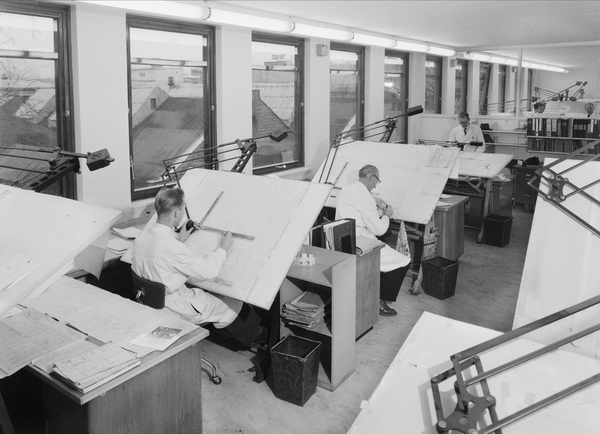
Every bridge, engine, building, ship, aircraft, machine tool and kettle that existed in 1965 began as lines put on paper by a person with a pencil, a tee square and a set square, at a board tilted towards them.
Computer-aided design replaced the board over roughly twenty years from the late 1970s, and the transition was total – there is essentially no commercial drawing office using boards now. It is one of the most complete professional disappearances of the century, and it happened to a job that required years of training and employed enormous numbers of people.
Like our content? Follow us for more.
2. The Board Was the Instrument and It Was Enormous
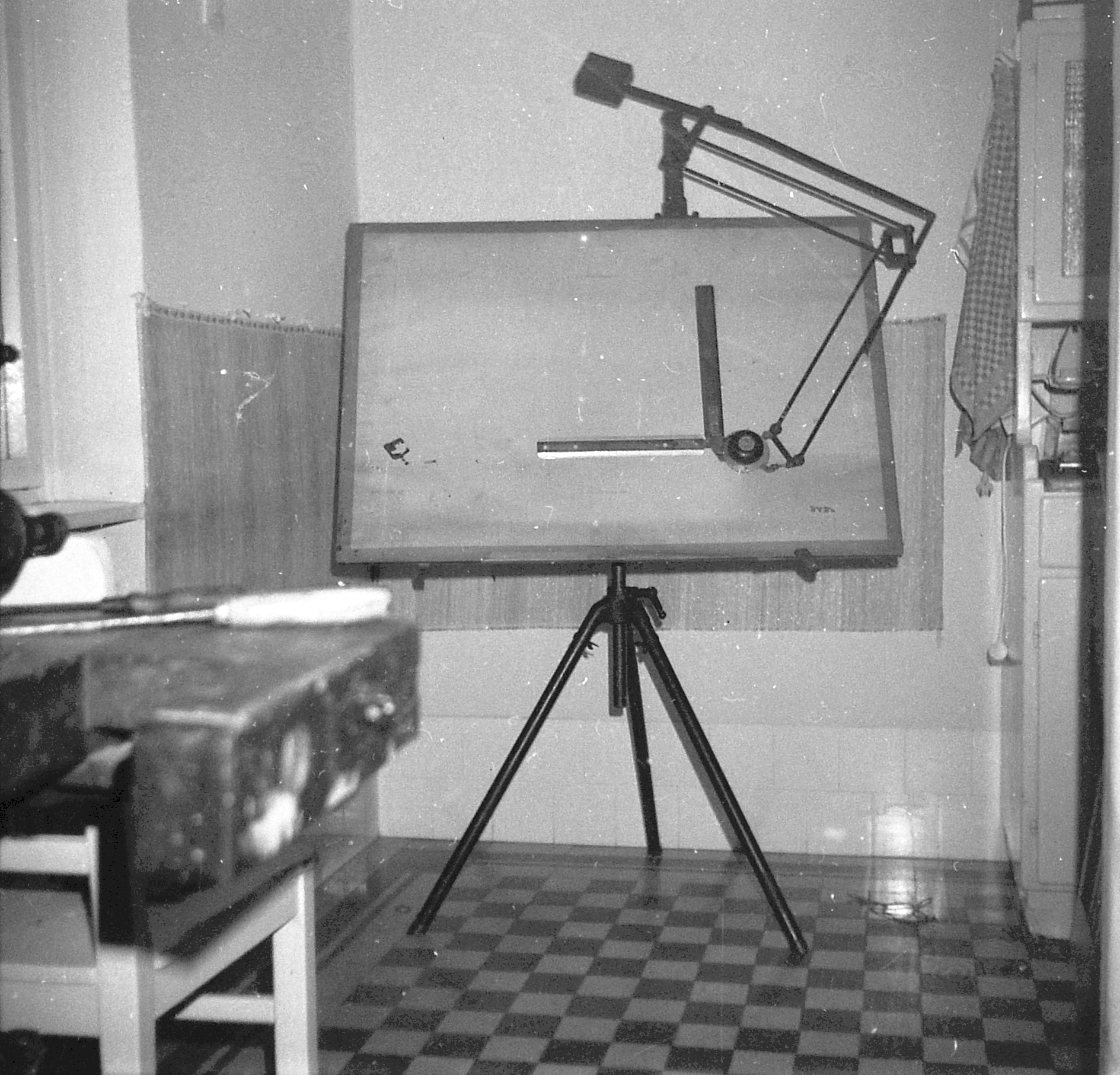
A drawing board was a flat surface the size of a door, set at an angle, with a parallel motion or a drafting machine mounted on it carrying rules that stayed square to the board wherever they were moved. A draughtsman stood or sat at it all day.
The whole apparatus – board, parallel motion, drafting head, stool, lamp – was a substantial piece of furniture per person, which is why drawing offices were large rooms with high ceilings and north light. A modern design office is a row of desks, and the space per person fell by a large factor, which is a mundane consequence nobody predicted.
3. Lines Were Drawn in Ink on Tracing Linen
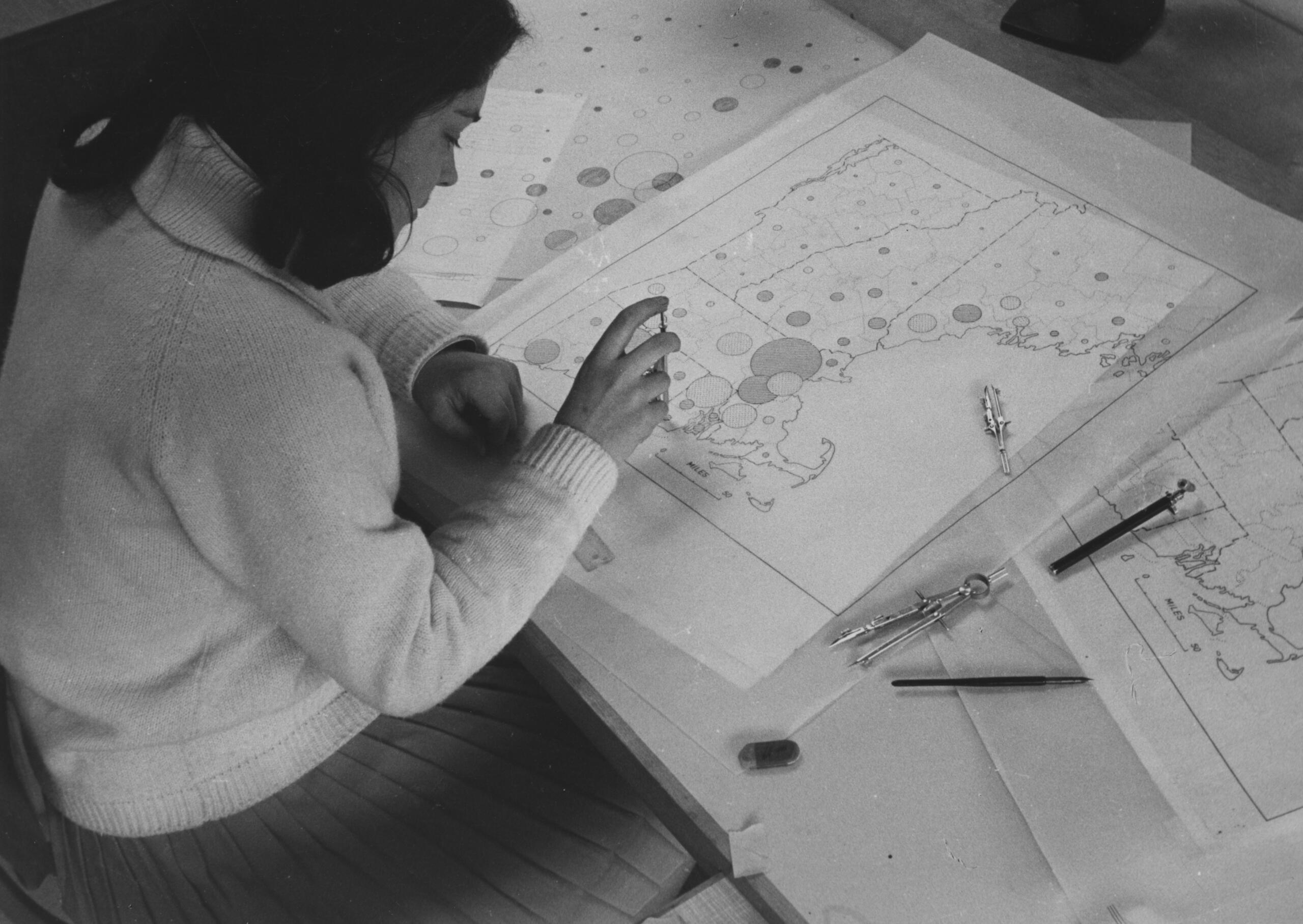
A pencil drawing was traced in ink onto translucent linen or film to produce the master, because only a translucent original could be copied. Inking was a separate skill, frequently done by tracers who were overwhelmingly women and paid less than the draughtsmen whose work they copied.
The tracer’s job disappeared first, to improved pencil-on-film and then to the printer. It is one of the clearer examples in these lists of a role defined as less skilled and paid accordingly, performing work that required a very steady hand and considerable precision, and vanishing without being much remarked upon.
4. A Mistake Meant Scraping the Ink Off With a Blade
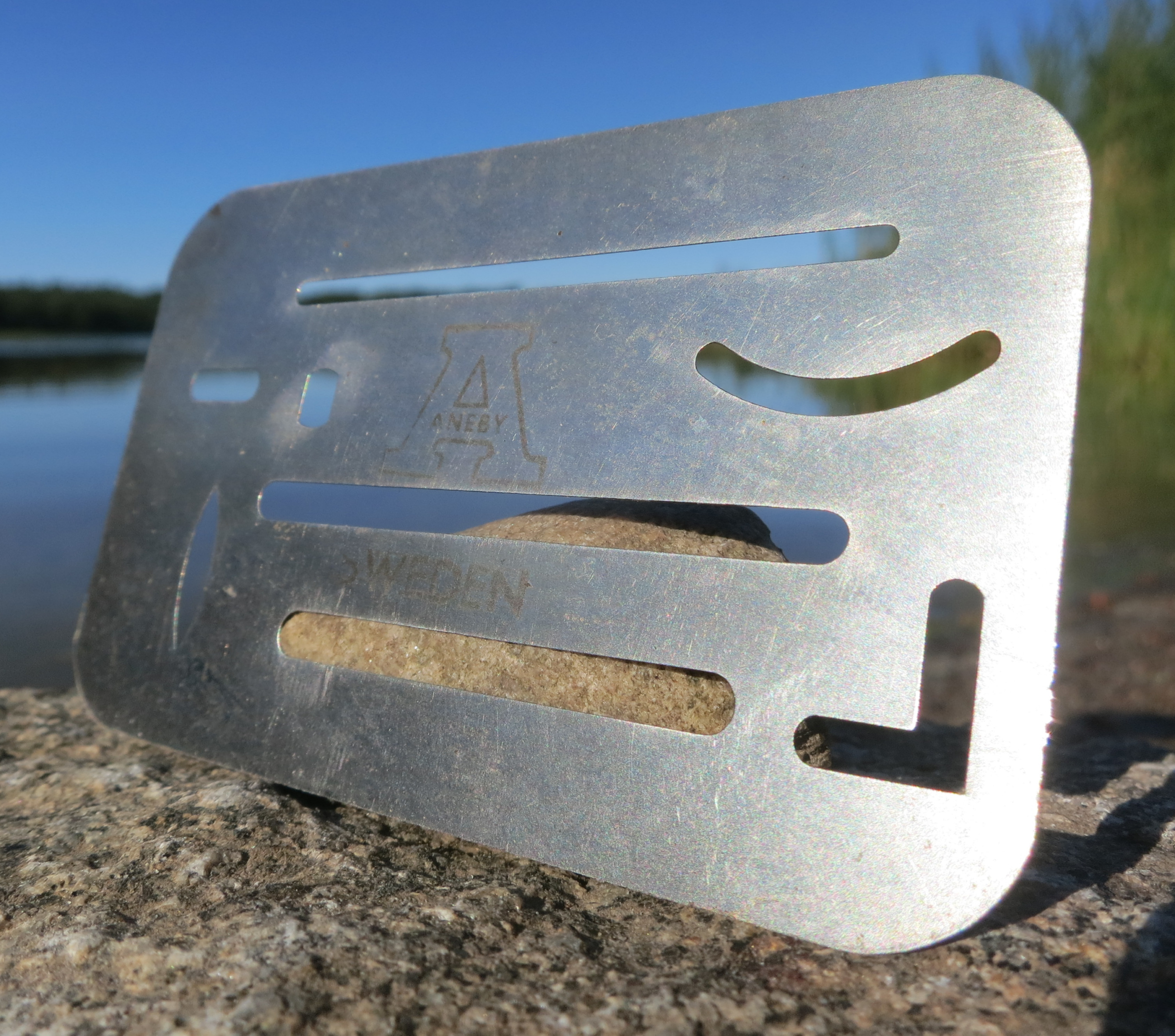
Correcting an inked line meant scraping the surface with a razor blade or an erasing shield, then burnishing the fibres back down so the repair would take ink again. A bad mistake meant starting the sheet again, which could be a week’s work.
The absence of an undo is the thing that defines the whole period. Everything about the practice – the care, the sequence, the checking before committing, the seniority structure – follows from the fact that a line once inked was permanent. The arrival of a command that reverses the last action changed not just the speed of the work but the psychology of it.
5. Lettering Was Done by Hand to a Standard
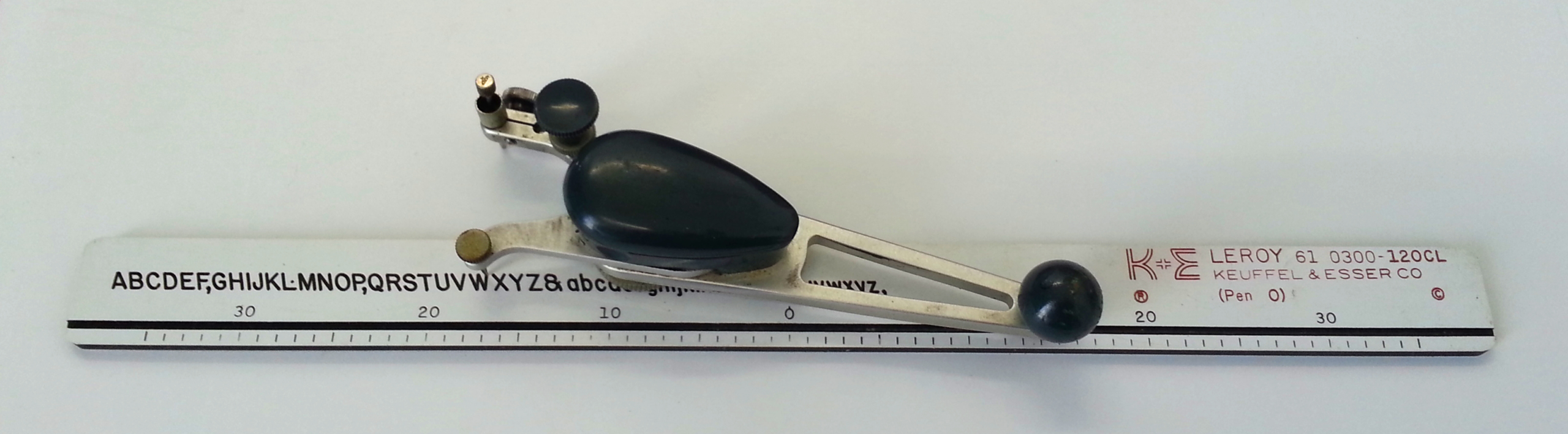
All text on a drawing – dimensions, notes, titles – was hand-lettered in a defined style, upright or sloped, to a consistent height, and a draughtsman practised it until it was automatic. Stencils and lettering machines existed and were regarded as slightly inferior.
Hand lettering was a distinct skill assessed in training, and a drawing office had a recognisable house hand. Typed and then digital annotation replaced it entirely. The standardised technical lettering styles survive as fonts, which means the appearance persists exactly while the skill behind it has gone.
6. Drawings Were Checked by a Person Whose Whole Job Was Checking
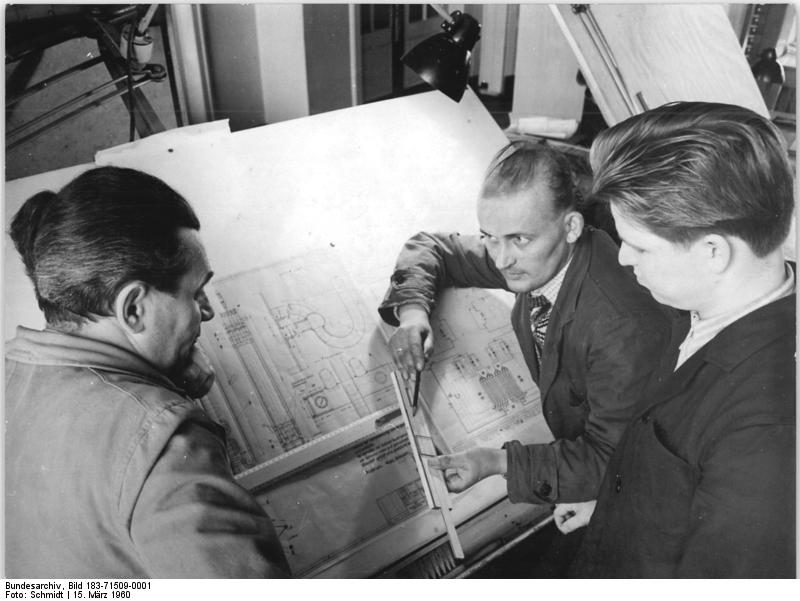
A completed drawing went to a checker – a senior figure who examined every dimension, every tolerance, every note and every reference against the drawings it related to, and marked it up in a defined colour before it could be issued.
Checking still happens and is still essential, but the nature of the errors changed. A hand drawing could be dimensionally inconsistent in ways no software would now permit, because the computer model holds the geometry and derives the dimensions from it. What checking catches now is intent, manufacturability and interface problems rather than arithmetic, which is a better use of a senior engineer.
7. Every Drawing Related to Dozens of Others and a Change Rippled
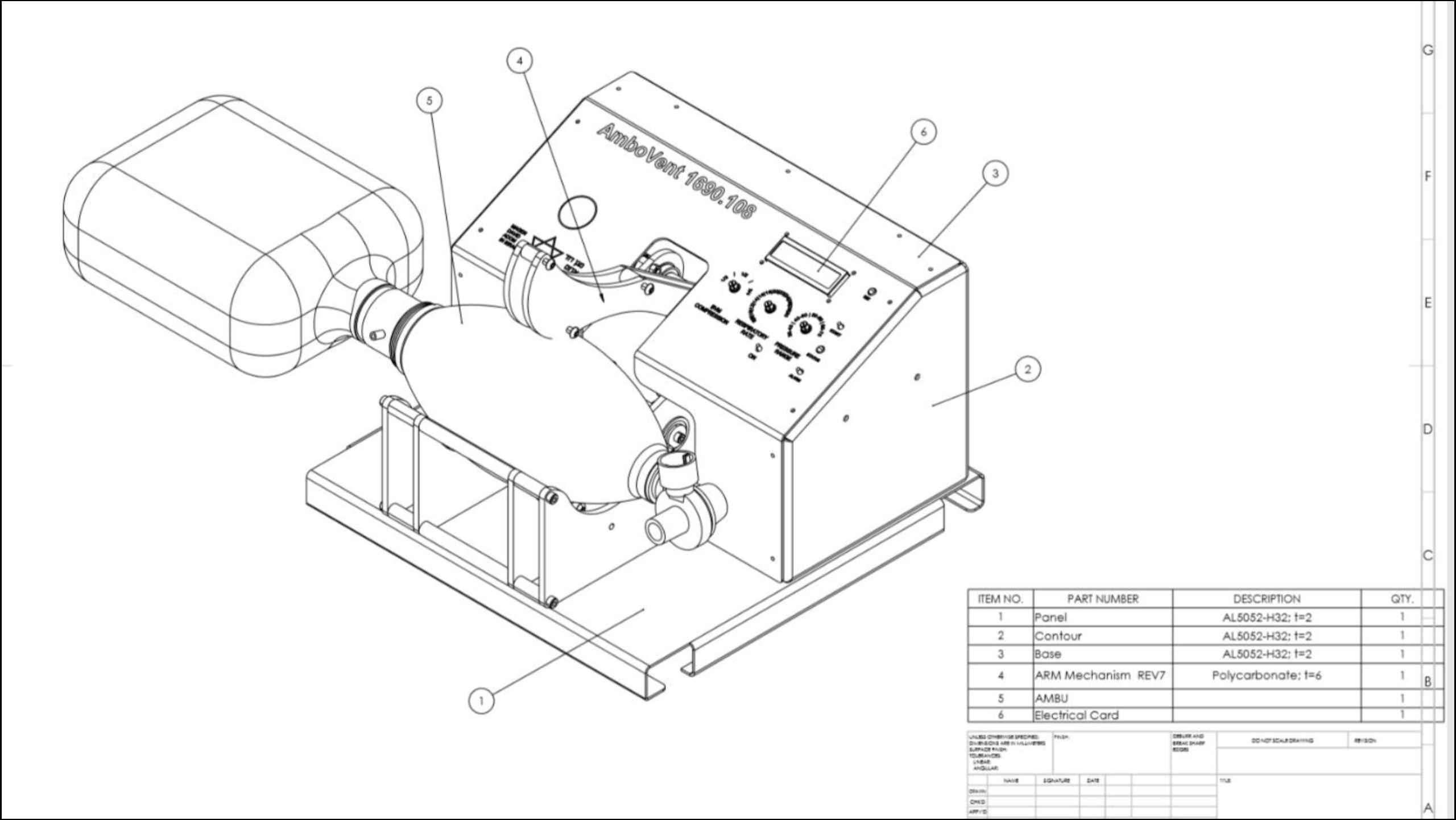
A machine was described by an assembly drawing referring to sub-assemblies referring to parts, each on its own sheet with its own number. Changing a dimension meant finding every drawing affected and amending each one by hand, with a revision note and a date.
This is the problem that computer-aided design actually solved, and it is a bigger one than drawing lines faster. A modern model holds the relationships, so a change propagates and the software flags what no longer fits. Change control on a paper system depended entirely on somebody knowing which drawings were affected, and the characteristic failure of a hand drawing office was a part made to a superseded revision.
8. Copies Were Made by a Chemical Process That Smelled
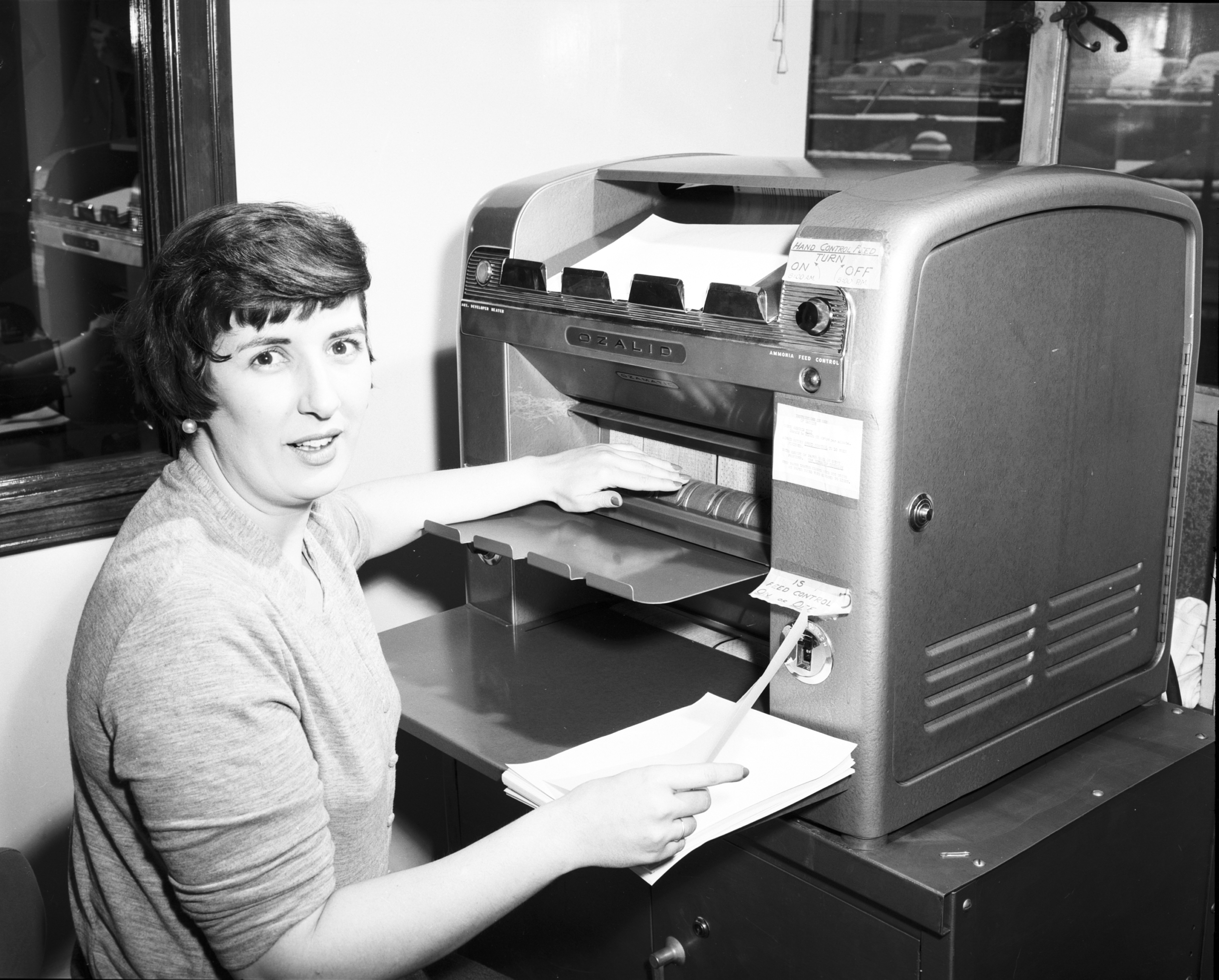
Prints were produced by passing the translucent original and a coated sheet through a machine using light and ammonia vapour. The copies came out damp, smelled strongly, and faded over years.
Plain paper copying and then digital distribution replaced it. The smell is the thing everybody who worked in or near a drawing office remembers, and the ammonia exposure in a poorly ventilated print room was a genuine irritant that nobody measured at the time. Modern equivalents produce no fumes and the prints do not fade.
9. The Office Was Ranked and You Could See It From the Door
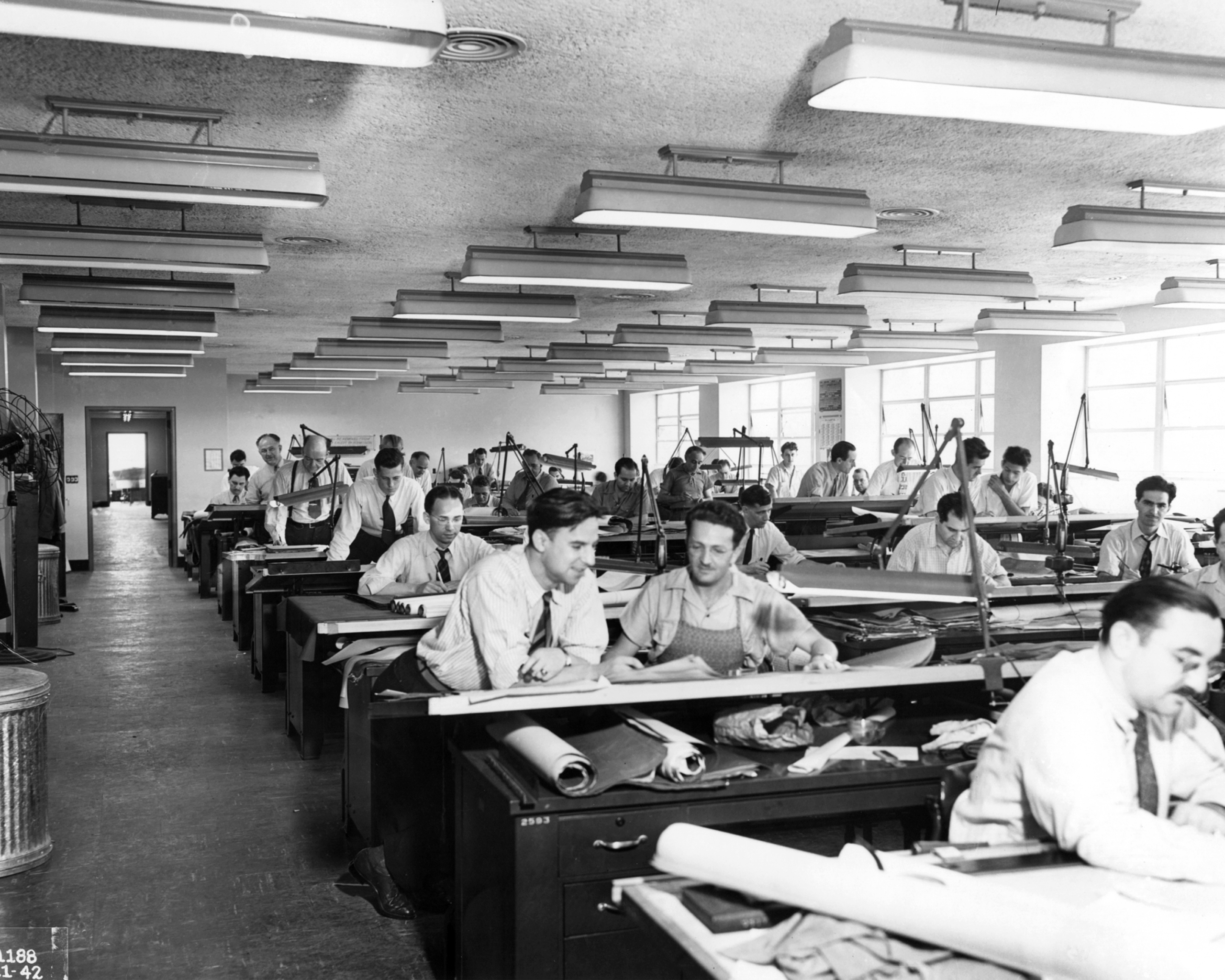
Seniority was physical. The chief draughtsman had a position with a view of the room, section leaders sat at the heads of rows, and juniors were at the back. Who had which board, and how close to the window, was understood by everybody.
Open-plan offices still signal hierarchy and always will, but the drawing office version was unusually explicit because the work and the person were visible simultaneously – anybody could see what was on everybody’s board and how far along it was. A modern design office hides the work behind screens, which has changed supervision considerably.
10. You Learned It Over Years and Started on the Simplest Parts
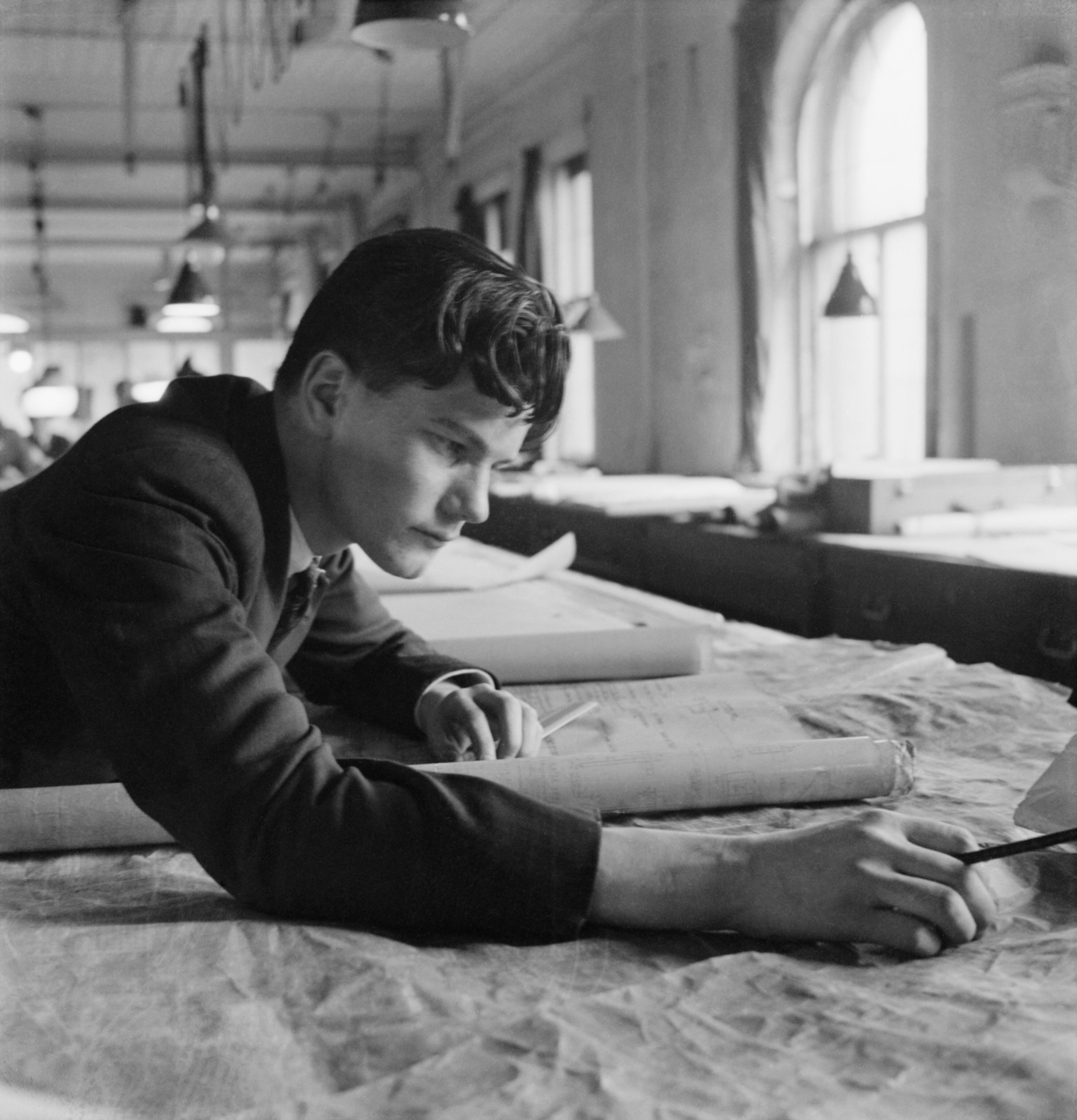
A junior began with simple components, revisions and tracing, and progressed to sub-assemblies and eventually to design work, over a long apprenticeship combining evening study with time on the board.
Drawing offices were one of the major routes into engineering for people who had not been to university, and the loss of that route is a real consequence of the transition. The skills transferred reasonably well to computer-aided design for the people in post at the time; the entry route at the bottom did not survive, because the simple tasks a junior cut their teeth on are the ones the software now does.
11. The Drawing Was the Legal Document
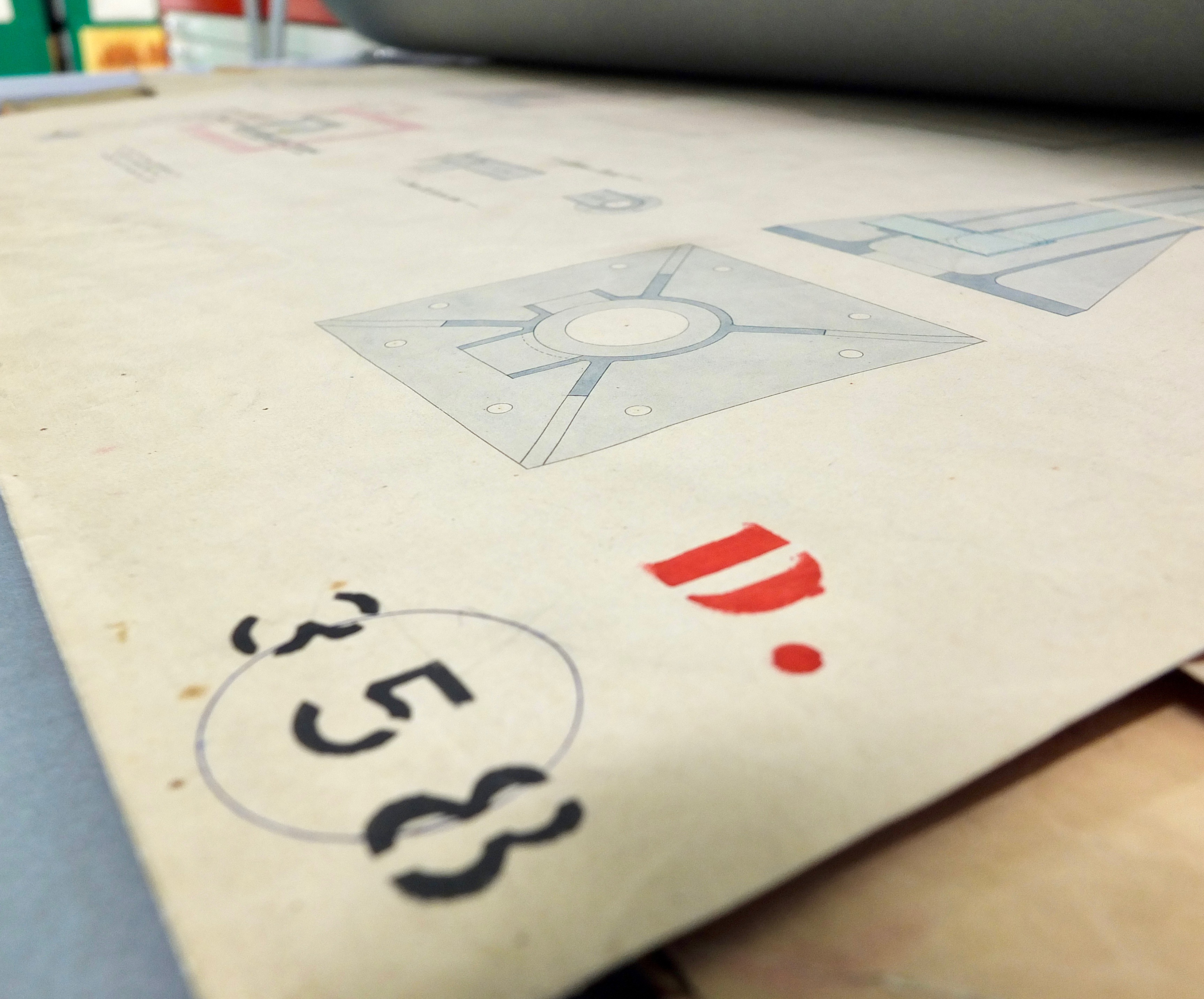
The issued drawing was the definitive description of the thing to be made. It was signed, dated, numbered and archived, and in a dispute about what had been specified, it was the evidence.
The model is now the definitive description in a great many industries, with drawings derived from it or dispensed with entirely. That has required a substantial change in contract and quality practice to establish what is authoritative and how a version is fixed and signed. The underlying need – an unambiguous record of what was specified and when – has not changed at all, and the archive problem is now worse rather than better, because paper in a plan chest is still readable after fifty years and a file in an obsolete format frequently is not.
12. Nobody in the Room Believed a Computer Would Do It
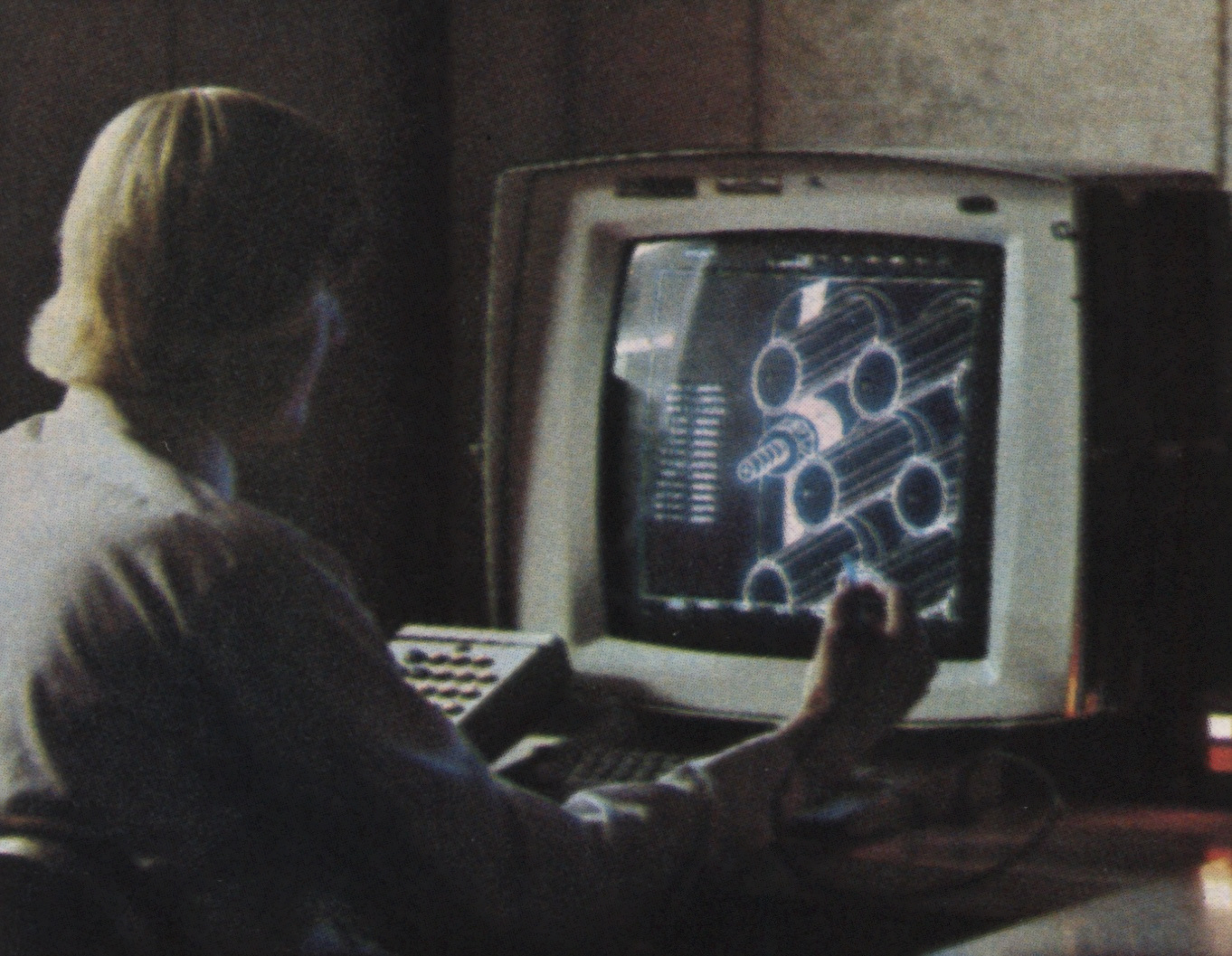
Early computer-aided design in the 1960s and 1970s was enormously expensive, slow, and confined to aerospace and large manufacturers. The view in an ordinary drawing office was that it was a specialist curiosity and that boards would remain.
Falling hardware costs through the 1980s and the arrival of software that ran on an ordinary desktop machine ended the argument inside about a decade. Drawing offices emptied, boards were skipped, and a profession of hundreds of thousands became a different profession. The people who made the transition well were generally the ones who already understood what a drawing was for, which is the part the software did not change.
What the Software Actually Replaced
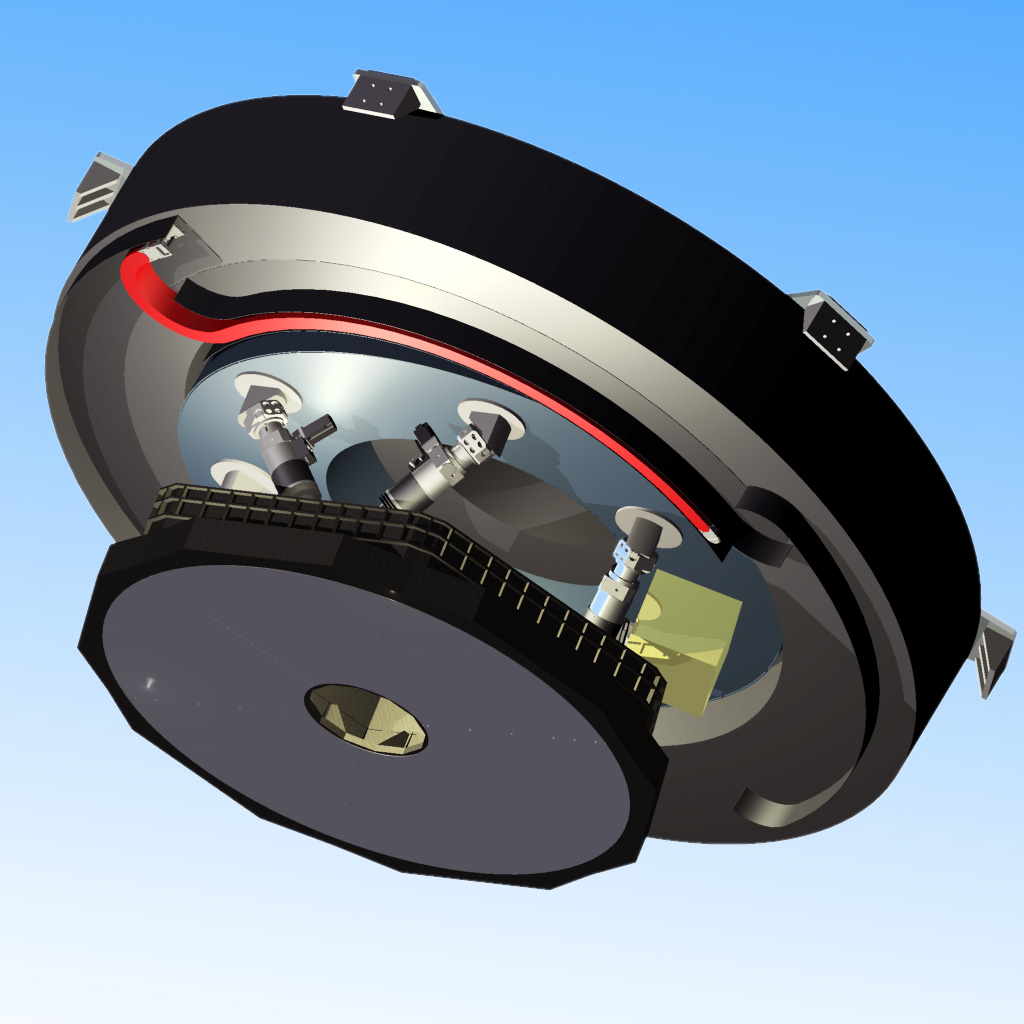
The usual account is that computers made drawing faster, and that is the least interesting part of it.
Drawing lines by hand is slow, but a skilled draughtsman was quick, and for a simple part the time difference was not decisive. What a paper system could not do was hold the relationships between drawings.
A machine with four hundred parts was described by several hundred sheets, each referring to others, each with its own revision history. Change one dimension and somebody had to know which other drawings were affected, find them, amend them, re-issue them and make sure nobody downstream was still working to the old version. That knowledge lived in people’s heads and in a drawing register, and when it failed a part was made wrong.
A modern system holds the geometry once and derives everything from it. A change propagates, interferences are detected, and the version in use is the version issued. That is the actual revolution, and it is about information management rather than about drawing.
Which is why the transition was so complete and so fast. It was not that the boards were slower. It was that the thing being managed had outgrown what paper could hold, and everybody in the room knew it long before the software was good enough.
If somebody in your family worked at a board, the ammonia smell of the print room is the detail that brings it back.
Which firm, what did they draw, and did they keep their instruments?
Like our content? Follow us for more.