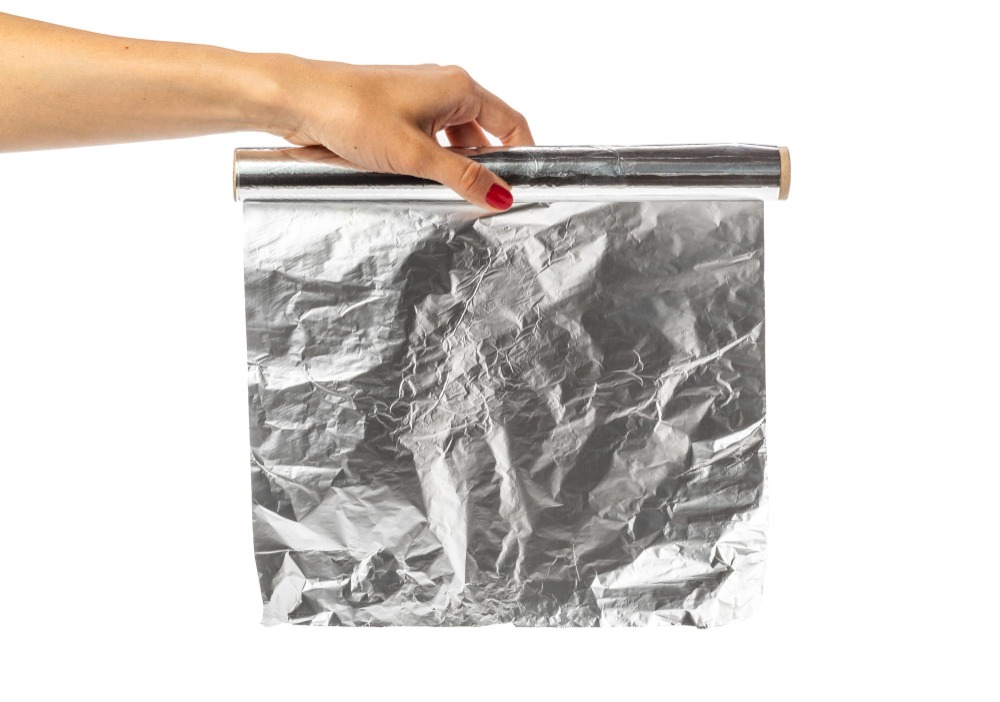
There is a confident person in every kitchen who knows which way round the foil goes. Shiny side in to reflect the heat back, or shiny side out to keep the heat off, depending on which version they heard.
Neither is right, and the reason is not that the difference is small. It is that the two sides are not a design feature at all. They are a by-product of how the stuff is made, and the manufacturers say so plainly on their own packaging.
Why the Two Sides Are Different
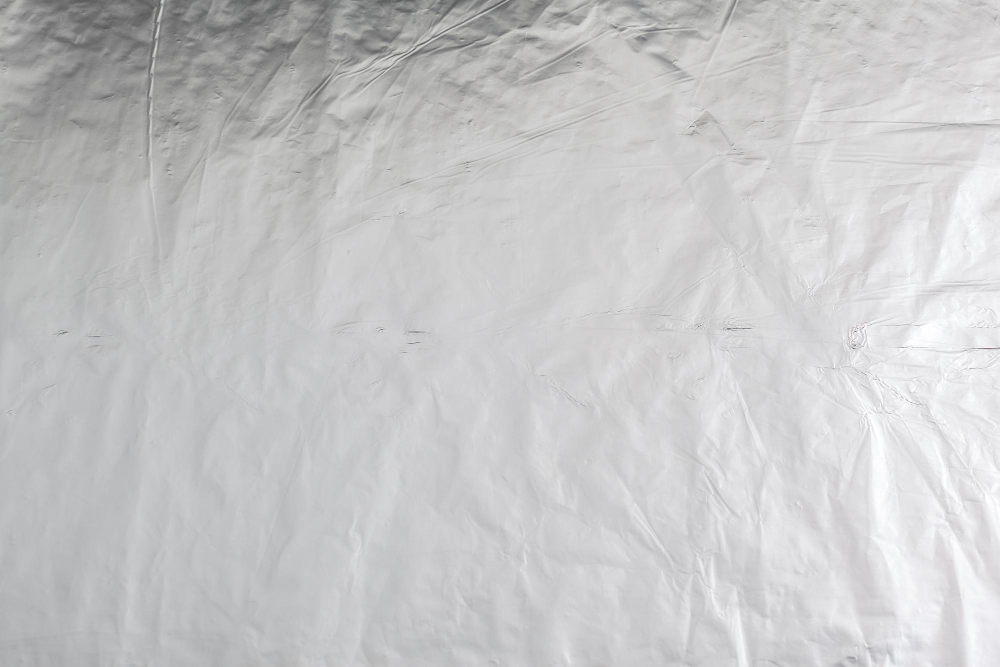
Foil is produced by rolling aluminium between heavy polished rollers, repeatedly, until it is extremely thin. At the final pass it is too thin to roll on its own – a single sheet at that thickness would tear or wrinkle in the mill.
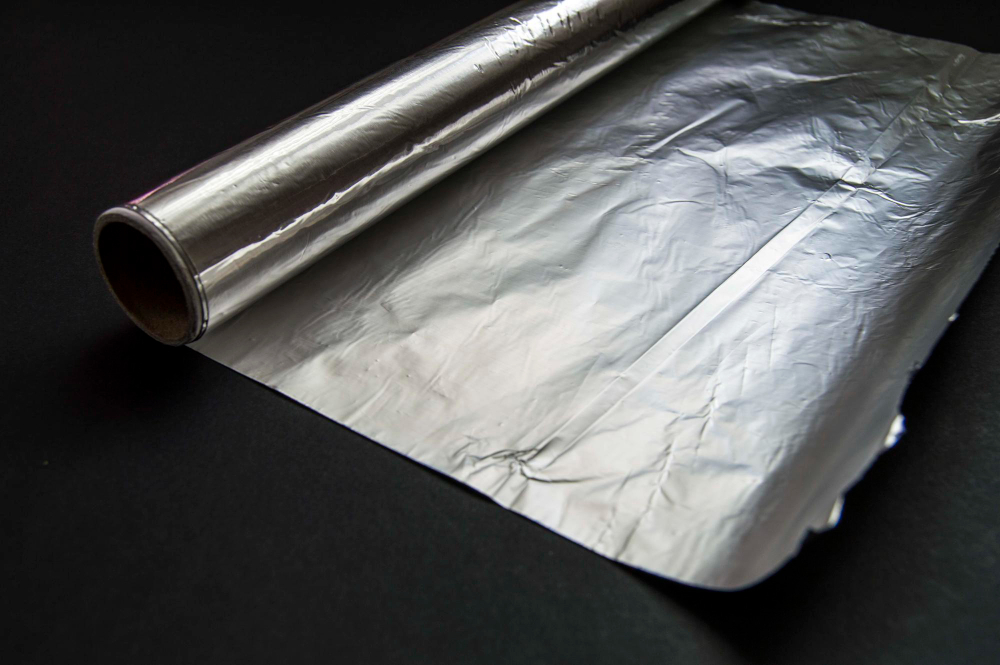
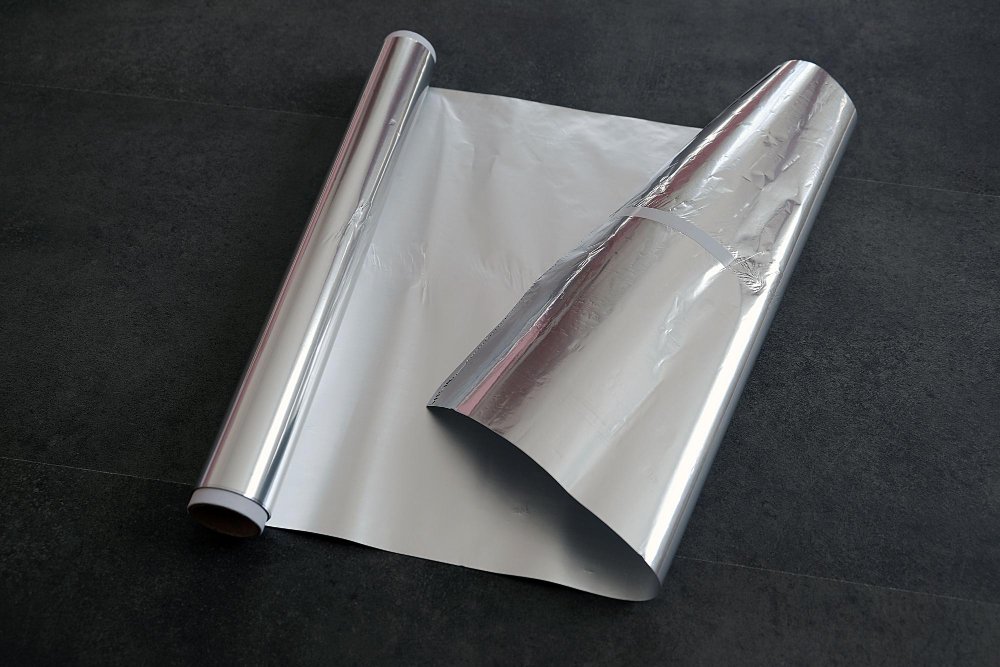
So the last pass is done with two sheets together, one on top of the other. The outer faces are in contact with the polished steel rollers and come out mirror-bright. The inner faces are in contact with each other and come out matt.
The sheets are then separated and wound onto rolls. Every sheet of kitchen foil has one face that met a roller and one that met another sheet of foil, which is why one is shiny and one is dull and why the difference exists at all.
It is the same reason a sheet of paper has a wire side and a felt side, and it carries about the same significance for how you use it.
Like our content? Follow us for more.
Does It Affect Anything At All
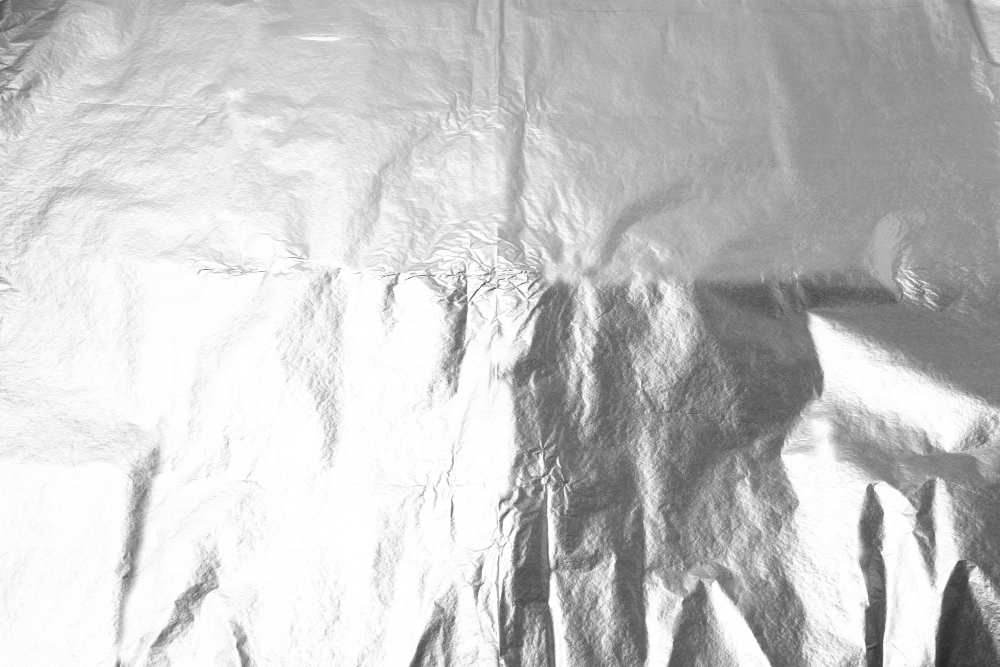
There is a genuinely tiny difference in reflectivity, and it is worth being precise rather than simply dismissive.
A polished metal surface reflects radiant heat better than a matt one. The difference between the two faces of foil is real and measurable in a laboratory.
It is also irrelevant in an oven, and for a reason that has nothing to do with the size of the effect. Cooking in an oven transfers heat to food mainly by conduction through whatever the food is touching and by convection from circulating hot air. Radiant transfer is a minor component, and the foil is in contact with the food or the tin in any case, which means conduction dominates completely.
By the time you have accounted for that, the difference between the two faces is far smaller than the variation between the top and bottom shelf of your oven, or between one tray and another, or between the oven’s thermostat setting and its actual temperature. It is not a factor you could detect by cooking.
Every major foil manufacturer states this on the box or on their website: use either side.
The One Exception Is Non-Stick Foil, and It Matters
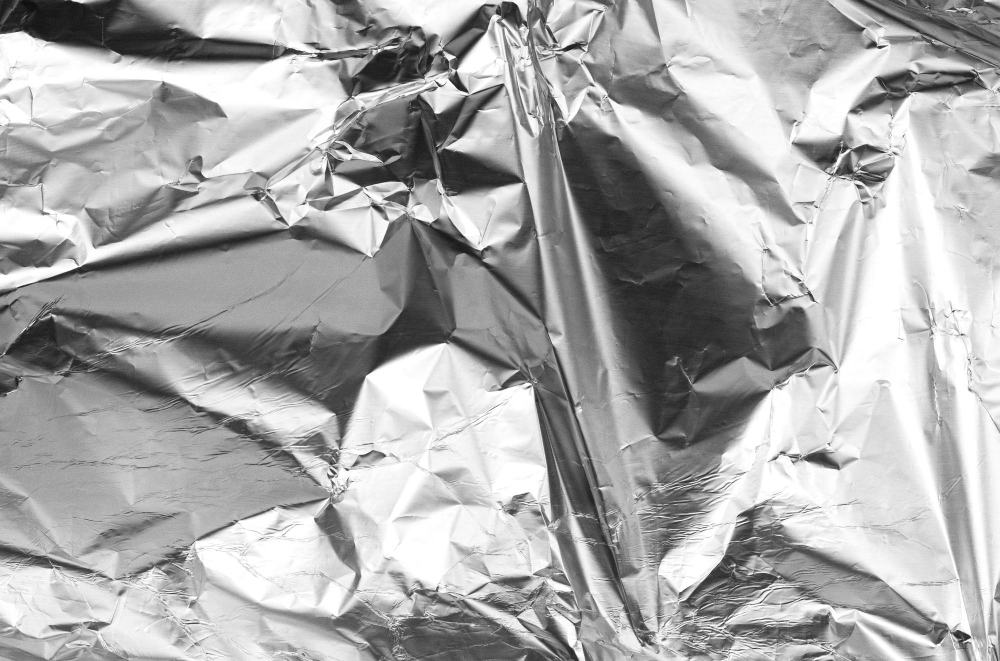
There is a product that does have a correct side, and it is sold specifically because of it.
Non-stick foil has a coating applied to one face, usually marked on the box and sometimes printed on the foil itself. That side must face the food. Put it the other way up and you are cooking on plain aluminium with an uncoated surface, and the food will stick exactly as it would on ordinary foil.
This is the likeliest origin of the confusion. Somebody reads a genuine instruction about which side faces the food, on a coated product, and the rule migrates to ordinary foil where it means nothing.
If a box says nothing about a coating, there is no correct side. If it does, the box will tell you which one and usually how to identify it.
What Foil Is Actually Doing in Cooking
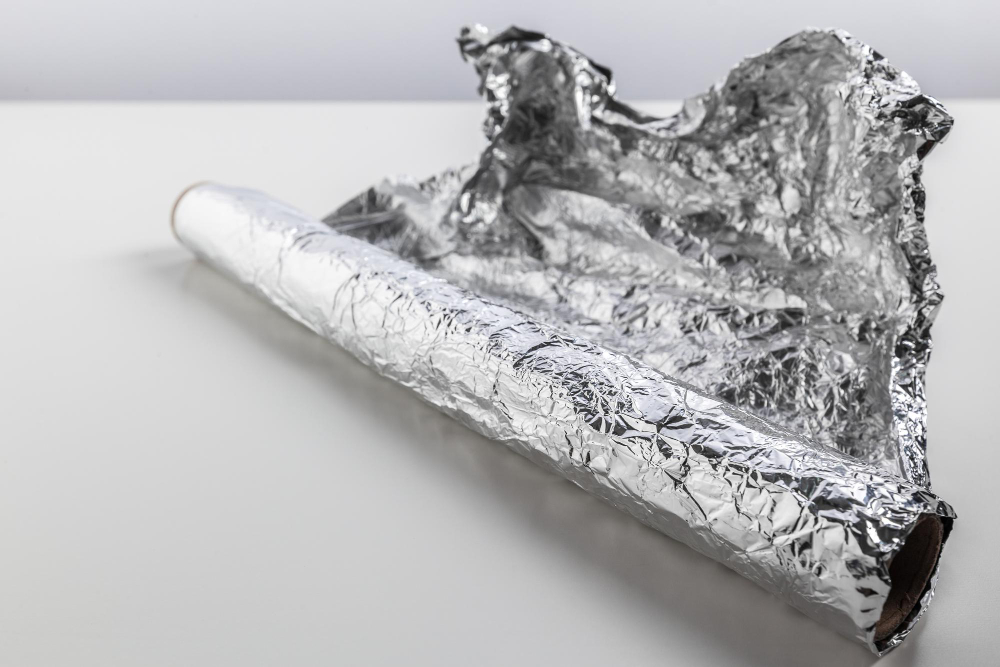
Since the subject usually comes up while somebody is covering a dish, it is worth saying what the foil is for.
Covering a roasting tin traps steam, which keeps the surface of the food wet and therefore below the temperature at which browning happens. That is why a covered joint comes out pale and a uncovered one browns – and why a foil tent partway through is a way of stopping something browning further while it finishes cooking through.
Wrapping food tightly does the same on a smaller scale and also conducts heat into the surface in contact with the metal, which is why a potato baked in foil has a soft skin and one baked bare has a crisp one. People who want crisp skin and wrap it in foil are working directly against themselves.
Lining a tray is about cleaning rather than cooking, and the only thing that matters is that the foil lies flat, because a crease traps fat and creates a hot spot.
None of those depend on which face is up.
Foil Was a Luxury Before It Was a Kitchen Staple
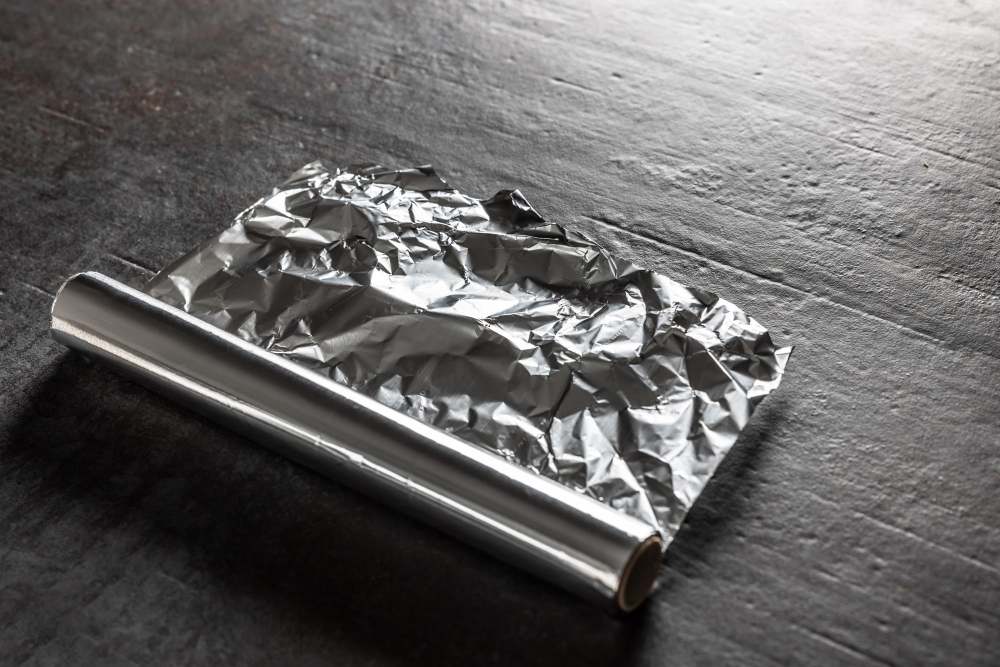
Aluminium is the most abundant metal in the earth’s crust and was, for most of the nineteenth century, more valuable than silver – because separating it from its ore was extraordinarily difficult. It was used for presentation pieces and jewellery, and a famous banquet is said to have served its most honoured guests on aluminium while everybody else made do with gold.
What ended that was electricity. An electrolytic smelting process developed at the end of the 1880s made production practical at scale, and the price collapsed within a few years from precious-metal territory to something approaching a commodity.
Foil followed. Tin foil came first and is the reason people still say tin foil – genuine tin sheet, heavier, which left a faint metallic taste on food. Aluminium replaced it through the early twentieth century because it is lighter, cheaper, does not taint, and can be rolled far thinner.
So the material in the kitchen drawer went from more precious than silver to disposable wrapping in roughly fifty years, which is one of the steepest price collapses of any material in industrial history – and the reason the name of the metal it replaced is still attached to it a century later.
Foil, Acid and Salt Do Interact
There is one real caution and it is not about shininess.
Prolonged contact between aluminium foil and strongly acidic or salty food – tomato sauce, citrus, heavily salted dishes – can cause visible pitting of the foil and leave small black or grey marks on the food. The aluminium reacts with the acid.
This is cosmetic and is a well-known kitchen nuisance rather than a dramatic discovery, and it is the reason wrapping leftover tomato-based dishes in foil overnight sometimes produces a wrapper full of holes. The practical answer is to use a lidded container for acidic leftovers rather than foil, which is better for the food anyway.
Anybody with a specific medical reason to limit particular dietary exposures should be taking that question to a doctor rather than to a kitchen article, and nothing here is advice on that.
Foil Is Worth Recycling and Is Usually Thrown Away
Aluminium is one of the most worthwhile materials in a household to recycle, because producing it from ore is extremely energy-intensive and remelting it uses a fraction of that energy. The material can be recycled repeatedly without degrading.
Kitchen foil nonetheless goes in the bin in enormous quantities, for two reasons. It is usually contaminated with food, and many collection systems will not take greasy foil. And it is light and thin, which means loose sheets are hard for sorting equipment to capture.
The practical answer is the one the recycling bodies give: clean it if it is worth cleaning, scrunch it into a ball with other pieces so it is large enough to be sorted, and check whether the local collection accepts it, because that varies enormously.
Foil trays and containers, being thicker and easier to clean, are more reliably accepted than sheet foil.
The Argument Is the Interesting Part
What makes this a good example of something is not the answer, which is mundane. It is how durable the belief is.
The shiny-side rule has everything a persistent household myth needs. It is about an object in every kitchen. It offers a small piece of expertise that costs nothing to apply and makes the applier feel competent. It cannot be disproved by cooking, because the effect it claims is too small to notice, which means doing it the “wrong” way produces a perfectly good dinner and no correction. And there are two opposite versions in circulation, so whichever one you heard, somebody will confirm it.
That is a near-perfect design for a belief that survives indefinitely. The actual explanation – that a mill rolls two sheets at once because one sheet would tear – is dull, technical, and known mainly to people who work in aluminium.
So the next time somebody in the kitchen turns the foil over with evident care, they are not wrong about anything that matters, and they are repeating a fact about rolling mills that has been mistaken for a fact about cooking for about eighty years.
The test, if anybody wants one, costs nothing. Cook two identical things on two pieces of foil from the same roll, one shiny up and one dull up, on the same shelf. Nobody has ever reported a difference, and the reason nobody has is not that people have not tried.
It is the sort of belief worth leaving alone in somebody else’s kitchen, and worth knowing about in your own.
Like our content? Follow us for more.