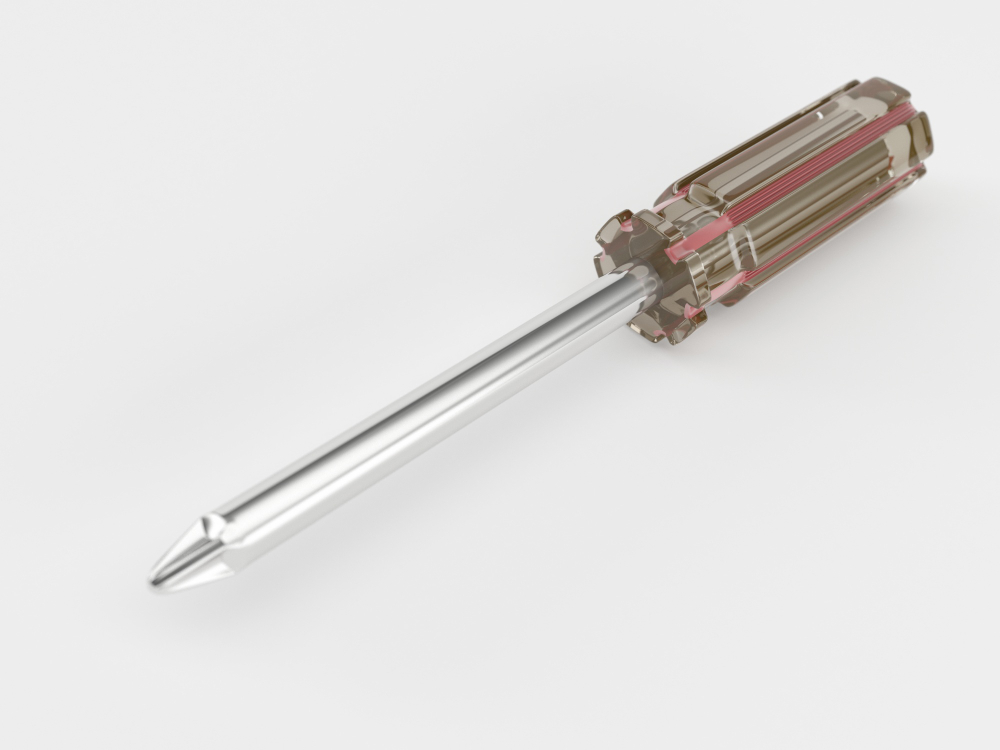
Everybody who has ever assembled furniture has had a cross-head screwdriver ride up and out of the screw, chewing the head on the way. It is one of the most reliably irritating experiences in any toolbox, and it is universally assumed to be a sign of a worn driver, a cheap screw, or the user doing something wrong.
It is none of those. The head was designed to do that. The behaviour is called cam-out, the geometry that produces it is deliberate, and in the application the screw was invented for it was the most valuable thing about it.
The Problem Was the Assembly Line
The slotted screw, which had been the standard for centuries, has two serious faults for mass production.
A straight blade in a straight slot has nothing holding it in place. It slides out sideways at the slightest misalignment, which means a worker needs one hand on the driver, one hand steadying the screw, and good light – and it is almost impossible to drive with a powered tool, because any wobble throws the blade out of the slot and across the workpiece.
And there is no natural limit. A worker leaning on a slotted screw keeps tightening until something gives, which on a production line means either a stripped thread, a snapped head, or a panel pulled out of shape – all of which stop the line.
Both problems were acute by the 1930s, when car manufacturing was running at volumes and speeds that made hand-fitting every fastener impossible.
Like our content? Follow us for more.
A Self-Centring Head That Lets Go
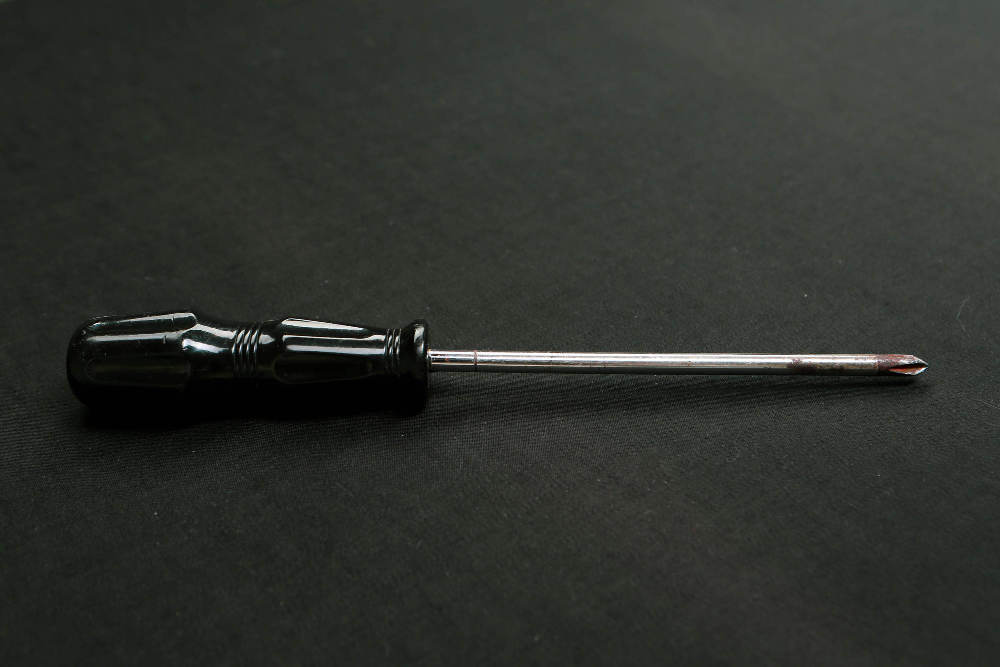
The cross-head answered both at once.
The recess is a cross with tapered flanks, so a driver dropped anywhere near it slides into the centre and seats itself. That alone changed the work: a worker could engage a screw one-handed, at an angle, without looking, and a powered driver could find the head reliably. It is why the design spread so fast.
The taper then does the second job. Because the flanks slope rather than running parallel, the force pushing the driver round also generates a component pushing it out of the recess. At low torque the friction holds it in. Past a certain torque the outward component wins and the driver rides up and out.
That is cam-out, and on a 1930s assembly line it was a clutch. It meant an unskilled worker with a powered driver could not over-tighten, because the tool ejected itself at roughly the right tension every time, on every screw, without anybody adjusting anything. The screws went in to a consistent torque set by the geometry of the head.
It is a mechanical torque limiter with no moving parts, built into a disposable component costing a fraction of a penny.
Which Is Why It Is So Annoying Now
The reason the feature feels like a defect today is that the conditions it was designed for have gone.
Modern powered drivers have adjustable clutches that limit torque directly and far more precisely. Once the tool can do it, the screw head does not need to, and cam-out stops being a safety mechanism and becomes pure nuisance – a driver that jumps out partway through a job for no useful reason, damaging the head as it goes.
It is also being used for things it was never meant for. A cross-head screw being driven into hardwood, or being removed after thirty years of corrosion, needs high torque sustained for several turns. That is precisely the condition the head was designed to refuse.
So a feature that was the whole point in 1936 is the main complaint in 2026, without the object having changed at all.
The Ones That Came Afterwards Fixed It
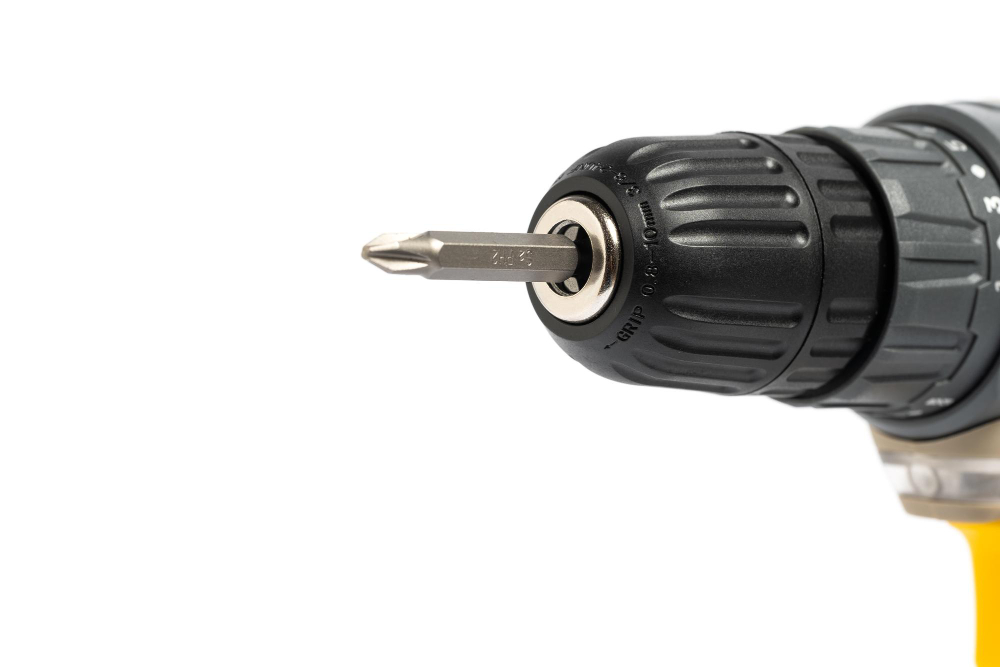
The newer drive types in a modern toolbox exist specifically to eliminate cam-out, and the way they do it is to make the walls of the recess parallel rather than tapered.
The square drive, with a straight-sided tapered square socket, grips so positively that a screw will hang on the end of a driver without being held, and will not eject under torque.
The six-lobed star drive, now the common choice for construction screws, spreads the load over six contact faces with near-vertical walls. It transmits far more torque than a cross-head of the same size, is very difficult to strip, and holds the driver securely.
Both are better in essentially every respect for hand and powered use. The cross-head survives in enormous volume because it is cheap, universally understood, and already specified in millions of products and drawings – which is the same inertia that keeps every other obsolete standard in place.
The Two Cross-Heads That Look Identical and Are Not
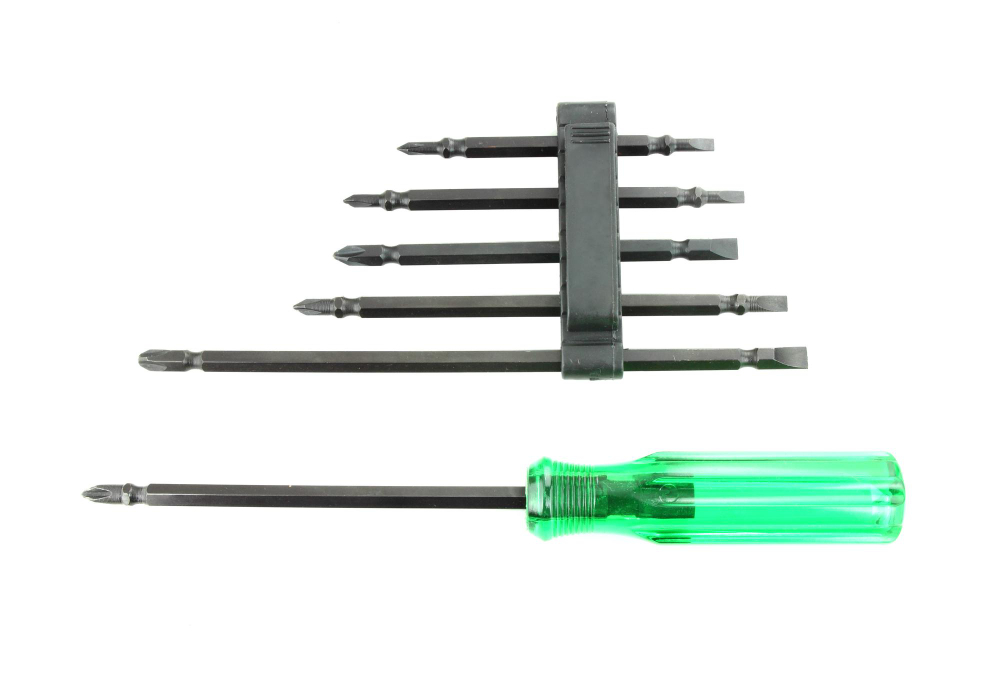
There is a second, practical reason cross-head screws strip, and it catches almost everybody.
There is more than one cross-head standard, and the two commonest look nearly the same to the eye. One has a slightly blunter tip and a different flank angle from the other, and they are not fully interchangeable – using the wrong driver engages on only part of the recess, concentrates the load on a small area, and tears the head out.
Furniture, electronics and a great deal of imported hardware frequently use the type that is less common in general toolboxes, which is why a particular flat-pack item seems determined to strip every screw while the same driver works fine on everything else in the house.
If a driver feels like it is sitting slightly proud in the head, or rocks in the recess, it is probably the wrong type rather than the wrong size. A set containing both costs very little and removes a surprising amount of frustration.
The Screw Itself Had to Be Mass Produced First
None of this was possible until screws stopped being made one at a time, and that happened later than most people assume.
A screw thread cut by hand on a lathe is a skilled job, and for most of history every screw was individually made and individually fitted – which means a screw and its hole were a matched pair and could not be swapped with another. Taking something apart and reassembling it required keeping track of which screw came out of which hole.
Interchangeability arrived with machine-cut threads and then with standardised thread forms, and it is one of the foundations of mass production generally. Once any screw of a given size fits any hole of that size, assembly can be done by somebody who has never seen the product before, from a bin of identical parts.
The cross-head sits at the end of that sequence. First the thread was standardised so any screw fitted. Then the head was redesigned so any worker could drive it quickly without aiming. Then the recess was tapered so no worker could over-tighten it.
Each step removed a requirement for skill from the person doing the work, which is what mass production is, and the screw in the drawer is a small record of all three.
How to Stop Stripping Heads

The practical measures are few and they work.
Push hard. Most cam-out is caused by insufficient axial force – the driver needs to be pressed into the recess firmly along the axis of the screw, not just turned. Trade advice is that the pressure matters more than the turning.
Keep the driver square to the screw. Any angle concentrates the contact on one flank.
Use the right size. A driver one size too small bottoms out in the recess and bears on nothing.
Use a manual driver for the last part of the turn, or set the clutch on a powered one, rather than running a drill at full torque into a seated screw.
And replace worn bits. The tip is a precision form and it rounds off with use, and a rounded bit will chew a perfectly good screw head in one turn. Bits are consumables, and treating them as permanent is the most common cause of ruined screws in any household.
A Design That Outlived Its Reason
The cross-head screw is a good example of something that recurs throughout the history of ordinary objects: a feature invented as a solution to a specific constraint, which then outlives the constraint and gets reinterpreted as a flaw.
The constraint was unskilled labour with powered tools and no torque control. The solution was to build the torque limit into the fastener. The constraint vanished when the tools improved, and the solution stayed, because by then it was in every product, every drawing and every drawer in every house.
The same thing happened with the watch pocket in a pair of jeans, the vertical title on a book spine, and the twelve-hour clock face. The design is not wrong and was never wrong. It is an answer to a question nobody is asking any more.
Which is worth remembering the next time one skates out of a screw and ruins the head. It is not failing. It is doing, precisely and as designed, the one thing it was built to do.
Like our content? Follow us for more.