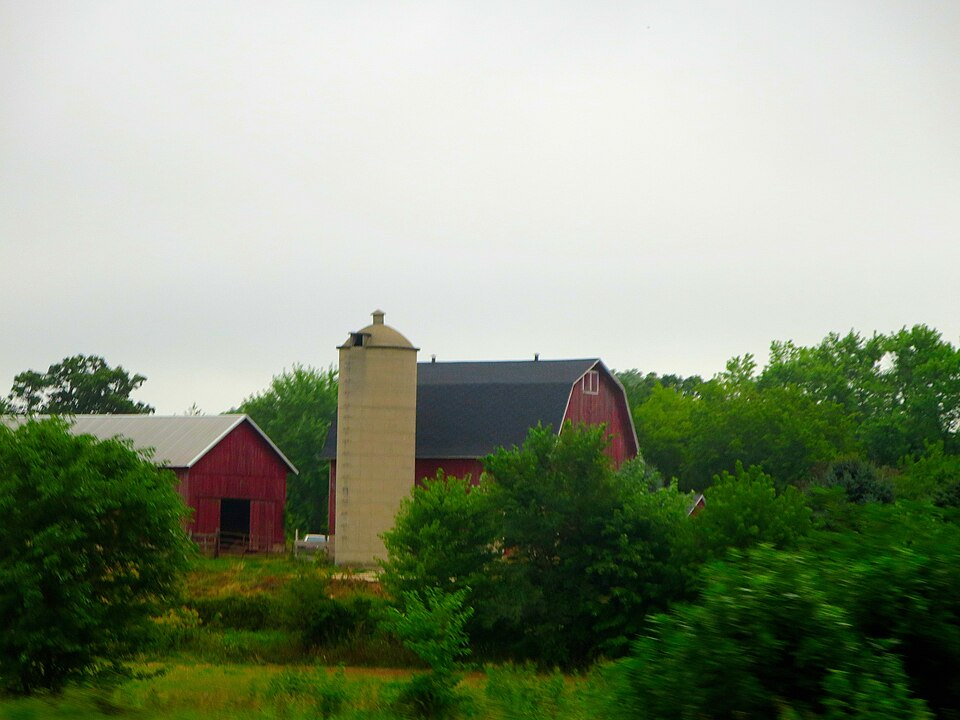
In 1974 filling silo was the loudest and most concentrated week on an American dairy farm.
A forage harvester chopped the crop green and wet – deliberately, which is the opposite of what a farm does with everything else. Wagons ran a continuous loop from the field so the chopper never stopped. A blower at the base of the tower, driven by a tractor at full throttle for ten hours, threw the material sixty feet up a pipe. And a crew of neighbours turned out, on the understanding that everybody would do the same for everybody else before the window closed.
What happens inside a silo is fermentation. Here are sixteen things every farm boy knew.
1. The Silo Was the Tallest Thing for Miles
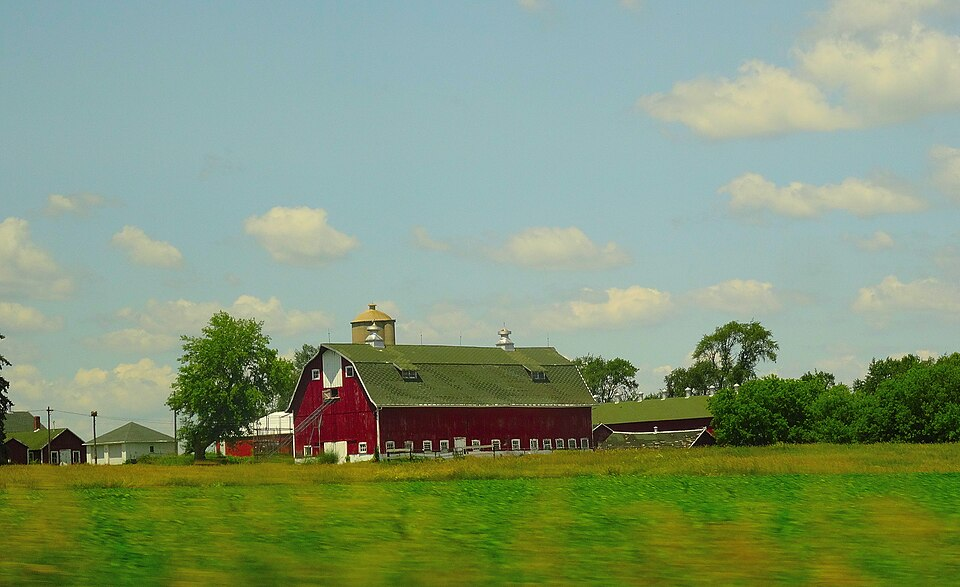
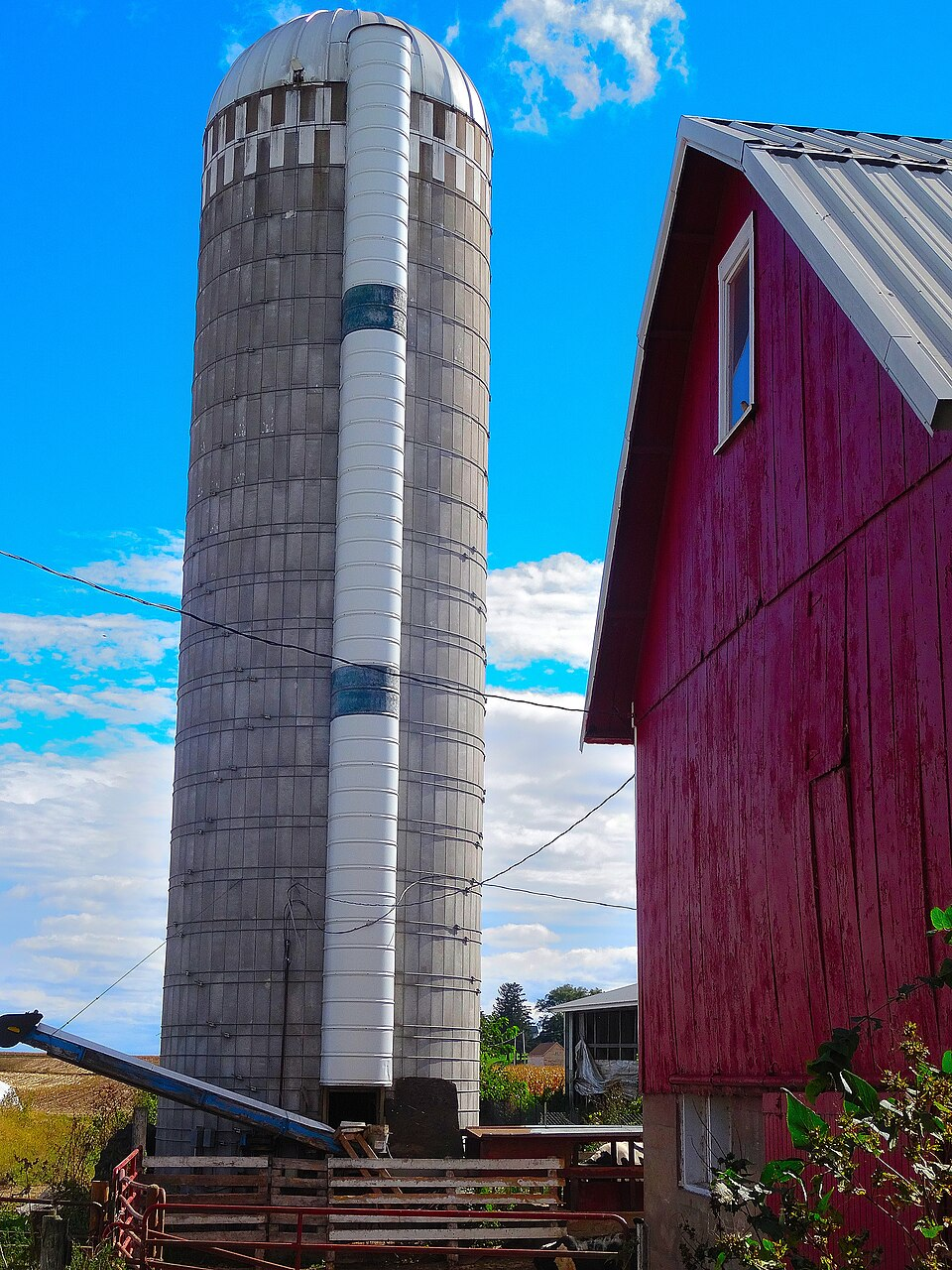
A cylinder of concrete staves, poured concrete, glazed tile or steel, standing sixty or eighty feet high beside the barn, with a roof dome on top and a chute of doors running down one side.
Standing empty in enormous numbers across the United States, in various states of disrepair, almost entirely out of use as working structures.
The upright silo is the single most recognisable silhouette in American agriculture and it appears in every drawing, logo and children’s book depiction of a farm. Almost none of them are being filled, which means the universal visual shorthand for farming is a picture of abandoned technology.
Like our content? Follow us for more.
2. What Went In Was Not Dry Feed
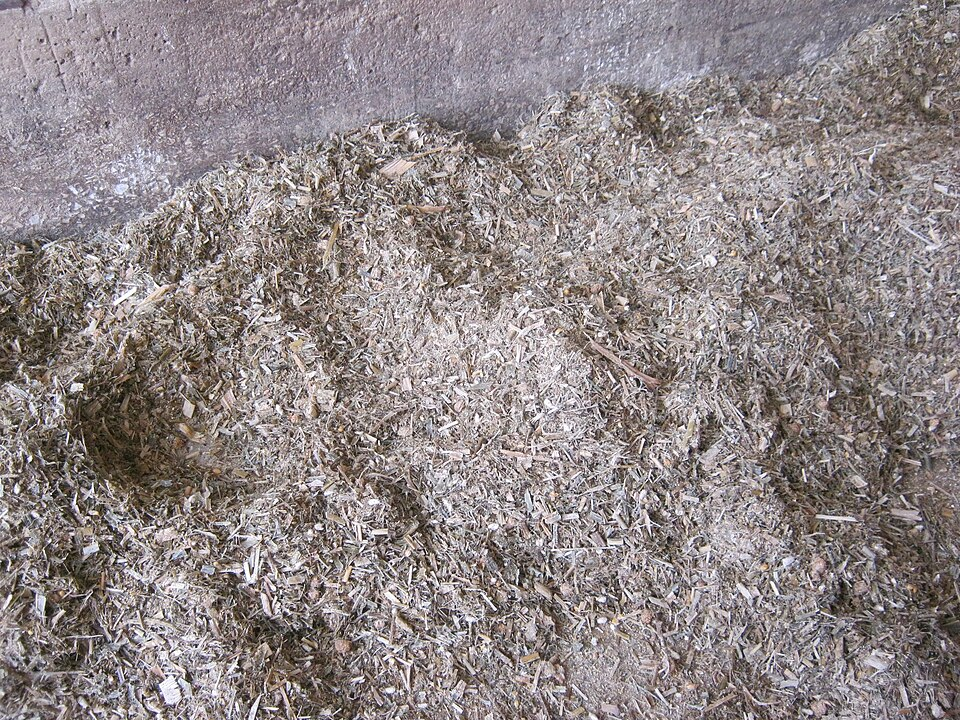
The crop – corn, cut whole with the ear still on it, or grass and legumes – went in green and wet, deliberately, which is the opposite of everything else a farm did with a harvest.
The same material, now stored in horizontal bunkers, long plastic bags or covered piles on concrete pads.
Putting a wet crop into storage is counterintuitive and it is the entire point. Hay is dried because dry material does not spoil; silage is kept wet on purpose, because the preservation mechanism is completely different and requires the moisture.
3. It Was Preserved by Its Own Bacteria
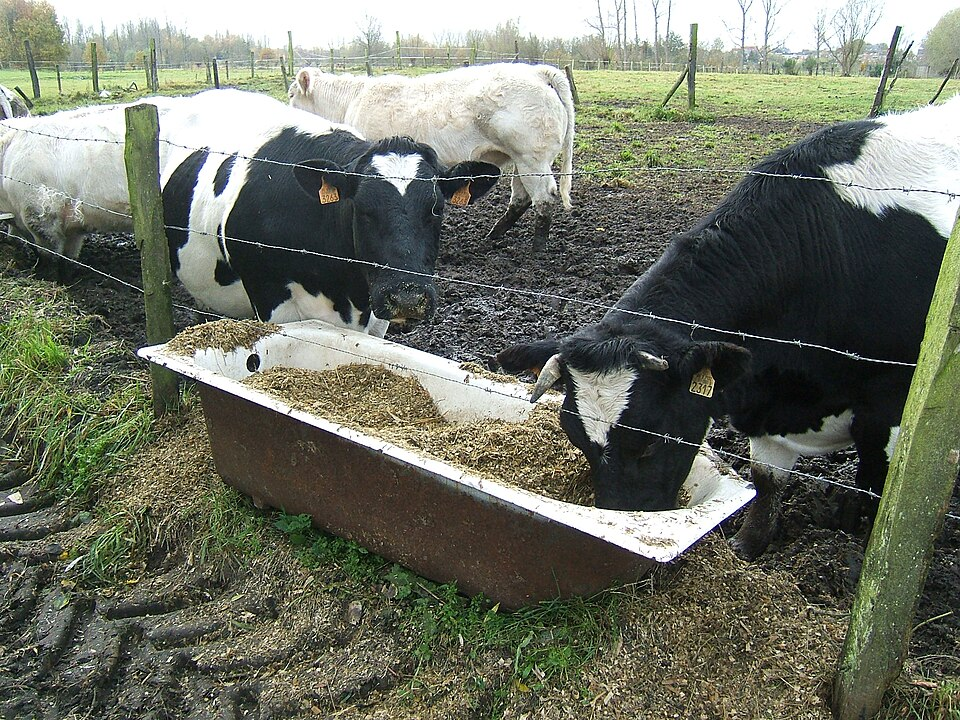
Packed tight and sealed from the air, the chopped crop ferments. Bacteria already present on the plants consume sugars and produce acid, the acidity rises, and at a low enough pH nothing else can grow – so the material keeps.
Exactly the same biology, far better understood, with bacterial inoculants and additives now routinely used to steer the fermentation.
This is one of the few genuinely elegant pieces of biology in ordinary farming and almost nobody outside agriculture knows it happens. A silo is a fermentation vessel. The crop preserves itself, using organisms it arrived with, and the farmer’s whole job is to create the conditions in which the right ones win.
4. Which Is Why Packing Out the Air Mattered More Than Anything
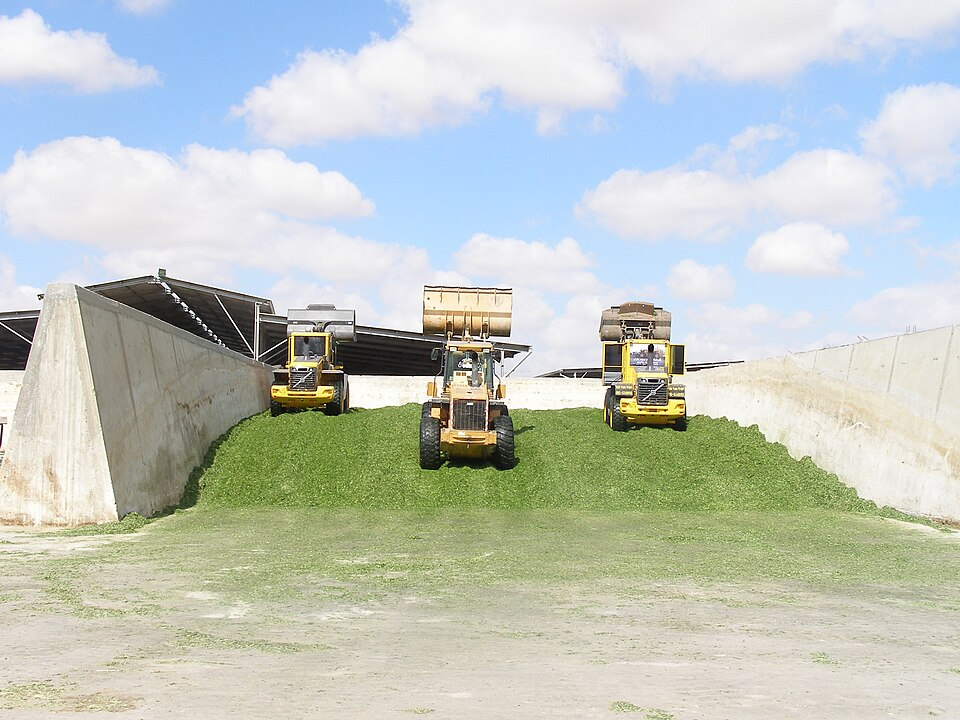
Every part of the operation aimed at excluding oxygen – chopping fine so the material settles tight, filling fast, distributing evenly, keeping the surface level, and sealing the top.
The same priority, pursued with heavy packing tractors on bunkers, oxygen-barrier films and vacuum-sealed bags.
Air is the enemy because the wrong organisms need it. Oxygen left in the mass lets moulds and spoilage bacteria work, which heats the material, destroys feeding value and can ruin a section entirely – so filling fast and tight was not tidiness, it was the whole technique.
5. The Chopper Was the Expensive Machine
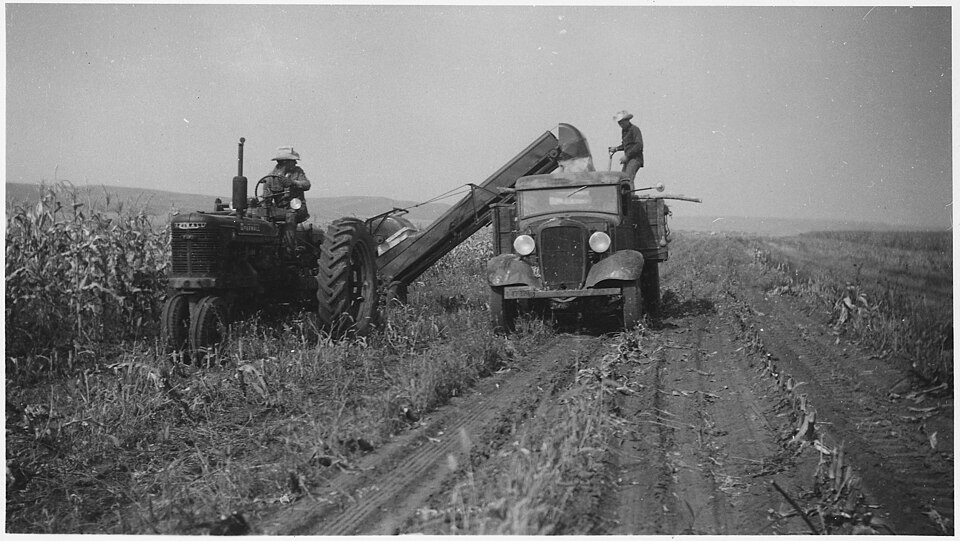
A forage harvester cut the standing crop and chopped it into short lengths, blowing it into a wagon alongside – and the chop length was adjustable, and it mattered.
Self-propelled forage harvesters of enormous capacity with processors, electronic length control and yield monitoring.
Chop length is a real variable with real consequences. Too long and the material will not pack tightly, leaving air in the mass; too short and it ferments fine but causes digestive problems in the animals eating it – so the setting was a compromise everybody argued about.
6. Wagons Ran in a Continuous Loop
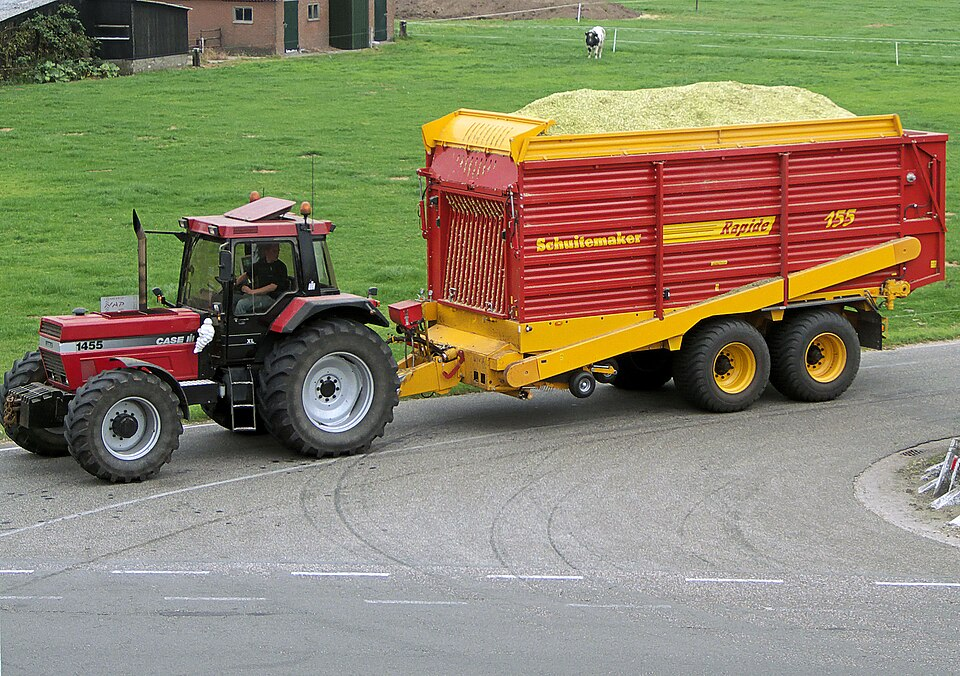
Loaded wagons came from the field to the silo, were unloaded into the blower, and went straight back out – with enough wagons and enough drivers in rotation that the chopper never stopped and the blower never ran empty.
The same logistics at much larger scale with trucks and high-capacity carts.
The whole operation was a conveyor and any gap in it cost money. A chopper standing idle is an expensive machine doing nothing, so the number of wagons, the distance to the field and the speed of unloading were calculated against each other – which is why filling silo needed a crew rather than a family.
7. The Blower Was Deafening and Threw It Sixty Feet Up
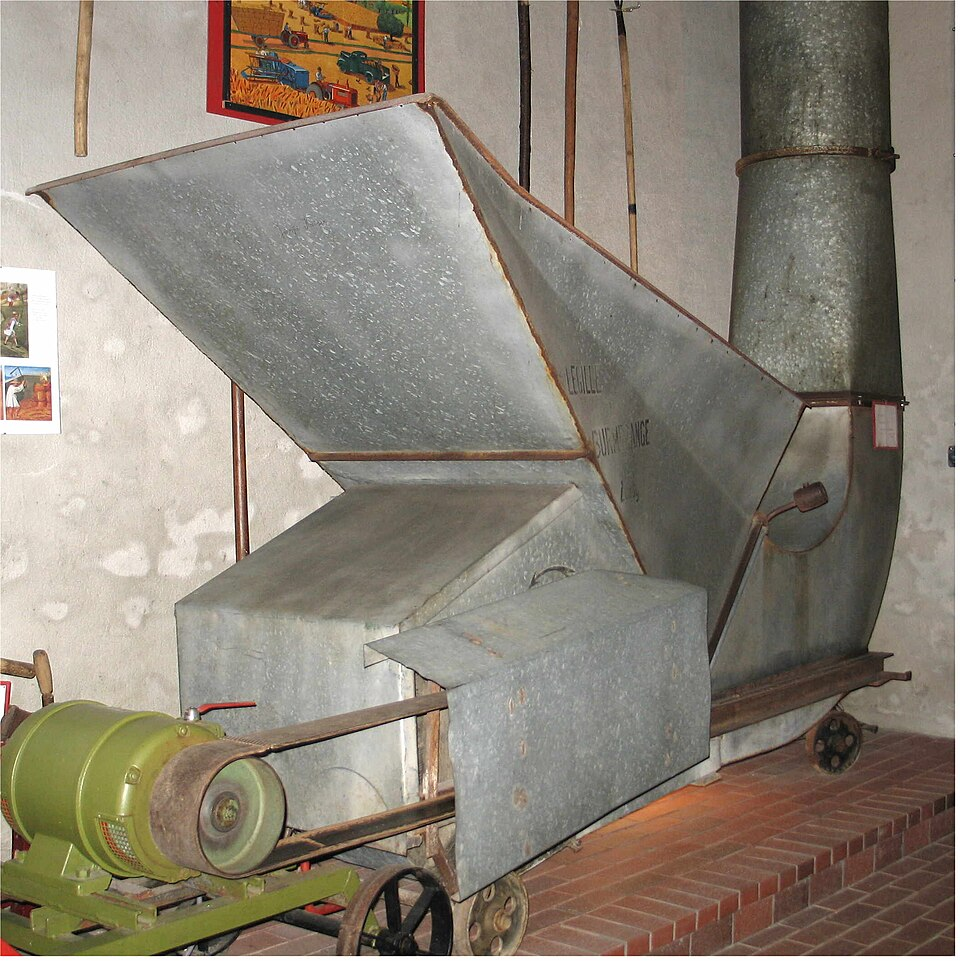
A blower at the base of the silo took the chopped crop from the wagon unloader and threw it up a pipe to the top, where a distributor spread it around the inside – powered by a tractor at full throttle all day.
Essentially gone with the upright silo, replaced by pushing and packing material in horizontal storage.
The noise is what everybody who was there remembers first. A blower running at full power for ten hours, next to a tractor at full throttle, in a yard, with people shouting instructions over the top of it – and hearing protection being something almost nobody wore.
8. Silo Gas Was a Real and Lethal Hazard
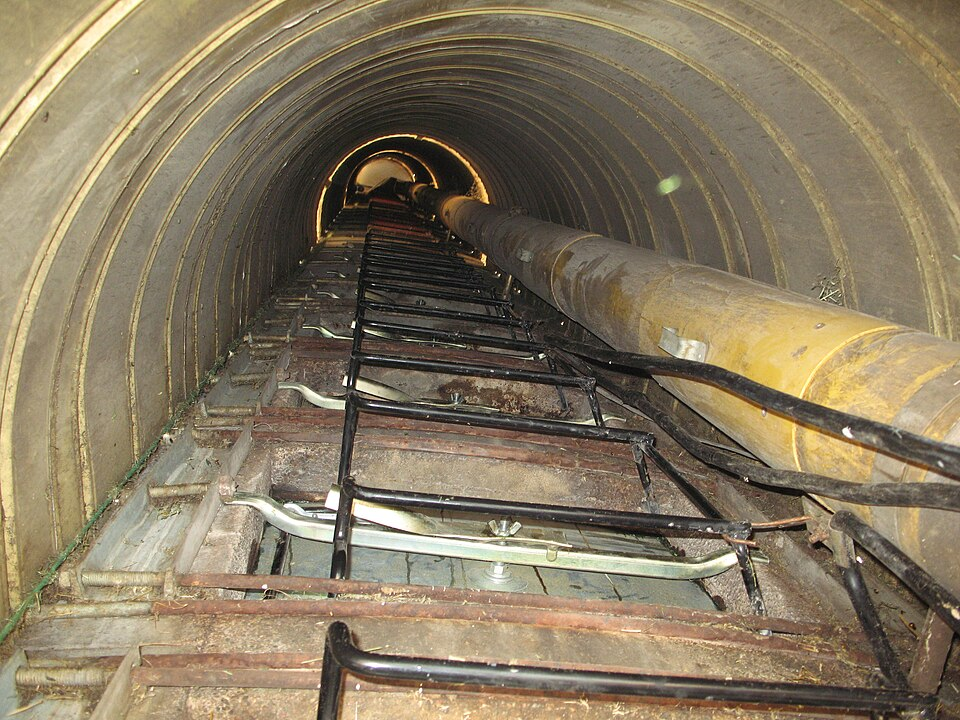
Fermenting silage can produce gases, and the danger was known and taken seriously: a filling or recently filled silo was a place where people had died, and farm families were warned about it repeatedly.
Exactly the same hazard, far better documented, with specific current authoritative guidance from agricultural safety and extension sources on when a silo must not be entered and what must be done first.
This piece states the hazard and deliberately gives nothing else – no gas, no condition, no timescale, no ventilation measure, no entry procedure and no detection method – because that is properly the business of current authoritative agricultural safety guidance, which is specific, free and should be the only source anybody uses. The historical point is only that the danger was understood and that people were killed by it.
9. Entering the Silo Was Dangerous for Several Reasons
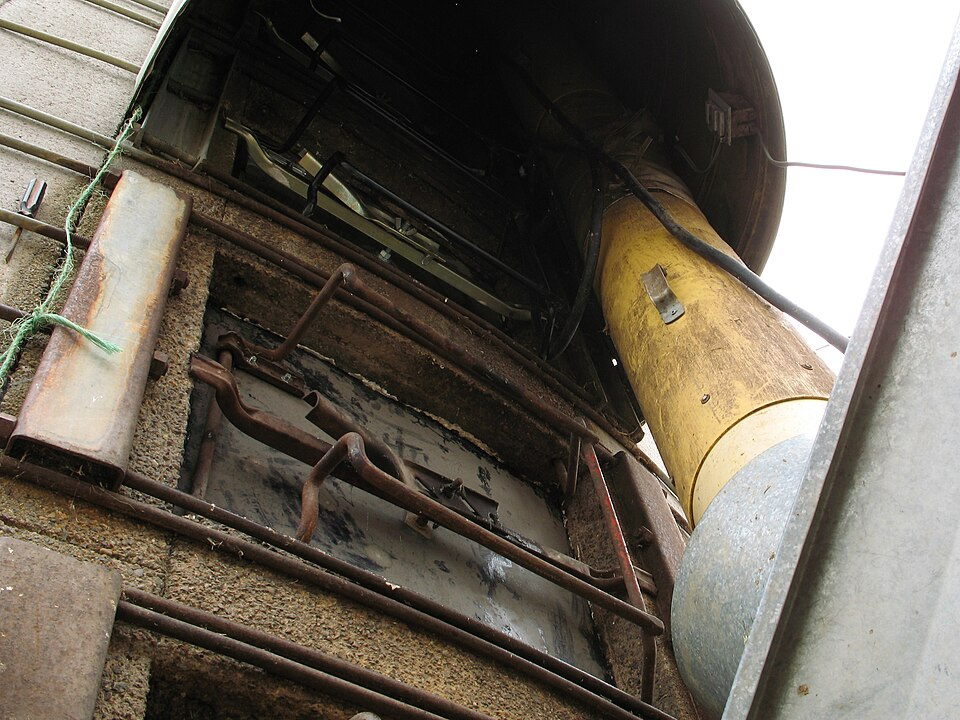
People went inside uprights – to level the surface during filling, to break loose material at the chute, to repair the unloader – and it was among the most hazardous jobs on any American farm, for reasons that included the atmosphere, the material itself and the machinery.
Horizontal storage is filled and unloaded entirely from the outside by machine, which eliminates the need for anybody to be inside anything.
Removing confined space entry from the storage of animal feed is the single most important safety improvement in this entire subject, and it was not the reason bunkers were adopted but it is arguably the best thing about them. This piece describes no task, no equipment and no procedure inside any structure, for the obvious reason.
10. The Unloader Hung Inside and Was Always Breaking
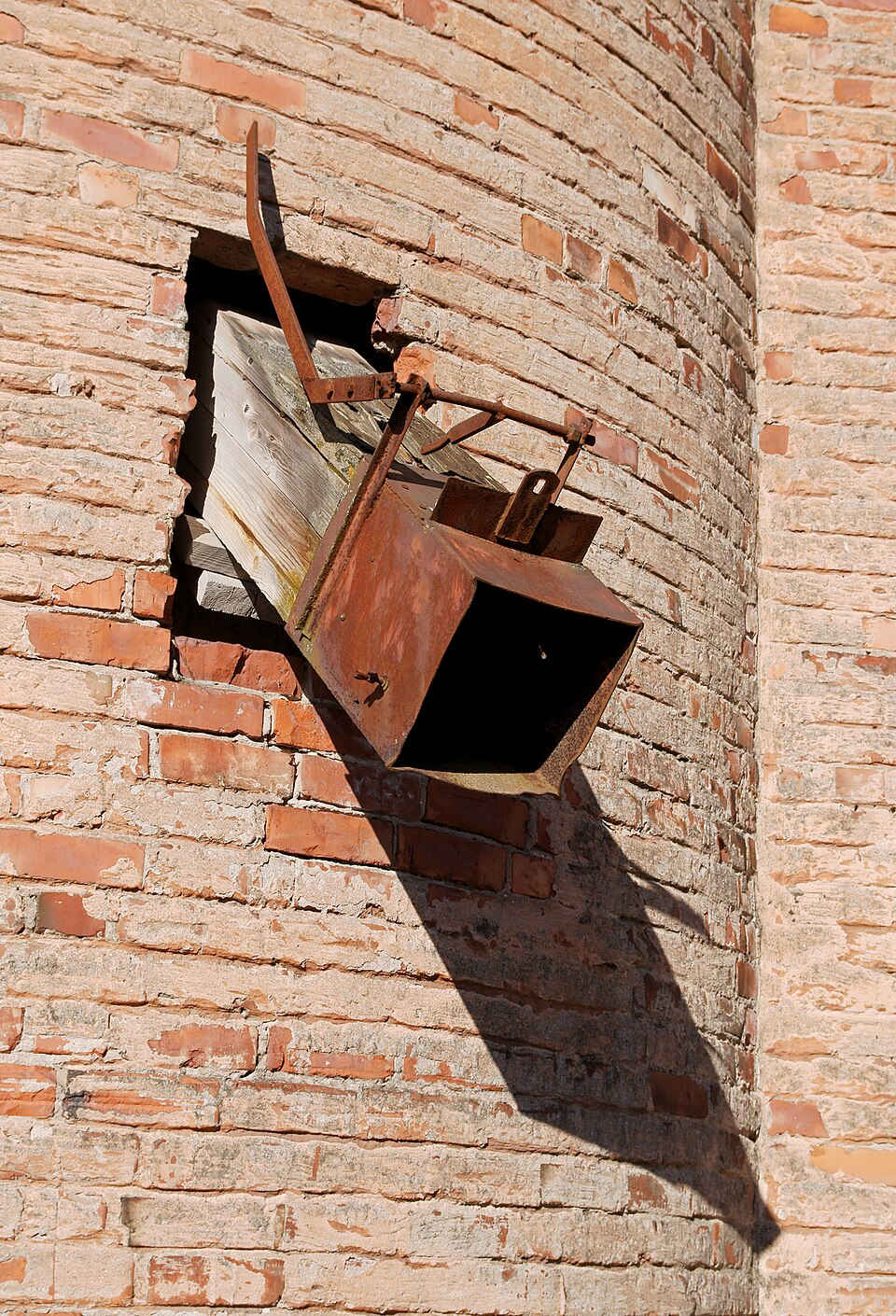
Feeding out was done by a mechanical unloader suspended inside the silo, which chewed across the surface of the silage and threw it into a chute – and which jammed, froze, wore out and had to be dealt with in winter.
Not applicable, since bunker and bag silage is cut out with a loader bucket or a facer from the outside.
The unloader is why upright silos became unpopular with the people who actually used them. It is a machine in a sealed, acidic, abrasive environment that has to work every single day through a winter, and a failure means a herd does not get fed until somebody fixes it.
11. Filling Silo Was Exchanged Neighbour Labour
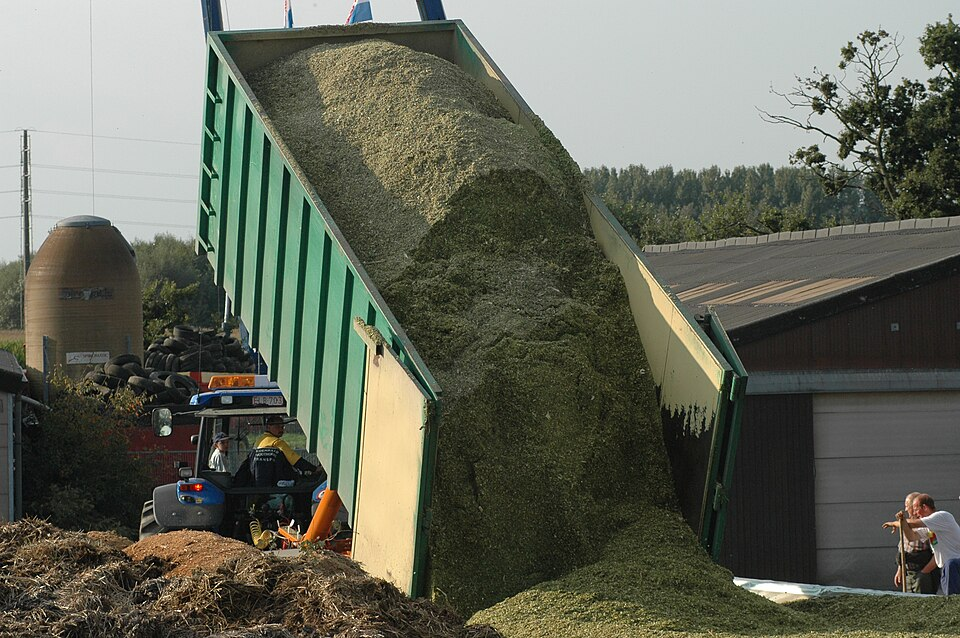
The crew was assembled the same way as a hay crew – neighbours, relatives, hired local men – with the understanding that everybody would turn out for everybody else in turn through the filling season.
One operator with a self-propelled harvester and a contractor’s crew, or a custom harvesting business doing the whole job on contract.
Silo filling was among the last standing occasions for mutual labour in American farming, and it lasted longer than most because the equipment stayed expensive and the window stayed short. Custom harvesting businesses then absorbed the function entirely, which is a service rather than an exchange.
12. The Crop Had to Be Cut at Exactly the Right Moisture
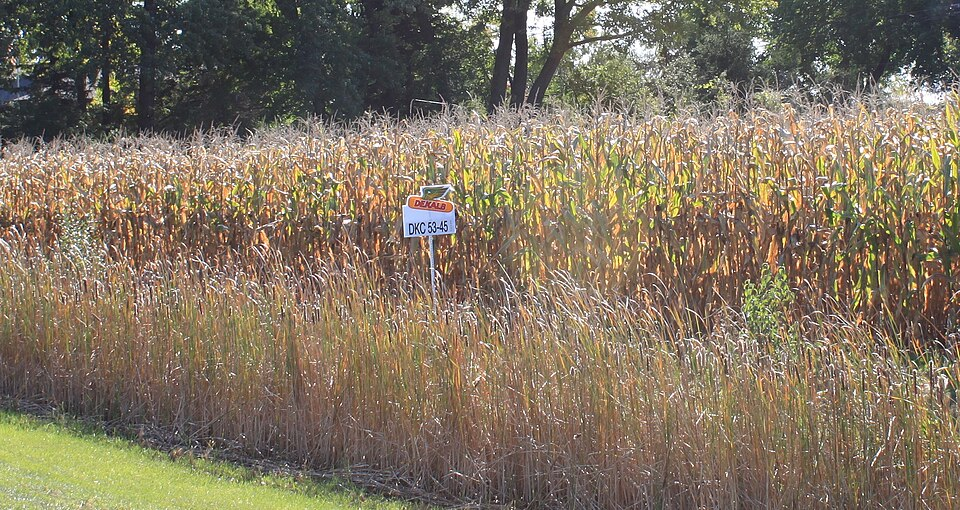
Silage made too wet ferments badly and seeps; made too dry it will not pack and spoils – so the whole operation was timed to a narrow window in the crop’s maturity, judged by experience.
Moisture testing, maturity staging and laboratory analysis, with the same narrow window and much better instruments for finding it.
The window is why the work was so concentrated and so urgent. A whole neighbourhood’s silage had to be put up within a short span of days, which meant the crew moved from farm to farm at speed and nobody got to choose a convenient date.
13. The Smell Was Unmistakable and Divided Opinion
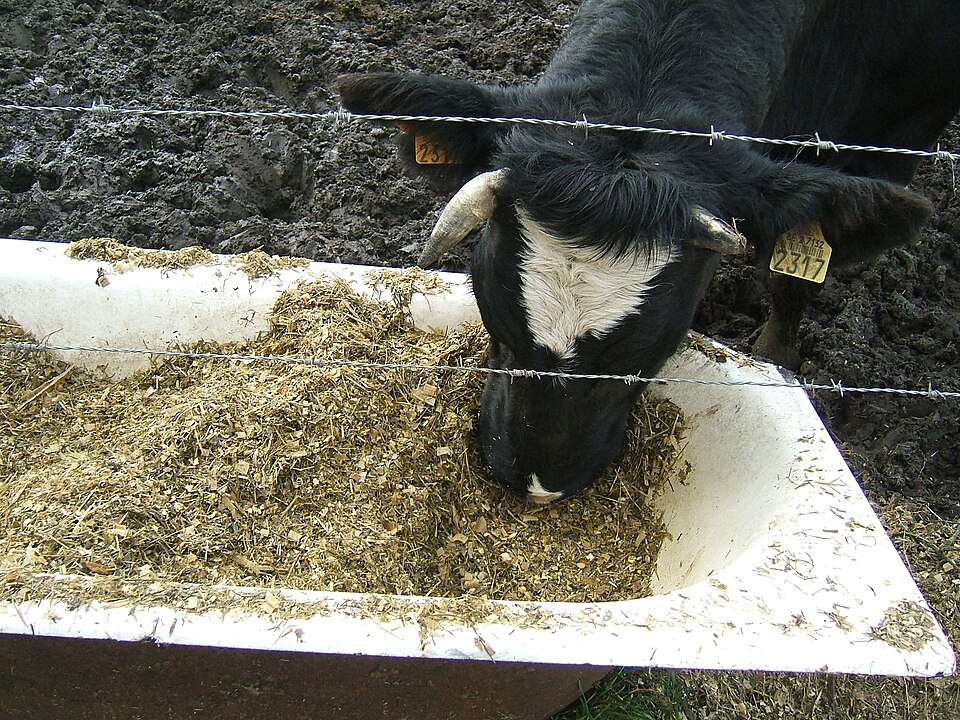
Fermented silage has a strong, sweet, sharp smell that carries across a farmyard, and people either found it pleasant or did not, with no middle position.
Identical, since the chemistry has not changed.
The smell is the fermentation announcing itself. What anybody standing in that yard was smelling were the acids produced by the bacteria doing the preserving, which means the characteristic odour of a dairy farm is the smell of a successful microbiological process.
14. Horizontal Storage Was Cheaper in Every Direction
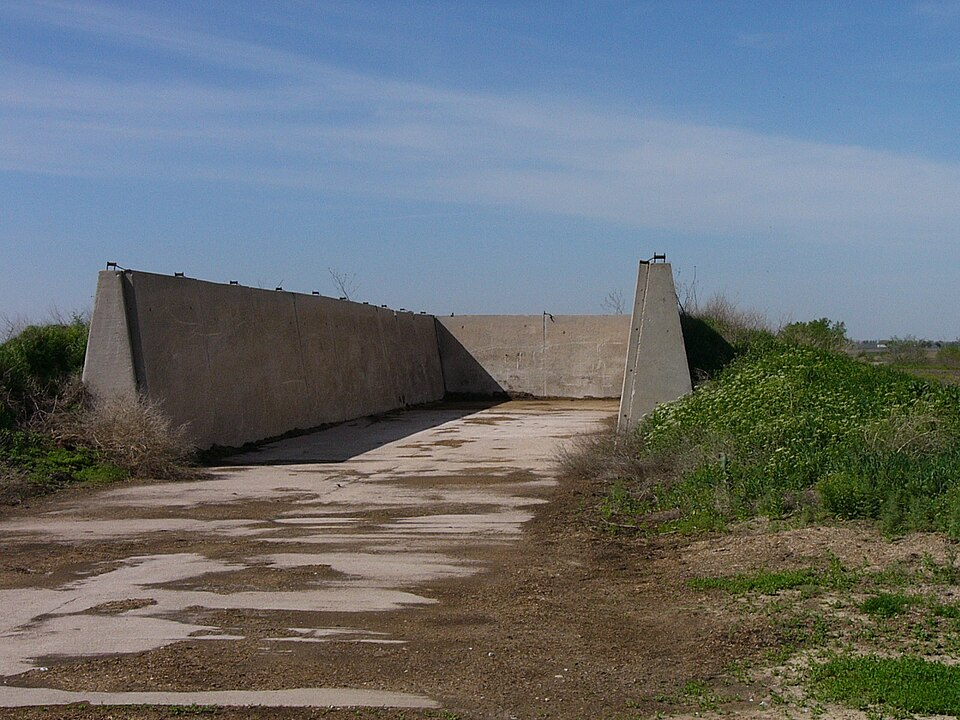
Bunkers, bags and covered piles cost a fraction of a tower to build, fill faster, unload faster, scale to any size, and require no climbing, no blower and no internal machinery.
The dominant method across American agriculture, with upright silos reduced to a small and shrinking minority of storage.
Every single economic comparison went against the tower and that is why it lost. A bunker is a concrete pad with walls; a silo is a sixty-foot engineered structure with a filling system and an unloading machine inside it – and both hold the same fermented crop.
15. Nobody Takes Them Down Because It Is Expensive
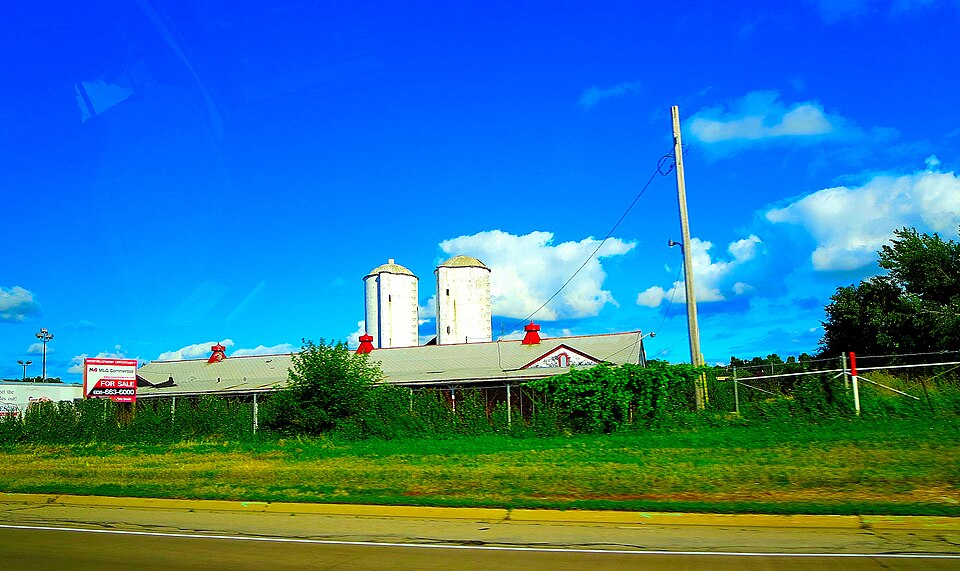
Demolishing a concrete stave or poured silo is a serious job requiring specialist contractors, so thousands of them stand on American farms long after their last use, slowly deteriorating.
The same, with the additional complication that a deteriorating tower near working buildings is a real liability for the owner.
The economics of removal are why the landscape still looks like 1974 from a distance. The towers are not being preserved and they are not in use; they are simply more expensive to remove than to ignore, which is the usual reason obsolete structures persist.
16. Then One Machine Replaced the Whole Neighbourhood
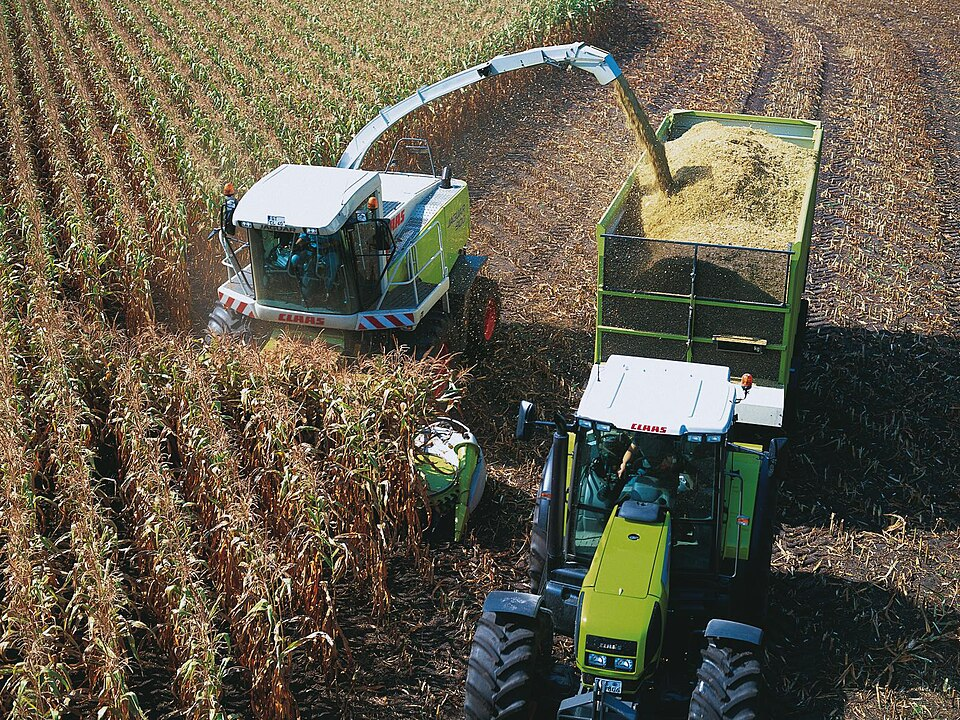
In 1974 filling silo meant a crew of neighbours, a loop of wagons, a blower running at full throttle for ten hours, somebody up in the structure levelling the surface, and a narrow window in which the whole township’s crop had to go up.
A contractor arrives with a self-propelled harvester and a fleet of carts, fills a bunker in a day, packs it with tractors, covers it with a plastic sheet, and leaves – with nobody from the neighbourhood involved and nobody inside anything.
And the thing worth noticing is that the tower did not lose on technology. It lost on the three things that are hardest to argue with: cost, speed and safety. A bunker is a concrete pad with walls, which any contractor can build for a fraction of what a sixty-foot engineered cylinder costs, and it holds the same fermented crop by the same biological mechanism – the material still preserves itself with its own bacteria, the acidity still rises, the air still has to be excluded. Nothing about the science changed. What changed is that the horizontal version fills faster, unloads faster, scales to any herd size, needs no blower, needs no suspended unloader breaking down in February, and – decisively – requires no human being to enter a confined space. Silo entry was among the most dangerous tasks in American agriculture, and the structures where it happened are now standing empty by the thousand because taking them down costs more than leaving them up. Which produces the odd situation this list ends on. The silhouette of a tower silo beside a barn remains the universal shorthand for an American farm. It is on signs, labels, children’s books, company logos and road maps. And it depicts a piece of equipment that the industry abandoned, partly because of what it cost and partly because of what it did to the people who had to climb into it.
The Universal Symbol of Farming Is Abandoned Equipment
The strangest thing about this subject is where it ends up.
Draw a farm. Anybody, anywhere, asked to draw or describe an American farm will produce a barn and a tall cylinder with a dome on top. It is on signage, food labels, company logos, children’s books, road atlases and the side of trucks. It is the single most reliable visual shorthand for agriculture in the country.
And it is a picture of equipment the industry gave up on.
Upright silos stand empty by the thousand across the United States right now. Not preserved, not in use – just standing, deteriorating slowly, because demolishing a concrete stave or poured tower is a specialist job that costs real money and leaving it alone costs nothing until something falls off it.
The reason the tower lost is worth being precise about, because none of it was about the science.
What happens inside any silo, upright or horizontal, is the same piece of biology, and it is genuinely elegant. The crop goes in green and wet on purpose – the exact opposite of hay, which is dried because dry material does not spoil. Silage is kept wet because its preservation mechanism needs the moisture: bacteria already living on the plants consume the sugars in the crop and produce acid, the pH falls, and below a certain acidity nothing else can grow. The material pickles itself, using organisms it brought with it from the field.
The farmer’s entire job in that process is to exclude air, because the organisms that spoil silage need oxygen. Hence chopping fine so the mass settles tight, filling fast so there is no time for spoilage to start, distributing evenly, levelling the surface and sealing the top. All of that is identical in a bunker.
So the tower and the bunker do the same thing by the same mechanism. The difference is everything around it.
A bunker is a concrete pad with walls. Any contractor can build one for a fraction of what a sixty- or eighty-foot engineered cylinder costs. It fills faster, because material can be pushed in and packed by tractors rather than blown up a pipe. It unloads faster, with a loader bucket or a facer working from the outside. It scales to any herd size – you simply build a bigger pad. It needs no blower and no tractor running at full throttle all day next to people shouting over it without hearing protection. And it needs no mechanical unloader hanging inside a sealed, acidic, abrasive space, required to work every single day through a winter, where a breakdown means a herd does not get fed until somebody fixes it.
Then there is the decisive one.
Nobody has to go inside a bunker. People went inside upright silos – to level the surface while filling, to free material at the chute, to work on the unloader – and that was among the most hazardous tasks in American agriculture, for reasons including the atmosphere inside a filling or recently filled structure, the behaviour of the material itself, and the machinery. Farm families were warned about it, repeatedly, because people were killed doing it.
This piece gives no procedure, no condition, no timescale and no detection or ventilation measure on any of that, deliberately. It is precisely the subject on which current authoritative agricultural safety and extension guidance should be the only source anybody consults, and that guidance exists and is free.
What can be said plainly is that horizontal storage eliminated confined space entry from the job of storing animal feed. That was not why bunkers were adopted – they were adopted because they were cheaper and faster – but it is arguably the best thing about them.
So the towers emptied, for cost and speed, with safety as a benefit nobody was initially shopping for. And they are still there, all of them, because removal is the one thing about a silo that never got cheaper.
Which leaves a country whose universal emblem of farming is a structure that farming stopped using.
If you ever helped fill silo, you remember the blower and you remember that you could not hear anybody for a week afterwards.
And you can still name every neighbour who turned out, because they turned out every single year.
Like our content? Follow us for more.