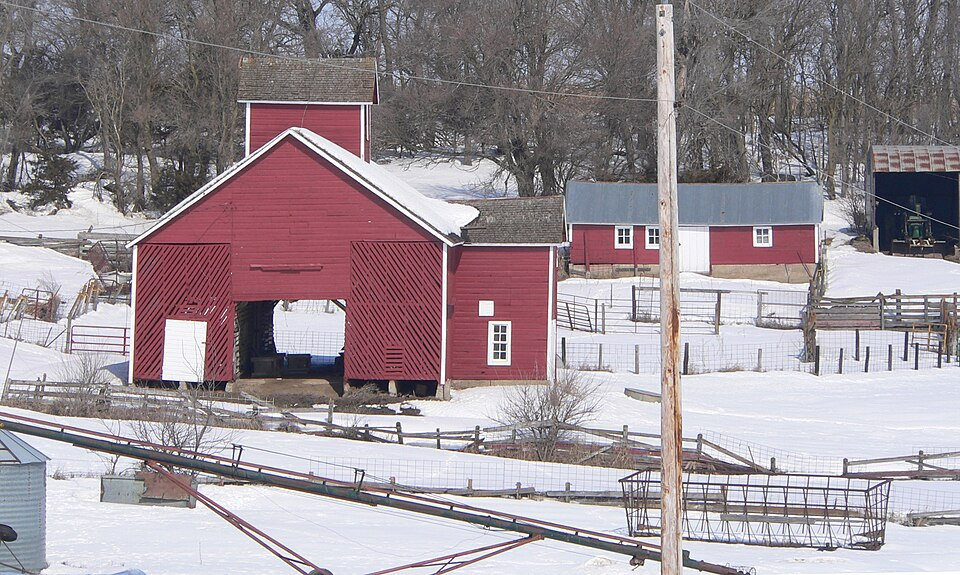
In 1964 a great many American farms brought corn in on the cob and put it into a building with deliberate gaps in the walls.
Those gaps are the entire point. Ear corn comes off the field too wet to keep, and it dries by air moving through the pile – so a crib is a ventilation device, built narrow enough for air to reach the middle and set against the prevailing wind. It dried the crop over the autumn and winter using no fuel, no fan and no electricity at all.
Shelling happened later, as a separate job on a separate day, which meant a farm could decide in February what to do with its corn. Here are fifteen things every farm family knew.
1. Corn Came Off the Field Still on the Cob
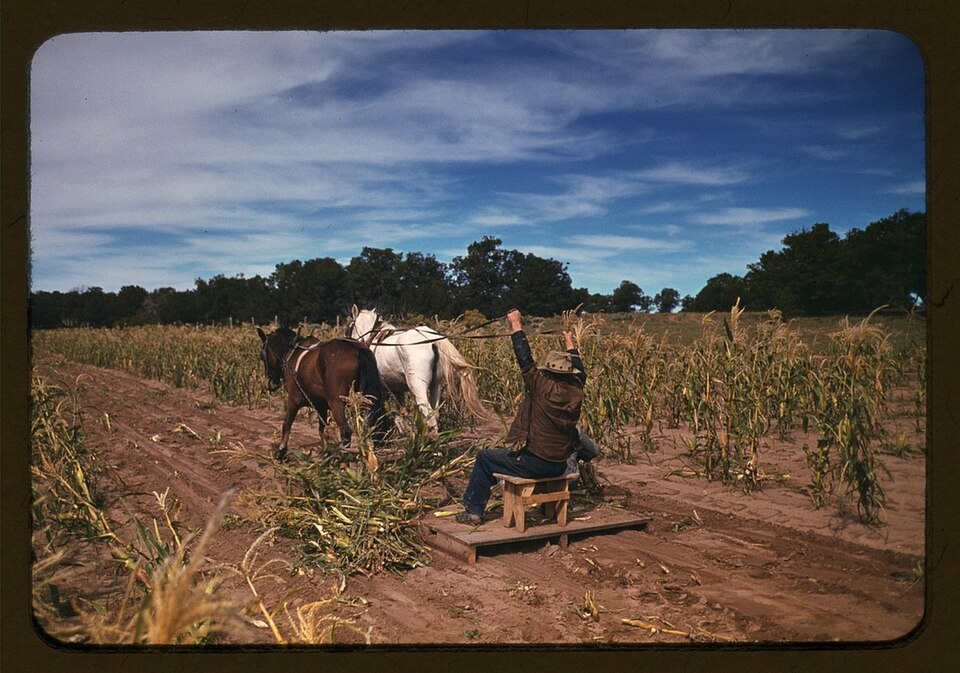
The harvest brought in whole ears – husked but unshelled – rather than loose kernels, which is why a farm needed somewhere to put several thousand bushels of cobs.
Combines shell the corn in the field and deliver loose grain directly, so the ear never leaves the row intact and no farm handles cobs at all.
That single difference reorganises everything downstream. A farm storing ear corn needs a crib, air, a sheller and a use for cobs; a farm storing shelled grain needs a sealed bin, a dryer and a fan – and those are completely different buildings, different costs and different seasons.
Like our content? Follow us for more.
2. The Crib Had Gaps in the Walls on Purpose
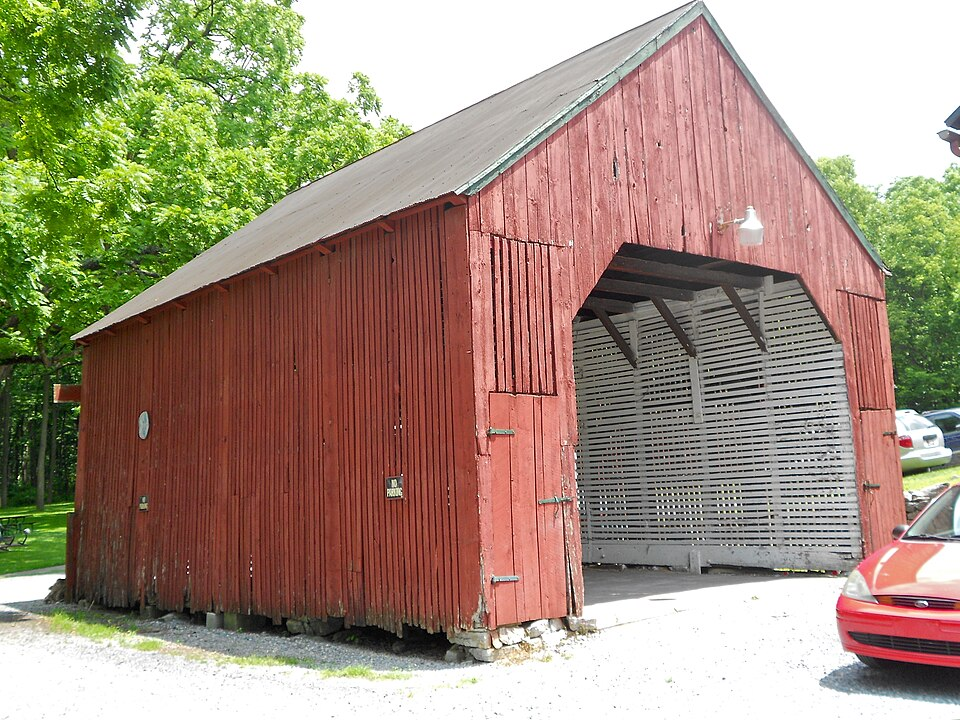
A corn crib was built with spaced boards or slats, leaving deliberate openings all over the walls, frequently with a narrow profile and a central driveway between two cribs under one roof.
Sealed steel bins, which are the exact opposite – airtight, round, and relying on forced air rather than on anything passing through the walls.
The gaps are the entire technology and people walk past them assuming the building was cheap. Ear corn comes in too wet to keep and dries by air moving through the pile, so a crib is a ventilation structure: slatted walls, limited width so air reaches the middle, and orientation set against the prevailing wind.
3. It Dried for Free and That Was the Whole Advantage
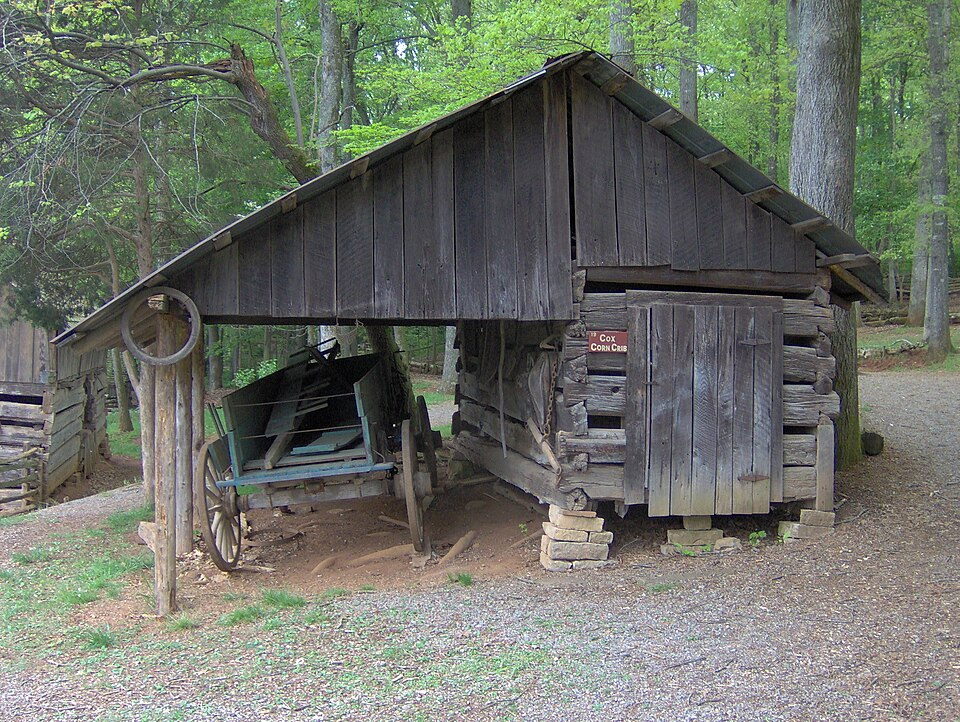
Corn in a crib dried over the autumn and winter using nothing but moving air – no fuel, no fan, no electricity, no attention beyond keeping the roof sound.
Mechanical drying with gas or propane burners and electric fans, consuming purchased energy on every bushel.
This is the trade that nobody describes as a trade. The crib dried corn at zero energy cost but took months and limited how wet the corn could be when it came in; the dryer does it in hours at any moisture, for fuel – so the modern system bought speed and flexibility with energy, permanently.
4. The Picker Left the Ear Intact
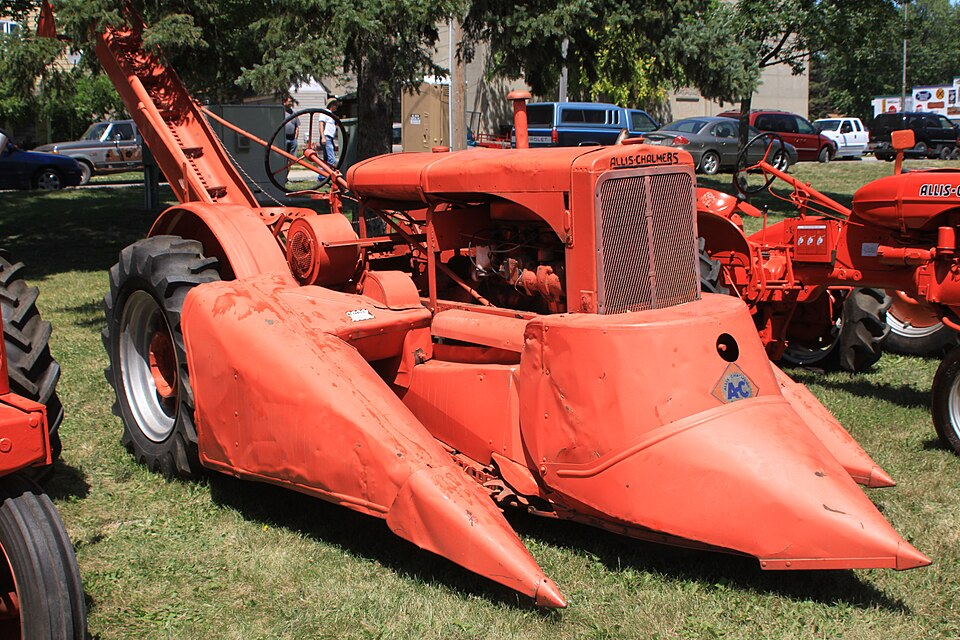
A mechanical corn picker snapped the ears off the standing stalks, stripped the husks and elevated them into a wagon – doing the gathering and husking but no shelling.
Combines with corn heads that snap, shell, separate and clean in one pass, delivering grain and leaving everything else in the field.
The picker was a genuine advance over hand work and it was also notoriously dangerous, which is worth stating plainly rather than skipping. Snapping rolls that pull stalks through a machine will pull anything else through as well, and American farm injury records from that era reflect it.
5. Before the Picker, It Was Done by Hand With a Hook
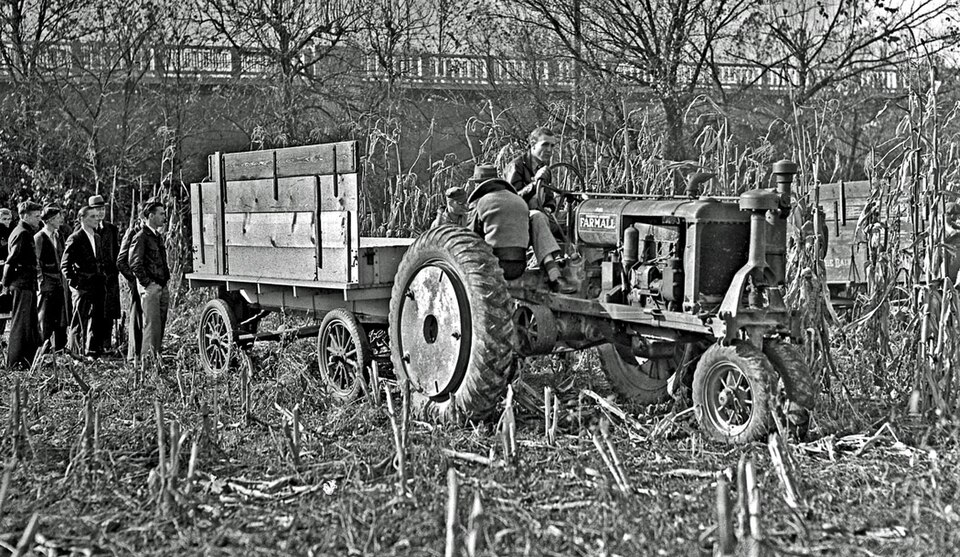
A worker walked the rows with a husking hook or peg strapped to one hand, tore the husk open, snapped the ear free and threw it against a tall board on the wagon so it dropped into the box – all day, for weeks.
Entirely gone, with the hooks surviving as collectibles that most people cannot identify.
The bang board on the wagon side is the detail that explains the rhythm. A picker never looked at the wagon – he threw blind, toward a board he knew was there, and the sound of ears hitting it was how he knew he had not missed.
6. The Sheller Was a Separate Machine and a Separate Day
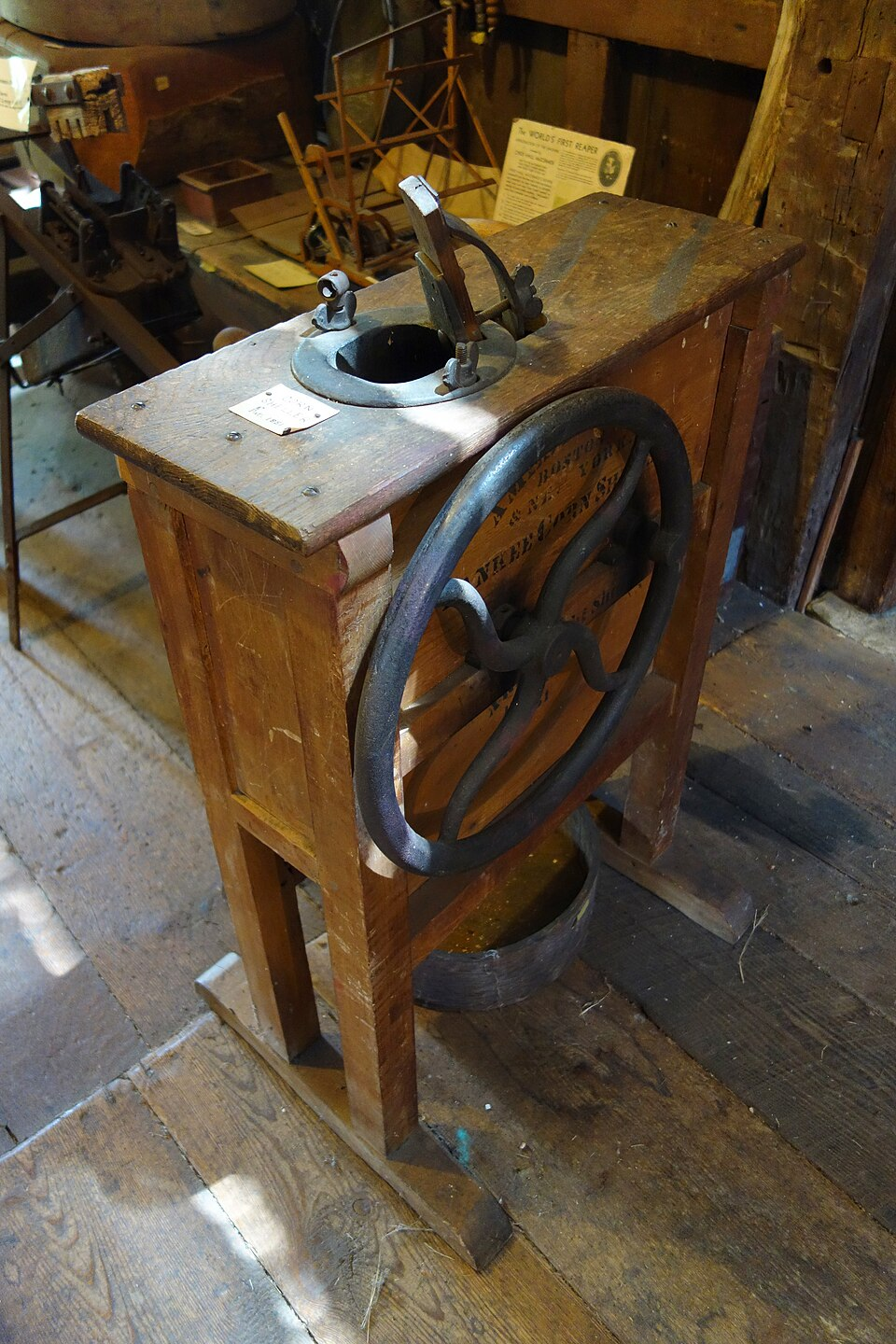
Shelling happened when the corn was dry and when it was needed – by hand-cranked sheller for small amounts, or by a powered sheller brought in to do the whole crib at once.
Not applicable, since shelling happens in the field as part of harvesting.
Separating the harvest from the shelling gave a farm something the modern system does not have, which is optionality. Corn in the crib could be sold as ear corn, shelled and sold as grain, fed whole, or ground – and the decision could be made in February on the basis of prices rather than in October.
7. The Cob Was a Product in Its Own Right
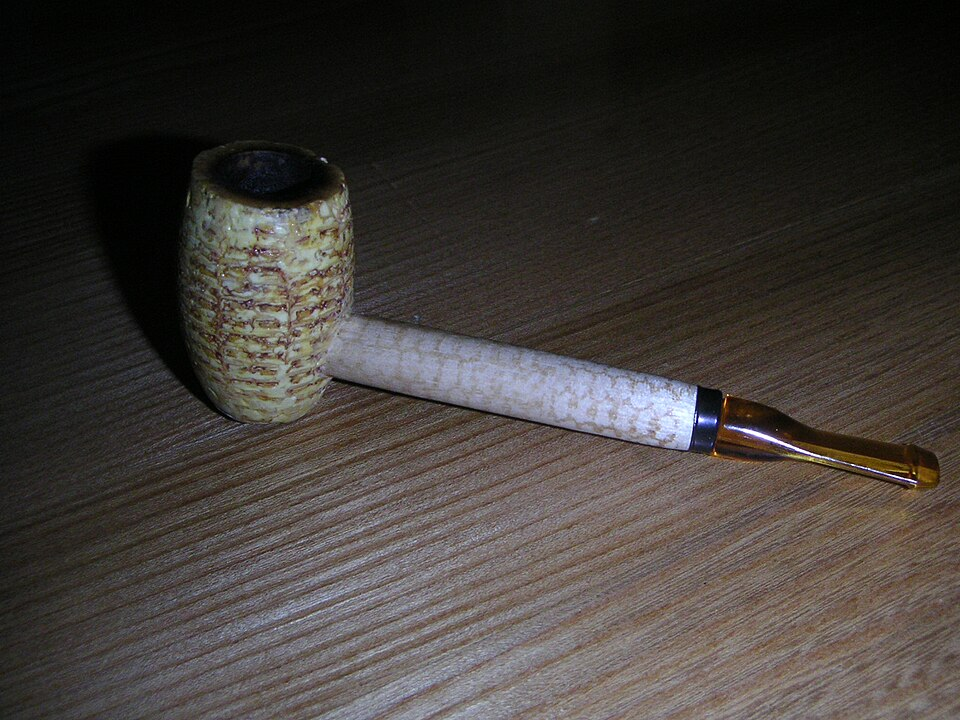
Cobs left over from shelling were used as fuel for stoves, as bedding and litter, as an abrasive for cleaning and tumbling, as a carrier for grinding, as pipe bowls, and in the smokehouse.
A residue left in the field as part of the crop residue, with industrial uses supplied from other sources.
That list is not folklore padding – cobs were genuinely useful and sold commercially for several of those purposes. The modern system does not produce them as a separate stream at all, so a material with a dozen established applications simply stopped being available.
8. Ear Corn Was Fed Whole to Cattle
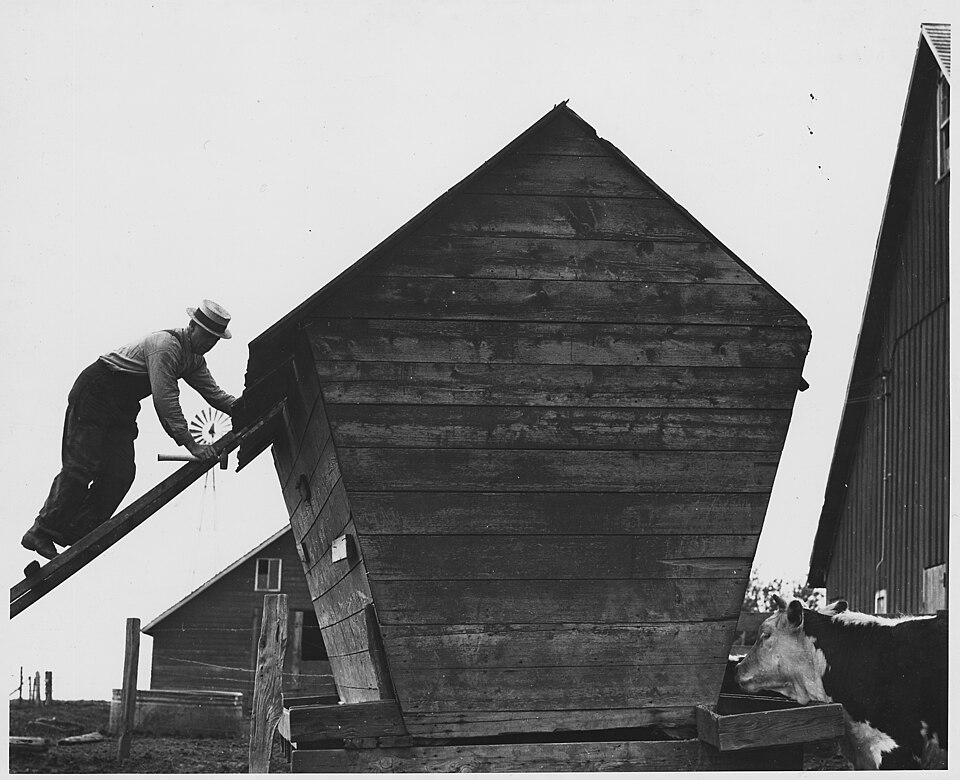
Cattle were fed unshelled ears directly – in a bunk, on the ground, or from a self-feeder – and they ate the kernels and worked at the cob without any processing at all.
Shelled, cracked, rolled, steam-flaked or ground grain in formulated rations, prepared to improve digestibility and measured precisely.
Feeding ear corn whole was a labour decision rather than a nutritional one and everybody knew it. Processing improves how much of the grain an animal actually uses, but it costs a step – and a farm with a crib and no mill could skip the step entirely.
9. Grinding Meant a Trip or a Visit
Corn to be ground for feed went to a mill, or a mobile grinder came to the farm on a circuit and ground and mixed a batch in the yard.
On-farm mixing with portable mills and augers, or complete purchased feed delivered by bulk truck.
The mobile grinder is one of the forgotten rural service businesses and there were a great many of them. A man with a truck-mounted mill driving a route, grinding each farm’s own corn with each farm’s own supplements, was selling a service to people who had the raw material and not the machine.
10. The Crib Was Full of Rats and That Was Managed by Cats
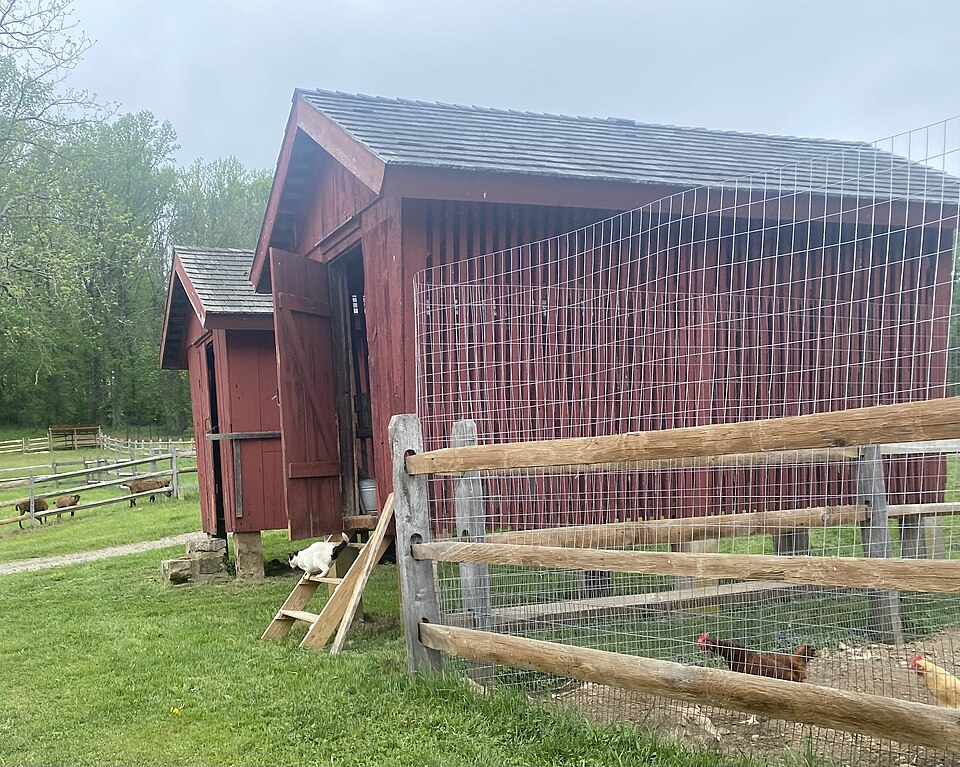
Several thousand bushels of grain in a slatted wooden building is an enormous food supply for rodents, and the response was barn cats in numbers, plus dogs, plus the crib’s elevation off the ground.
Sealed steel bins with no entry points, which solve the problem structurally rather than biologically.
The rodent problem was serious, constant and a real loss of grain, and the slatted walls that made the drying work also made exclusion impossible. Sealing the storage is one of the clear practical gains of the modern system.
11. Children Played in It and Should Not Have

A crib or a wagon box full of ear corn was an irresistible place for children, who climbed, tunnelled, buried themselves and jumped into it.
Not applicable in most places, and grain entrapment is now a recognised and documented hazard with specific safety guidance attached to it.
This piece says no more than that. Flowing grain and deep piles are the subject of serious current agricultural safety guidance for sound reasons, and the appropriate source for anybody with a bin, a crib or a wagon on their property is that guidance rather than a nostalgia article.
12. The Crib Told Everybody How the Year Had Gone
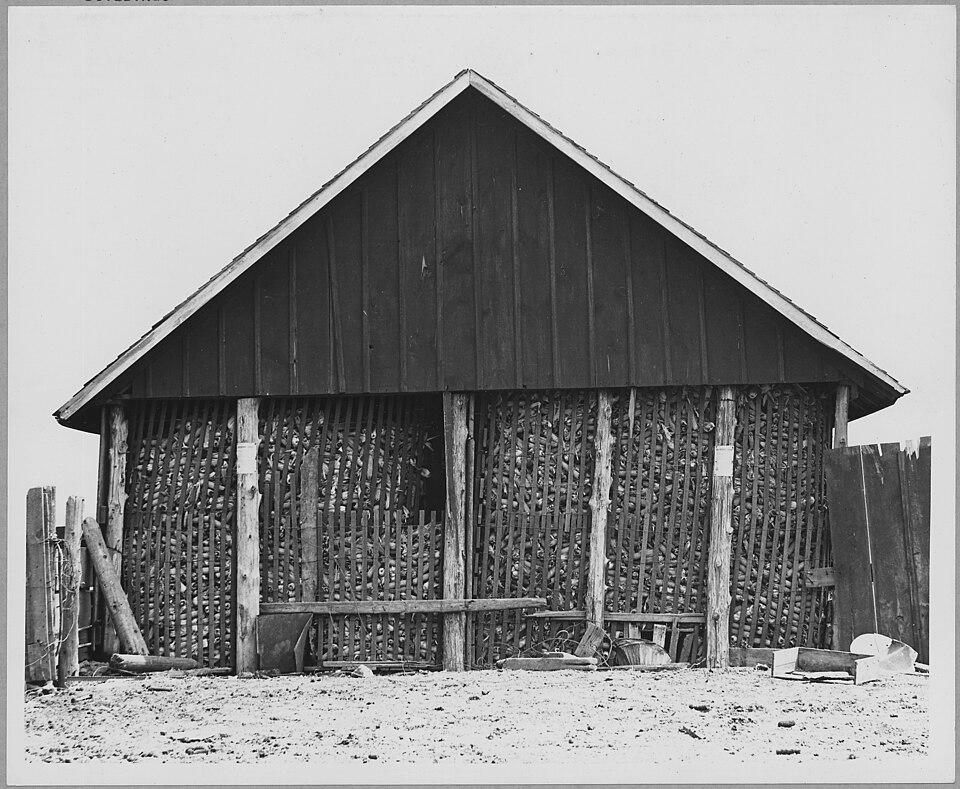
A full crib was visible from the road and so was an empty one, which meant the state of a farm’s harvest was public information all winter long.
A steel bin looks identical whether it is full or empty, so nobody can tell anything from the outside.
That visibility mattered more than it sounds. A neighbourhood in which everybody could see everybody’s harvest had a shared and accurate picture of how the season had gone – and the man with the half-empty crib knew that everybody driving past knew it too.
13. Moisture Was the Constraint on the Whole System
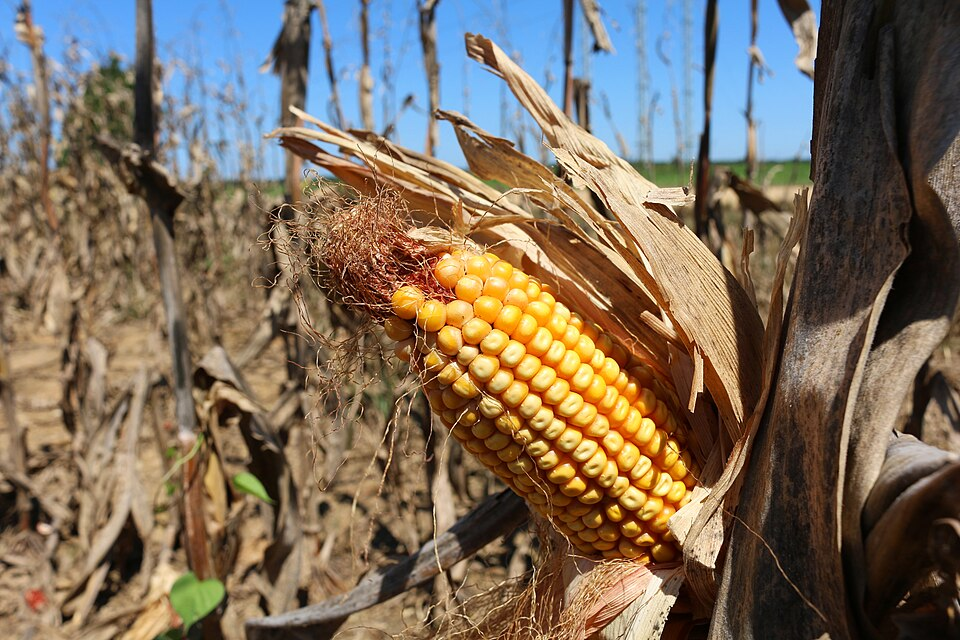
Corn had to be dry enough to crib or it would spoil, which meant waiting in the field until late in the season and accepting whatever losses came with standing corn in bad weather.
Harvest at much higher moisture followed by mechanical drying, which allows a far earlier start and takes the crop out before weather damage accumulates.
Breaking the moisture constraint is the real achievement of the modern system and it is a substantial one. Being able to harvest wet and dry afterwards means a farm is no longer gambling its entire crop on whether the weather holds through October and November.
14. The Elevator Became the Buyer and the Grader
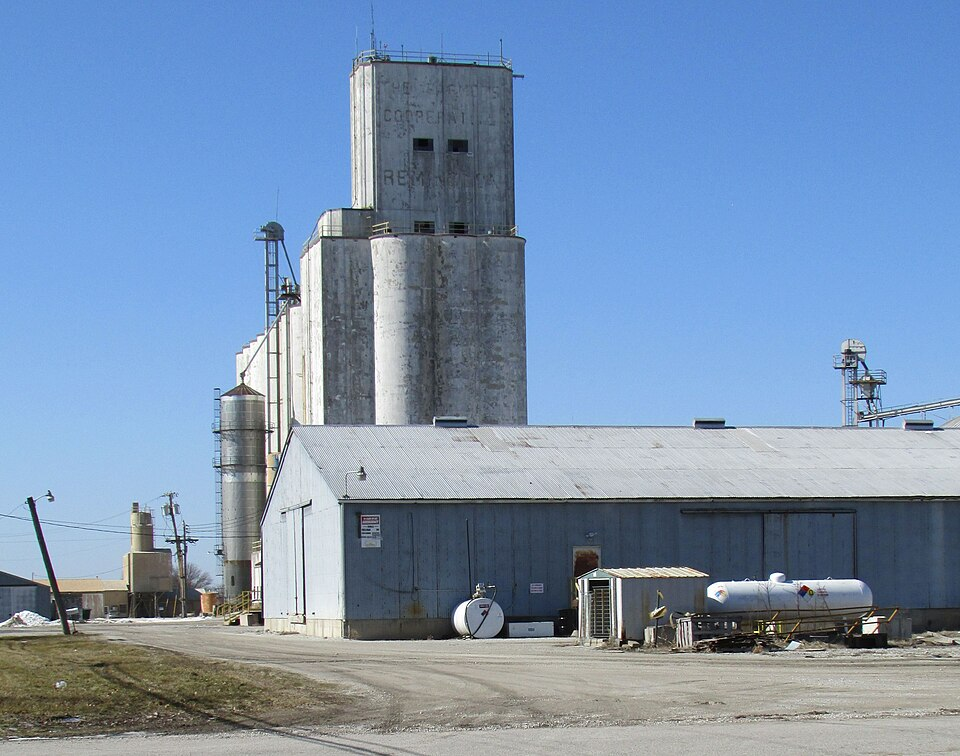
Shelled corn hauled off the farm went to a country elevator, where it was sampled, tested for moisture and quality, graded, weighed and priced – and the grade determined the cheque.
The same institution performing the same functions, considerably consolidated, with electronic testing and far larger facilities.
The elevator’s grading is where a farm’s crib management showed up as money. Corn that had dried well and kept well graded well, and corn that had heated or taken damp in a poorly ventilated crib did not – so the building was effectively part of the pricing.
15. Then the Drying Moved From the Weather to a Fuel Bill
In 1964 a great many American farms harvested corn on the ear, stored it in a slatted wooden building, let the autumn air dry it for free over several months, shelled it when it suited them, fed the kernels and used the cobs.
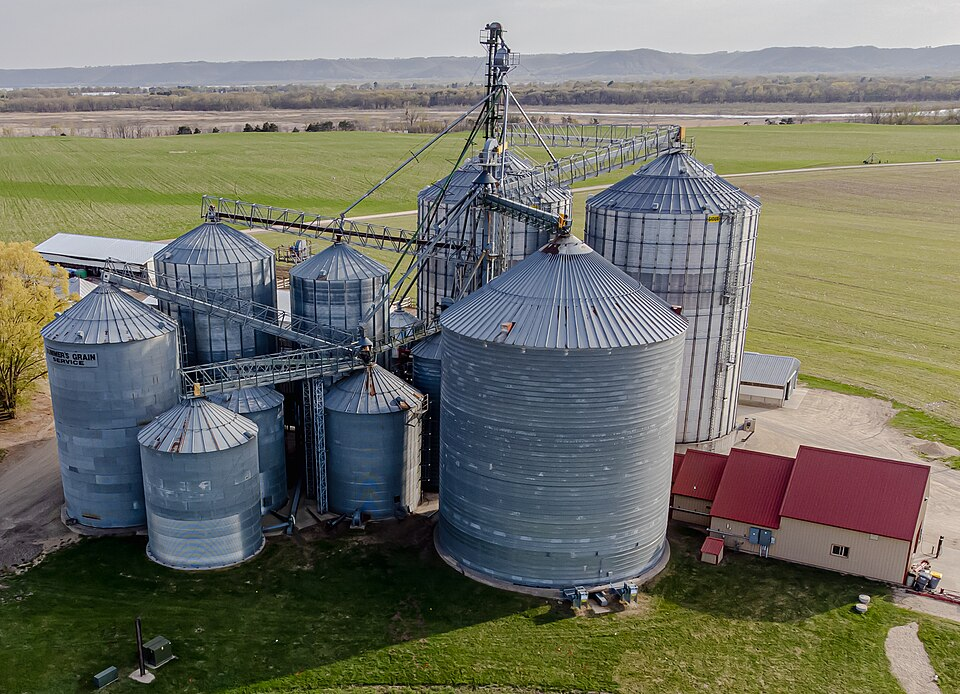
Combines shell in the field, the wet grain goes straight to a mechanical dryer burning purchased fuel, and it is stored in sealed steel bins – with no cribs, no shellers, no cobs and no free drying anywhere in the system.
And the thing worth noticing is that this was not a case of a better machine beating a worse one, but of a genuine trade in which something real was given up for something more valuable. What the crib did brilliantly was dry corn at no energy cost whatsoever, using nothing but the air moving through its slatted walls across the autumn and winter. That is free, it is reliable, and it demanded only that the building be well designed and the roof sound. What it could not do was handle wet corn or work quickly, which meant the farm had to leave the crop standing in the field until it had dried down enough to crib – gambling the whole harvest on the weather holding through the end of the season, with losses from wind, lodging, birds and rot accumulating every week it waited. The combine and the dryer broke that constraint completely. A farm can now harvest at a moisture level that would have ruined a crib, take the crop out weeks earlier, avoid most weather damage, and dry it down in hours. By every agricultural measure that is better, and the extra grain saved from standing in a wet autumn is not a small quantity. But the drying moved from the weather to a fuel bill, permanently, which is a large part of why growing corn became an energy-intensive business. And three things vanished with the building: the cob, a genuinely useful material with a dozen established uses that the modern harvest does not produce as a separate stream at all; the optionality of deciding in February whether to sell ear corn, shell it, feed it or grind it; and a slatted wooden structure that told every neighbour, from the road, exactly how your year had gone.
The Crib Dried Corn for Nothing. The Dryer Charges by the Bushel.
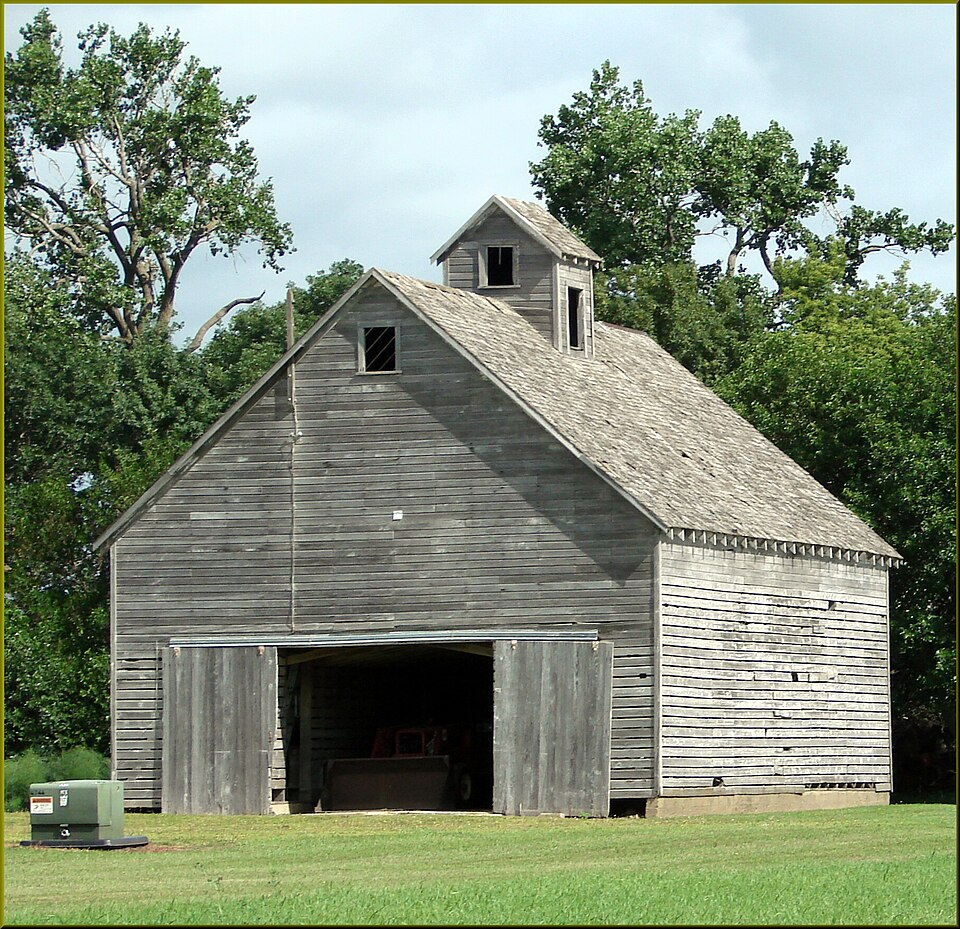
The corn crib is the best example in American farming of a building that was secretly a machine.
Look at one and it reads as cheap construction – rough boards with gaps between them, a tin roof, no insulation, no door worth the name. It looks like somebody ran out of lumber.
It is in fact a precisely conceived piece of equipment, and every apparent shortcoming is a specification.
The gaps in the walls are air intakes. Ear corn comes out of the field at a moisture level that will spoil in storage, and the way it was brought down to a keeping level was by air moving through the pile – so the walls were slatted to let air in on every side. The crib is narrow, frequently strikingly so, because air has to reach the middle of the mass and a wide pile has a core it cannot penetrate. Many were built as two narrow cribs flanking a central driveway under one roof, which gives you double the capacity while keeping both piles thin enough to breathe. And they were oriented with the prevailing wind in mind, because the wind was the fan.
The result is a building that dried several thousand bushels of corn over an autumn and a winter, at zero energy cost, requiring nothing from anybody except that the roof stay sound.
That is a remarkably good piece of design, and it is worth saying so before explaining why it lost.
What the crib could not do was take wet corn, and it could not work quickly. Both of those are serious. A farm with a crib had to leave the crop standing in the field until it had dried down on the stalk far enough to be safe to store – which means waiting, through October and into November, while wind lodged the stalks, birds worked the ears, and rot took whatever the weather gave it. Every week of waiting was a loss, and a bad autumn could be a disaster.
The combine and the mechanical dryer broke that constraint completely, and this is the part where the modern system is simply better.
A combine shells in the field, so the crop can come out at a moisture level that would have ruined a crib. The grain goes to a dryer and comes down to a keeping level in hours rather than months. Which means harvest can start weeks earlier, the crop comes off before most weather damage accumulates, and the grain saved from standing in a wet autumn is a genuinely large quantity. Then it goes into a sealed steel bin, which also solves the rodent problem that slatted walls made structurally impossible.
So this is not a story about a good old building being replaced by a worse new one. It is a trade, and the farm got the better end of it.
But the trade is real and it is worth naming, because it is the reason growing corn became an energy-intensive business. The drying moved from the weather to a fuel bill. What the autumn air did for nothing, a burner now does for money, on every bushel, every year, forever.
And three other things went with the building.
The cob went, which sounds trivial and is not. Cobs were used as stove fuel, as bedding and litter, as an abrasive for cleaning and tumbling, as a carrier in feed grinding, as pipe bowls and in smokehouses – and several of those were commercial markets rather than farm improvisation. A combine leaves the cob in the field as crop residue, so a material with a dozen established uses stopped existing as a separate stream.
The optionality went. Corn in a crib was undecided corn. It could be sold on the ear, shelled and sold as grain, fed whole to cattle, or ground into feed, and that choice could be made in February when prices were known rather than in October when they were not.
And the visibility went. A crib was full or it was empty and everybody driving past could see which. A steel bin looks exactly the same either way, which means a neighbourhood lost its ability to know, at a glance, how everybody’s year had gone.
If you grew up around one of these, you remember the smell inside and the sound of ears hitting the bang board.
And somebody in your family can still tell you whose crib in the township was built the right way round for the wind.
Like our content? Follow us for more.