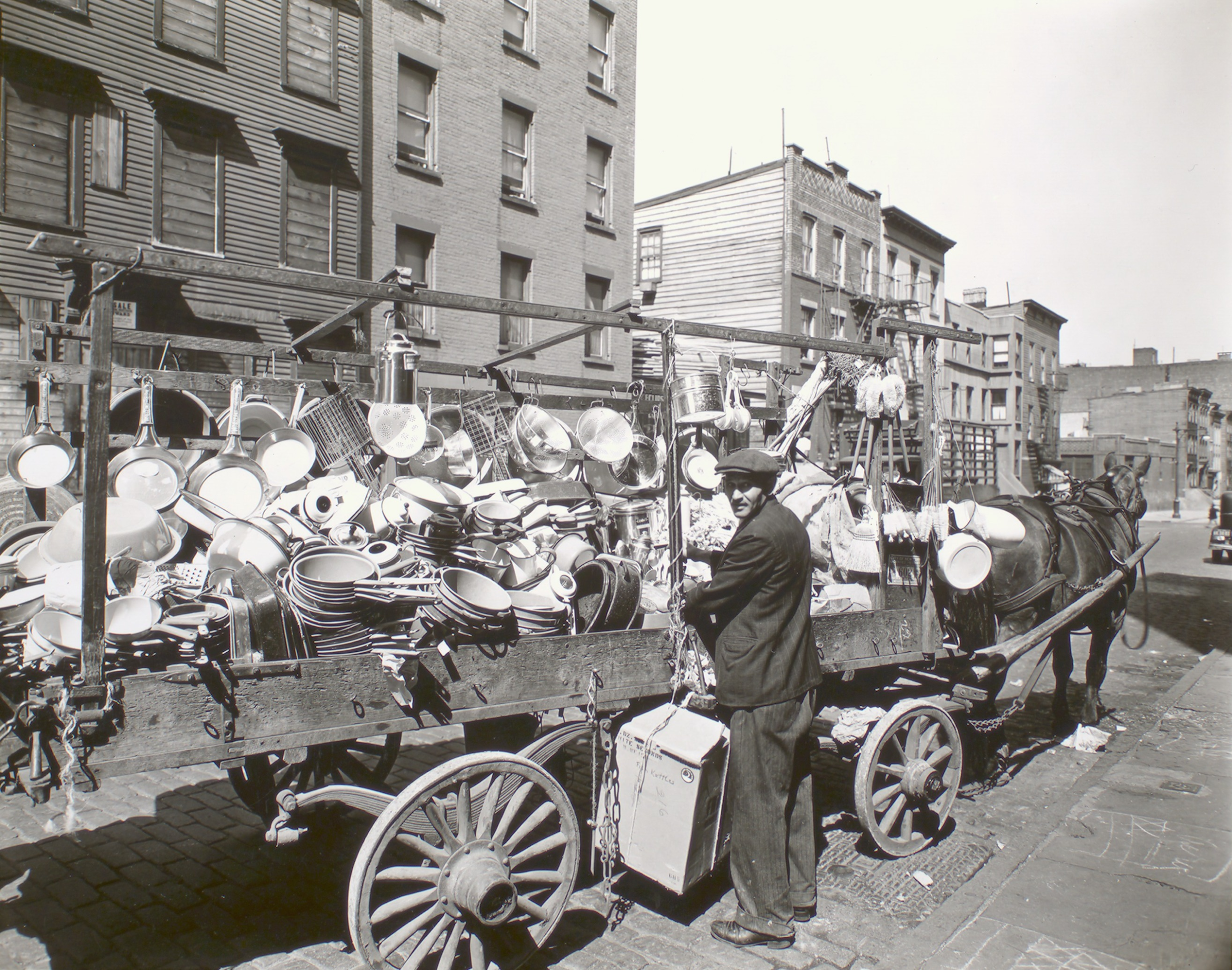
He came with a wagon, set up in the yard, and worked for a day or two.
The travelling tinner carried sheet metal, solder, a small furnace and hand tools – a workshop brought to households that could not bring their work to one. And the demand was enormous, because before pressed steel and plastic almost everything that held or carried a liquid was thin tin-coated sheet iron: pails, pans, dippers, milk cans, lanterns, coffee pots, basins, cups, funnels and gutters.
The tin is only a coating. The strength is in the iron underneath and the protection is a microscopically thin layer on top, so any scratch, dent or worn spot exposes iron to water and the vessel rusts outward from that one point. Which is also why it could be saved. Here are sixteen things every farm knew.
1. He Arrived With a Wagon and Set Up in the Yard
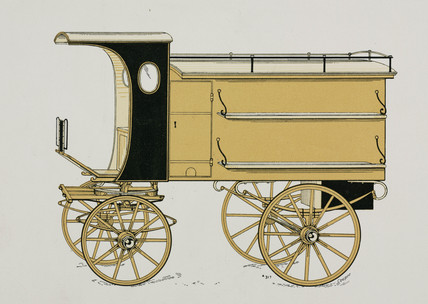
The travelling tinner came round with a wagon carrying sheet metal, solder, a small furnace and a set of hand tools, and worked for a day or two at the farm.
Not applicable; metal household goods are bought new and discarded when they fail.
Start with the business model, because it explains everything about the trade. A tinner who travels is bringing a workshop to households that cannot bring their work to a workshop – which means his tools had to be portable, his skills had to cover everything, and his price had to be worth a farm’s while.
Like our content? Follow us for more.
2. Almost Every Household Vessel Was Sheet Metal
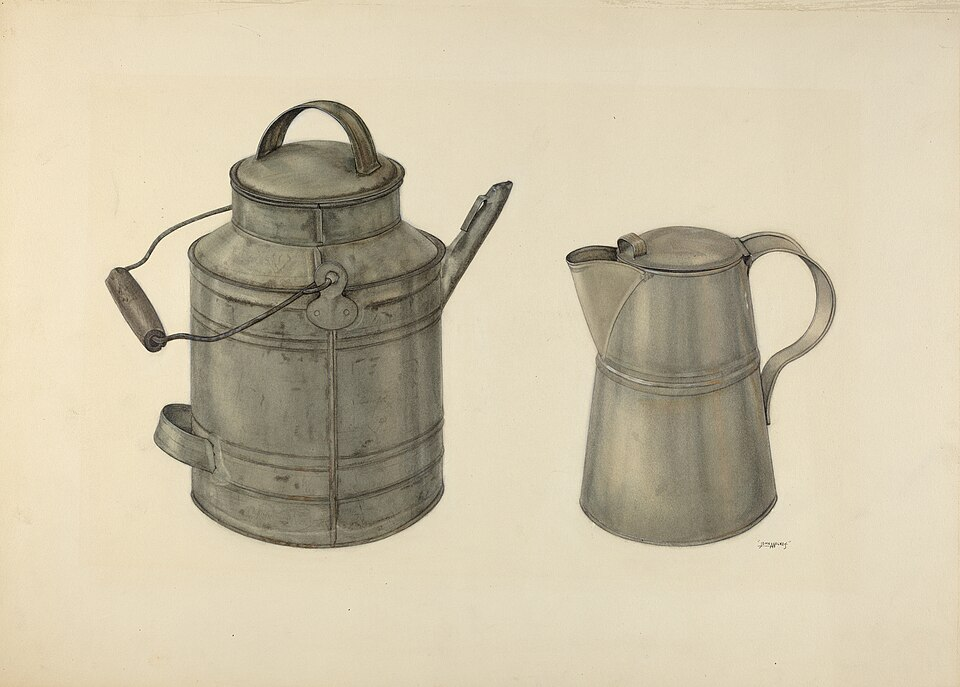
Pails, pans, dippers, milk cans, lanterns, coffee pots, basins, cups, funnels, boxes and roof gutters were all made of thin tin-coated sheet iron.
Plastic, aluminium, stainless steel and enamelled ware, all bought ready-made.
The sheer quantity of tinware in a house is the thing modern readers underestimate. Before cheap pressed steel and plastic, almost anything that had to hold or carry a liquid was made of thin sheet metal cut, folded and soldered by hand – which is an enormous number of objects, all of them repairable.
3. The Tin Was a Coating, Not the Metal
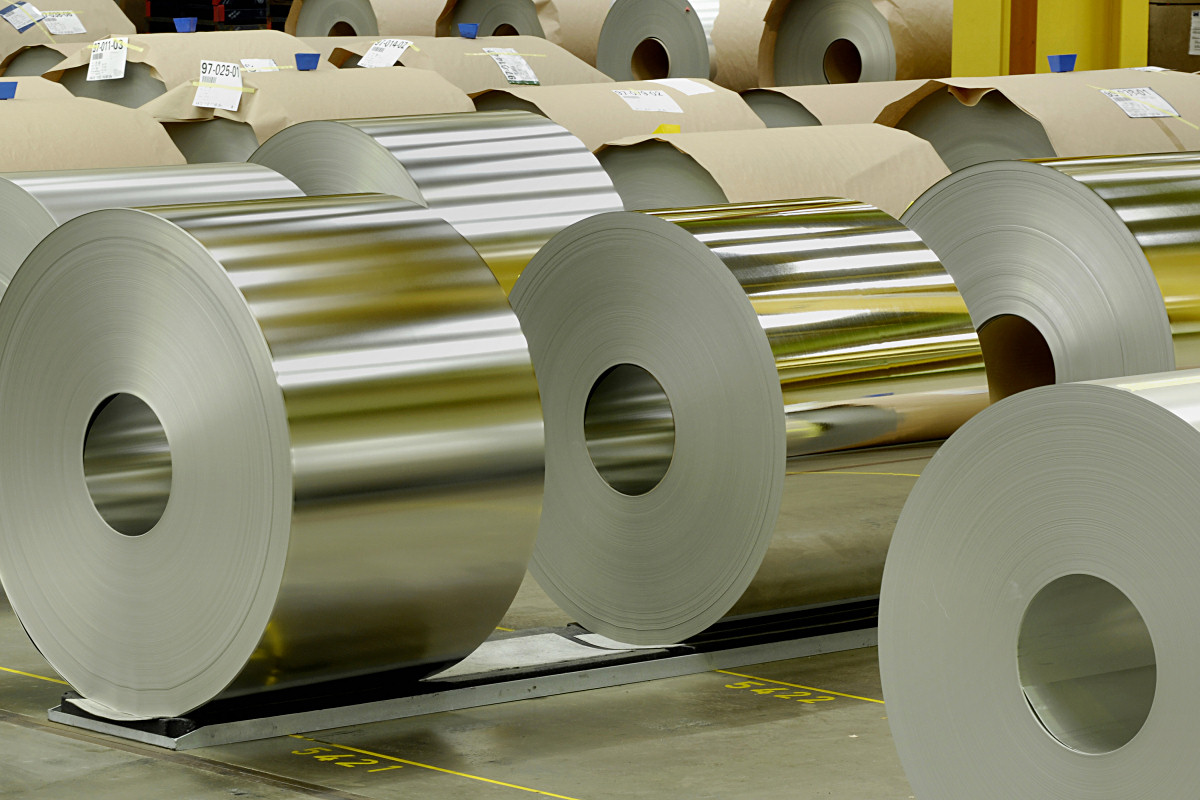
The sheet was iron or steel dipped in molten tin, because iron rusts and tin does not, and the thin bright coating is what made the vessel usable with water and food.
Stainless alloys and plastic removed the need for a coating.
This is the fact that explains why tinware failed and why it could be saved. The strength is in the iron underneath and the protection is in a microscopically thin layer on top, so any scratch, dent or worn spot exposes iron to water – and the vessel then rusts from that one point outward.
4. A Pinhole Was Worth Mending
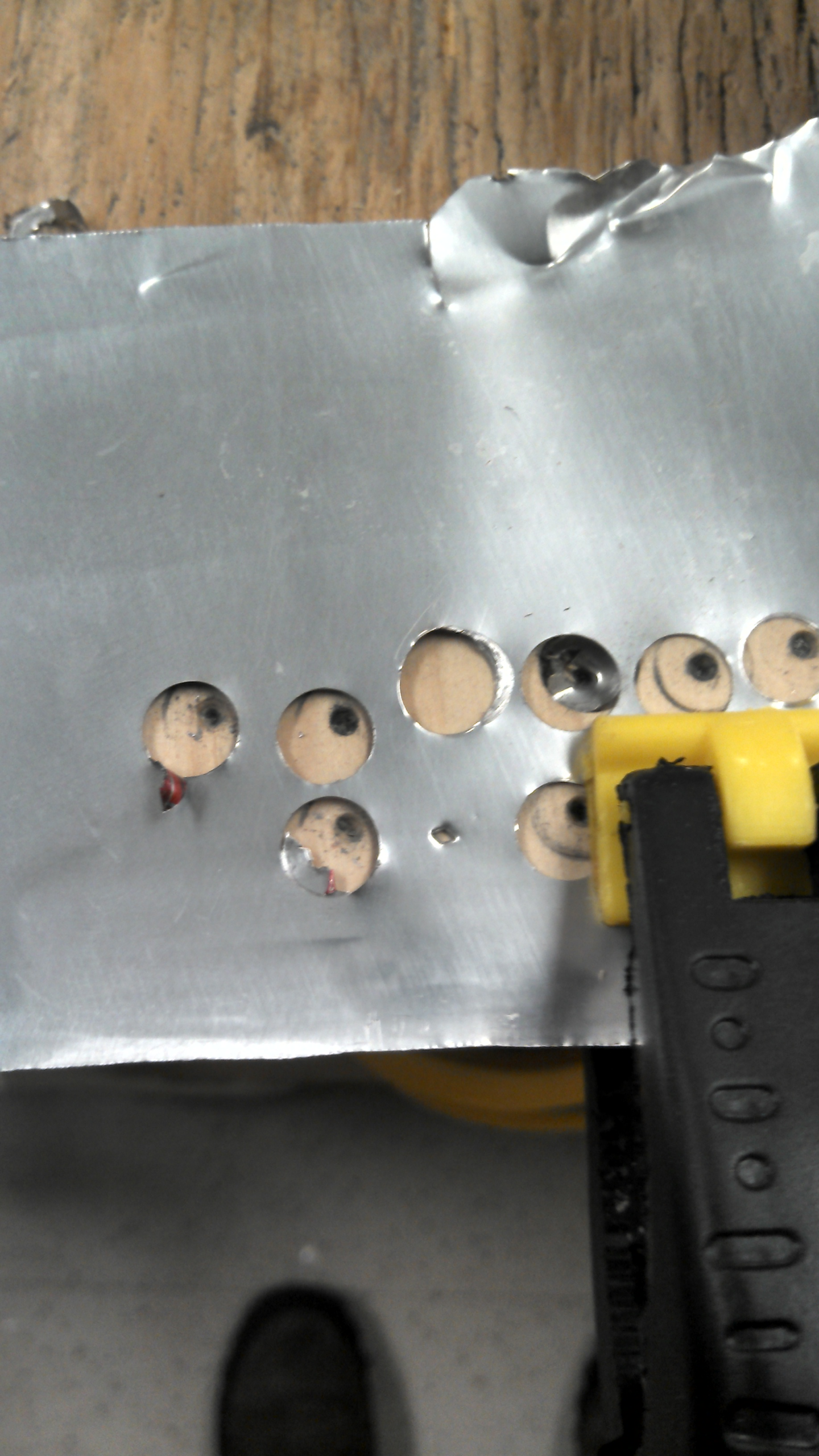
A pail that leaked from one small spot was not thrown away. It was cleaned, fluxed and closed with a drop of solder, and it went back into service.
Replaced.
The economics here are the whole story of the trade. A new pail cost real money that a farm did not have in cash, while a mend cost a few cents and five minutes – so the arithmetic favoured repair overwhelmingly, and a tinner’s circuit through a district was a service with genuine demand.
5. Soldering Is Not Welding
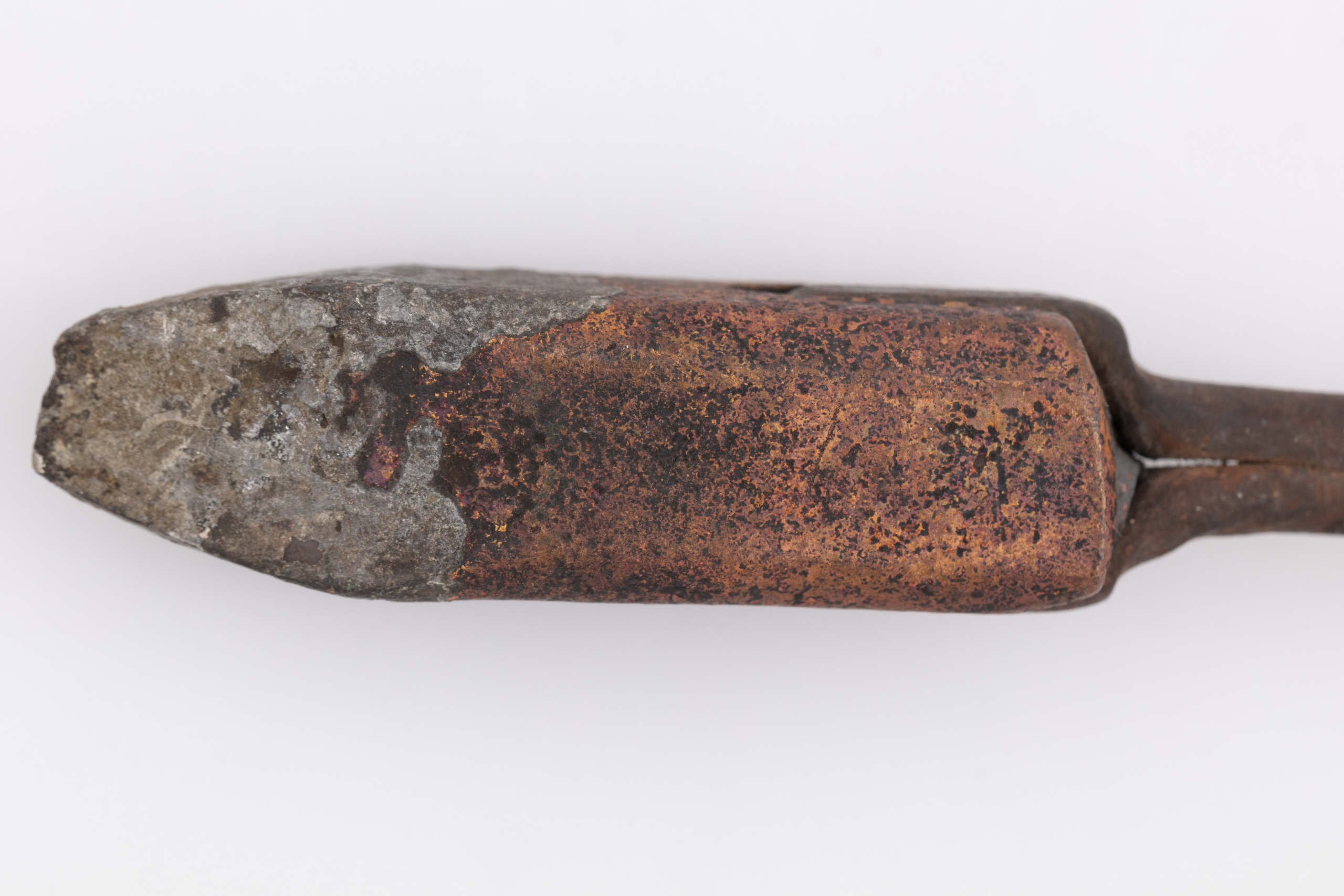
Solder is a low-melting alloy that flows into a joint and sticks to clean metal on both sides, without melting the pieces being joined.
The same principle, now in electronics and plumbing.
Understanding the difference makes the whole craft intelligible. Because the parent metal never melts, thin sheet can be joined without being burned through – which is the only way to make a watertight seam in material that thin, and is why tinsmithing is a soldering trade rather than a forging one.
6. Everything Depended on the Metal Being Clean
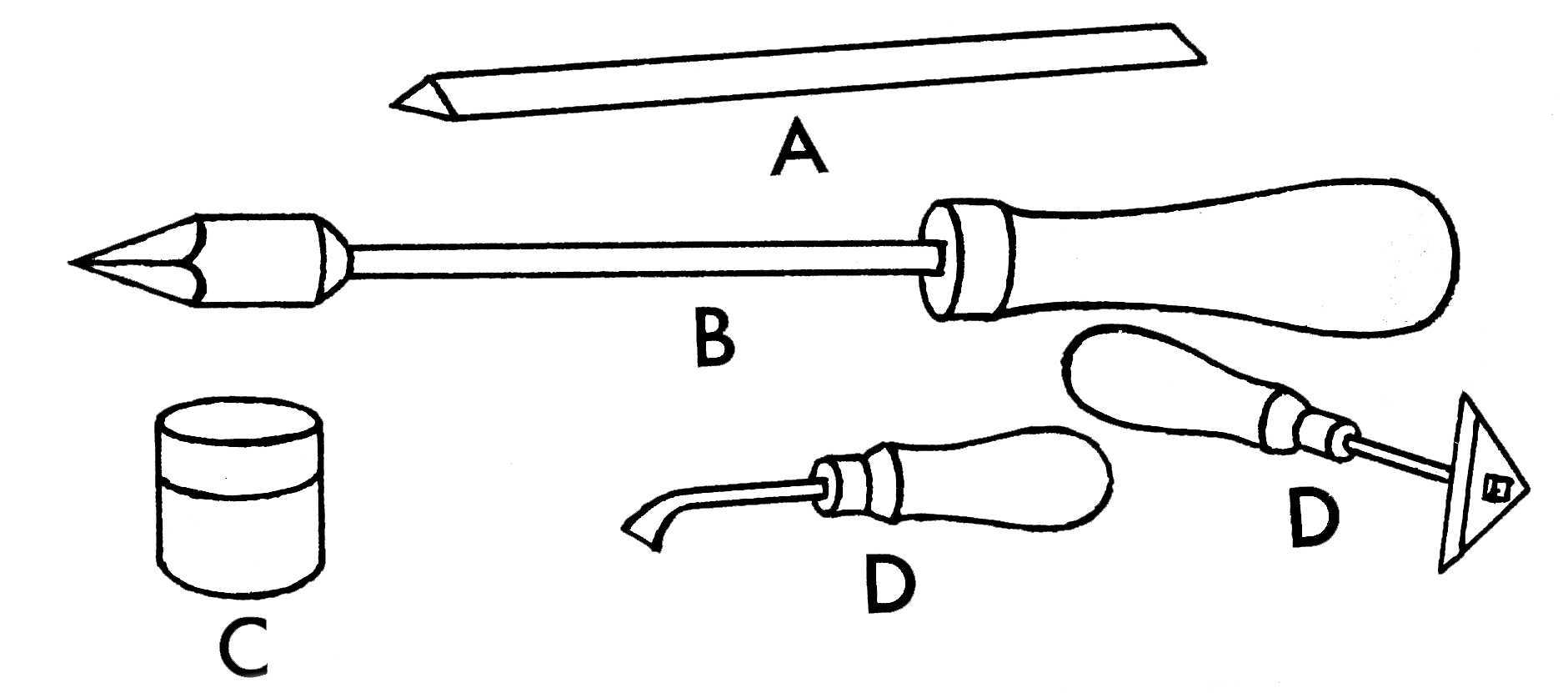
Solder will not stick to oxide, grease or dirt, so the joint had to be scraped bright and treated with flux before any metal was applied.
Unchanged.
Cleanliness is the entire skill and it is why bad repairs failed. Solder laid onto a dirty surface sits on top of it as a lump and comes away under load, while solder flowed onto bright fluxed metal bonds and holds – and the difference is invisible until the pail is full.
7. Patterns Were Cut Flat and Then Folded
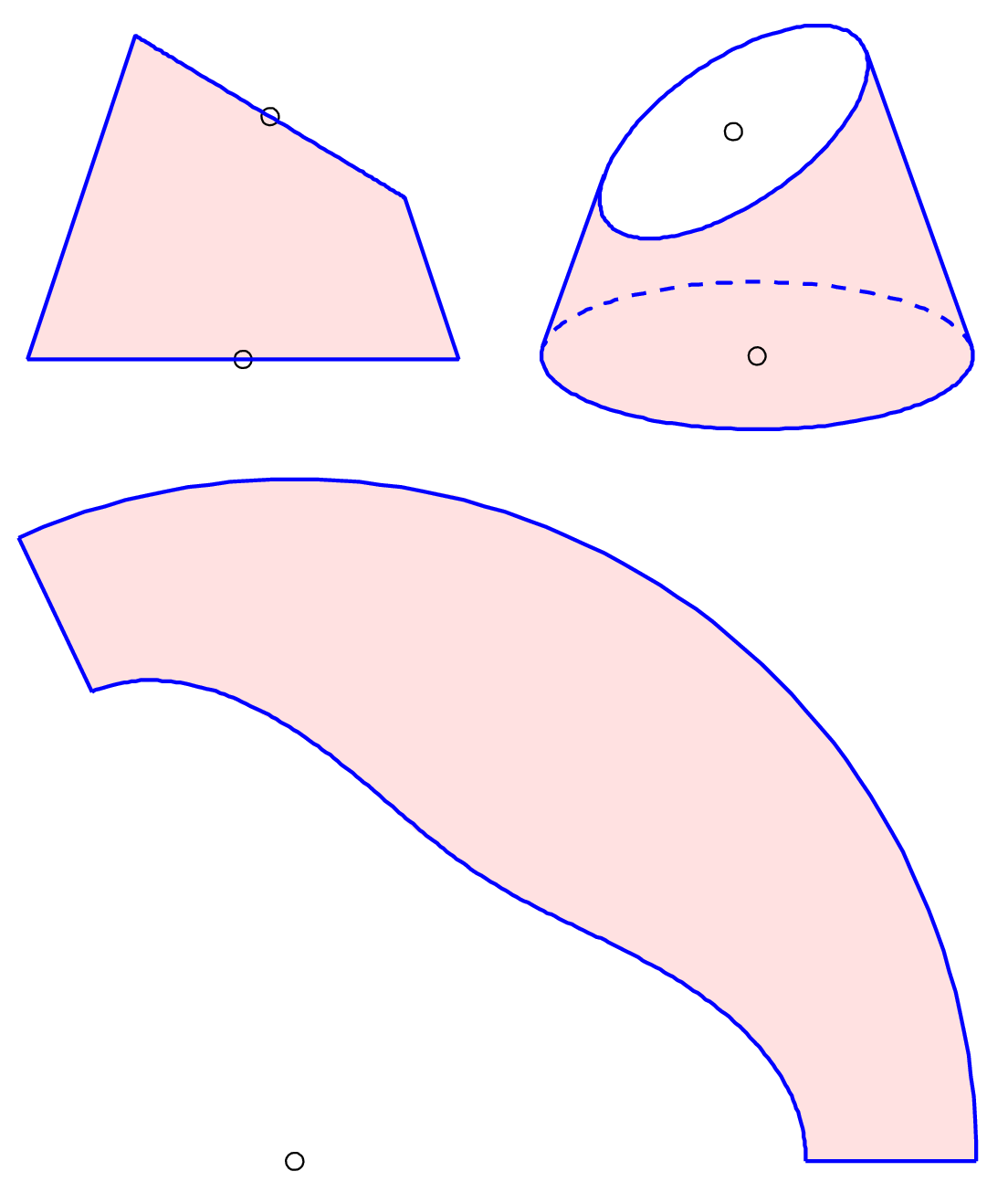
A tinner drew the unrolled shape of a finished vessel onto flat sheet, cut it out, and formed it into a cone, cylinder or box by bending and seaming.
Machine stamping and moulding.
The flat pattern is a genuine piece of applied geometry and it was done by eye and by rule. Working out the flat shape that folds into a tapered pail with a given top and bottom diameter is not obvious, and a tinner carried that knowledge in templates and in his head.
8. The Seams Were Folded Before They Were Soldered
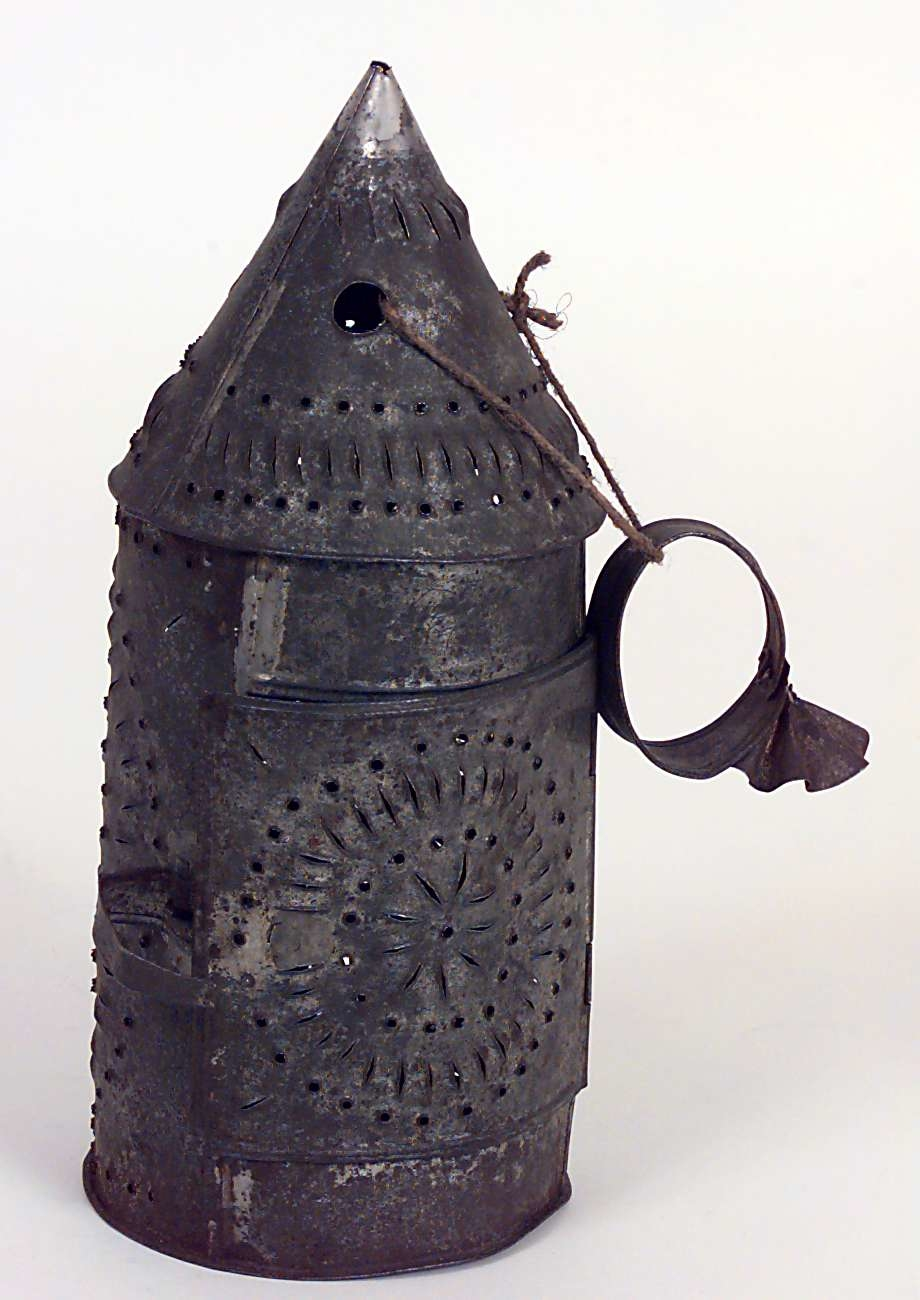
Edges were bent into interlocking hooks and hammered flat, so the joint held mechanically first and the solder only had to make it watertight.
Not applicable in the same way.
This is the detail that separates competent tinware from the kind that falls apart. Solder is weak in tension, so a seam relying on it for strength will fail – but a folded and hammered seam carries the load mechanically and uses the solder purely as a sealant, which is why hundred-year-old pails are still sound.
9. He Made New Things as Well as Mending
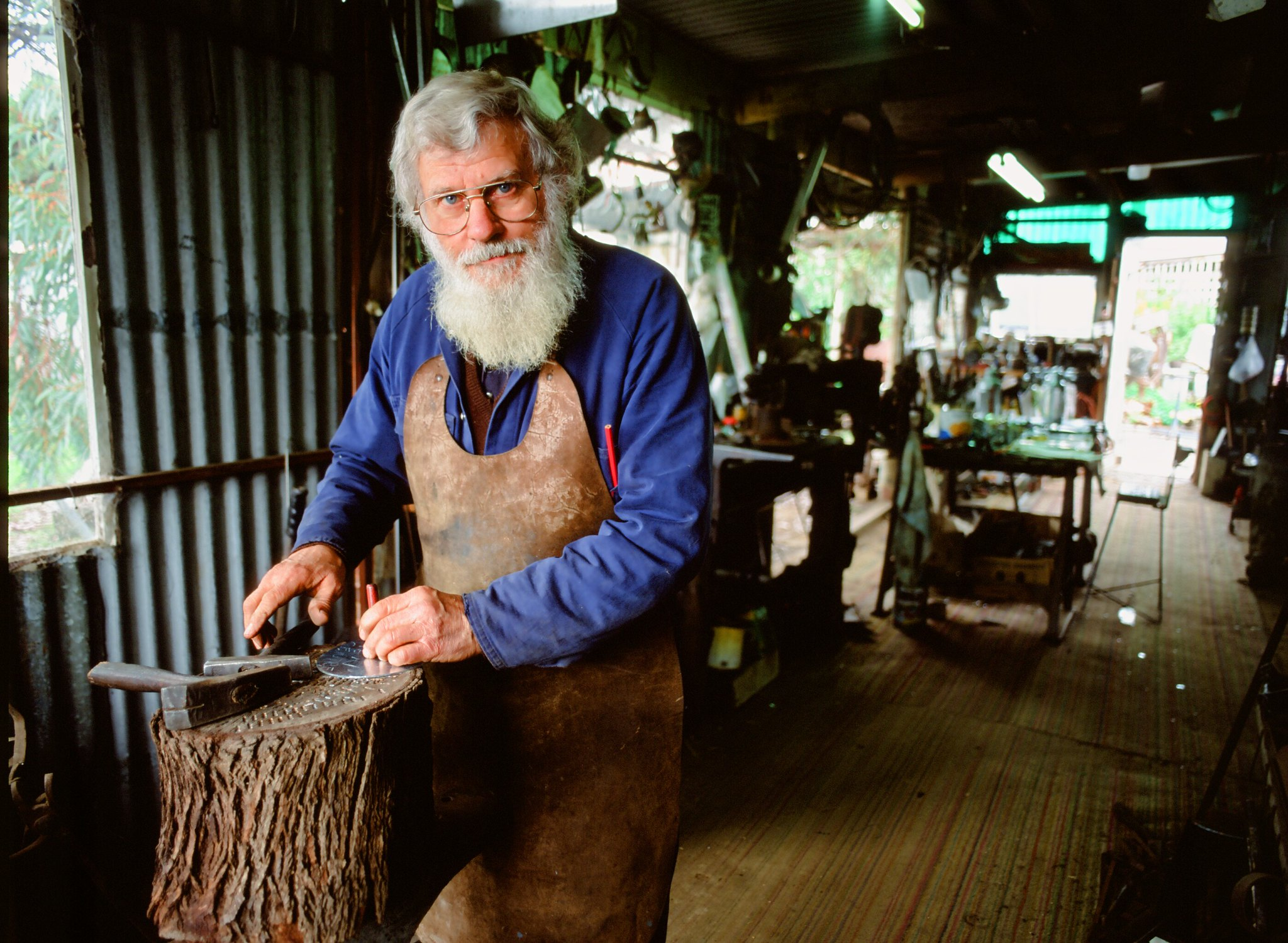
A tinner would make a vessel to order – a particular size of pan, a funnel for a specific jar, a replacement part for a lamp, a length of gutter – on the spot.
Not applicable.
The made-to-order capacity is what makes this a craft rather than a repair service. A household that needed something no catalogue sold could describe it and have it made that afternoon, in whatever dimensions suited, which is a kind of access to manufacturing that no household has had since.
10. Payment Was Often Not in Money
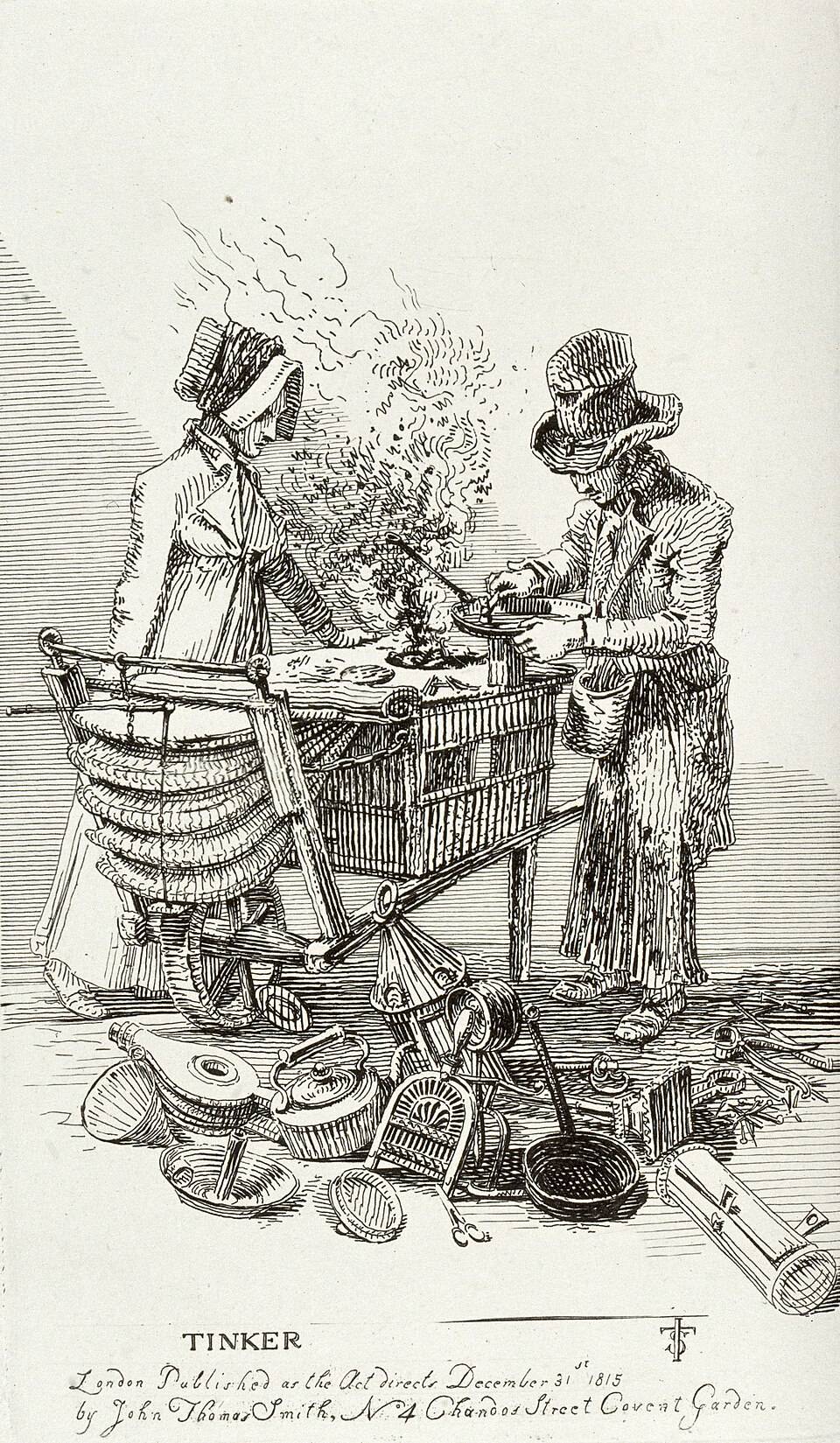
Tinners were paid in produce, in meals, in a bed for the night, in old metal or in a combination, because farms had goods and no cash.
Not applicable.
The payment arrangement is why these men travelled rather than opened shops. A trade conducted where the customers are allows payment in whatever the customers have, which suits a cash-poor countryside – and it also means the tinner’s wagon left heavier in goods than it arrived.
11. Scrap Was Currency
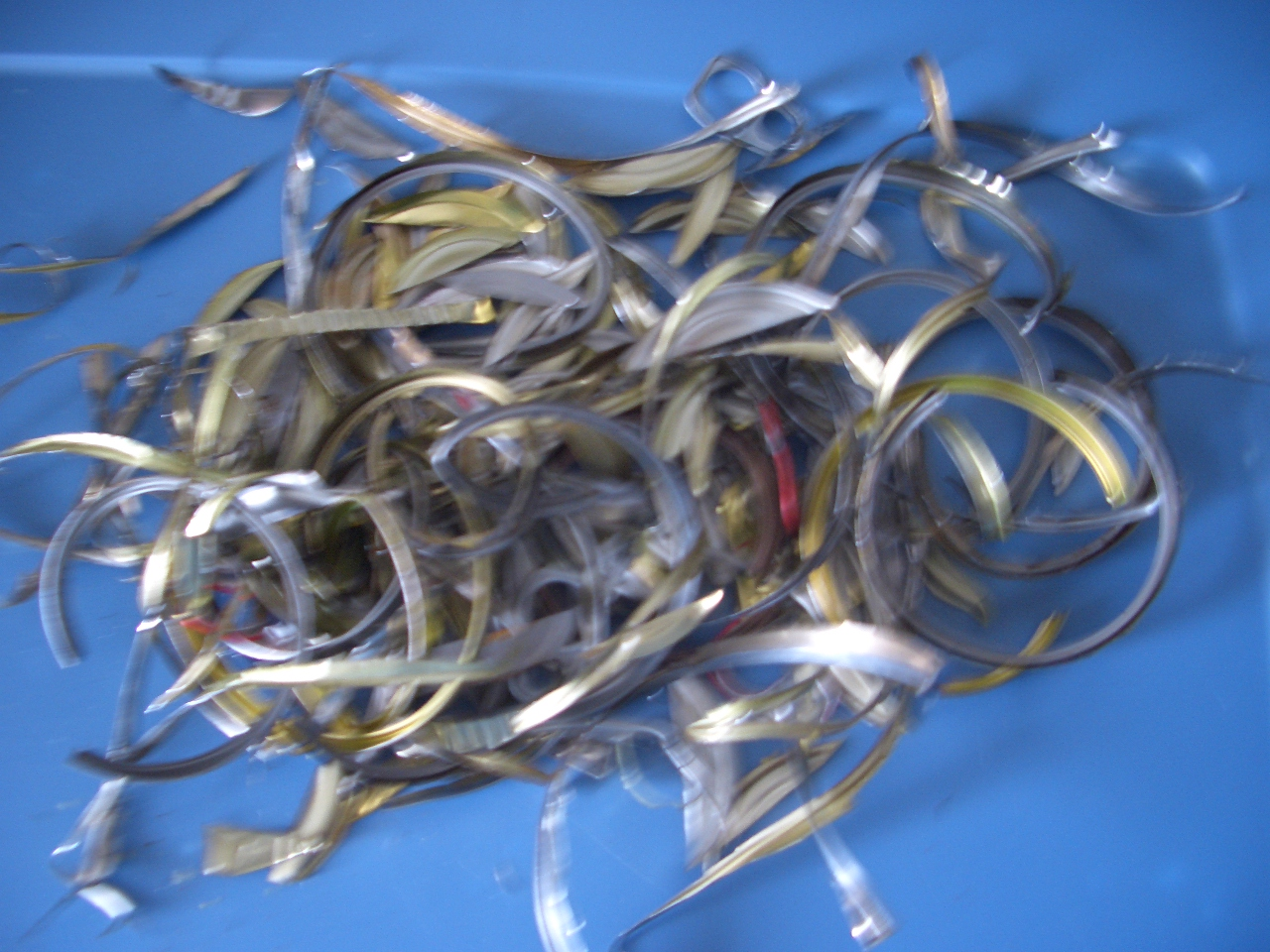
Worn-out tinware was traded in, and the tinner took it away to be cut up for patches, small parts or sale.
Recycling at industrial scale.
The scrap trade closed the loop and it is worth noticing. Nothing was discarded – a pail too far gone to mend became the patches for three other pails, so the material circulated through a district for decades and the tinner was the mechanism by which it did.
12. The Trade Was a Source of News

A man who travelled a circuit of farms and small towns carried information, prices, gossip and outside opinion with him, and households expected it.
Not applicable.
The information function was part of the service in practice if not in the price. An isolated farm saw a handful of outsiders in a year, and a man who had been at twenty other farms that month was a genuinely valuable visitor regardless of what he did with solder.
13. Children Watched the Whole Time
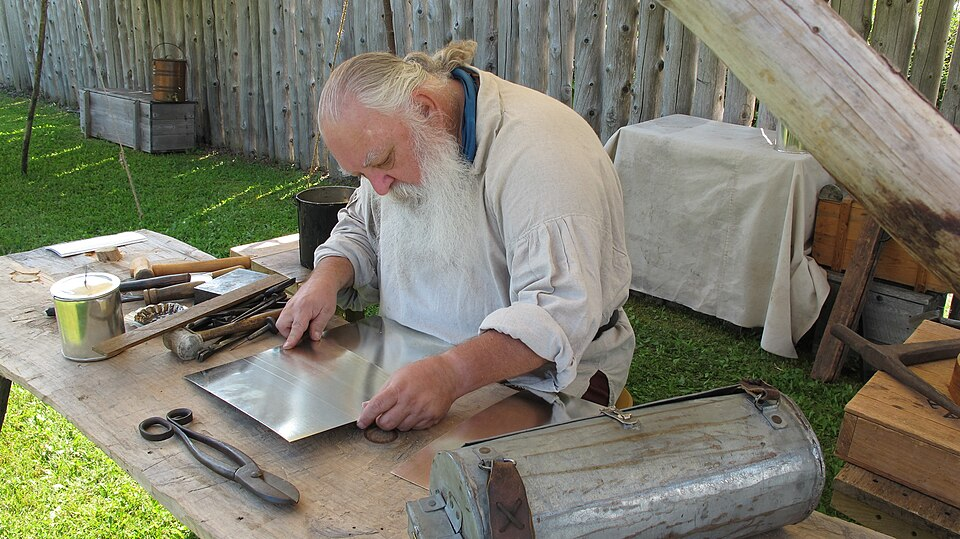
The furnace, the molten solder, the shears and the hammering made the tinner’s visit the most interesting thing to happen at the farm that month.
Not applicable.
Every account of these visits is a child’s account, which tells you where the audience was. A man making a bright metal object out of a flat sheet, in a farmyard, with fire, is close to a performance – and he was generally happy to be watched, since he was being fed.
14. Then Pressed Steel and Enamel Made Vessels Cheap
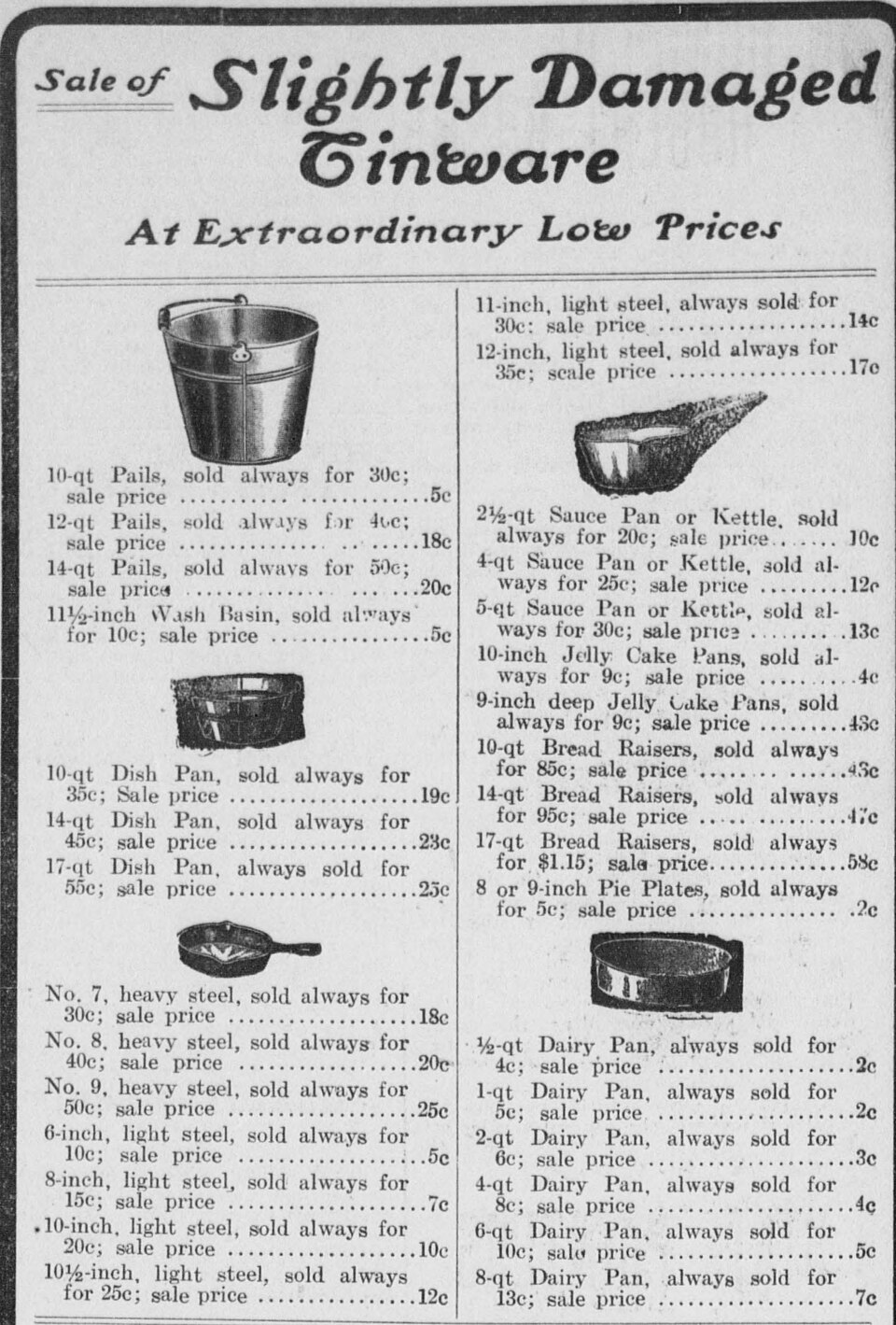
Machine-stamped and enamelled ware, sold through catalogues and stores at low prices, made a new pail cheaper than a mended one.
Universal.
The price crossover is the decisive event and it is purely arithmetical. The moment a new vessel costs less than a repair, the entire basis of the trade is gone – and there is nothing a craftsman can do about it, because he is competing with a machine that makes a thousand an hour.
15. Then Plastic Finished the Category
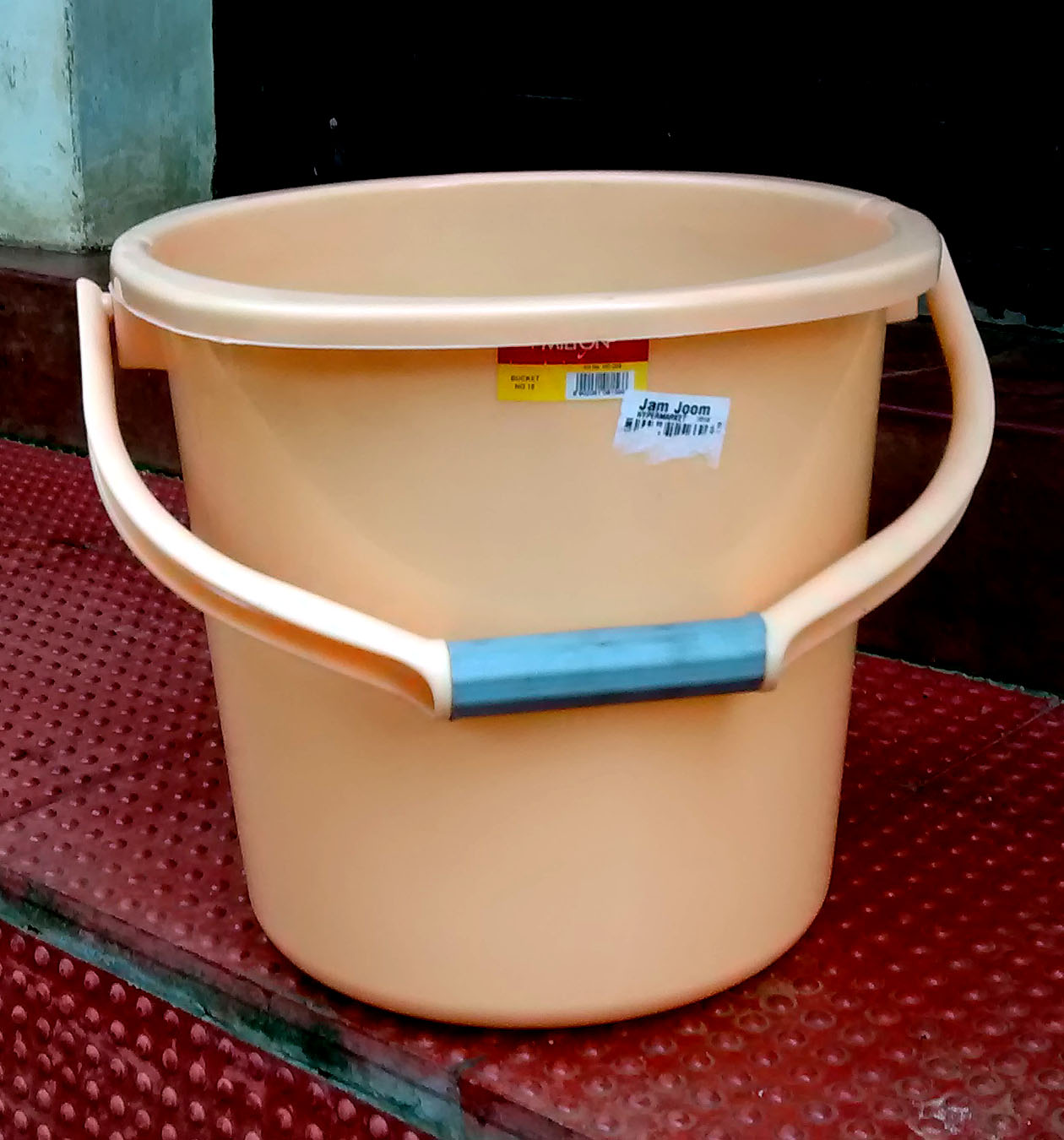
Light, cheap, unbreakable, rustproof vessels replaced sheet metal for most household purposes, and a plastic pail cannot be soldered at all.
Universal.
Plastic ended not just the trade but the possibility of the trade, which is a different thing. A tin pail with a hole in it is a repairable object and a cracked plastic one is not – so the shift in material removed repair as an option from the household rather than merely making it uneconomic.
16. And by 1964 the Wagons Were Long Gone
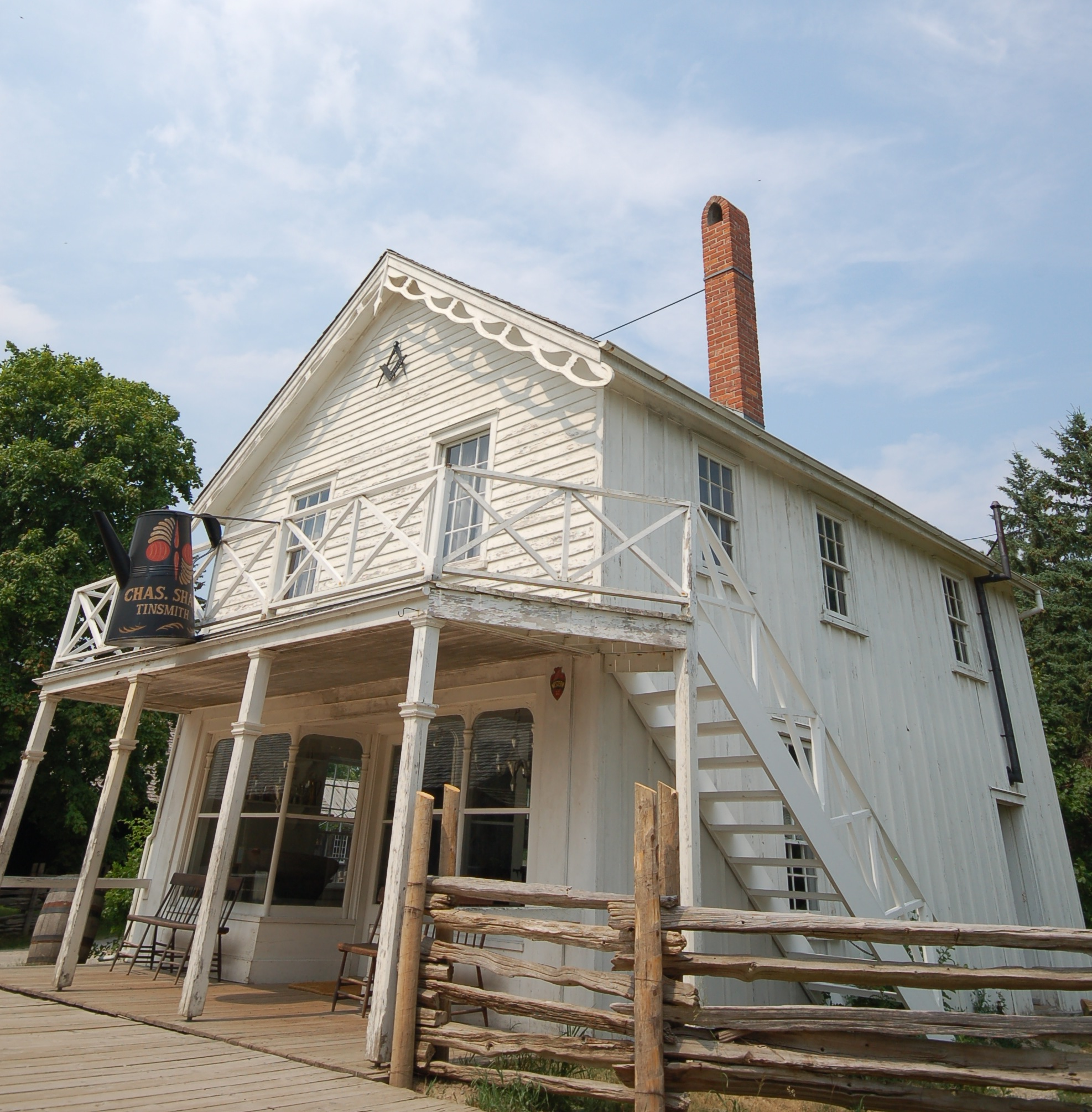
The travelling tinner had disappeared from most of the country, the skills survived in sheet metal and plumbing trades, and the tinware itself had become collectable.
Sheet metal work survives as an industrial trade; handmade tinware is collected.
And what deserves the last word is what the trade actually was. A man with a wagon brought the capacity to manufacture and repair metal objects directly to American households that had no other access to it, was paid in food and goods rather than money, took away worn metal to be reborn as patches, and carried the news from twenty other farms as part of the bargain. He could make you a funnel to fit a jar you owned, that afternoon, to no standard dimension. None of that was charming at the time – it was the cheapest available solution to the problem that everything in the kitchen was made of thin coated iron and thin coated iron eventually leaks. When a new pail got cheaper than a mend, the arithmetic ended him. And when the pail became plastic, it ended the whole idea that a household vessel was something anybody could fix.
He Brought Manufacturing to the Farmyard
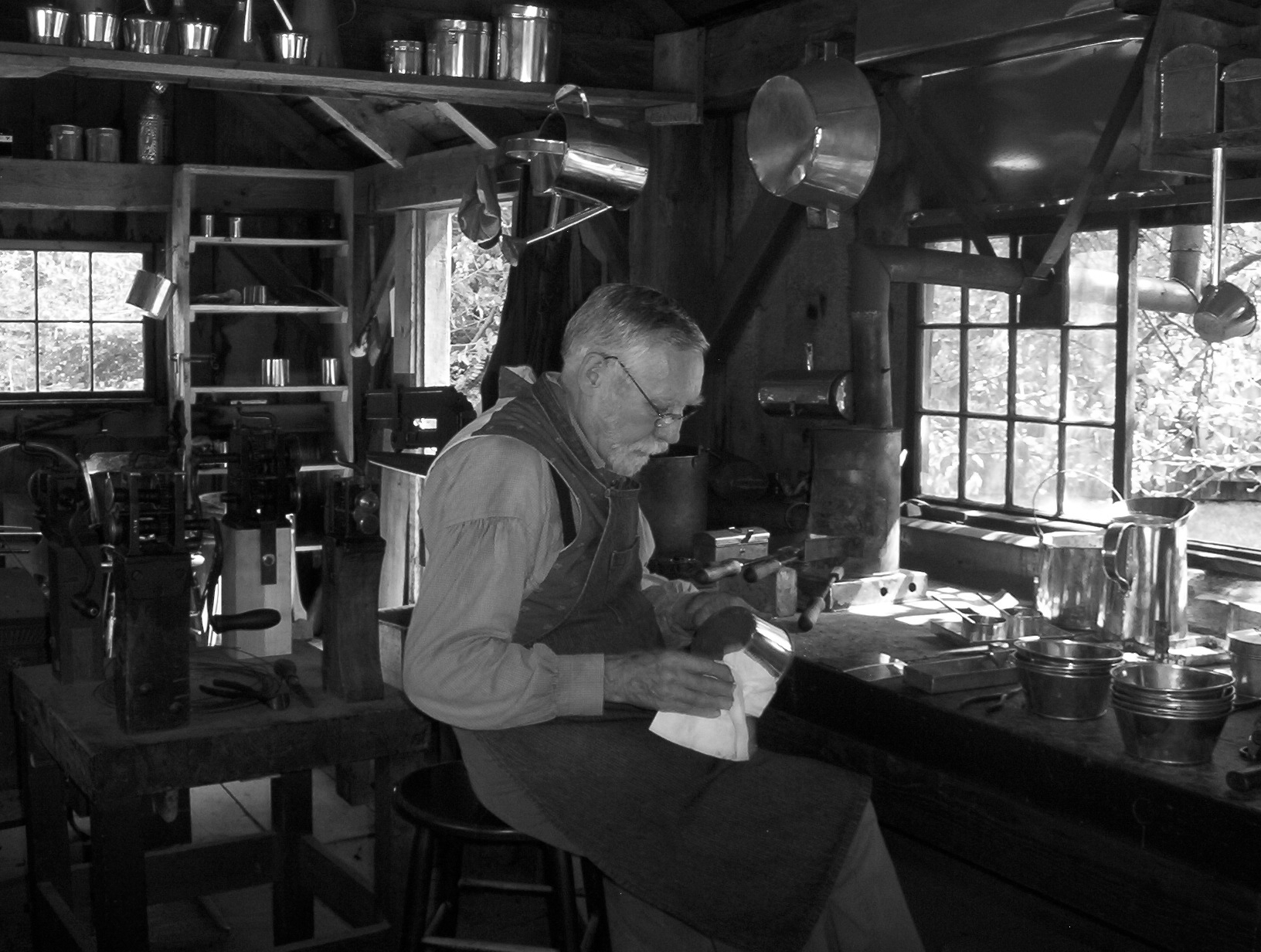
The travelling tinner is remembered as a picturesque visitor, and he was really something closer to a mobile factory.
Start with why he existed. Almost every vessel in a nineteenth-century American household was thin tin-coated sheet iron – pails, pans, dippers, milk cans, lanterns, coffee pots, basins, cups, funnels, boxes, gutters. An enormous number of objects, every one of them cut, folded and soldered by hand, and every one of them repairable.
And every one of them destined to leak. The tin is only a coating over iron, applied because iron rusts and tin does not. So the strength is underneath and the protection is a microscopically thin film on top, and any scratch, dent or worn patch exposes iron to water. The vessel then rusts outward from that single point.
Which is where the trade came from. A pail leaking from one spot was not thrown away – it was cleaned, fluxed and closed with a drop of solder. A new pail cost real money that a farm did not have in cash; a mend cost a few cents and five minutes. The arithmetic favoured repair overwhelmingly, and a circuit through a district was a service with genuine demand.
The craft itself is worth understanding properly.
Soldering is not welding. Solder is a low-melting alloy that flows into a joint and adheres to clean metal on both sides without melting the pieces being joined – which is the only way to make a watertight seam in material that thin, since the parent metal would simply burn through.
And everything depends on the metal being clean. Solder will not stick to oxide, grease or dirt, so the joint had to be scraped bright and fluxed first. Solder laid onto a dirty surface sits on it as a lump and comes away under load; solder flowed onto bright fluxed metal bonds and holds. The difference is invisible until the pail is full, which is why a bad repair was worse than none.
Making new vessels is where the real skill shows. A tinner drew the unrolled shape of a finished object onto flat sheet, cut it out, and folded it into a cone, cylinder or box. Working out the flat pattern that becomes a tapered pail with given top and bottom diameters is not obvious, and he carried that knowledge in templates and in his head.
Then the seams, which separate competent tinware from the kind that falls apart. Edges were bent into interlocking hooks and hammered flat, so the joint held mechanically before any solder went near it. Solder is weak in tension – a seam relying on it for strength fails – but a folded seam carries the load and uses the solder purely as a sealant. Which is why hundred-year-old pails are still sound.
He also made things to order: a particular size of pan, a funnel to fit a jar you already owned, a replacement lamp part, a length of gutter, on the spot, in whatever dimensions suited. That is a kind of direct access to manufacturing that no household has had since.
The commercial arrangements explain why he travelled rather than opened a shop. Payment was often not money but produce, meals, a bed for the night, or old metal – which suits a cash-poor countryside, and means his wagon left heavier in goods than it arrived. And scrap was currency: worn-out tinware was traded in and cut up for patches and small parts, so a pail too far gone to mend became the patches for three others. The material circulated through a district for decades and he was the mechanism.
Two other things came with him. News, because a man who had been at twenty other farms that month was genuinely valuable to a household that saw a handful of outsiders in a year. And a performance, because the furnace, the molten solder, the shears and the hammering made his visit the most interesting event of the month – which is why every surviving account of it is a child’s account.
What ended him was arithmetic. Machine-stamped and enamelled ware sold cheaply through catalogues made a new pail cost less than a mend, and there is nothing a craftsman can do about competing with a machine that makes a thousand an hour.
Then plastic ended something larger. A tin pail with a hole in it is a repairable object; a cracked plastic one is not. So the change in material did not merely make repair uneconomic – it removed repair as a possibility from the household altogether.
Which is the thing worth sitting with. None of this was charming at the time. It was the cheapest available solution to the fact that everything in the kitchen was made of thin coated iron, and thin coated iron eventually leaks.
If an old tin pail in your family has a bright patch on it, somebody was paid in eggs to put that there.
And the pail outlasted him by a century.
Like our content? Follow us for more.