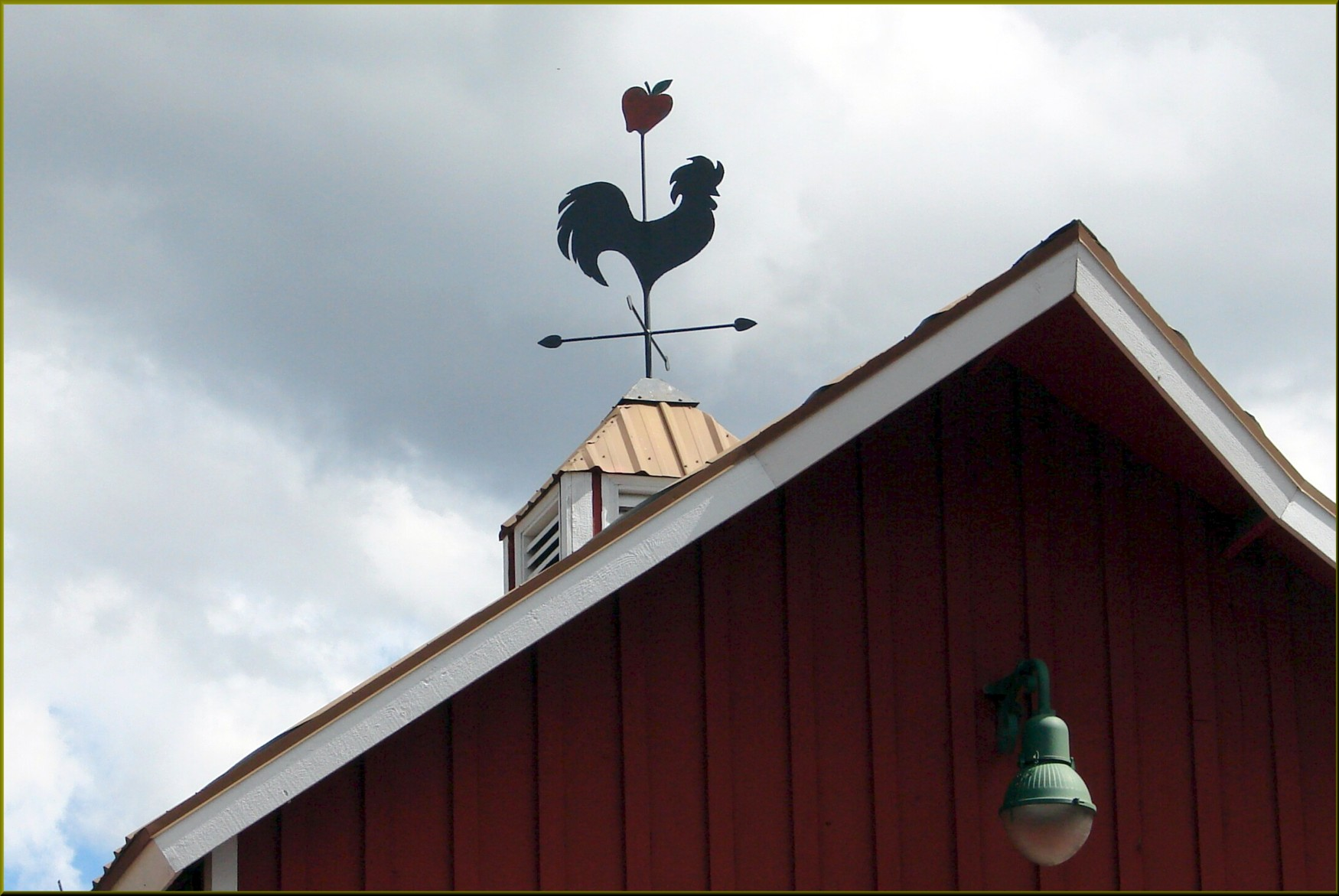
They sell for serious money now. A nineteenth-century American weather vane in copper – a horse, a cow, a rooster, an Indian, a locomotive, an arrow – is a collectible object, bought by people who put it on a garage or a mantelpiece and never look at which way it is pointing.
Which is a slightly odd fate for a scientific instrument.
Because that is what it is. A vane reports one number, wind direction, and wind direction is a genuinely useful predictor of what the weather is about to do. The farmers who glanced up at the barn every morning were not being quaint. They were reading an instrument, and the reading told them something real.
One Reading, and It Actually Forecasts
Here is the physics, and it is worth getting right because the folklore around it is a mixture of sound reasoning and nonsense.
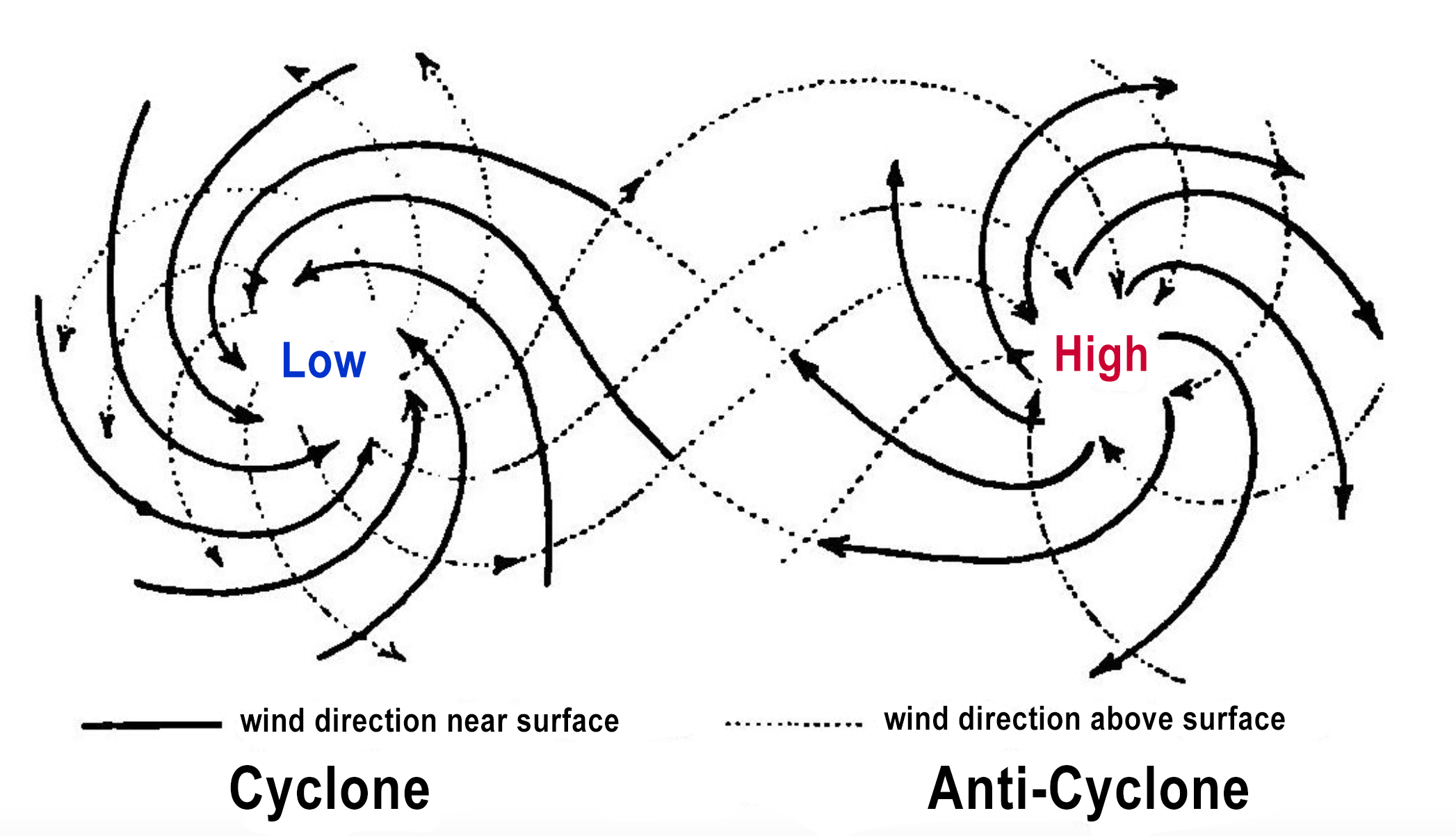
In the middle latitudes – which is most of the United States – weather is organised around travelling low pressure systems, and those systems rotate. Air spirals inward and counterclockwise around a low in the northern hemisphere.
Which means the wind direction at any given point tells you where the low is relative to you. If you stand with your back to the wind in the northern hemisphere, the low pressure is roughly to your left. That is a real relationship, taught in meteorology, and it is derivable from one glance at a vane.
Now add the fact that these systems travel, generally from west to east across North America. So the direction of the wind, and more importantly the way that direction is changing through the day, tells you whether a low is approaching, passing or departing – which is the single most useful thing anybody can know about the next twelve hours.
A vane does not measure that. But a person who looks at a vane twice does.
Like our content? Follow us for more.
The Sayings Are Half Right and Worth Sorting Out
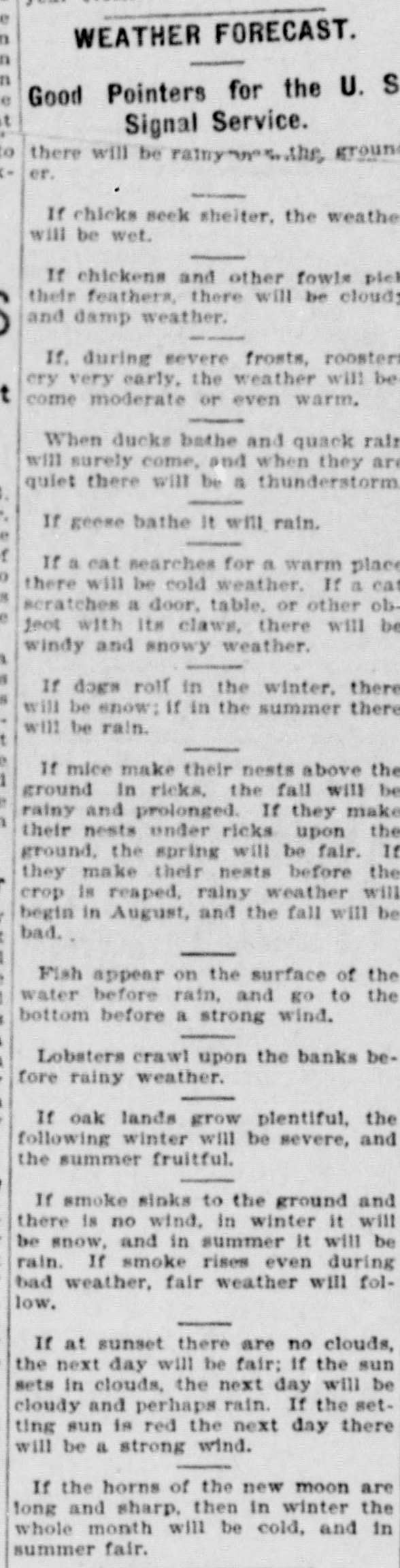
Every farming region had rhymes and rules about wind direction, and they deserve honest treatment rather than either reverence or dismissal.
The sound ones encode exactly the relationship above. A wind backing into a particular quarter means a system is approaching. A wind that swings round sharply means a front has passed. A steady wind from the dry quarter means settled weather because the air is coming off the continental interior rather than off a body of water.
Those are not superstition. They are pattern recognition in a specific place, accumulated over generations, and in that place they worked – because the geography that determines which wind brings moisture does not change.
The weak ones are the universal claims. A rule that works in one region will frequently be wrong in another, because which direction brings rain depends entirely on where the water is relative to you. And anything that attaches a specific number of days or an outcome for a whole season to a single wind reading is not doing meteorology.
The honest summary is that local wind lore was good at twelve hours and bad at anything longer.
It Had to Be High and Clear of Everything
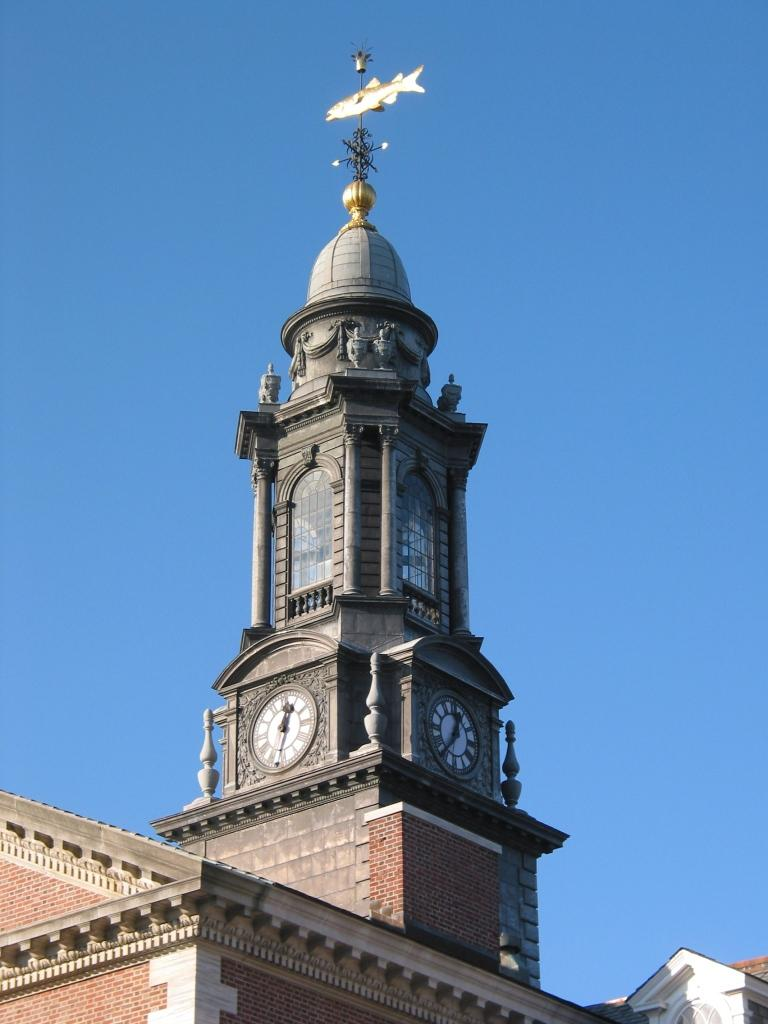
Which explains the placement, and the placement is the part people get wrong when they buy one now.
Wind near the ground is disturbed by everything it has just passed – buildings, trees, hills, the barn itself. To read the actual wind, the vane has to be above all of that, which is why it went on the highest point available: a barn ridge, a cupola, a church steeple, a courthouse dome, a windmill tower.
The cupola on a barn is frequently assumed to be decorative. It is not – it is a ventilator for the hay mow, and the vane went on top of it because that happened to be the highest fixed point on the property.
Mount a vane on a garage between two trees and it will spin and swing and tell you nothing, which is why most modern ornamental installations are not instruments in any useful sense.
It Had to Be Balanced and Nearly Frictionless
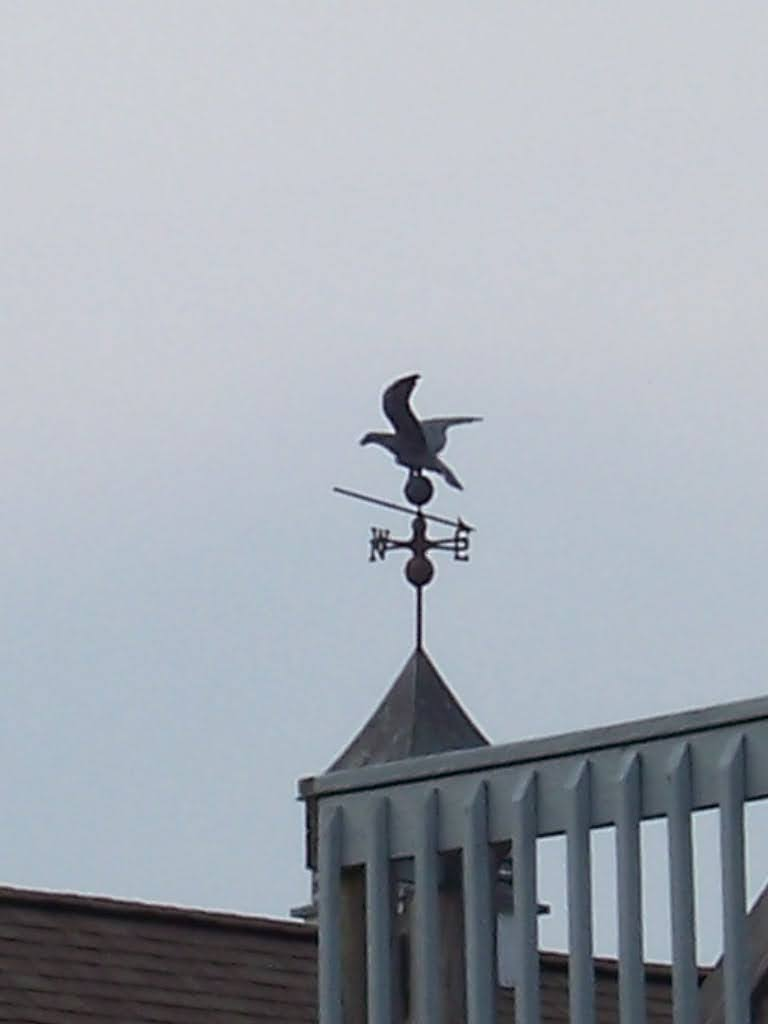
The engineering is more careful than it looks.
A vane has to turn freely in a light wind, which means the bearing has to be good and has to keep working through rain, ice, dust and decades of neglect. The usual arrangement is a hardened point sitting in a socket, which is a design that is self-centring and tolerant of dirt.
It has to be balanced about the pivot so that gravity does not hold it in one position – which is why the tail is large and the head is small, and why figures have a counterweight hidden in them.
And the pointer has to have much more area behind the pivot than in front of it. That is the whole principle: the wind pushes the large tail downwind until the small head points into the wind, and then it is stable. Get that ratio wrong and the vane hunts back and forth instead of settling.
The cardinal letters underneath are the other half of the instrument, and they are useless unless somebody aligned them to true north when it went up. Plenty were not.
The Figures Meant Something to Whoever Bought Them
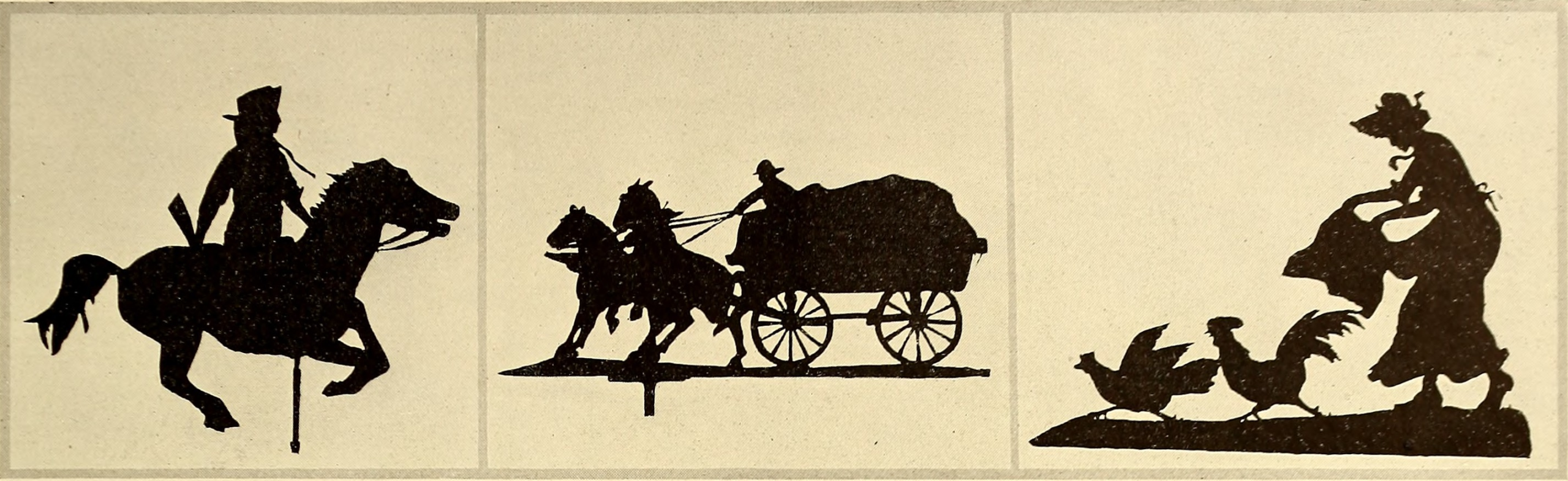
The decorative side is real and worth taking seriously rather than treating as mere ornament.
Vane figures ran to horses, cows, sheep, pigs, roosters, fish, eagles, arrows, locomotives, fire engines, ships, angels and a long list of other subjects, and the choice was frequently a statement about the building underneath. A trotting horse on a horse barn. A cow on a dairy. A locomotive on a depot. A fish on a building near water.
They were manufactured commercially in quantity, in copper and zinc and cast iron, and sold through catalogues – which means most of them are products rather than folk art, however they are sold now.
The best are genuinely fine objects, hollow-formed in sheet copper over moulds, and the copper weathers to the colour everybody associates with them. The gilded ones were gilded because gold leaf does not corrode and stays visible against a sky.
Why It Mattered So Much on a Farm
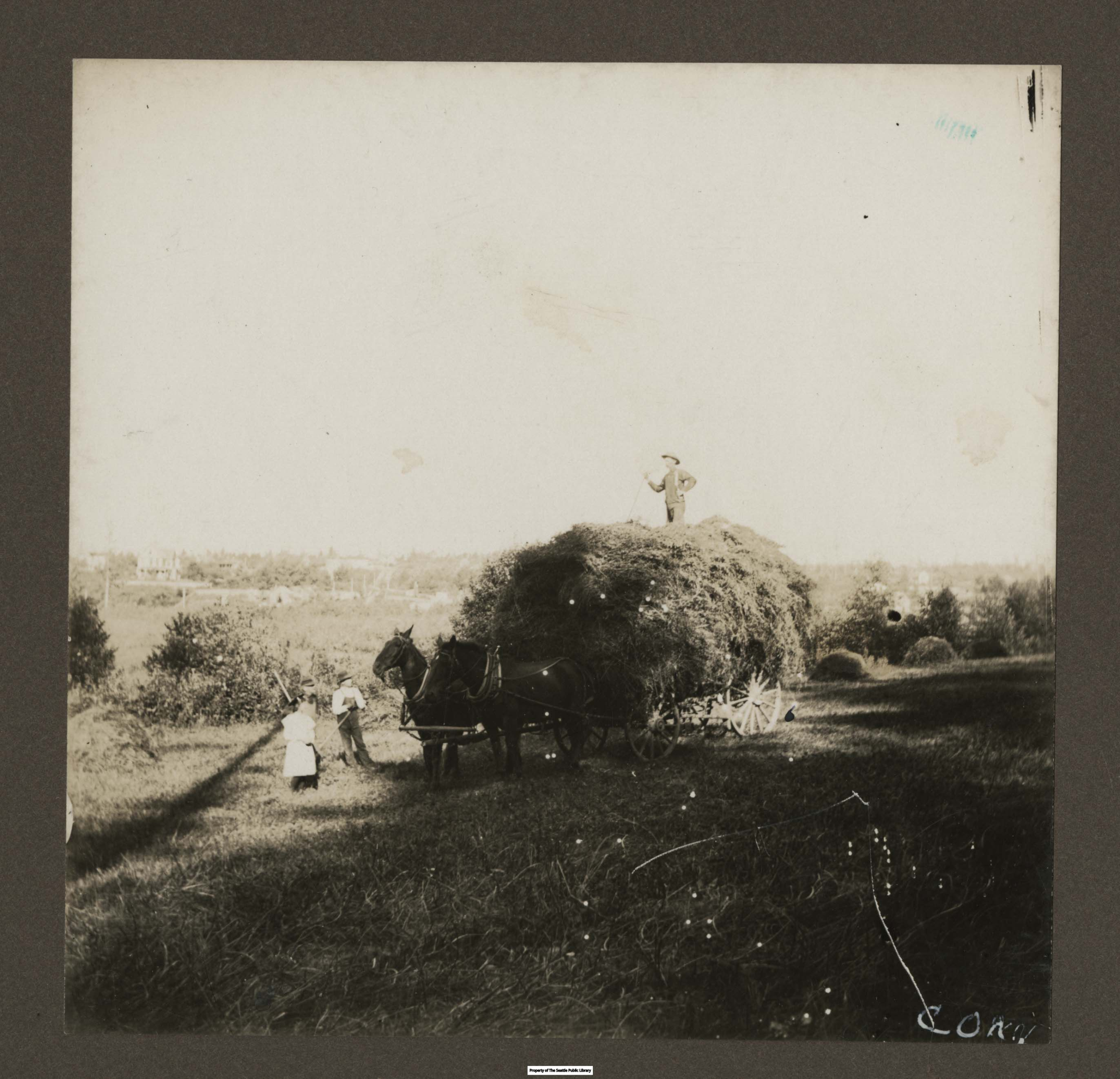
The reason a farm cared about twelve hours of weather, specifically, is worth spelling out, because it explains why anybody bothered to glance at a roof every morning.
Almost every important decision on a farm is a bet about the next half day, and most of them cannot be undone.
Cut hay and it has to dry in the field. Rain on cut hay ruins it, and once the mower has gone round there is no putting it back. So the decision to start cutting is a forecast, made by one person, with a crop’s value riding on it.
The same applies to anything spread out to dry, anything that has to be got under cover, stock that has to be brought in or left out, a trip to town with a load, and a hundred smaller things. None of them is reversible and all of them depend on what the sky does between now and tomorrow.
Which is why the vane was not a curiosity. It was the only forward-looking information anybody on the place had, and the person reading it was making real decisions on the strength of it.
It is also why the loss of local weather knowledge was felt as a loss by the generation that had it. Their forecast was worse than ours in range and accuracy, and it was about their own ground.
Then the Forecast Arrived From Somewhere Else
The decline is not about the instrument failing. It is about better information arriving.
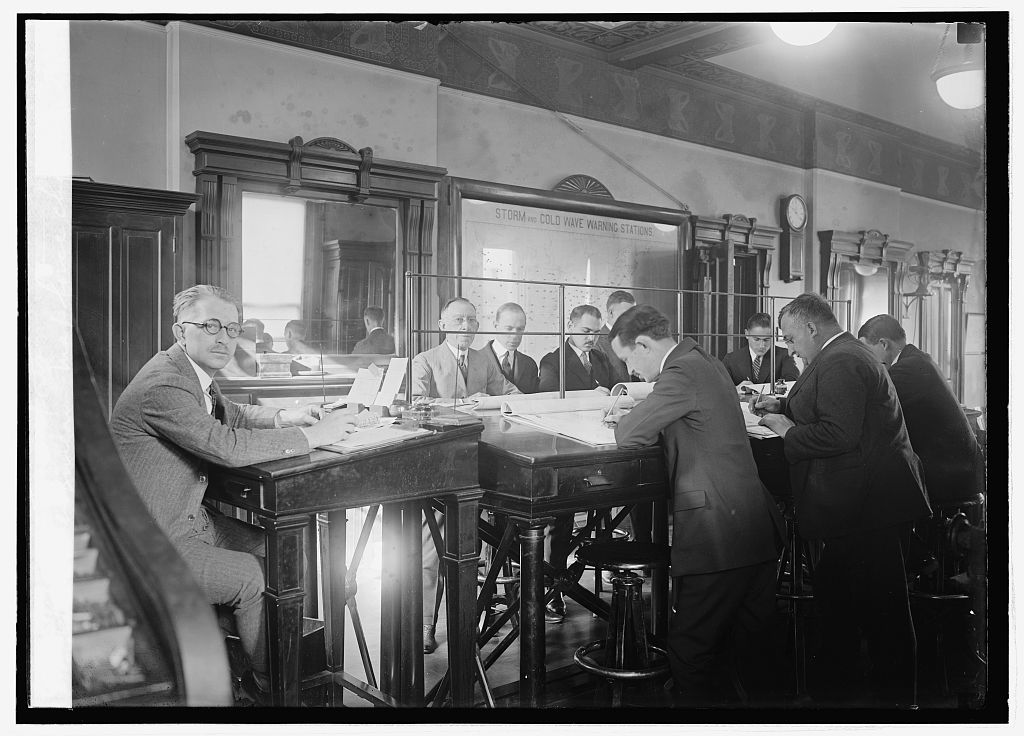
Telegraph networks allowed weather observations to be collected from many places at once, and a system assembled from reports across a continent can see a low pressure area that is still a day away – which no single local reading can do. That is a different order of knowledge from watching your own vane.
Then the radio delivered that forecast into the kitchen. A farmer who could hear a regional forecast every morning had no reason to infer one, and the inference had always been the weaker method.
Television added the map, which is the decisive step. A picture of the pressure systems and where they are heading gives a person the thing they had been trying to deduce from wind direction, directly and without the deduction.
And then radar, satellites and the general availability of a forecast on demand removed the last reason anybody would look at a vane for information.
The Knowledge Went Faster Than the Object
Which is the part worth noticing, because the two did not disappear together.
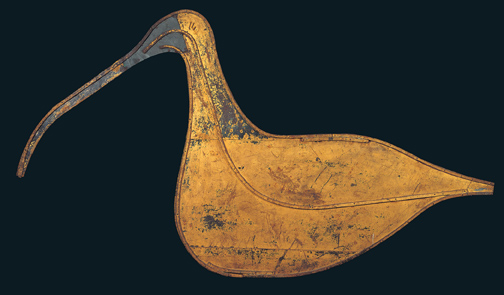
The vanes stayed up. They are durable, they are high off the ground, nobody takes one down without a reason, and they became ornamental in place – still turning, still correct, still reporting the wind to nobody.
What went was the habit of reading one, and with it a body of local knowledge about which wind brought what in a particular place. That knowledge was specific, unwritten, accumulated over generations, held by the people who farmed one piece of ground, and it had no way of surviving once nobody needed it.
A modern forecast is far better than it. But a regional forecast is regional, and the old knowledge was about this valley, this slope, this side of the ridge – which is a scale that forecasting has only recently started to reach again.
The One on the Barn
If there is still a vane on a building near you, it is worth standing underneath it for a second and doing what the instrument is for.
Find which way it is pointing. Put your back to the wind. The low pressure is off to your left, and it is probably moving east. Look again in two hours and see whether the direction has shifted, and which way.
That is the entire method, it takes ten seconds, and it will tell you something true about the next half day.
Then notice that the thing doing it is a copper horse made in a factory a hundred years ago and bolted to the top of somebody’s hay mow ventilator – and that for a long time it was the only weather information an entire farm had.
Like our content? Follow us for more.