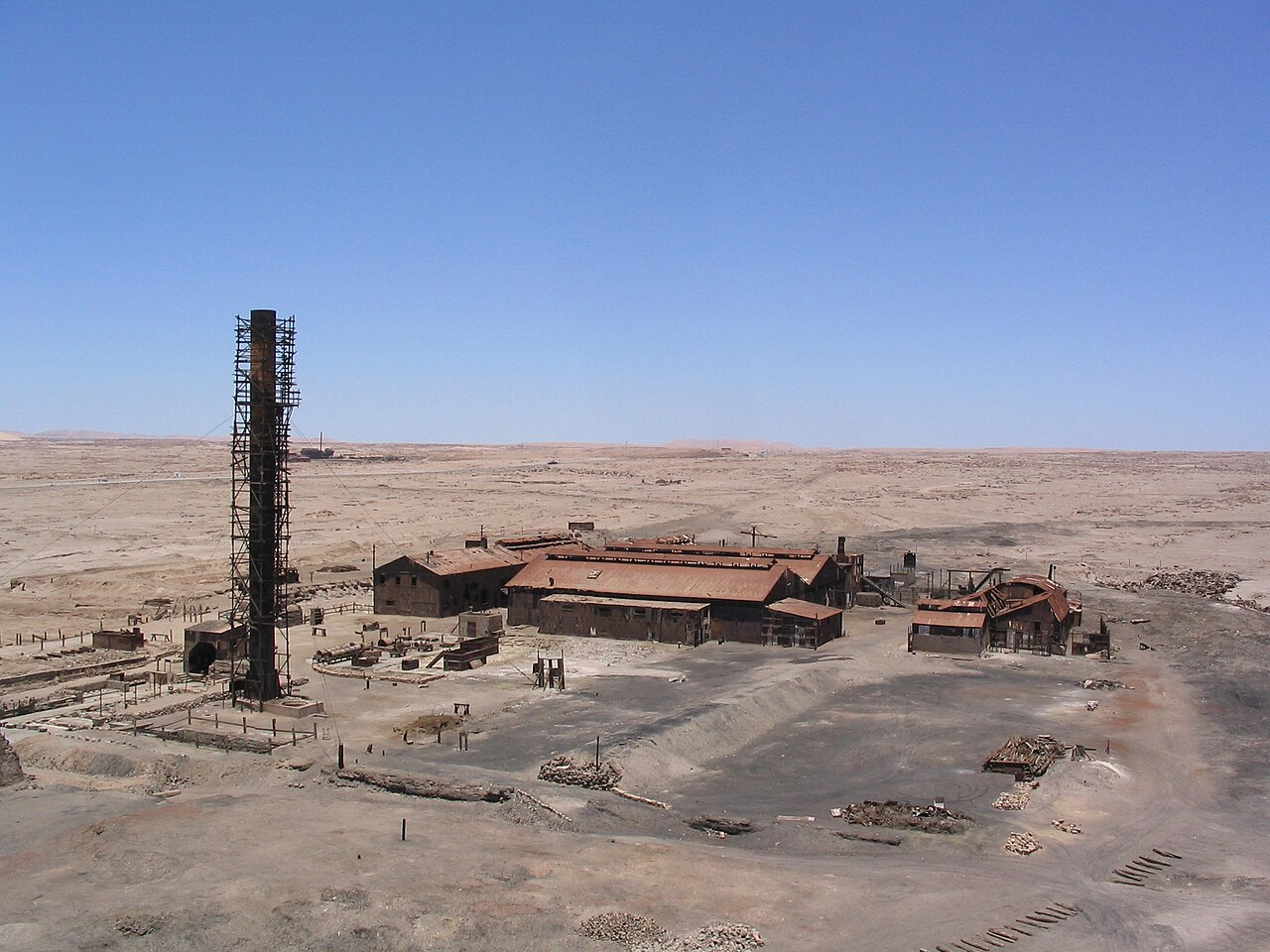
In the heart of Chile’s Atacama Desert, the driest place on Earth, sits a ghost town so well preserved it feels as though its residents simply walked away mid-shift. Humberstone, along with its smaller neighbor Santa Laura, once formed the beating heart of an industry that transformed Chile’s economy and, for a time, fed farmland across three continents. Today, both sites stand as UNESCO World Heritage landmarks, a haunting monument to the rise and collapse of the global saltpeter trade.
The Rush for “White Gold”
Beginning in the mid-1800s, the Atacama Desert’s vast deposits of sodium nitrate, known as saltpeter or “white gold,” became one of the most valuable natural resources on Earth, prized as a natural fertilizer capable of dramatically boosting agricultural yields, and as a key ingredient in gunpowder. Chile emerged as the world’s dominant saltpeter producer, and company towns sprang up across the desert to house the thousands of workers needed to extract and process it. Founded in 1872 and originally known as La Palma, the settlement that became Humberstone grew into the largest and most prosperous of more than 200 such nitrate works scattered across the region.
Like our content? Follow us for more.
A Company Town in the Driest Place on Earth
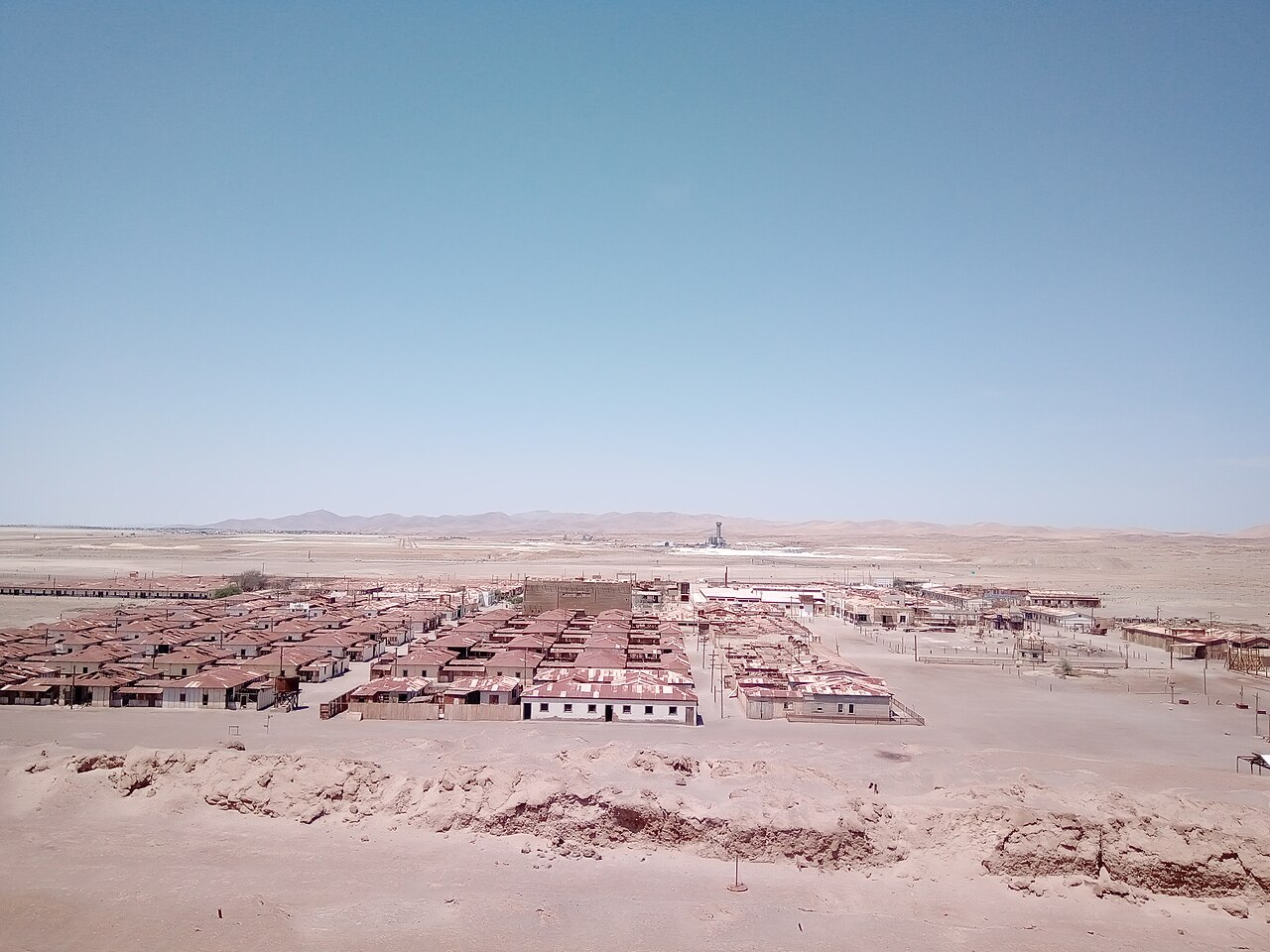
At its peak, Humberstone housed more than 3,700 residents, with the neighboring Santa Laura works adding several hundred more, workers and families drawn from Chile, Peru, and Bolivia to endure some of the harshest working conditions imaginable. The company provided housing, food, and healthcare, but paid workers in company-specific tokens usable only at the company store, and daily life involved brutal heat, long hours, and genuine poverty. Out of these difficult conditions emerged a distinctive “pampino” culture, its own dialect, music, and traditions, along with some of Chile’s earliest and most influential labor unions, whose struggles for fair treatment helped shape the country’s first labor laws.
Collapse of an Industry
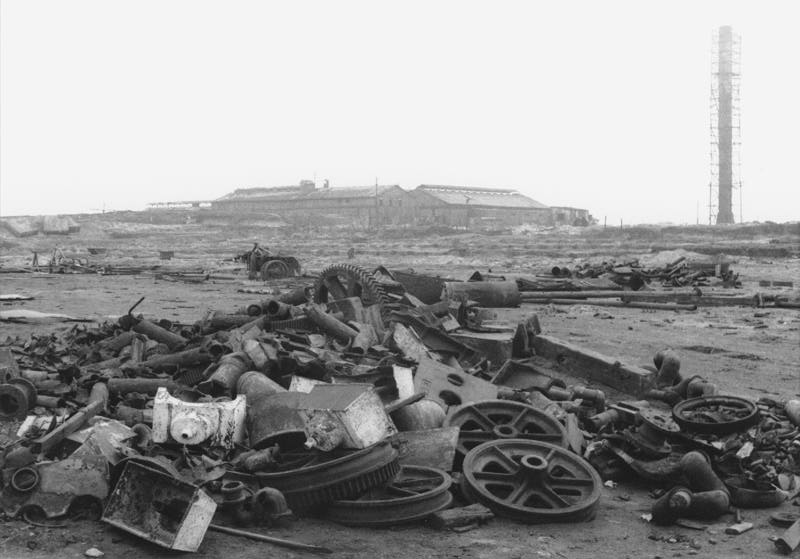
The saltpeter boom came to an abrupt end in the 1920s, when German chemists Fritz Haber and Carl Bosch developed a method for synthesizing ammonia-based fertilizer, eliminating much of the world’s need for Chile’s natural product almost overnight. Humberstone limped along under new ownership through the following decades, renamed in honor of the engineer who introduced an improved extraction process, but the writing was on the wall. The Great Depression compounded the industry’s troubles, pushing many nitrate operations toward bankruptcy well before the final collapse. By 1960, both Humberstone and Santa Laura were fully abandoned, their machinery left standing and their tools still on workbenches, as though the workers expected to return the next morning.
Decades of Neglect, Then Recognition
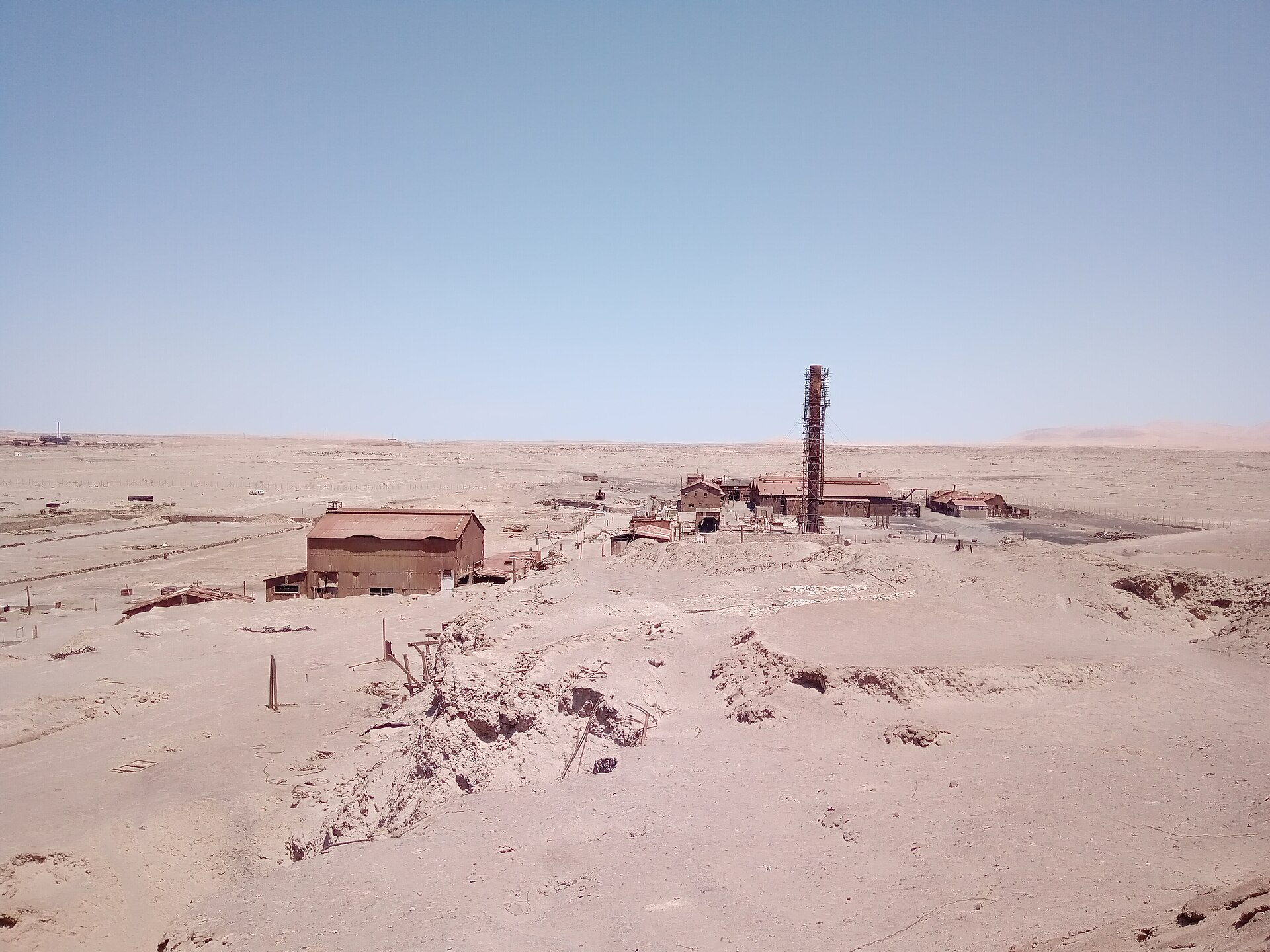
For much of the following decades, the abandoned towns suffered from looting and dismantling, as scavengers stripped away metal for scrap and wood for fuel. Recognizing what remained of genuine historical value, the Chilean government declared both sites national monuments in 1970, offering some legal protection, though meaningful conservation work didn’t begin in earnest until the early 2000s. That effort paid off in 2005, when UNESCO designated Humberstone and Santa Laura a World Heritage Site, recognizing them as the best-preserved surviving examples of the saltpeter industry that once defined an entire era of Chilean history.
Walking Through Frozen Time
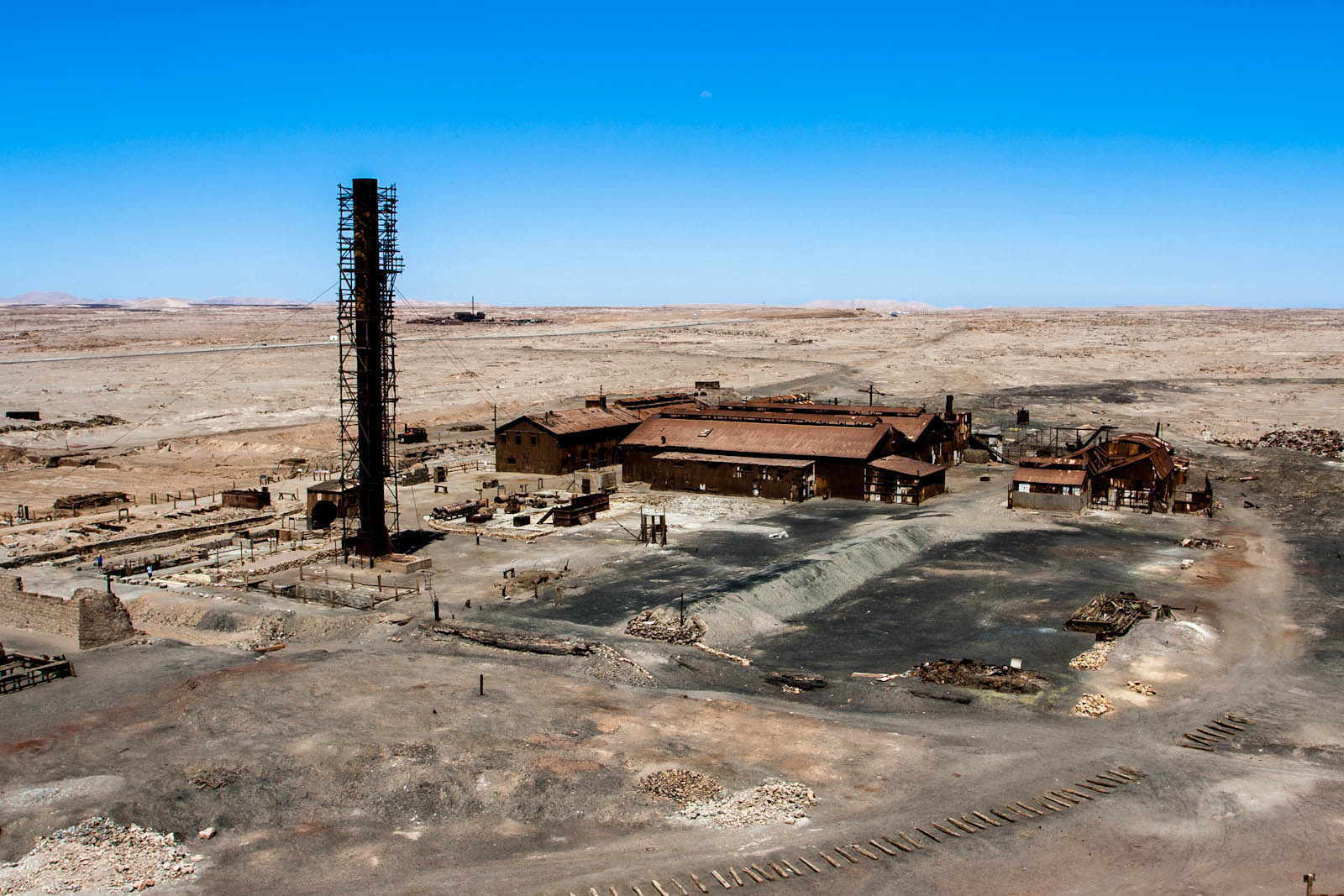
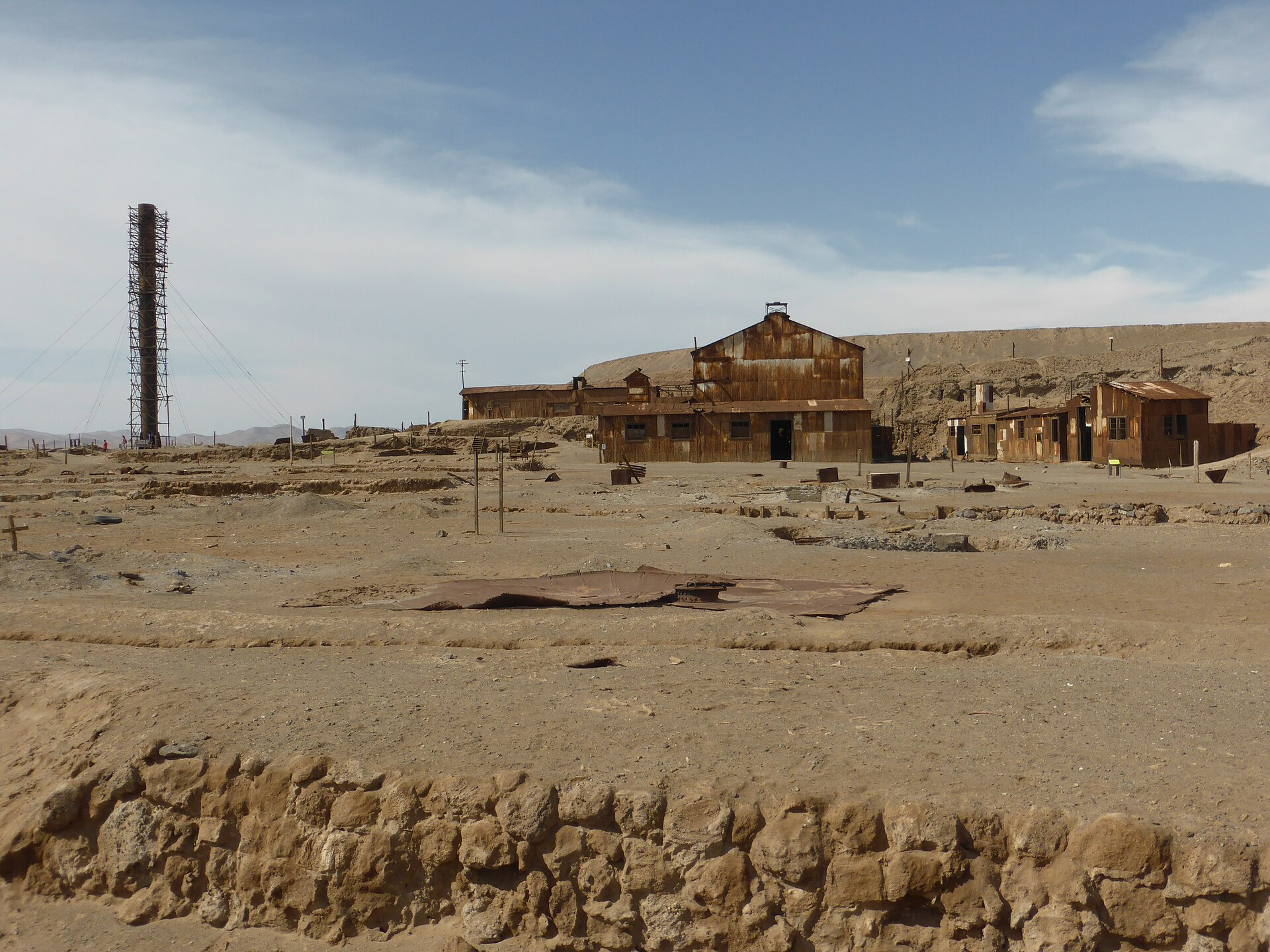
Today, visitors can explore both sites largely unrestricted after paying a modest entry fee. Humberstone’s town center remains remarkably intact, a theater, a market, a hospital, a church, a hotel, and a swimming pool built from the salvaged iron hull of a shipwreck, alongside rows of modest worker housing and the larger homes reserved for administrators. Santa Laura’s industrial machinery, rusted but largely still standing, offers a striking look at the mechanical processes that once drove the entire operation. Every third week of November, former pampinos and their descendants gather for Saltpeter Week, a celebration that keeps the culture and memory of the mining communities alive.
A Monument to an Entire Way of Life
Humberstone endures today not simply as an interesting ruin, but as a genuine monument to the thousands of workers whose labor built enormous wealth for Chile while enduring desperately hard conditions themselves. Its remarkable preservation, aided by the desert’s own dry, unforgiving climate, offers visitors an unusually vivid window into a vanished industrial world. The surrounding Atacama landscape, one of the driest and most inhospitable environments on the planet, only heightens the sense of just how demanding daily life here must have been, and how remarkable it is that an entire, functioning community once thrived in the middle of it. For travelers exploring northern Chile, a day trip to Humberstone from the nearby coastal city of Iquique offers one of South America’s most evocative and educational ghost-town experiences, and a rare chance to walk through streets, homes, and workplaces left almost exactly as their last residents departed them more than six decades ago.
Like our content? Follow us for more.