

There is a strong temptation to explain organised-looking animal behaviour by assuming somebody is organising it.
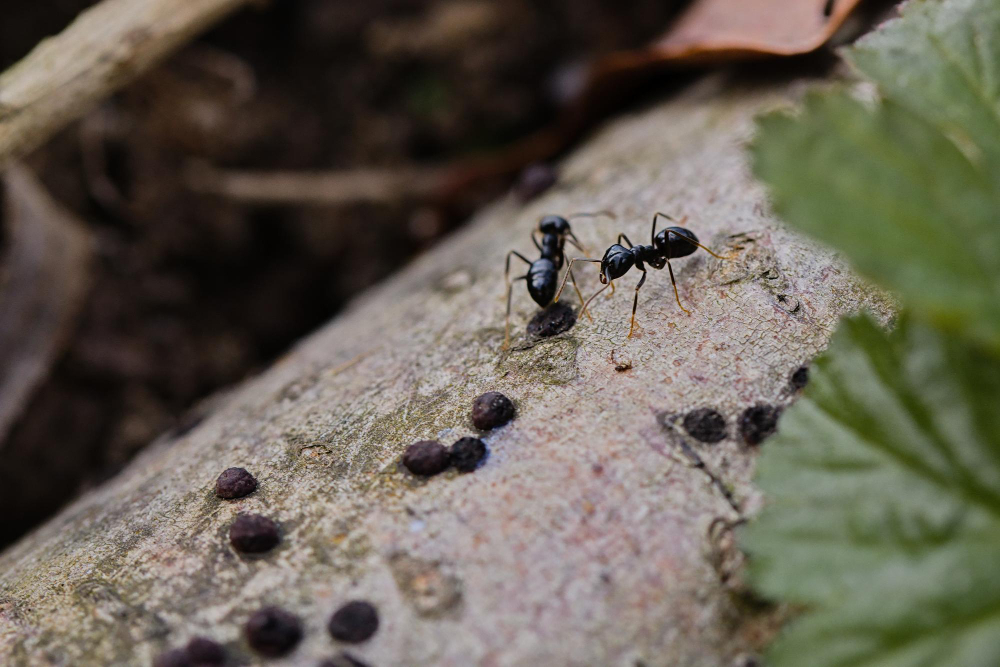
An ant trail invites exactly that. A line of insects moving purposefully between a nest and a food source, keeping to a narrow path, looks like a system with a plan behind it.
There is no plan and nobody in charge. The queen does not direct anything; she lays eggs. No ant has an overview, and none can see more than a short distance.
What produces the pattern is a simple rule applied by every individual, combined with a chemical signal that accumulates and fades — and that combination turns out to solve problems that look as though they need intelligence.
How the Trail Builds Itself
The mechanism is worth stating precisely because the details do the work.
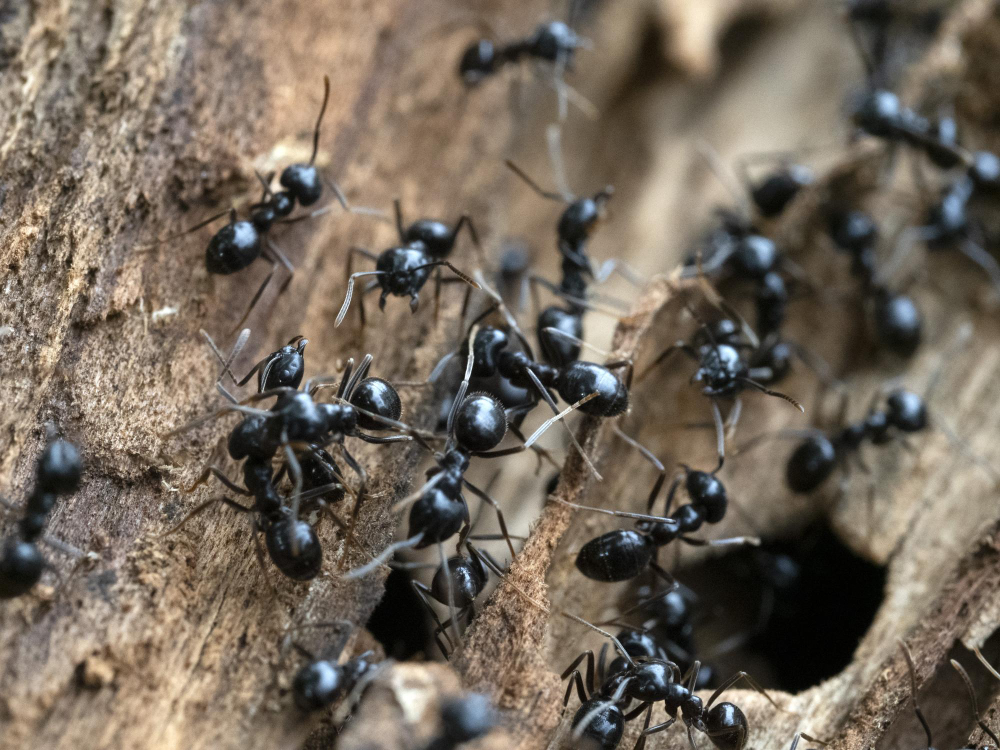
An ant that finds food returns toward the nest, laying a chemical as it goes.
Other ants encountering that chemical tend to follow it, and if they also find food, they reinforce it on their own return.
The chemical evaporates over time, so a trail that stops being reinforced fades and disappears.
That is the entire system, and two consequences follow.
A route that is shorter is completed faster, so ants using it return sooner and reinforce it more frequently — which means the shorter route accumulates signal faster than a longer one and progressively attracts more traffic.
And a food source that runs out stops generating returning ants, so its trail fades and the colony stops going there without anybody deciding to stop.
Like our content? Follow us for more.
Why the Fading Matters
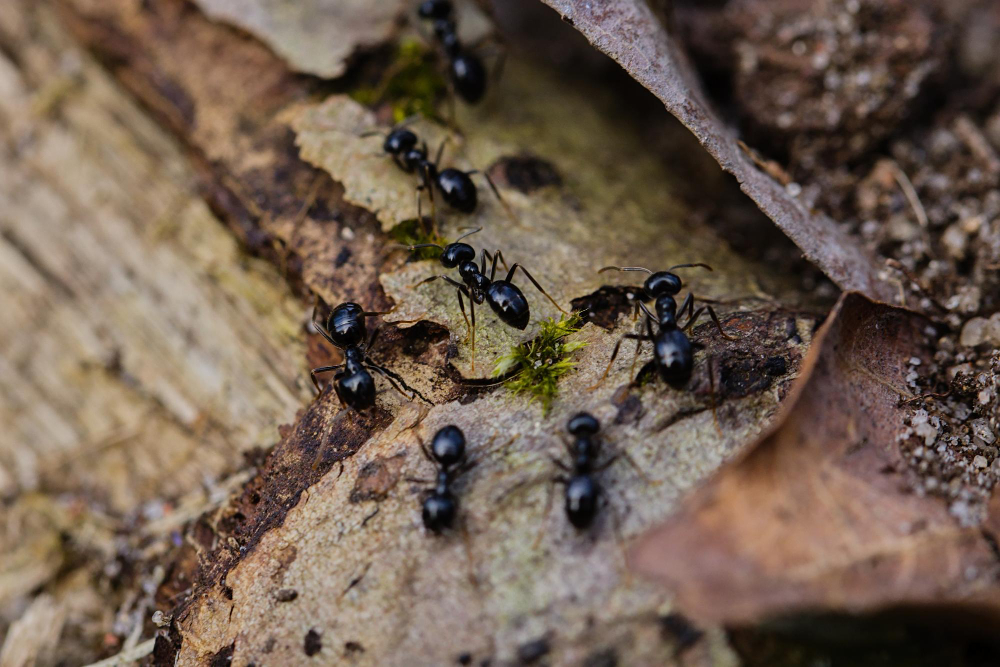
Evaporation is not a limitation of the system; it is what makes it work.
A trail that persisted indefinitely would keep directing ants to sources that were exhausted long ago, and would lock the colony into routes that are no longer useful.
Because the signal decays, the network continuously updates, reflecting where food currently is rather than where it has ever been.
It also allows the colony to switch when circumstances change. A blocked route stops being reinforced and fades, and alternative paths that are still being used take over.
That balance — reinforcement against decay — sets how quickly the colony responds and how firmly it commits to a route.
Too slow a decay and the colony is rigid; too fast and it never builds a usable trail at all.
There is a scale point worth adding. The foraging area of a large colony can extend a considerable distance from the nest, with trails maintained over that whole range and shifting as sources appear and are exhausted.
What It Cannot Do
The limitations are as informative as the successes, and they are worth being honest about.
The method can lock onto a route that is good rather than best. If a reasonable path is found first and reinforced heavily, a shorter one discovered later may never accumulate enough signal to compete.
It depends on numbers. A small number of ants cannot establish a trail against evaporation, which means the system only works above a certain colony size.
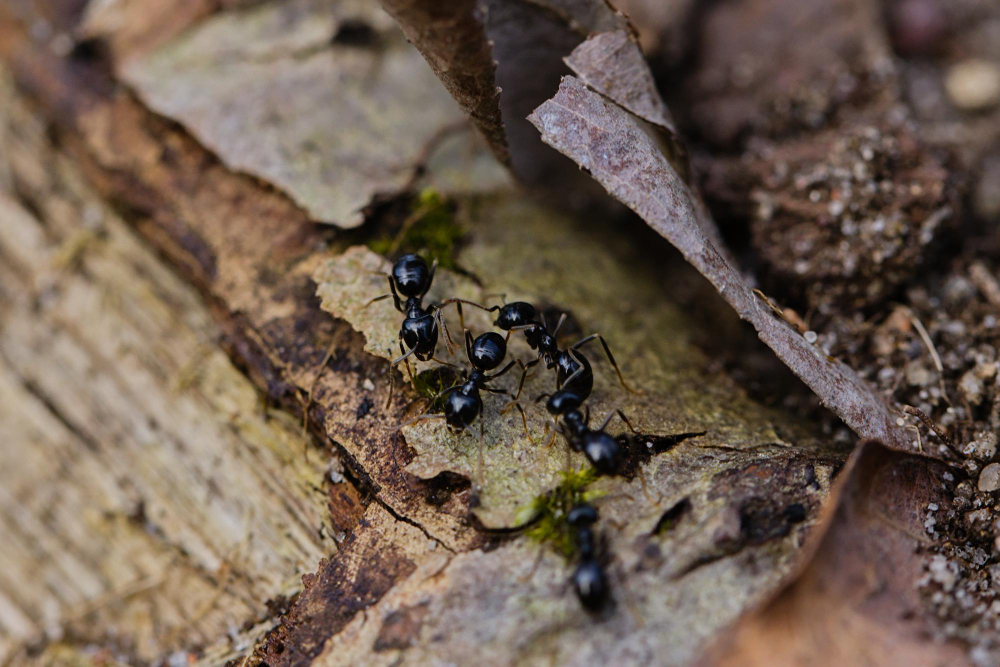
It can fail spectacularly. In rare circumstances, ants following trails can end up in a closed loop, each following the one ahead, circling until they are exhausted — which is a direct consequence of a rule that works well almost all the time.
And it cannot plan. Nothing in the system anticipates, evaluates alternatives or reasons about the future; it responds to what is currently on the ground.
Those failures are the clearest evidence that no intelligence is involved, because an intelligent system would not make them.
What Else the Colony Does Without Deciding
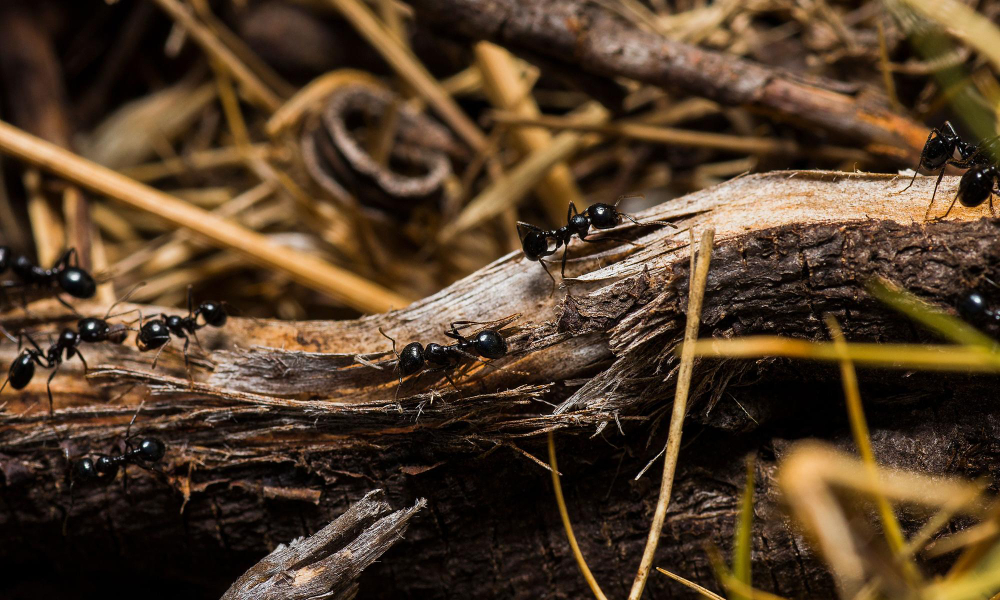
The same principle appears throughout colony behaviour.
Task allocation shifts without direction: individuals respond to local conditions — how much food is arriving, how many encounters they have with others doing a particular job — and switch tasks accordingly, so the proportion of workers on each task tracks demand.
Nest construction follows local rules about where to deposit material, which produce complex structures with no plan.
Choosing a new nest site can involve individuals assessing candidate sites and recruiting others, with the recruitment rate reflecting quality, so that the best site accumulates support fastest.
And in some species, workers form physical structures with their own bodies — bridges and rafts — by individuals responding to local contact rather than to any instruction.
In every case the pattern is the same: local rules, local information, and an outcome that looks designed.
What the Colony Is Made Of
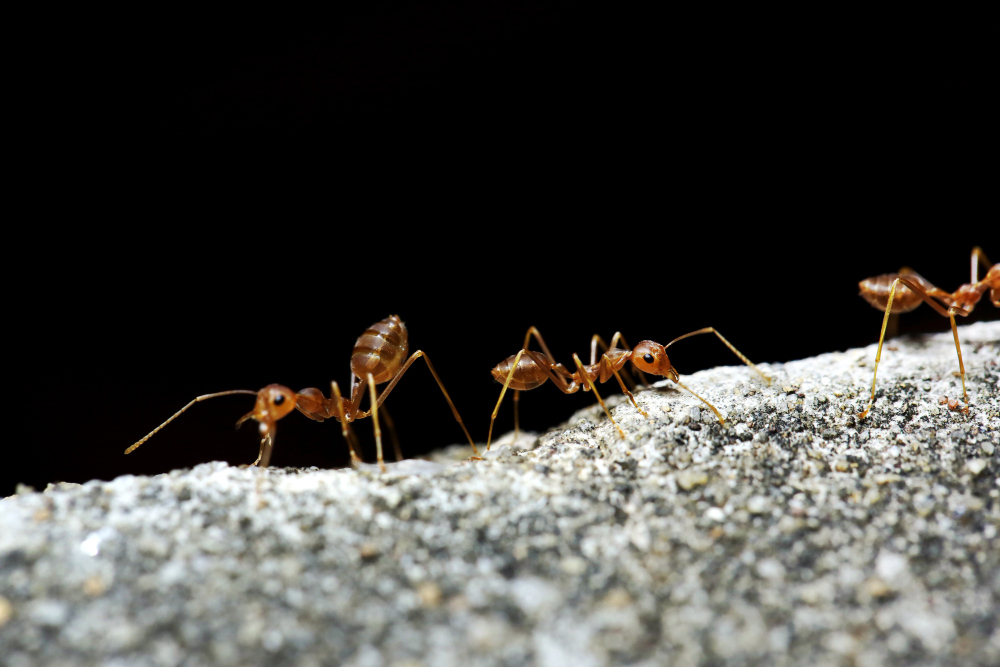
Some structural facts make the behaviour easier to understand.
A colony is founded by a single reproductive female who establishes a nest, raises the first workers herself, and afterwards does nothing but lay eggs.
The workers are her offspring, are female, and generally do not reproduce, which means their interests are served by the colony’s success rather than their own.
Colony size varies enormously between species, from a few dozen individuals to populations measured in millions, and the behaviours that work at one scale do not necessarily work at another.
The trail-following system in particular depends on numbers, which is why large colonies use it heavily and very small ones rely more on individual searching and memory.
Lifespans differ sharply as well: workers frequently live for weeks or months while the founding female may live for years, which means the colony persists while its members are continuously replaced.
That turnover is part of why no individual can hold important information. Anything the colony needs to retain has to be stored outside any single ant — in the structure of the nest, in the chemistry of the trails, or in the collective behaviour itself.
Why the Fading Matters Again
A further consequence of decay deserves stating, because it is what keeps the system honest.
Any signal that persists without being renewed becomes misleading, and in a changing environment a stale instruction is worse than none.
Because the trail chemistry evaporates, the network is continuously rebuilt from current information, and nothing that stops being true stays on the map.
That makes forgetting a feature rather than a failure. A colony that remembered everything would be directed by obsolete information, and one that remembered nothing could not coordinate at all.
The rate of decay sets where between those extremes the colony sits, and it differs between species and between the substances used for different purposes.
Alarm signals, for instance, generally fade far faster than food trails, because an alarm needs to stop mattering quickly once the threat has gone.
So the colony has, in effect, several different memory spans running at once, each matched to how long the information it carries stays useful.
Why It Matters Beyond Ants
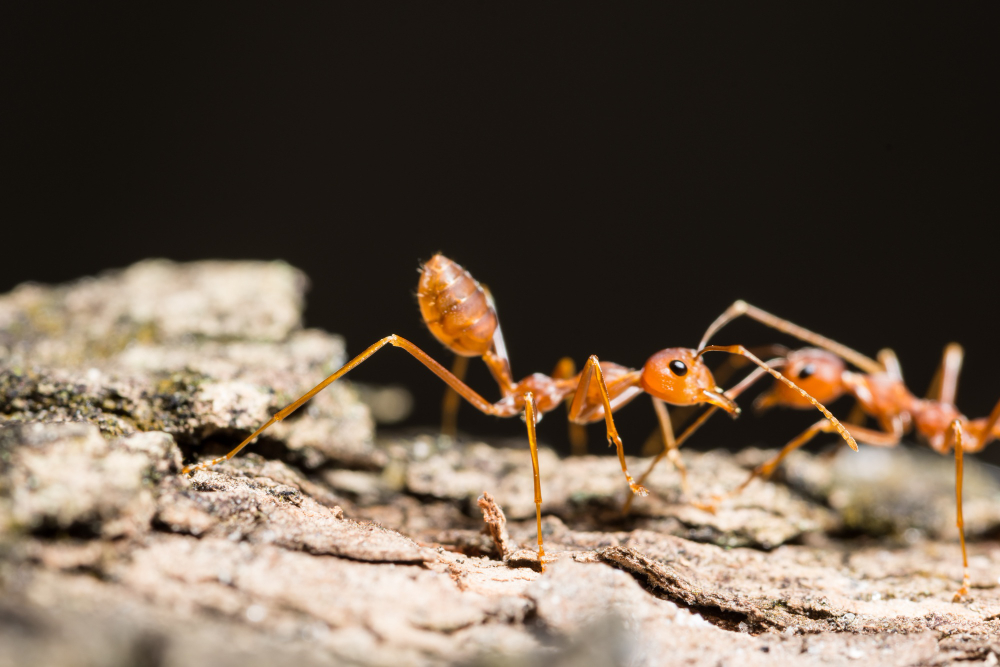
The transferability of the principle is the reason this receives so much attention.
Algorithms modelled directly on trail-laying and evaporation are used to find good routes through networks, and they work well on problems where conditions change and a perfect answer is not required.
The general approach — many simple agents, local rules, a signal that accumulates and decays — has been applied to scheduling, routing and coordination problems of several kinds.
It is also a standing caution against a particular kind of explanation. Seeing organisation and inferring an organiser is an intuitive move and frequently wrong, and ants are the standard demonstration of why.
That caution extends well beyond insects, to any system where a pattern emerges from many individuals following local rules without an overview.
There is a reproduction point worth adding. New colonies are founded when winged reproductive individuals leave the nest, mate and establish nests of their own, which is why flying ants appear in large numbers on particular days and then vanish.
Those flights are frequently synchronised across a wide area by weather conditions.
What Should Not Be Concluded
A few clarifications belong at the end, because this subject attracts overstatement.
The colony is not a single intelligent organism, and describing it as a brain or as having thoughts is a metaphor that misleads more than it explains.
Individual ants are not simply automatons either; they have real sensory and learning capabilities, and the simple rules described here are simplifications of more varied behaviour.
Ant species differ enormously, and much of what is said generally about ants applies to some species and not others — trail-laying itself is not universal.
And the research picture continues to develop, with the relative importance of chemical trails, visual landmarks and individual memory differing between species and situations.
What is not in doubt is the central point. The trail across a kitchen floor is not being managed by anybody. It is a very large number of small animals each following a smell and leaving a little more of it behind — and that is enough.
Which is the part worth keeping. Organisation does not require an organiser, and an explanation that reaches for one is frequently reaching for something that is not there.
Like our content? Follow us for more.
