Nobody thinks of them as equipment, which is what they are. Here are eleven jobs.
1. Trapping a Layer of Still Air

Most of the insulating effect is not the fabric. It is the pocket of air held between the curtain and the glass, and still air is a poor conductor of heat.
The fabric is there to stop the air moving. That is the whole mechanism.
Like our content? Follow us for more.
2. Which Is Why the Gaps Matter More Than the Thickness

If air can circulate in at the bottom and out at the top, the pocket is not still and the insulation largely stops working.
A long curtain that touches the sill or floor does far more than a thicker short one.
3. Blocking the Cold Radiating Off the Glass

On a cold night a window is a large cold surface, and a body facing it radiates heat towards it and feels the loss directly.
Drawing the curtain puts a warmer surface between you and the glass, which is felt immediately.
4. Stopping the Draught You Cannot See
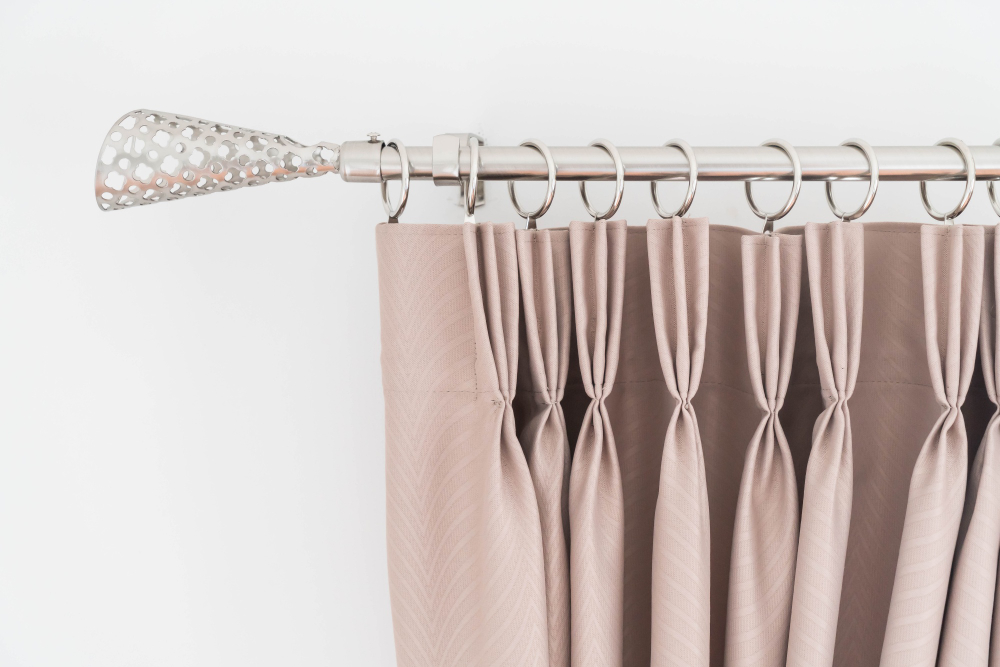
Air cooled by the window sinks and runs across the floor, which is why a room can feel draughty with every gap sealed.
The curtain interrupts the loop rather than blocking a hole.
5. Keeping Summer Heat Out, But Only Just

A curtain intercepts sunlight after it has already passed through the glass, so the heat is inside the room before the fabric sees it.
This is why external shutters and awnings work far better than internal curtains for keeping a room cool.
6. Protecting Everything in the Room From Fading

Ultraviolet and visible light break down dyes, and sunlight falling on the same patch of carpet or upholstery year after year bleaches it.
The effect is cumulative and one-directional, which is why a room’s sunlit side ages faster than the rest of it.
7. Absorbing Sound Inside the Room
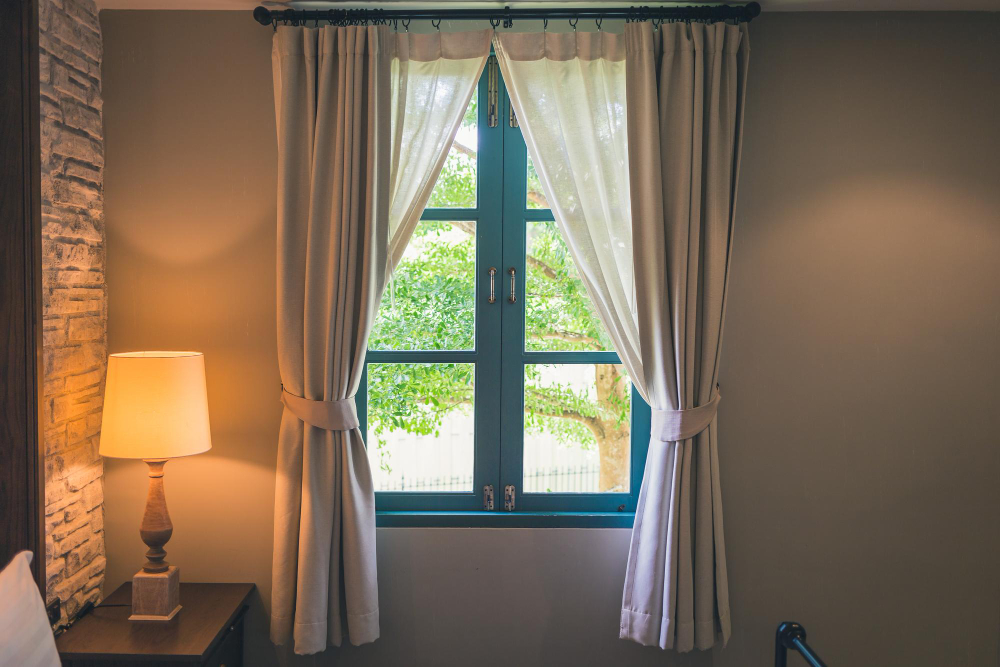
Heavy fabric hanging in folds absorbs mid and high frequencies and stops them bouncing off a hard glass surface.
A room with the curtains drawn sounds noticeably less echoey, and the effect is largest in rooms with hard floors.
8. Doing Much Less About Noise From Outside

Fabric absorbs sound but barely blocks it, because blocking requires mass and a curtain has almost none.
They take the edge off and they will not stop traffic. That needs glazing.
9. Controlling What Can Be Seen In

Net and sheer fabrics work on a light-level difference: they conceal when it is brighter outside than in, and stop working entirely after dark.
This is why a lit room with nets is more visible from the street than an unlit one with none.
10. Setting the Light Level Without Turning Anything Off

Partly drawn curtains cut glare on a screen or a table while leaving the room usable in daylight.
The adjustment is continuous, which is something a light switch cannot offer.
11. Marking the End of the Day

Closing the curtains is one of the few remaining household actions that formally separates the evening from the afternoon.
It signals to everybody in the house that the day has changed shape, which is not a function anybody designed.
Fabric, Still Air and a Line on the Carpet

A trapped layer of air doing the insulating, gaps that undo it, cold radiating off glass, fading fabric, sound absorbed inside and a nightly signal nobody planned.
The second item is the one worth acting on. The insulating value of a curtain comes almost entirely from holding a pocket of air still against the glass, so a curtain that stops short of the sill, or that has an open gap along the top, is leaving most of its usefulness on the floor regardless of how heavy the fabric is.
Like our content? Follow us for more.