Try It Before Reading Any Further
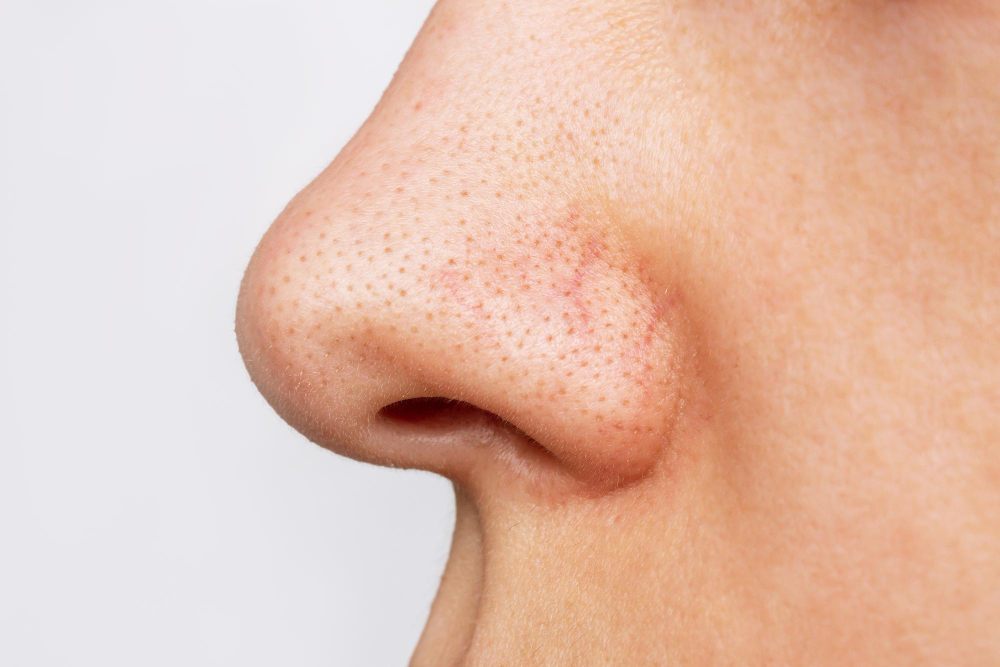
Press a finger against one nostril and breathe in through the other. Then swap. For most people, at most moments, the two are noticeably different. One moves air easily and quietly; the other feels tighter, slower, and higher-pitched.
This is not a blocked nose and it is not a sign of anything wrong. It is the normal state. At any given moment the great majority of people are breathing predominantly through one nostril, with the other contributing a minority of the total airflow. Nobody notices, because the brain presents breathing as a single sensation rather than as two separate channels, and because the total amount of air arriving is unchanged.
And it does not stay that way. Over a period of hours the dominant side closes down and the quiet side opens up, and the whole arrangement reverses. Then, some hours later, it reverses again. The body has been doing this continuously, through every night and every day, since before you could walk.
Most people who are told this immediately check, find it to be true, and then want to know why nobody mentioned it. It is an odd gap in general knowledge, considering how easy it is to verify and how often it has been written up.
It Is Not a Blockage, It Is Swelling
Nothing is moving to close the nostril. There is no valve and no muscle acting as a shutter.
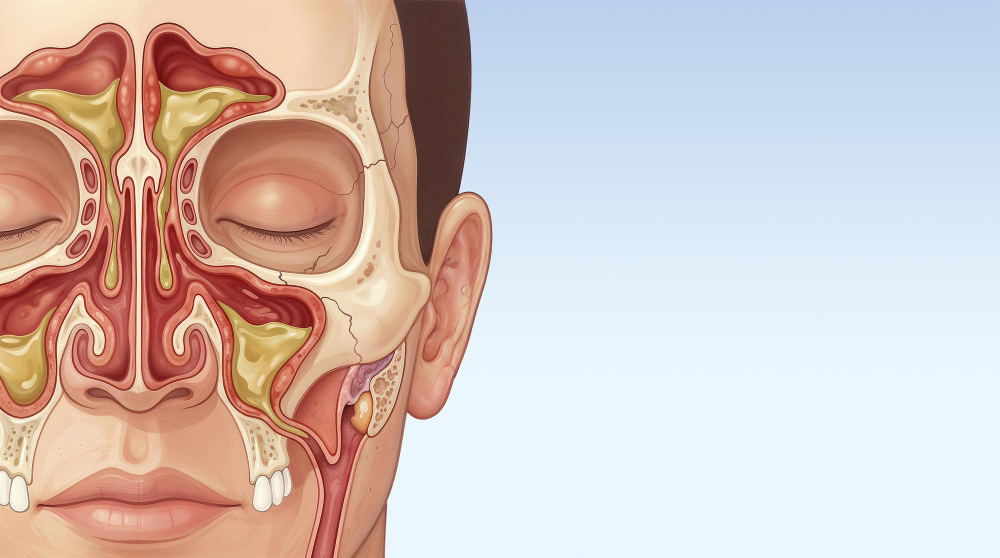
The inside of each nasal passage is lined with tissue wrapped around three shelf-like structures projecting into the airway. That lining contains an unusually dense network of blood vessels, more like the tissue of an erectile organ than like ordinary skin, and it can swell and shrink dramatically as those vessels fill and empty.
When the vessels on one side fill, the lining thickens, the passage narrows and airflow drops. When they empty, the lining shrinks back against the walls, the passage opens and air moves freely. The nostril itself, the visible opening, does not change at all. Everything happens several centimetres inside.
The filling and emptying is controlled by the autonomic nervous system, the part that also runs heart rate, digestion and pupil size, and which operates without any conscious involvement. Signals from it tighten or relax the vessels in the nasal lining, and the two sides receive opposite instructions. One is told to constrict while the other is told to dilate, and then the instructions swap over.
So the cycle is not a quirk of anatomy. It is an actively maintained oscillation, driven by the nervous system, with a control centre somewhere in the brain that nobody has conclusively identified.
The Timing Is Regular, and Also Not
Measurements of how long each side stays dominant produce a wide range. Periods of roughly one to several hours are commonly reported, with the figure varying between individuals and within the same individual at different times.
Some people have a fairly consistent rhythm. Others swap irregularly, or show only a weak alternation, or show none at all under some conditions. The proportion of people in whom a clear cycle can be measured at any given time is well below everybody, which is one of the reasons the phenomenon has been argued about for well over a century.
Several things disturb it. Exercise opens both sides, because the autonomic shift that accompanies exertion shrinks the lining generally and the body is prioritising getting air in over whatever the cycle was doing. Lying down on one side tends to congest the lower nostril and open the upper one, an effect strong enough to override the cycle entirely and strong enough that most people have noticed it without ever thinking about why. Cold air, posture, time of day, and the state of the lining all have effects.
The cycle also changes with age, becoming less marked in older people, and it is disrupted by anything that inflames the lining, which is why a cold or an allergy produces the sensation of blockage swapping sides unpredictably rather than on a schedule.
The Case for It: Two Nostrils Doing Two Jobs

The obvious question is why a body would bother. Breathing through one side at a time appears, at first glance, to be strictly worse than breathing through both.
The leading answer is that the two sides are not duplicates but a division of labour, and that the division only works if they are unequal.
Air moving fast through a narrow opening behaves differently from air moving slowly through a wide one. The fast-flowing side delivers a larger volume but has less contact time with the lining, so it warms and humidifies the air less thoroughly. The slow side moves little air but holds what it does move against the lining for longer, warming and moistening it very effectively.
More importantly, the slow side is recovering. The nasal lining does an enormous amount of work on incoming air, and that work dries it out and cools it. A passage running at full flow continuously would become progressively less able to do its job. By alternating, each side gets several hours of heavy duty followed by several hours of light duty during which the lining rehydrates and the mucus layer is restored.
On this account the cycle is a maintenance schedule. The nose is a conditioning plant with two units, and it runs them in rotation so that neither is ever worked to the point of failure.
The Smelling Argument
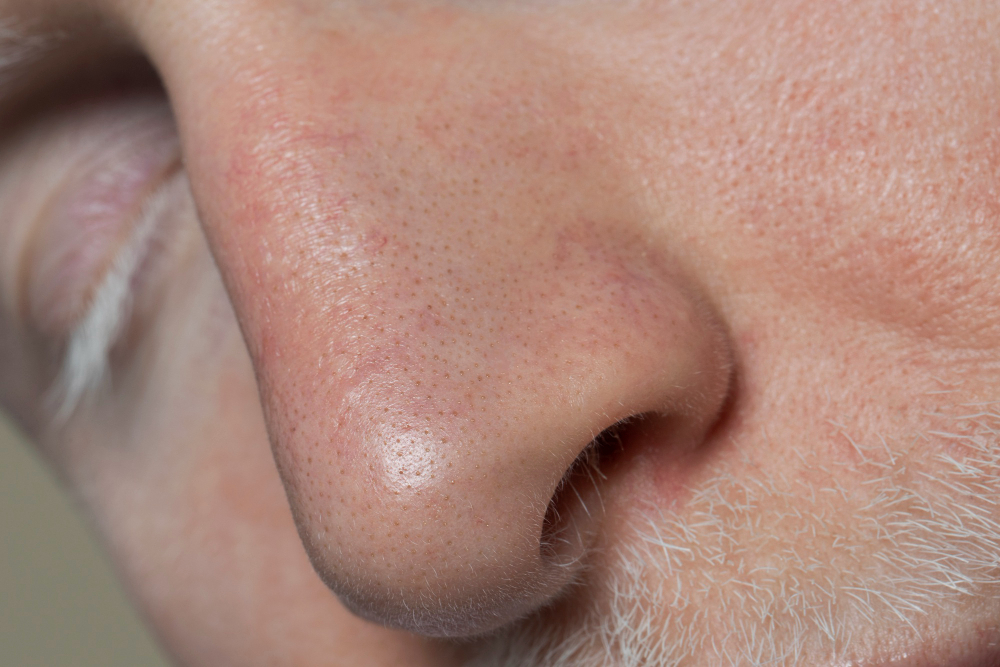
There is a second proposal that is harder to test and more interesting if true. It concerns the fact that different smells reach the sensory tissue best at different airflow rates.
The molecules responsible for odour vary enormously in how readily they dissolve into the moist lining where the sensing cells sit. Some dissolve almost instantly and are absorbed right at the front of the airway, so a fast flow that sweeps air past quickly presents them poorly. Others dissolve reluctantly and need a long contact time to register at all, which a fast flow does not provide.
A nose with one fast side and one slow side is therefore sampling the same air in two different ways simultaneously, and may be detecting a wider range of compounds than two identical passages would. The brain receives both sets of signals and combines them.
This would make the asymmetry a feature of the sense of smell rather than merely a maintenance arrangement, and it would explain why the cycle persists in animals that depend heavily on smell. The evidence is suggestive rather than settled, and it is entirely possible that both explanations are correct and that one mechanism is serving two purposes, which is a common pattern in biology.
What is not in dispute is that smell depends on airflow. Hold your breath and odours fade within seconds, not because the molecules have gone but because nothing is carrying them to the tissue that detects them.
Why the Nose Works So Hard in the First Place
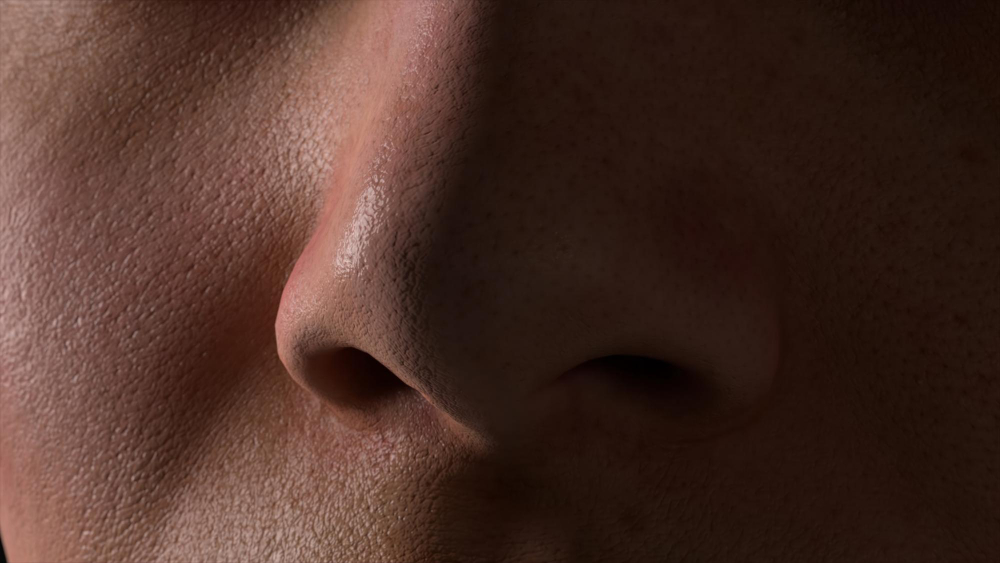
All of this makes more sense once you know how much the nasal passages are actually doing to the air passing through them.
Air arriving at the lungs needs to be close to body temperature and nearly saturated with water vapour, because the delicate surfaces where gas exchange happens cannot tolerate dry or cold air. The nose achieves that in a distance of a few centimetres, for air that may have arrived at freezing point and almost completely dry.
It manages this by presenting an enormous surface area in a small space, which is what the shelf-like structures are for. They force air into thin streams running close to warm wet tissue instead of straight down the middle of a tube. A great deal of heat and water is transferred in a fraction of a second.
The water is partly recovered on the way out. Exhaled air passing back over the now-cooler lining gives up some of its moisture and heat, which is why breathing through the nose loses less water than breathing through the mouth, and why the nose runs in cold weather.
The quantity of water involved over a day is substantial, and it has to come from the lining, which has to be resupplied. That is the resource the cycle is managing. An organ performing this much conditioning work needs downtime, and the only way to have downtime while still breathing continuously is to have two of them and take turns.
What the Cycle Is Connected To, and What It Is Not
Because the cycle is driven by the autonomic nervous system, which also governs a great many other rhythms, there has been persistent interest in whether it correlates with anything else going on in the body.
Various associations have been reported over the decades, including links to broader cycles of autonomic activity and to shifts in alertness. Some of this work is suggestive. A good deal of it has been difficult to replicate, and the stronger claims that circulate about the subject, particularly those asserting that the open nostril determines mood, mental state or the activity of one half of the brain, go considerably further than the evidence supports.
The defensible position is narrower and still interesting: the nose has an autonomic oscillation, that oscillation is part of a system which has many other oscillations, and the connections between them are not fully mapped.
Nothing in this piece is advice, and the cycle is not a diagnostic sign. A persistent one-sided sensation that does not alternate is a different matter from a cycle, and the normal alternation described here is not something anybody needs to monitor, encourage or correct. It has been running correctly without supervision for your entire life.
An Oscillation Nobody Mentioned
So the position is this. The nose is not a pair of matched tubes but a two-unit air-conditioning plant that runs its units in rotation, swapping the heavy load from one side to the other every few hours by inflating and deflating the lining with blood.
It does this to give each side time to recover from work that dries and cools it, and possibly also to sample the air at two different flow rates at once so that a wider range of odours registers. It is interrupted by exercise, by lying on one side and by anything that inflames the lining, it weakens with age, and it is not present in a measurable form in everybody at all times.
And almost nobody knows about it, despite the fact that it takes four seconds and one finger to confirm.