


The Universal Misunderstanding

Everybody believes the same thing: the stomach is empty, so it complains. The noise is the body asking for food, and once the food arrives the noise stops.
Almost every part of that is wrong, and the parts that are not wrong are wrong about the reason.
The noise happens whether you have eaten or not. It happens shortly after a meal, it happens in the middle of the night, it happens while you are asleep, and it happens in people who are being fed intravenously and have nothing in the gut at all. It is not a signal, it is not directed at anybody, and it has no communicative function whatsoever.
It is also not primarily a stomach noise. A good deal of it, frequently most of it, originates from the small intestine, which is a long narrow tube of continuously moving muscle lying across the middle of the abdomen, directly behind the surface where everybody listens for the sound. The stomach contributes, but the organ getting the blame is not the main culprit.
And the reason it seems to correspond to hunger is real but indirect, and it turns out to be the most interesting part of the whole business.
Like our content? Follow us for more.
What Is Actually Making the Sound
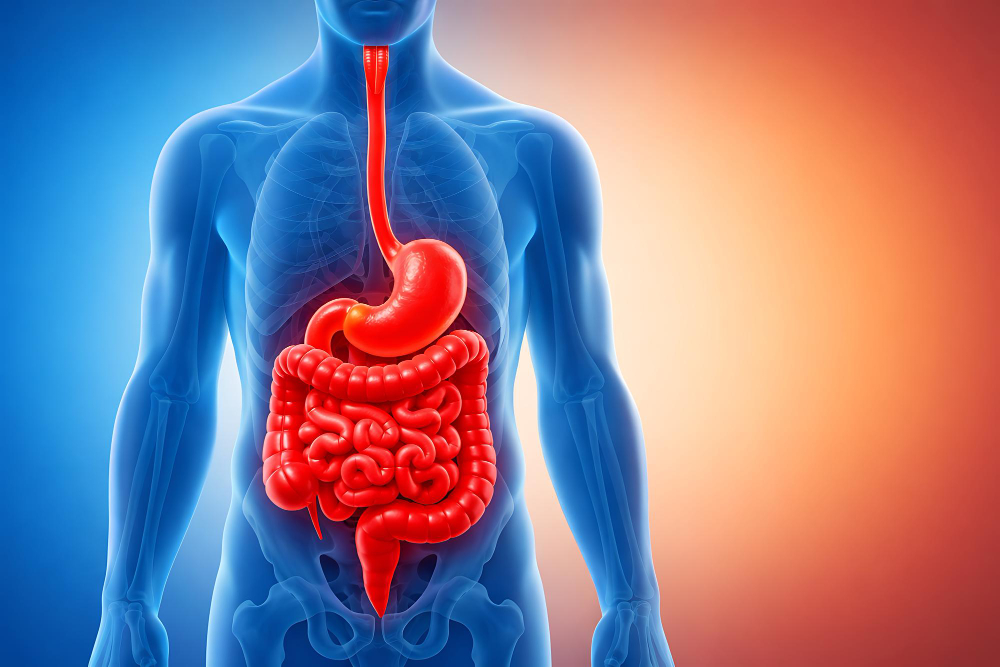
The mechanism is simple and purely mechanical. The digestive tract is a muscular tube. It contains liquid, and it contains gas. Rings of muscle contract in sequence along its length, squeezing the contents forward.
When a contraction squeezes a mixture of liquid and gas through a narrowing, the gas is compressed and forced through, and the resulting turbulence and bubble movement makes noise. It is the same sound any plumbing system makes when air is in the pipes, for exactly the same reason, and the abdomen is a reasonably good resonant cavity.
The formal name for the sound is a word that is itself onomatopoeic, derived from Greek, and it is one of the better pieces of medical vocabulary: borborygmi. It sounds like what it describes, which is more than can be said for most anatomical terms.
Three things determine how loud it is. How much gas is present, how vigorous the contractions are, and how much liquid and solid material is there to damp the sound. All three change through the day, and the third one is the key to everything that follows.
Peristalsis Never Stops

The squeezing contractions are not triggered by food arriving. They are continuous, generated by the gut’s own nervous system, which is extensive enough that it is sometimes described as a second brain and which can run the basic rhythm with no input from the brain at all.
Embedded in the wall of the gut are cells that act as pacemakers, generating a slow electrical rhythm which sets the maximum rate at which contractions can occur. The rate differs in different sections, being faster in the upper small intestine than lower down, and it runs whether or not anything is passing through.
Food modifies this activity considerably. It stretches the wall, it changes the chemistry, and it provokes a more vigorous and more localised pattern of mixing contractions. But the removal of food does not switch the system off. It switches it into a different mode, and that mode is both more forceful and much noisier.
The Real Reason an Empty Gut Is Louder
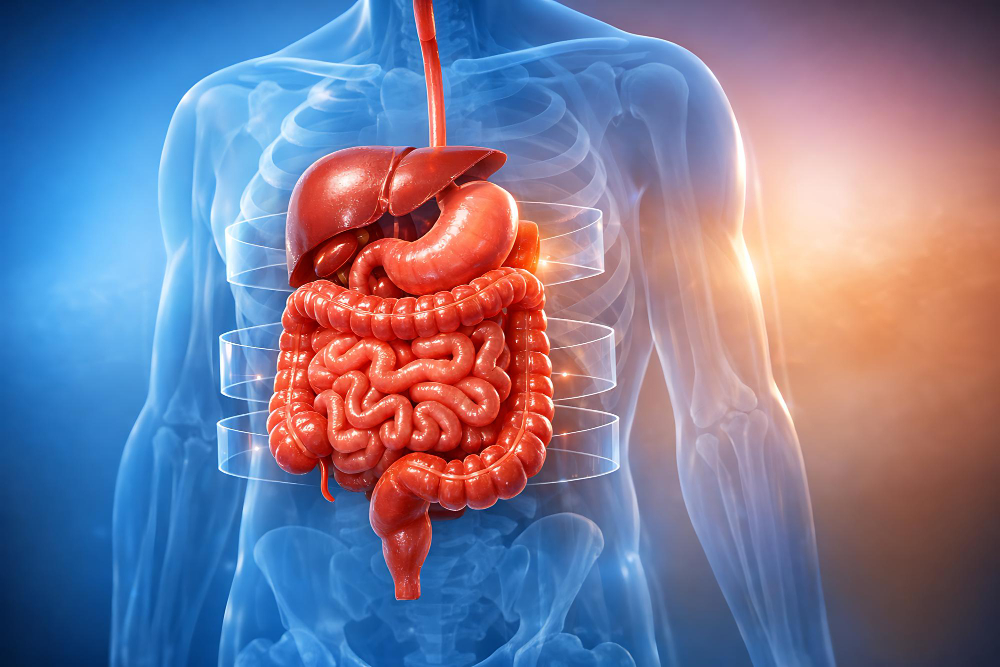
Here is the part almost nobody has heard. When the gut has been empty for a while, it begins running a cycle that does not happen while digestion is in progress.
That cycle has distinct phases. There is a long quiet phase with almost no activity. Then a phase of irregular contractions building in intensity. Then a short, dramatic phase of strong, coordinated contractions that sweep along the whole length of the small intestine from the stomach downward, clearing everything in front of them. Then it returns to quiet and begins again.
The whole cycle repeats roughly every hour and a half to two hours while fasting, and the sweeping phase lasts only a few minutes of that. It is sometimes called a housekeeping wave, which is exactly what it is: a periodic clear-out that removes residual debris, sloughed cells and bacteria from the upper gut and pushes them downstream, preventing bacteria from establishing themselves where they should not be.
Eating stops it immediately. The moment food arrives, the cycle is abandoned and the gut switches to the fed pattern. The housekeeping wave only runs when there is nothing to digest.
So the loudest gut noises are produced by a mechanism that exists specifically for the empty state, and which is interrupted by food. That is why the correspondence with hunger is so convincing, and why it is not a case of the gut asking for anything. The gut is cleaning itself because it finally has the opportunity.
And Because There Is Nothing to Muffle It
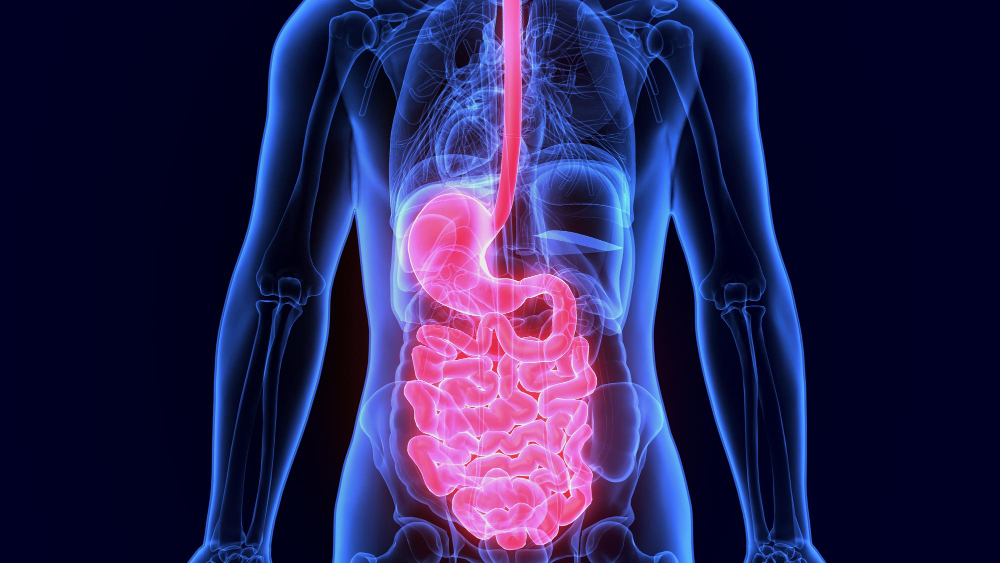
The second half of the explanation is acoustic rather than physiological, and it is the one people find most satisfying because it is immediately obvious once stated.
A tube containing a slug of gas with liquid on either side is loud. A tube packed with semi-solid material is quiet, because the material absorbs the sound and because the gas is dispersed through it rather than travelling as discrete pockets.
After a meal, the gut is full of a thick mixture that damps the noise very effectively. The contractions are vigorous and there is plenty of gas, but the sound is absorbed before it reaches the abdominal wall. Hours later, the solid material has moved on, what remains is gas and secreted fluid, and the same contractions now produce audible noise with nothing to stop it.
So you get the worst of both. The empty gut runs its most forceful contractions and simultaneously loses its soundproofing, and the two effects multiply.
The gut also secretes a substantial volume of fluid of its own regardless of what has been eaten, which is why an empty gut is not a dry one and why there is always something to splash.
Where the Gas Comes From
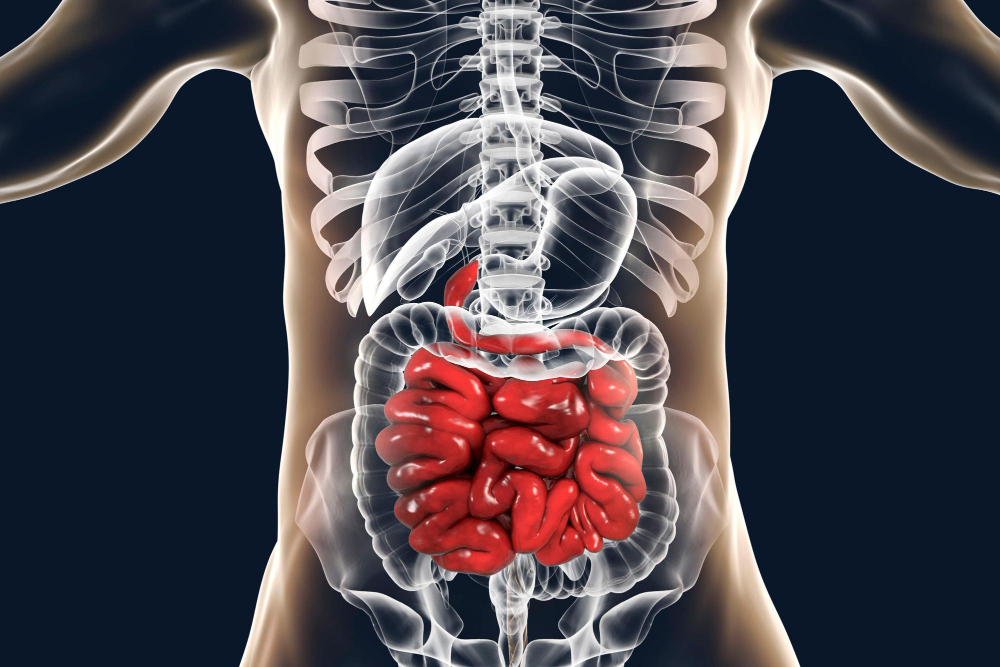
Three sources, in roughly descending order of importance for the upper gut.
The largest contribution is swallowed air. Every swallow takes a small amount of air with it, and people swallow far more often than they realise, including continuously while awake to clear saliva. Eating quickly, drinking through a straw, talking while eating, chewing gum and fizzy drinks all increase it. Most of it is belched back, but a proportion goes onward.
The second is chemical. Acid arriving from the stomach into the small intestine is neutralised by bicarbonate secreted there, and that reaction releases carbon dioxide directly into the tube. This happens every time stomach contents are released onward, which is many times during the processing of a meal.
The third is bacterial, and it dominates further down. Microbes in the large intestine ferment material that human enzymes cannot break down and produce gas as a by-product, in quantities that depend enormously on what has been eaten and on the particular population present.
That third mechanism is why noises from the lower abdomen have a different character from the upper ones: a different kind of content, a different gas production rate and much slower, more irregular movement.
Why It Always Happens in the Quietest Possible Moment
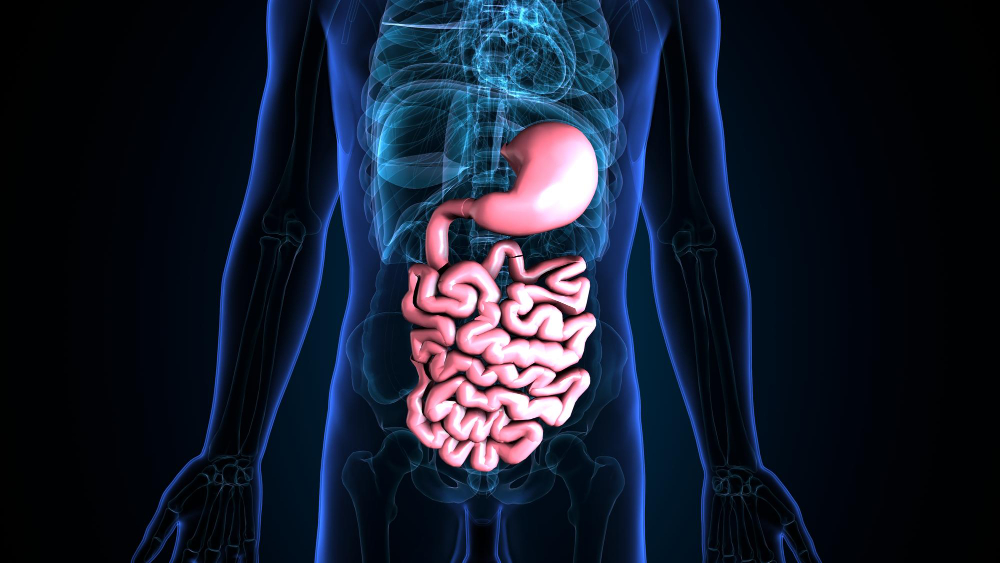
The experience everybody recognises is that the gut is silent all day and then produces an extraordinary noise during an exam, a meeting, a service or a silence.
There is no mechanism by which the gut knows the room has gone quiet, and the real explanation is unflattering to our powers of observation. The noise was happening before. It was masked by ambient sound, by movement, by conversation and by the general din that a person generates simply by existing in a normal environment. Remove the masking and the same noise becomes audible, to you and to everybody within a couple of metres.
Two things do do contribute. Sitting still allows the abdomen to settle into a position where sound transmits to the surface more efficiently, and sitting upright and motionless removes the muscular tension that otherwise damps it. And anxiety has real effects on gut motility, mediated through the autonomic nervous system, so a stressful quiet moment can measurably increase activity rather than merely revealing it.
But the primary cause is that the room got quieter. The gut has been doing this all along, in everybody, including everybody else in the room.
What Silence Would Actually Mean
Since the noise is continuous and normal, its absence is the thing that carries information, which is the reverse of how most people think about it.
A gut that has gone completely silent has usually stopped moving, and a gut that has stopped moving is not a trivial matter. This is the reason that listening to the abdomen is a standard part of a physical examination, and that what is being listened for is frequently the presence of sound rather than its absence. Noise is reassuring.
Nothing in this piece is advice and no reader should interpret any sound, or any silence, as information about themselves. It is included because it inverts the entire popular understanding. The rumble that everybody treats as a mild embarrassment is the audible evidence of a system working correctly, and the version that would concern anybody who knew what they were listening to is the quiet one.
So the next time it happens in a silent room, the technically accurate response is that your small intestine has reached the sweeping phase of its housekeeping cycle, is clearing itself out as designed, and has lost its soundproofing because you have not eaten for a while. Whether that is a useful thing to say out loud is a separate question.
Like our content? Follow us for more.
