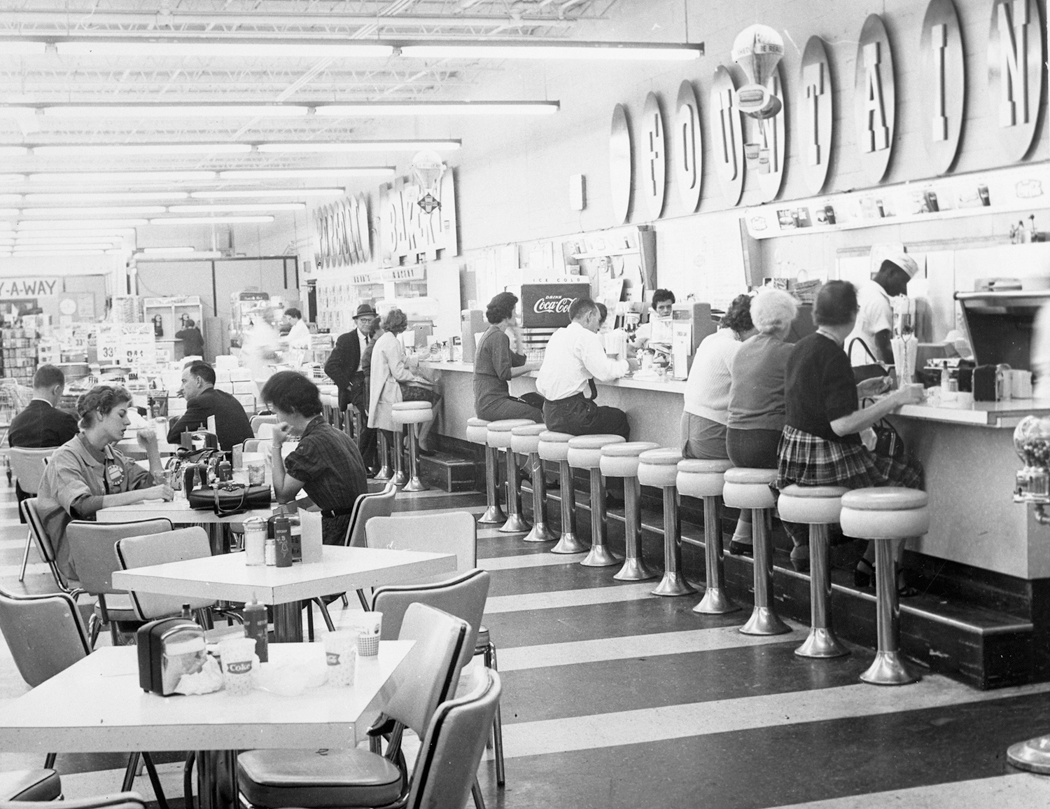
The lunch counter was a row of stools along a bar, usually inside a shop that sold something else entirely, and in 1964 it was where a town ate in the middle of the day. You sat down next to whoever was already there, somebody put water in front of you without being asked, and you were back out on the street in twenty minutes. The format has almost completely vanished, and it was a genuinely clever piece of design.
The Counter Existed to Make the Space Pay Twice
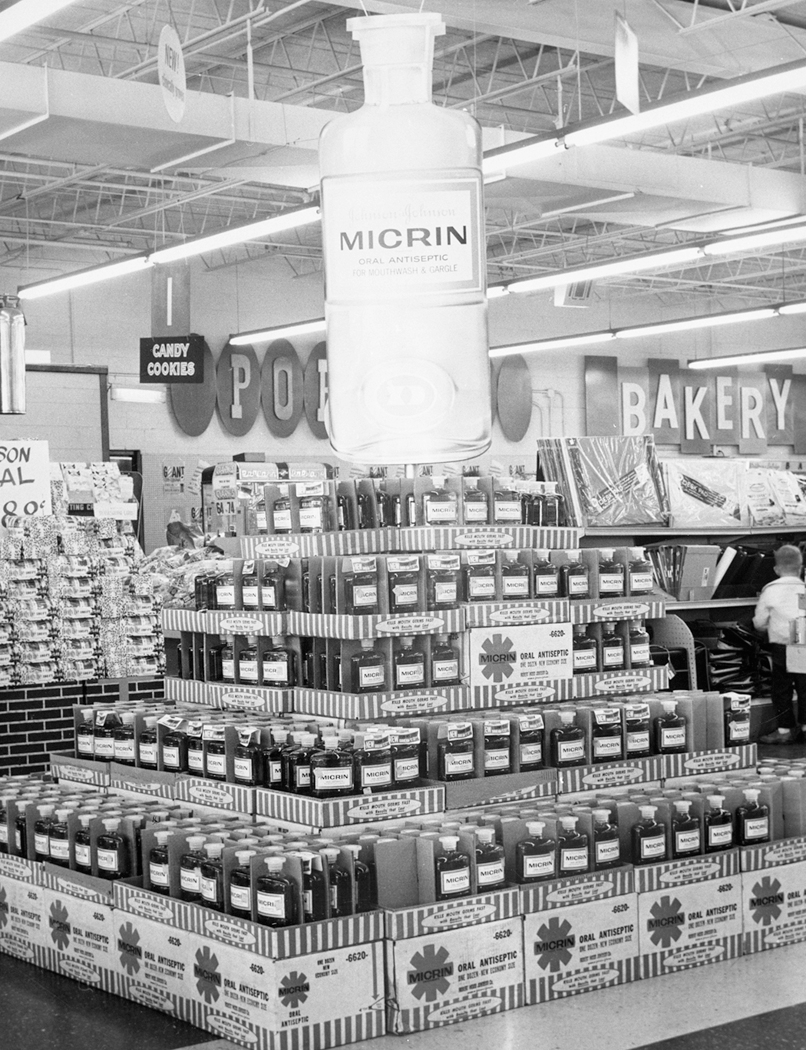
Start with the economics, because the counter was a solution to a property problem rather than a dining concept. Retail space is expensive and much of it sits idle.
A drugstore or a department store has floor area, foot traffic and a lease it is paying for regardless. Putting a counter along one wall turns part of that into a second business at the busiest hour of the day, using customers who were already in the building – which is why so many counters were inside shops rather than in restaurants of their own.
Like our content? Follow us for more.
One Row of Stools Is the Most Efficient Dining Shape There Is
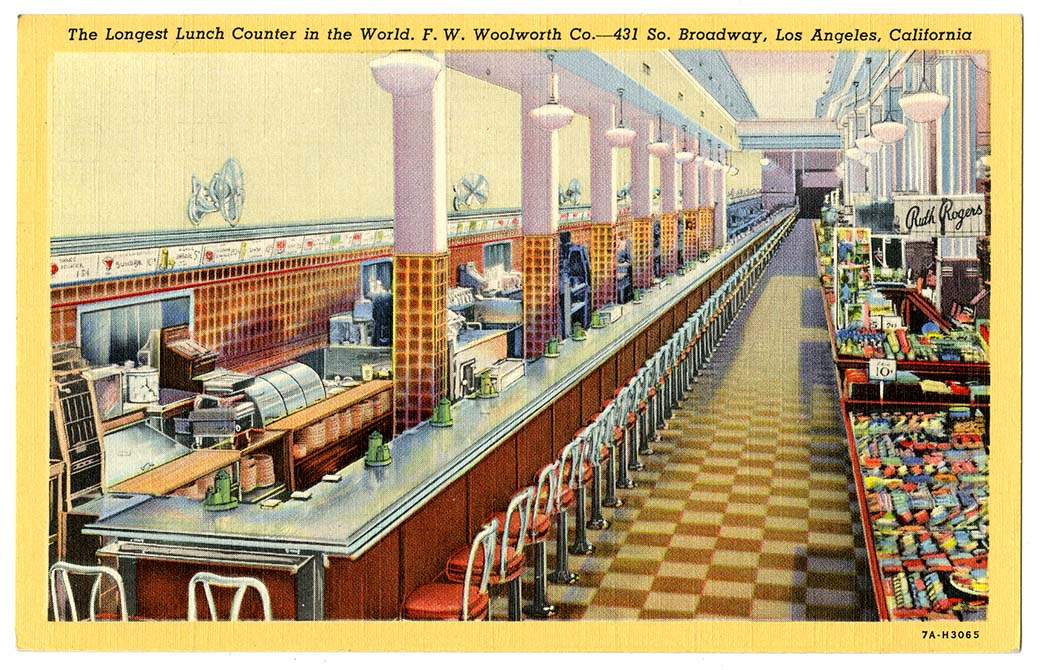
A counter seats people in a line along a single service edge, which means one person standing in one place can reach every customer.
Compare that with tables, where a server walks. The counter’s whole advantage is that the staff do not move: everything – the customer, the food, the till, the water, the check – happens within arm’s reach of one position, so a single person could serve twelve to twenty people without taking a step.
The Cook Was Three Feet Away and You Watched
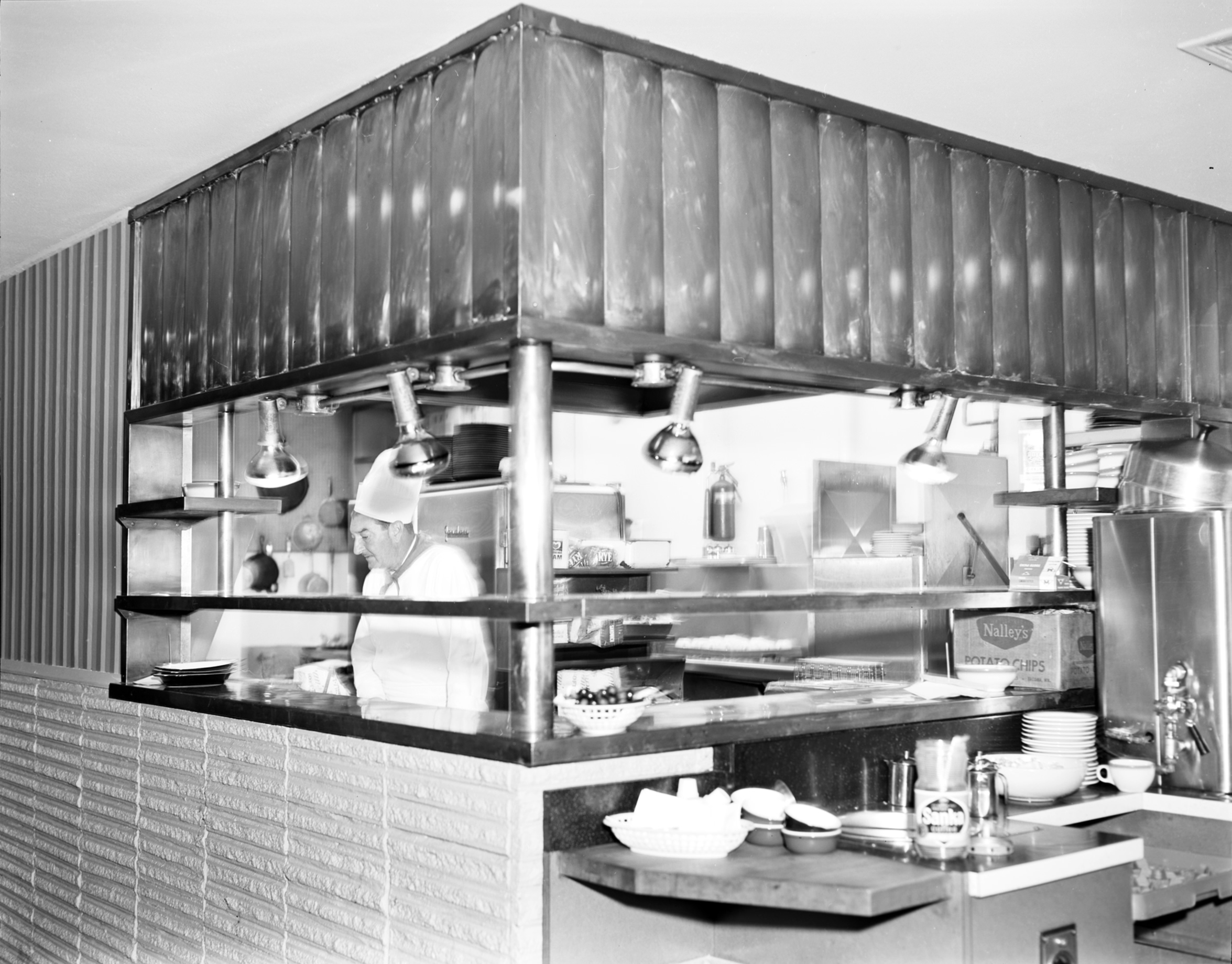
Food was prepared on the other side of the same counter, in front of the customer, which eliminates the entire problem of getting an order from a dining room to a kitchen.
No tickets, no window, no runner, no waiting for a bell. The order was spoken, heard, cooked and handed over across a single surface – which is why the food arrived in minutes and why nothing ever got lost between the order and the plate.
Turnover Was the Business Model
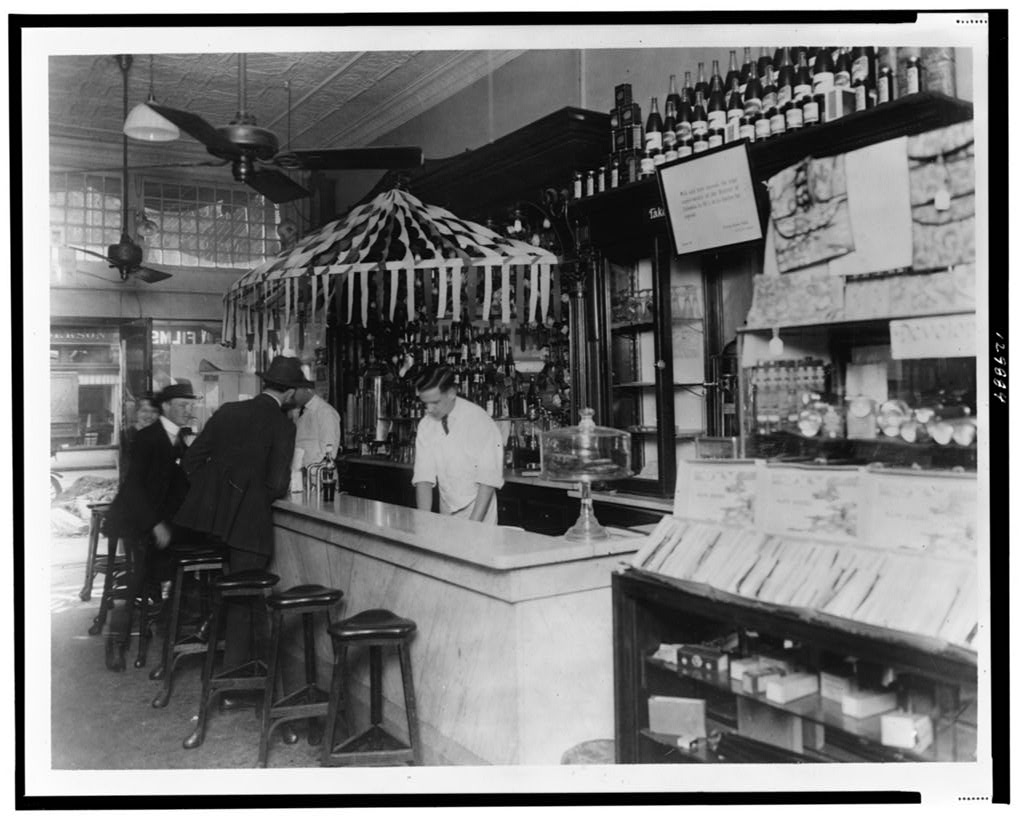
A stool is not a table. Nobody lingers at a counter, and the format is designed so nobody does.
Which is the point. A counter with twelve stools serving four sittings in an hour feeds forty-eight people from twelve seats, and the arrangement encourages exactly that: no tablecloth, no courses, a stool with no back or a low one, your coat on your lap. Everything about it says eat and go, pleasantly.
The Menu Was Short Because the Equipment Was Small
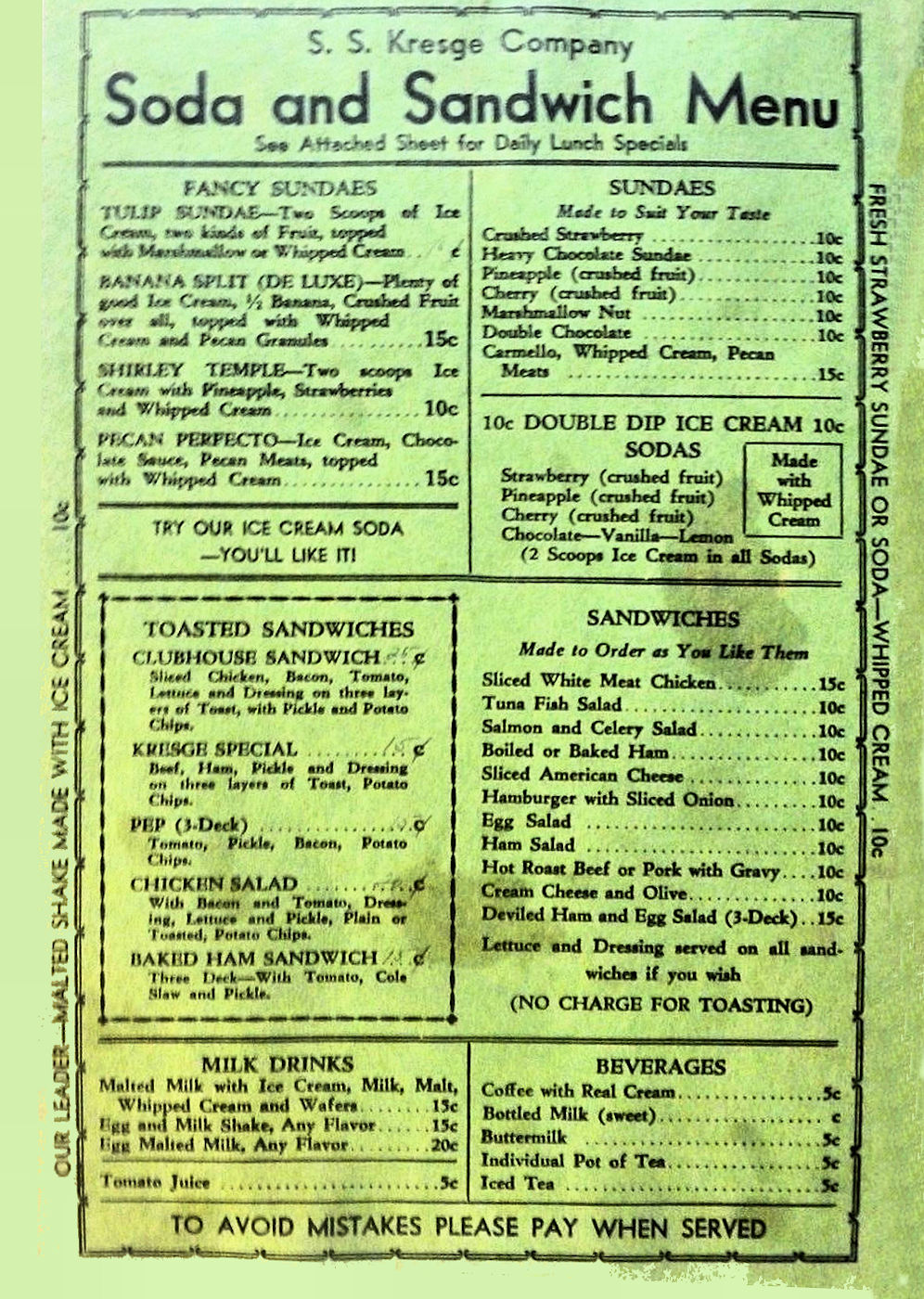
A griddle, a fryer, a coffee urn, a toaster and a cold well will produce perhaps twenty dishes, and that is what the board offered.
The constraint produced the character. A short menu means everything is prepped, everything is fast, nothing is wasted and the cook is doing a small number of things extremely well hundreds of times a week – which is why counter food was reliably good in a way an ambitious menu in the same space could never have been.
You Sat Next to Strangers and Talked to Them
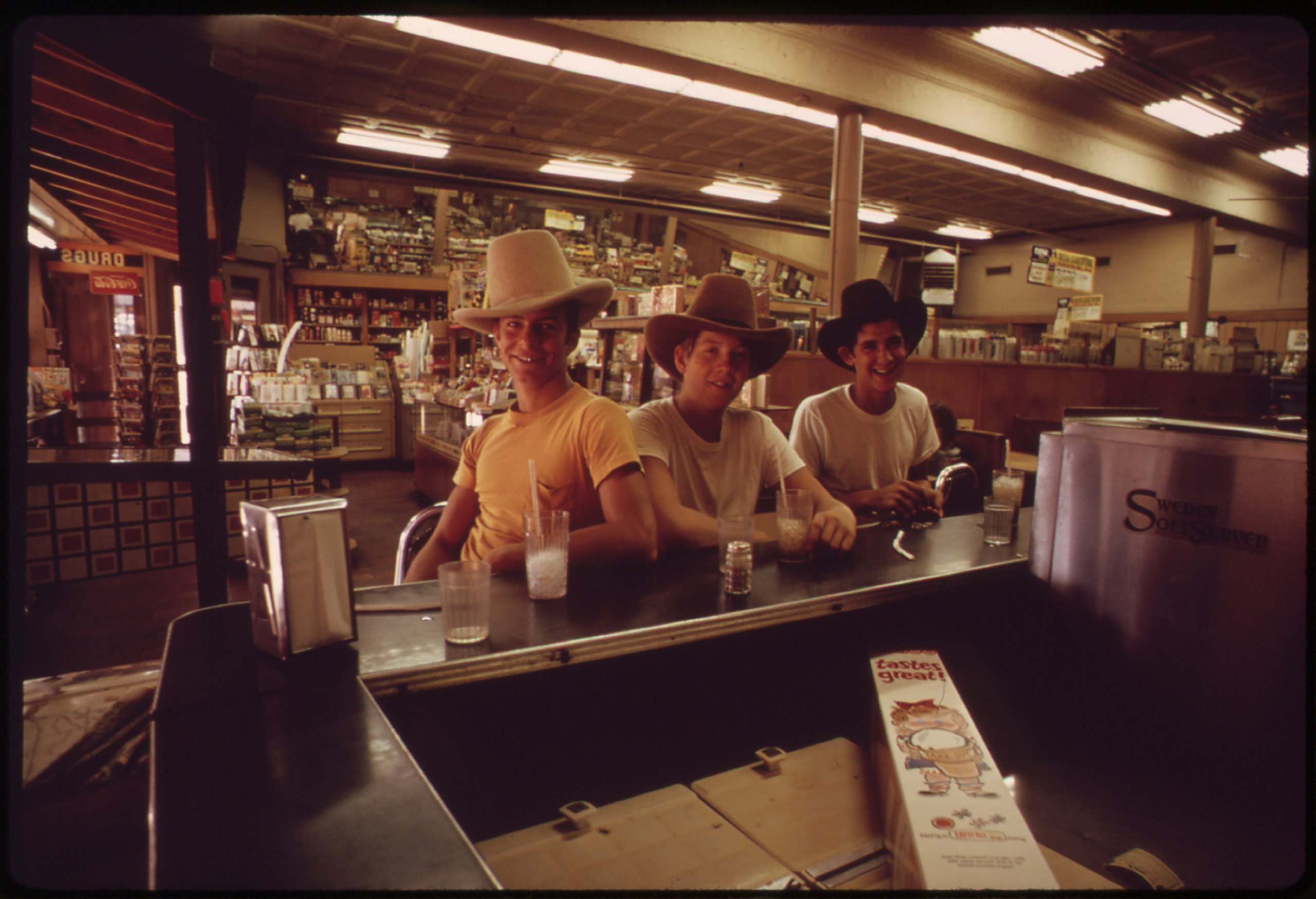
A counter has no private tables. Sitting down means sitting beside somebody, facing the same direction, close enough to talk without raising your voice.
That geometry produced conversation between people who had no particular reason to speak. It is the same thing a bar does, at lunchtime, sober, across every part of a town’s population – which made a counter one of the few places where a farmer, a clerk and a schoolteacher were seated shoulder to shoulder.
The Waitress Knew Everybody and Remembered Everything
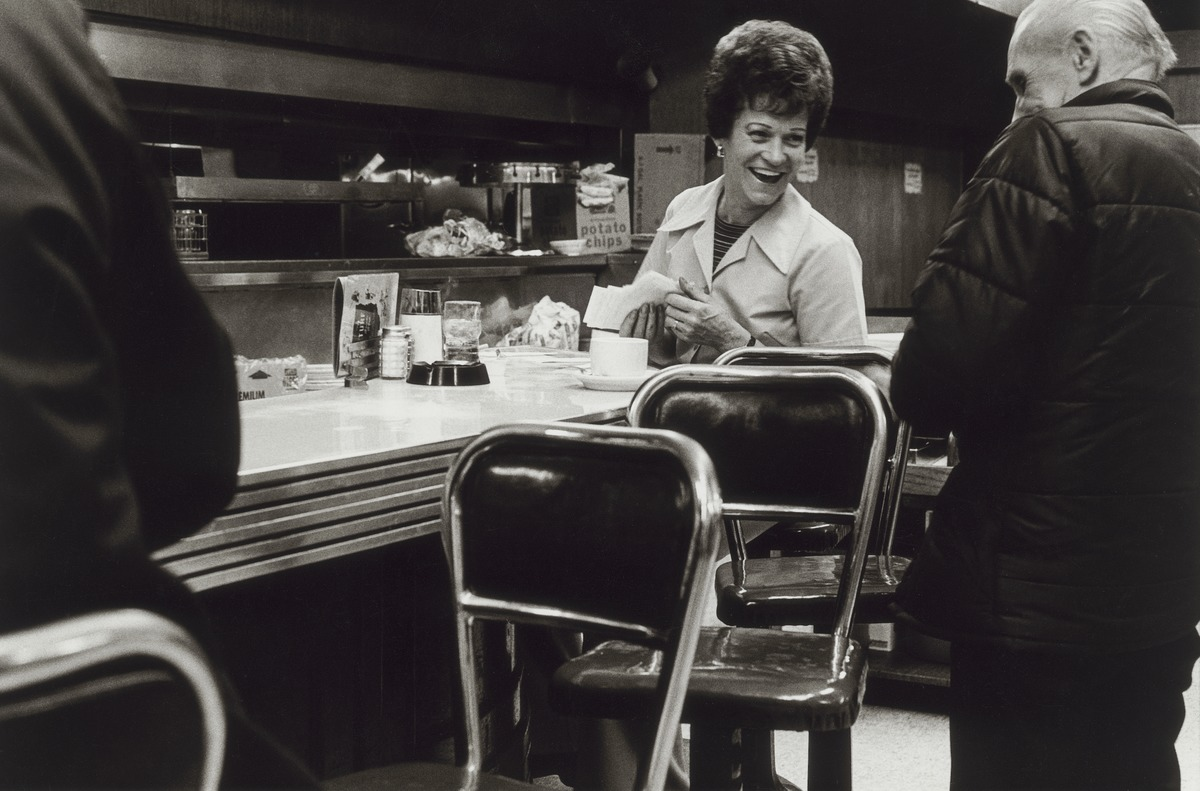
Counter service is one person holding an entire room in their head – who ordered what, who is nearly finished, who needs coffee, who is paying.
That is a real skill and it was treated as one by regulars, if not always by anybody else. A good counter worker ran the whole operation from one spot, kept track of a dozen simultaneous states, handled the money, and did it through the lunch rush every day.
Coffee Was Bottomless and That Was Deliberate
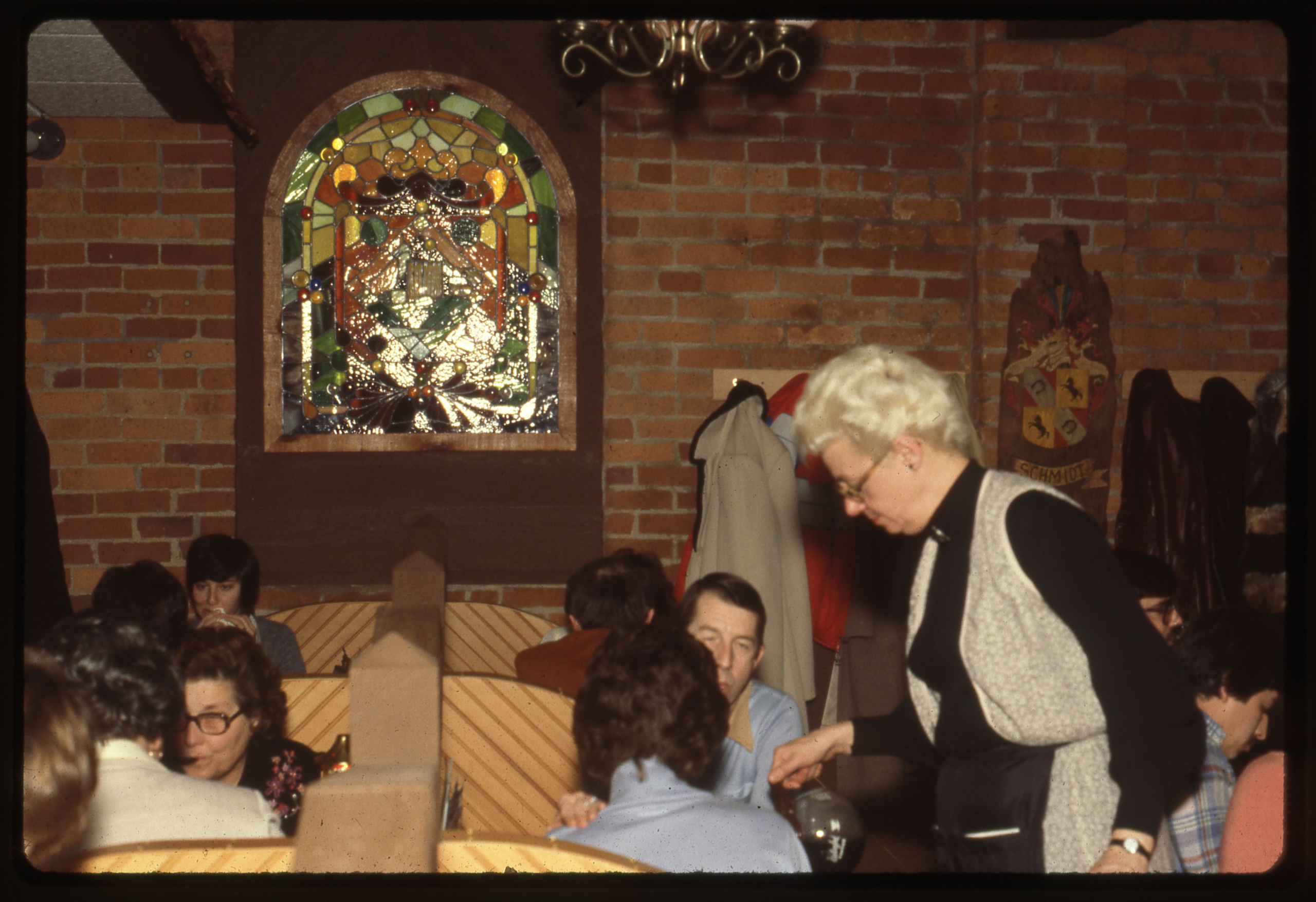
The urn sat behind the counter and the cup got refilled without being asked, repeatedly, at no extra charge.
Which sounds generous and is good business. Coffee costs almost nothing per cup, keeps a customer comfortable, and makes the whole experience feel abundant – and a customer who feels well treated at a counter comes back three times a week for years. The refill is marketing with a very long payback.
The Soda Fountain Half Ran on Children
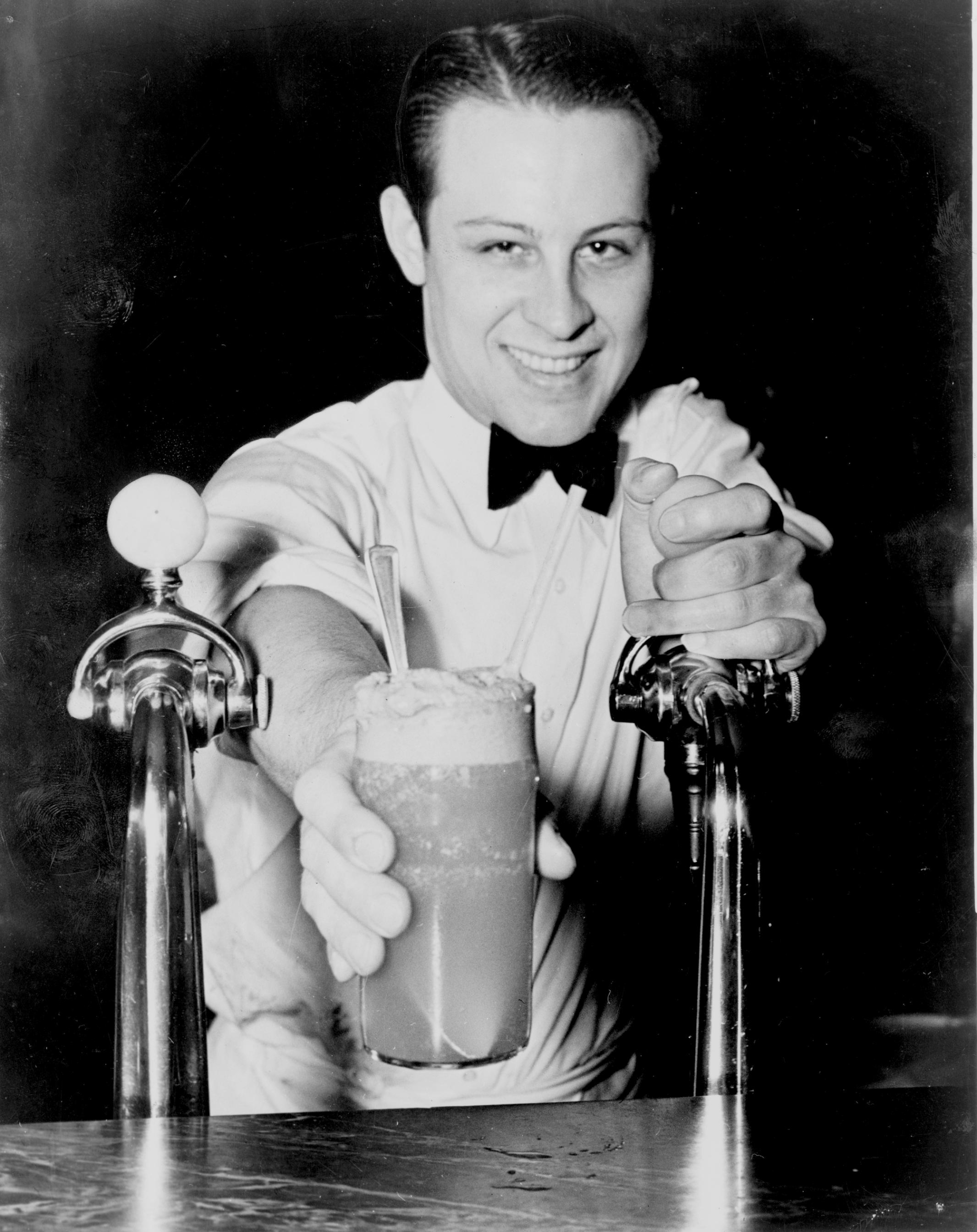
Many counters were also fountains, serving ice cream and fizzy drinks made to order from syrup and carbonated water.
That is a second business layered on the first, and it ran at different hours: lunch for adults, after school for children. One counter, one set of equipment, two customer bases and two peaks – which is the same logic as putting the counter in the shop in the first place.
The Stool Was Engineered for Exactly This
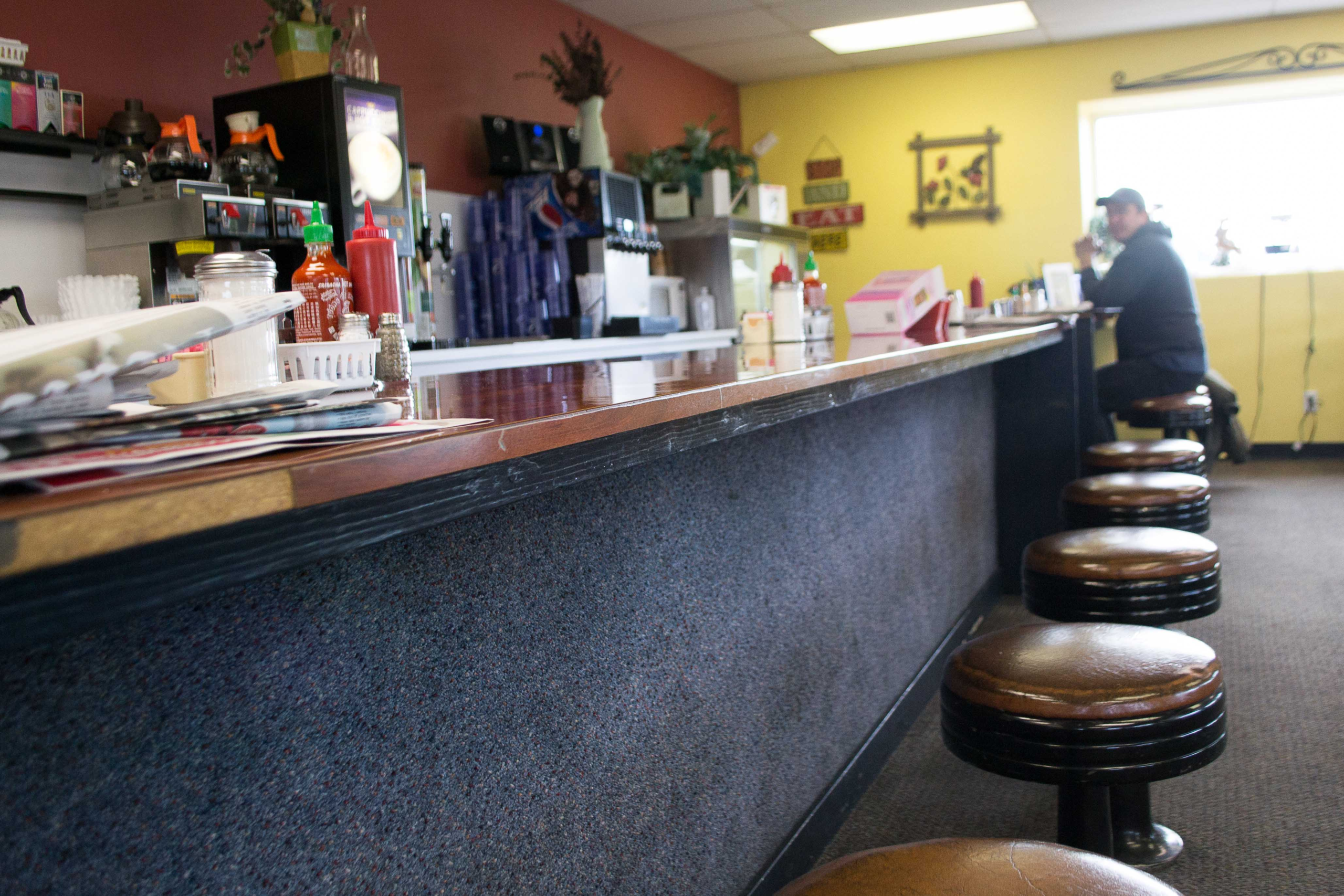
A round seat on a single post, fixed to the floor, swivelling, with the footrail at a set height – every element of that is a decision.
Fixed stools cannot be moved, rearranged or stolen, and they guarantee the spacing stays right. Swivelling lets somebody get on and off without pushing back. No arms and no back means a person occupies the minimum width. The stool is as optimised for throughput as the counter itself.
Ordering Had Its Own Language
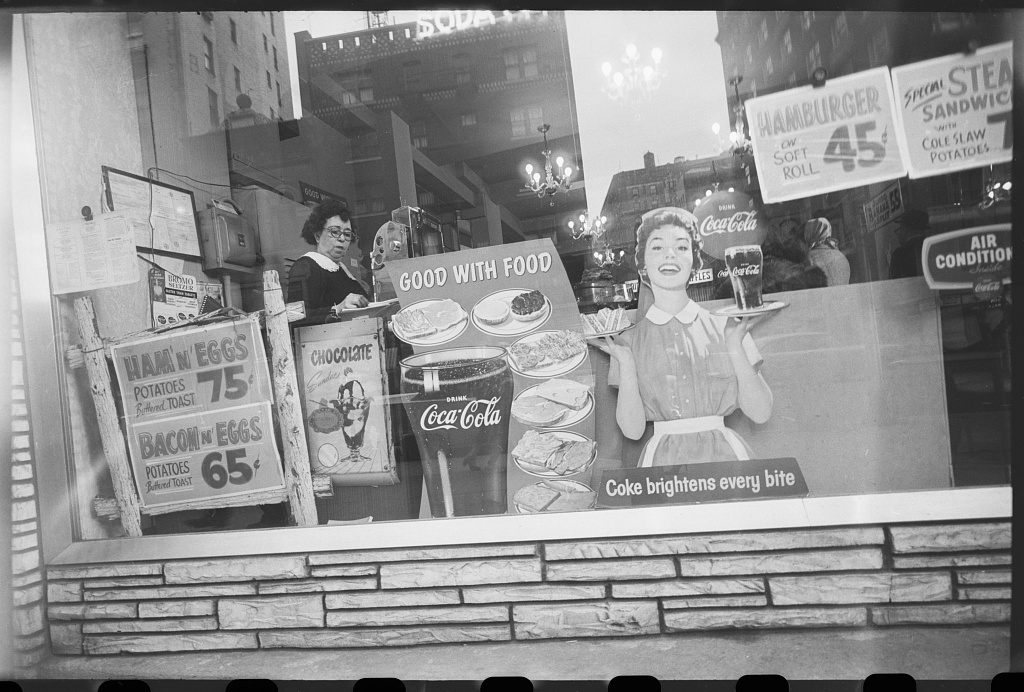
Counter staff and cooks used an abbreviated shorthand for dishes, which existed because calling an order across three feet of counter has to be fast and unambiguous.
It is a working vocabulary rather than a joke, and it did two things: compressed a long dish name into a syllable or two, and made the order distinct from every other word being said in a noisy room. Regulars learned it and used it, which is how a customer became an insider.
Lunch Counters Were Central to the Civil Rights Movement
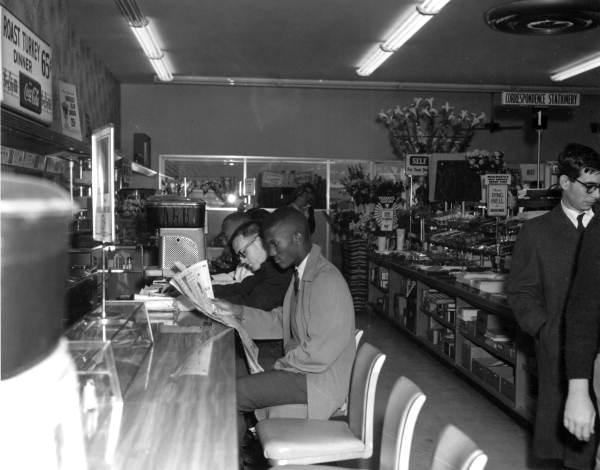
It cannot be left out of any honest account of these places. In the American South and elsewhere, lunch counters were segregated, and sit-ins at them in the early 1960s were a defining tactic of the civil rights movement.
The reason the counter was chosen is partly what this whole piece is about: it was ordinary, public, central, and the exclusion was visible to everybody in the room. That history is extensively documented, it is not mine to summarise in a paragraph, and anybody reading about lunch counters should read about it from proper sources rather than from a nostalgia piece. It is the most important fact about the subject and it is why I am naming it rather than describing it.
The Format Was Fast Food Before Fast Food
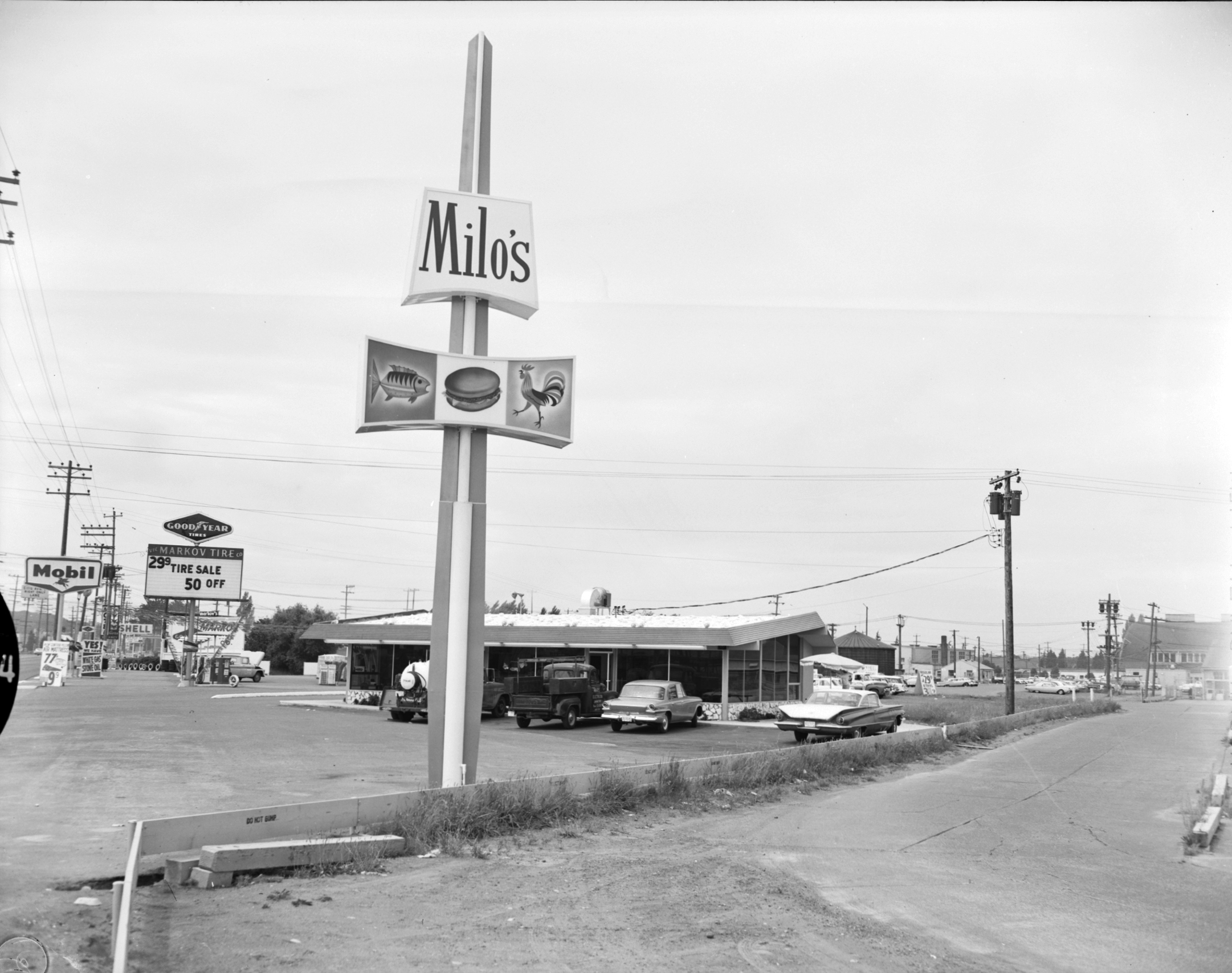
Everything the drive-through later sold itself on – speed, a short menu, consistency, low price, no ceremony – the counter was already doing.
Which makes the eventual replacement less a revolution than a relocation. The counter’s model was sound and it was simply rebuilt somewhere cheaper, with the seating removed, the cook put out of sight and the staff interaction reduced to a window.
Parking Beat Everything in the End
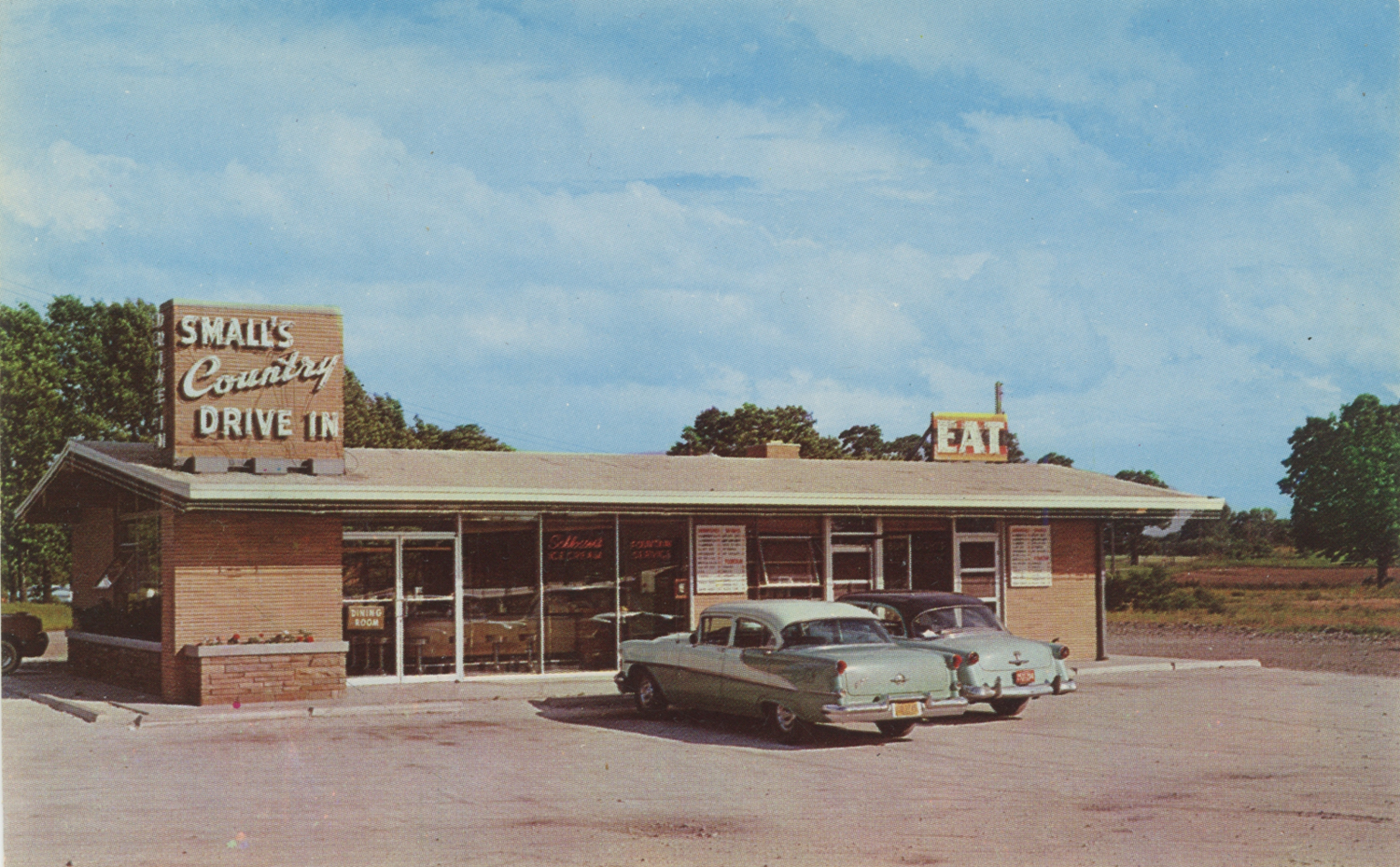
A counter is downtown, in a building, on a street, and reaching it means walking. A drive-in needs none of those things.
As towns spread out and errands moved to the edge, the whole premise – that people were already in this building, on this street, at this hour – stopped being true. The counter did not lose on food or price. It lost because the foot traffic it was built to capture went somewhere with a car park.
The Shops They Lived Inside Closed First
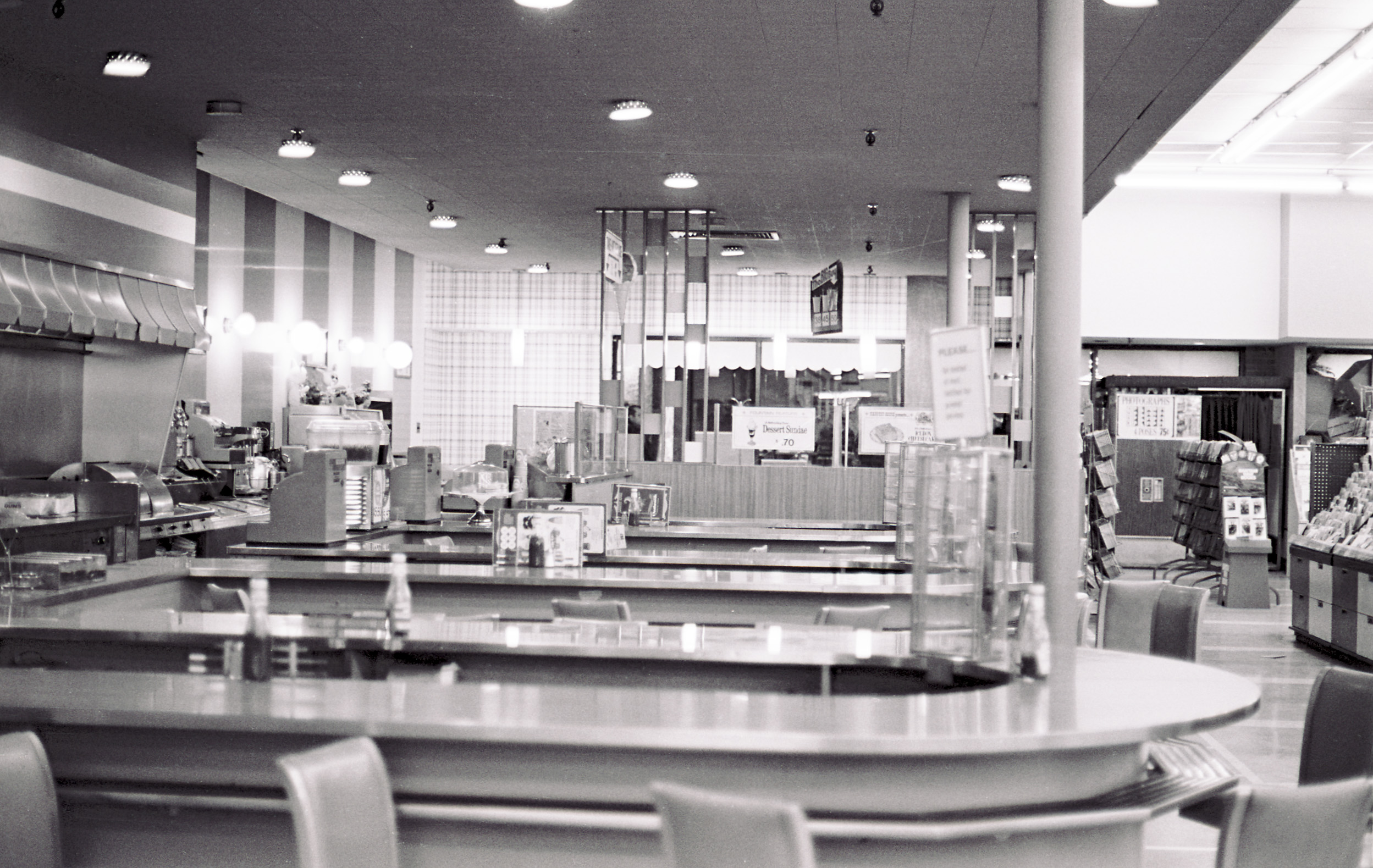
A counter in a drugstore depends on the drugstore. When the host business went, the counter went with it, regardless of how well it had been doing.
That is the unsentimental mechanism behind most of the disappearances. These were not independent restaurants that failed on their own merits – they were a secondary use of somebody else’s floor space, and a secondary use cannot outlive its host.
And What Went With It Was Eating Next to Strangers
The honest summary is that almost every element of the counter survived, in better and cheaper form, except one.
Speed survived. The short menu survived and got shorter. The visible cooking came back as a selling point. Cheap, consistent, fast food is more available now than it has ever been. What did not survive is the row of stools – the single arrangement that put a town’s population side by side, facing the same way, close enough to talk, for twenty minutes in the middle of an ordinary working day. That was never the product. It was a by-product of making a narrow strip of floor space pay for itself, and when the floor space went, the only thing nobody had designed went with it.
Like our content? Follow us for more.