Do It Now
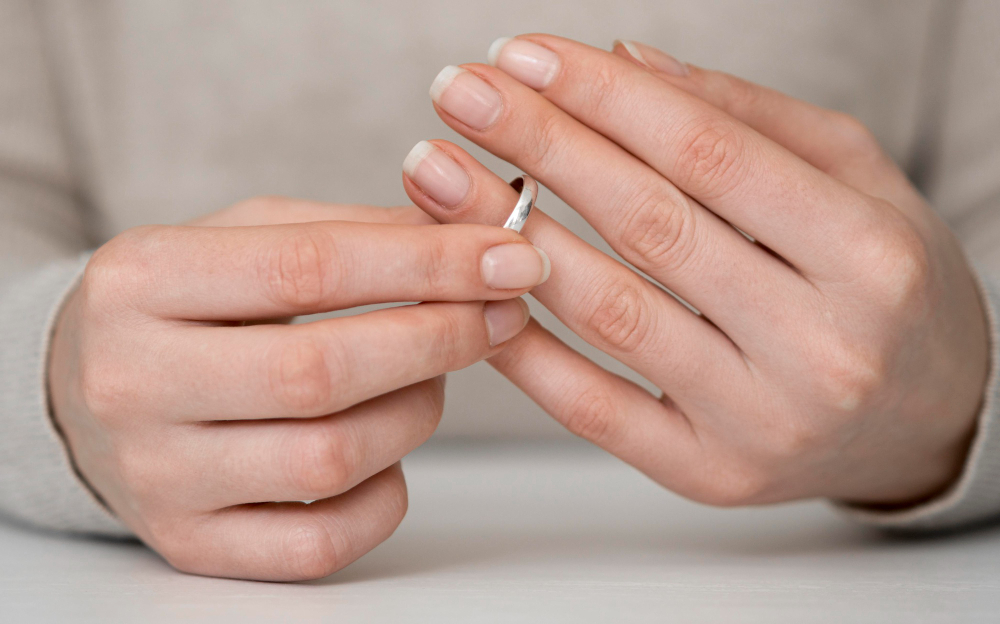
Put one hand flat on a table, palm down, fingers spread.
Now fold the middle finger under, so that it tucks beneath the palm and the middle knuckle is resting on the table. The other three fingers and the thumb stay flat.
Lift the thumb. It comes up. Put it down.
Lift the index finger. It comes up. Put it down.
Lift the little finger. It comes up. Put it down.
Now lift the ring finger.
Nothing happens. Not a reduced range, not a struggle – for most people it will not move at all, and the sensation is of something being held rather than something being weak. You can push as hard as you like.
Then unfold the middle finger and lift the ring finger again, and it rises without difficulty. It was never the finger that was the problem.
Like our content? Follow us for more.
What You Have Just Demonstrated
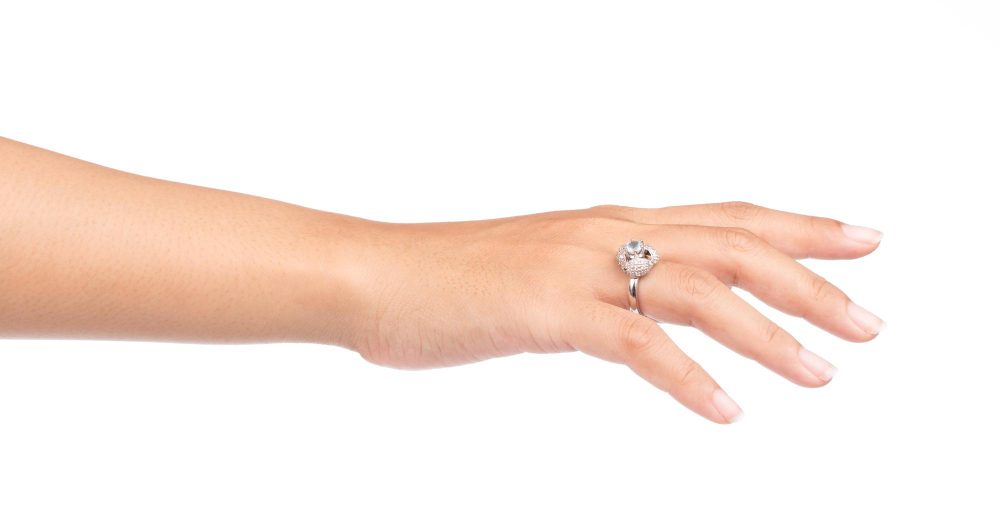
The fingers do not have independent machinery. They look independent, they are arranged as four separate items, and almost everybody assumes each one has its own set of muscles pulling it about.
They do not. What you have just found is a physical connection between two fingers – a specific, locatable piece of tissue that ties the ring finger’s lifting apparatus to the middle finger’s, so that disabling one disables the other.
And the reason it is a surprise is that the connection is invisible from outside and almost never noticeable in ordinary use. Nothing you do in a normal day puts the middle finger into that position while asking the ring finger to lift. The arrangement is exposed only by a configuration your hand is never otherwise in, which is why a piece of anatomy you have carried your whole life can be news.
There Is One Muscle Lifting Four Fingers
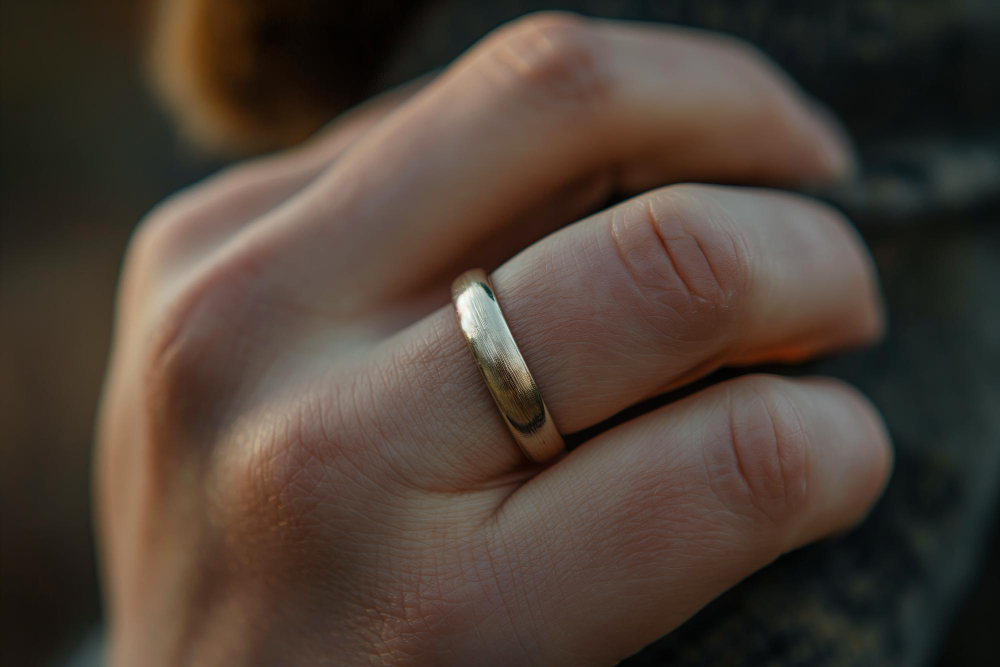
Turn your hand over and look at the back of it with the fingers straight. You can see the tendons running from the knuckles back toward the wrist – four cords lying under the skin, one heading for each finger.
Four cords, but they do not come from four muscles. They converge in the forearm into a single muscle, which has one body and divides into four slips toward its far end. One contraction, four fingers lifting.
That is already enough to explain a familiar frustration: fingers tend to come up together, and holding three down while lifting one takes effort. They are being pulled by the same thing.
But there is more to it than a shared origin. The four tendons are also tied to one another where they cross the back of the hand, by short oblique bands running between them. These connections are the reason the fingers are not merely pulled together but mechanically coupled: tension or slack in one tendon is transmitted sideways to its neighbours.
Except for Two Fingers, Which Were Given Extras
Here is where the asymmetry comes in, and it is the part that makes the trick work the way it does.
Two of the four fingers have additional, dedicated muscles of their own, over and above their share of the common one. The index finger has a private extra extensor. So does the little finger. Each of those two therefore has an independent line of pull that nothing else is attached to.
The middle finger and the ring finger have no such thing. They are supplied by the shared muscle and nothing else.
Now the result of the experiment makes sense item by item. The thumb has an entirely separate apparatus of its own and is unaffected. The index finger lifts because its private muscle can raise it regardless of what the common tendon is doing. The little finger lifts for the same reason. The ring finger has no private muscle, so it is entirely dependent on the common system – and the common system has just been immobilised.
Why Folding That One Finger Locks It
The mechanism is about slack rather than about strength, which is why the sensation is so odd.
A tendon is a cord of fixed length. Lifting a finger means pulling its tendon toward the wrist, and that requires there to be slack available in the system to take up. When the middle finger is folded under, its tendon is drawn right out over the bent knuckle and pulled taut. All the available slack in that part of the system has been spent.
Because the ring finger’s tendon is connected sideways to the middle finger’s, it cannot get that slack back. Pulling on the ring finger’s slip simply pulls against the tethered middle finger tendon, which is already at the end of its travel and is not going anywhere. The force has nowhere to go.
The ring finger is not weak and is not disconnected. It is attached to something that has been pinned down, and no amount of effort changes the length of a cord. This is also why the feeling is so specifically that of being held – which, accurately, is what is happening.
Fold the index finger under instead and the ring finger still lifts, because the index has its own supply. Fold the ring finger under and the middle finger becomes the one that will not rise. The effect is reciprocal, and that is the giveaway that it is about a connection rather than about any one finger.
The Bending Side Has the Same Problem
The coupling is not confined to lifting. On the palm side, the arrangement is similar and in some people more pronounced.
The deep muscle that bends the last joint of the fingers is also a single muscle body dividing into slips. In most people the slips serving the middle, ring and little fingers arise from a common mass, while the one serving the index finger is more separate.
Which has a consequence worth noticing: the index finger can bend its fingertip on its own, and the ring finger very largely cannot. Try curling only the last joint of the ring finger and the neighbours will come with it, by an amount that varies from person to person and is never zero.
So the ring finger is the dependent digit in both directions. It shares a lifting system with the middle finger and a bending system with the middle and little fingers, and in neither direction does it have anything of its own.
Which Is Why Musicians Spend Years on That One Finger
Anybody who has learned piano, guitar, violin or any other instrument requiring independent fingers will recognise this immediately, because the ring finger is universally the problem and nobody ever explains why.
The reason is not that it is lazy or untrained. It is that two of the other fingers have hardware it does not have. A student working on index-finger independence is developing control of a system that is already mechanically independent. A student working on ring-finger independence is working against a physical coupling that will still be there at the end.
What practice achieves is real but is a different thing from what people imagine. It improves the brain’s ability to activate the shared muscle selectively and to use the small muscles in the hand itself, which do contribute, and it builds tolerance of the coupling. What it cannot do is create a dedicated muscle, because the body does not grow one.
This also explains why the ring finger measures as the weakest of the four in grip and in individual force, and why the middle and ring pair move together more than any other pair when people are asked to move one at a time. The phenomenon has a name in the research literature – the involuntary accompanying movement of neighbouring fingers – and the ring finger shows the most of it by a clear margin.
Why It Works Better on Some People Than Others
A small number of people will find that their ring finger lifts a little, and a very small number will find they can lift it almost normally, which is a reasonable objection to everything above and is in fact further evidence for it.
The short bands tying the extensor tendons together vary considerably from one person to another. There is a typical pattern, but the number of bands, their thickness, where exactly they attach and how much they restrict movement are all highly variable, and the variation is well documented. Some hands are tightly coupled, some are comparatively loose.
So the trick is a direct readout of your own anatomy. A total lock means tightly tied tendons. A little movement means looser ones. And a hand that manages it comfortably is unusual and is worth knowing about if its owner plays anything.
The same variation has consequences beyond party tricks. Surgeons rebuilding a hand after injury rely on the fact that the index and little fingers have spare extensors, which can be borrowed and rerouted to do another finger’s job – a transfer that is possible precisely because of the asymmetry you have just demonstrated on a table with one hand.
Four Fingers, Two of Them Properly Independent
The summary is that the hand is not four equivalent units. It is a shared system with two privileged members, two dependent ones, and a set of short connecting bands that make the dependence physical rather than merely neurological.
The ring finger is at the bottom of that arrangement, which is why it is the weakest, the least independent, the hardest to train and the one that will not lift when its neighbour is folded away.
None of it is detectable in normal use. It takes one specific, slightly ridiculous hand position to reveal, and it has been true of your hand since before you could use it.
Like our content? Follow us for more.