

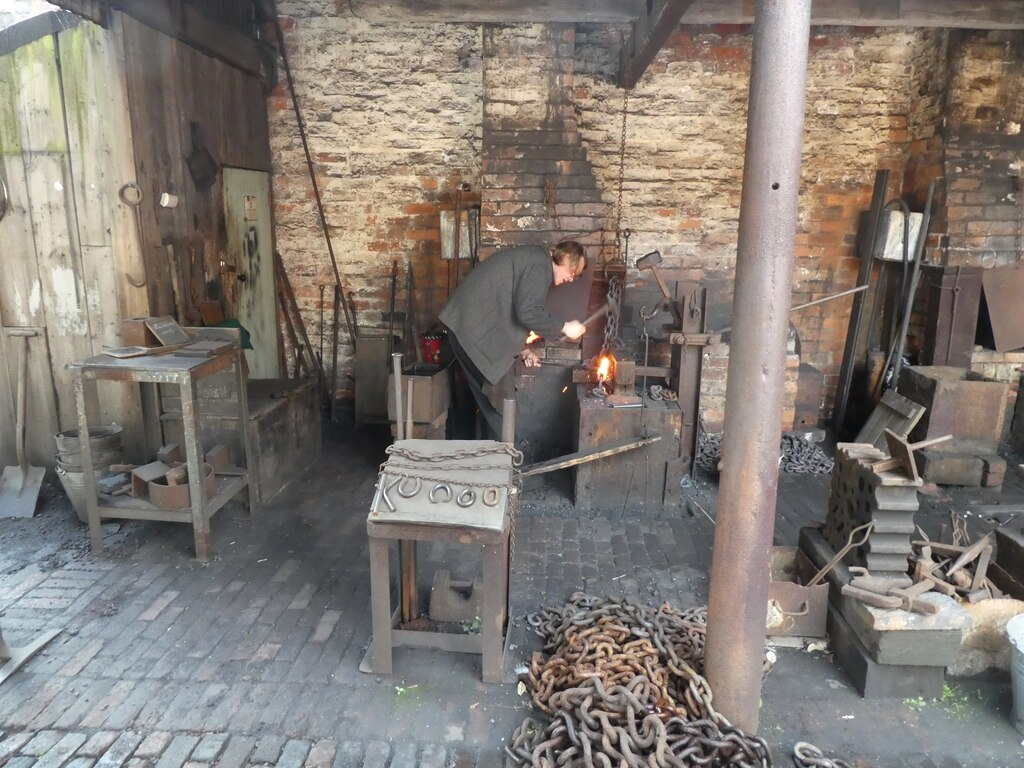
In 1955 the remnants of a trade were still being worked in brick sheds behind houses – a hearth, an anvil, bellows, and a family making chain and nails by hand, paid by weight on the buyer’s scales with deductions for the iron.
Every link was formed, threaded and welded individually, judged by colour, with no test of the joint except pulling the finished chain. Heavy chain took a team of strikers working in timed rotation around one anvil.
Here are eleven things that were ordinary in the chain and nail trade in 1955, and what became of each one.
1. The Work Was Done in a Shed at the Bottom of the Garden
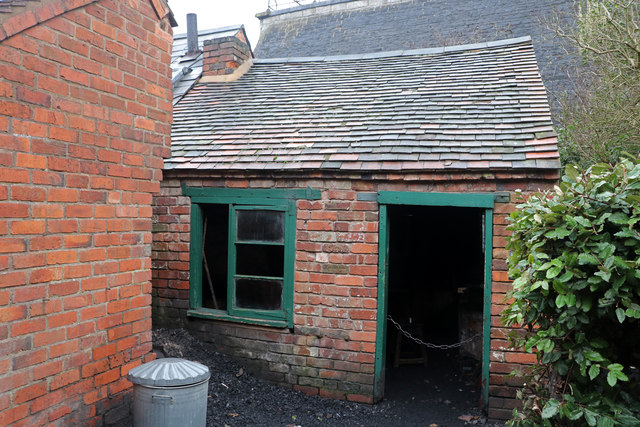
Chain and nail making were domestic industries. A family worked a hearth and anvil in a brick shed attached to or behind the house, and the output was collected by a middleman who supplied the iron and paid by weight.
Factory production concentrated the work and the domestic workshops disappeared, with the sheds demolished or absorbed into gardens. The arrangement meant there was no boundary at all between the house and the workplace – the fire was lit before breakfast and the work continued around everything else the household did.
Like our content? Follow us for more.
2. Women Made Chain and Were Paid Less for the Same Chain
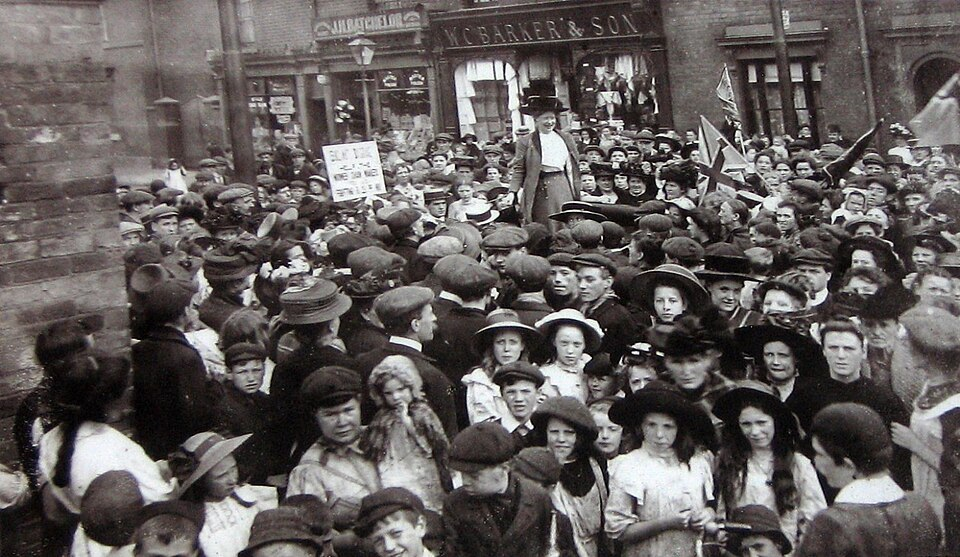
Chainmaking was done extensively by women, working the same hearths with the same tools, and the rate paid per hundredweight was lower than the rate paid to men for comparable work.
Minimum wage machinery for sweated trades was introduced in the early twentieth century after organised campaigning by the women themselves, and it is one of the earliest and clearest cases of statutory minimum pay being established in response to a specific documented abuse. The campaign is well documented and is a significant episode in industrial history that almost nobody outside the district has heard of.
3. Payment Was by Weight and the Scales Belonged to the Buyer
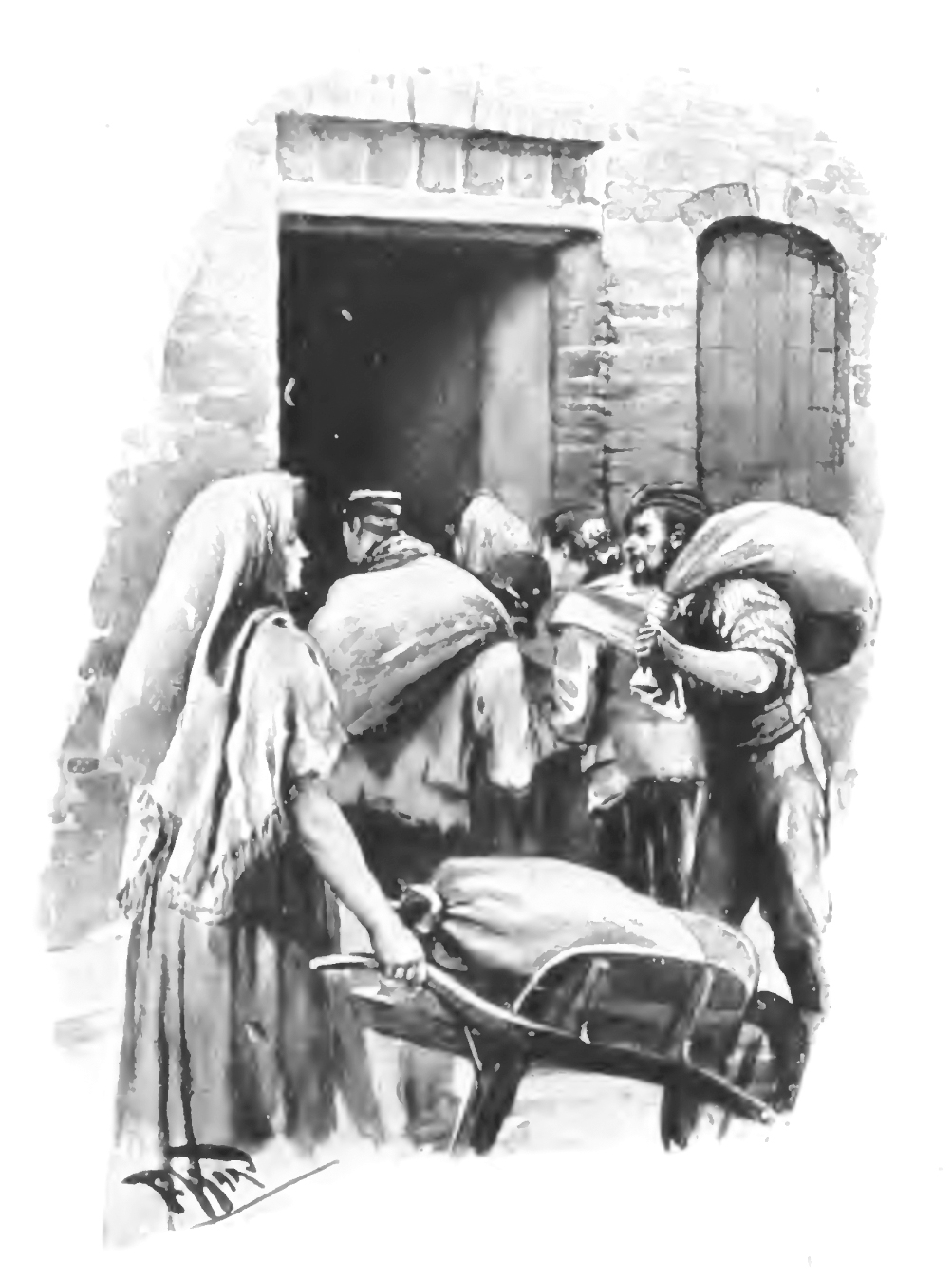
Workers were paid by the hundredweight of finished product, weighed on the middleman’s scales, with deductions for iron supplied, for fuel, and for work judged substandard.
Direct employment, hourly or measured pay and weights and measures enforcement removed the arrangement. When the person buying your output also owns the scales, supplies your raw material on credit and judges your quality, the pay rate on paper is not the pay rate, and that gap is what the campaigns were ultimately about.
4. Children Worked the Bellows and Then the Hammer
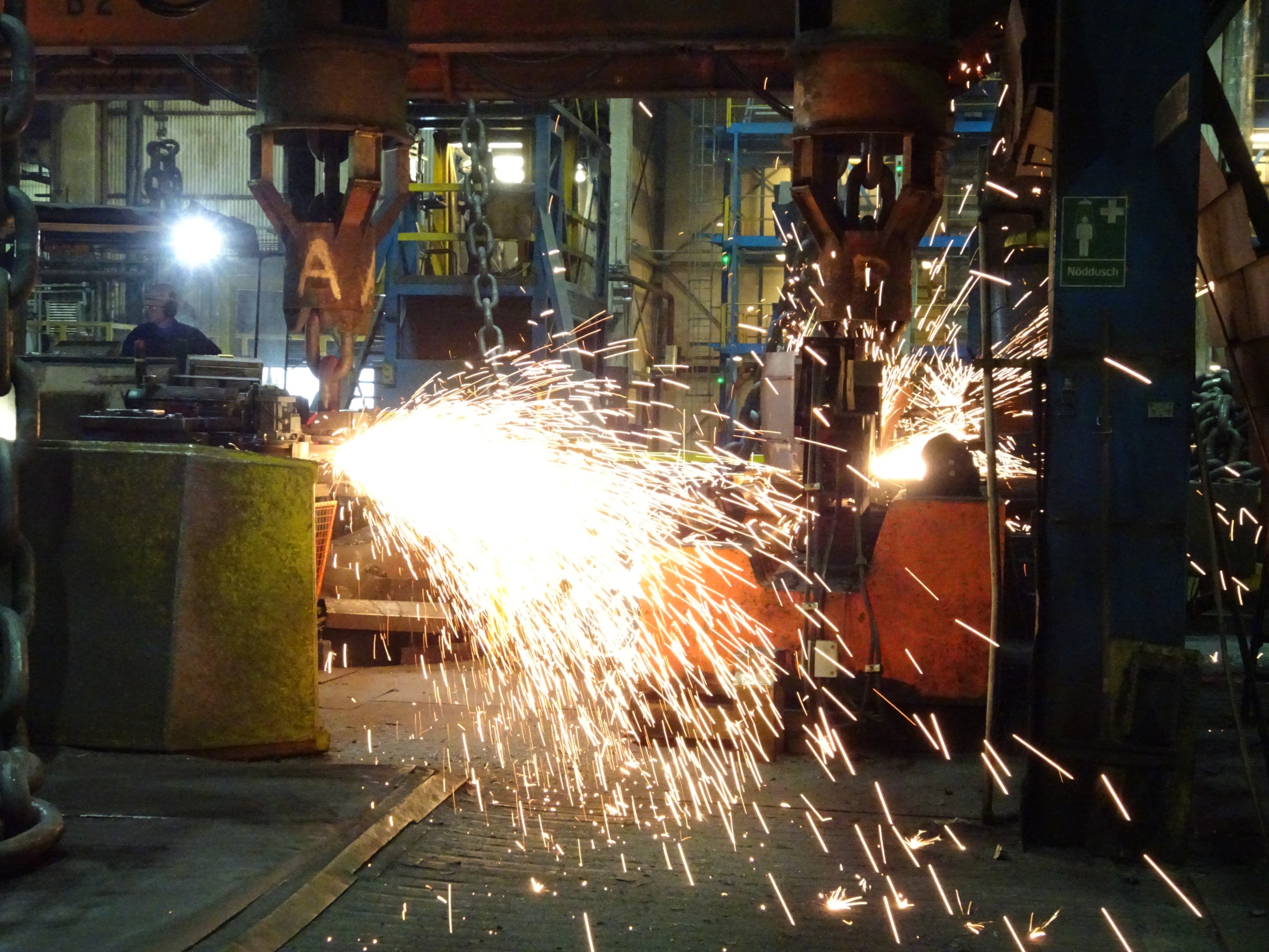
Children in these households blew the bellows, fetched iron and struck, and progressed to making small chain or nails as soon as they were physically able.
Compulsory education and child labour legislation ended it well before 1955, and by that date the surviving domestic work was done by older people. The trade is one of the most thoroughly documented examples of domestic child labour precisely because it was investigated so often by so many official inquiries.
5. Every Link Was Made and Closed Individually by Hand
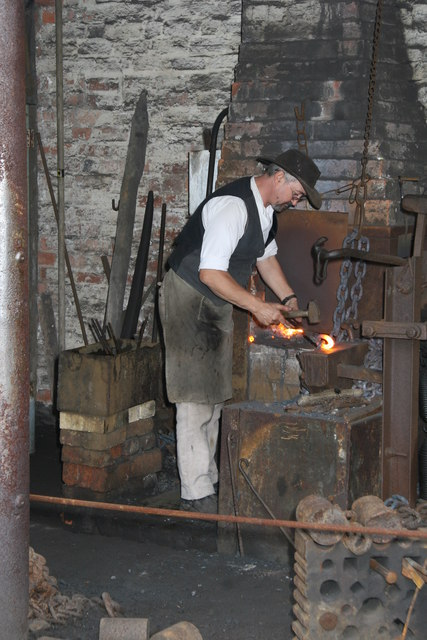
A chain was built link by link: a length of rod heated, bent round a former, threaded through the previous link, and the ends scarfed and hammered together while hot into a welded joint.
Automatic chain-making machines form, thread and weld links continuously, and welding is now electric. The hand-welded link is a genuine piece of skill – the joint has to be as strong as the rest of the link, judged by colour and feel at the moment of striking, with no way to test it except by pulling the finished chain.
6. Large Chain Was Made by Teams Swinging in Sequence
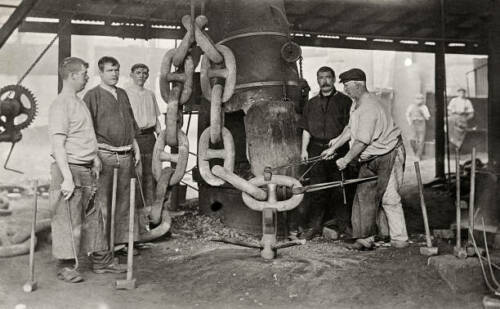
Heavy chain – anchor cable and the like – needed several strikers working one link in turn, swinging in a timed rotation around the anvil, each blow landing while the iron was still at temperature.
Hydraulic presses and machine welding replaced the team. The coordination required was considerable and the sequence was maintained by rhythm and by sound, with the men working within arm’s length of each other and of a hearth, swinging sledges.
7. Nails Were Cut and Headed One at a Time
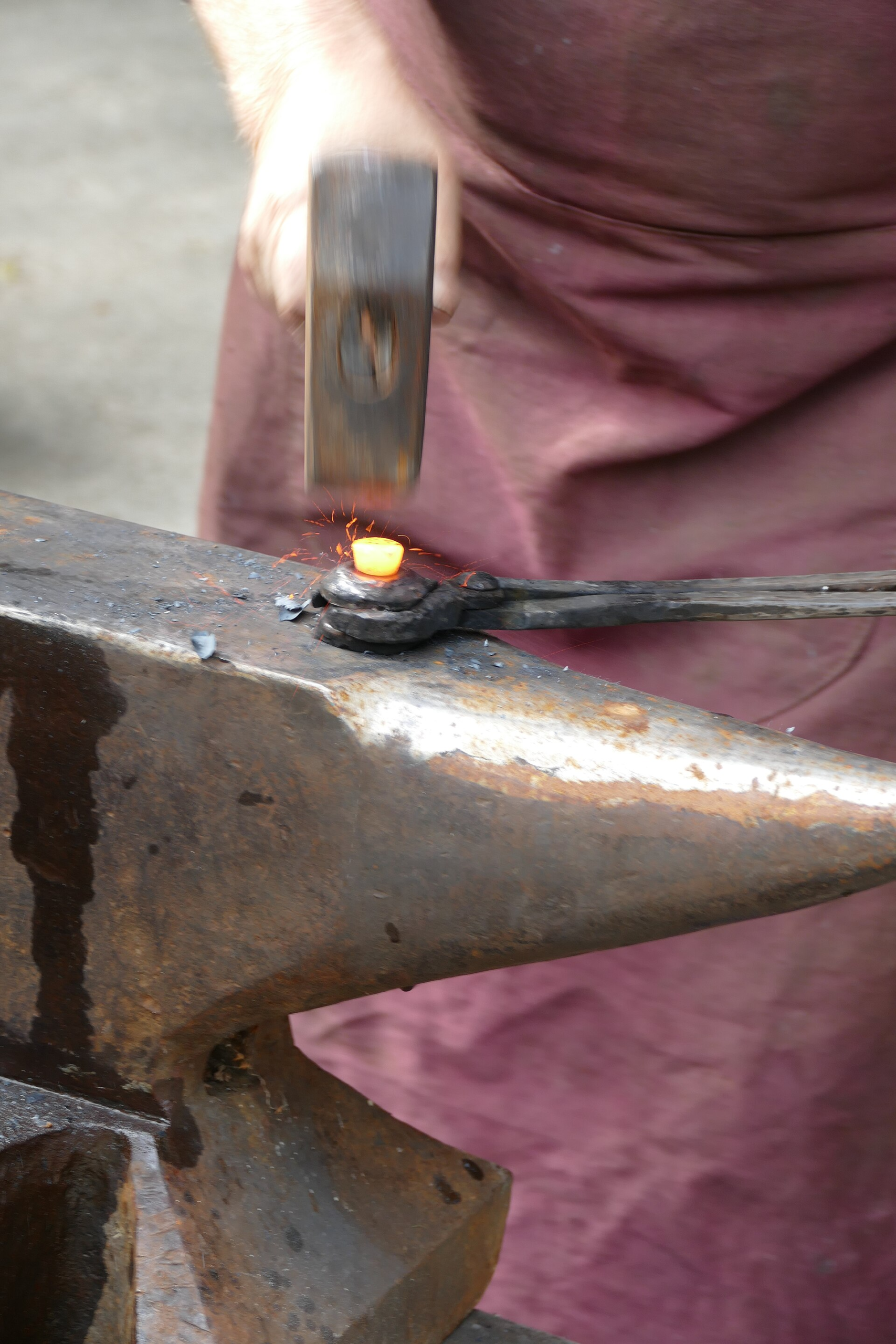
Hand nailmaking took rod, cut it, pointed it, and formed a head in a heading tool with a hammer blow – producing a few hundred nails an hour from a worker who did nothing else all day.
Wire nail machines producing many nails per second had already destroyed the hand trade well before 1955, and the survivors were making specialist and farrier’s nails. The wire nail is the clearest example in this entire series of a machine making a hand trade worthless almost overnight – the price collapsed and the skill became unsellable within a few years.
8. The Hearths Were Open and the Sheds Were Unventilated
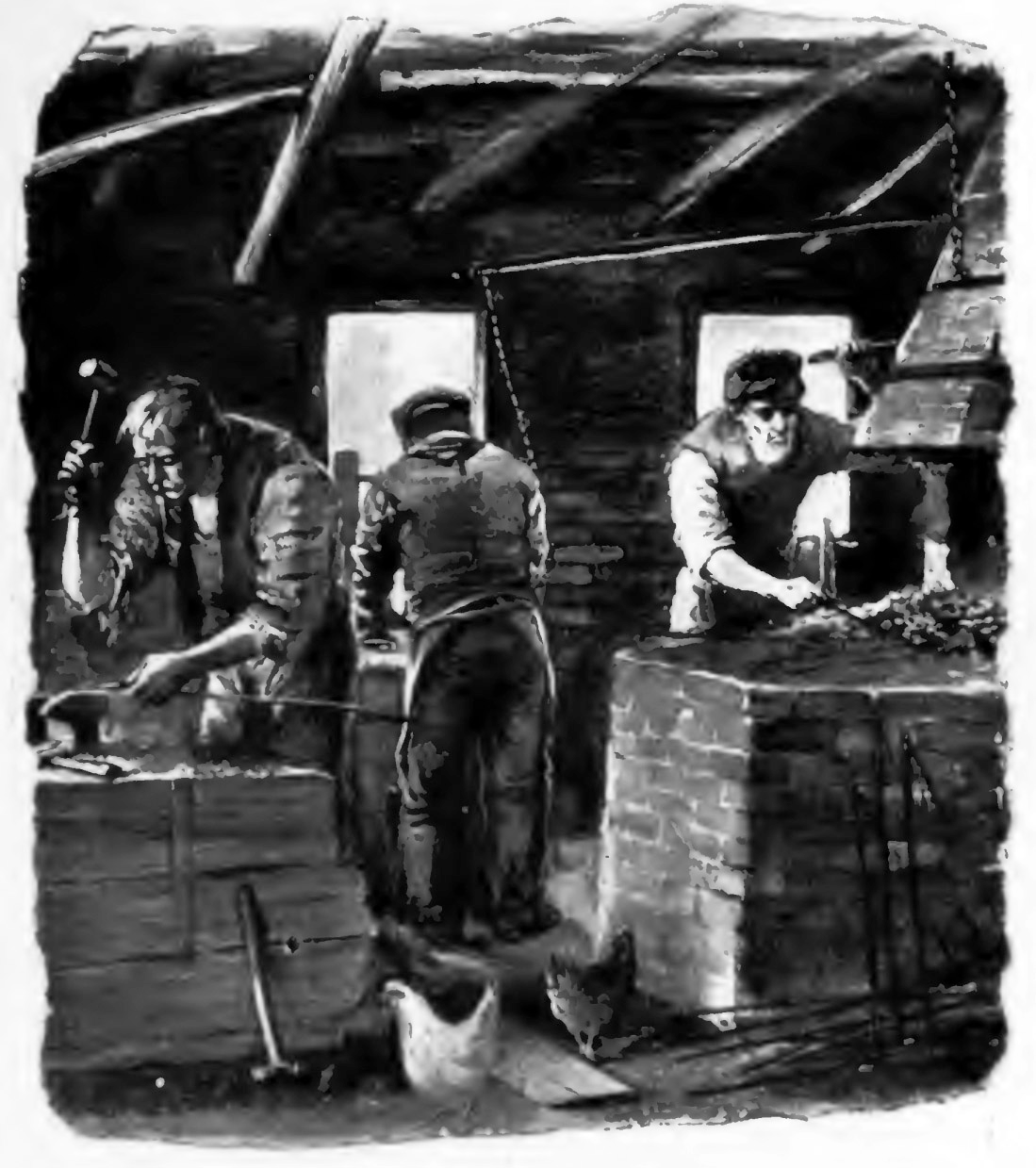
A small coke hearth in a confined brick shed, with bellows, produces heat, fumes and combustion products in a space with minimal ventilation, occupied all day.
Industrial hearths are now ventilated, monitored and enclosed, and the domestic workshop does not exist. Included here as occupational history only. Anybody with that work history should raise it with their own doctor rather than with an article.
9. Burns Were Routine and Treated at Home
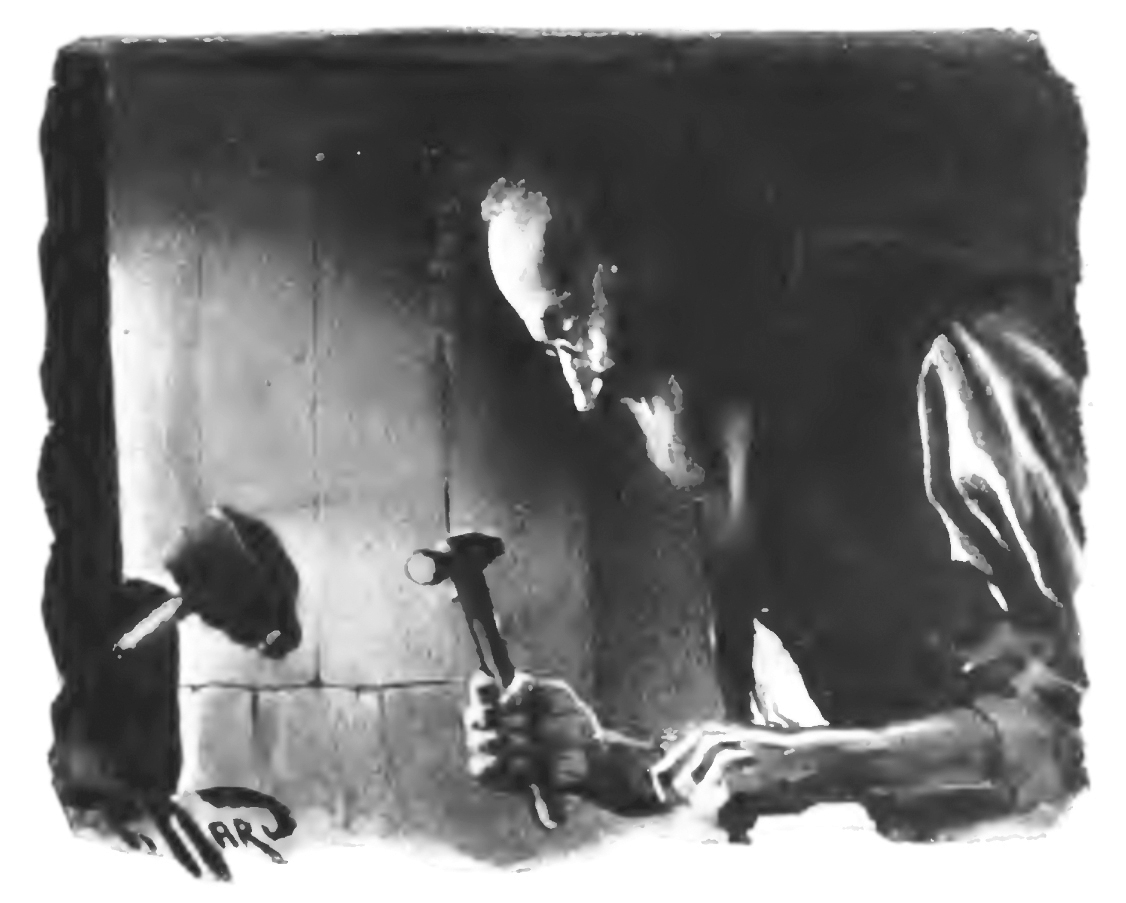
Working hot iron by hand, with children present, in a confined space, produced burns and sparks constantly, and they were dealt with domestically as an ordinary part of the day.
Protective clothing, guarding, first aid provision and reporting requirements changed the picture entirely. The acceptance of minor injury as simply part of the work is the attitude that runs through every trade in this series, and it is the thing that modern safety culture had to displace before any specific control could be effective.
10. The Quality Depended Entirely on the Person and Nobody Tested It
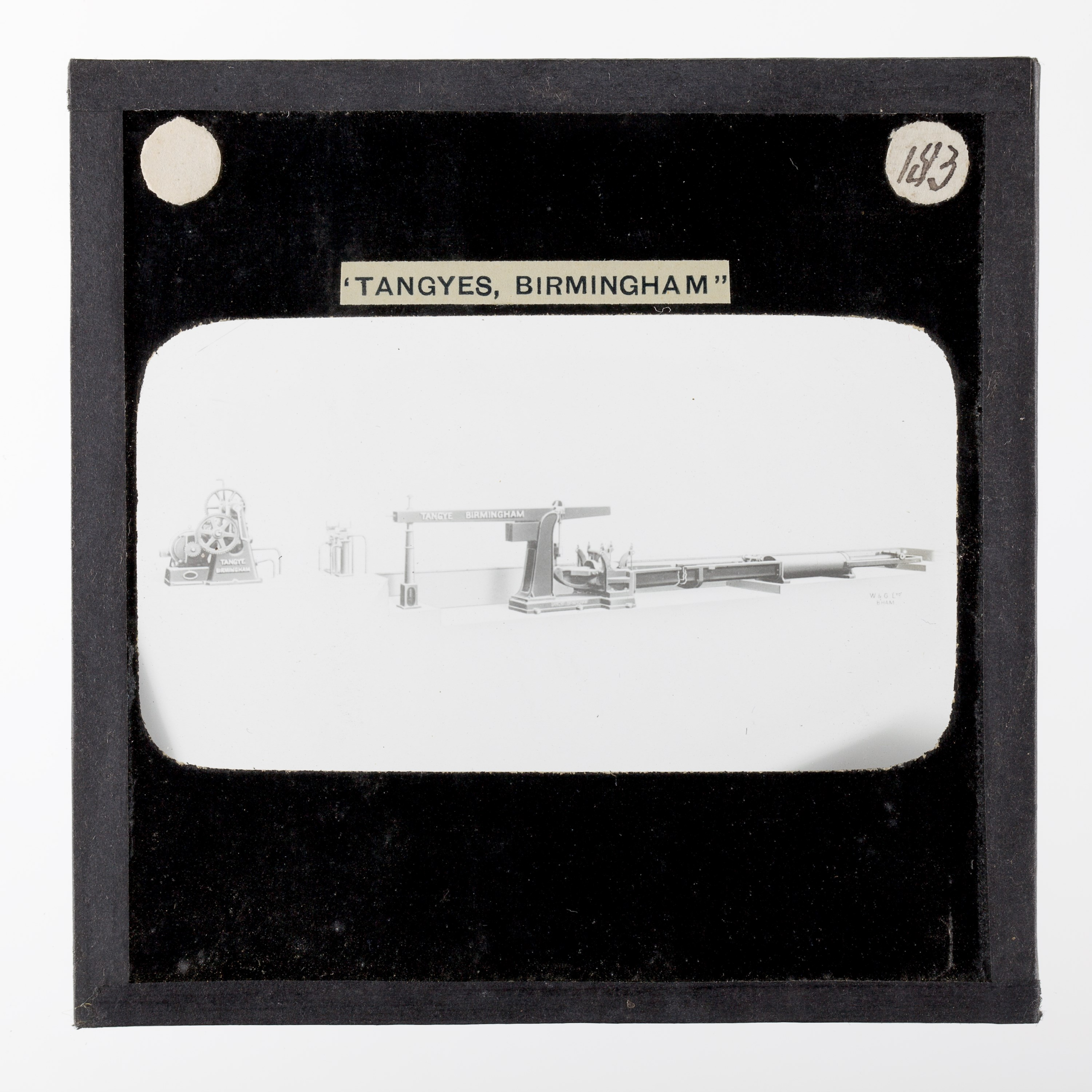
A chain is only as strong as its worst weld, and in a domestic trade paid by weight there was no testing, no certification and no traceability of who had made any particular length.
Proof testing, certification, batch traceability and standards for lifting equipment are now absolute requirements, for the obvious reason. Chain made for lifting is now tested to a specified load before it is sold, and the entire certification regime around lifting gear exists because of what happens when an untested chain fails under load.
11. Nobody Thought the Skill Would Simply Stop
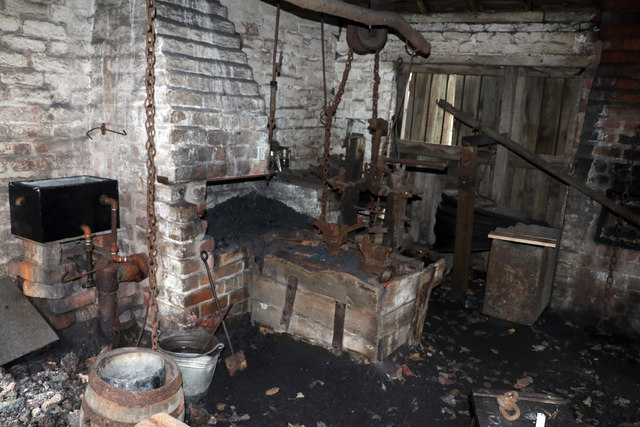
The trade had existed in these districts for centuries, passed down within families, and it was assumed to be permanent in the way that long-established things are.
It ended within a couple of generations, and the specific knowledge – hand-welding a link, judging the heat, the heading technique – survives now only through heritage demonstration and a small number of people keeping it alive deliberately. The buildings mostly went too, and what remains is a handful of preserved workshops and the memorials to the women who struck over their pay.
Paid by Weight on Somebody Else’s Scales
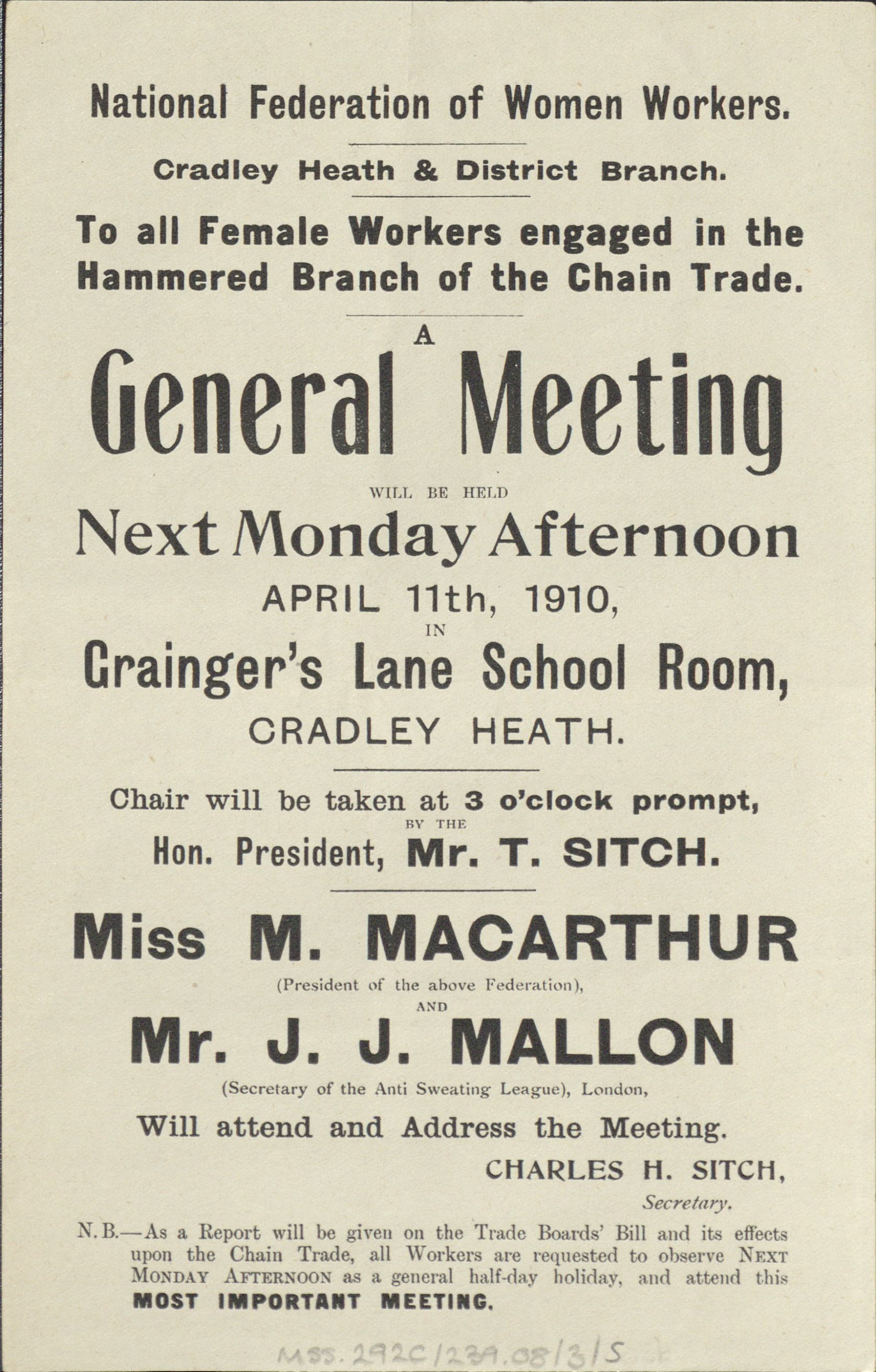
The item that explains this trade is the payment arrangement, because it is the mechanism that made everything else possible.
A domestic chainmaker did not have an employer. They had a middleman who supplied iron, advanced it on credit, collected the finished product, weighed it, applied deductions, and paid the difference. On paper this is a contract between independent parties. In practice the worker owned nothing except their tools and their labour, could not sell to anybody else, could not verify the weight, could not contest a quality deduction, and was in debt for the raw material before starting.
The consequence is that the nominal rate per hundredweight tells you nothing about what anybody actually earned, and the system could absorb a rate increase entirely through deductions without anybody breaking a stated agreement.
This is why the eventual remedy was statutory. Campaigning for a better rate within the arrangement achieved very little, because the arrangement was designed to be adjustable at the buyer’s end. What worked was a legally enforceable minimum, set externally, applying to the trade as a whole, with inspection behind it – and the women of this trade were central to establishing that principle and to winning it through sustained organised action.
It is a piece of industrial history with an unusually direct modern parallel. Any arrangement where a person is formally self-employed, supplied with their materials or their platform by the entity buying their output, paid per unit at a rate that party sets, with deductions that party calculates, has the same structure. The names have changed and the mechanism has not, which is why this particular trade is worth knowing about beyond the district that worked it.
If your family came from a chainmaking district, there may still be a brick shed at the bottom of somebody’s garden.
And the memorials to the women who struck over the rate are still standing.
Like our content? Follow us for more.
