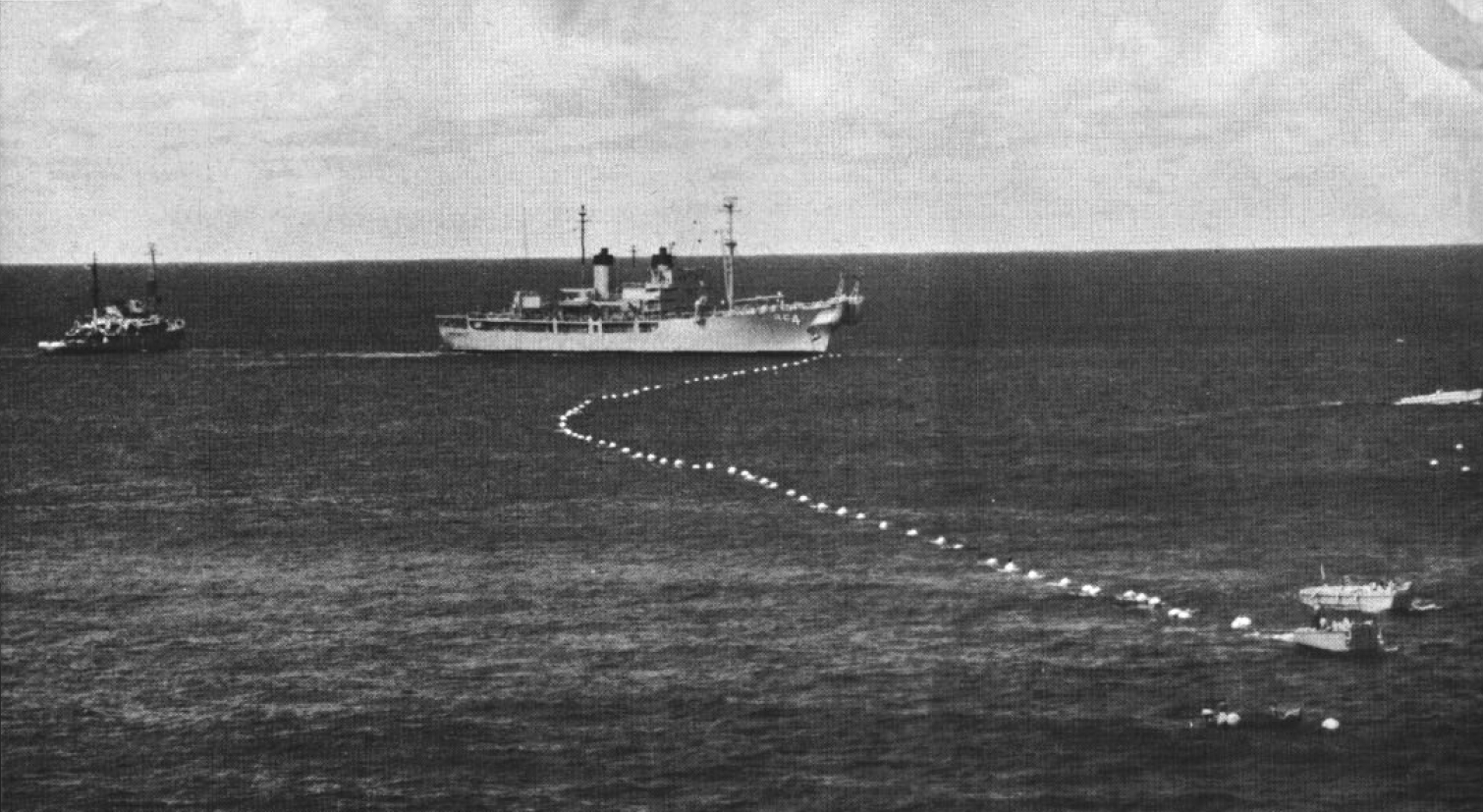
In 1960 a cable ship was built around circular tanks holding thousands of miles of cable, coiled down flat by hand by men walking the coil as it loaded.
Laying meant paying it over the stern at a rate matched to the ship’s speed and the depth, calculated against a seabed known only from scattered soundings. Repairing meant dragging a grapnel blind along the bottom until it caught. And the join was made by hand on deck, to a standard that had to last decades under pressure.
Here are fifteen things that were ordinary on a cable ship in 1960, and what became of each one.
1. The Ship Carried Thousands of Miles of Cable Coiled in Enormous Tanks
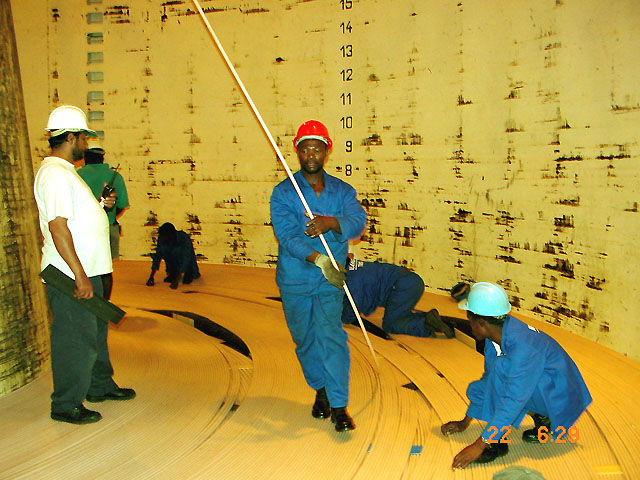
A cable ship’s hull was built around circular tanks, each holding cable coiled down in flat layers by hand, with men walking the coil continuously as it was loaded to keep every turn flat and in order.
Automated handling and powered coiling have reduced the manual work and the tanks are still there and still the defining feature of the hull. The coiling had to be perfect: a cable that comes out of the tank with a turn trapped under another turn fouls at the stern while being laid, which is a serious problem at sea with no good solution.
Like our content? Follow us for more.
2. The Cable Was Paid Out Over the Stern at a Controlled Speed Against the Ship’s Motion
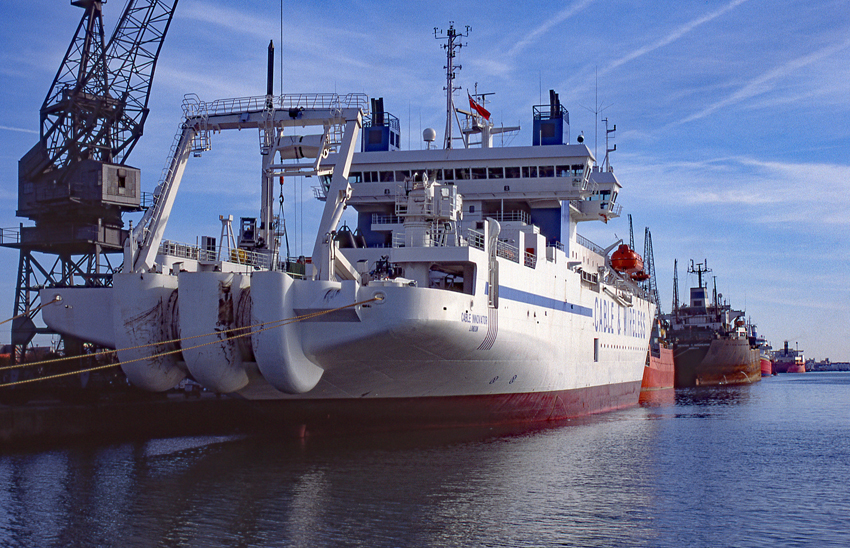
Laying meant running the cable out over a sheave at the stern, at a rate matched to the ship’s speed and the depth, controlled by a brake, so that it reached the seabed with just enough slack and no more.
Automated tension control and dynamic positioning do it far more precisely. The arithmetic is the whole craft: too little slack and the cable hangs between high points on the seabed and eventually parts, too much and you have wasted expensive cable and created loops that abrade – and the ideal is a few per cent, calculated continuously against a seabed profile you cannot see.
3. The Depth Was Measured by Lowering a Weight on a Wire
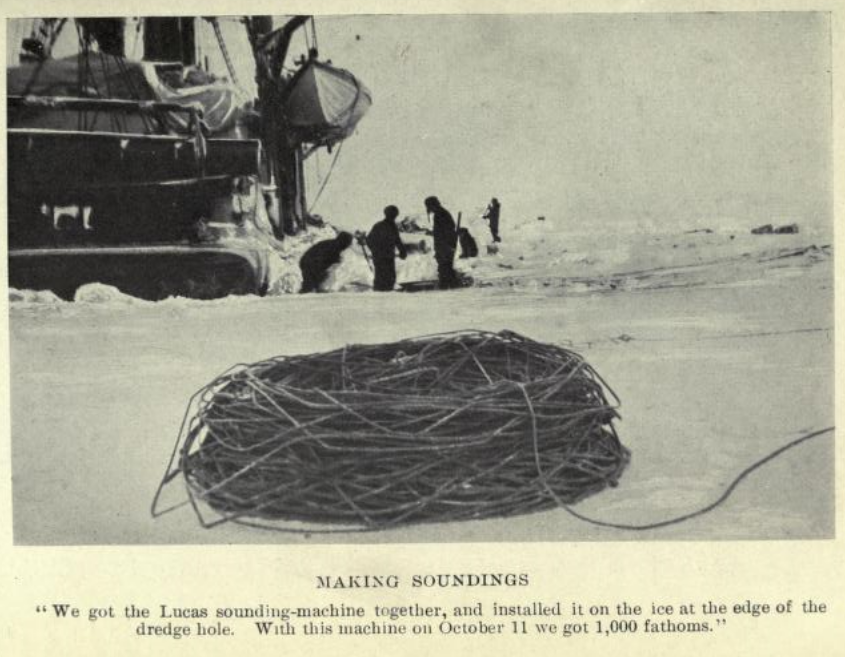
Before echo sounding was precise, the seabed profile along a route was established by sounding – lowering a weighted line until it touched – which gave single points rather than a continuous picture.
Multibeam sonar, satellite positioning and detailed route surveys give a full profile before any cable is laid. Laying a cable across a seabed known only from scattered soundings meant the slack calculation was being made against a guess, and a cable that crossed an unknown ridge or canyon was at risk from the moment it was laid.
4. Finding a Broken Cable Meant Dragging the Seabed With a Grapnel
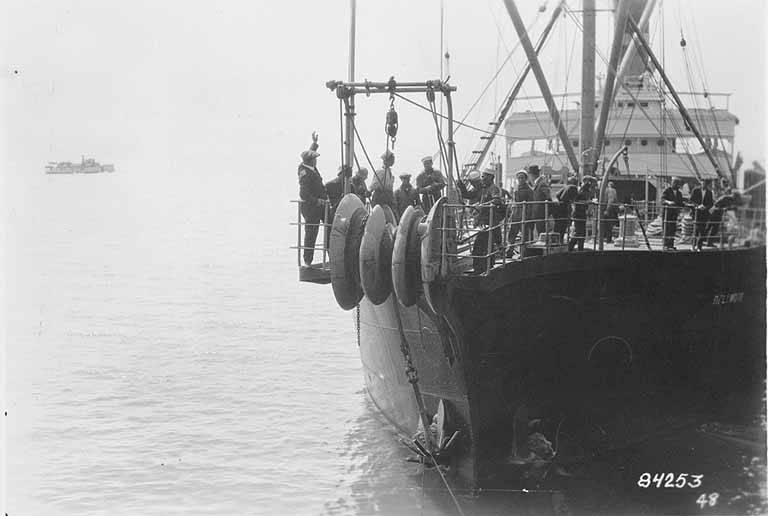
Repair began by locating the fault electrically from shore, then steaming to the position and dragging a hooked grapnel along the bottom across the cable’s line until it caught, then hauling it up from the depth.
Remotely operated vehicles now locate and recover cable precisely under direct observation. Grappling blind in deep water, for a cable a few centimetres across, from a ship on the surface, was routine work and succeeded regularly – which is more remarkable than it sounds and depended entirely on the accuracy of the electrical fault location.
5. The Splice Was Made by Hand on Deck and Had to Last Decades
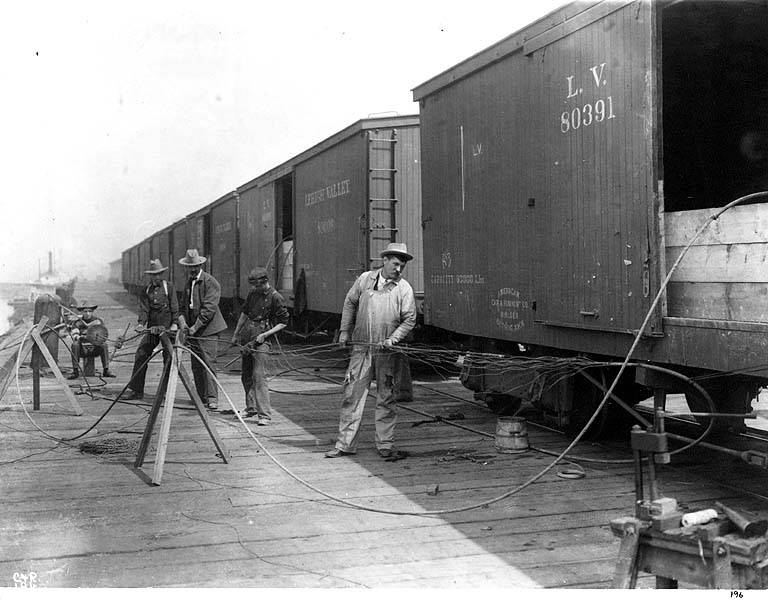
Joining two cable ends meant a jointer working on deck, by hand, building up the conductor connection, the insulation and the armouring in sequence, to a standard that would survive on the seabed under pressure for the life of the cable.
Still highly skilled hand work in a controlled environment aboard the ship. A splice is the weakest point in a cable and the only part made at sea rather than in a factory, which means the jointer’s work is the single component on which an entire ocean crossing depends.
6. The Early Cargo Was Telegraph Signals and the Capacity Was Astonishingly Small
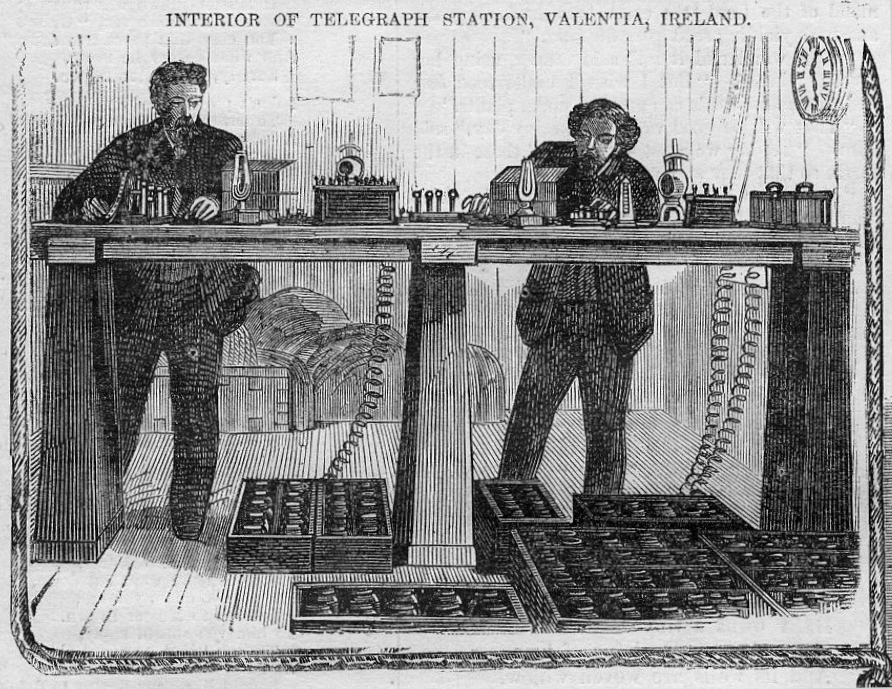
The first generations of submarine cable carried telegraph traffic – a few words per minute – and a single cable’s entire capacity was a fraction of what one telephone conversation requires.
Coaxial cable carrying telephone circuits, and then optical fibre carrying capacity that is effectively uncountable, transformed it. The scale of the change is difficult to convey: a modern fibre pair carries in a second more than a nineteenth-century cable carried in its entire working life.
7. Repeaters Had to Be Dropped in the Middle of an Ocean and Work Forever
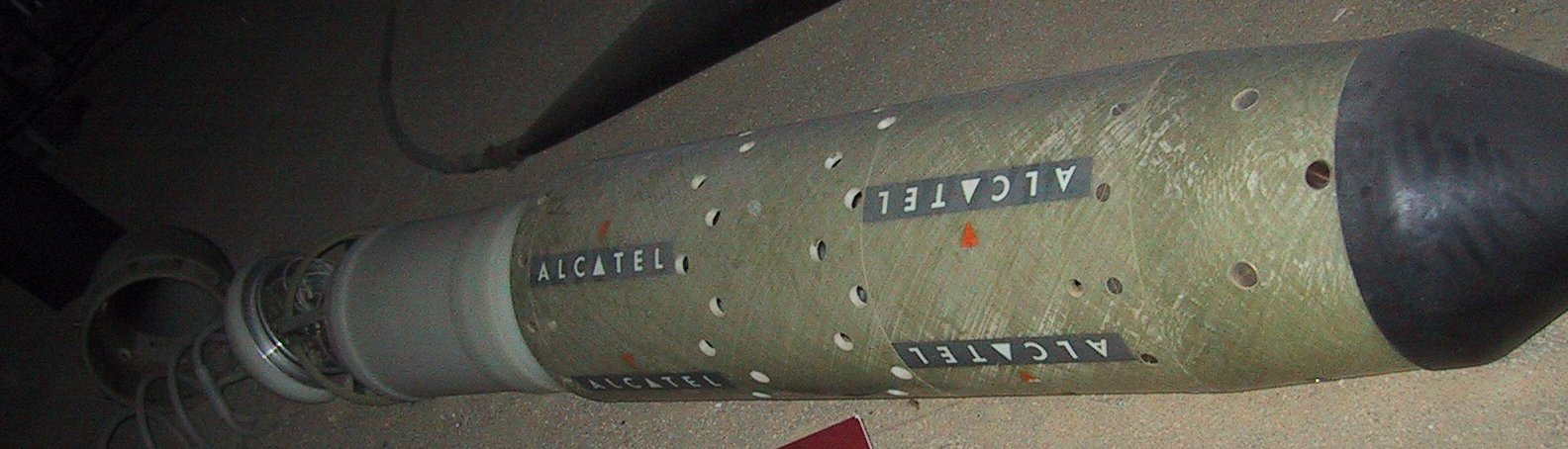
Signals weaken over distance, so amplifiers were built into the cable at intervals – sealed units laid on the seabed, under pressure, which cannot be reached, serviced or replaced economically.
Optical repeaters and vastly improved reliability engineering continue the same principle. The design requirement is unusual in engineering: a component expected to operate without maintenance for twenty-five years in the deep ocean, where the cost of a failure is a ship, a crew and several weeks at sea.
8. The Crews Were Away for Months and the Work Followed the Weather
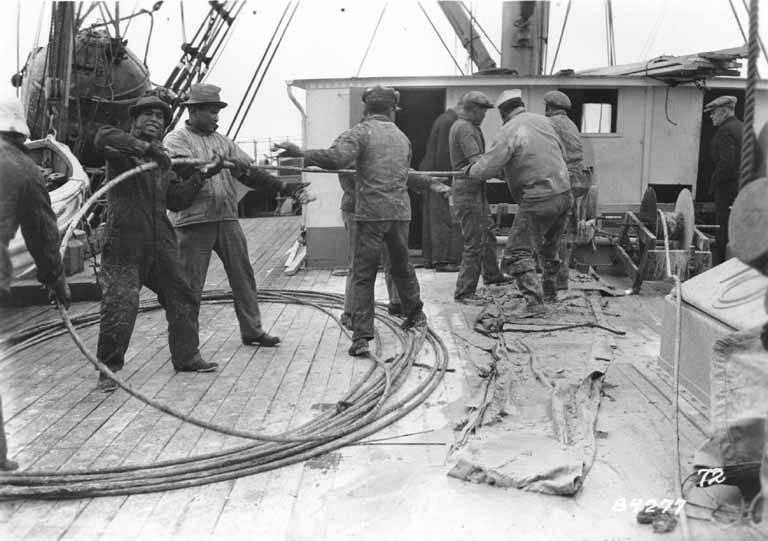
A cable ship went where the work was, for as long as it took, with the schedule set by the route, the season and the sea state rather than by any plan anybody could keep.
Unchanged in character, with far better communications and crew rotation. Cable work is still a sector where a vessel and its crew may be at sea for extended periods at short notice, because a broken cable is an emergency and the ship goes when it is needed.
9. The Ships Were One-Purpose Vessels and Nothing Else Could Do It
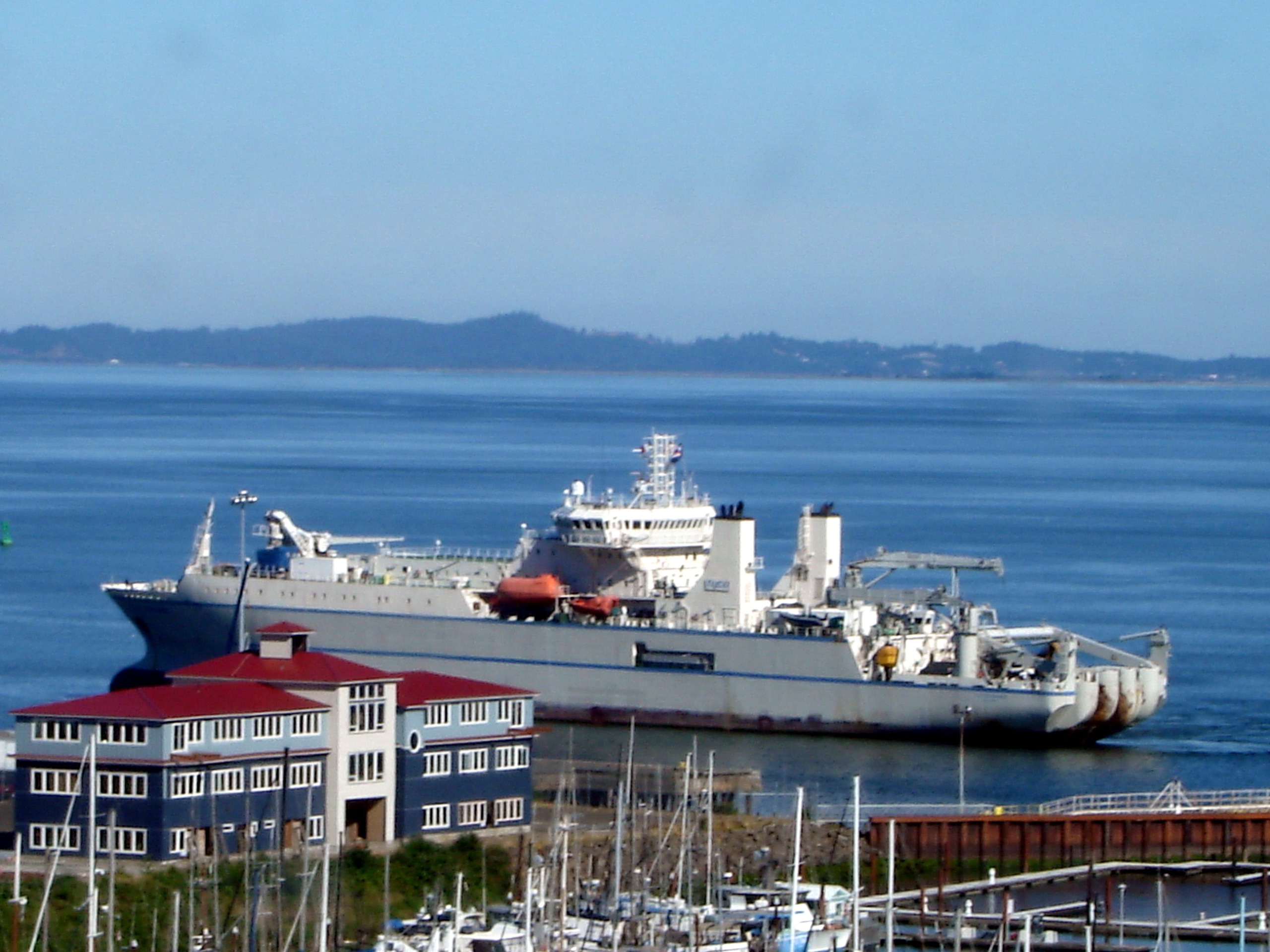
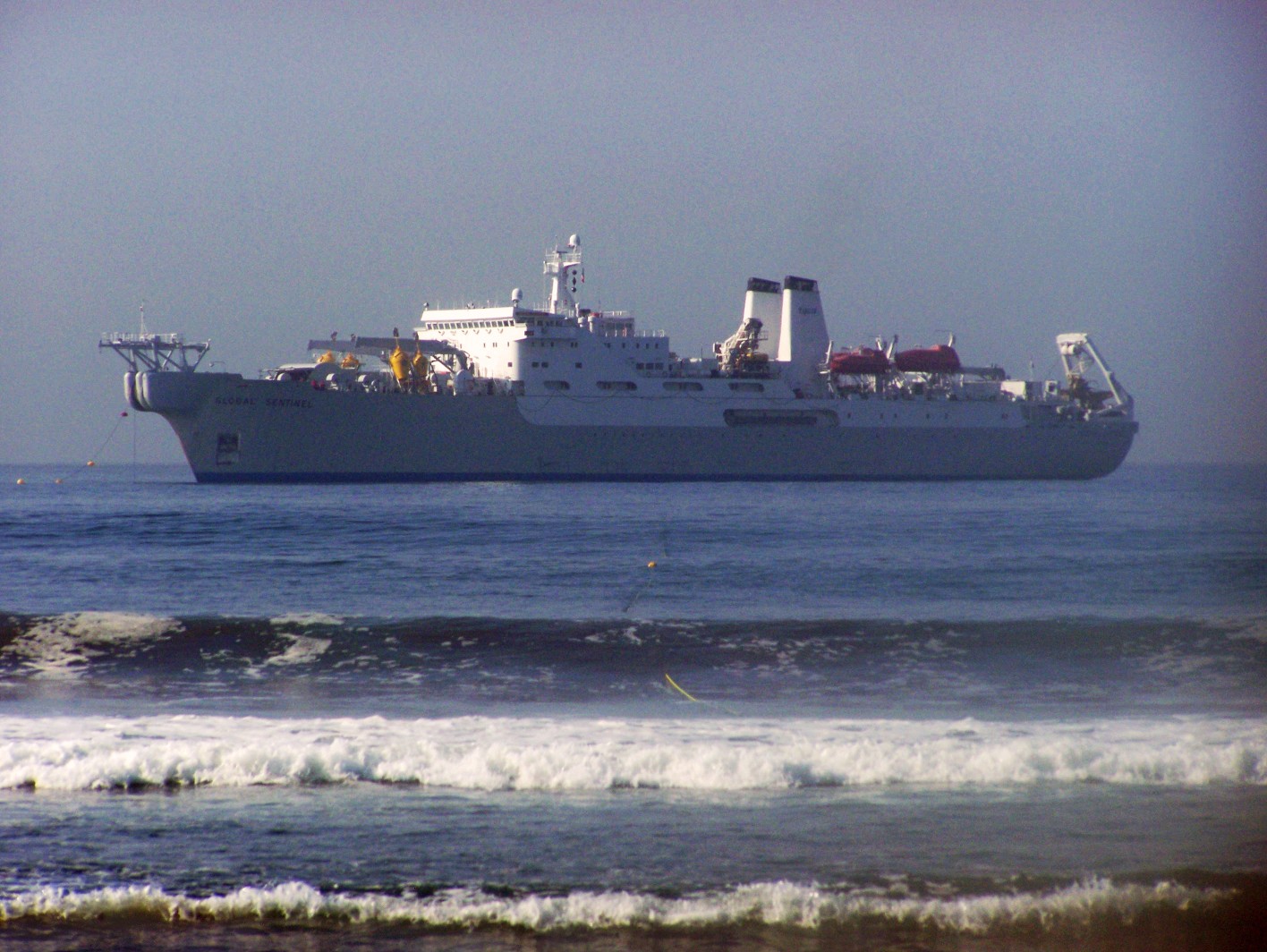
A cable ship is designed around the task – tanks, bow and stern sheaves, cable engines, jointing accommodation, and a hull able to hold position and move very slowly with precision.
Modern vessels add dynamic positioning and remotely operated vehicle handling and are no less specialised. The fleet is small, globally distributed, and the number of vessels capable of deep ocean repair is small enough that a concentration of faults in one region is a genuine capacity problem.
10. Nobody Could Tell You Exactly Where the Cable Was
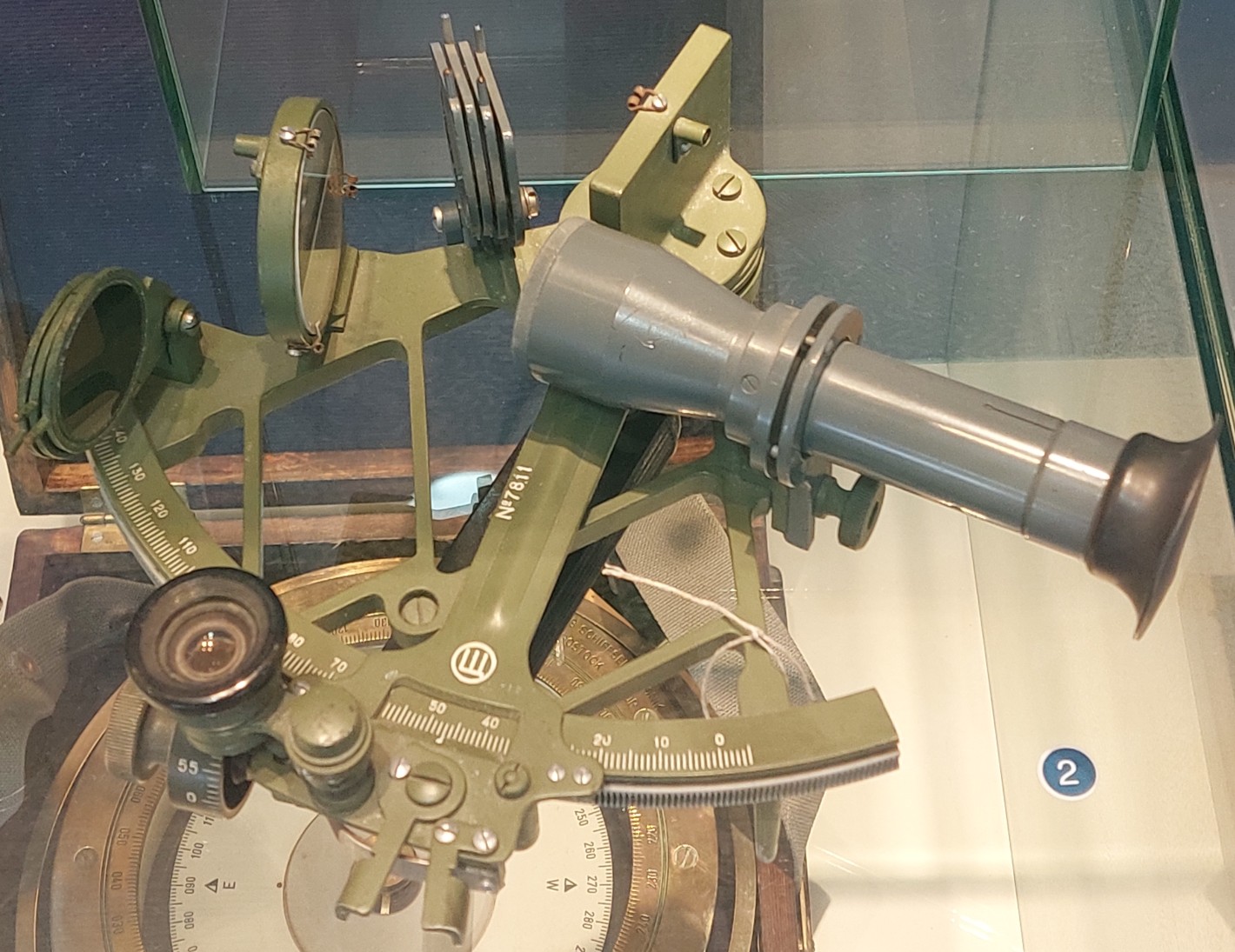
Position while laying was established by celestial navigation and dead reckoning, which meant the recorded route of a cable was approximate, and finding it again years later depended on records of varying quality.
Satellite positioning records every metre as it is laid, and route position lists are maintained and published to fishing and anchoring interests. Older cables were genuinely difficult to find, which is one reason some were abandoned rather than repaired – the fault could be located electrically and the physical cable could not.
11. Fishing Gear and Anchors Were the Main Cause of Damage and Still Are
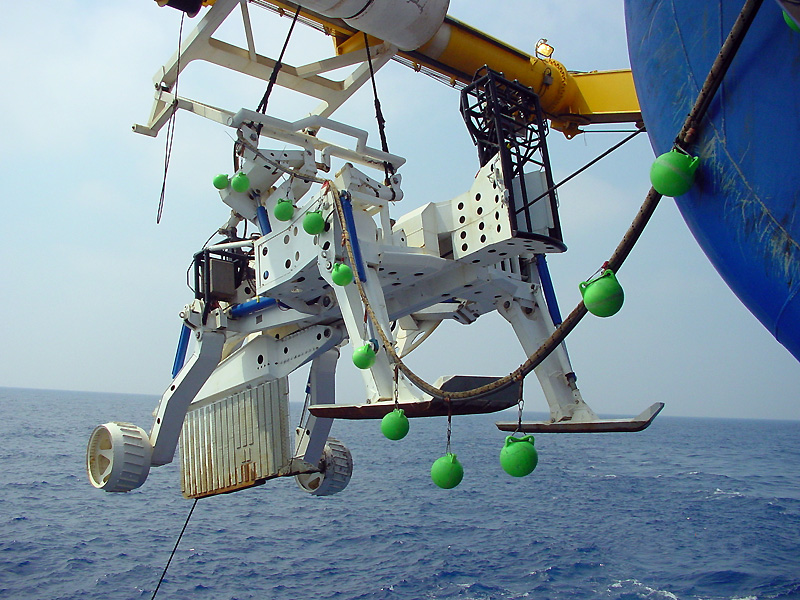
The overwhelming majority of cable faults in shallow water were and are caused by trawl gear and anchors, not by the sea itself.
Route planning avoiding anchorages and fishing grounds, burial of cable in the seabed near shore, charted positions published to mariners and liaison with fishing industries have reduced it without eliminating it. It remains the single largest cause of faults, which is why nearshore cable is buried and deep ocean cable simply lies on the bottom.
12. The Telegraph Clerks Ashore Were Part of the System
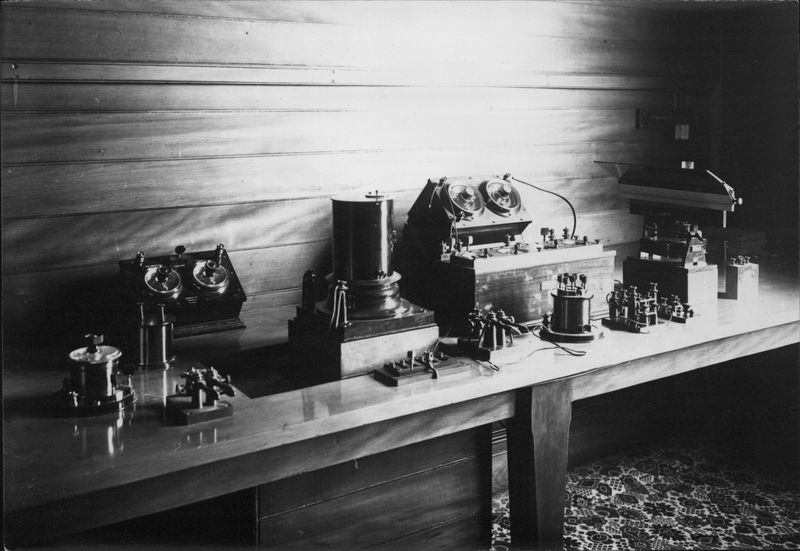
A cable terminated in a station where operators received, recorded and relayed traffic by hand, and the cable’s usefulness depended on them as much as on the ship that laid it.
Automatic switching and then digital networks removed the manual handling entirely. The cable stations were frequently in remote coastal places chosen for the landing rather than for anybody’s convenience, and several of the settlements that grew around them have no other reason to exist.
13. Nobody Thought the Cable Would Beat the Satellite
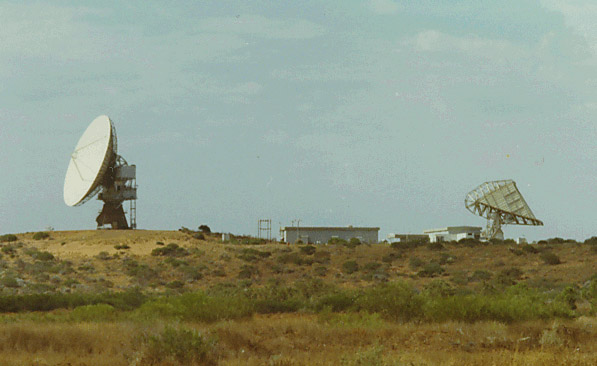
When communications satellites arrived they were widely expected to make submarine cable obsolete – no ships, no seabed, no repairs, and coverage everywhere.
Cable won decisively. Optical fibre carries vastly more capacity at lower cost and far lower latency, because a signal to a satellite and back travels a very long way, and essentially all international data now goes by cable. Satellites serve where cable cannot reach, which is the opposite of what was predicted.
14. The Whole Internet Runs Through This and Almost Nobody Knows
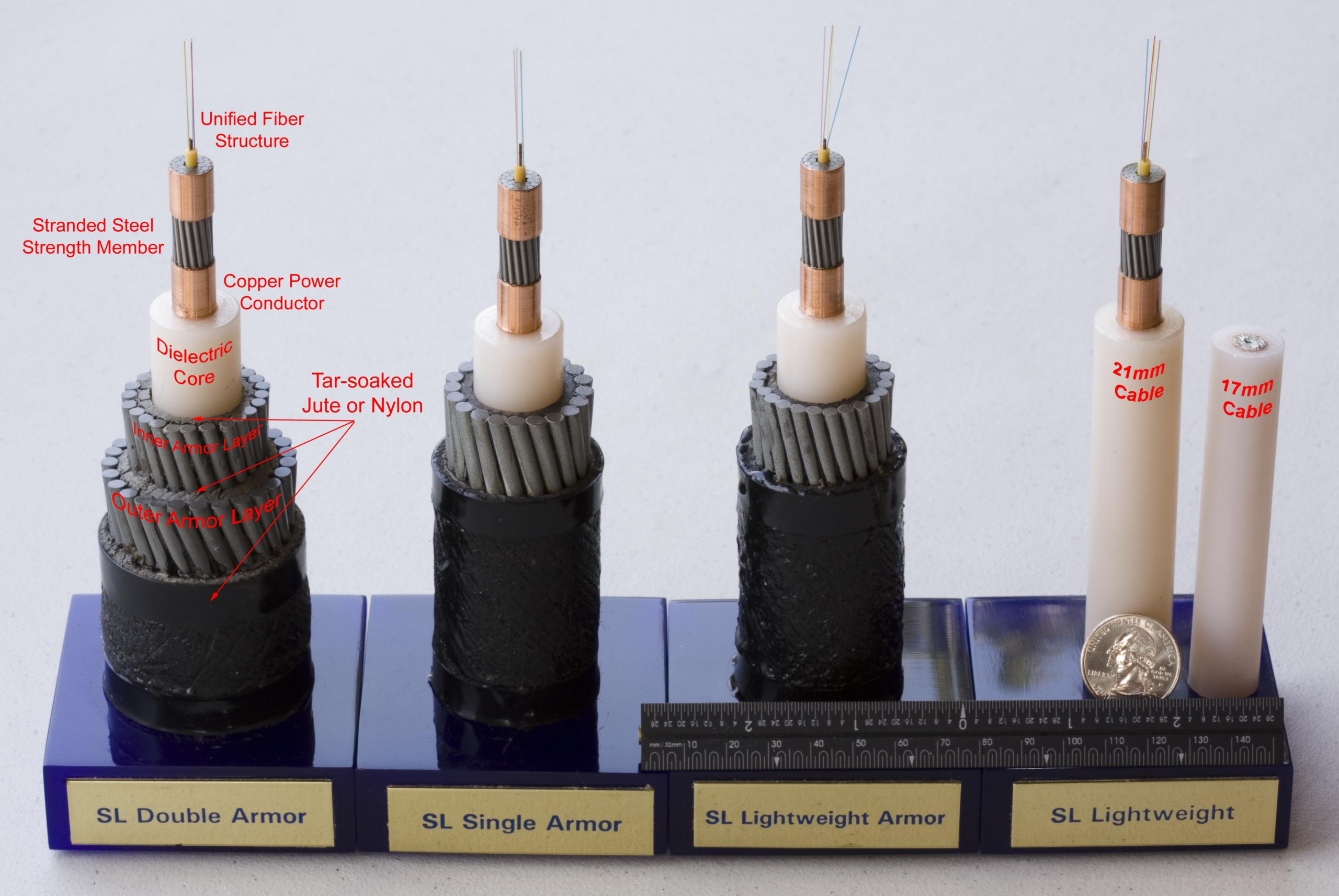
Submarine cable carried the telegraph, then the telephone, and now carries effectively all intercontinental data traffic.
Unchanged and more true than ever. The physical infrastructure of global communication is a set of cables a few centimetres thick lying on the seabed, laid and repaired by a small fleet of specialised ships, and the general assumption that international traffic goes by satellite is almost entirely wrong.
15. The Faults Are Still Repaired the Same Way by the Same Kind of Ship
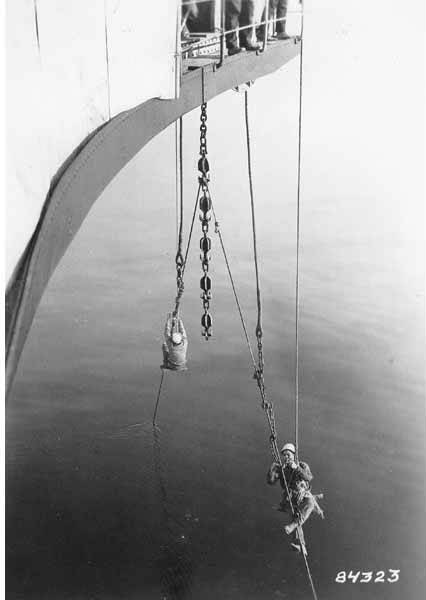
Locate the fault, send a ship, recover the cable from the seabed, cut out the damage, splice in a new length by hand, and lay it back down.
Every step of that is still the procedure, with better equipment at each stage. It is one of the few operations in this entire series that is unchanged in sequence rather than merely in principle – and the reason is that there is no other way to mend something lying on the floor of an ocean than to go and get it, bring it up, and join it by hand.
Everybody Thought Satellites Would End It
The prediction about this industry was confident, widely held, and completely wrong, and the reason is worth understanding.
When communications satellites appeared, the case against submarine cable looked overwhelming. A satellite needs no ships, no seabed survey, no grapnels and no splices. It covers an entire hemisphere from one object. It cannot be cut by a trawler. And it does not require anybody to spend six weeks at sea in the North Atlantic recovering a cable from three thousand metres to mend it by hand.
Cable won anyway, for two reasons that were not obvious at the time.
The first is capacity. Optical fibre carries an amount of data that bears no relation to anything a satellite link can manage, at a cost per unit that is not comparable. Once fibre existed, the economics stopped being close.
The second is distance, and it is the one people find surprising. A signal to a geostationary satellite travels tens of thousands of kilometres up and the same back down, and light takes a noticeable fraction of a second to do that. For a telephone call it is an audible pause. For anything interactive – a trade, a query, a video call, a remote control input – it is a disqualifying delay. A cable on the seabed takes the short way round.
So the thing that beat the satellite was geometry. The seabed is closer than space, and no amount of engineering changes that.
Which means essentially all international data now travels through a handful of cables a few centimetres thick, lying on the ocean floor, maintained by a small fleet of ships doing a job whose sequence has not changed since 1960 – while most people assume it goes through the sky.
If anybody in your family served on a cable ship, they were away for months and the work went where the faults were.
And the message you are reading this on almost certainly travelled along the seabed to reach you.
Like our content? Follow us for more.