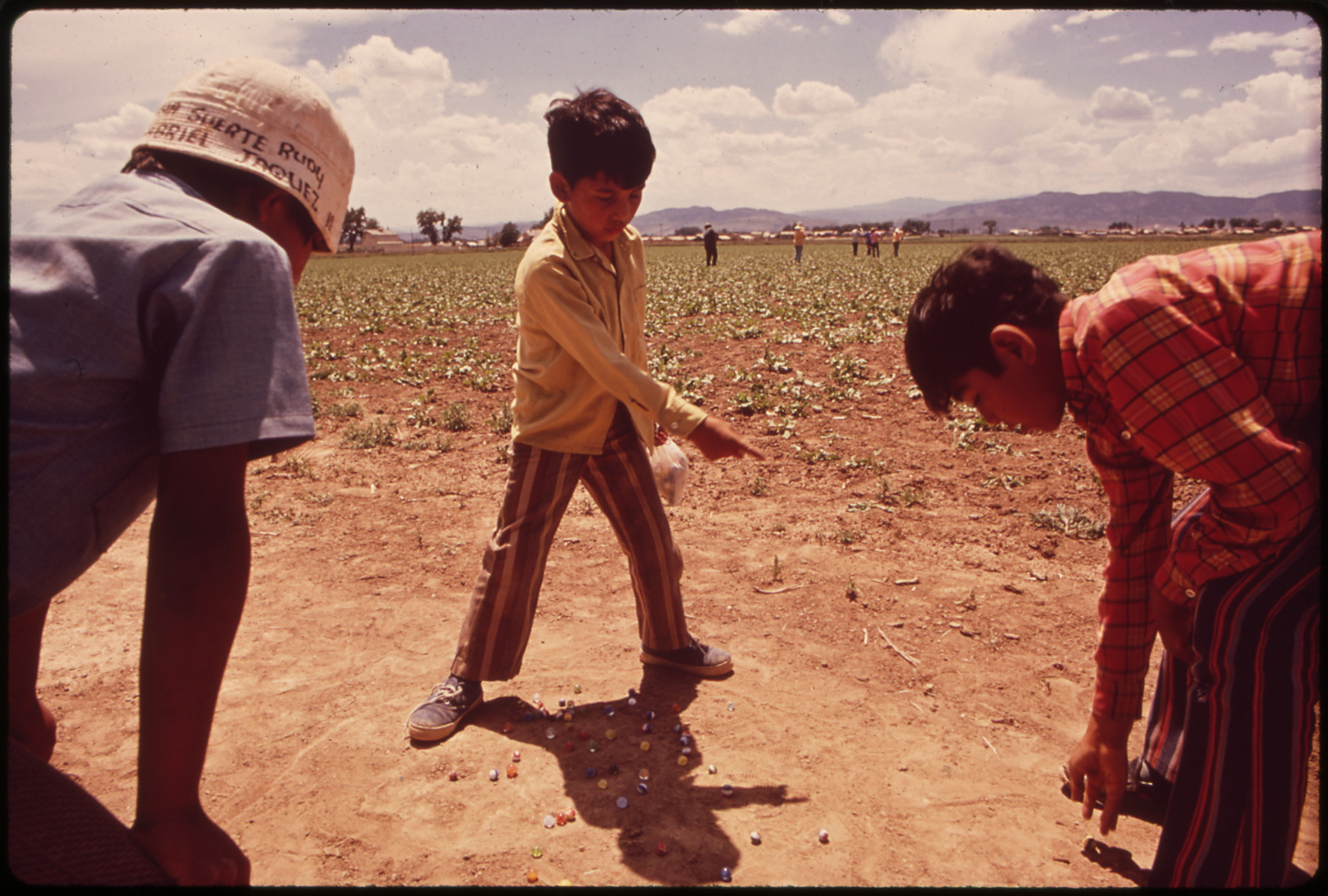
In 1974 a game was played in a circle scratched into bare dirt with a stick, for keeps, with no adult involved at any point.
You kept your shooter separate and never wagered it. You knuckled down or you were accused of hunching across the ring. A steelie was a ball bearing from somebody’s garage and half the groups banned it. Who went first was settled by lagging, which was a skill of its own.
Here are fourteen things every kid knew about marbles in 1974, and why almost none of it survived.
1. The Ring Was Drawn in Dirt With a Stick and That Was the Court
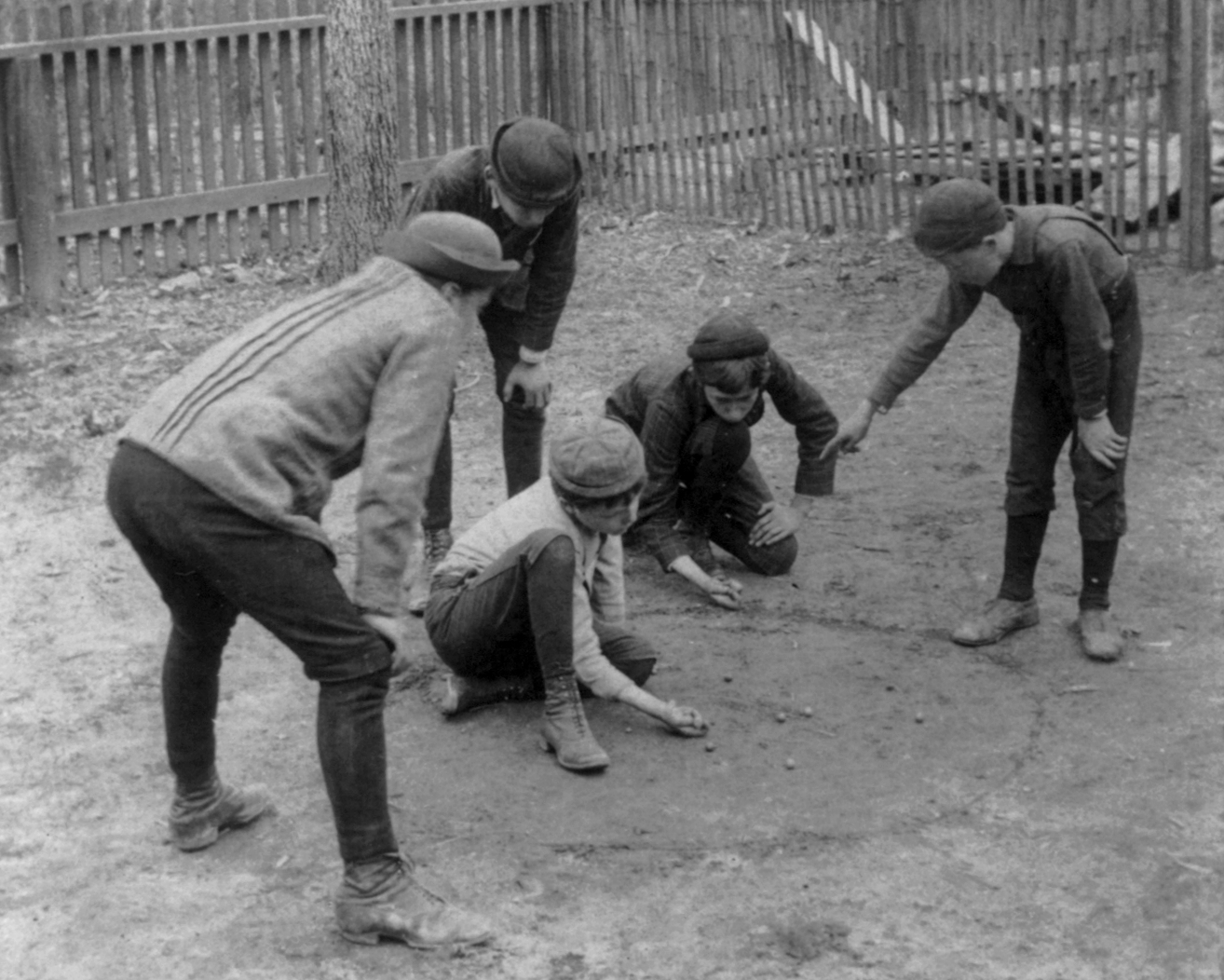
A circle a few feet across, scratched into bare earth, gravel or packed dirt with a stick or a heel, was the entire playing surface, redrawn wherever the game happened.
Nothing – the game needs a bare earth surface, and schoolyards, streets and sidewalks were progressively paved. The ring could not be drawn on asphalt, which turns out to be most of the story.
The surface requirement is the detail that explains the game’s disappearance better than any change in children’s taste. Marbles needs loose dirt to hold a line and to slow a rolling glass sphere, and a paved playground makes it physically unplayable – which happened quietly, nationally, over about two decades.
Like our content? Follow us for more.
2. You Played for Keeps and You Could Lose Everything
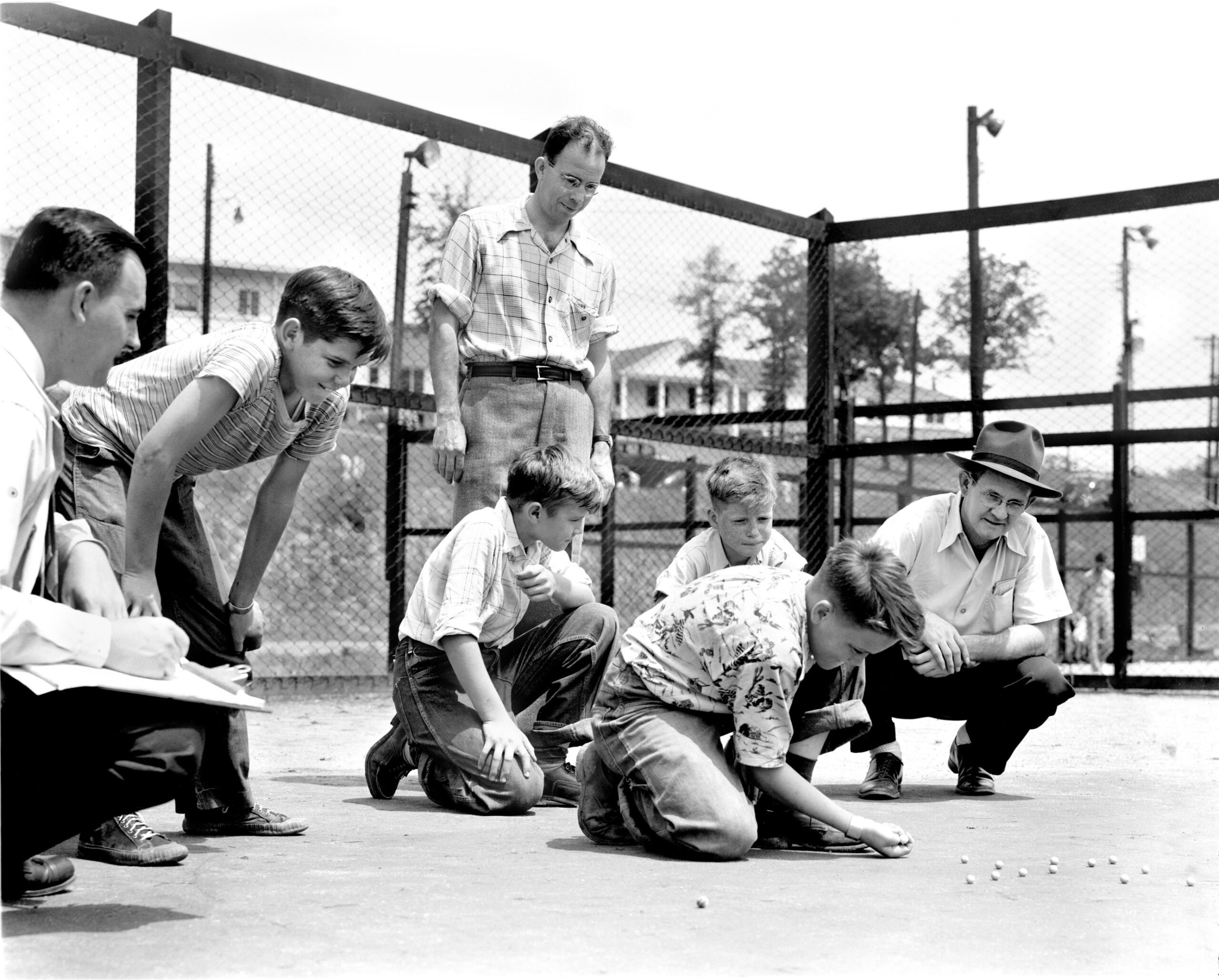
The standard game was for keeps: marbles knocked out of the ring belonged to whoever knocked them out, permanently, and were carried away at the end.
Nothing comparable. Playing for fun – returning everything afterwards – existed and was specified in advance, but keeps was the default and the whole point of the competition.
It made the game genuinely consequential and that is why it was taken seriously. A child could arrive at school with a full bag and go home with nothing, the good players accumulated steadily across a season, and losing a marble you cared about to somebody better than you was a real and memorable loss.
3. Your Shooter Was a Specific Marble and It Was Not for Playing With

The shooter – also called a taw – was a single larger marble kept separate from the stake, chosen for weight and feel, never wagered, and used for every shot.
Nothing. The shooter was a personal instrument, selected over time, replaced reluctantly, and recognisable to other players who knew whose it was on sight.
Children developed strong attachments to a shooter in a way that looks disproportionate until you consider what it did. Every shot in every game you played went through that one object, your accuracy was built around its particular weight, and swapping to another one measurably hurt your play – so a lost shooter was a worse disaster than a lost bag.
4. Knuckling Down Was a Rule and Breaking It Had a Name
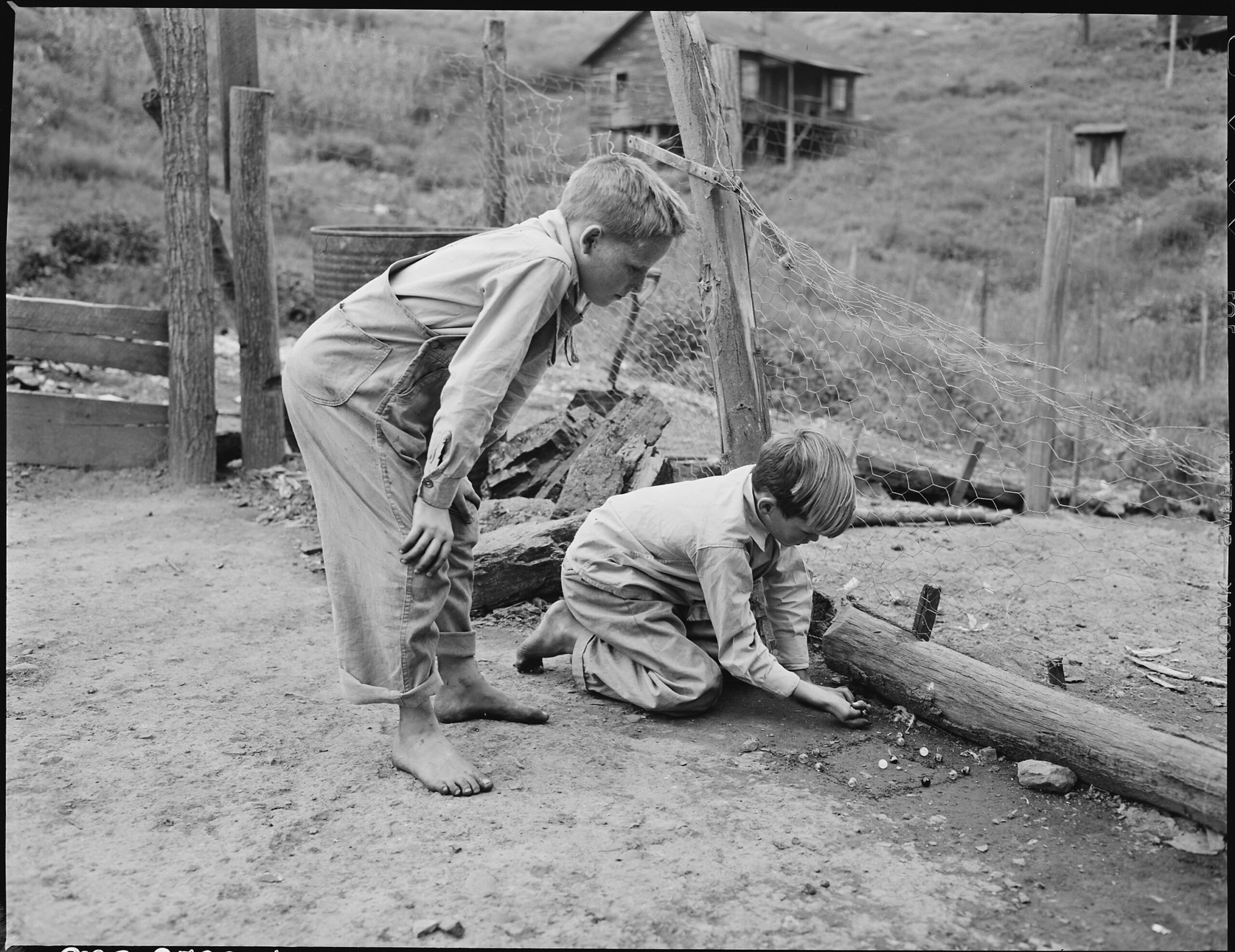
The shot was taken with at least one knuckle in contact with the ground, flicking the marble off the thumb. Lifting the hand to gain reach or force was hunching, and it was cheating.
Nothing, with the vocabulary gone entirely. The rule existed to stop players creeping forward and throwing, and its enforcement was entirely between the children playing.
The enforcement is the interesting part. There was no referee, the accusation was made directly across the ring, and a reputation for hunching followed a player around a schoolyard – which means a group of eight-year-olds operated a rules system with detection, accusation, dispute and social penalty, unsupervised, every lunch break.
5. The Vocabulary Was Enormous and Varied by Neighbourhood

Marbles had names by type and appearance – cat’s eyes with coloured vanes inside clear glass, aggies patterned like agate, puries of single-colour clear glass, steelies of solid metal, and dozens more – with the terms shifting from town to town.
Essentially nothing, and the words have gone with the game. The vocabulary was learned by playing rather than taught, and a child who used the wrong local term was identified immediately as an outsider.
That local variation is why the game is hard to document now. Rules, names and values differed between neighbourhoods a few miles apart, nobody wrote them down because everybody playing already knew them, and the whole structure existed only in the heads of children who have since forgotten most of it.
6. A Steelie Was a Ball Bearing and Everybody Knew Where to Get One

Solid steel marbles were ball bearings, obtained from a garage, a machine shop, a scrapped appliance or a parent’s workplace, and they were heavier than glass and hit much harder.
Nothing. The steelie was found rather than bought, which made it both prestigious and contentious, and its weight advantage was obvious to everyone in the ring.
Which created the first rules argument in every group. A steel shooter knocks glass out of a ring with far more authority and chips the marbles it hits, so some groups banned them outright, some allowed them only as stakes, and the negotiation over whether steelies were legal was a recurring feature of playground politics.
7. Who Shot First Was Decided by Lagging and It Was Its Own Skill
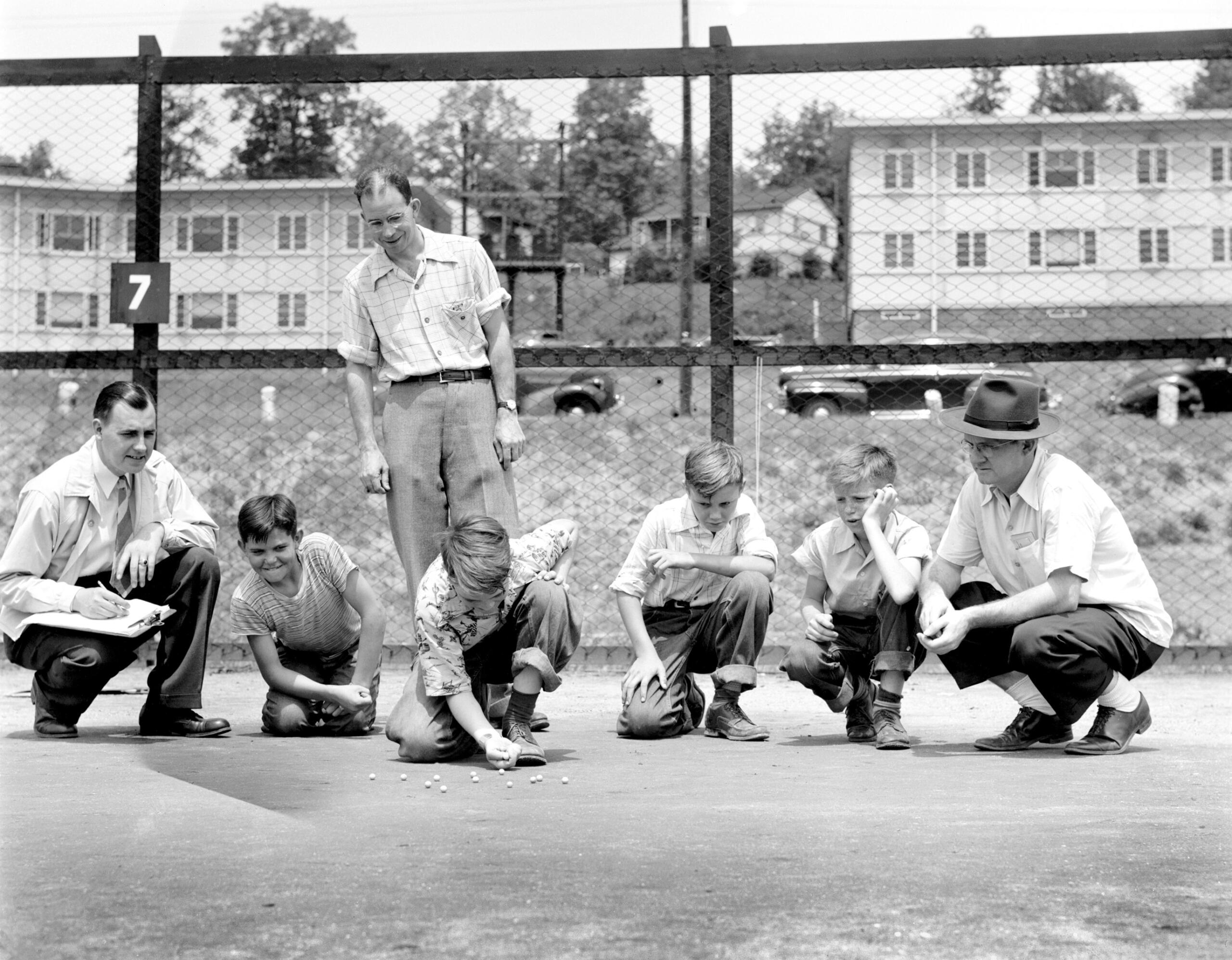
Players rolled or tossed a marble at a line some distance away, and whoever stopped nearest it shot first – a separate contest, with its own technique, held before every game.
Nothing, with the concept gone. Lagging settled order fairly without an adult, a coin or an argument, and shooting first was a significant advantage worth competing for.
It is a neat piece of improvised fairness. A group of children needed a method to allocate an advantage, invented one that rewarded a relevant skill rather than luck, applied it consistently, and used it in versions of the game across the entire country – without any of it being written down or taught.
8. Value Was a Local Consensus and It Shifted

Marbles had exchange rates – so many ordinary ones for an unusual one, a large one worth several small, a particular colour or pattern worth more because the group had decided so.
Nothing, because there is no market. Values were set by consensus within a group of players, and an outsider’s marbles might be worth more or less than they had been a street away.
The fragility of that consensus is what made trading interesting. A child who arrived with marbles valued highly at their old school found them discounted at the new one, scarcity was asserted rather than demonstrated, and a persuasive player could talk a particular pattern up over the course of a week.
9. Marbles Were Chipped, Cracked and Visibly Used and That Was the Normal State

Glass marbles in constant play chip at the point of impact, develop internal fractures, scuff from dirt and go cloudy – and a well-used bag was a bag of damaged marbles.
A collector market in which antique and handmade examples are valued substantially and condition matters enormously. Damage was previously the evidence of use and carried no penalty at all.
There is a particular irony in the collecting. The handmade and early machine-made marbles that collectors now pursue were used exactly as every other marble was – shot, struck, chipped and lost in grass – and the examples in good condition survived by being in a jar on a shelf rather than in a bag in a pocket.
10. You Lost Them Constantly and They Turned Up for Years

Marbles rolled into drains, grass, gravel, floorboards, car seats and ditches, in quantity, permanently – and then surfaced in gardens, under porches and in sofa cushions decades afterwards.
Nothing, because the things are not in circulation. The loss rate was high enough to be a standing feature of the game and part of why a bag needed constant replenishing.
The reappearances are a small shared experience of a particular generation. People who dig a garden in an old neighbourhood still turn up glass marbles, which is the most durable physical evidence the game left behind – and in most cases nobody in the house has any idea which child lost it.
11. Playing Against Older Children Was How You Learned and How You Were Cleaned Out
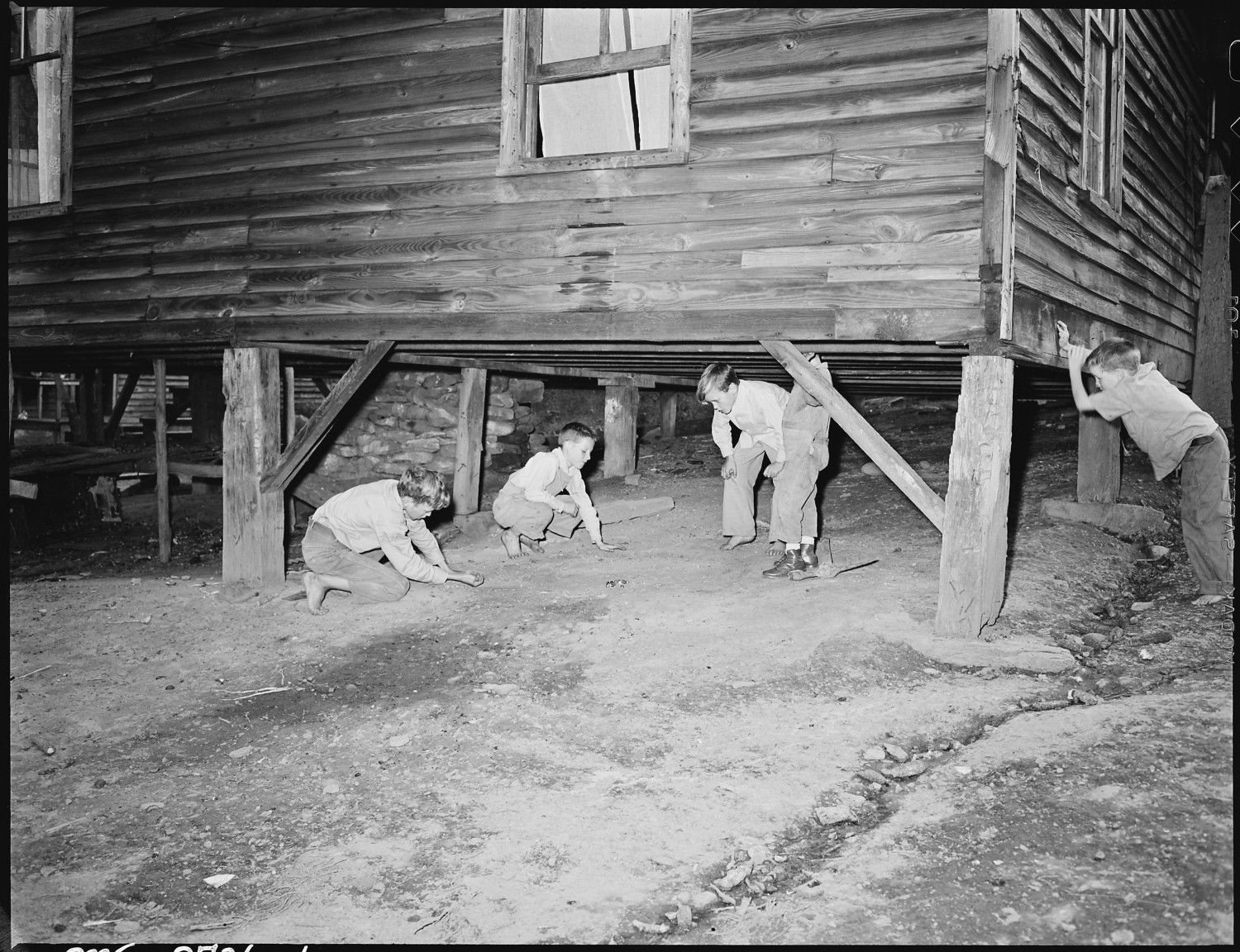
Rings were mixed-age, and a seven-year-old played against eleven-year-olds who were substantially better, with real stakes, and lost.
Age-graded organised activity with adult supervision. The mixed-age ring was unsupervised, the skill gap was wide, and the consequences of it were material rather than notional.
The exchange was understood by everybody involved. You paid for your education in marbles, you got better by playing people who beat you, and the older players tolerated younger ones in the ring partly out of goodwill and partly because they were a reliable source of stock.
12. The Bag Was Cloth With a Drawstring and It Went Everywhere

Marbles were carried in a cloth drawstring bag, a tobacco pouch or a sock, kept in a pocket or a satchel, taken to school every day and weighed noticeably.
Nothing. The bag was a permanent personal possession that announced itself by sound and weight, and its contents represented an accumulated record of every game played.
And the sound of it is what people remember first. A pocketful of glass marbles makes a specific noise when a child runs, it was audible across a playground, and teachers could identify who was carrying what long before anybody drew a ring in the dirt.
13. Schools Banned It, Repeatedly, Because the Gambling Was Real
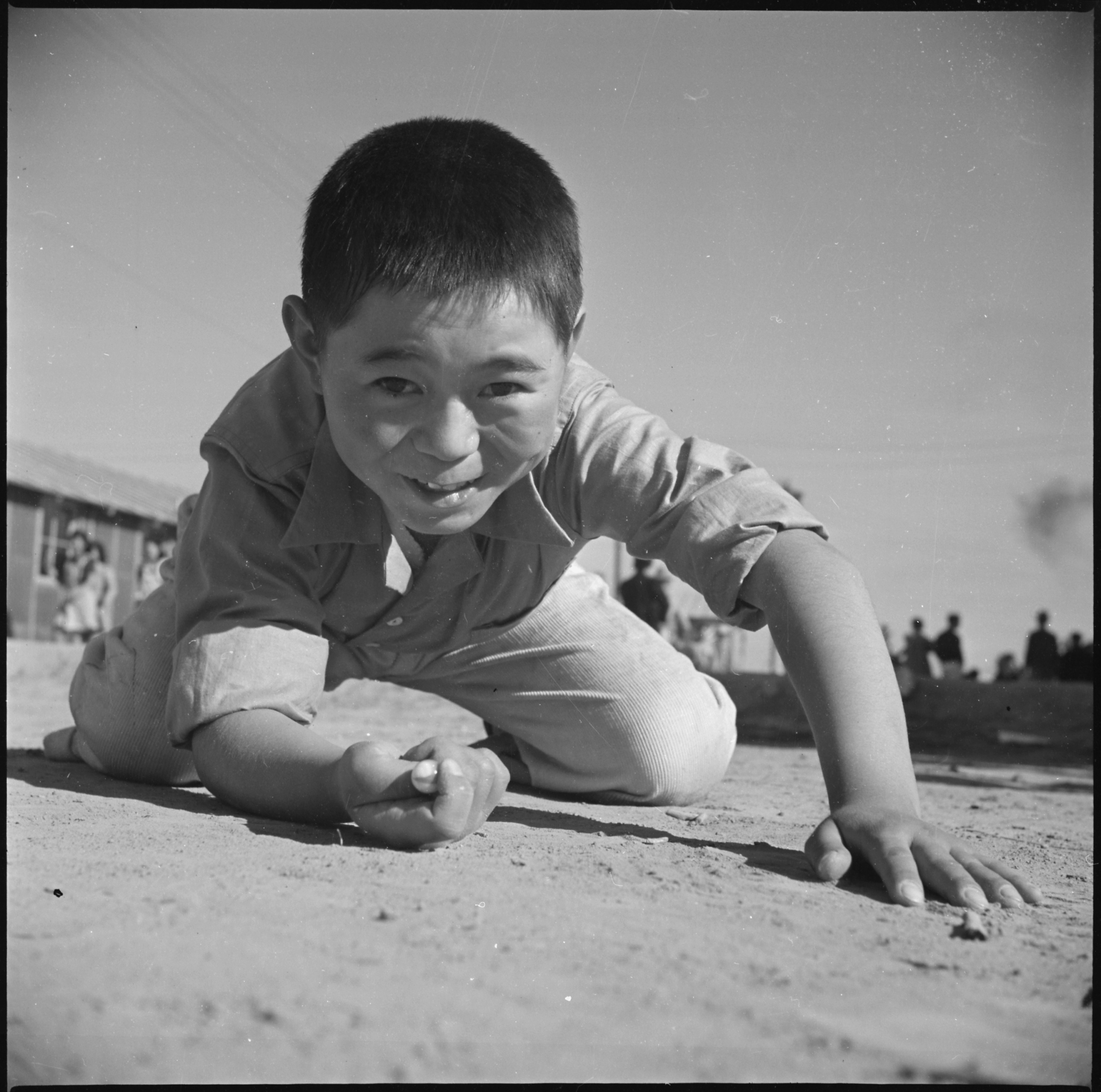
Playing for keeps is wagering, which brought bans – on keeps specifically, or on marbles entirely – enforced unevenly and widely ignored.
The question does not arise. The bans were a recurring feature across decades and were aimed squarely at the stakes rather than at the game.
The schools had a straightforward point and it was not prudishness. Children were losing possessions they cared about to better players, disputes over hunching and values produced fights, and younger children were being systematically cleaned out by older ones – which is a real set of problems and not one that a playground rules system invented by eight-year-olds was ever going to solve.
14. Then the Playgrounds Were Paved and the Game Had Nowhere to Be Played
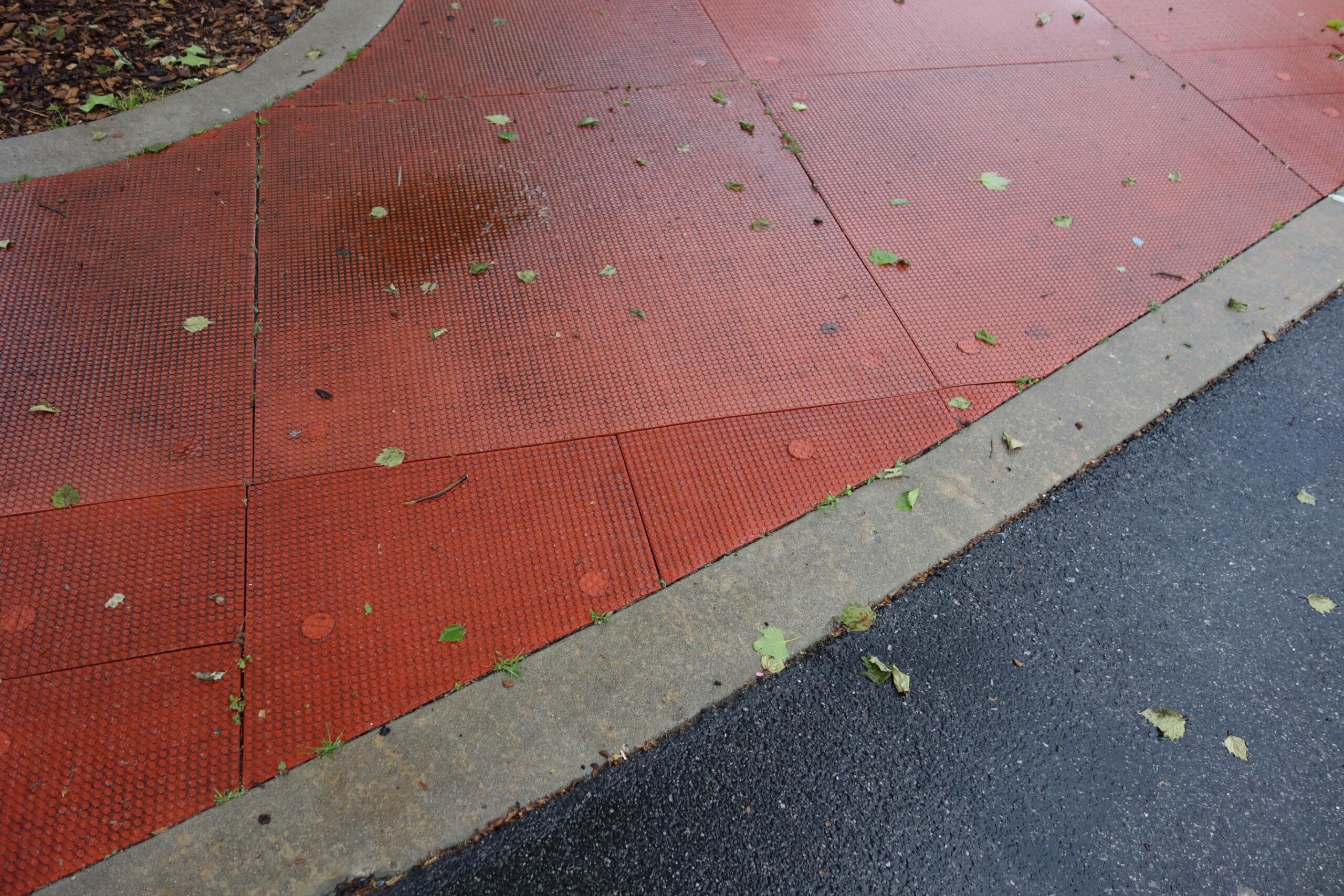
The game required bare dirt to hold a scratched ring and to slow a rolling marble, mixed-age unsupervised play, and an accepted culture of playing for keeps.
Paved and surfaced playgrounds, supervised and age-graded break times, and a general end to children wagering possessions at school. All three supports went at roughly the same time.
The surface is the one that finished it, and it is worth separating from the rest. Interest in games does fade and the bans did suppress keeps, but marbles did not decline because children stopped liking it – it became physically impossible to play where children actually were. Asphalt will not hold a line, glass does not slow on it and the marbles chip and scatter. A game that had been played in essentially the same form for thousands of years was ended, within about two decades, by paving.
A Game Thousands of Years Old Was Ended by Asphalt
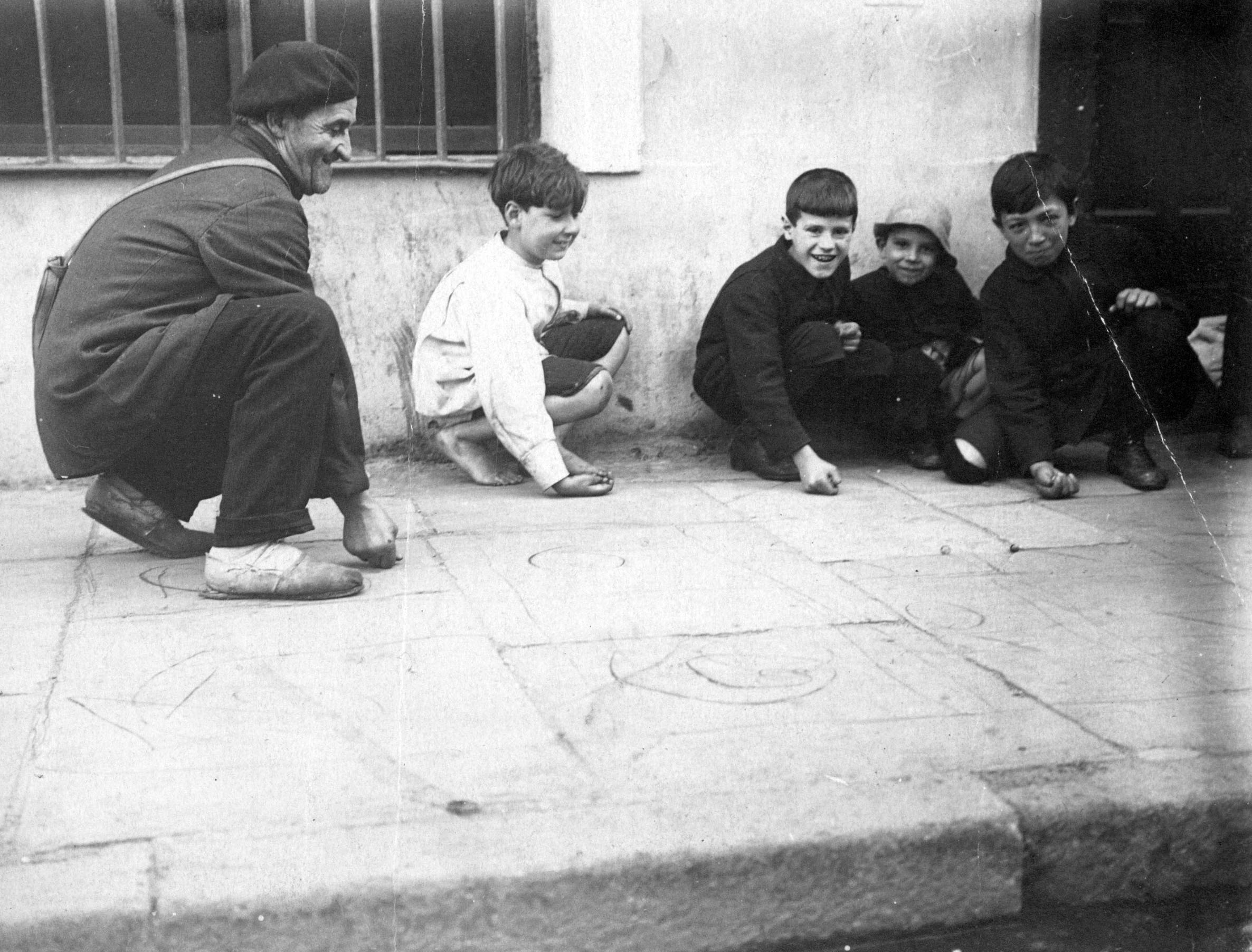
Marbles is among the oldest games there is. Versions of it turn up across the ancient world, it was played continuously for centuries, and in 1974 American children were playing it in a form their great-grandparents would have recognised immediately.
Within about twenty years it was effectively gone. The usual explanations are that children’s interests changed, or that television and then video games displaced it, or that schools banned it.
The bans were real and they mattered, but they were aimed at keeps rather than at the game. Interest does shift, and no doubt it shifted. Neither explains why a game that survived the arrival of radio, cinema, comics and television did not survive the 1980s.
The answer is underneath everybody’s feet.
Marbles has a hard physical requirement: a surface of loose dirt. The ring has to be scratched into something that will hold a line. The marbles have to roll a short, predictable distance and stop, which glass does on packed earth and does not on asphalt. Impacts have to be absorbed by the ground rather than chipping the glass. Take away the dirt and the game does not get less appealing – it stops working.
And the dirt went. Schoolyards were surfaced. Streets and alleys were paved. Vacant lots were built on or fenced. The specific places children played were, over about two decades, systematically covered in materials the game cannot be played on, for reasons – drainage, maintenance, injury, cost – that had nothing whatever to do with marbles and in which marbles was never considered.
That is worth sitting with, because the whole culture went with it. The vocabulary, varying neighbourhood by neighbourhood. The rules system that eight-year-olds operated unsupervised, with detection, accusation and social penalty for hunching. Lagging as an improvised method of allocating advantage fairly. The negotiated local values. The mixed-age ring where you paid for your education in lost marbles.
None of that was written down, because everybody playing already knew it. It lived entirely in the heads of children, it was transmitted from older players to younger ones in the ring itself, and when the ring had nowhere to be drawn the transmission simply stopped.
The marbles are still in the ground. People digging gardens in old neighbourhoods turn up glass spheres and have no idea which child lost them.
They are the only part of it that paving could not get to.
If you played this, you had a shooter you would not wager and you can still describe it.
And you lost it, eventually, in grass – and you remember roughly where.
Like our content? Follow us for more.