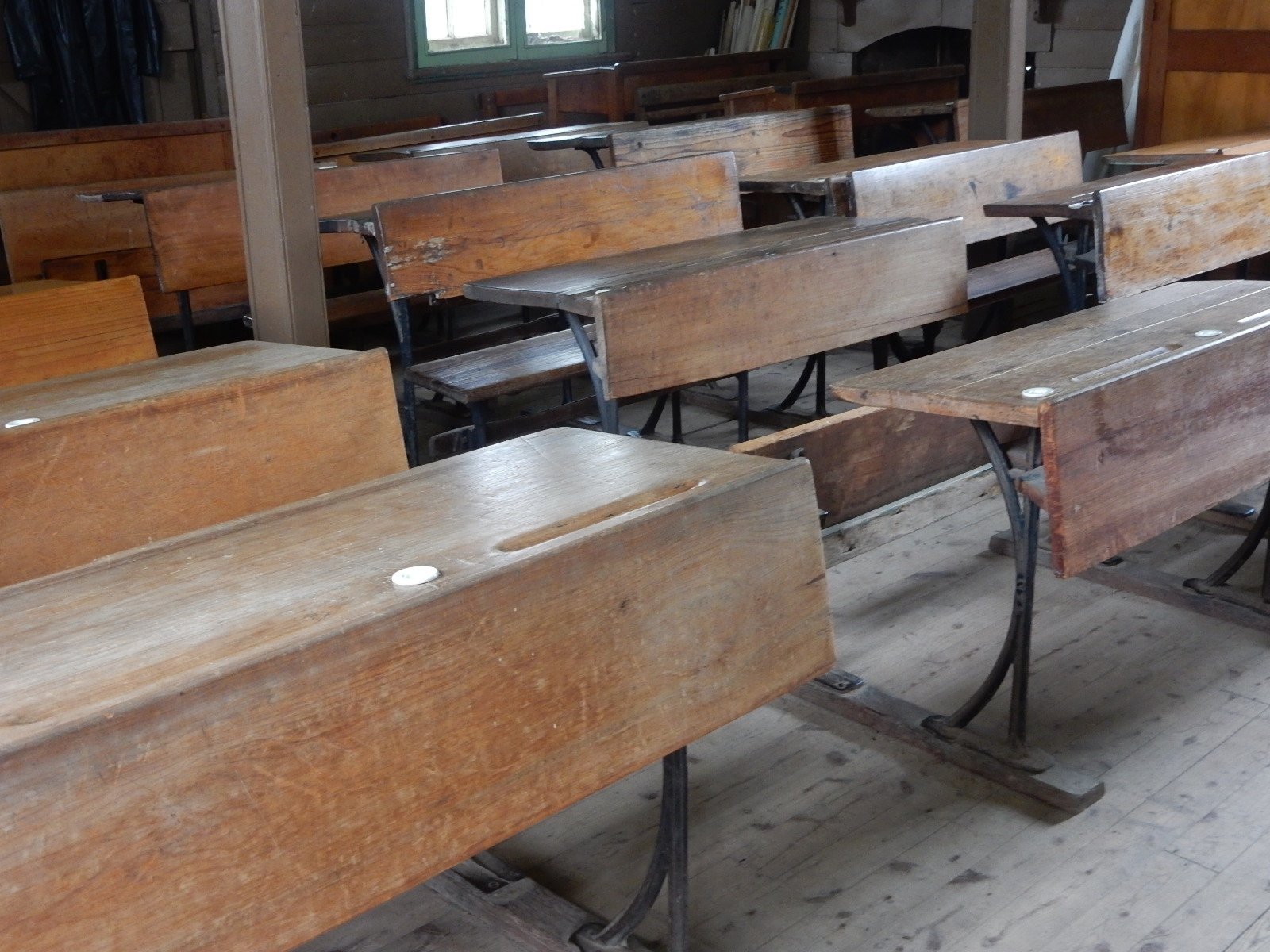
The first desks I sat at had a round hole in the top right corner with nothing in it. Nobody explained the hole. It was simply a feature of a desk, the way a drawer is a feature of a table, and it took me until adulthood to understand that I had spent years sitting at furniture designed around a technology I had never used.
The Hole Was Structural
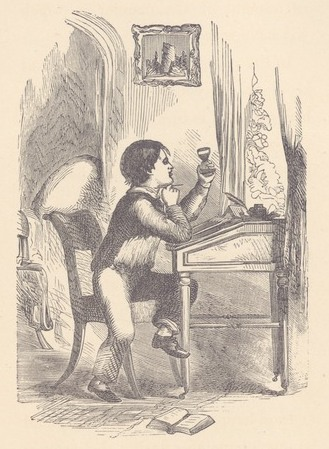
Start with the fact that the hole was cast into the desk.
A school desk of that period was an iron frame with a wooden top, manufactured in quantity, and the recess for the inkwell was part of the design rather than something drilled later. Somebody specifying school furniture treated a container of liquid ink as a permanent requirement of writing, in the same category as a seat and a surface.
The well itself was a small ceramic or glass pot with a shoulder on it, dropped into the hole so that the rim sat flush. It could be lifted out to be filled and washed, and it was deep and narrow for a reason I will come to.
Like our content? Follow us for more.
The Pen Held Almost Nothing
Here is the fact everything else follows from.
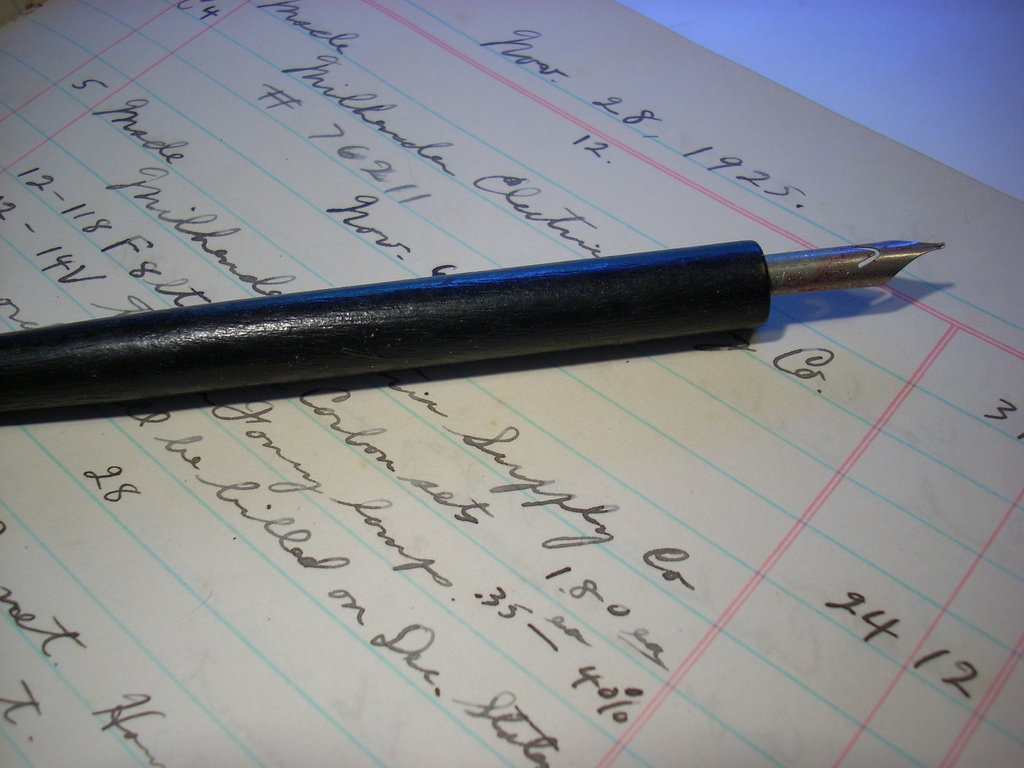
A steel nib held in a wooden holder picks up ink by capillary action. The ink sits in a slit and in a small reservoir pressed into the metal, and the total quantity is perhaps enough for a line of writing. Then it is gone and you have to dip again.
That is the constraint. Not the quality of the ink, not the roughness of the paper – the fact that writing proceeded in bursts of a few words separated by a reach to the well. Every single thing about how children were taught to write in that period is downstream of it.
Which Is Why the Hand Had to Be Even
A pen that starts each dip wet and ends it nearly dry puts down a line of varying weight.
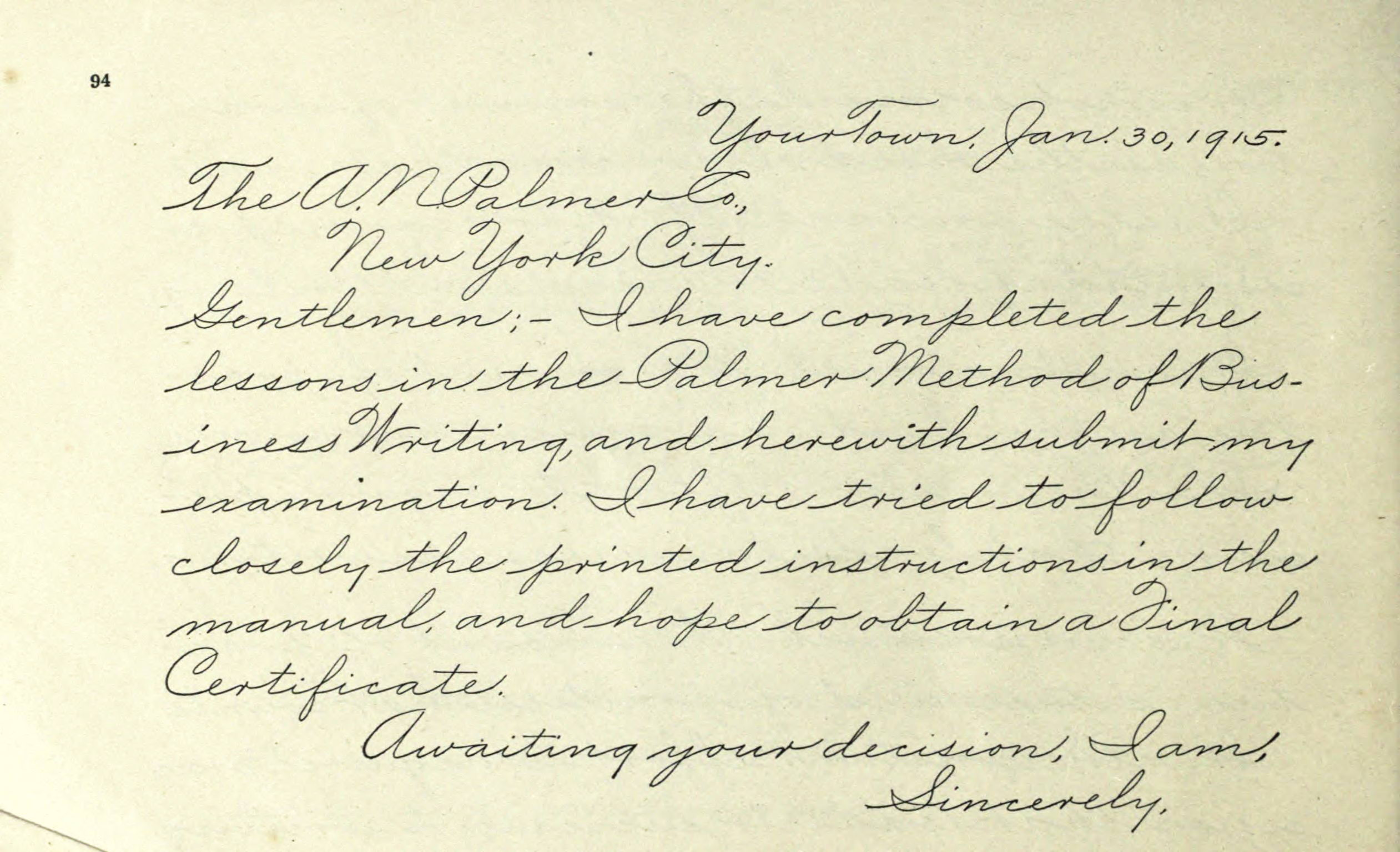
The first words after a dip are heavy and can blot; the last are thin and can skip. The only way to get a page of uniform writing out of such a pen is to control the pressure continuously – lighter at the start of the dip, heavier at the end – and to dip at consistent intervals so the variation has a rhythm rather than being random.
That is a genuinely difficult physical skill, and it is the reason handwriting instruction of the period looks so obsessive. The drills in loops and ovals that children did by the page were not aesthetic exercises. They were training in applying steady pressure with a tool that fought back.
The Whole Arm Moved, Not the Fingers
The other half of the instruction was about which muscles did the work.
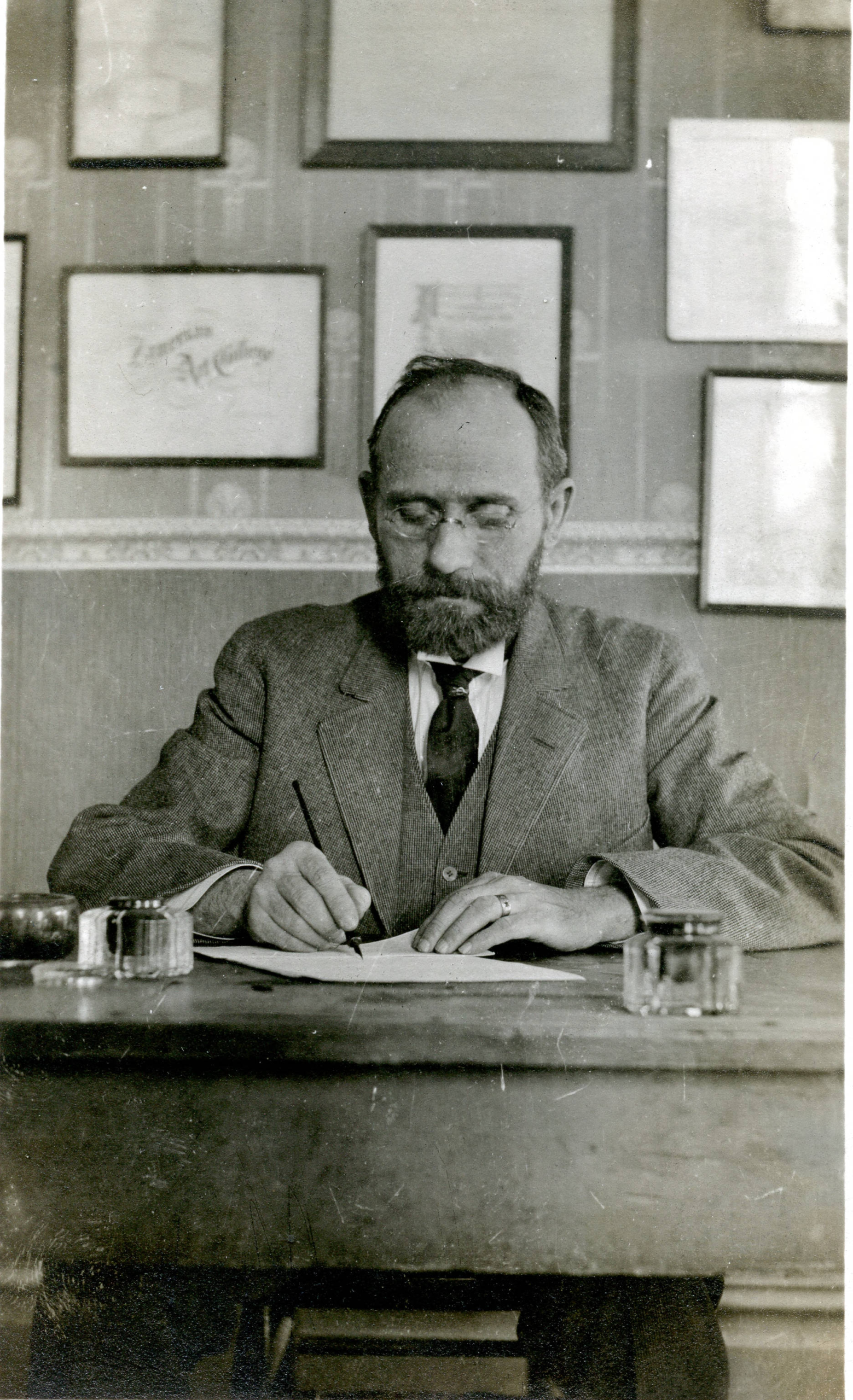
Children were taught to write from the shoulder and forearm, with the fingers holding the pen in a fixed position rather than forming the letters themselves. The hand rested on the two smaller fingers and slid across the paper.
The reason is mechanical. A nib dragged sideways or pushed against its own direction catches and spatters; it wants to be pulled. Large smooth movements from a big joint produce that, while small movements from the finger joints produce a jerkier line and a tiring hand. There were also claims about cramp and endurance, which I have no way to assess.
Either way, the result was that writing was taught as a whole-body posture – feet flat, back straight, paper at an angle, arm sliding. Which is why so many people who learned it could still produce a page of that writing sixty years later.
The Well Was Deep and Narrow on Purpose
Now back to the shape of the pot.
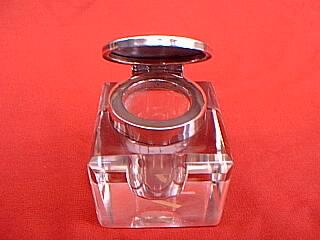
Ink evaporates, and what is left behind thickens. A wide shallow dish presents a large surface to the air and goes gummy quickly; a deep narrow one presents very little, so the ink keeps longer. Some wells had a hinged lid or a hole barely wider than the nib for the same reason.
The depth also meant the nib could be dipped to a consistent level without being plunged in up to the holder, which matters because ink on the upper part of a nib runs down and blots. Children were taught to dip to the same shallow depth each time and to touch the nib against the inside of the well to shed the excess.
Nobody designed that pot to be charming. Every feature of it is a response to the behaviour of a liquid that dries out and a tool that holds too much of it.
Somebody Had to Fill Them
The wells did not fill themselves, and the job fell to a pupil.
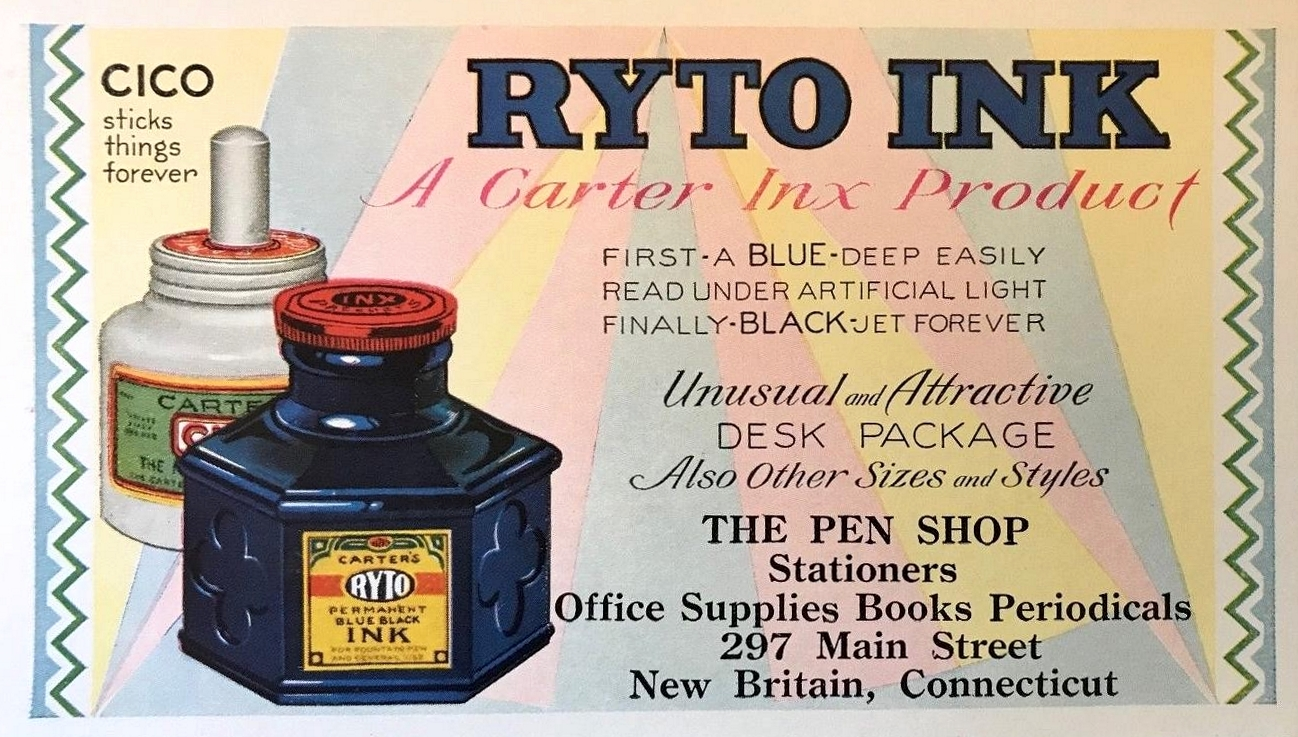
Ink arrived as powder to be mixed with water, or as liquid in a bottle, and somebody went round the room with a can or a pitcher at the start of the week topping up thirty wells. It was a position of trust, it was coveted, and it involved carrying an open container of permanent dye between rows of seated children.
The results were predictable and are recorded in a great many memoirs. I will leave the detail alone except to say that the stain on a wooden floor around a desk leg lasted as long as the desk did.
Winter Froze Them
In an unheated or barely heated room, water-based ink freezes.
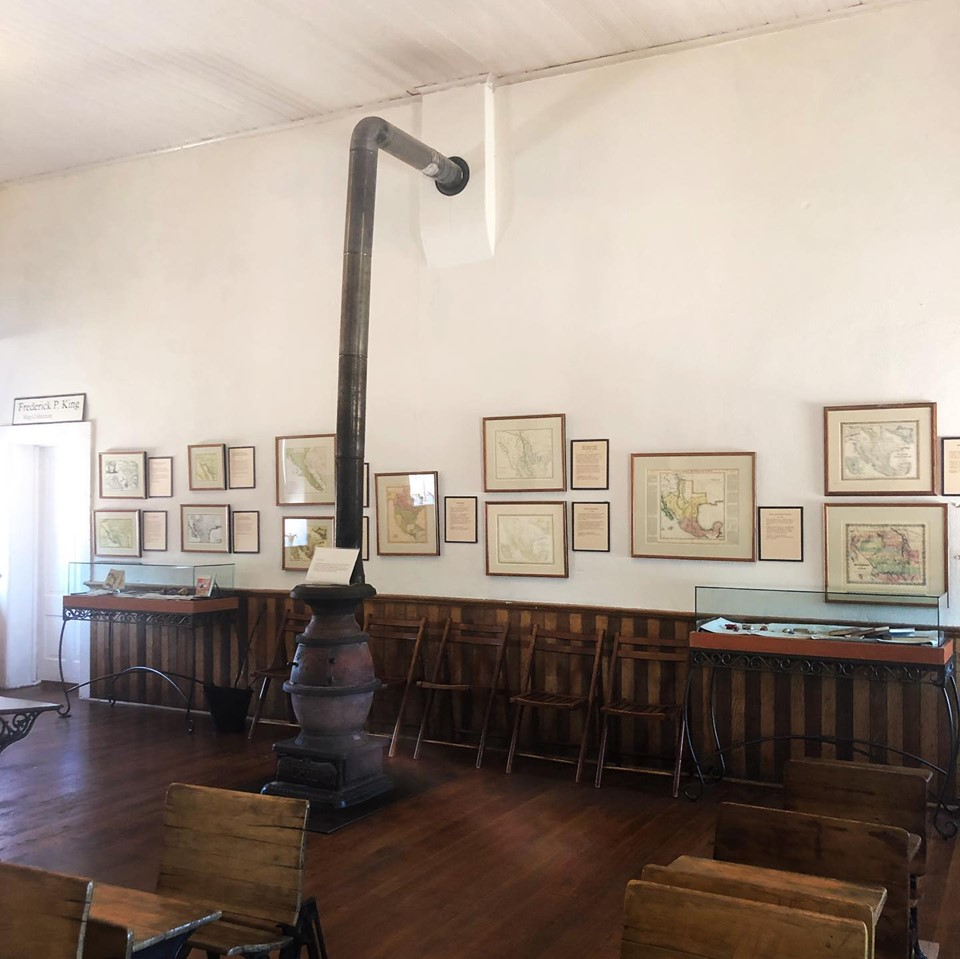
A well left in a desk overnight in January could be solid in the morning, and a frozen and thawed ink is not the same ink – the solids separate out and it writes badly afterwards. So the wells came out and went somewhere warmer, or the first job of the morning was thawing them near the stove.
This is the kind of detail that makes the period concrete for me. A child arriving at school in winter did not simply sit down and begin. There was a sequence of small restorations to be performed before the room was capable of being written in.
Blotting Paper Was a Consumable
Ink from a dip pen sits on the surface of the paper and takes time to dry.
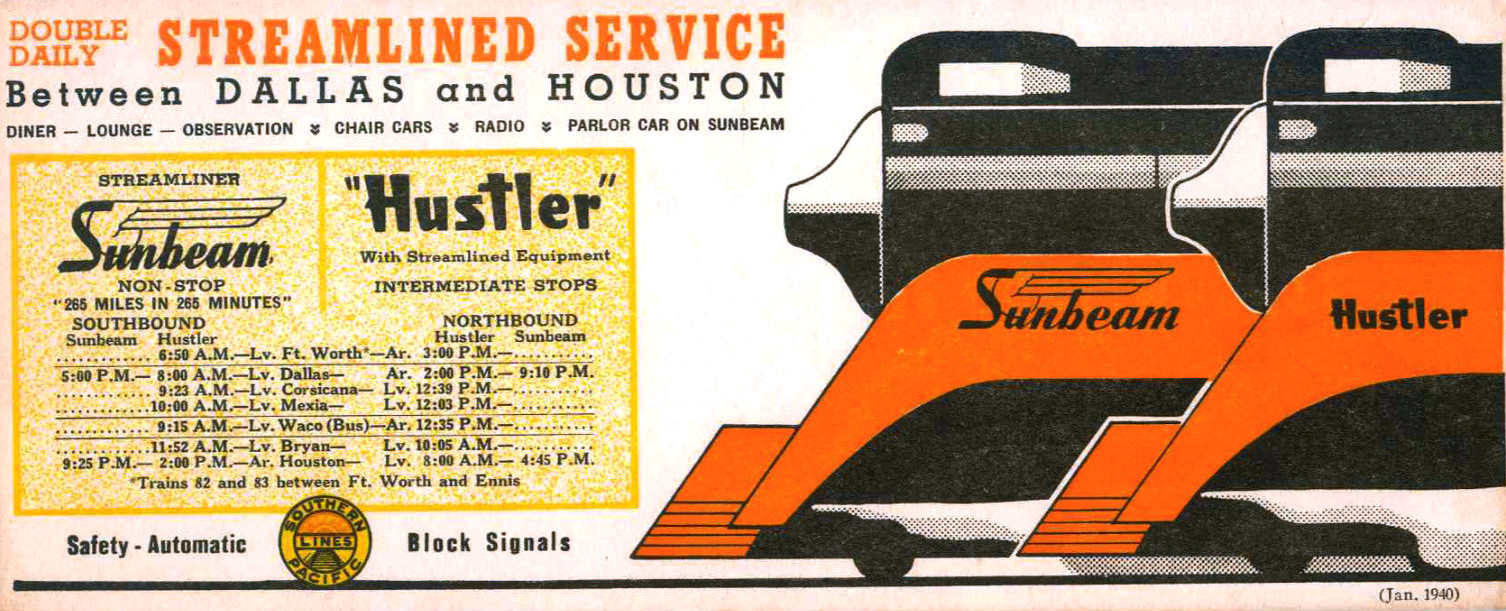
So every desk had blotting paper – a soft absorbent sheet pressed onto fresh writing to lift the surplus. It was used constantly, it wore out, and it was often an advertising item given away by banks and merchants with their name printed on the clean side.
The practical consequence is that nobody wrote on the back of a page immediately, nobody closed a book on wet writing, and a page of work had to be managed physically after it was finished. Writing was not done when you stopped writing.
The Nib Itself Was a Consumable
The other thing I had not understood is that the writing end was disposable.
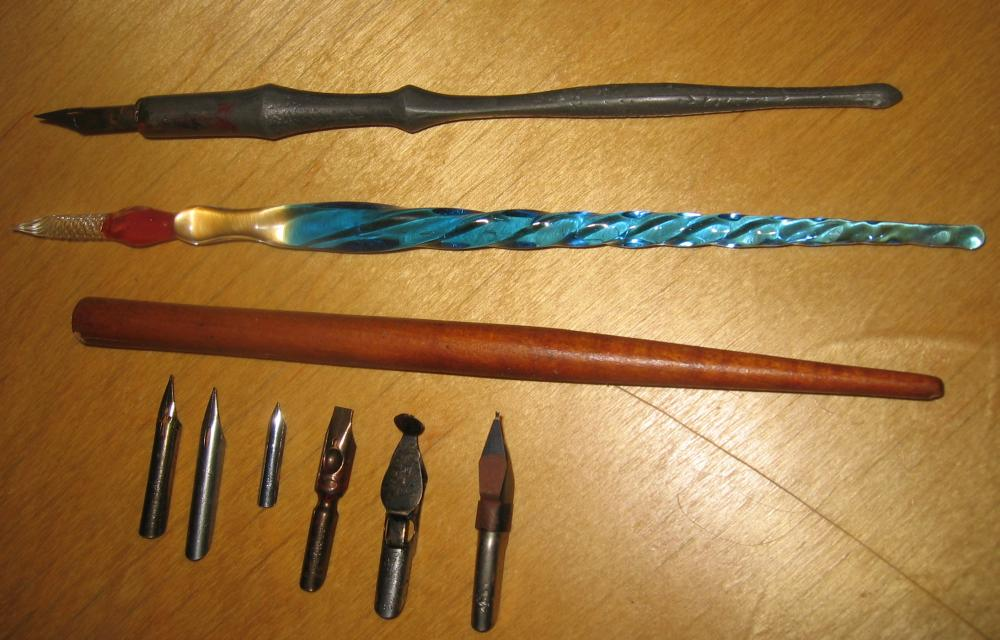
A steel nib is a thin pressed strip with a slit cut up the middle, and the two halves of that slit spring apart under pressure to widen the line. That springiness is the whole reason the pen can produce a line of varying weight, and it is also what wears out. The point abrades against the paper, the slit loses its set, and eventually the two halves no longer meet properly and the pen either skips or holds nothing.
So nibs were bought by the box, in dozens, in a range of patterns from fine and hard to broad and flexible, and a school kept a supply the way it kept chalk. A child who bent or split a nib got another one. The wooden holder lasted for years and the business end lasted for weeks.
Which also explains something about the handwriting itself. A pen whose line widens when you press and narrows when you do not is a pen that rewards deliberate variation in pressure, and the thick-and-thin stroke that marks the handwriting of that period is not decoration. It is what that tool does when it is used properly.
Then the Fountain Pen Carried Its Own Ink
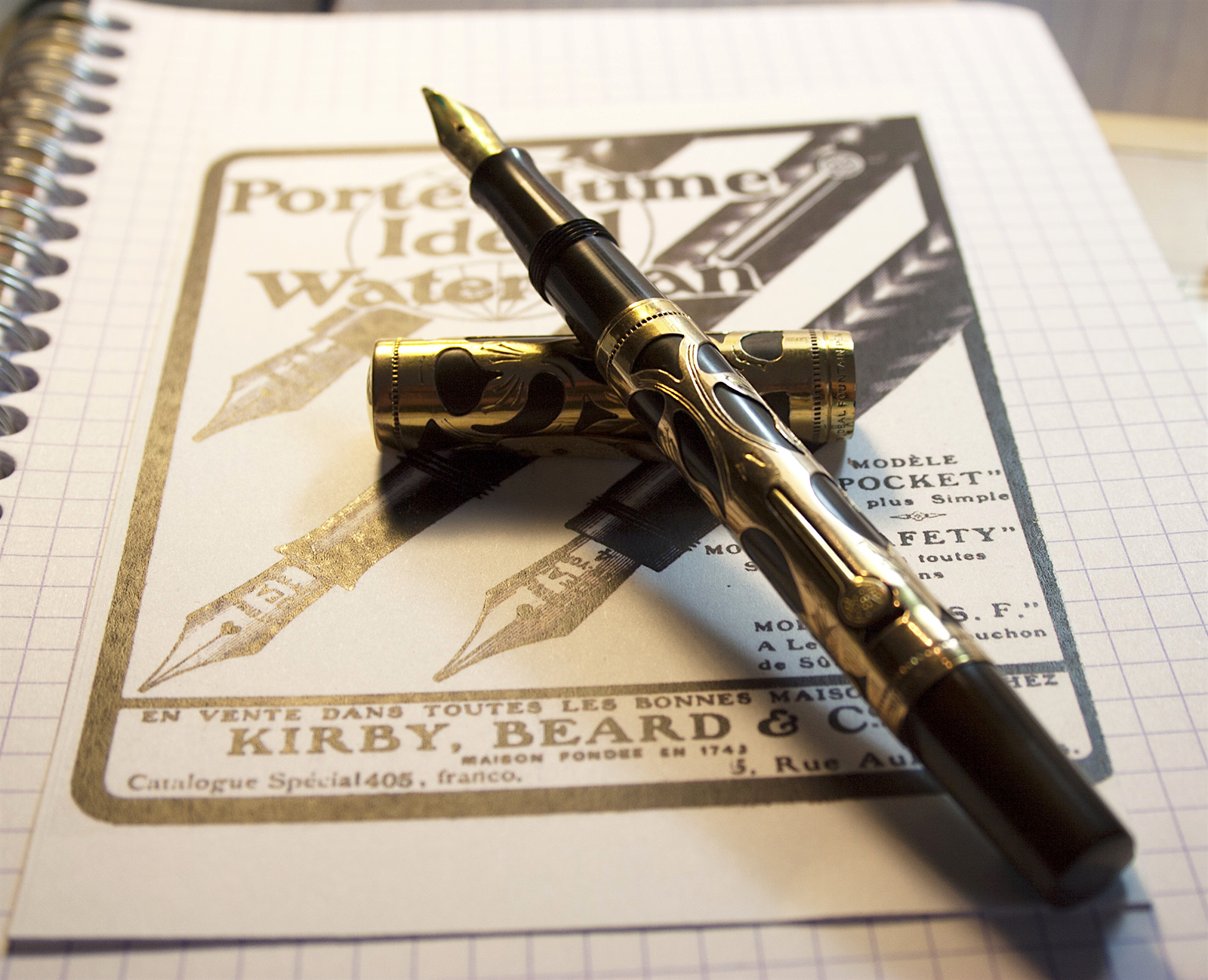
The fountain pen holds a reservoir of ink inside the barrel and feeds it to the nib continuously.
That single change removes the dip, and with the dip goes the whole apparatus. No well, no filling, no freezing, no rhythm of interruption, and a line of far more even weight because the ink supply does not vary. Much of what was difficult about the old instruction becomes unnecessary.
The ballpoint then removed the remaining fragility. A rolling ball fed with thick ink does not care about pressure, direction, posture or paper angle, cannot be damaged by being pushed sideways, and dries almost immediately – which means it needs no blotter and tolerates any grip at all.
So the desks were replaced, and the new ones had no hole.
What the Hole Was
I think the hole in the desk is worth knowing about for one specific reason.
It is evidence that writing used to be a manual trade. Not an expression of personality or a thing you either had neat handwriting for or did not – a physical technique, with a correct posture, a correct movement originating in the shoulder, a correct depth of dip, a correct interval between dips, and a correct way of managing the page afterwards. It was taught like a trade, drilled like a trade, and assessed like a trade.
All of that was made unnecessary by a pen that holds its own ink and a pen that cannot blot, which is an unambiguous improvement. Nobody should want to go back to dipping.
But it does mean that the generation who learned this way had a skill their grandchildren have no equivalent of, and the only surviving physical trace of it in most places is an unexplained round hole in the corner of a very old desk.
Like our content? Follow us for more.