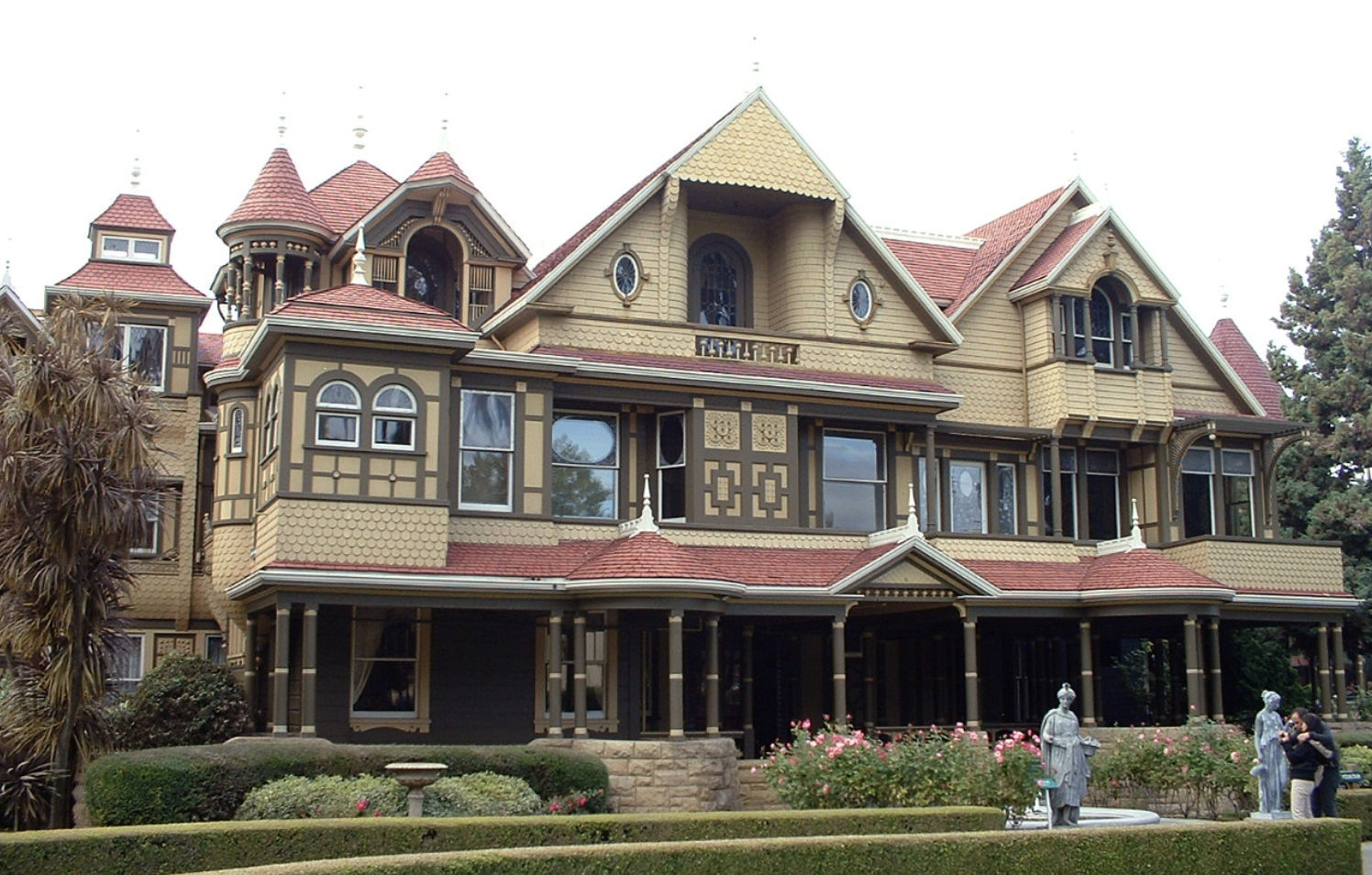
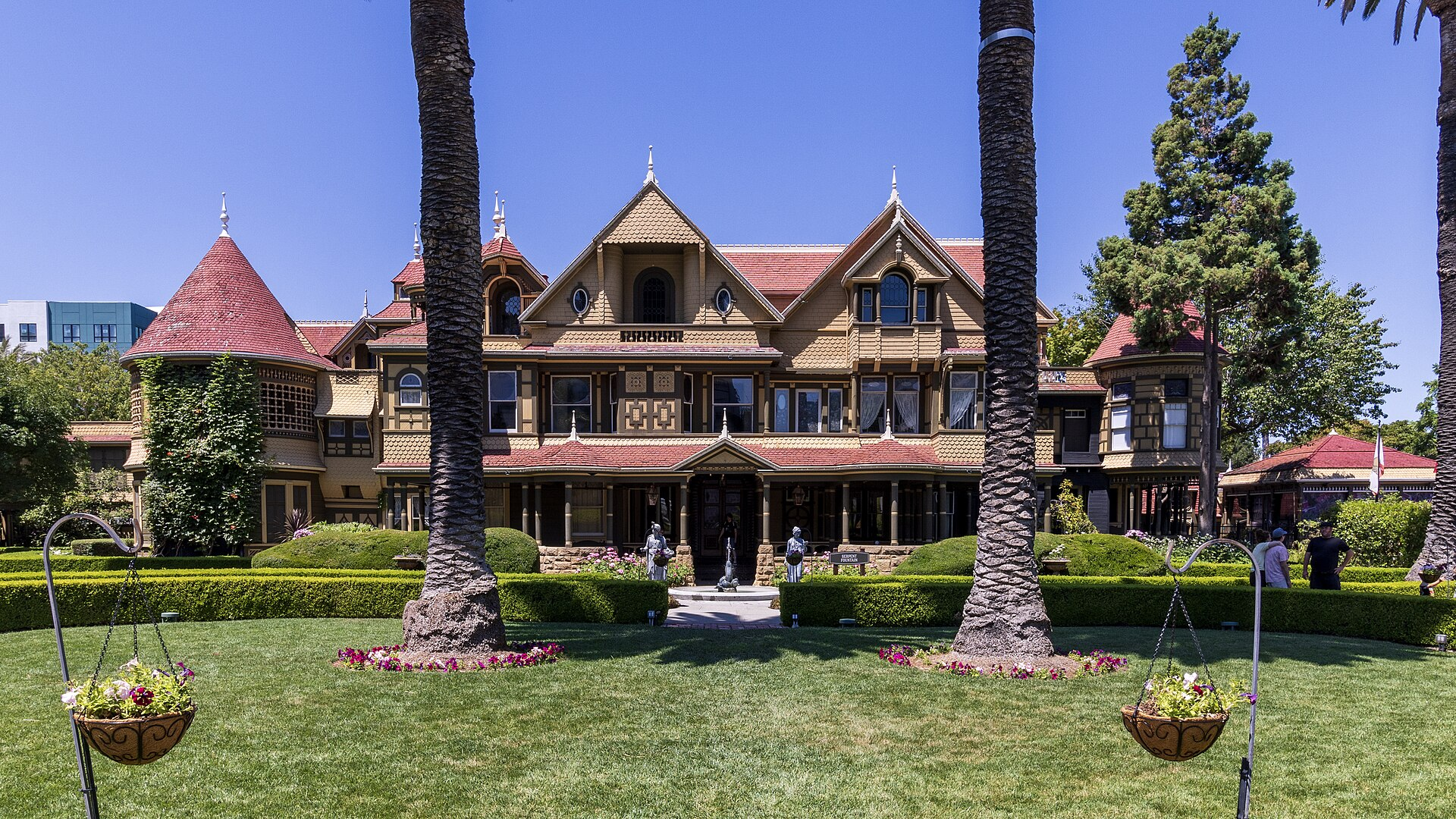
Sarah Winchester, heir to the Winchester rifle fortune, built her California mansion continuously from 1886 to her death in 1922 — producing 160 rooms, 47 fireplaces, 10,000 windows, doors that open onto walls, and stairways that climb into ceilings. The popular story is that she was haunted by ghosts of rifle victims. The historical evidence suggests something more complicated.
In 1862, Sarah Lockwood Pardee married William Wirt Winchester — heir to the Winchester Repeating Arms Company, the company that produced what was advertised as “The Gun That Won the West.” Within a few years, the marriage had been touched by tragedy beyond easy comprehension. Their only child, Annie, died at six weeks old in 1866. William died of tuberculosis in 1881. Sarah inherited a fortune valued at approximately $20 million (roughly $600 million in today’s dollars).
What she did with that fortune has become one of the most-told ghost stories in American history. The popular version, repeated in countless tour brochures, paranormal TV shows, and a 2018 Helen Mirren film, holds that Sarah was haunted by the spirits of everyone killed by Winchester rifles, and that a Boston medium told her she could only stay alive by continuously building a house. So she did — for 36 years, with construction crews working 24 hours a day, until the moment she died.
The actual evidence for any of that is much thinner than the legend suggests. The truth is messier, more interesting, and significantly more human.
1: A house that should not exist
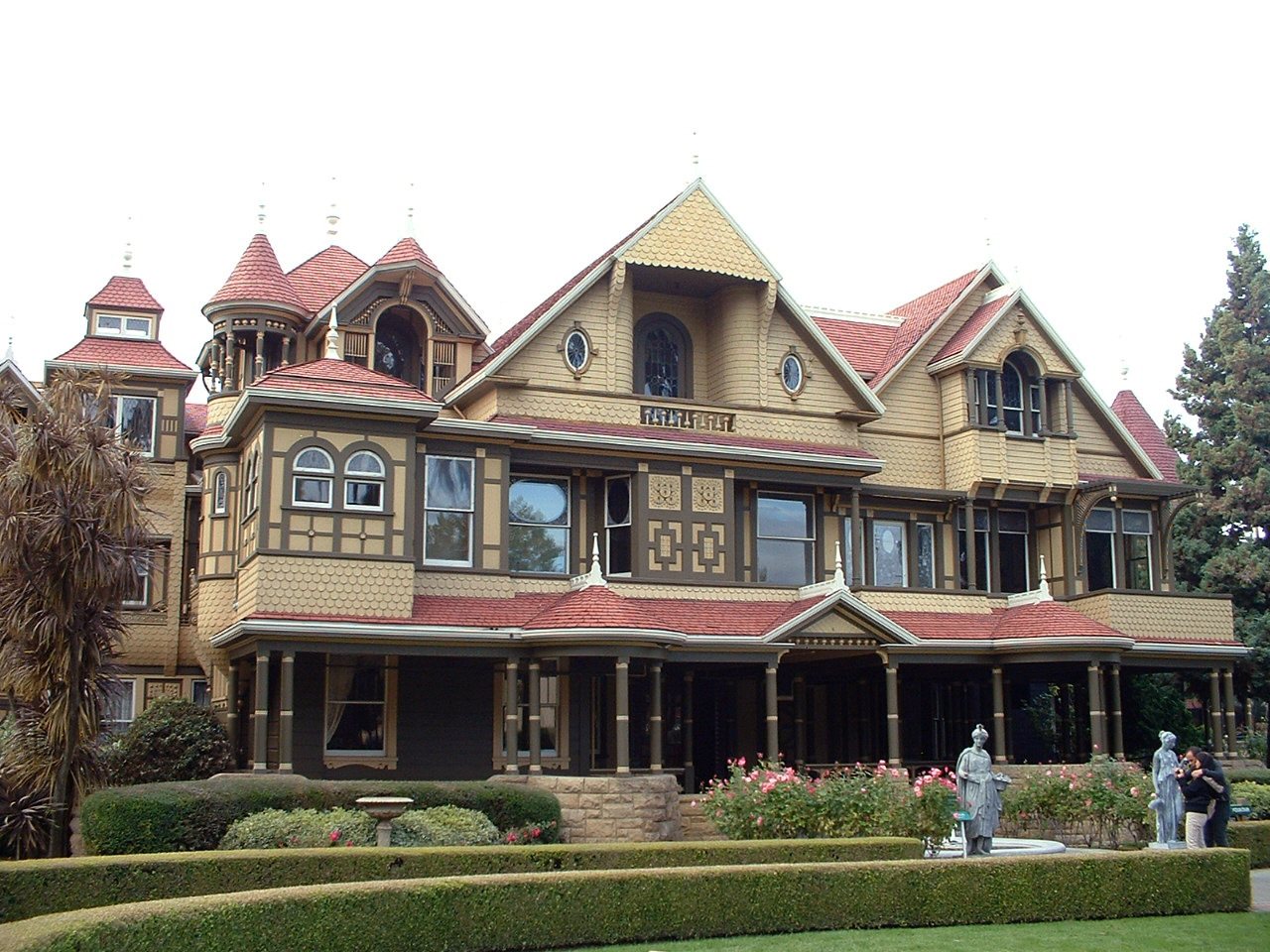
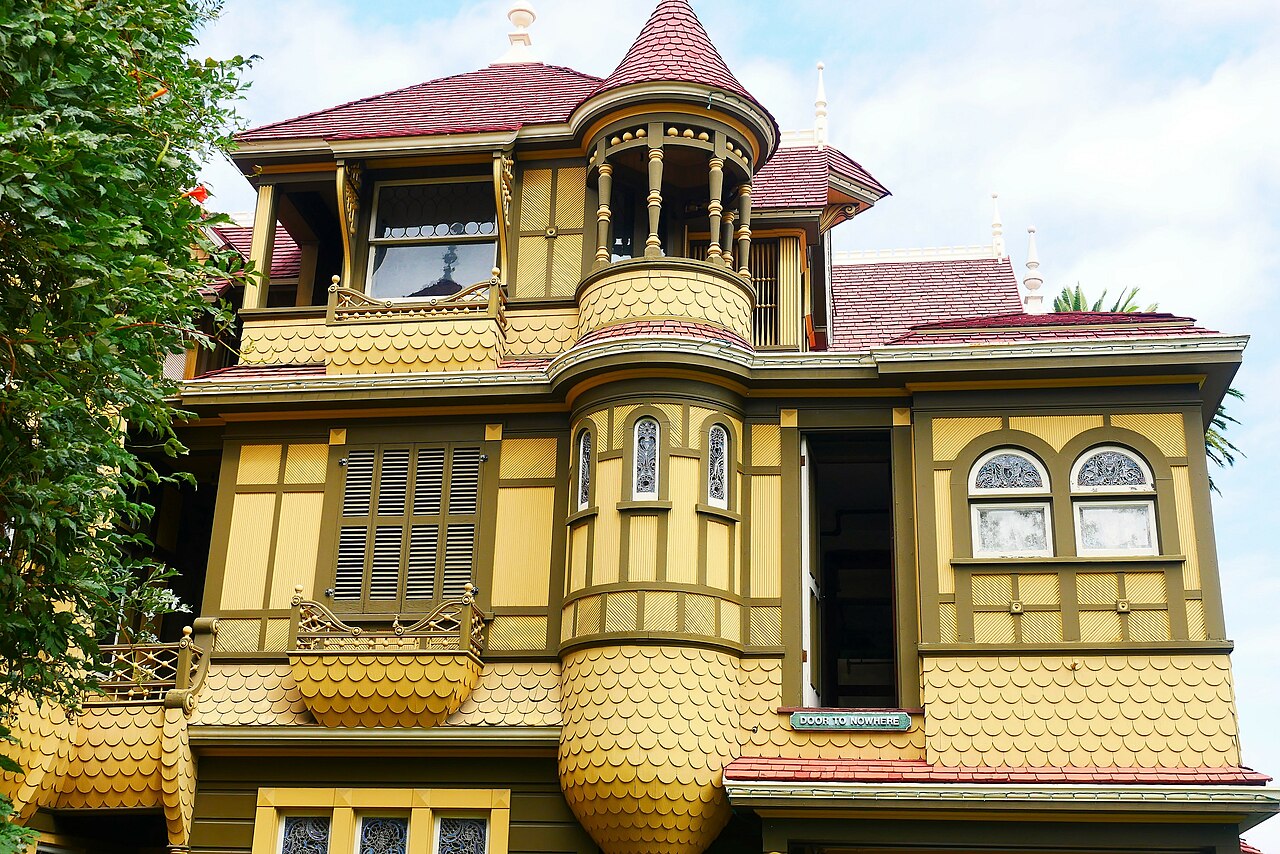
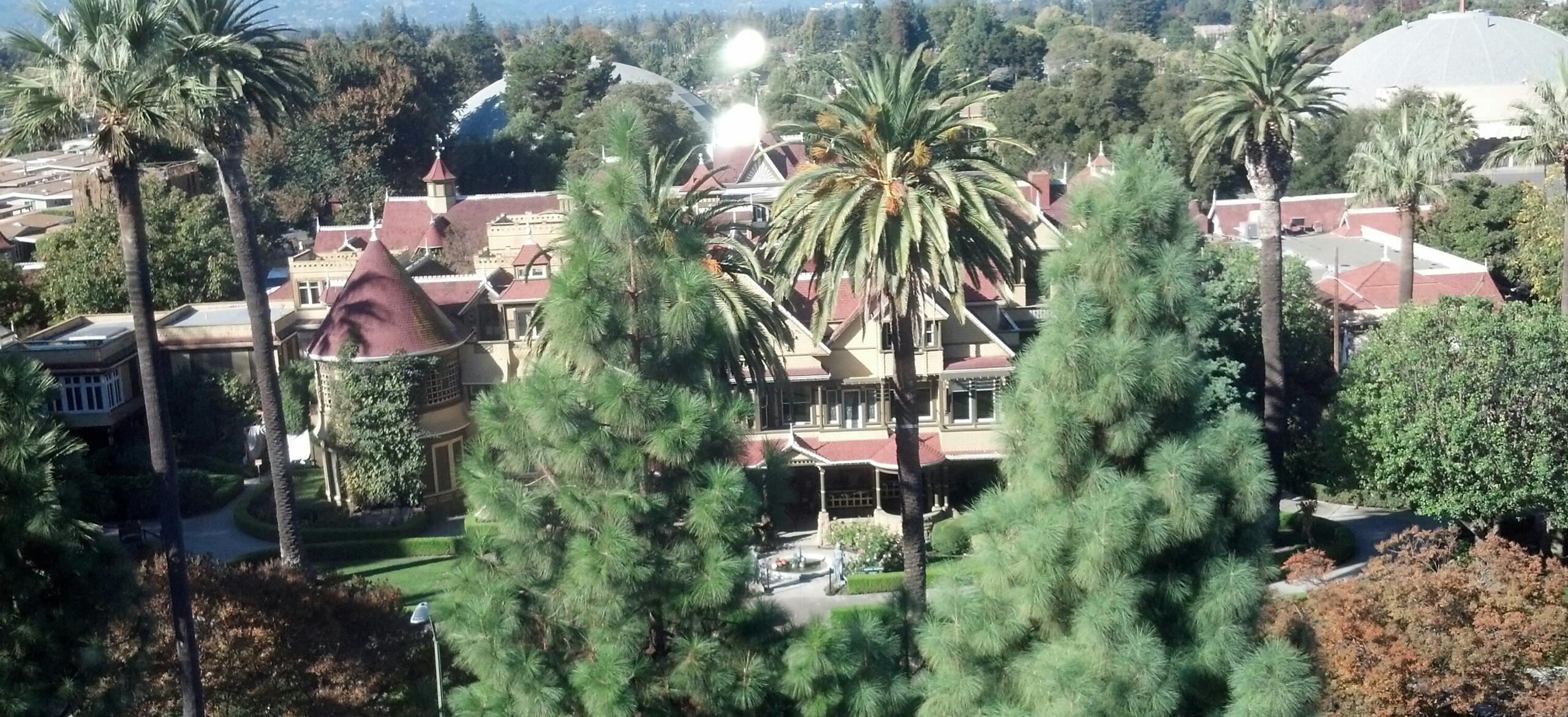
The Winchester Mystery House in San Jose, California has 160 rooms in its current configuration, including 40 bedrooms, 2 ballrooms, 47 fireplaces, 10,000 windows, and 2,000 doors. Many features are deliberately non-functional — stairs leading to ceilings, doors opening onto blank walls or sheer drops to the garden below, windows in floors. The house is the result of 36 years of continuous, non-planned construction. By the time Sarah Winchester died in 1922, the mansion had reached seven stories tall — though much of the upper floors were destroyed in the 1906 San Francisco earthquake and never rebuilt.
2: A child prodigy who married into a gun fortune
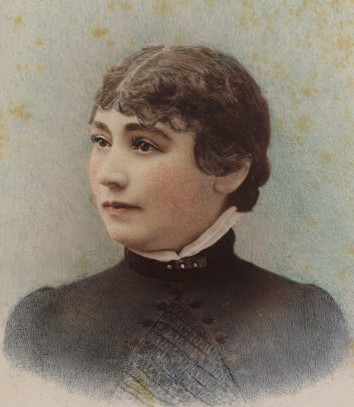
Sarah Lockwood Pardee was born in New Haven, Connecticut in 1839. She was a child prodigy — by the age of 12, she was fluent in four languages, cultured in Shakespeare and other major literary works, and a skilled musician. She attended the Young Ladies Collegiate Institute at Yale University. In Connecticut, she was known as “the Belle of New Haven.” On September 30, 1862, she married William Wirt Winchester, heir to the Winchester Repeating Arms Company. Their daughter Annie was born in June 1866 and died six weeks later. William died of tuberculosis in March 1881, leaving Sarah a widow at age 41 with no surviving children.
3: The fortune that defined her life
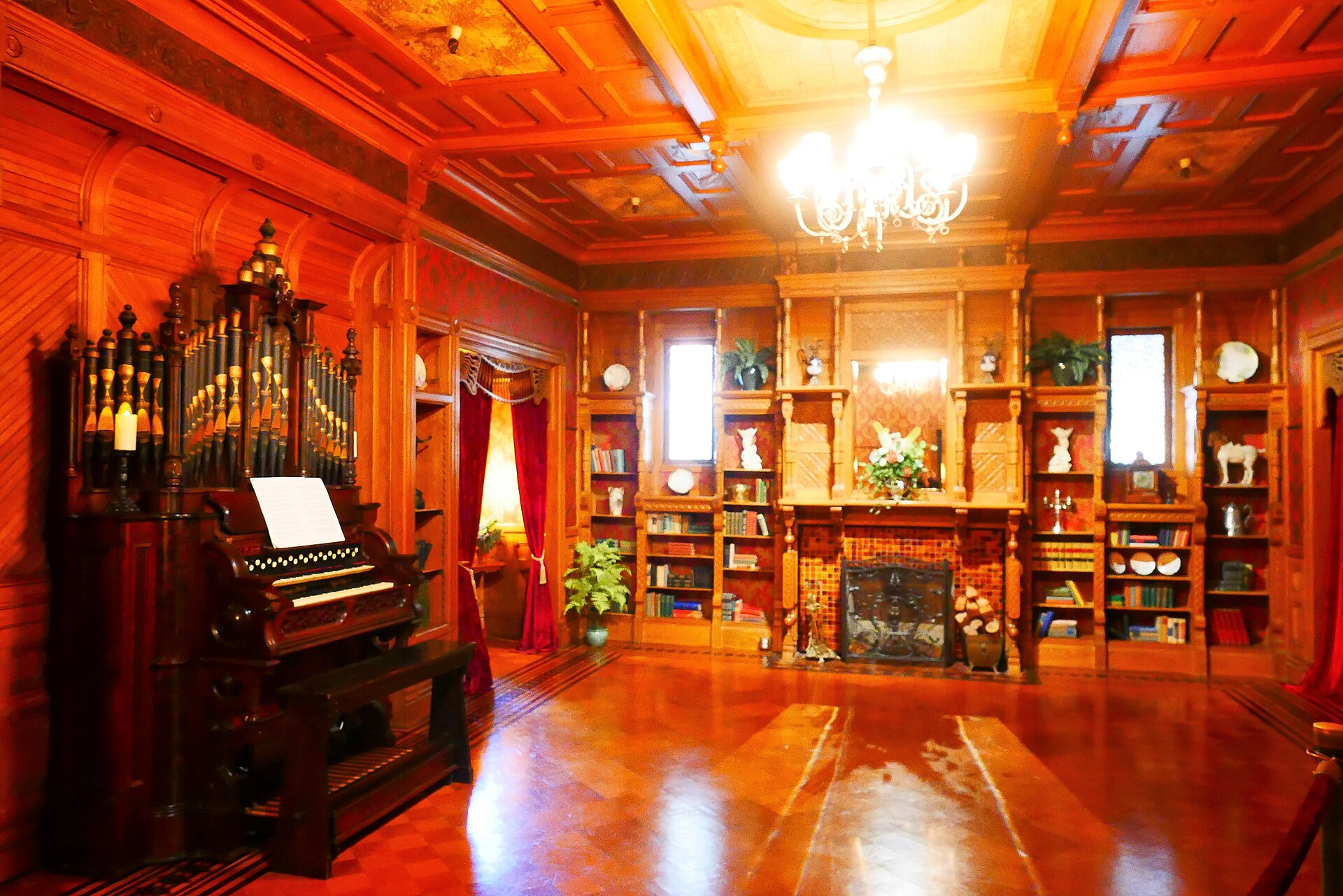
When William died, Sarah inherited approximately $20 million — equivalent to about $600 million in 2025 dollars. She also received nearly 50% ownership of the Winchester Repeating Arms Company, with annual dividend income that exceeded $1,000 per day in 1880s purchasing power. Sarah was, by some measures, the wealthiest woman in America at the time. After her husband’s death, she traveled around the world for several years before settling in California in 1886, partly to be closer to her sister Isabelle and her niece Marion “Daisy” Merriman.
4: The 1886 farmhouse
In 1886, Sarah purchased a two-story farmhouse near San Jose, California. She named the property Llanada Villa (a Spanish phrase meaning “Plain Villa” or “House on the Plain”) — though the public would later know it as the Winchester Mystery House. Construction began almost immediately, transforming the modest farmhouse into something that grew over time without master plans, formal architects, or any clear endpoint. Sarah’s niece Daisy moved in in 1888 and lived with her aunt for the next 15 years. From the outside, the original construction looked like an ordinary Victorian addition project. From the inside, the strangeness was already beginning.
5: When the ghost story actually started
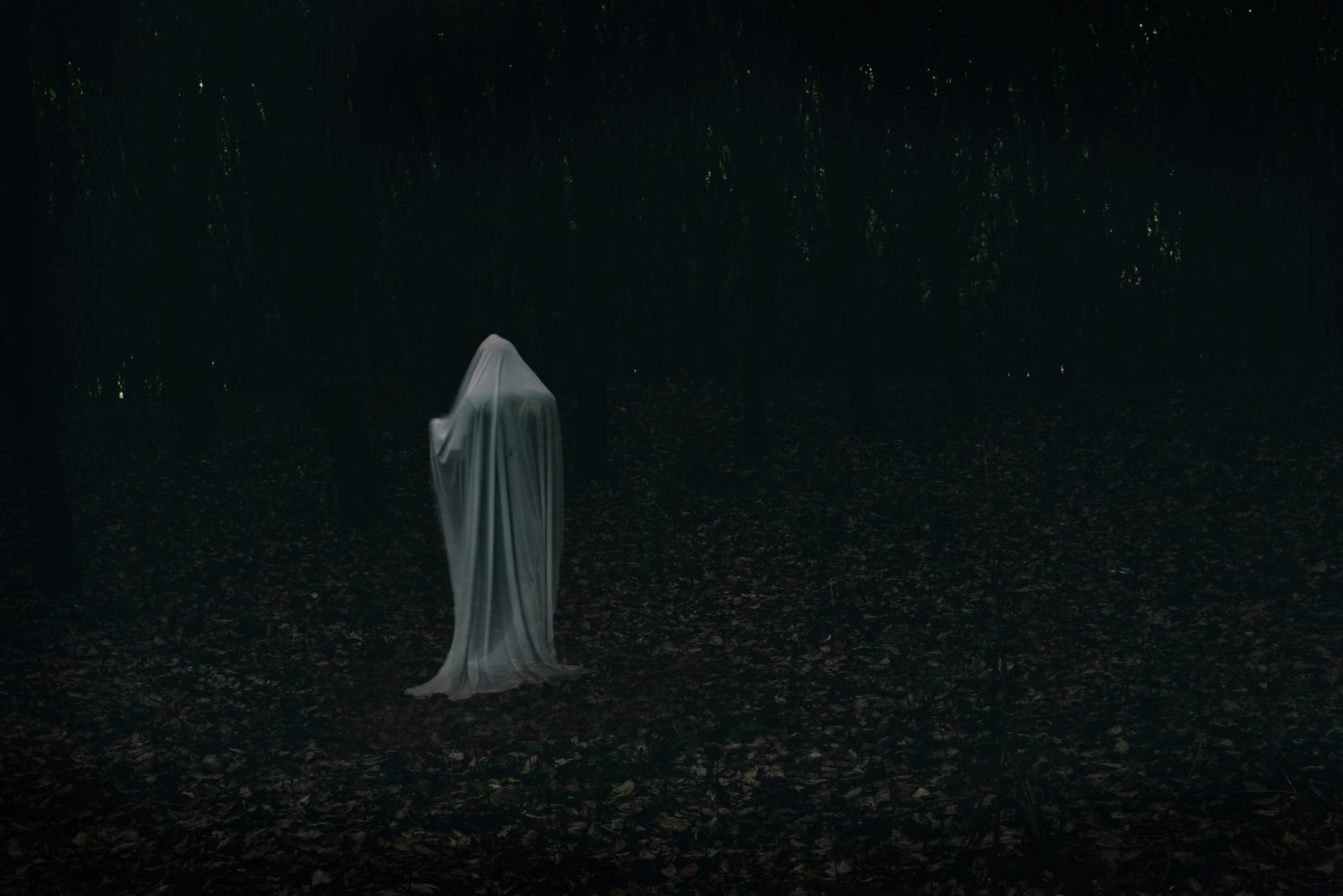
Here’s the part most retellings of the Winchester story leave out: the ghost narrative didn’t come from Sarah Winchester. It came from newspapers. On February 24, 1895 — nine years after construction had begun — the San Francisco Chronicle published the first known written story suggesting that Sarah was building her home to avoid death. Sarah herself never publicly responded. She gave no interviews, left no journals, and had no family willing to discuss the matter publicly. By 1911, the San Francisco Examiner was calling the mansion the “House of Mystery.” The legend was being constructed in newspaper offices, not by Sarah Winchester herself.
6: The Boston medium that may not have existed
The most famous element of the legend — that a Boston medium told Sarah she must continuously build to stay alive — first appears in print decades after Sarah’s death. There is no contemporaneous evidence that Sarah ever consulted a medium, spiritualist, or psychic about building advice. According to historian Mary Jo Ignoffo, whose 2010 biography Captive of the Labyrinth researched Sarah’s actual letters, financial records, and family correspondence, the medium story appears nowhere in any documentation from Sarah’s lifetime. It seems to have been invented or significantly embellished after her death.
7: What the house’s quirks may actually be
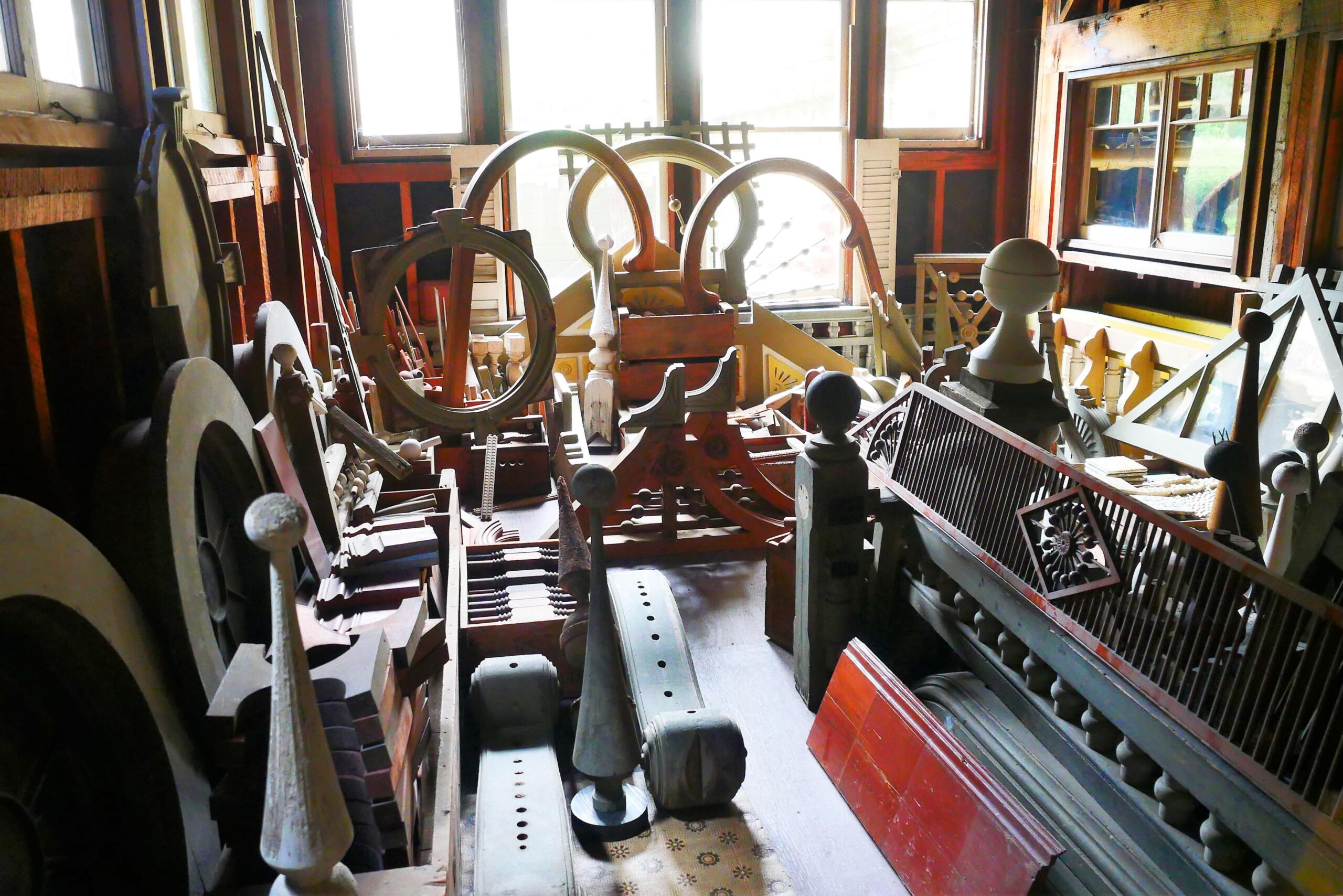
The Winchester Mystery House’s most famous features — the staircases that lead nowhere, the doors that open onto blank walls, the rooms with no apparent purpose — have been explained in several ways. The most dramatic explanation holds they were built to confuse malevolent spirits. More prosaic explanations suggest Sarah was simply an eccentric builder who designed as she went, correcting mistakes by building over them rather than demolishing. Sarah Winchester had severe rheumatoid arthritis. The staircases with small steps may have been built to make ascending easier. The “stairs to nowhere” may simply be sections that were closed off after the 1906 earthquake destroyed parts of the house. Out of 13 bathrooms in the home, only one was reportedly functional — but this likely reflects construction in progress rather than supernatural strategy.
8: The 1906 earthquake and what it actually destroyed
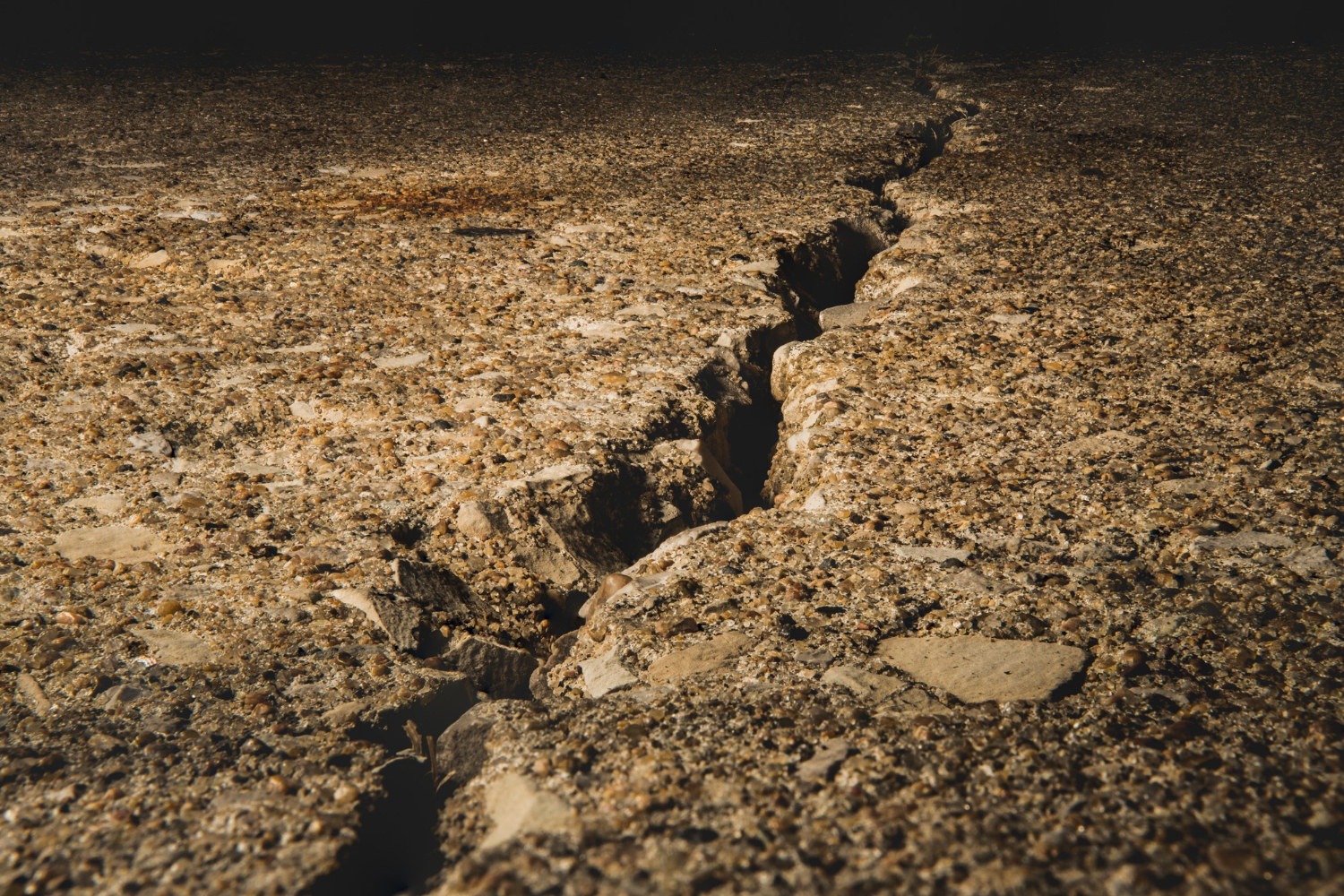
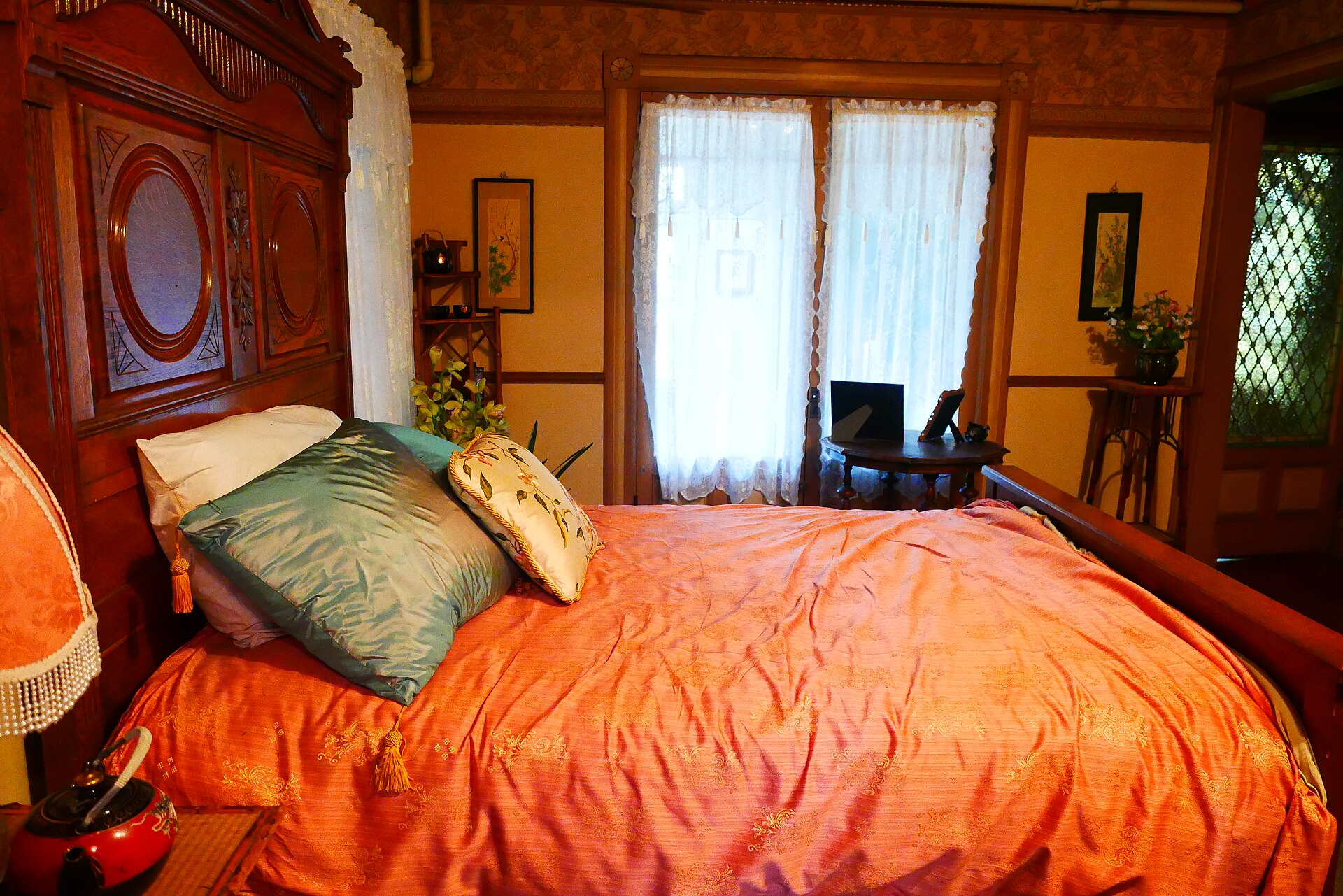
On April 18, 1906, the Great San Francisco Earthquake hit Northern California. The Winchester house, located in San Jose, suffered significant damage. The 7-story tower at the front of the house collapsed. Most of the fourth floor was damaged beyond practical repair. Sarah, who was 67 years old at the time, was reportedly trapped in the Daisy Bedroom for several hours before being rescued. After the earthquake, Sarah’s grand project suddenly seemed in jeopardy. She moved out of the house for periods to be closer to her sister and niece, eventually purchasing a second home in Atherton. But construction never fully stopped. The damaged sections of the original 7-story tower were sealed off rather than demolished — accounting for some of the famous “doors to nowhere” today.
9: The rumors during her lifetime

In Sarah Winchester’s day, the residents of San Jose whispered about the strange construction and even stranger inhabitant — but most of the wildest stories emerged after her death. Locally, she was generally recognized as eccentric but reasonable. One unidentified acquaintance refuted the superstitious accusations during her lifetime, telling a newspaper: “If she wants to build a castle on her premises near Campbell, she should be permitted to do so without ascribing her motives to foolish superstitions. If people of wealth who settle in Santa Clara are to be ridiculed when they spend their money lavishly, we might as well put up the bars and keep them out.” Her family and those in her employ tried to refute the haunting claims. They couldn’t compete with the newspaper coverage.
10: The “38 years” myth
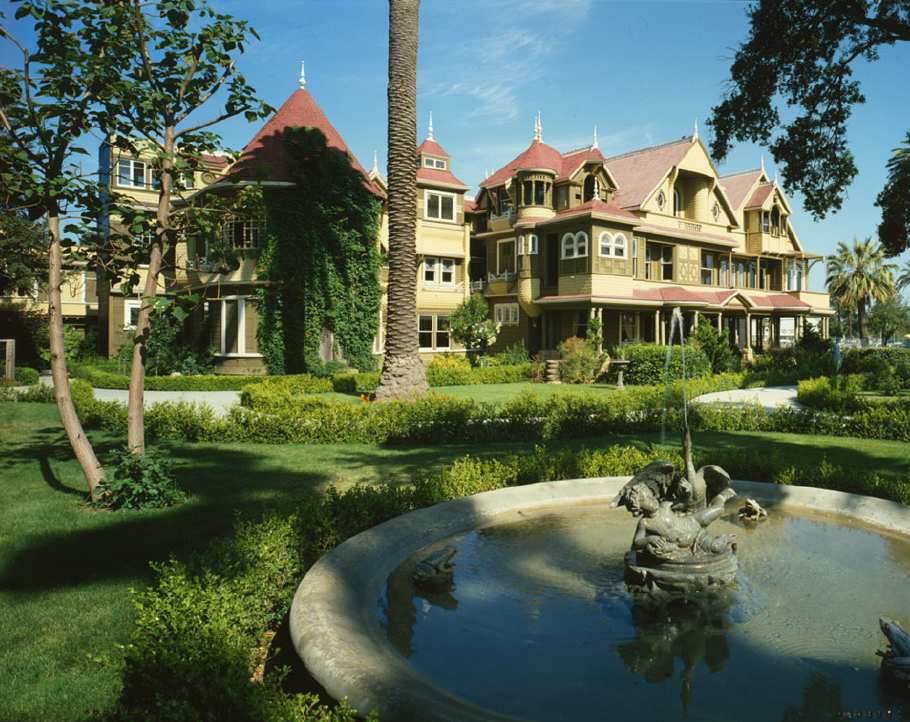
Even the most famous fact about the Winchester Mystery House — that Sarah Winchester built it continuously for 38 years — is incorrect. Construction actually lasted about 36 years (1886 to 1922). The 38-year figure first appears in the 1981 Historic American Buildings Survey when the home was added to the National Register of Historic Places. The error was based on an incorrect 1884 purchase date (Sarah didn’t buy the property until 1886). The error has been repeated in the official tour script for decades because it’s now embedded in the legend. According to author Mary Jo Ignoffo, current tour guides are required to follow a script that emphasizes fabrications and inaccuracies. One guide reportedly said: “I feel so torn because I have to tell people untruths! Every time I go through the house and have to talk about 13s and other ‘kooky’ things, my heart breaks a little for Sarah.”
11: The truth that’s harder to tell
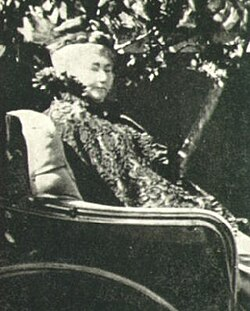
The historically supported version of Sarah Winchester is significantly less dramatic than the ghost story but arguably more compelling. She was a brilliant, well-educated woman who experienced devastating losses (a child, then a husband) and inherited an enormous fortune. She channeled her grief and creative energy into a continuous construction project that gave her purpose and structure for the rest of her life. She lived with severe arthritis. She was generous with charity, including specific donations to tuberculosis research (the disease that had killed her husband). She had close relationships with her niece, sister, and household staff. She gave no interviews because she was a private woman who didn’t owe the public an explanation. She built without a master plan because she enjoyed building and could afford to do whatever she wanted.
12: How the house became a tourist attraction
Sarah Winchester died on September 5, 1922, of heart failure at age 82. According to the legend, the construction crew stopped midway through pounding nails — an abrupt end after exactly 38 years of work. (In reality, construction had stopped and started many times throughout the project.) After her death, the house was sold to John and Mayme Brown, who had a background in roller coaster design and amusement parks. They originally considered turning the property into an amusement park or putting a roller coaster on it. Public interest in the house was so strong, however, that they began offering tours instead. The Winchester Mystery House officially opened to public tours on June 30, 1923, less than a year after Sarah’s death.
13: The Disney connection
The Winchester Mystery House inspired Disney’s Haunted Mansion. Walt Disney visited the property in the 1950s and was struck by the contrast between the home’s elegant Victorian exterior and its mysterious, haunted-feeling interior. Disney reportedly said he’d “keep up the outside and let the ghosts take care of the interior.” That principle — a beautiful exterior hiding scary interior features — became the design philosophy for the Haunted Mansion ride, which opened at Disneyland in 1969. The Imagineers also incorporated specific design elements from the Winchester house into the ride, including the Séance Room with its illuminated crystal ball.
14: How to actually visit
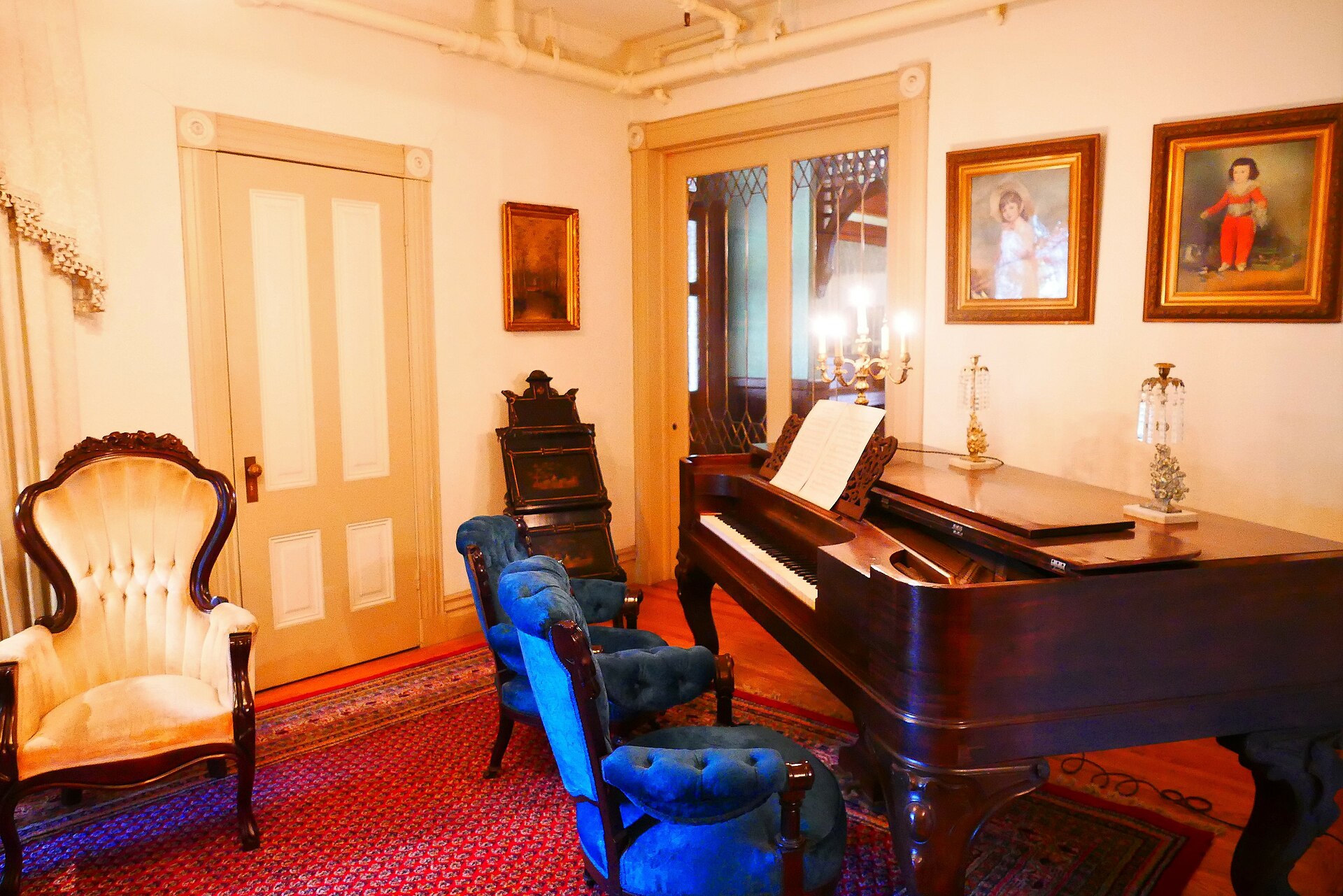
The Winchester Mystery House is located at 525 South Winchester Boulevard in San Jose, California — easily accessible from Highway 280. Daily mansion tours run year-round and last approximately 65 minutes, covering 110 of the 160 rooms. Special tours are available, including extended explorer tours that access locked sections of the house, and seasonal flashlight tours that take place after dark. Tickets typically cost $40-$60 depending on the tour type. The Winchester Mystery House has hosted over 12 million visitors since opening in 1923. Multiple paranormal investigation teams continue to document the house, and the gift shop sells extensive ghost-hunting merchandise. The official narrative leans heavily into the supernatural angle, regardless of what the historical evidence actually supports.
15: The enduring appeal
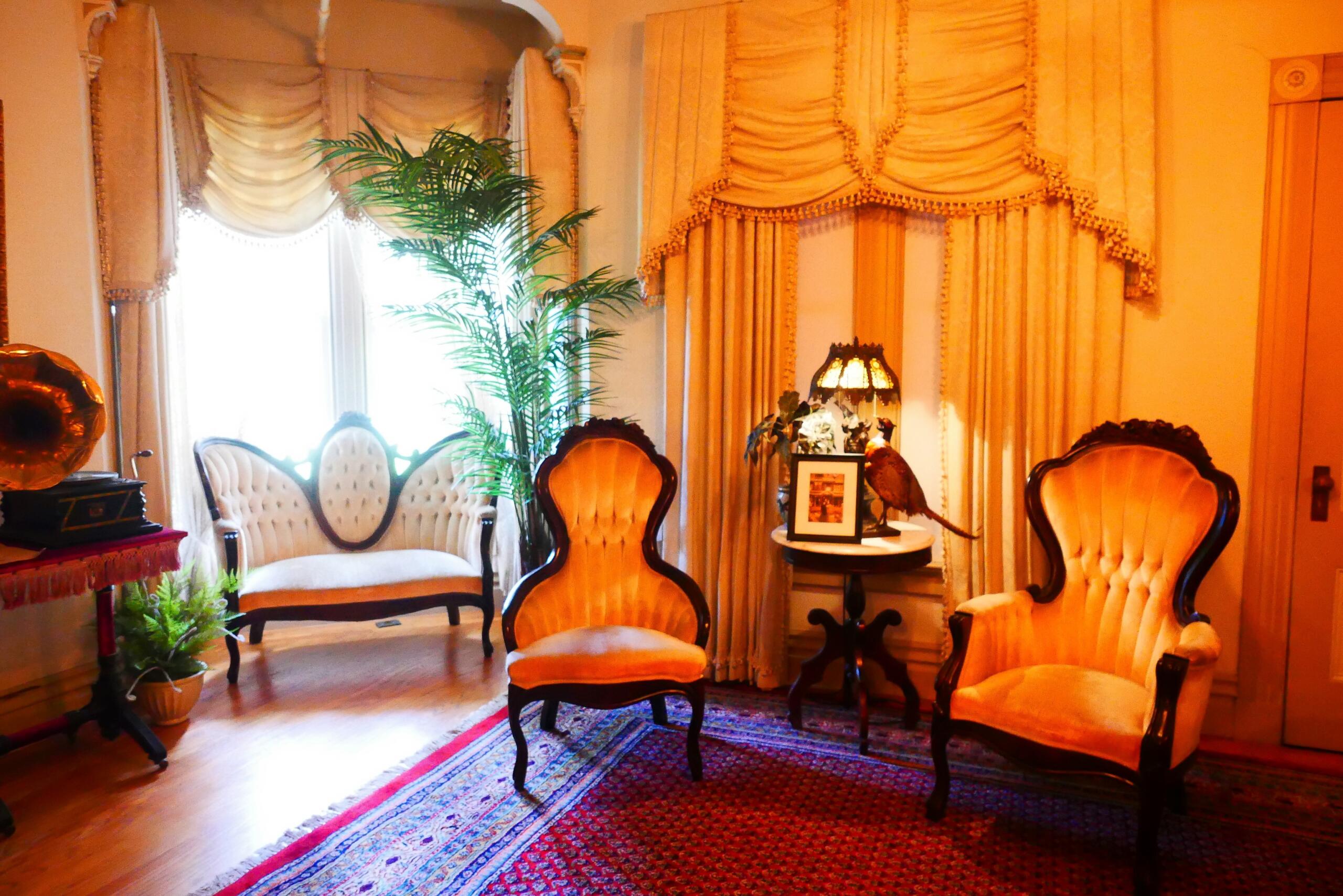
For visitors, the Winchester Mystery House offers something genuinely unusual: a Victorian mansion that is simultaneously real and unbelievable. Whether or not you accept the ghost story, the architectural reality is impossible to deny — a 160-room labyrinth that includes specifically purposeful elements (the Séance Room, the Hall of Fires, the elaborate Grand Ballroom built at great expense and apparently never used) and specifically purposeless elements (stairs to nowhere, doors to walls, windows in floors). The house exists. It is what Sarah Winchester actually built. Whether her motivations were supernatural, eccentric, grief-driven, or simply the practical results of a 36-year construction project that prioritized continuous activity over coherent design — that question may never have a definitive answer. But the architectural evidence speaks regardless of the interpretation. There is no other house quite like it anywhere in the United States, and there likely never will be again.