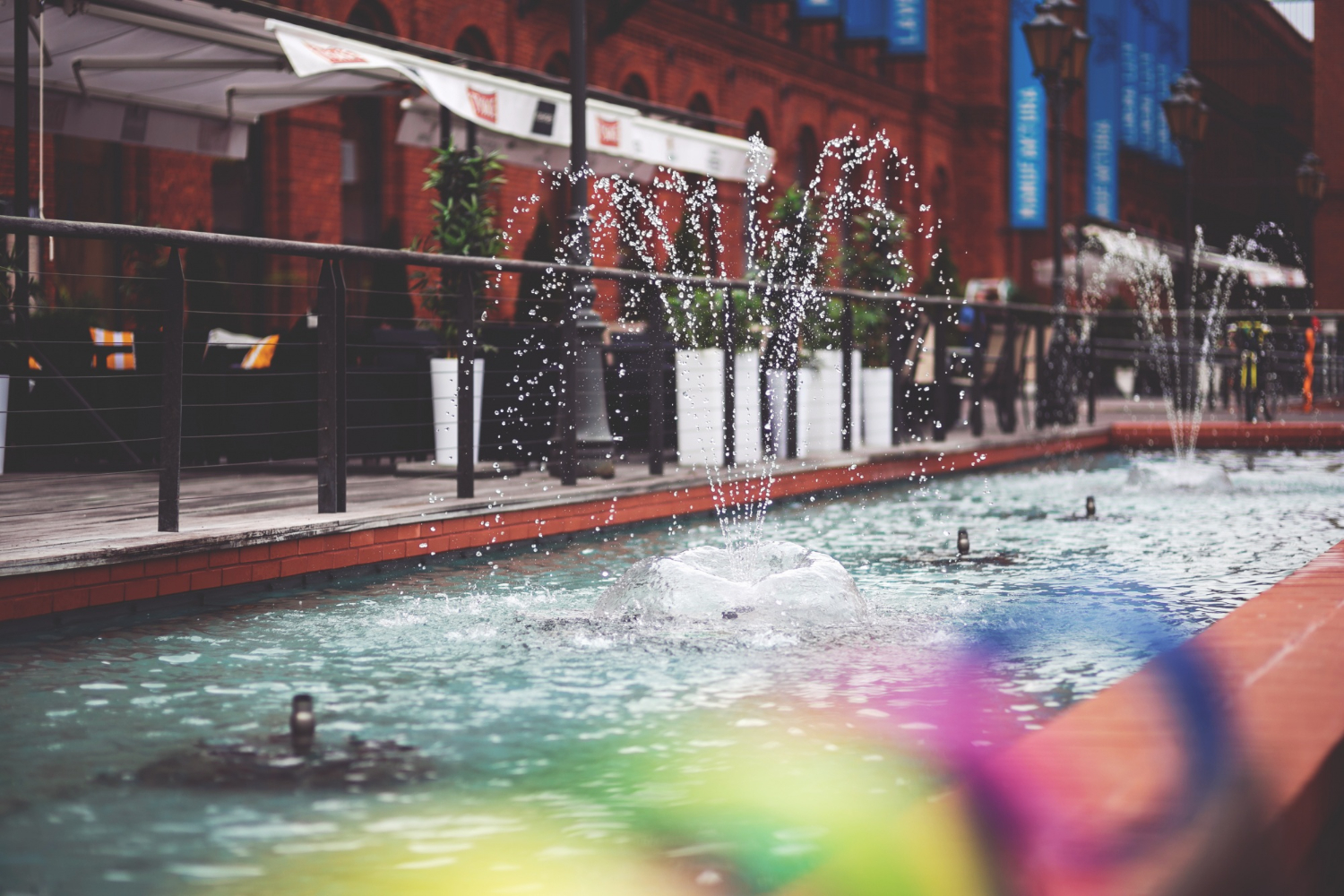
From the early 1970s through the late 2000s, every American mall had a central fountain. Kids tossed in pennies, made wishes, and saw their parents do the same. Today, most of those fountains are gone — drained or removed in mall renovations. The coins, it turns out, often went to charity. Here’s where they actually ended up.
If you grew up in the United States during the 1970s, 1980s, 1990s, or even early 2000s, you almost certainly tossed at least one coin into a shopping mall fountain. The ritual was nearly universal: parents handed kids a penny or nickel, kids closed their eyes and made a wish, the coin went plunk into the chlorinated water joining hundreds of others on the bottom. By the time you were a teenager, “meet me at the fountain” was the default rendezvous instruction for every Saturday afternoon mall trip.
Today, those fountains are mostly gone. The death of the American mall fountain mirrors the broader decline of the American mall itself — but it raises a specific question that occurred to surprisingly few people at the time: where did all those coins actually go? The answer, it turns out, is more meaningful than most people would guess.
Where the coins actually ended up
For privately owned mall fountains in the United States, the coins almost universally went to charity rather than to the property owners. The economic argument was simple: the actual cash value was small (a few thousand to tens of thousands of dollars per year, depending on the mall), and the public relations value of donating it to local nonprofits was much higher than keeping it.
The most-cited example is the Mall of America in Bloomington, Minnesota — the largest shopping mall in the United States. According to multiple verified reports, the Mall of America collects approximately $24,000 per year from its fountains and indoor ponds. The money is donated to local nonprofit organizations, with a different charity selected each month. Community projects can submit formal requests to the mall’s staff for consideration. Inside the Mall of America, the original Rainforest Cafe restaurant operates its own fountain, which generates an additional $25,000 per year — donated to environmental charities.
Other major American fountains follow the same pattern:
The Bellagio fountains in Las Vegas (more of a public attraction than a mall, but related): Coins tossed in the 8-acre lake at the Bellagio Hotel are collected and donated to charity. A 2022 Bellagio video reported that coin collections from the previous five years totaled approximately $200,000 — all donated to people in need.
Walt Disney World fountains in Florida: Tens of thousands of dollars in coins scooped out of wishing wells, fountains, and ponds at Disney World are donated each year to support foster children living in Florida, through an organization called Community Based Care. The total coin haul from Disney World fountains was approximately $18,000 in 2014.
Bryant Park in New York City: The fountain in Bryant Park is owned and operated by a non-profit corporation, which puts the cash collected by cleaners toward the fountain’s own upkeep.
The 9/11 Memorial reflecting pools (despite explicit signs asking visitors not to throw coins): Approximately $2,700 per year is collected. The coins block the drains and create maintenance problems, but visitors throw them anyway.
How the tradition started
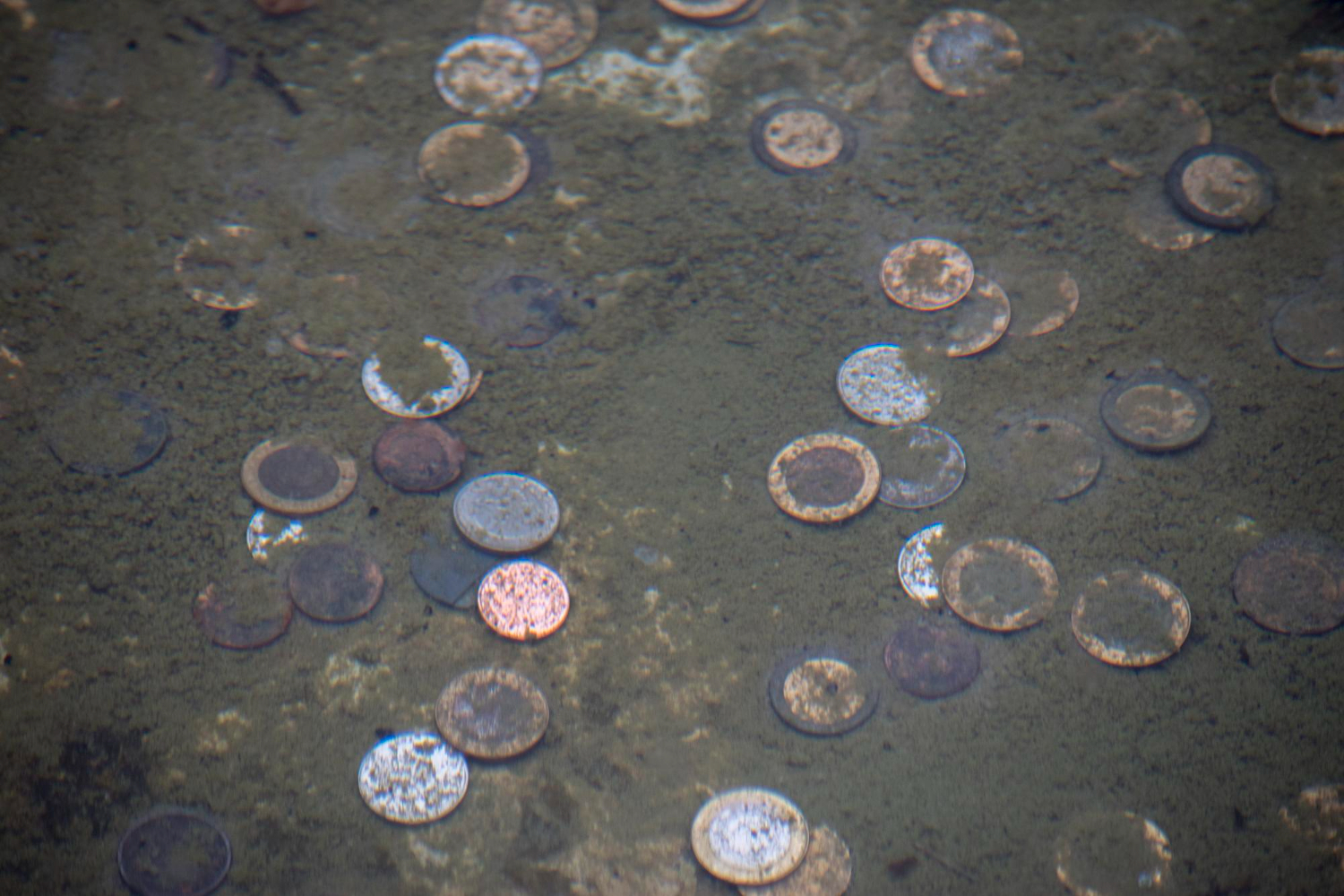
The practice of throwing coins into water for good fortune dates back thousands of years — long before modern shopping malls existed. Ancient cultures threw offerings into wells and springs as gifts to water deities. Norse mythology features the Well of Wisdom, where Odin reportedly sacrificed his eye for the privilege of wisdom. Archaeologists have uncovered 3,000-year-old wells in Germany containing offerings of coins, beads, and other items.
The modern wishing-fountain tradition was popularized largely by the 1954 film Three Coins in the Fountain, in which two characters threw coins into Rome’s Trevi Fountain to ensure they would return to the city someday. The film created a global tradition that hasn’t dimmed since. Approximately €3,000 worth of coins accumulates in the Trevi Fountain every day — making it the most lucrative wishing fountain on the planet, generating roughly $1.5 million per year in modern dollars.
In the United States, the wishing-fountain tradition adapted quickly to suburban shopping malls when those malls began appearing in the 1950s, ’60s, and ’70s. Mall designers included central fountains as both decorative and ritual elements — places where mall-goers could pause, throw a coin, and feel connected to a tradition that felt much older than the mall itself. The Bayshore Shopping Centre in Ottawa, Canada, for instance, opened in 1973 with an “epic central fountain” featuring a commissioned sculpture, surrounded by what visitors described as a “virtual jungle oasis” of plants. By the 1980s, mall central fountains had become so universal in North America that “meet me at the fountain” was a cultural shorthand that didn’t need explanation.
Why the fountains disappeared
Multiple factors caused the gradual disappearance of mall fountains in the 2000s and 2010s:
Maintenance costs. Fountains require continuous maintenance — water filtration, chemical treatment to prevent algae and bacteria, structural upkeep, plumbing service, and the actual coin removal. Many malls calculated that the maintenance cost exceeded any benefit the fountain provided in customer experience or charitable goodwill.
Liability concerns. Mall fountains became sources of liability claims — slips and falls on wet floors near the fountain, children climbing into the water, occasional injuries from glass bottles or sharp objects thrown in along with the coins. Insurance companies reportedly began discouraging or surcharging fountain coverage at malls.
Mall renovations. As malls underwent renovations to compete with online shopping in the 2000s and 2010s, many central courts were redesigned to maximize retail space. The fountain that had once been the centerpiece became “wasted space” that could instead host a kiosk, a seating area, or an additional retail unit.
Mall closures. As of 2024, approximately 1,600 American malls have permanently shut down since the 1980s. There were once over 2,500 malls in the United States; by 2028, there may be as few as 900 still in operation. The mall vacancy rate in 2024 was 248% higher than the overall retail vacancy rate. When a mall closes, its fountain disappears along with it.
Drought and water-conservation rules. In western U.S. states experiencing chronic drought, decorative fountains have come under increasing regulatory scrutiny. California’s Mall of San Bernardino, for example, drained its central fountain permanently in 2014 due to drought-related restrictions. Other malls in Colorado, Arizona, and Texas have followed similar paths.
The fountains that still exist
A handful of American mall fountains have survived, mostly at flagship destination malls that have continued to perform well:
Mall of America (Bloomington, Minnesota) — Multiple fountains and ponds remain operational throughout the property’s 5.6 million square feet of retail space.
Cherry Creek Shopping Center (Denver, Colorado) — Maintains its central fountain as part of the upscale shopping experience.
The Galleria (Houston, Texas) — Features multiple ornate fountains throughout the property.
Tysons Galleria (McLean, Virginia) — Maintains a central fountain in its high-end retail space.
Caesar’s Palace Forum Shops (Las Vegas, Nevada) — The fountains at the Forum Shops are part of the destination’s appeal and remain heavily maintained.
These survivors share certain characteristics: they’re all located in affluent areas where the malls have continued to perform commercially, and the fountains contribute to a high-end shopping aesthetic that justifies the maintenance cost. The mid-tier mall fountains that defined American mall culture for most of us have largely disappeared.
What the disappearance represents
The mall fountain is, in some ways, a perfect microcosm of what happened to the American mall itself. It was a feature designed for an experience-based shopping model where the goal was to make customers want to spend hours at the mall. As mall traffic declined and the economic model shifted toward maximum revenue per square foot, decorative features that didn’t directly generate sales became unaffordable. The fountains were drained. The plants were removed. The benches were eliminated. The mall transformed from a community gathering space into a more transactional retail environment — and then, as e-commerce continued to grow, it transformed again into the vacant or partially-vacant shells that increasingly dot American suburbs.
For Generation X and millennial Americans who grew up tossing coins into mall fountains, the loss is genuinely personal. The fountains represented a specific kind of childhood ritual — the wish-making, the parental involvement, the sense that even in a shopping mall, certain things were sacred enough to merit a small ceremony. The disappearance of the fountains tracks closely with the broader feeling that the malls of childhood are gone — not just the buildings, but the cultural function they served.
For the charities that benefited from the coin collections, the loss is concrete. The Mall of America’s $24,000 annual donation, distributed across 12 local nonprofits per year, supported real programs. Walt Disney World’s $18,000 to foster care services helped real children. The cumulative contribution of all American mall fountains over their decades of operation supported charitable work that, while modest in total dollar terms, was real money going to real causes.
The next time you visit a remaining mall fountain — increasingly rare though they are — and see coins glittering at the bottom, you can rest assured that the tradition still works the way it always did. Your wish may or may not come true. The coin you threw in is almost certainly going to someone who needs it.