

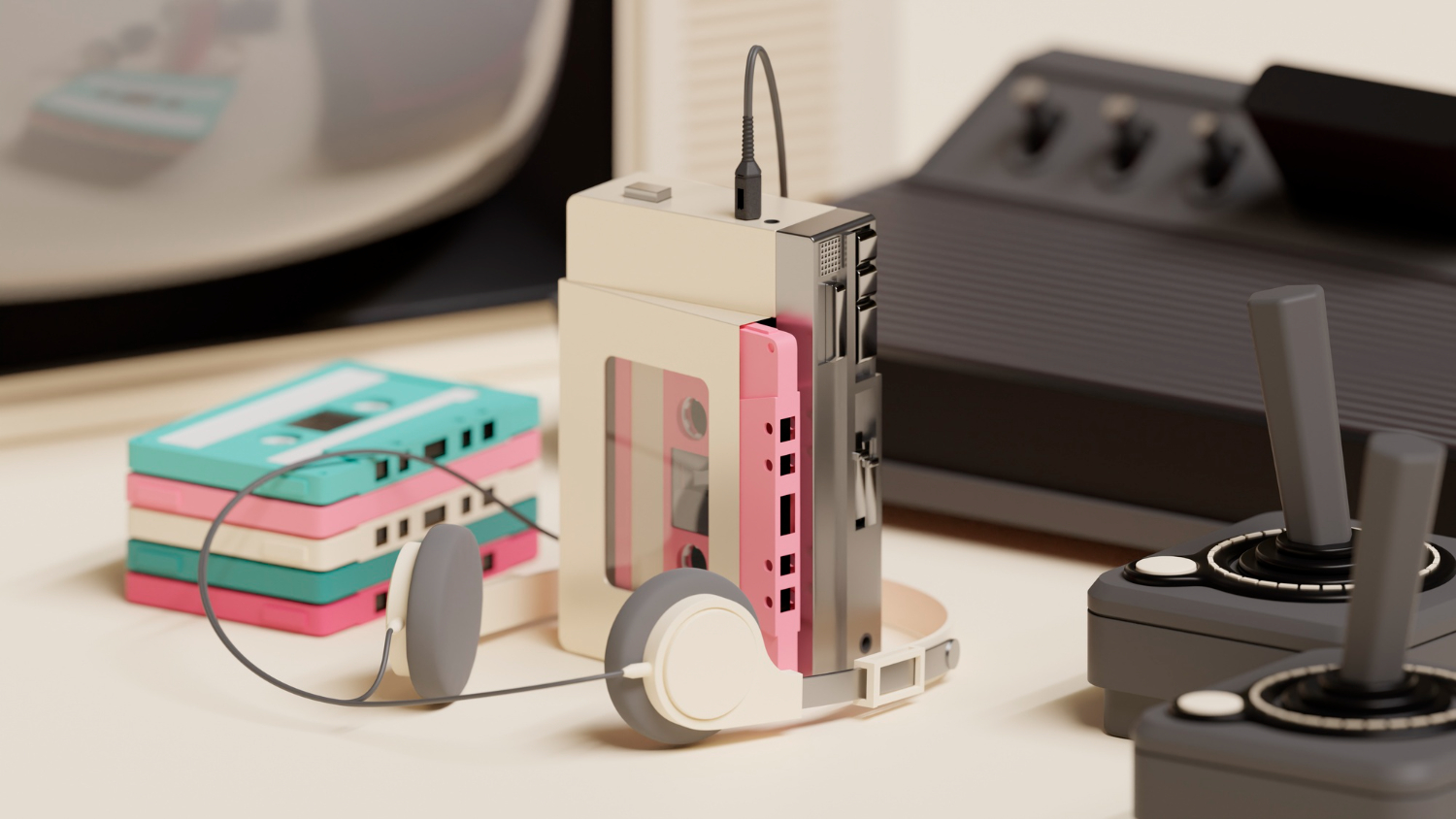
The 1990s nostalgia wave has dominated TikTok and Instagram for years now, but the rosy filter edits out a lot. From smoking on airplanes to the absence of cell phones during emergencies to the “heroin chic” beauty culture, here are 9 things about the decade that the social media nostalgia version conveniently leaves out.
The 1990s have been having a sustained cultural moment for years now. Y2K fashion is back. The decade’s music dominates millennial-generation playlists. Streaming services are building entire content libraries around 90s-era television. TikTok creators post nostalgic videos celebrating Tamagotchis, dial-up internet sounds, and Saturday morning cartoons. For people who lived through the decade as kids and teens, the cultural revisitation can feel warm and validating — a confirmation that their formative years were special.
But the nostalgia version of the 1990s edits out substantial portions of what daily life actually felt like. A recent Reddit thread asking what people remember as the worst parts of the decade produced thousands of responses that collectively painted a different picture — one where the freedoms millennials remember came with some genuinely uncomfortable trade-offs.
This isn’t an attempt to make the 1990s look terrible. It’s a reality check on what gets lost when complex decades are flattened into aesthetic content. Some of these things have improved dramatically in the years since. Others represent freedoms that have been lost and may not return. All of them are part of the actual 1990s, regardless of what shows up on your feed.
1. Cigarette smoke was everywhere

If you didn’t live through it, it’s hard to convey just how inescapable cigarette smoke was in the 1990s. Restaurants had “smoking” and “non-smoking” sections separated by low partitions that did essentially nothing to keep smoke out of the non-smoking area. Bars were hazy. Most office buildings still allowed smoking in designated indoor areas. High schools sometimes had outdoor “smoke pits” where students who smoked could legally light up during lunch breaks.
Most strikingly to modern sensibilities: airplanes still allowed smoking on flights for much of the decade. The U.S. domestic flight smoking ban took effect in 1990, but many international flights continued allowing smoking through the late 1990s. Coming home from a bar, restaurant, or nightclub reeking of secondhand smoke was just normal. Most people’s clothes had a faint cigarette smell most of the time.
The transformation has been nearly complete. Indoor smoking bans rolled out across U.S. states starting in the early 2000s. By 2010, smoking inside any public establishment was illegal in most states. The decline in adult smoking rates from 25% in 1990 to about 11% in 2024 represents one of the most successful public health interventions in American history. But the daily texture of life — particularly for non-smokers — was significantly different in ways that current 1990s nostalgia content rarely shows.
2. “Heroin chic” and the body image culture

The 1990s produced a fashion and beauty aesthetic that was, by current standards, openly hostile to most body types. The “heroin chic” look — extreme thinness, sunken cheeks, dark eye circles, often glamorized through deliberately bleak photo shoots — dominated fashion magazines, advertising, and the imagery surrounding female celebrities.
The cultural impact on young people was significant and well-documented. Eating disorder rates increased substantially during the 1990s. The “thinspo” content that would later define mid-2010s pro-eating-disorder communities had its cultural origins in mainstream 1990s magazines and advertising. Women who were average or healthy weights for their height regularly described themselves as “fat” by the standards of the era.
Subsequent decades have substantially shifted this dynamic. Body positivity movements, more inclusive fashion sizing, and direct creator-to-audience platforms (where everyday body types appear regularly) have produced a notably different culture for younger generations. The 1990s standard hasn’t completely disappeared, but it’s no longer the dominant baseline. The nostalgia content celebrating 1990s fashion sometimes leaves out the body image culture that surrounded those clothes.
3. Being unreachable was the default

Without cell phones (smartphones didn’t exist; mobile phones were rare and expensive through most of the decade), being unreachable was the normal state. If you were out somewhere — at the mall, at a party, walking home from school — your family or friends had no way to contact you. There was no “let me check in real quick.” There were no GPS trackers for kids. There were no texts saying “running late.”
The everyday consequences ranged from minor (waiting at a restaurant for friends who never showed up because their plans changed and there was no way to tell you) to serious (being unable to reach anyone in an actual emergency). One frequently-cited Reddit memory: being locked out of the house after school with no way to contact anyone, just sitting on the porch for hours waiting for a parent to come home.
The corresponding loss in the 2020s — constant connectivity reducing the spontaneity of being genuinely unreachable — is itself part of why some Gen Z and millennials romanticize the 1990s. But the memory often skips over the specific moments when being unreachable was actually scary or frustrating, not freeing.
4. Information was hard to find

If you wanted to know something in 1990, you had options that included: looking it up in an encyclopedia, going to the library, calling someone who might know, or simply not knowing. By 1995, the early internet existed but was primarily text-based, dial-up was painfully slow, and most reference content wasn’t yet online. By 1999, the internet was substantially more useful but still couldn’t answer most questions about specific products, locations, or services.
The everyday consequences: simple research projects took entire afternoons. Finding the address of a restaurant required calling 411 (paid directory assistance) or buying a paper guide. Comparing prices on products required physically visiting multiple stores. Settling factual disputes between friends required someone going to a library at some point and reporting back days later.
The 2026 version of “information access” — where any factual question can be answered in 5 seconds via smartphone — represents a transformation that’s hard to overstate. The 1990s nostalgia version often glamorizes the “we had to figure things out for ourselves” aspect of pre-internet life without acknowledging how many small frustrations the modern information environment has eliminated.
5. Crime was significantly higher

Violent crime rates in the United States peaked in the early 1990s and have declined dramatically since. The U.S. murder rate in 1991 was 9.8 per 100,000 people. By 2014, it had dropped to 4.4 per 100,000 — less than half the 1990s peak. Property crime rates followed similar patterns.
The everyday consequences for 1990s urban Americans: cities felt genuinely more dangerous than they do now. Specific neighborhoods in major cities (large parts of pre-revival Manhattan, much of Los Angeles, parts of every major city) were considered no-go zones. Personal security awareness was significantly more central to daily life. Parents restricted children’s movement more than they often do now, partly because the actual statistical risk was meaningfully higher.
The 2025 reversal — increasing crime rates in some major cities post-pandemic — has produced concerns, but most cities remain dramatically safer than their 1990s baselines. The “1990s NYC was special” nostalgia content sometimes celebrates the decade’s grit without acknowledging that the grit was real and produced genuine victims.
6. AIDS, while finally being treated, still carried massive stigma and fear

The 1990s sit between two important moments in HIV/AIDS history. The decade started with HIV essentially being a death sentence — there were no effective treatments, infection rates were rising, and stigma was severe. The decade ended with the rollout of antiretroviral therapy (introduced 1996) that transformed HIV from a death sentence into a manageable chronic condition.
The texture of daily life in the early-to-mid 1990s included: extensive public fear of AIDS, often expressed in ways that targeted gay communities and people of color. Schools regularly featured fear-based AIDS education that produced anxiety more than information. Funeral homes refused to handle the bodies of AIDS victims (a contributing reason that thousands of AIDS deaths were buried at New York City’s Hart Island potter’s field). The stigma and ignorance of the era caused real harm to real people in ways that current cultural memory often elides.
The progress since the 1990s has been substantial — both in medical treatment and in social attitudes — but the transformation came at the cost of vast suffering during the decade itself. The 1990s nostalgia content rarely engages with this part of the era’s actual texture.
7. The internet was paid by the minute or by the megabyte

Dial-up internet was the norm for most of the decade, with broadband only becoming widely available in the late 1990s and early 2000s. Beyond the slow speeds (typically 28.8 to 56 kbps — about 1/2000th of modern broadband speeds), access was often metered. AOL charged hourly rates ($2.95/hour for early plans, eventually transitioning to monthly subscriptions). Many ISPs charged by megabyte transferred. International phone calls required for some internet access were billed by the minute.
The everyday consequences: families fought over who got to use the phone line because internet access tied up the landline. Logging on for “just a minute” could turn into a $5 bill if a download took too long. Internet use was rationed, scheduled, or actively limited by parents in ways that have no equivalent in the 2020s.
The transformation to flat-rate, always-on, high-speed internet (and then to mobile data) has been so complete that it’s easy to forget the metered access era. The “things felt slower” 1990s nostalgia is partly accurate, but the slowness wasn’t free — it was actually expensive in ways that disproportionately affected lower-income households.
8. The casual homophobia and racism that was just baked into media

A significant portion of mainstream 1990s media — sitcoms, stand-up comedy, popular music, movies, even children’s content — included casual homophobia, racism, sexism, and other forms of prejudice that would not pass current production standards. This wasn’t even hidden in subtext; it was often the explicit punchline.
The progression hasn’t been uniformly positive — discussions of “wokeness” and the cultural arguments about content standards reflect real disagreement — but the 1990s media baseline was substantially more openly prejudiced than current media. Watching 1990s comedy or sitcoms in 2026 frequently produces moments where modern viewers wince at jokes that aired without controversy at the time.
The nostalgia content celebrating 1990s media sometimes implicitly suggests that current media is “too sensitive” by comparison. The actual record shows specific forms of harm being reduced, with reasonable disagreement about whether the corrections have gone too far in specific cases.
9. The economy worked very differently for most people

The 1990s nostalgia narrative sometimes implicitly celebrates the decade’s economic prosperity. The reality was more complicated. Yes, the late 1990s produced the dot-com boom and rising stock markets. Yes, unemployment dropped through the decade. Yes, real wages grew for the first time since the 1970s.
But significant 1990s realities don’t appear in the nostalgia content: the manufacturing job base that had supported working-class families was actively collapsing, with NAFTA accelerating the trend. Healthcare costs were rising rapidly without the eventual ACA structure. College tuition began the long climb that would compound through the 2000s and 2010s. The middle-class lifestyle that 1990s media depicted was already becoming inaccessible to many of the people watching it.
The specific “the economy was so much better in the 1990s” claim that sometimes appears in nostalgia content is real for some people and demographics but obscures genuine economic struggles for many others. The 1990s prosperity wasn’t universal, and the seeds of subsequent economic problems were being planted during the decade itself.
What this means for the nostalgia wave

The point of this list isn’t to argue that the 1990s were terrible. They weren’t. They were, like every decade, a complicated mix of progress and problems, freedoms and constraints, things gained and things lost. The cultural memory that flattens decades into aesthetic content always loses information.
The current 1990s nostalgia wave reflects real things: the texture of pre-smartphone life, the relative simplicity of media consumption before algorithmic feeds, certain kinds of freedom that have been lost, and the specific cultural products of a particular era. Those things are worth remembering and celebrating where appropriate.
But complete pictures matter. Cigarette smoke really was everywhere. The body image culture really did produce widespread eating disorders. AIDS stigma really did cost lives. Crime really was higher. Information really was harder to access. Casual prejudice really was more openly mainstream. These things weren’t aesthetic flourishes — they were daily realities that shaped how people lived.
For Gen Z viewers consuming 1990s nostalgia content, the missing context matters. The decade looked the way it looks in the content because it was real. It also produced specific forms of harm that current culture has substantially addressed, even imperfectly. The trade-offs between “things felt simpler” and “things were less harmful” are worth thinking about clearly rather than romanticizing one half of the equation.
For millennials and Gen X who actually lived through the decade, the nostalgia is genuine but selective. Most of the things on this list were not improvements over current life — they were the friction and harm that surrounded the things that were genuinely good. Holding both pictures simultaneously is more honest than pretending the bad parts didn’t exist or weren’t significant.
The 1990s aren’t coming back. The texture of that decade is fixed in time. What’s available in the current era of 2026 nostalgia content is a curated version that emphasizes certain elements and elides others. That’s how nostalgia works for every era. But understanding what’s missing from the nostalgia version is part of having an honest relationship with the actual past, both its real losses and its real gains.

