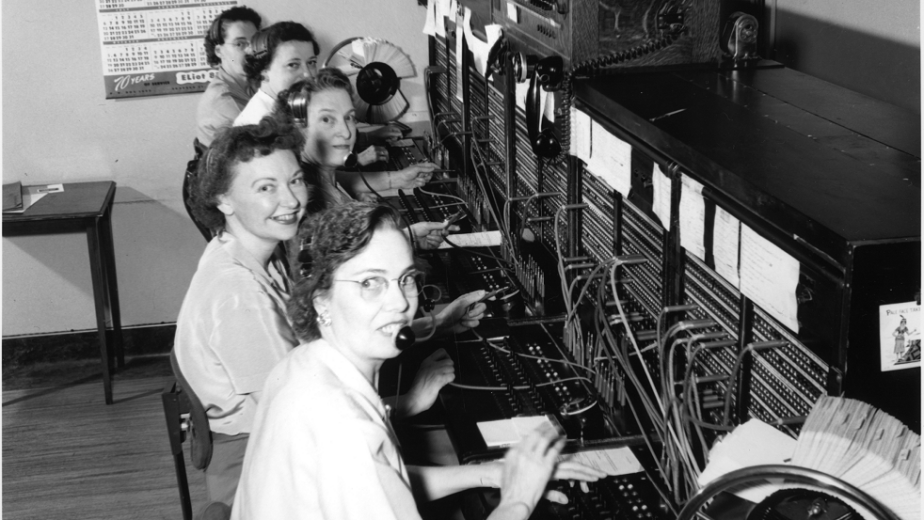
From smoking at your desk during meetings to publishing job ads under “Help Wanted Male” and “Help Wanted Female” columns to denying women credit cards without their husband’s signature, the 1950s American workplace operated under rules that would now produce immediate lawsuits, fines, and EEOC investigations. The Civil Rights Act of 1964 and subsequent legislation transformed the legal landscape — but the cultural changes have taken even longer. Here are the 13 specific practices that defined work in 1955 and have since become explicitly illegal.
The 1950s American workplace operated under what would now be considered a comprehensive system of legal discrimination. Women, racial minorities, religious minorities, older workers, disabled workers, and various other groups were excluded from various jobs as a matter of explicit policy. Sexual harassment was unregulated. Workplace safety was minimal. Various forms of physical and chemical exposure that are now specifically prohibited were commonplace.
The Civil Rights Act of 1964 marked the beginning of the legal transformation. Title VII of the Act prohibited employment discrimination based on race, color, religion, sex, or national origin. The Equal Employment Opportunity Commission (EEOC) was established to enforce these protections. Subsequent legislation — the Age Discrimination in Employment Act of 1967, the Americans with Disabilities Act of 1990, the Pregnancy Discrimination Act of 1978, and various others — systematically expanded the categories of protected workers.
The cultural transformation has been substantially slower than the legal transformation. Many practices that were defined as illegal in 1964 continued informally for years or decades afterward. Some of the practices on this list remained common into the 1980s or 1990s, with consequences only beginning to be seriously enforced as the modern HR-and-compliance infrastructure developed.
Here are 13 specific things adults routinely did at American workplaces in the 1950s that are completely illegal in 2026.
1. Smoking at desks, in meetings, and throughout the office

Throughout the 1950s, smoking in offices was completely normal and expected. Executive offices typically had specific ashtrays. Meetings included ashtrays at every seat. Secretaries lit superiors’ cigarettes as a routine courtesy. Office air was visibly hazy from accumulated smoke.
The first workplace smoking restrictions emerged in the 1970s as health research documented secondhand smoke harms. By 2026, smoking is prohibited in essentially all American workplaces under various state and federal regulations. The Clean Air Act, OSHA workplace safety standards, and numerous state laws make office smoking essentially illegal nationwide. Even smoke breaks have been increasingly restricted to designated outdoor areas substantial distances from buildings.
2. Publishing job ads in “Help Wanted Male” and “Help Wanted Female” columns

Throughout the 1950s and early 1960s, American newspapers published job advertisements in separate “Male” and “Female” columns. Most professional positions appeared in the male column. Female jobs were typically limited to secretarial, nursing, teaching, and service positions.
The EEOC ruled in 1968 — four years after the Civil Rights Act — that gender-segregated job advertisements violated Title VII. Newspapers were required to integrate their classified sections. The EEOC’s ruling was one of its earliest major enforcement actions and substantially changed how employment advertising functioned.
3. Denying women credit cards or loans without husband’s signature

Throughout the 1950s and into the 1970s, American banks routinely refused to issue credit cards or loans to married women without their husband’s signature. Women — regardless of their income, education, or credit history — were treated as financially dependent on their husbands. Single women had slightly more financial freedom but lost it upon marriage.
The Equal Credit Opportunity Act of 1974 made this practice explicitly illegal. Banks could no longer require spousal signatures for women’s credit applications, could not consider gender in credit decisions, and had to evaluate married women on their own financial standing. The change took years to fully implement; many women in the late 1970s still encountered banks that refused them credit cards in their own names.
4. Pressuring secretaries for dates and tolerating unwanted touching

The 1950s “office wife” culture treated female secretaries as subordinate domestic helpers as much as professional employees. Unwanted touching, sexual jokes, pressure to date supervisors, and various other behaviors that would now constitute sexual harassment were considered normal workplace conditions. Women who complained were typically fired or labeled as “troublemakers who couldn’t take a joke.”
The first sexual harassment cases under Title VII weren’t filed until the mid-1970s. The U.S. Supreme Court didn’t rule on a sexual harassment case until 1986 (Meritor Savings Bank v. Vinson). The EEOC’s specific regulations defining sexual harassment as a form of sex discrimination weren’t issued until 1980. Even after these legal developments, enforcement was uneven for decades. Modern workplace harassment regulations represent the cumulative result of 60+ years of legal evolution.
5. Asking job applicants their race, religion, marital status, and pregnancy plans

Standard 1950s job applications asked applicants their race, religion, marital status, age, number of children, intentions to have more children, height and weight, and various other personal details. These questions were used explicitly to screen out applicants from various protected categories.
The Civil Rights Act of 1964 made discrimination based on race, religion, sex, color, and national origin illegal. The Age Discrimination in Employment Act of 1967 added age (40+). The Pregnancy Discrimination Act of 1978 specifically prohibited discrimination based on pregnancy or related conditions. Modern employment applications and interview practices specifically avoid asking about these protected characteristics.
6. Refusing to hire married women or pregnant women

Many 1950s employers had explicit policies against hiring married women or required women to resign upon marriage or pregnancy. Airlines famously fired flight attendants who got married, became pregnant, or reached specific ages. Teachers in many districts were dismissed upon marriage. Various other industries operated under similar policies.
The Civil Rights Act of 1964 made these “marriage bars” illegal. The Pregnancy Discrimination Act of 1978 specifically prohibited pregnancy-based termination. The Family and Medical Leave Act of 1993 added protections for parental leave. Modern employers cannot legally fire employees for getting married, becoming pregnant, or having children.
7. Implementing race-based hiring quotas explicitly excluding minorities

Throughout the 1950s, many American employers maintained explicit racial hiring restrictions. “Whites Only” job postings appeared in some Southern newspapers. Northern employers often had implicit understandings about which positions would be open to which racial groups. Black professionals faced systematic exclusion from various industries regardless of qualifications.
The Civil Rights Act of 1964 made racial discrimination in employment illegal. Subsequent affirmative action policies (Executive Order 11246 of 1965) required federal contractors to take active steps to ensure equal employment opportunities. Modern workplace discrimination law is substantially built on the framework that emerged from the Civil Rights Movement era.
8. Refusing to accommodate disabled workers

The 1950s workplace had no requirements to accommodate disabled workers. Buildings lacked wheelchair ramps. Information was rarely provided in accessible formats. Disabled workers seeking employment faced exclusion based on disability without legal recourse.
The Americans with Disabilities Act of 1990 transformed the legal landscape for disabled workers. The ADA requires employers to provide “reasonable accommodations” for disabled employees who can perform essential job functions. Building accessibility requirements (ramps, accessible bathrooms, etc.) apply to most workplaces. Modern disability accommodation is a substantial area of HR practice that simply didn’t exist in 1955.
9. Paying women substantially less for the same work

The 1950s wage gap was massive — women typically earned 60% or less of what men earned for comparable work. Many employers had explicit policies of paying men more than women in the same positions, justified by the assumption that men were primary household earners and women’s income was supplementary.
The Equal Pay Act of 1963 prohibited gender-based pay discrimination for substantially equal work. The Lilly Ledbetter Fair Pay Act of 2009 strengthened workers’ ability to challenge pay discrimination. While significant gender pay gaps persist (with various complex causes), explicit policies of paying women less for the same work are now illegal.
10. Setting mandatory retirement ages without justification

Throughout the 1950s and into the 1970s, many American employers had mandatory retirement ages — typically 65, sometimes earlier for specific positions. Workers were forced to retire regardless of their ability to continue working effectively.
The Age Discrimination in Employment Act of 1967 prohibited mandatory retirement under most circumstances. Workers cannot be forced to retire based solely on age (with limited exceptions for safety-critical positions like commercial pilots and certain public safety roles). Modern workers can theoretically work indefinitely if they remain capable of performing job functions.
11. Using polygraph tests for routine hiring decisions

Throughout the 1950s, American employers routinely used polygraph (lie detector) tests as part of standard hiring processes for many positions. The technology was treated as reliable despite no actual scientific basis for its claims of detecting deception.
The Employee Polygraph Protection Act of 1988 prohibited most private employers from using polygraph tests for employment screening. Limited exceptions exist for security firms, pharmaceutical companies, and a few other categories. The standard 1950s practice of subjecting all hires to polygraph testing has been largely eliminated.
12. Requiring employees to take “diet pills” (amphetamines) to stay alert

A subset of 1950s workplaces — particularly those involving long shifts, demanding physical work, or weight-conscious industries (modeling, entertainment) — explicitly or implicitly encouraged amphetamine use to maintain employee alertness and productivity. The drugs were prescribed easily and considered relatively benign.
By 2026, amphetamine prescription is highly regulated, employers cannot require drug use, and various workplace drug policies (including drug testing) operate in opposite directions from 1950s norms. Workplace expectations around alertness are now addressed through scheduling, breaks, and accommodations rather than pharmaceutical solutions.
13. Exposing employees to asbestos, lead, and other now-regulated hazards

The 1950s workplace exposed millions of workers to substances now known to be carcinogenic or toxic. Asbestos was used in construction, manufacturing, automotive repair, and various other industries with no protection requirements. Lead exposure was common in painting, plumbing, and various industrial processes. Various solvents and chemicals now regulated or banned were used freely.
OSHA was established in 1970 to address workplace safety. The agency has implemented thousands of specific regulations governing workplace exposure to hazardous substances. Modern workplaces have substantial requirements for protective equipment, exposure monitoring, training, and various other safety measures that simply didn’t exist in 1955.
What this transformation actually represents

The transformation from the 1950s workplace to the 2026 workplace reflects substantially more than just specific legal changes. The cumulative effect represents one of the most significant cultural and legal transformations of the 20th century:
Legal infrastructure development. The Civil Rights Act of 1964 was the foundational legislation, but the implementing infrastructure (the EEOC, court interpretations, follow-on legislation) developed over the following 60+ years. Modern workplace law represents accumulated development that didn’t exist as a coherent system in 1955.
Cultural change lagging legal change. Many practices became technically illegal in 1964 but continued informally for years or decades. Sexual harassment lawsuits were rare until the 1990s. Race discrimination lawsuits remained difficult to win until various court decisions strengthened plaintiffs’ positions. The legal change came first; the cultural change followed gradually.
HR profession development. The modern HR department, with its compliance focus, didn’t really exist in 1955. The field developed in response to the legal requirements imposed by civil rights legislation. Modern workplaces have entire departments focused on compliance with regulations that didn’t exist 60 years ago.
Generational workforce transitions. The workers who came of age in the 1950s were generally raised with substantially different expectations than workers entering the workforce in 2026. The cultural change has happened partly through generational replacement rather than through individual workers changing their expectations.
Continuing evolution. Workplace law continues to evolve. Recent additions have included protections for sexual orientation and transgender identity (Bostock v. Clayton County, 2020), various pregnancy-related accommodations, and ongoing development of disability accommodation requirements. The 2026 workplace will likely look substantially different from the 2046 workplace as continued evolution unfolds.
For workers who came of age in the 2010s and 2020s, the 1950s workplace can seem almost incomprehensible — a culture where job applications routinely asked race, women were fired for getting married, secretaries were expected to tolerate unwanted touching, and racial discrimination was simply standard practice. The transformation that has occurred over 70 years represents one of the most significant social changes of modern history.
Looking back at the 1950s workplace from 2026 reveals something specific about institutional change: it can happen substantially faster than people expect when the right combination of legal frameworks, cultural shifts, and generational transitions align. The workplace that seemed permanent and natural in 1955 was substantially transformed within a single generation. Whether the 2026 workplace will similarly look transformed in 2096 depends on which specific evolutionary pressures continue to push forward — but the historical pattern suggests that what seems inevitable about current workplace practices may look as outdated to future workers as the 1950s practices look to current workers.
For most modern American workers, the elimination of the 1950s practices on this list represents straightforward improvement — fairer treatment, safer environments, broader opportunity. The legal infrastructure that produced these changes is one of the most consequential achievements of 20th century American policy. The 1950s American workplace was, by 2026 standards, a substantially worse place to work for most people. The transformation that has occurred since represents progress that’s worth recognizing, even as continued improvement remains needed.