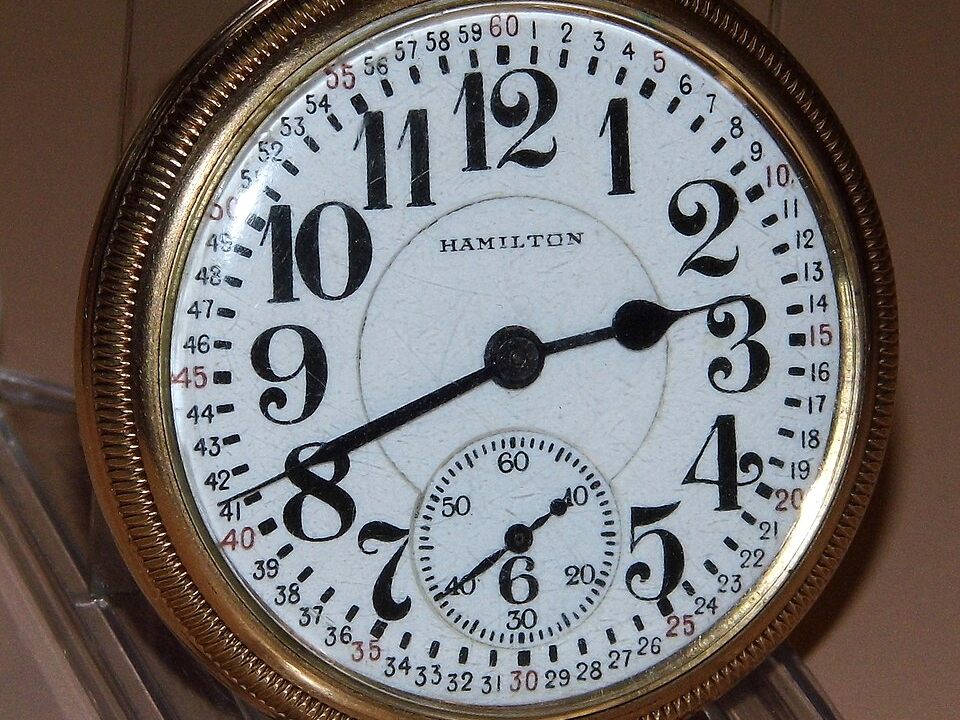
There is a particular kind of pocket watch that turns up in American families. Large, heavy, open-faced with no cover, a plain white enamel dial with big bold black numerals, a separate seconds dial, and a winding stem at the twelve o’clock position rather than beside the crown.
It is not a dress watch. It is deliberately plain, slightly oversized, and built to be read instantly in bad light by somebody in a hurry.
It is a railroad watch, and it was not merely a nice thing to own. It was required equipment, held to a published accuracy standard, carried by a man who had to present it for inspection on a schedule, with a written record of its performance kept and signed.
If the watch failed the standard, it was taken out of service. If the man failed to have it inspected, so was he.
And the reason for all of it is that two trains running toward each other on a single track are kept apart by nothing except both crews agreeing on what time it is.
The Problem Was Single Track
Modern readers assume railways have always run on signals and automatic protection, and for most of the period in question they did not.
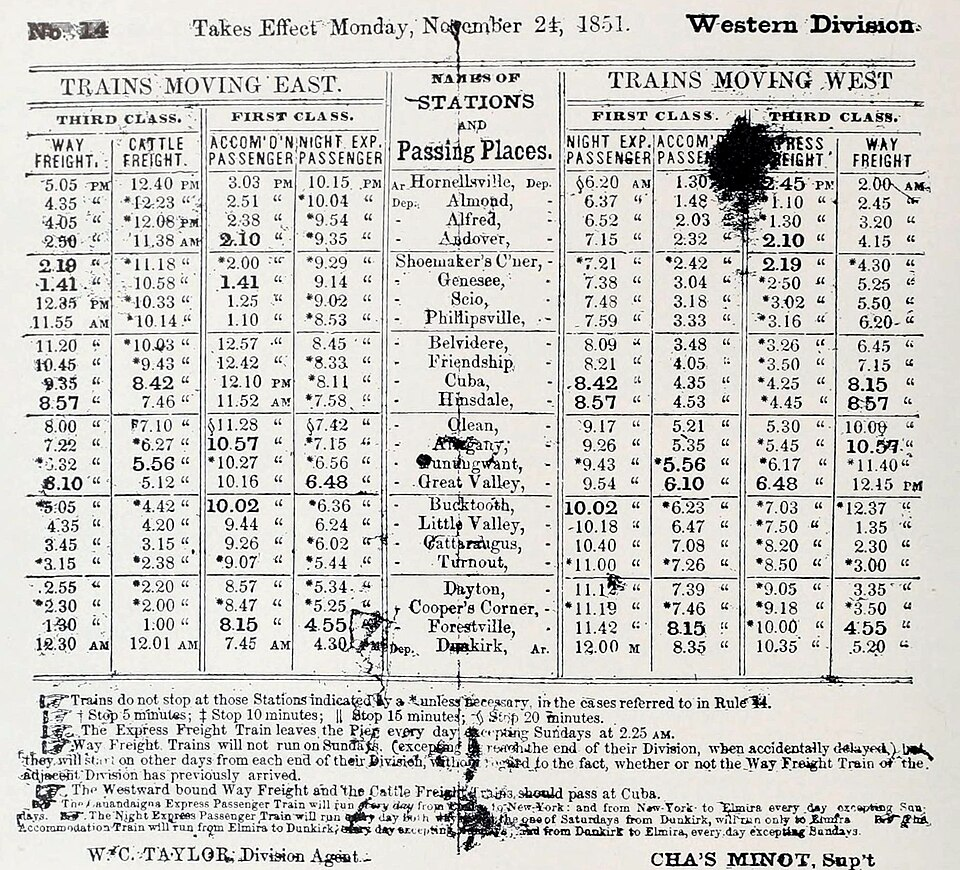
Across enormous stretches of the American rail network there was one track, used in both directions. Trains were kept apart by a timetable and by written orders: this train has the right to occupy this section until this time, after which it must be in a siding, because another train has the right to it from that moment.
That system is called timetable and train order operation, and it worked, for decades, moving an immense volume of traffic. But look at what it depends on. The authority to occupy a piece of track is defined by a clock. A train that is late is not merely inconvenient – it is in a place it has no right to be, while another train is approaching that place believing it to be clear.
There is no signal to catch the error. There is no dispatcher watching a screen. There are two crews, two watches, and a written order, and if the watches disagree by enough minutes, the two trains are in the same place at the same time.
That is the whole problem, and it is why the watch in your grandfather’s drawer was treated as safety equipment rather than as jewellery.
Like our content? Follow us for more.
The Standards Came After a Collision
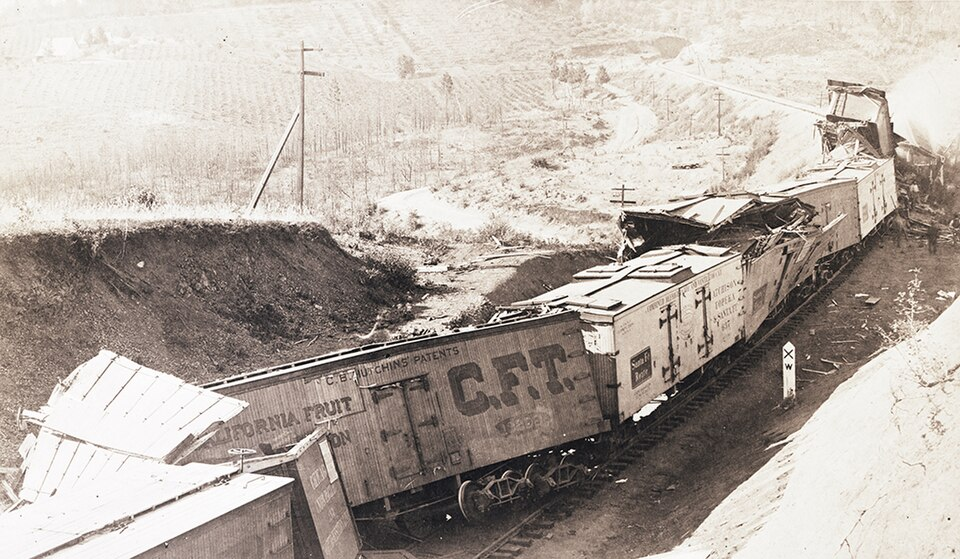
The American railroad watch standards were not developed in the abstract. They followed accidents, which is the usual and unhappy pattern in transport safety.
A head-on collision on a single-track line, attributed to a watch that had stopped briefly and then started again – leaving its owner believing a time several minutes earlier than the actual time – produced an investigation and then a formal response. A watch inspection system was established, with a published specification for what an acceptable railroad watch had to be and a structure of appointed inspectors to enforce it.
This piece names no railroad, no location, no year, no individual and no casualty figure, because the point here is the institutional response rather than the incident. But the sequence matters: the industry did not impose an expensive requirement on its employees out of fastidiousness. It did so after people were killed by a watch that lost time.
The resulting standards spread across the American railroad industry and became, in effect, a national specification. They were revised upward over the decades as watchmaking improved, which meant a watch that was acceptable in one decade could be out of compliance in the next.
What the Standard Actually Required
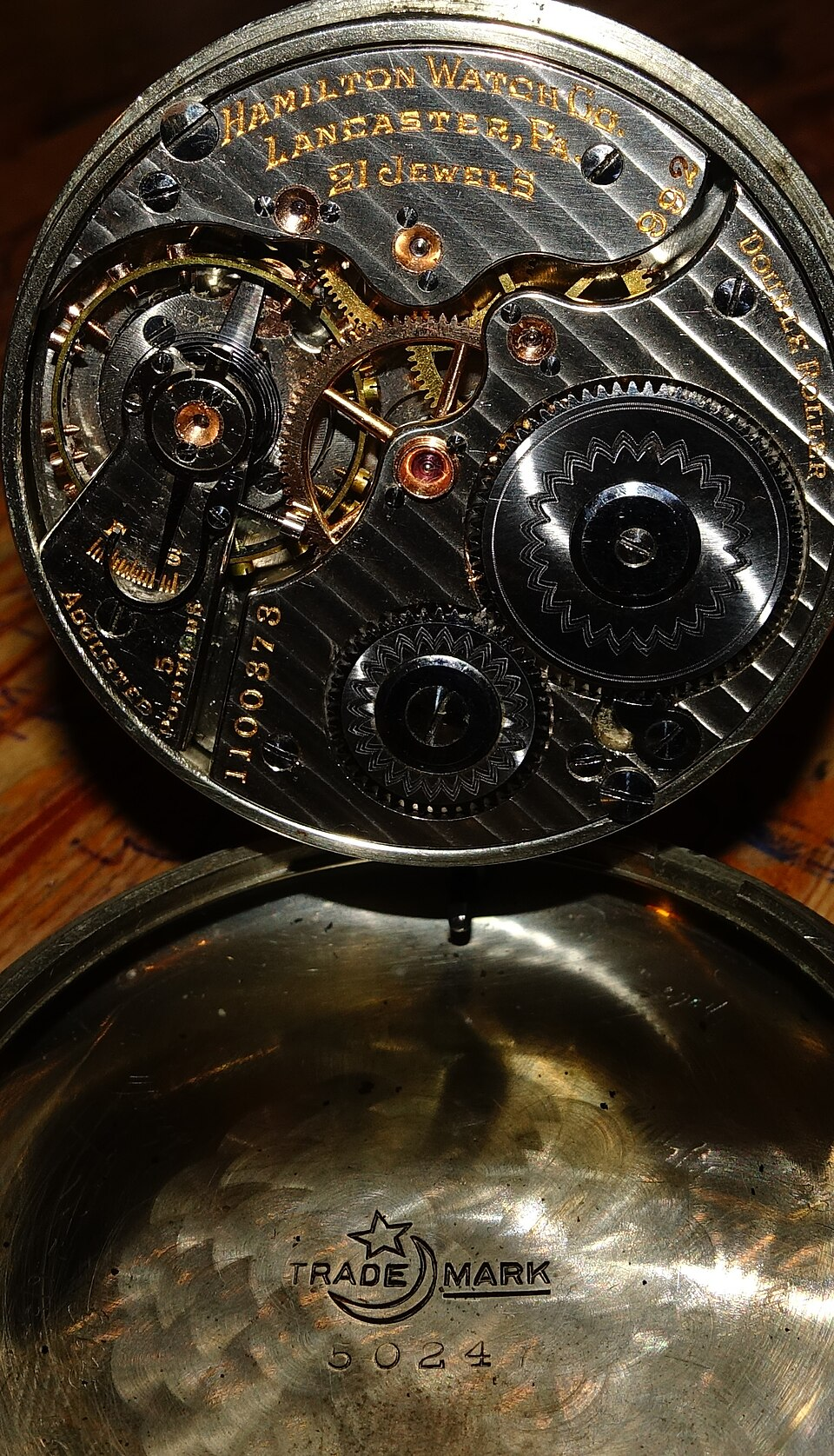
The specification covered both the movement inside and the dial outside, and every element of it has a reason.
The movement had to keep time within a tight tolerance, tested in multiple positions – because a watch in a waistcoat pocket sits vertically and a watch on a table lies flat, and a movement can run at different rates in different orientations. It needed a substantial number of jewelled bearings to reduce wear at the points that matter. It had to be adjusted for temperature, since a balance spring changes with heat and a watch that gains in summer and loses in winter is useless for the purpose. It needed a device to compensate for the loss of power as the mainspring unwound, so that the last hours of a wind ran at the same rate as the first.
And critically, it had to have a lever-set mechanism. On a lever-set watch you cannot change the time by pulling the crown. You must remove the bezel, move a small lever, then turn the crown, then push the lever back and refit the bezel – which makes it effectively impossible to alter the time accidentally while winding it in your pocket. That single requirement eliminates an entire category of error.
The dial requirements were about legibility under pressure: an open face with no hinged cover to fumble with, bold black Arabic numerals on white, minute markings all the way round, and the winding stem positioned so that the dial reads upright when the watch is held in the hand after being pulled from a pocket.
The Inspection Was the Real System
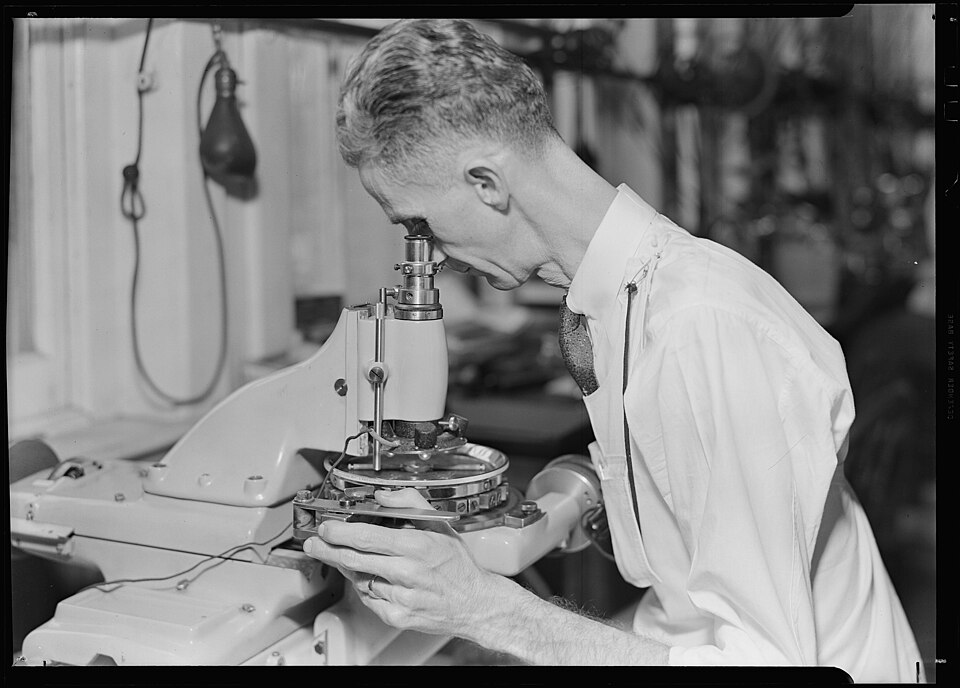
Owning a compliant watch was only the beginning. The watch had to prove itself continuously.
A railroad employee in a position requiring a watch – engineers, conductors, brakemen, and others depending on the road – had to present it to an appointed inspector at intervals, commonly every two weeks. The inspector compared it against a standard clock, recorded the error, and signed a card that the employee carried. A watch drifting beyond tolerance was sent for service. A watch that could not hold the standard was condemned.
The employee was also required to compare his watch against a designated standard clock at the start of duty, and to carry the card showing the inspection record. Failure to do either was a disciplinary matter, because the whole protective structure collapses if a man simply stops checking.
And the standard clocks themselves had to be right, which meant railroads maintained a time distribution system – a reference clock at a central point, with time signals sent out along the telegraph lines to stations across the network, so that every standard clock on the road was set from the same source.
That is a complete institutional system for the maintenance of accurate time across a continent, built by private companies, for the purpose of not running trains into each other.
The Railroads Also Invented the Time Zones
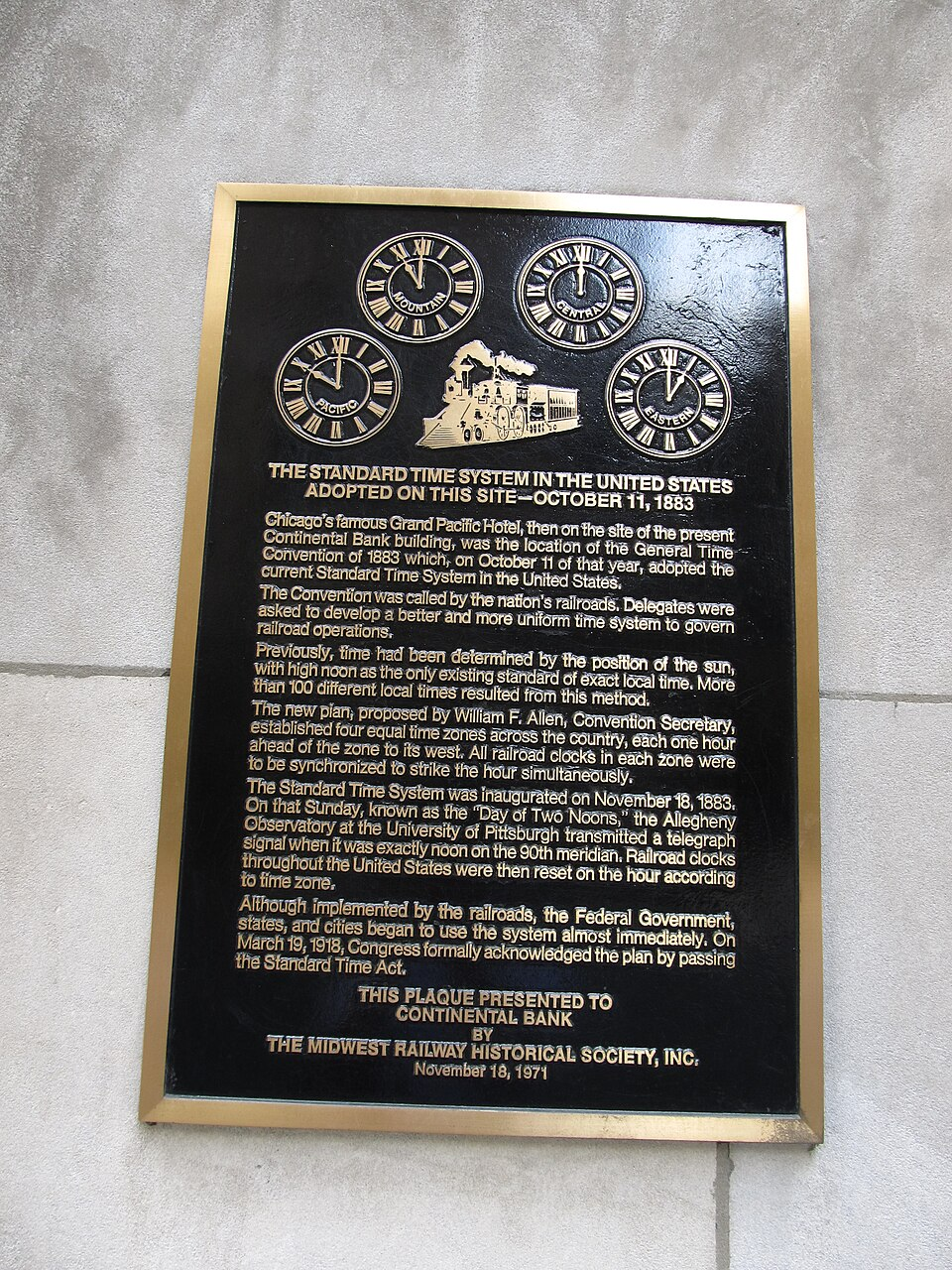
The related fact, and the one with the largest consequences for everybody, is that the railways are the reason your clock reads what it reads.
Before standardisation, local time was genuinely local. Each town set its clocks by the sun, which means noon in one place is a few minutes different from noon forty miles away – a difference nobody notices until something moves fast enough to care. A stagecoach does not care. A railway timetable spanning hundreds of miles cares enormously, because a single schedule cannot be written in dozens of different local times without becoming unusable.
So the railways divided the continent into bands of uniform time, agreed among themselves, and simply began operating on it. Towns along the lines adopted railroad time because that was the time the trains ran on and the trains mattered. Government ratification followed considerably later, which is the reverse of how people assume this sort of thing happens.
Standard time in the United States was therefore not a government reform imposed on industry. It was an industrial convenience adopted by the public, and the reason it was needed was the same reason the watch in the drawer had to be inspected: a railway is a machine for putting heavy objects in precise places at precise moments, and it cannot run on approximate time.
Everything That Ended It

The railroad watch did not become obsolete because watches got worse. It became obsolete because the problem it solved was solved better.
Automatic block signalling put the protection in the track itself. When a section of track detects an occupying train and holds the signal behind it at danger, two trains cannot occupy the same block regardless of what anybody’s watch says. Centralised traffic control then put a dispatcher in direct control of signals and switches across large territories. Radio put the crews in voice contact with the dispatcher and with each other. And eventually positive train control put an automatic enforcement layer on top of all of it.
Each of those replaced a layer of dependence on human timekeeping with a physical or electronic interlock. The watch went from being the primary safety device to being a convenience, and then to being nothing at all.
The wristwatch finished the object off socially – a pocket watch requires a waistcoat and a free hand, and the wristwatch does not – and quartz movements finished it technically, since an inexpensive quartz watch keeps time far better than the finest mechanical railroad grade movement ever made.
What the Object Represents
So that heavy plain watch is worth more consideration than it usually gets.
It is a piece of certified safety equipment from an industry that learned the hard way what imprecise timekeeping costs. Every feature on it – the lever set, the position adjustment, the temperature compensation, the plain white dial, the bold numerals, the stem at twelve – exists because somebody specified it in response to a known failure mode.
It was inspected every two weeks and the record was carried in its owner’s pocket. It was compared against a clock that was itself set by telegraph from a central reference. And the time it kept was the time the whole country eventually agreed to use, because the railways decided it first and everybody else followed.
It is probably the most consequential object in any American family’s drawer, and it looks like a plain watch because looking plain was part of the specification.
Like our content? Follow us for more.