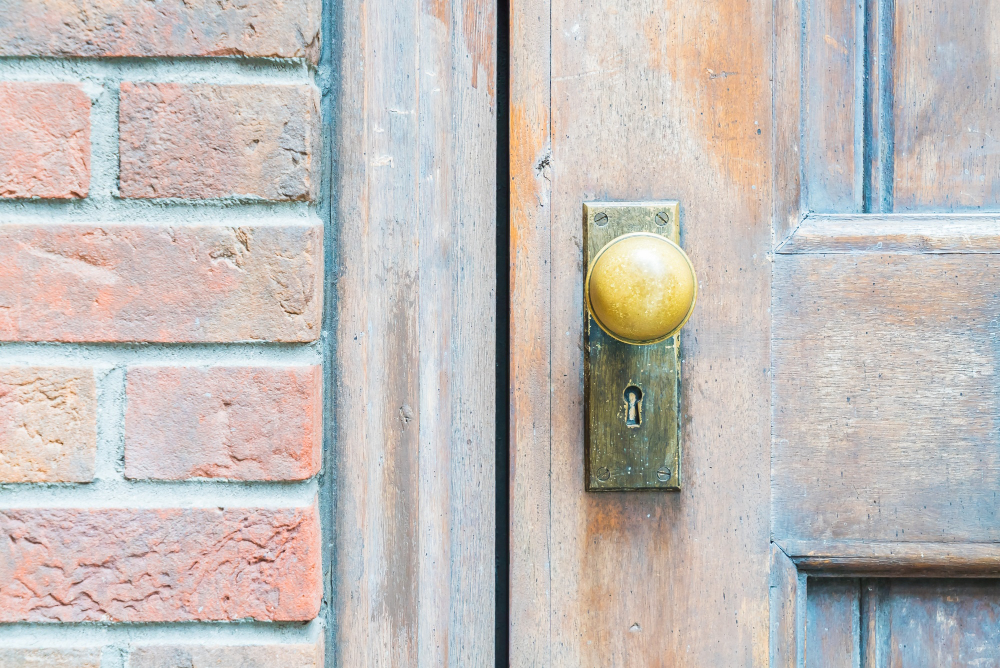
Copper and the alloys made from it – brass and bronze among them – have a property that no other common building material has. Microorganisms that land on a copper surface are destroyed, reliably, within hours, with no intervention of any kind.
The effect is real, has been measured repeatedly, and has been known in some form for a very long time.
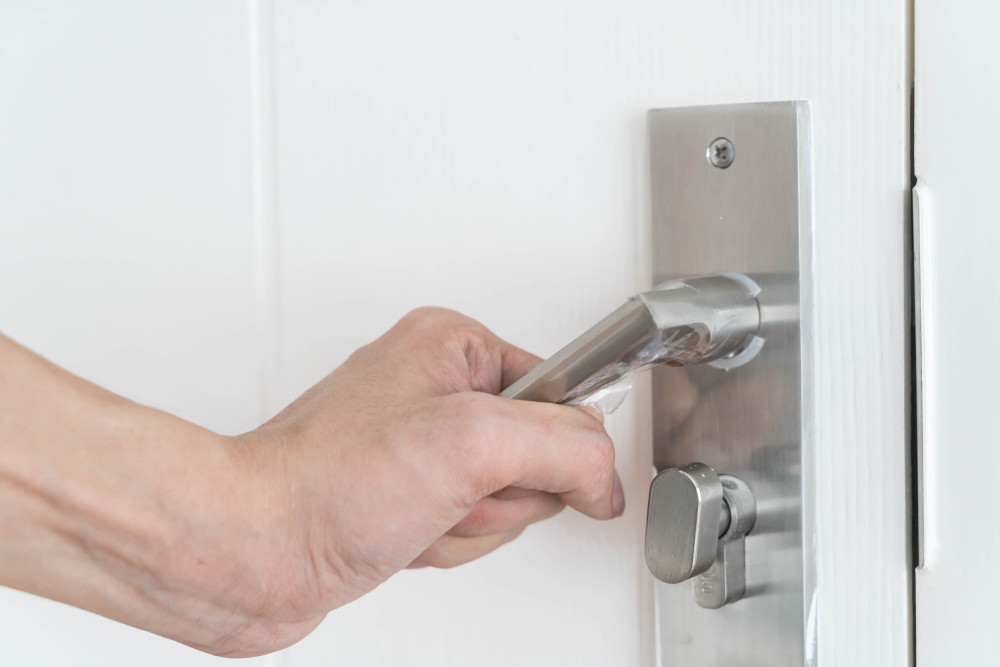
And over the twentieth century, the brass door handles, push plates, rails and fittings in hospitals, schools and public buildings were steadily replaced by stainless steel, which does not do this at all.
The Effect Is Genuine and Reasonably Well Understood

Put bacteria on a stainless steel surface and a substantial proportion will still be viable days later. Put them on copper or a high-copper alloy and the population collapses, typically within a few hours.
The mechanism involves copper ions released from the surface, which damage cell membranes and interfere with the machinery inside the cell. It does not depend on a coating that wears off, it does not need to be activated, and it continues as long as the surface is copper – which, because the metal is the thing doing the work rather than something applied to it, means essentially indefinitely.
It also appears to be difficult for organisms to develop resistance to, because the damage is physical and multi-site rather than targeted at a single pathway. That is a meaningful distinction, though it is not a guarantee and the research continues.
The effect is strong enough that copper alloy surfaces have been given formal recognition for this property in some places, and trials have been conducted installing them on frequently touched surfaces in healthcare settings. Those trials have generally found reductions in surface contamination, with the question of whether that translates into measurably fewer infections being harder to establish and genuinely less settled.
Like our content? Follow us for more.
So Why Did Everything Become Stainless Steel

Several reasons, none of which was that anybody decided the copper effect did not matter. The effect was simply not the thing being optimised.
Appearance. Stainless steel looks clean and modern and stays looking the same. Brass oxidises, darkens and develops a patina, and a tarnished handle reads as dirty even when it is actively destroying the organisms on it. The material that looks cleanest and the material that is cleanest turned out to be different materials.
Maintenance. Keeping brass bright means polishing it, regularly, by somebody. That was ordinary when buildings had staff whose job included it and became an unjustifiable cost when they did not. Stainless steel needs wiping.
Cost. Copper is a traded commodity and an expensive one, and stainless steel fittings are cheaper for most applications.
Durability and hygiene assumptions. Stainless steel is hard, non-porous and easy to clean, and cleanability became the governing criterion for hygienic surfaces – which is reasonable, and which measures how easily a surface can be made clean rather than what happens on it in the hours between cleans.
That last point is the heart of it. A policy built around cleaning favours a surface that cleans well. Copper’s advantage is in the interval between cleanings, which is not what the criterion measures.
The Polishing Was Doing Something Nobody Had Named

There is a detail here that is quietly interesting.
Oxidation and tarnish can reduce the effect, because the active surface becomes covered by a layer of corrosion products. Regular polishing removed that layer and exposed fresh metal.
So the daily routine of polishing the brass in a hospital, a school or a public building – performed for appearance, by people who had no concept of the mechanism – was also maintaining an antimicrobial surface at full effectiveness.
When the polishing stopped, two things happened at once: the fittings looked worse, and they worked less well. The response to the first was to replace them with a material that did not need polishing, which also removed the second, which nobody was measuring.
It is a good example of a practice whose actual benefit was invisible to the people performing it, discontinued on the strength of the visible reason, with the invisible benefit going silently.
Silver and Other Metals Are Not the Same Story
Because this effect is real, it attracts claims that are not, and it is worth separating them.
Silver has genuine antimicrobial activity and is used in some medical applications, and it also appears in a large number of consumer products – socks, chopping boards, phone cases, paint – where the quantity, the availability of the active form and the conditions of use frequently mean the practical effect is negligible. The presence of a material with a property in a laboratory does not mean the product containing it delivers that property on a kitchen counter.
Antimicrobial coatings applied to other surfaces are a separate category again. Some work, many wear off, and the ones that work tend to need reapplication on a schedule that nobody keeps.
Copper’s distinction is that the structural material is the active material. There is no coating to wear through, no additive at low concentration, and no reservoir to exhaust – a solid brass handle worn thin by a century of hands is still brass all the way through and still doing the same thing.
That is a genuinely unusual property and it is the reason this case is worth taking seriously while being sceptical of most of the products that invoke the same language. The question to ask of any such claim is whether the active material is the object or merely in it, and in nearly every consumer product the answer is the second one.
What Is Happening Now
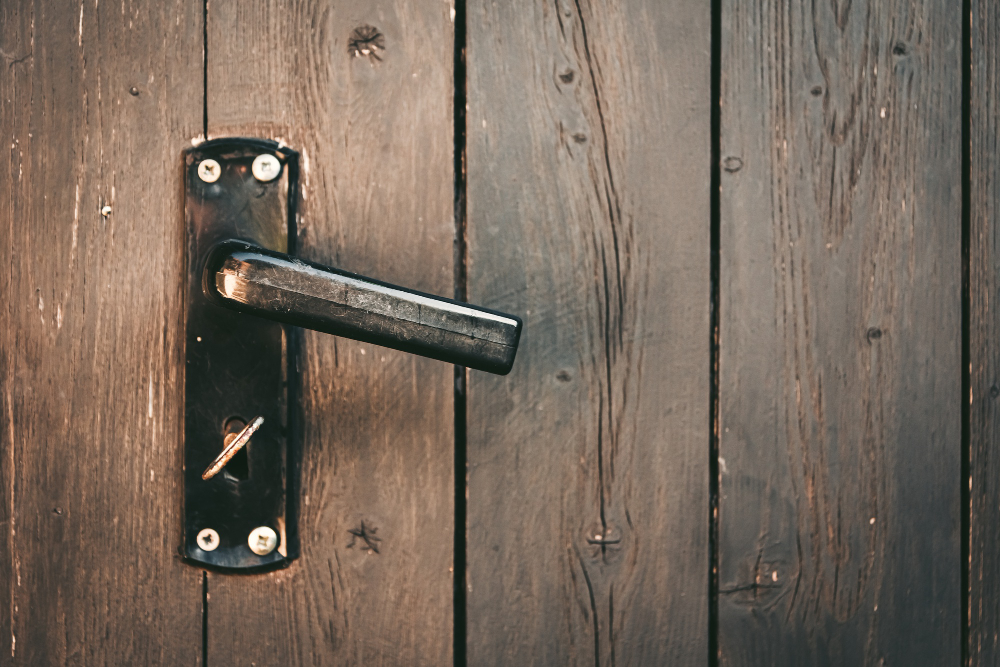
Copper alloy touch surfaces have had a modest revival, driven by interest in healthcare-associated infection and by renewed attention to surface transmission generally.
The honest state of the evidence is that surface contamination is reliably reduced, and the clinical question – whether that produces fewer infections in a real hospital, where transmission happens by many routes and hand hygiene dominates – is much harder to answer and the studies are fewer, smaller and more contested.
Nobody serious argues that copper fittings substitute for hand hygiene or cleaning. The argument is that they are a passive additional layer that works continuously and costs nothing to run once installed, which is an unusual profile for an infection control measure.
Against it: the installation cost is real, the appearance objection has not gone away, and in a building where every other surface is something else the benefit of treating the handles alone is limited.
It is a genuinely open question rather than an obvious missed opportunity, and the people arguing both sides are arguing in good faith.
What has changed the calculation slightly is that the cost argument looks different over a long horizon. A stainless handle is cheaper to buy and needs replacing on roughly the same schedule; a brass one is dearer, lasts indefinitely, and has a scrap value at the end of its life that stainless does not. Several of the brass handles still in service in older buildings were installed over a century ago and have outlasted several generations of everything around them, which is the kind of durability that does not show up in a fitting-out budget and shows up very clearly in a building that is still using them.
The Wider Point About Why Good Things Get Removed
The reason this is worth knowing is not really about door handles.
Brass fittings were not removed because somebody weighed their antimicrobial property and decided it was not worth the cost. They were removed because that property was not in the specification at all – it was not measured, not named, not owned by anybody, and therefore not defended when cost, appearance and maintenance arguments came along.
That is how most unrecognised benefits are lost. Not through a decision, but through an absence from the criteria.
The same shape appears throughout: an old practice persists for visible reasons, delivers an invisible benefit nobody has identified, the visible reason stops applying, and the practice is discontinued without the invisible benefit ever entering the discussion. It is discovered afterwards, if at all, and frequently by somebody studying why things used to be better and not finding an obvious explanation.
Which is an argument for a degree of caution about removing long-established practices whose rationale seems obviously outdated – not because tradition is wise, but because a practice that has survived a long time may be doing something nobody has written down.
Next time you open a door with a worn brass handle in an old building, that handle has been doing this the entire time.
Nobody specified it, and nobody noticed when it stopped.
And the handles themselves are frequently still there in older buildings, under decades of lacquer or paint applied to stop them tarnishing – which, if you have followed the argument above, is a coating sitting between the metal and everything that touches it, applied to solve the appearance problem, defeating the property nobody knew was there. The buildings that kept their brass have very often sealed it.
Like our content? Follow us for more.