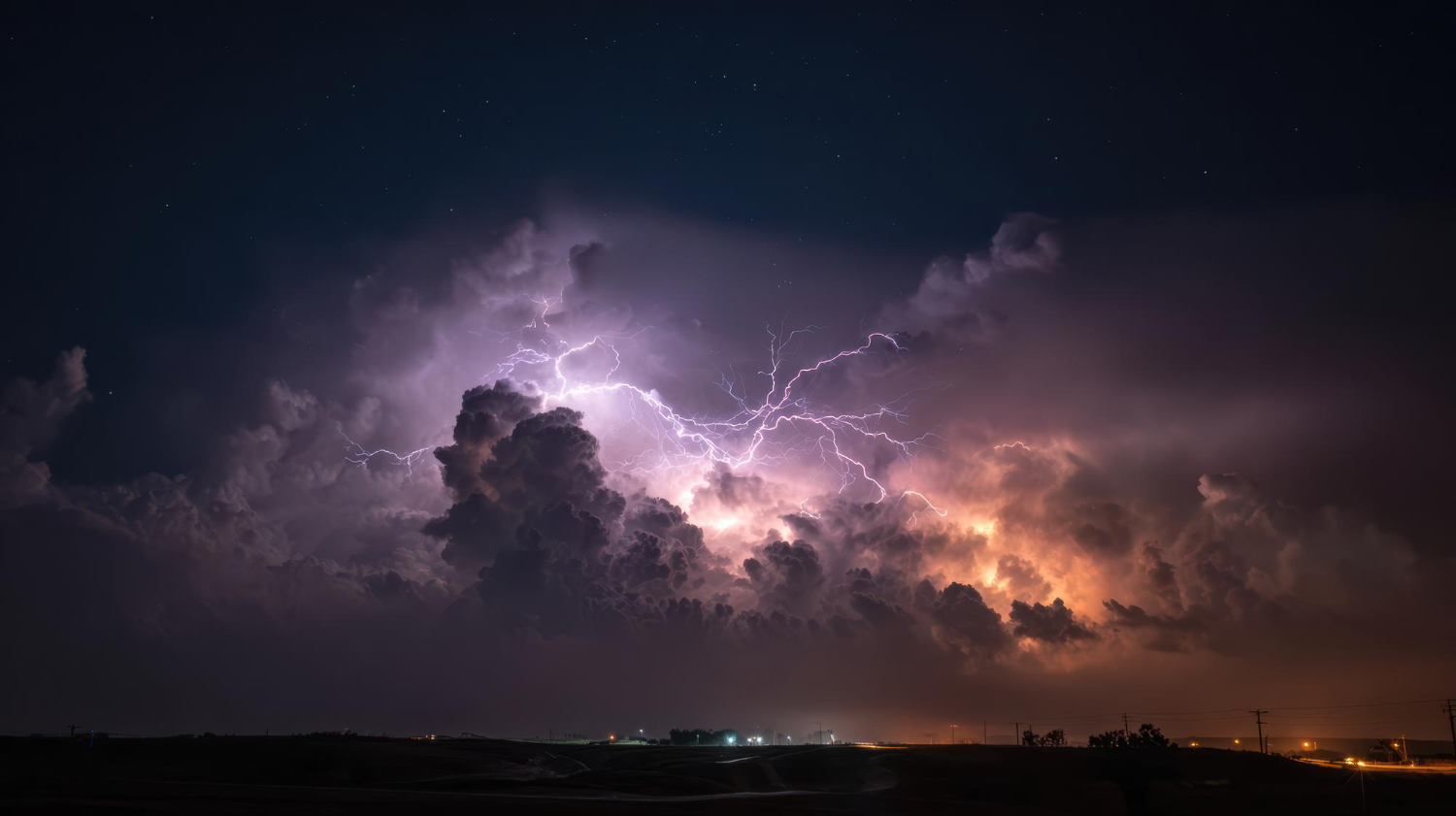
Ordinary lightning is well understood. It is a fast, enormous electrical discharge, it lasts a fraction of a second, it leaves physical traces, and it can be measured, photographed, and reproduced in laboratories.
Ball lightning is none of those things. The reports describe a luminous sphere, most often somewhere between the size of a pea and a few metres across, with the typical account closer to a grapefruit and roughly as bright as a household bulb. It appears during or shortly after thunderstorms, sometimes in clear conditions, and sometimes indoors. It moves slowly and horizontally rather than falling, which is one of its stranger features. It persists for a second or several, far longer than a lightning flash. Then it either fades or ends abruptly, occasionally with a bang and a sulphurous smell.
For most of scientific history this was a problem, because there was essentially nothing to study. The phenomenon is rare, brief, unpredictable, and leaves almost nothing behind. Unlike ordinary lightning, which scorches trees, fuses sand into glassy tubes, and trips electrical equipment, ball lightning typically vanishes without a measurable trace. It occupied an uncomfortable middle ground between atmospheric physics and folklore for a very long time, and it has still not been fully explained. Here is what is actually known.
The Weight of the Eyewitness Record
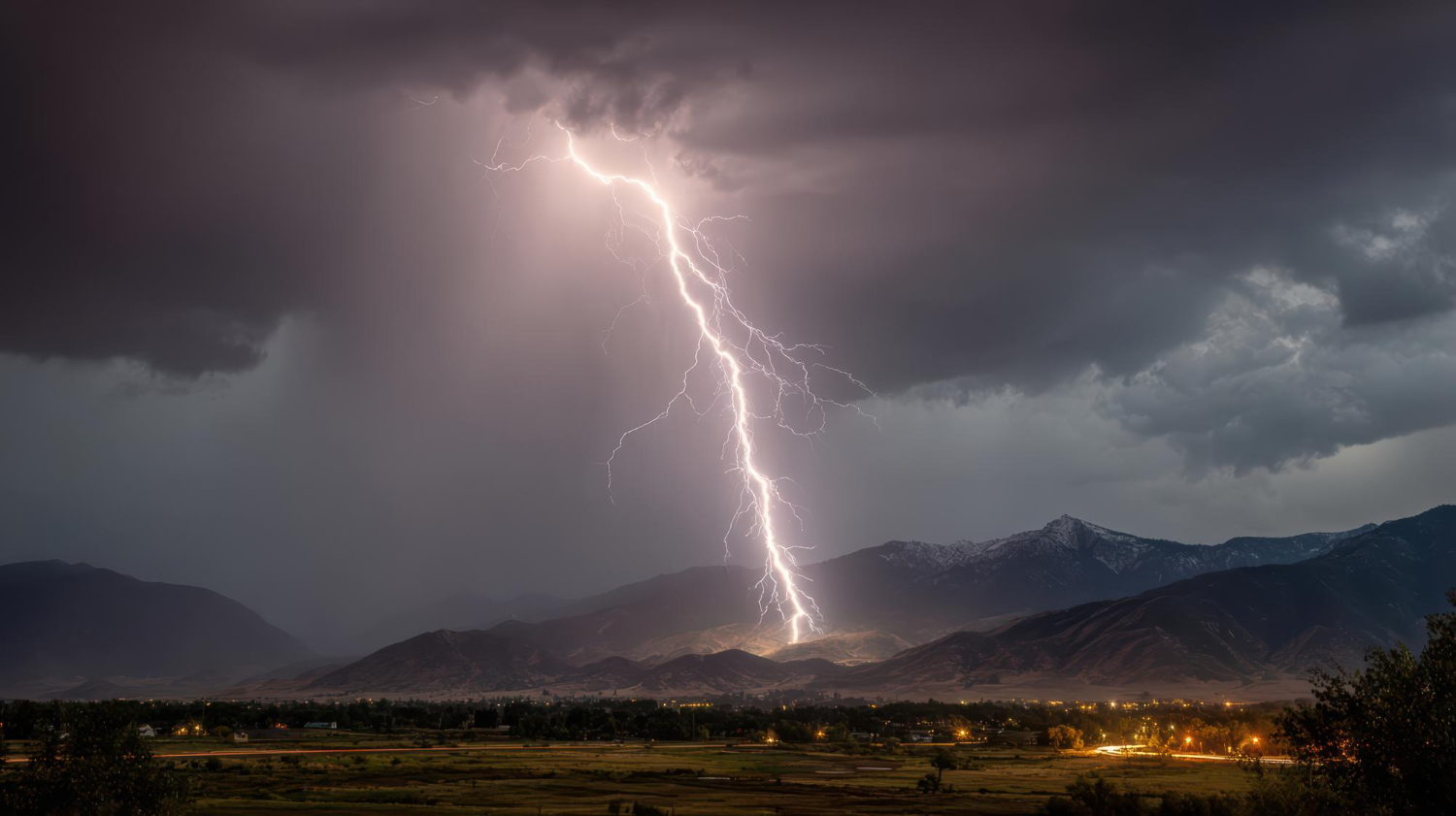
The main reason ball lightning survived as a serious topic rather than being dismissed is the sheer volume and consistency of the reports, and the fact that many came from careful observers.
Accounts run back centuries. One frequently cited case from 1636 in Devon, England describes a glowing orb entering a church during a storm, moving down the aisle, and bursting, with injuries and a sulphurous smell reported afterward. Pilots have described spheres travelling alongside aircraft, including a British pilot during the Second World War who reported one flying beside his plane for several minutes. Physicists and other technically trained people have reported sightings, which is not decisive but is difficult to wave away.
More useful than any individual anecdote is what happens when the reports are aggregated. A survey compiling more than 4,000 eyewitness accounts found a remarkably consistent set of characteristics: spherical or slightly oval, luminosity roughly comparable to a 100-watt bulb, a tendency to drift slowly and horizontally rather than fall under gravity, and an association with electrical storm activity.
That consistency is the crux. Assorted misperceptions of ordinary phenomena would not converge on the same profile across centuries, continents, and observers who had never heard of one another. Something is being seen. The open question has always been what.
Like our content? Follow us for more.
Why It Was So Hard to Study
The practical obstacles are severe, and they explain the slow progress better than any lack of interest.
The phenomenon is rare, and nobody can predict where or when it will appear. It lasts on the order of a second, which is not enough time for a witness to do anything but watch. It leaves little physical residue to analyse afterward. It does not reliably trigger electromagnetic sensors. And it tends to appear during thunderstorms, when the electrical environment is already chaotic and instruments are typically pointed at other things.
The result was a field built almost entirely on witness memory, which is the weakest kind of scientific evidence: unrepeatable, unmeasured, and recorded after the fact. Researchers could argue about mechanisms indefinitely, because there was no data capable of settling anything.
It is worth adding that ball lightning is frequently confused with two better-understood phenomena that are not the same thing at all. St. Elmo’s fire is a stationary corona discharge that glows on masts, wingtips, and other pointed conductors, and it does not drift freely. Will-o’-the-wisp is a separate marsh phenomenon. Ball lightning is characterized specifically by being a free-moving, self-contained luminous ball, distinct from both.
The Accident on the Qinghai Plateau
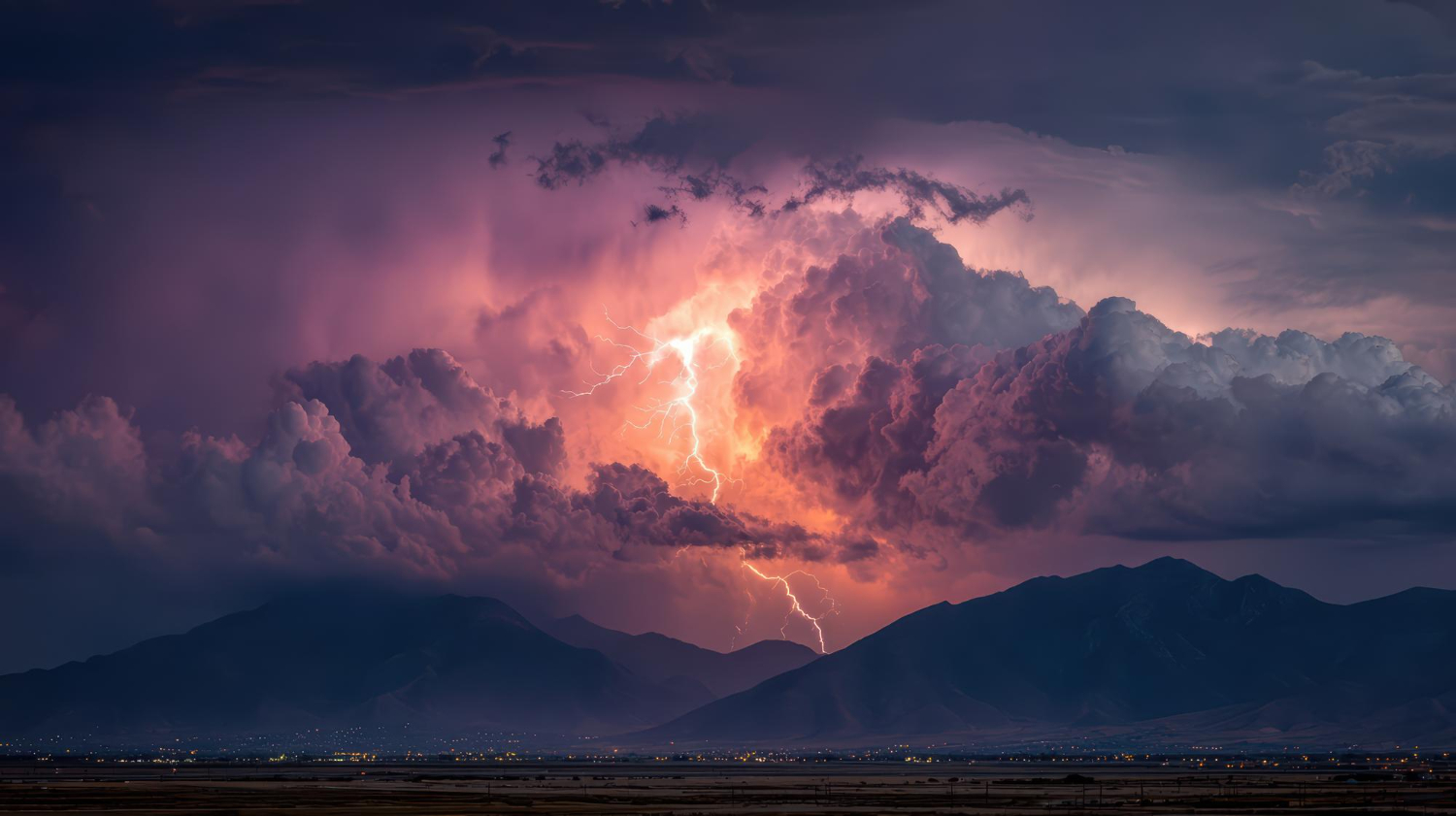
The situation changed in July 2012, and it changed by luck.
A team from Northwest Normal University in Lanzhou, led by Ping Yuan, had set up spectrometers and high-speed video cameras on the remote Qinghai Plateau in northwest China. They were not looking for ball lightning; they were studying ordinary lightning, which is common in the region.
During a late-evening thunderstorm, ball lightning appeared just after a cloud-to-ground lightning strike roughly 900 metres from their equipment, and their instruments recorded it. They captured video footage and, critically, a spectrum: a measurement of the actual wavelengths of light the ball was emitting.
The observed details were modest and specific. The ball changed from white to reddish over the second or so that it lasted, and it drifted horizontally a short distance. Darkness prevented the team from estimating its altitude. Yuan noted that this appeared to be the first time ball lightning had been observed being created by a cloud-to-ground strike. The results were published in Physical Review Letters in 2014.
What made this a landmark was not the drama of it. It was that the field could finally move from arguing about whether the phenomenon existed to arguing about what the recorded light implied regarding composition and mechanism.
What the Spectrum Suggested
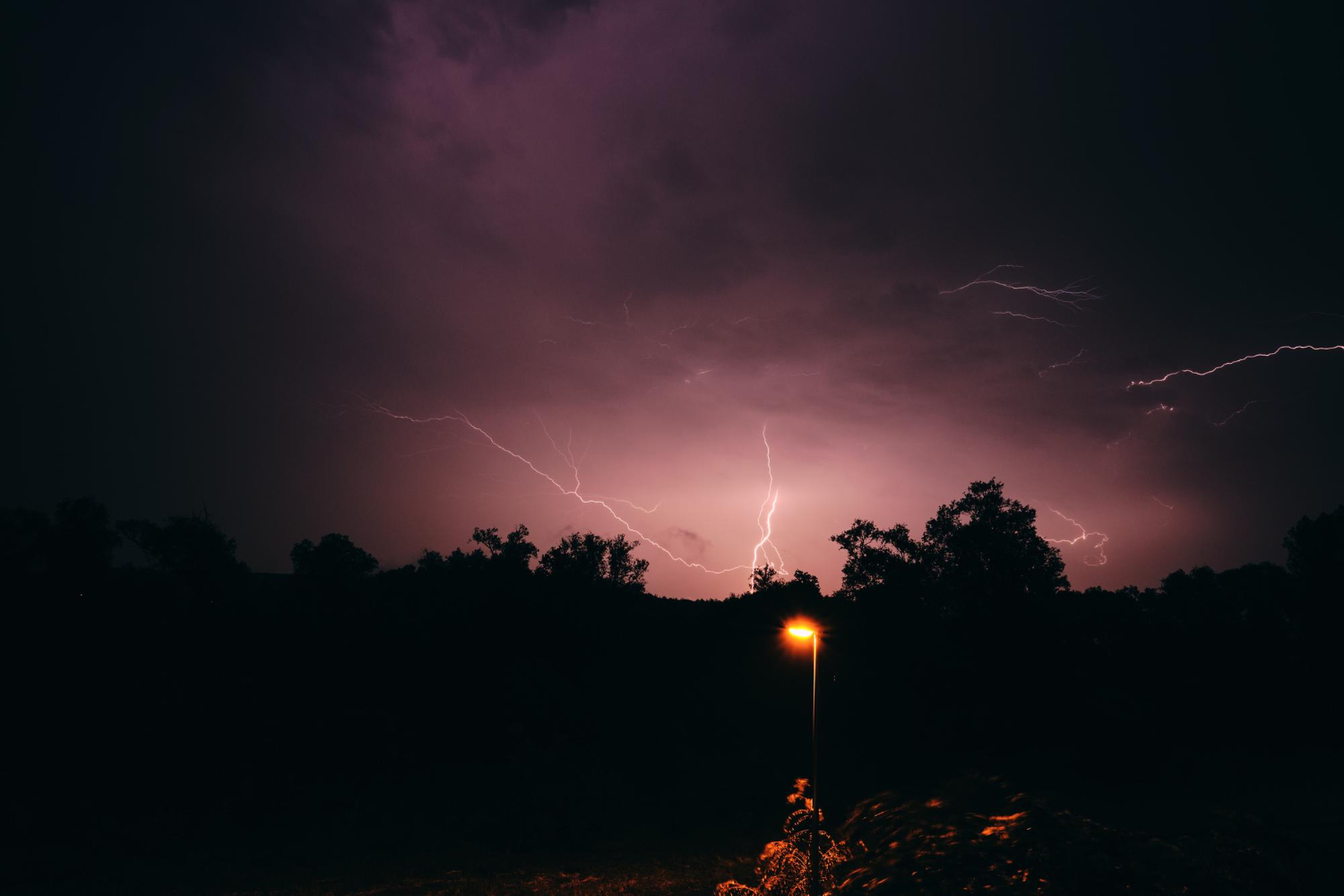
The spectrum showed emission lines from silicon, iron, and calcium. Those elements were also present in the local soil.
That result lines up with one long-standing hypothesis. The idea holds that when lightning strikes the ground, it vaporizes silicon and other material from the soil, releasing a cloud of nanoparticles that, through a process not fully worked out, become charged and glow as they oxidize in air, producing a slowly drifting luminous ball. The Qinghai data are consistent with that picture: the ball appears to have been composed of vaporized ground material, reacting with oxygen.
This is real progress, and it is the strongest evidence the field has. But it should not be oversold. A single event was measured. The spectrum tells you what elements were emitting light; it does not by itself explain how the structure held together, why it moved horizontally, why some reports describe indoor appearances, or why the duration varies so widely.
Other theories remain in play, and some are quite different. One published proposal argues that a lightning strike can produce a bunch of relativistic electrons that generate intense microwave radiation, which ionizes the surrounding air while radiation pressure clears a cavity, producing a plasma bubble that traps the radiation and glows. Laboratory analogues have also produced glowing balls of plasma by various means, which demonstrates that such objects can exist without establishing that nature makes them the same way. There is even a suggestion that the physics involved may connect to the behaviour of long-lived luminous structures in the Sun’s outer atmosphere.
The Detail That Resists Every Theory
There is one category of report that any complete explanation has to account for, and it is the one that gives researchers the most trouble: ball lightning appearing indoors.
Witnesses have described spheres entering rooms through windows, chimneys, and in some accounts apparently passing through closed glass, then drifting across a space before fading or bursting. The 1636 church account is one instance; there are many others, including reports from aircraft cabins.
This is difficult for the vaporized-soil model. If the ball is a cloud of glowing particles thrown up by a ground strike, it is not obvious how such a structure crosses a wall or forms inside an enclosed room a long way from any soil. The microwave-plasma proposal handles this rather better, since electromagnetic radiation can pass through glass and could in principle form a plasma structure on the other side, which is part of why that theory retains supporters despite the spectroscopic evidence pointing elsewhere.
It is also possible that indoor reports describe a different phenomenon altogether, or that some of them are misidentifications of electrical faults or afterimages. The honest position is that the indoor cases are neither explained nor safely dismissed, and that any theory claiming completeness has to say something about them.
An Honest Place to Leave It
The responsible summary is this. Ball lightning is almost certainly real, on the strength of a large and internally consistent body of observation, now supported by at least one instrumented measurement. The vaporized-soil hypothesis has meaningful evidence behind it and is the leading explanation. And the phenomenon has not been fully explained to the satisfaction of the scientific community.
That last part is unusual enough to be worth pausing on. Ball lightning is among the very few atmospheric phenomena reliably witnessed by large numbers of people throughout recorded history that still lacks a complete accepted explanation. Weather is otherwise a well-mapped field. Hurricanes, tornadoes, hail, and ordinary lightning are all understood in mechanistic detail. This one glowing sphere remains outstanding.
There are reasons for optimism. The 2012 spectroscopic capture showed that instrumented observation is possible, and the proliferation of high-quality cameras, denser sensor networks, and dedicated storm-monitoring campaigns makes another capture substantially more likely than it once was. Some researchers think a complete explanation is within reach.
For now, ball lightning sits in a category that scientific culture is not always comfortable with: a phenomenon that is real, witnessed by ordinary people, partially measured, plausibly explained, and not yet resolved. There is something bracing about that. It is a reminder that unexplained does not mean unexplainable, that eyewitness reports deserve neither automatic belief nor automatic dismissal, and that after everything we have worked out about the weather, a storm can still produce a glowing ball nobody can fully account for.
Like our content? Follow us for more.