The thing that strikes me about every old toolbox I have been shown is that the stones are the most worn objects in it. Hollowed in the middle, dished, broken and glued, wrapped in rag. Whatever else was in that box got used occasionally. The stone got used every time anything else did, and I think that single fact says more about how people worked then than any amount of description of the tools themselves.
What an Edge Actually Is

Start here, because almost everything people believe about sharpening is downstream of getting this wrong.
An edge is not a thing. It is a line – the intersection of two surfaces. If both surfaces are smooth and they meet cleanly, the line between them is sharp. If either surface is rough, or they do not quite meet because the very tip has been bent over or worn away, the line is dull.
So sharpening is not removing metal from the edge. It is working the two surfaces until they meet again. Which is why you can sharpen a knife a hundred times and only lose a little metal, and why a knife sharpened badly a hundred times is ruined.
Like our content? Follow us for more.
A Stone Is Just Controlled Abrasion
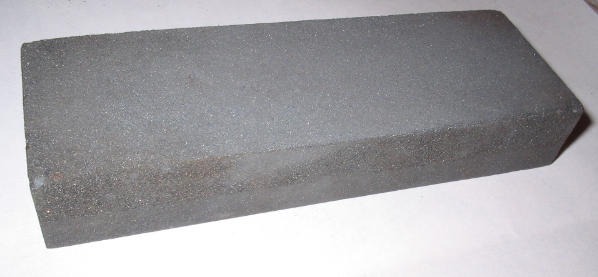
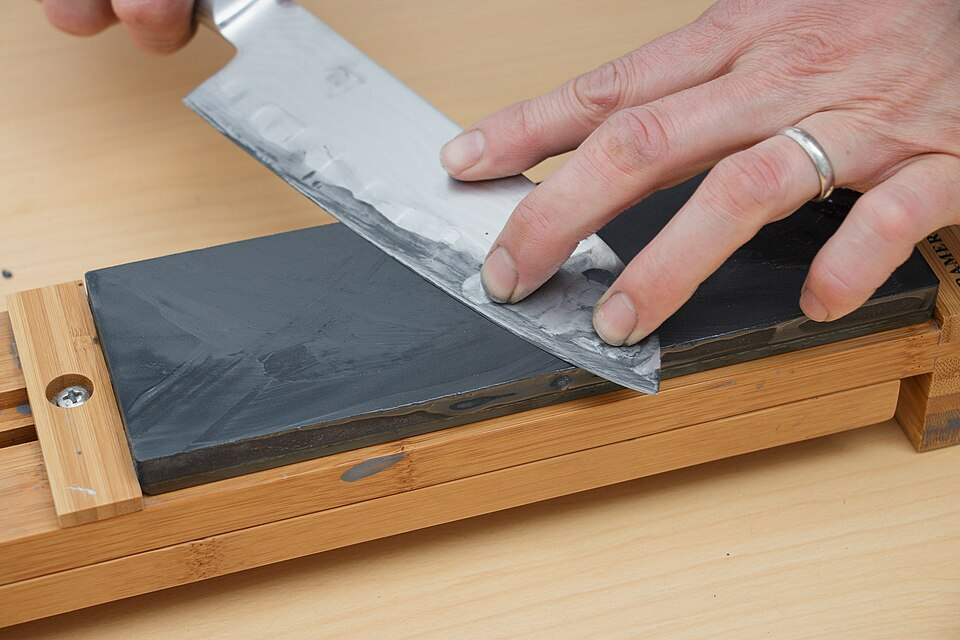
The stone’s job is to cut metal away in a controlled manner.
A natural sharpening stone is a fine-grained rock with hard particles held in it. Dragging steel across it removes microscopic amounts of metal, and the size of those particles determines how much comes off and how rough the surface is left. Coarse grit removes metal quickly and leaves scratches; fine grit removes almost nothing and polishes.
Which is why serious sharpening uses more than one stone, in sequence. The coarse stone restores the shape of the two surfaces. The fine stone makes them smooth enough to meet in a clean line. Skipping the second step gives you a shape that is right and a line that is ragged, and skipping the first means polishing surfaces that are not in the right place yet.
Oil or Water, and Why
The liquid is not lubrication in the way people assume.
Grinding steel on stone produces fine metal particles, and those particles fill the spaces between the abrasive grains. A loaded stone stops cutting – it becomes a smooth surface sliding against a smooth surface. The oil or water floats that debris out of the way and carries it off when you wipe the stone.
Which is why a stone used dry goes glassy and useless, why it has to be wiped clean, and why households were particular about which stones got oil and which got water. Oil does not evaporate, so an oiled stone stays ready; a water stone has to be wetted each time and dries out between uses. Both work, and people were loyal to whichever they had learned on.
The Angle Was the Whole Skill
Here is the part that cannot be written down usefully.
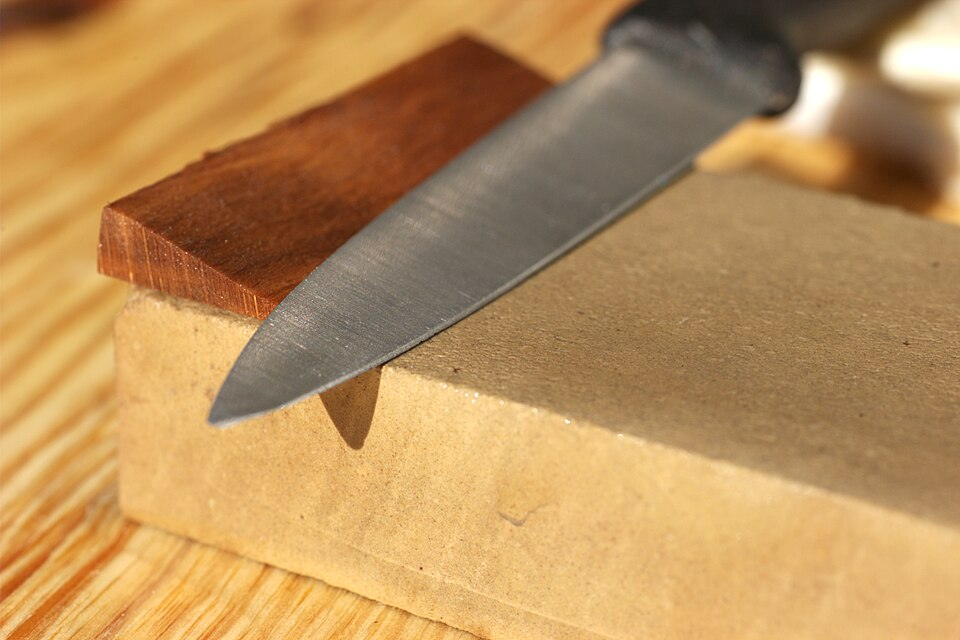
The two surfaces have to be worked at a consistent angle, stroke after stroke, by hand, without any guide. If the angle wanders, you are polishing a curve rather than a flat, and a curved surface meets its neighbour in a rounded line – which is exactly what a dull edge is.
Holding an angle within a degree or two, for fifty strokes, with no reference but the feel of it, is a genuine motor skill. It takes a long time to learn and it is learned by watching somebody and then failing at it. Nobody could explain how they did it, which is why every account of being taught to sharpen is an account of somebody taking the knife out of your hands and showing you again.
Different Stones for Different Tools
The jobs were not interchangeable, and neither were the stones.
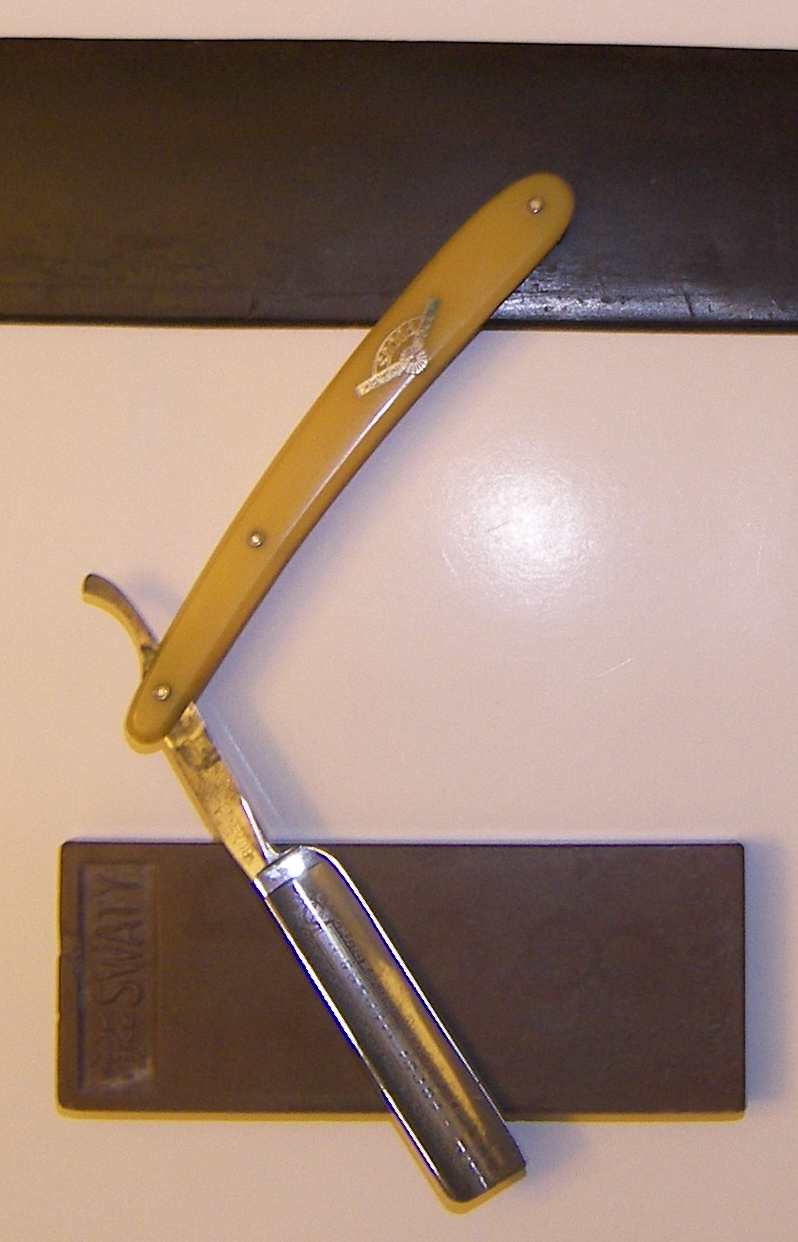
A pocket knife was done on a small flat stone that lived in a pocket or a drawer. A razor was done on a very fine stone and finished on leather. An axe was done with a round stone held in the hand and worked in circles, because an axe edge is convex and would be ruined by a flat stone. A scythe was done in the field with a long tapered stone, standing up, with the blade held against the body.
So a working household had several, each shaped for its job, and knew which was which. The round axe stone and the long scythe stone are so distinctive that they are the two kinds you still find in barns.
The Wire Edge Was the Thing to Watch For
There is a failure mode that explains most bad sharpening.
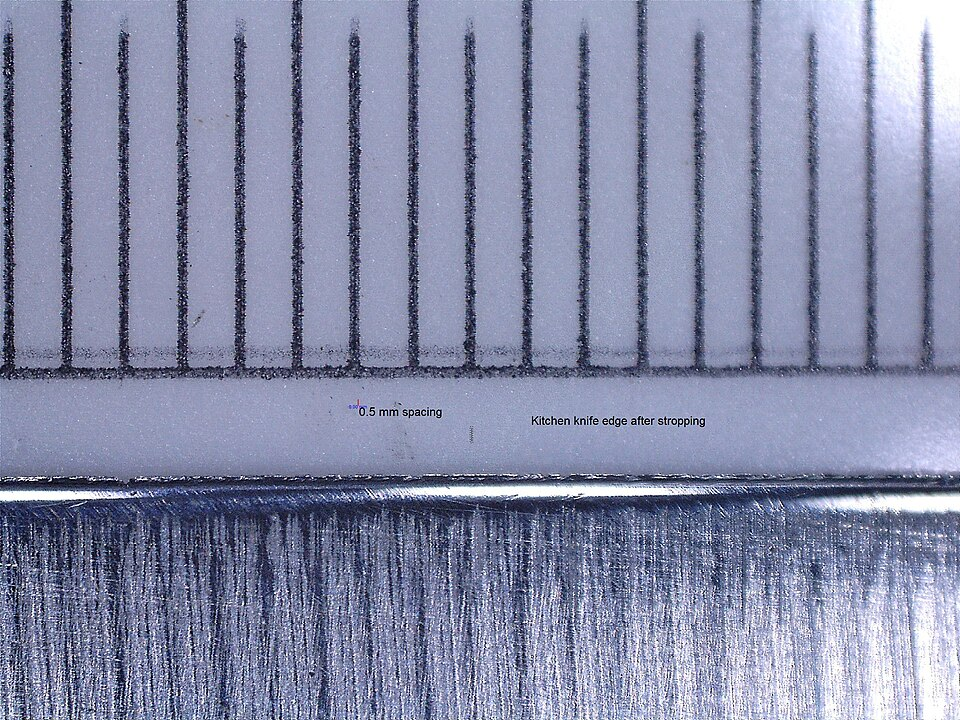
Push a thin piece of steel against an abrasive and the last fraction of the edge, which has almost no material behind it, bends away rather than being cut. The result is a hair-thin lip of distorted metal along the edge. It feels sharp – sharper than the knife really is – and it collapses on the first use, leaving the tool dull again within minutes.
Getting rid of it is what the final stages are for: lighter and lighter strokes, alternating sides, and then stropping on leather or on the palm of the hand to fold that lip off. The man who finishes by wiping the blade down his trouser leg is not being casual. He is removing the wire edge.
A Dull Tool Is More Dangerous Than a Sharp One
This was said to me as a child and I did not believe it, and it is true.
A sharp edge cuts where it is placed, with light pressure, and goes where it is aimed. A dull one requires force, and force is what makes a tool slip, skid off the work, bounce, or keep going after it is through. Almost everything bad that happens with an edged tool happens because somebody was pushing hard.
So sharpening was not fussiness or craft pride. It was the routine maintenance that kept the work from fighting back, and it was done before the job rather than after the tool had stopped working.
The Grindstone Was for Damage, Not for Sharpening
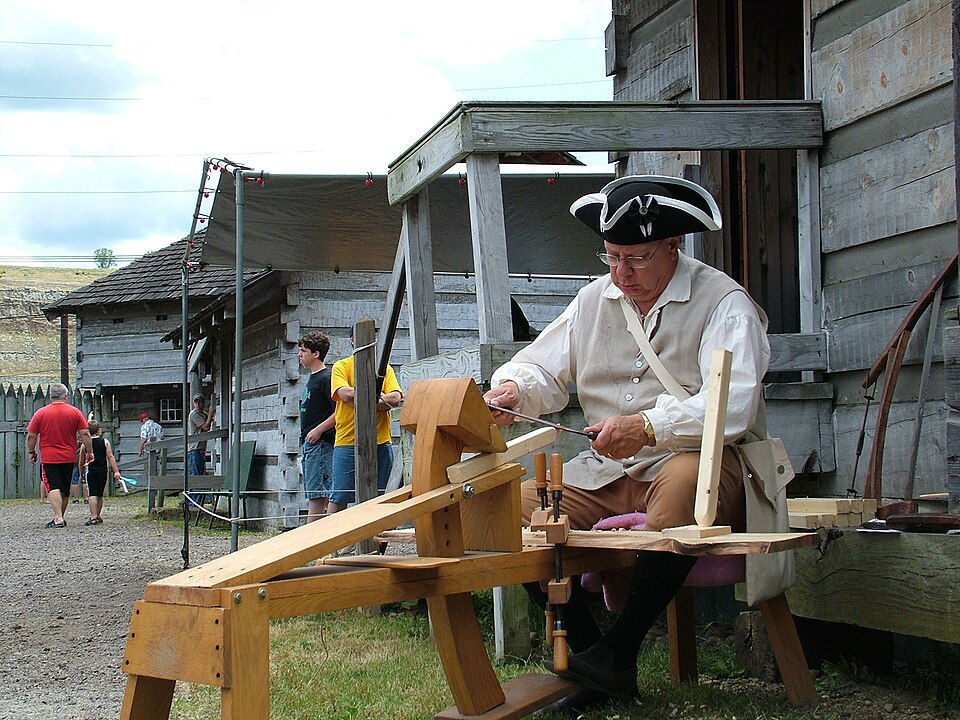
Worth distinguishing, because the two get confused.
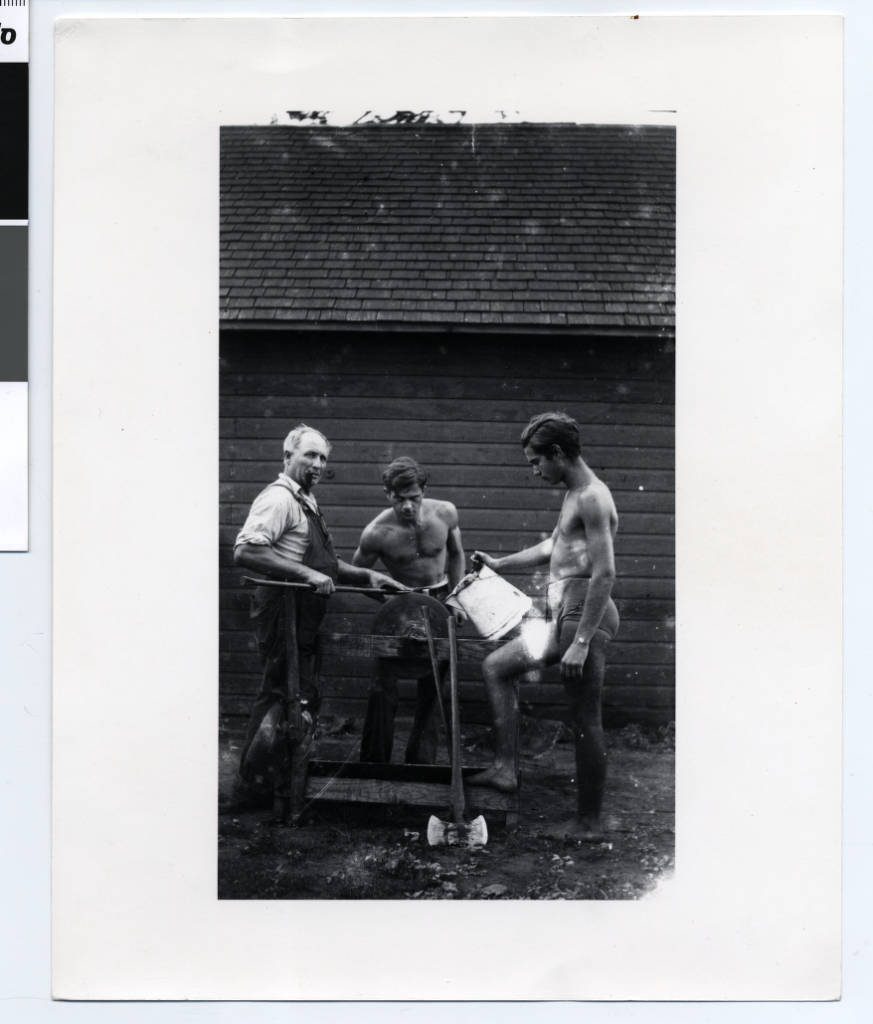
A large turning wheel removes metal fast and is for reshaping – a chipped axe, a bent hoe, a blade that has lost its profile. It is a repair tool. It also heats the steel, and steel that gets too hot loses its hardness permanently, which is why it was used wet and why people were nervous about it.
Routine edge maintenance was a hand stone, and it was done constantly – between rows, during a rest, in the evening. A man who put an axe on the wheel every week was somebody who did not know what he was doing, and his axe got visibly shorter.
Then Everything Became Disposable or Replaceable
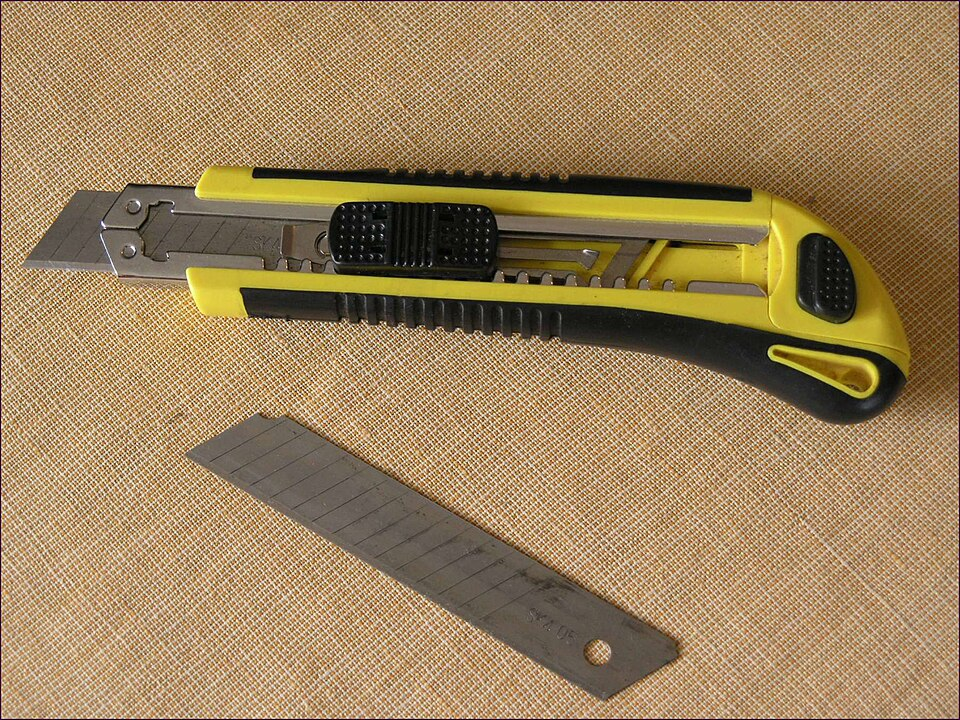
What ended the daily habit was not better stones.
Blades got cheap. A knife that costs very little is quicker to replace than to maintain, and a blade designed to be snapped off and discarded is not meant to be sharpened at all. At the same time powered tools took over the jobs that edged hand tools used to do, and a powered tool’s cutter is a serviced part rather than something you look after yourself.
Stainless steels also changed the calculation. They hold an edge longer and they are harder to sharpen, which suits somebody who wants to sharpen rarely and badly suits somebody who wants to touch up an edge in two minutes every morning.
So the skill stopped being universal and became a hobby, which is where it now lives, pursued with far better equipment than anybody had then.
The Stones Outlasted Everybody
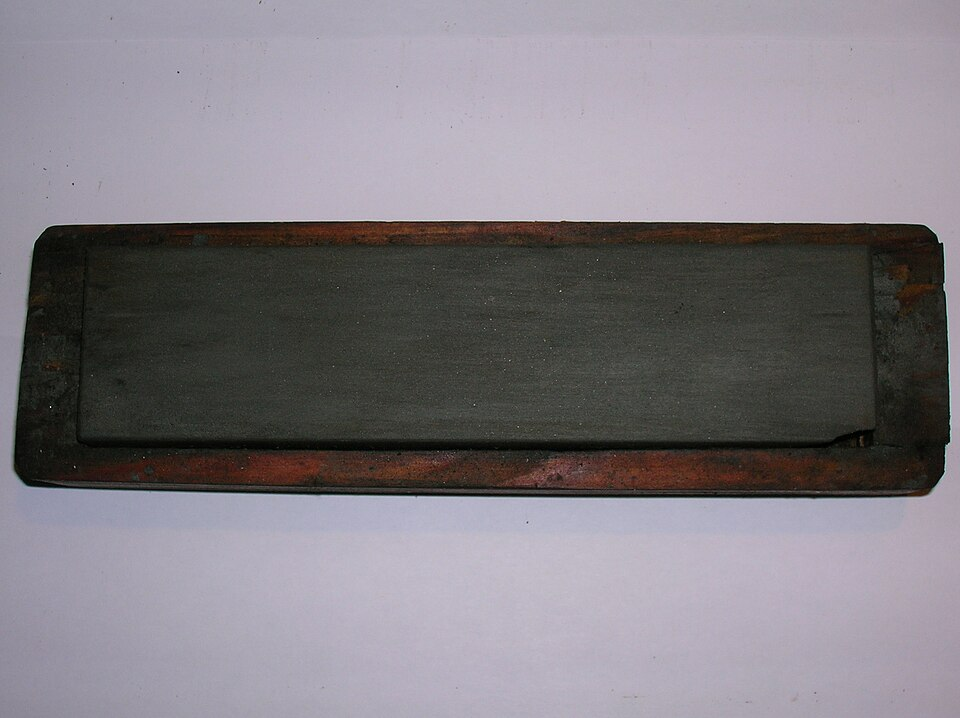
And this is what you find in the barns.
A stone does not rust, does not rot, has no moving parts and does not wear out in any practical sense – it only gets thinner and dished. The stones in old toolboxes are frequently a hundred years old and still perfectly serviceable, and the dish worn into the middle of one is a direct record of how many times somebody drew a blade across it.
I find that more affecting than anything else in those boxes. The hollow in the stone is not damage. It is the sum of every edge that was ever put right on it, and you can see from the shape of it whether the man who owned it sharpened knives or chisels or both.
What It Tells You
The reason I think this matters is the frequency.
Not the technique, not the romance of hand tools – the fact that keeping edges right was a daily, unremarkable, repeated task that every working person did, the way people now charge a battery. It happened in the gaps: waiting for something, sitting down, before starting, at the end of a row. Nobody recorded it because there was nothing to record.
And it was a real skill with a real failure mode, learned from a person rather than from instructions, held in the hands rather than the head, and almost entirely lost in one generation because blades got cheaper than the time it took to look after them.
Like our content? Follow us for more.