

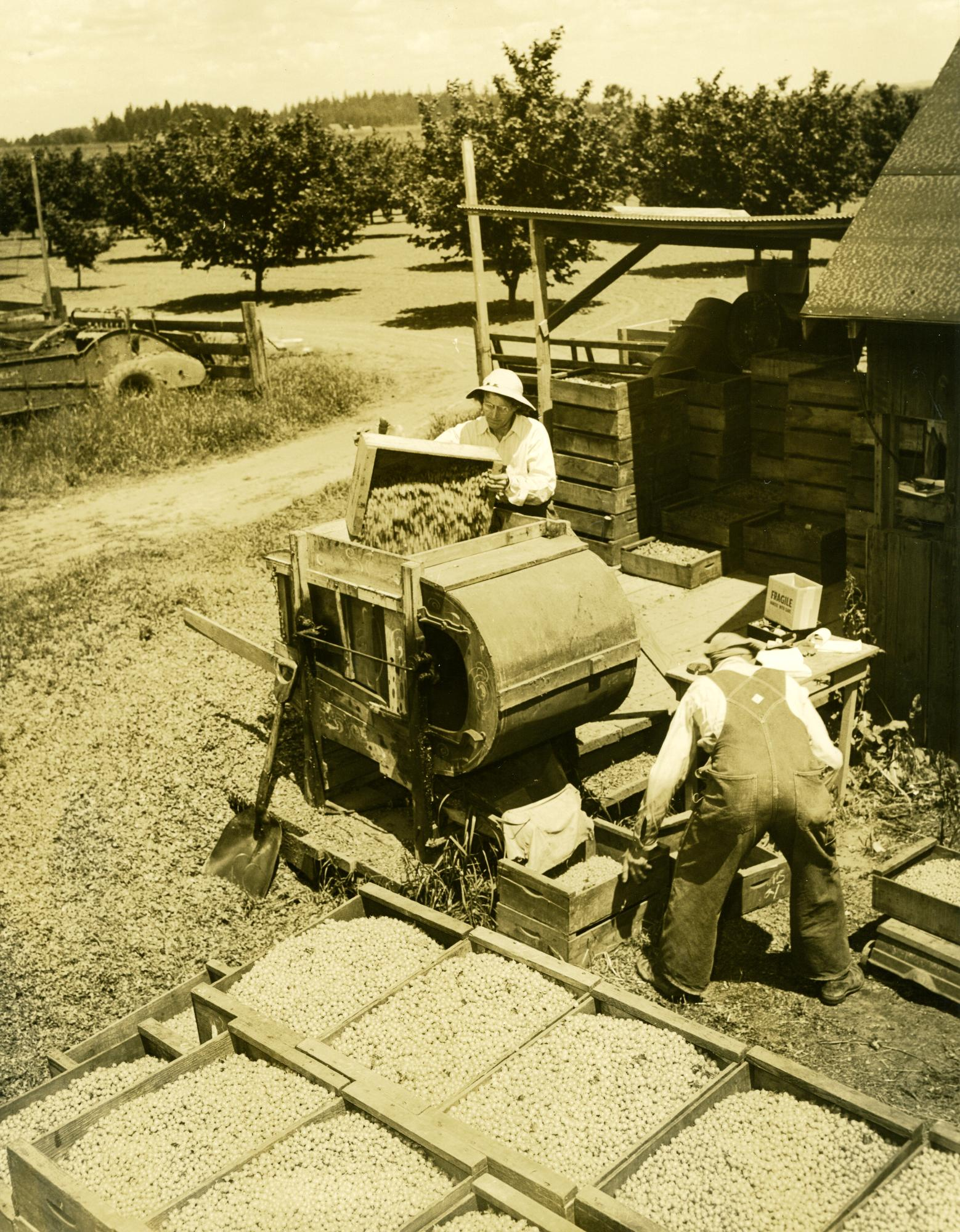
It is a wooden box on legs, about the size of a chest of drawers, with a crank on the side, a hopper on top, a couple of chutes at the bottom and a stack of removable screens in the middle. There is usually a faded stencilled name on it somewhere.
Most people who find one in a barn cannot work out what it did. It looks like furniture with a handle.
It is a fanning mill, and it did one of the two essential operations in turning a standing crop into usable grain. Threshing knocks the seed loose from the plant. This machine separates that seed from everything else that came loose with it – and for a few hundred years it was the only way a farm could do that job on a day with no wind.
Threshed Grain Is Not Clean Grain
Worth being clear about the problem, because people assume threshing finishes the job.
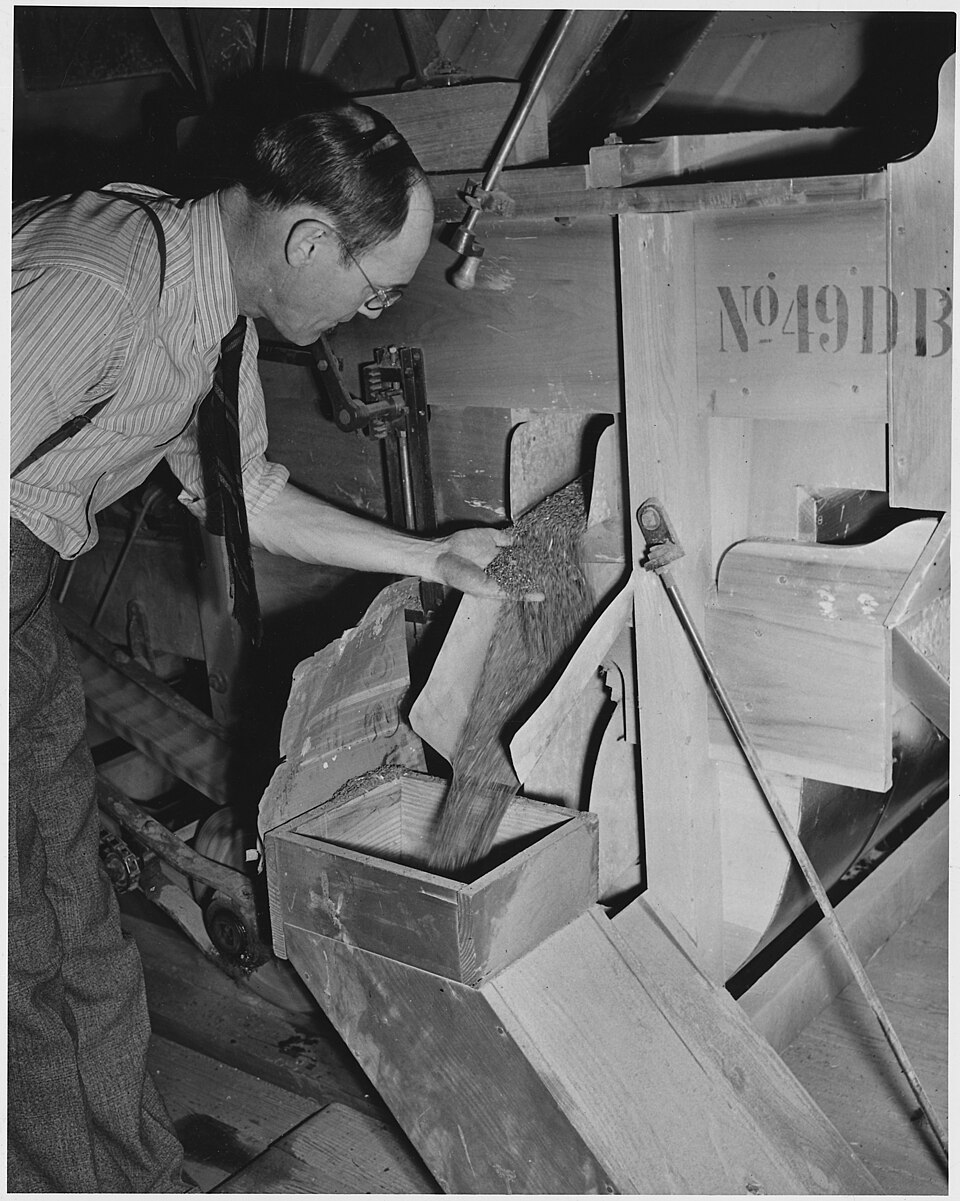
When grain is threshed, what comes off is a mixture. There is the grain itself. There is chaff – the light papery husks and glume fragments. There is broken straw. There is dust. There are weed seeds, which were everywhere in the era before chemical weed control, and there are shrunken, immature and broken kernels of the crop itself.
That mixture cannot be sold, cannot be milled properly, and above all cannot be planted. A farm sowing its own seed from the crib is sowing whatever is in the sack, which means sowing its own weeds back into the field and sowing small shrunken kernels that produce weak plants.
So the mixture had to be separated, and the separation has to work on two different principles at once, because the contaminants differ from the grain in two different ways.
Like our content? Follow us for more.
Two Properties, Two Mechanisms
This is the clever part, and it is why the machine has both a fan and screens.
The first property is weight relative to air resistance. Chaff and dust are light and catch the air; grain is dense and does not. Blow a steady stream of air through a falling curtain of the mixture and the light material is carried sideways out of the stream while the heavy grain falls more or less straight down. That is winnowing, and it is one of the oldest operations in agriculture.
The second property is size and shape. A weed seed may be perfectly heavy enough to fall with the grain, in which case air will never separate it. But it is usually a different size. Pass the mixture over a screen with holes large enough for the weed seed and too small for the grain and the weed seed falls through. Pass it over a screen with holes too small for the grain but large enough for nothing you care about and the broken and shrunken kernels go through while the good grain rides over.
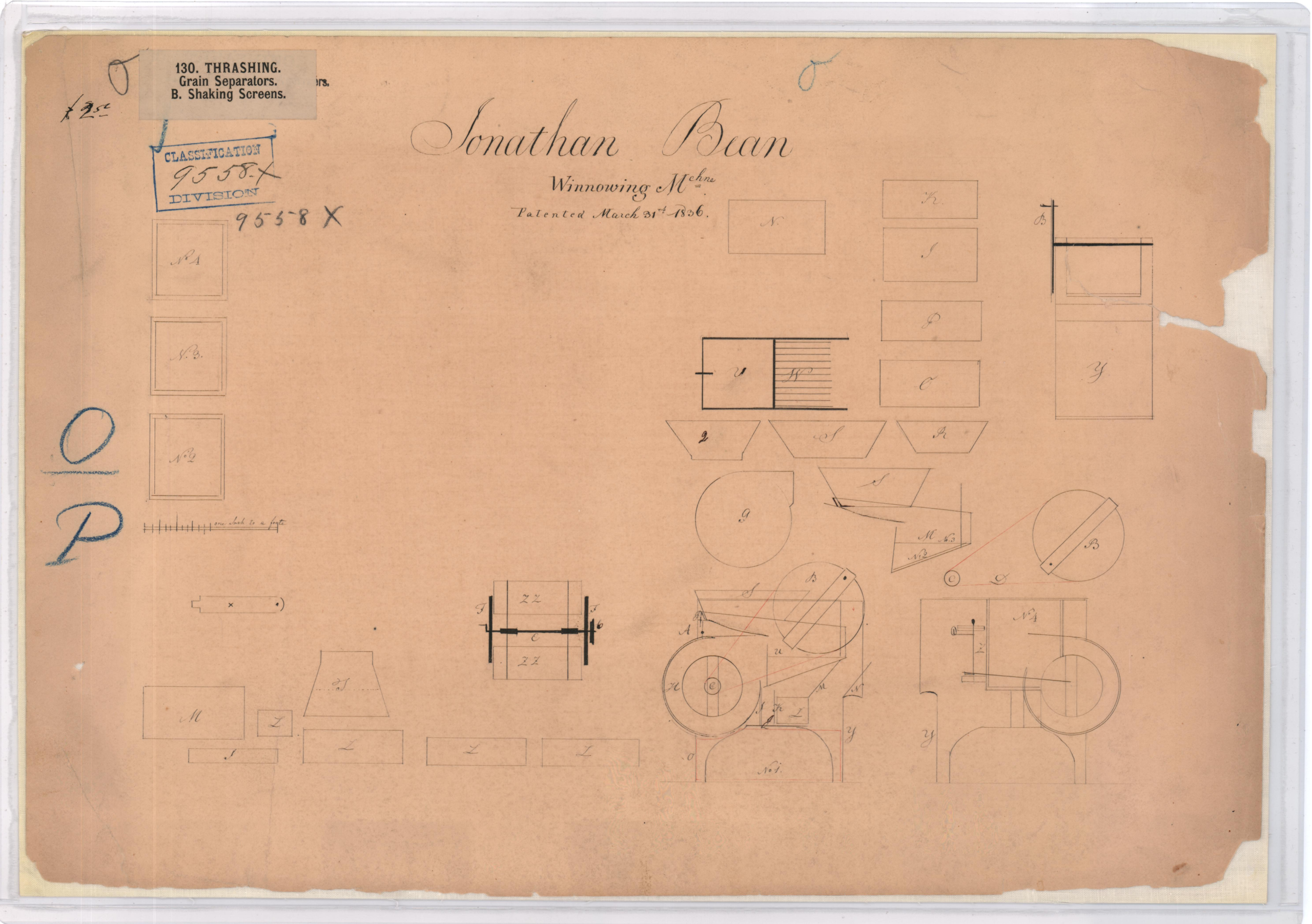
A fanning mill does both. The crank drives a bladed fan inside the case, producing a continuous air stream, and it simultaneously drives an eccentric that shakes a stack of screens. Grain fed into the hopper falls through the air blast and across the screens in sequence, and comes out the bottom in two or three streams: good clean grain out of one chute, small and broken material out of another, and chaff blown out the back.
The Screens Were the Skill
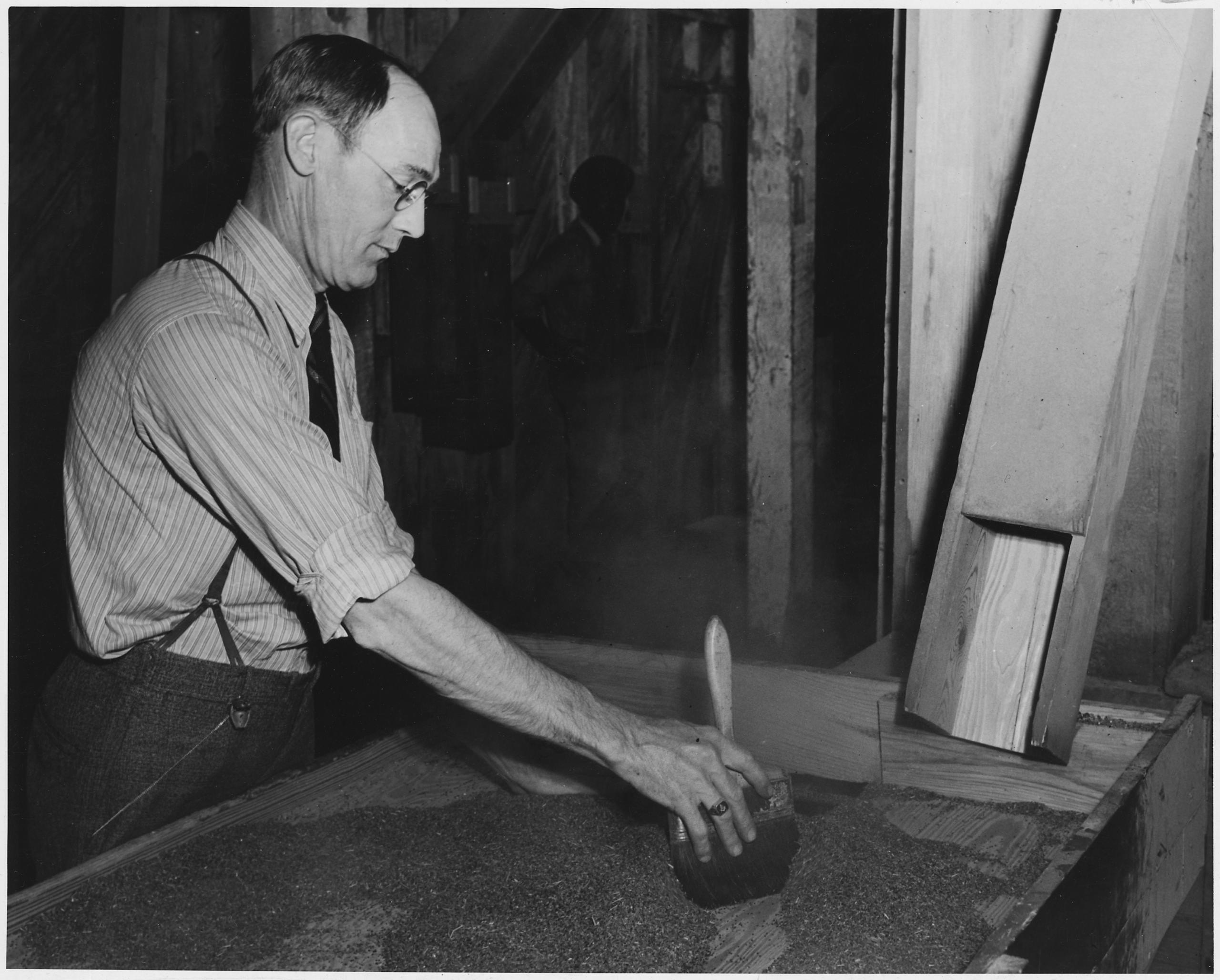
The machine came with a set of interchangeable screens, and selecting them was the whole art of using it.
Different crops need different sizes. Wheat, oats, barley, rye, flax, clover and timothy are all different in dimension and shape, and a mill set for one will do a poor job on another. Beyond that, a farm cleaning for seed wanted a much more aggressive setting than a farm cleaning for sale, because the standard is higher – you will tolerate some small kernels in grain you are selling by weight and you will not tolerate them in grain you are planting.
So the operator chose a top screen, a bottom screen, a fan speed by how fast he turned the crank, and a feed rate by how far he opened the hopper gate. Four variables, adjusted by judgement, against a mixture that varied from load to load.
Getting it wrong in one direction left weed seed in the sample. Getting it wrong in the other direction blew good grain out the back with the chaff, which is money on the floor. Men who were good at running a mill were known for it.
It Replaced Waiting for Weather
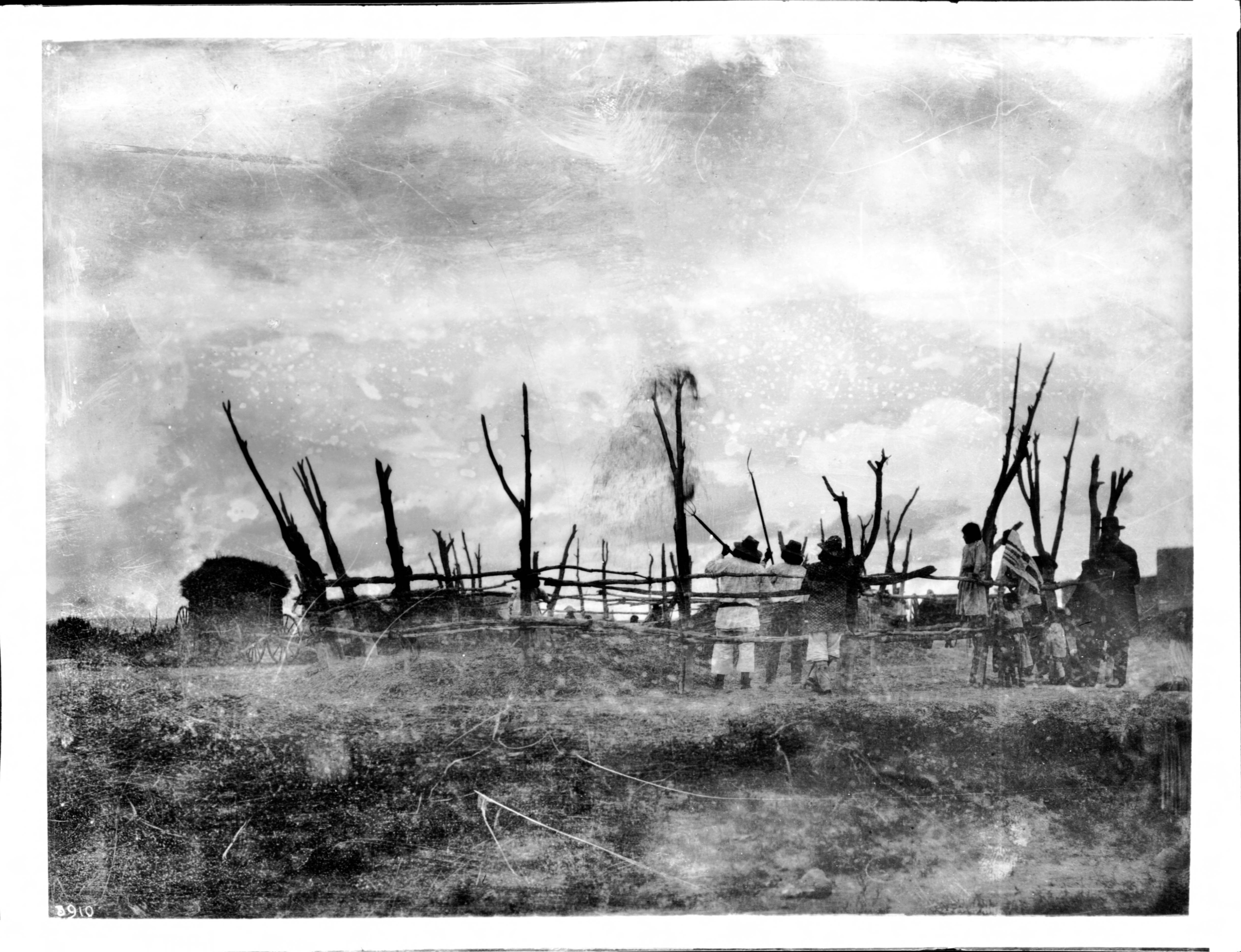
Before machines like this, winnowing was done by throwing threshed grain into the air on a windy day and letting the wind do the sorting – with a shovel, a basket or a sheet, usually on a threshing floor sited to catch a breeze.
That works, and it worked for thousands of years. But it has an obvious defect: it requires wind, of the right strength, on a day when you have labour available and the grain is dry.
Too little wind and nothing separates. Too much and the grain goes with the chaff. And the whole operation is at the mercy of a variable that nobody controls.
A fanning mill manufactures the wind. The crank makes a steady, adjustable, repeatable air stream inside a building, on any day, at any hour, regardless of the weather. That is the real advance – not that it was faster, though it was, but that it took one of the central operations of grain farming and removed it from the list of things that depend on the sky.
It Was a Seed Machine as Much as a Grain Machine
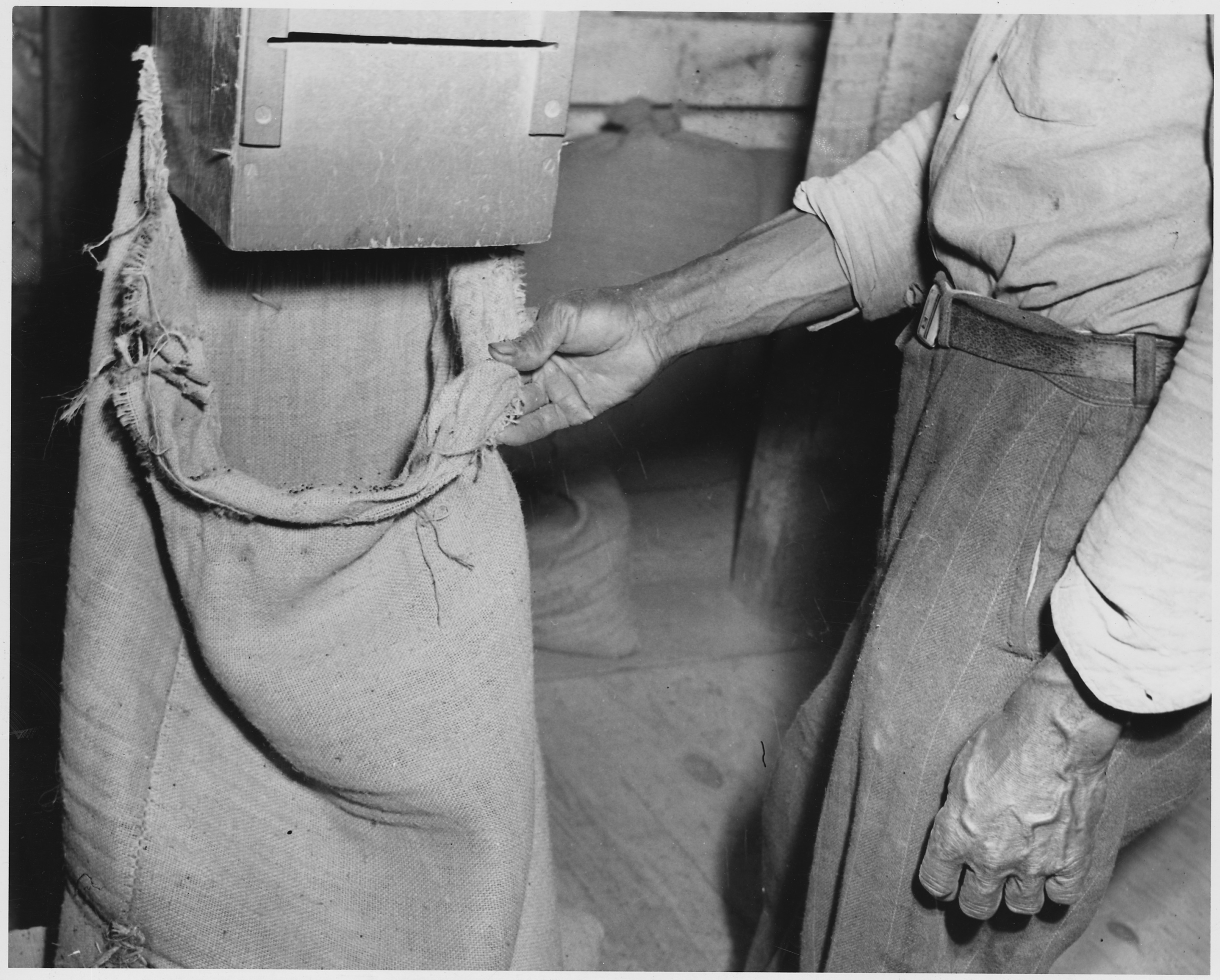
The highest-value use was not cleaning grain for market. It was preparing seed.
A farm in 1964 that still saved its own seed – and plenty did for small grains and forage – ran it through the mill before sowing. The mill removed the weed seed, which is the single most important thing anybody can do to a seed lot, and it graded out the small kernels so that what went into the drill was uniform and vigorous.
Seed cleaning was also a trade. Men owned good mills and travelled, or operated a cleaning plant in town, and farms brought seed in to be cleaned properly. Clover and timothy seed in particular were valuable enough and troublesome enough to clean that specialists handled them.
And the mill was the quality control step in the local seed trade. A farm selling seed to a neighbour was selling the output of a mill, and what the buyer was buying was really the cleanliness.
The Stencil on the Side
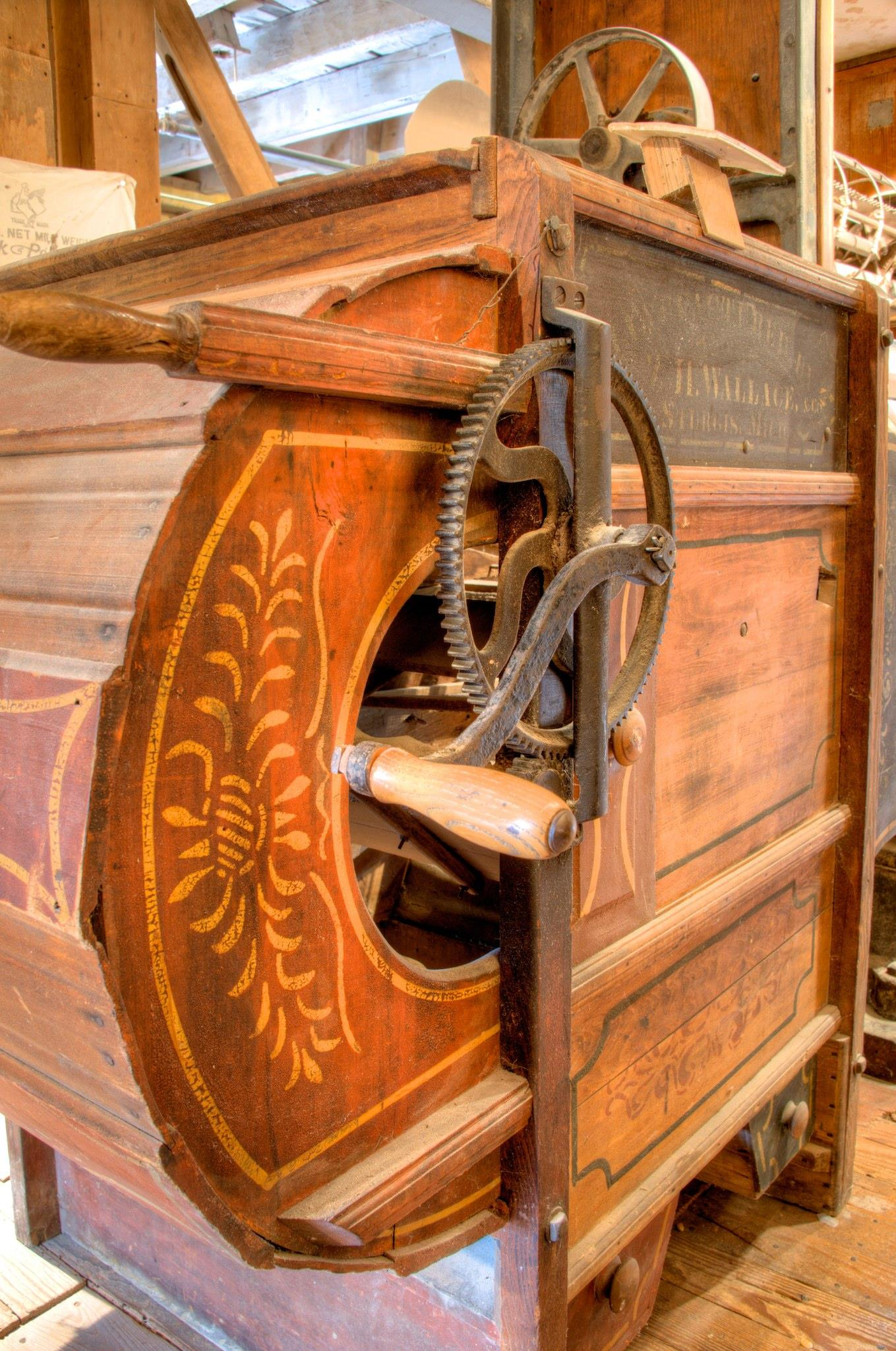
One small thing worth noticing on any survivor is the painted or stencilled lettering, because it tells you something about how these were sold.
Fanning mills were made by a very large number of small American manufacturers, frequently working regionally, and they competed on the screens rather than on the box. The case is simple carpentry that any shop could produce. The fan is a few paddles. What distinguished one maker from another was the range and quality of the perforated plates supplied with it, and whether the shaking mechanism delivered an even distribution across the screen rather than piling the load on one side.
So the advertising talked about seeds. A maker would list the crops its screen set covered and the troublesome weed seeds its plates would catch, which is an unusually specific claim for a piece of nineteenth-century farm equipment and tells you the buyers knew exactly what they were assessing.
It also means a mill found with its full original screen set is a far more interesting object than one found empty, and that the stencil is worth reading before anybody repaints anything.
What Replaced It
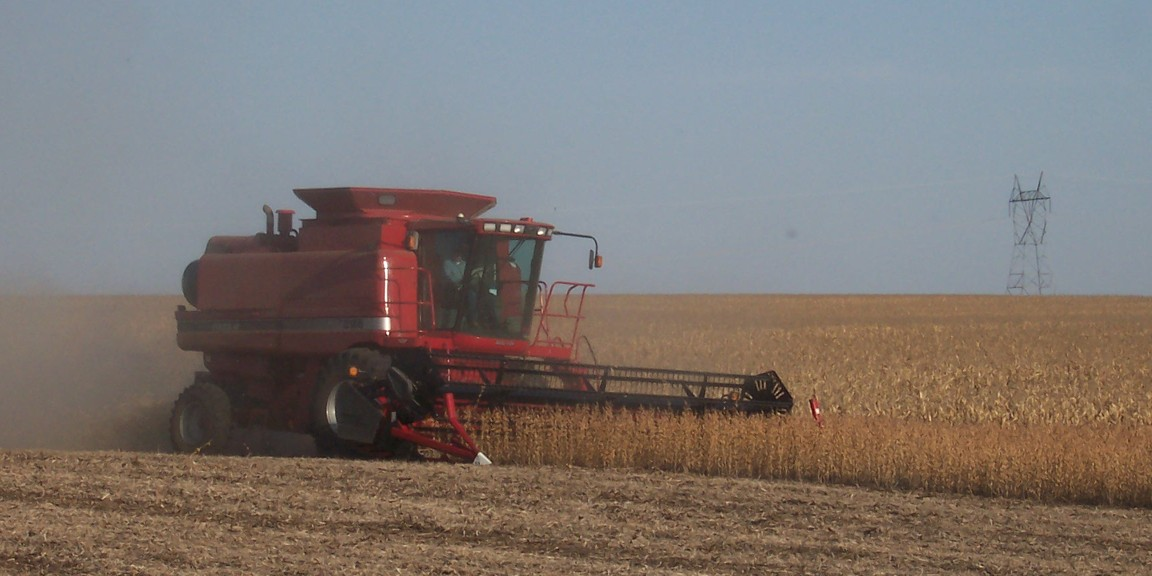
Three things in sequence, and the last one is the interesting one.
First, power. The same machine driven by a belt from a stationary engine or a tractor did the same work without an arm, and larger versions were built for the same job at scale.
Second, the combine. A combine harvester does threshing and cleaning in one pass, in the field, using exactly the principles above – it has a fan and it has sieves, and the grain that comes out of the tank is already cleaned. Which means the separate cleaning operation at the farmstead disappeared for grain going to market, because it had been absorbed into the harvest.
Third, and this is what finished it: farms stopped saving seed. Purchased seed – cleaned, graded, treated and certified by somebody else – became the norm for most crops, and hybrid corn made saving seed pointless as a matter of genetics rather than convenience. Once a farm buys its seed in a bag, the entire reason to own a precision cleaning machine evaporates.
So the mill lost its two jobs to two different changes. The market-grain cleaning went into the combine, and the seed cleaning went into the seed industry.
The Box in the Barn
They survive in reasonable numbers because they are made of wood and lived indoors, which is a better combination than most farm equipment managed.
If you find one, open the side door and look at the fan. It is a simple set of flat wooden paddles on a shaft, and it is the entire reason the machine exists – a device for making a specific amount of wind on demand, in a building, in any weather.
Then pull out the screens. There will be two or three still in it and usually more stacked underneath, each perforated differently, and those perforations are a record of exactly what that farm grew and how particular it was about its seed.
It is a sorting machine from before anybody used that phrase, built on the observation that the things you want and the things you do not want differ in weight and in size – and that if you exploit both differences at once, you can take a sack of mixed rubbish and turn it into something worth planting.
Like our content? Follow us for more.
