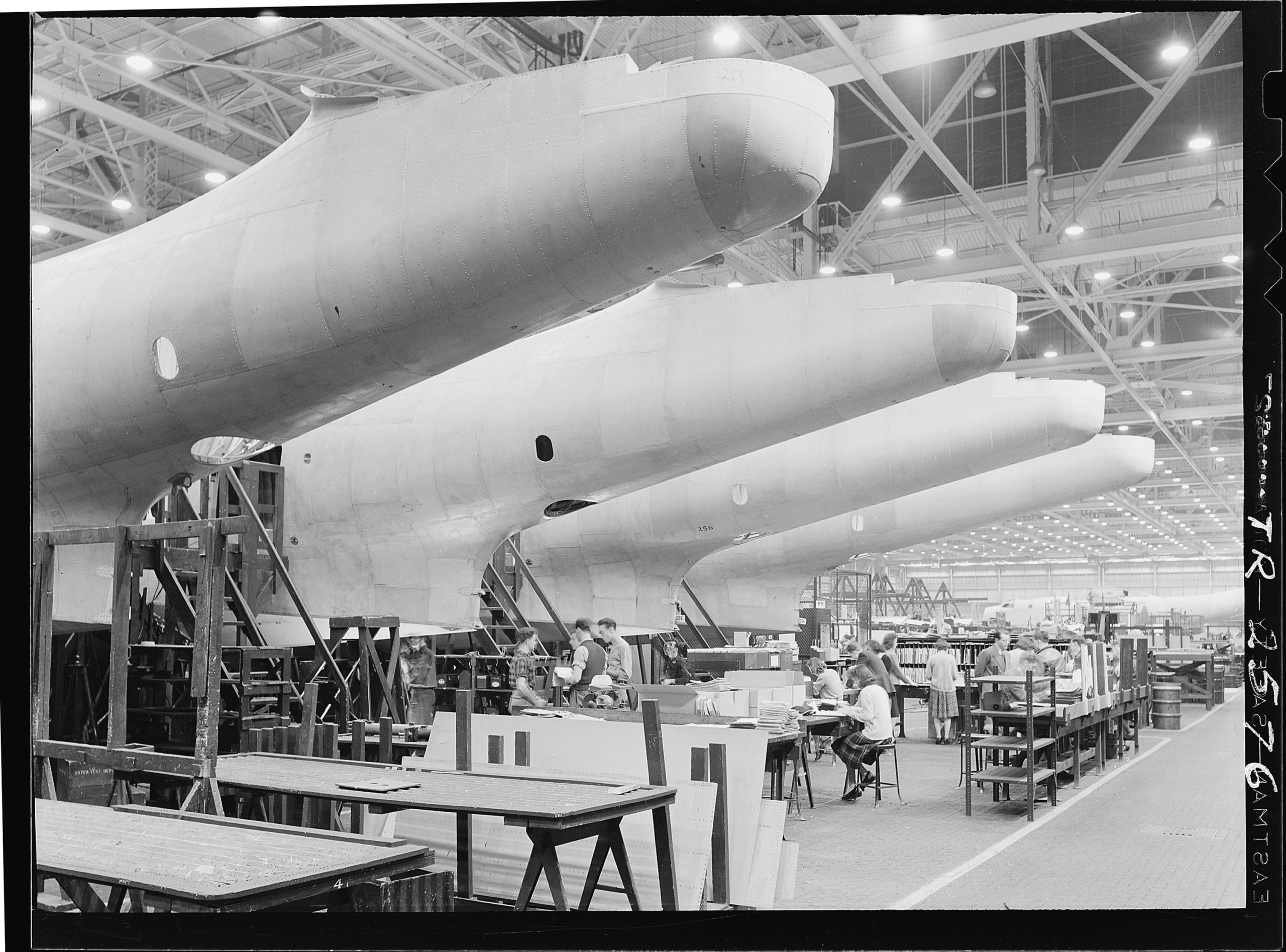
In 1960 an aeroplane was aluminium held together by several hundred thousand rivets, each one driven by two people working on opposite sides of a structure, unable to see each other, communicating by tapping.
Its accuracy came from a physical fixture the size of a building. Its definition was a few thousand hand-drawn sheets. And it was designed, made, finished and flown from one site that made most of its own parts.
Here are ten things that were ordinary in an aircraft factory in 1960, and what became of each one.
1. The Aircraft Were Riveted Together by Pairs of People Shouting at Each Other
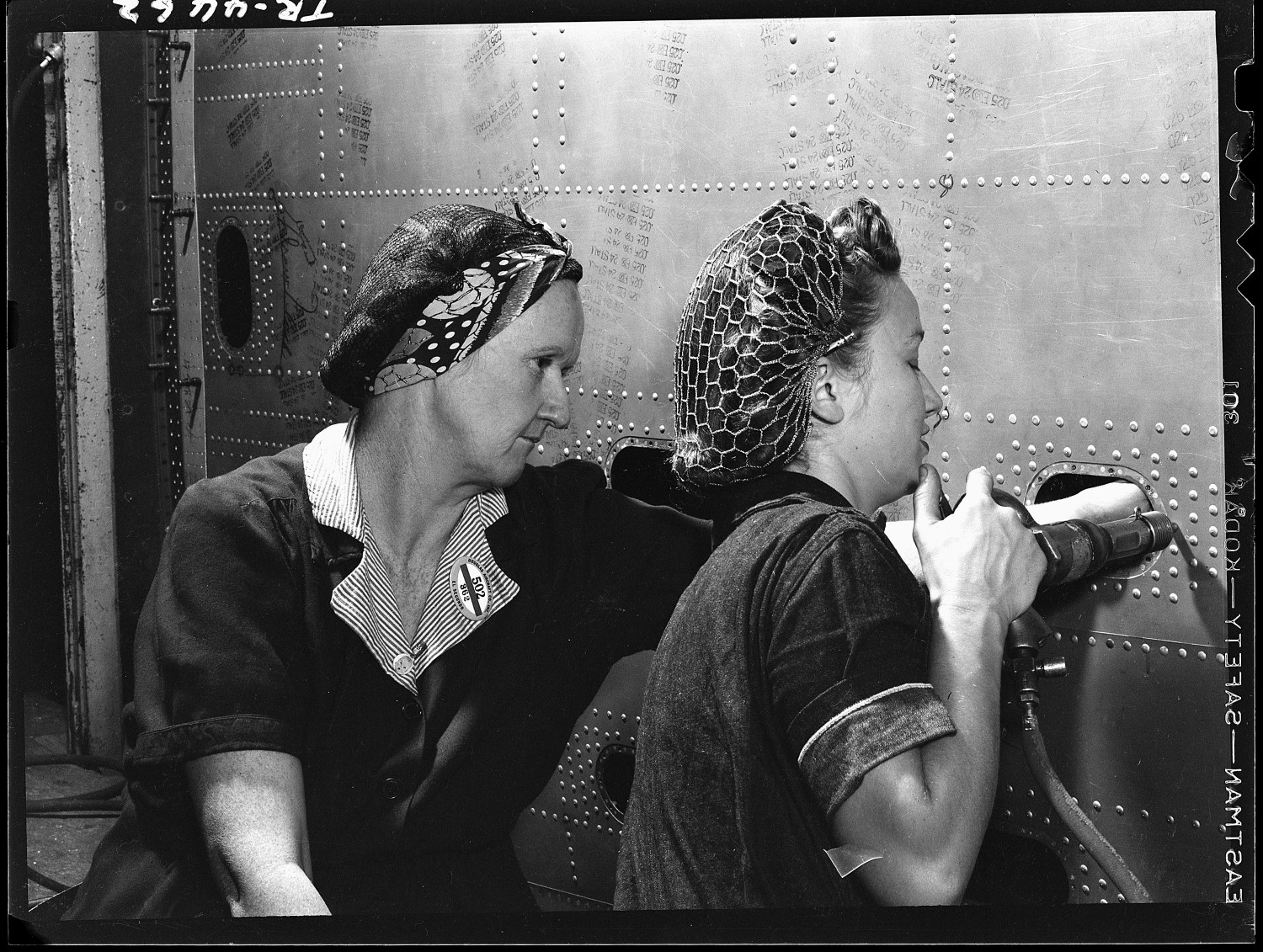
An airframe is held together by hundreds of thousands of rivets, and each one needed somebody with a gun on one side and somebody with a bucking bar on the other, frequently inside a structure, working by feel and by sound with no view of each other.
Automated riveting, bonded and composite structures and friction-stir methods have removed a large share of it, though hand riveting persists where access demands it. Riveting crews worked in sustained noise inside confined metal structures, communicating by tapping, and the pairing was so established that crews stayed together for years.
Like our content? Follow us for more.
2. The Jigs Were Enormous and Defined the Aeroplane
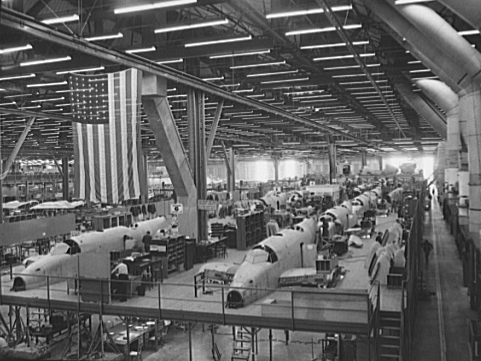
Accuracy came from jigs – vast fixtures that held every component in its exact relative position while it was joined. The jig was the aircraft’s dimensional definition, it was built before the aircraft, and it cost a fortune.
Laser and photogrammetric measurement, numerically controlled machining to tolerances that need no jig, and determinate assembly using self-locating parts have largely displaced them. A jig was a physical embodiment of a design, which meant changing the design meant rebuilding the jig, which is a large part of why aircraft designs were frozen so early and so firmly.
3. A Huge Proportion of the Workforce Were Women and They Were Paid Less
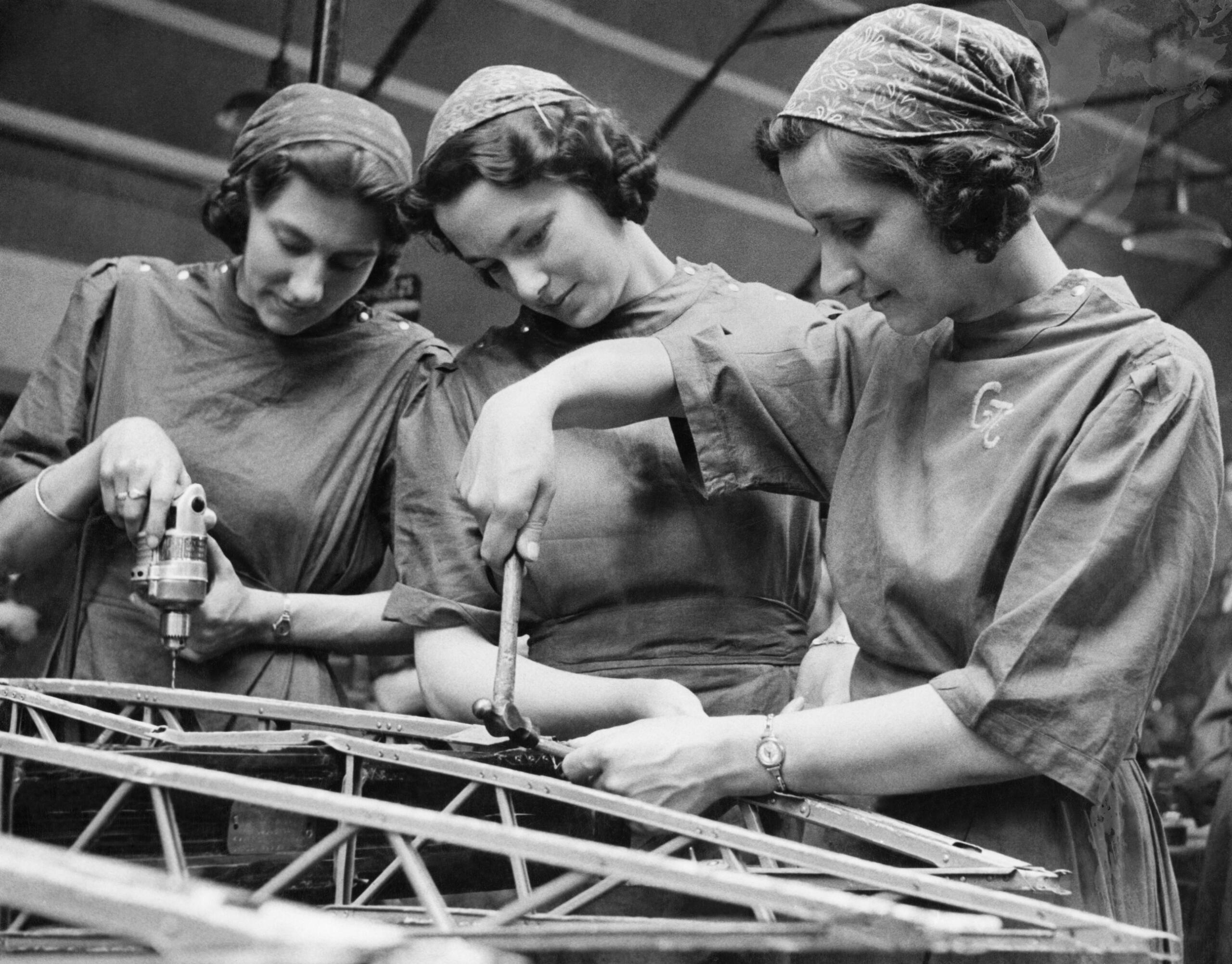
Women made up a very large share of the workforce in riveting, wiring, fabric work, inspection and sub-assembly, in numbers established during wartime production and sustained afterwards, on lower rates for comparable work.
Equal pay legislation and the removal of formal grade segregation changed the structure over subsequent decades. The wartime demonstration that the work could be done by anybody trained to do it was never seriously disputed afterwards, which makes the persistence of the differential a decision rather than an assumption.
4. Asbestos Was in the Insulation, the Brakes and the Firewalls
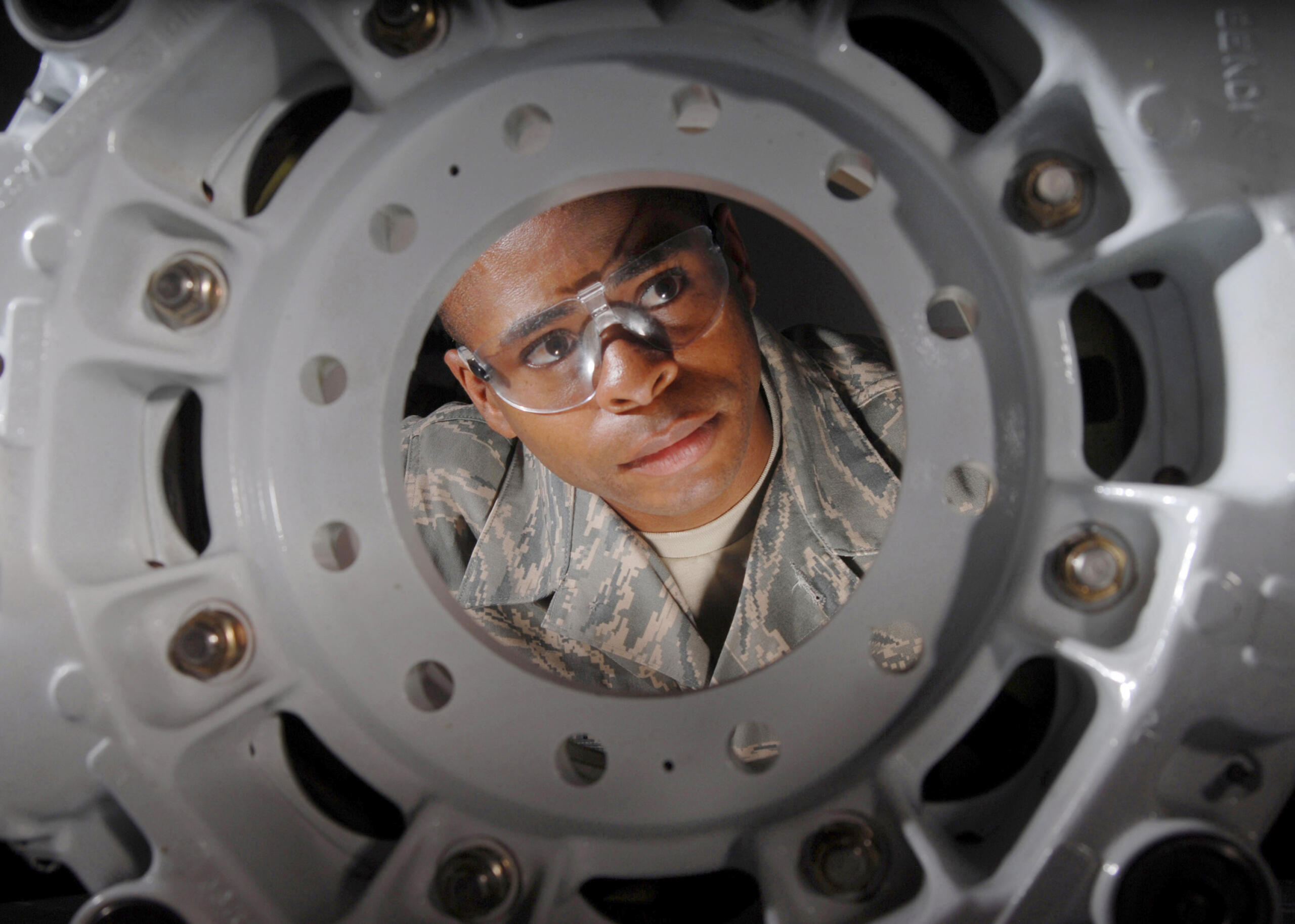
Thermal and fire insulation, brake assemblies and engine bay materials contained asbestos, and fitting, cutting and reworking them was ordinary production work with no controls.
Prohibited in new manufacture, with legacy material handled under licensed controlled conditions. Stated here as occupational history only. Anybody who worked with these materials should discuss it with their own doctor rather than with an article.
5. The Paints, Primers and Sealants Were Breathed All Day
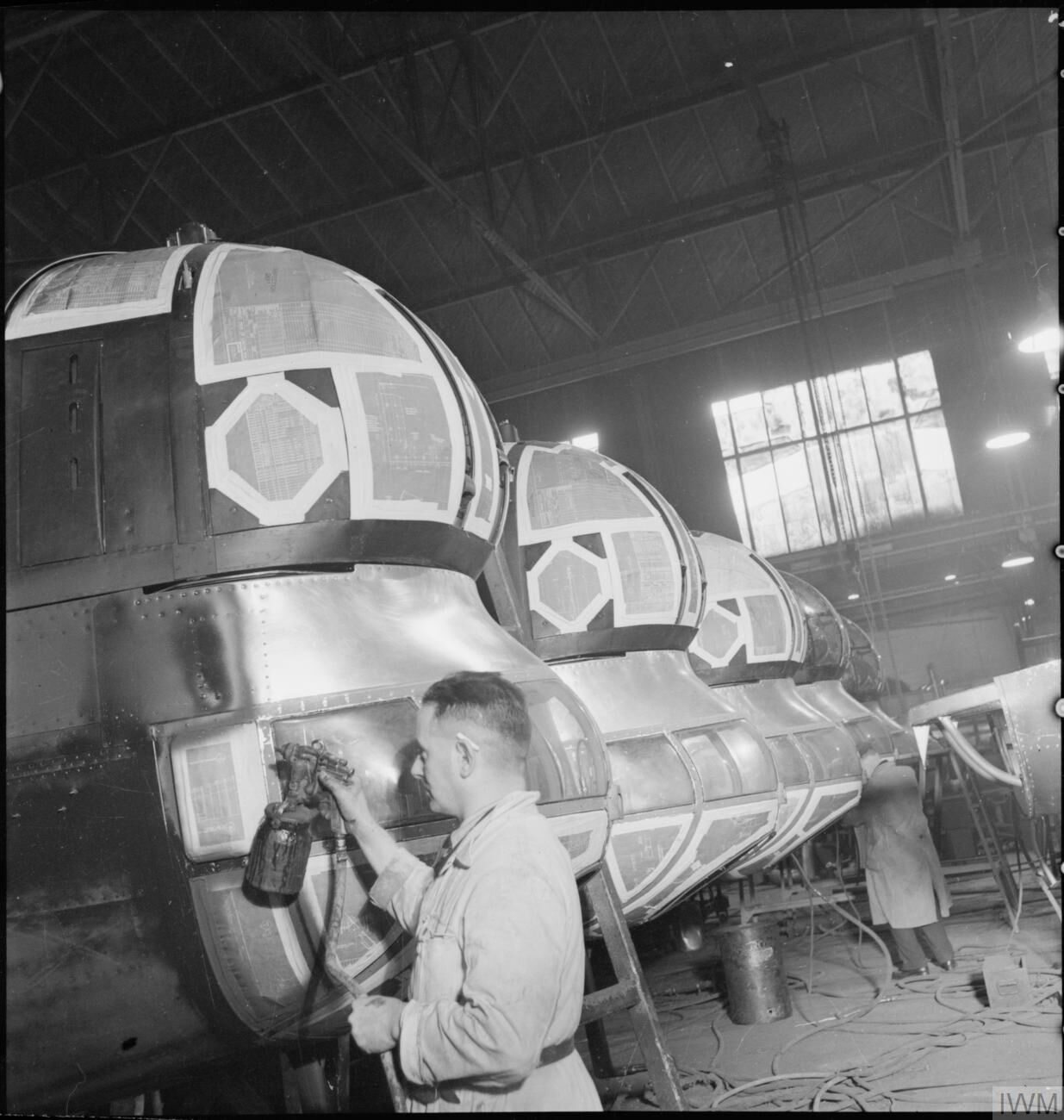
Chromate primers, cellulose finishes and polysulphide sealants were applied by hand and by spray in large quantities, frequently inside closed structures such as wing tanks, with minimal protection.
Extraction, supplied-air respiratory protection, confined-space procedures, substitution of the worst materials and robotic application have changed this substantially. Sealing the inside of a wing tank is among the more unpleasant jobs in the industry and the conditions in which it was formerly done would not now be contemplated.
6. Inspection Was a Man With a Torch and a Stamp
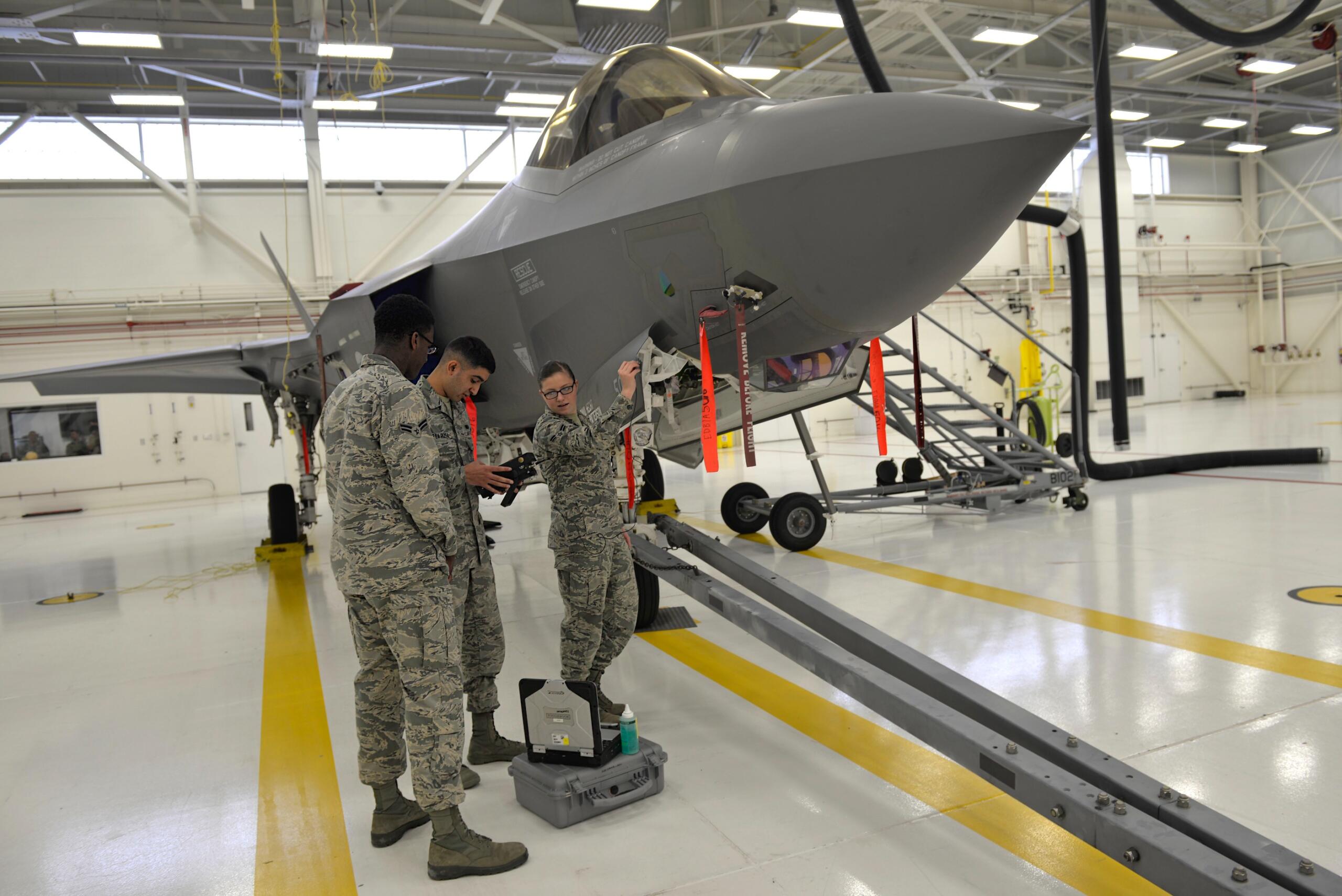
Quality assurance rested on inspectors examining work visually and by touch and applying a personal stamp to accept it. The traceability of the whole aircraft came down to those stamps and the paperwork behind them.
Non-destructive testing, digital traceability of every part and operation, and statistical process control now supplement the inspector, who still exists and still matters. The stamp system was better than it sounds, because it attached a named individual’s reputation to every acceptance, and some of that principle has been deliberately retained.
7. Design Was Done on Paper and the Drawings Were the Aircraft
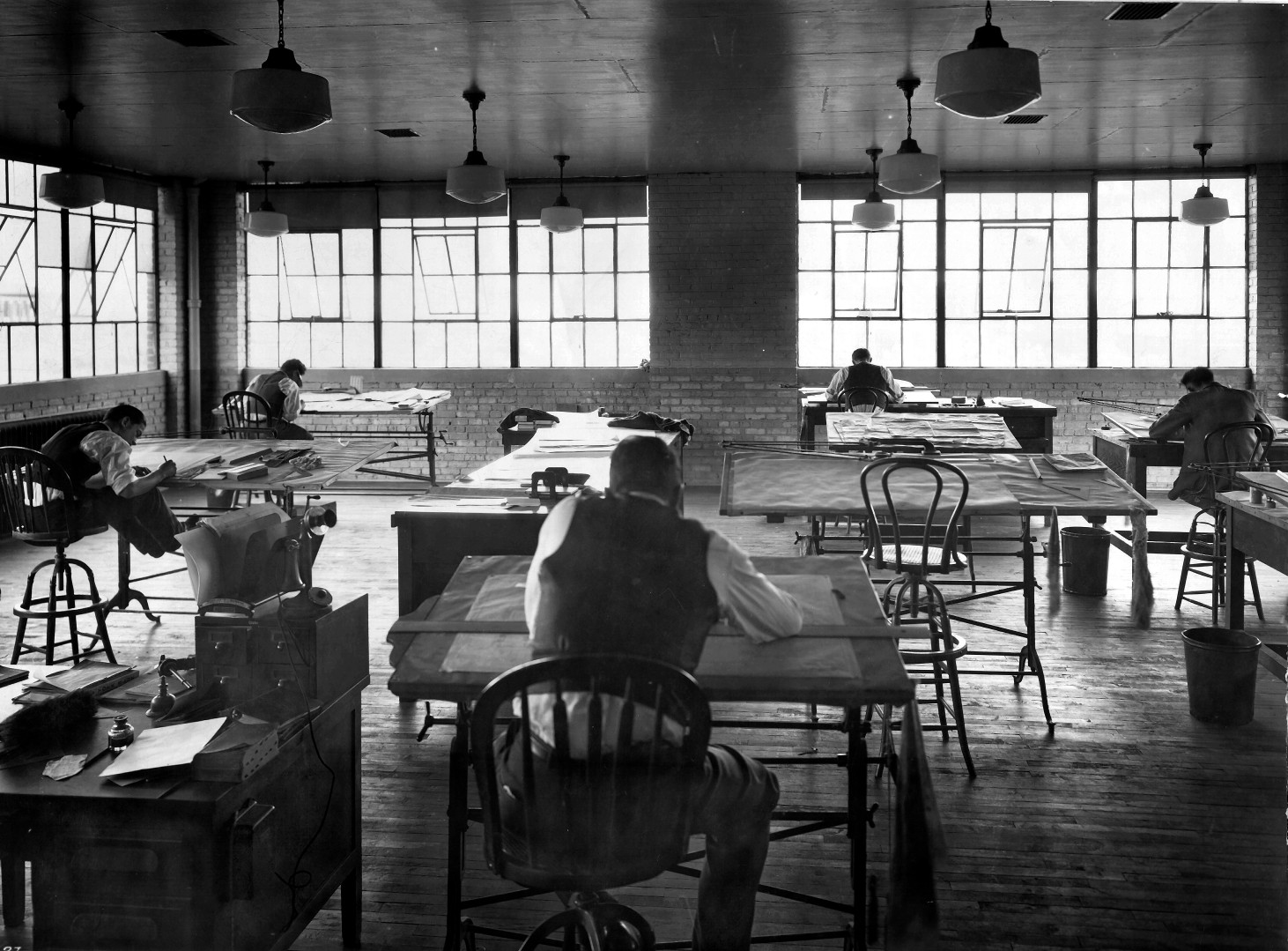
Design offices held thousands of hand-drawn sheets on linen and film, and the master drawings were the definitive record of the aircraft. A change meant reissuing drawings and tracking which build standard each aircraft was at.
Digital models that drive the machining directly replaced the drawing, and configuration management became a database rather than a filing problem. The build-standard tracking problem is still with the industry, because an airframe in service for forty years accumulates modifications and the record of what is actually fitted to a specific aircraft matters enormously.
8. The Workforce Went Up and Down With Single Contracts
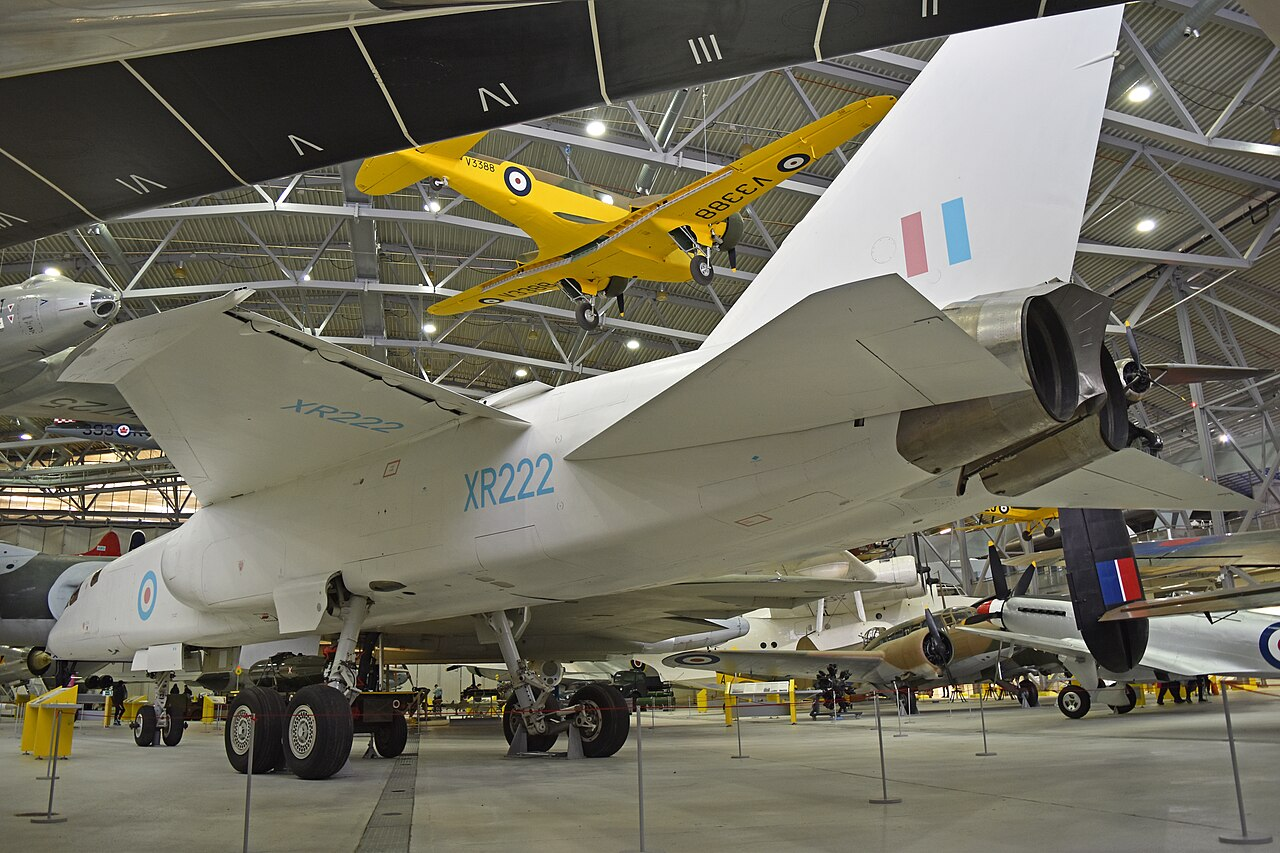
Employment depended on programmes, and a cancelled or won order moved thousands of jobs at once. Whole workforces were recruited and released on the outcome of individual government or airline decisions.
Consolidation into fewer, larger, multinational manufacturers with longer order books and diversified programmes smoothed it considerably, without removing it. For a factory town the volatility was the defining feature of the industry: a cancellation decided elsewhere could end the local economy within a year.
9. Everything Was Made in One Place
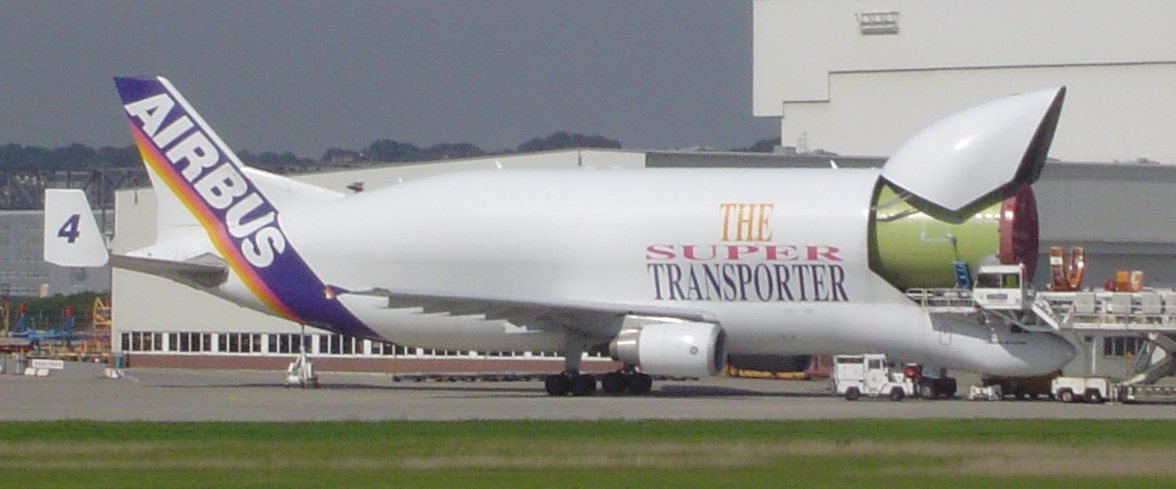
A manufacturer designed, machined, formed, assembled, finished, tested and flew the aircraft from a single site with its own airfield, including making most of its own parts.
Global supply chains with major structures built by partners on several continents and shipped for final assembly replaced it. The single-site model meant the whole capability was in one community, which is why the closure of an aircraft works removed an entire industrial skill base rather than one employer.
10. Nobody Thought the Metal Would Stop Being Metal
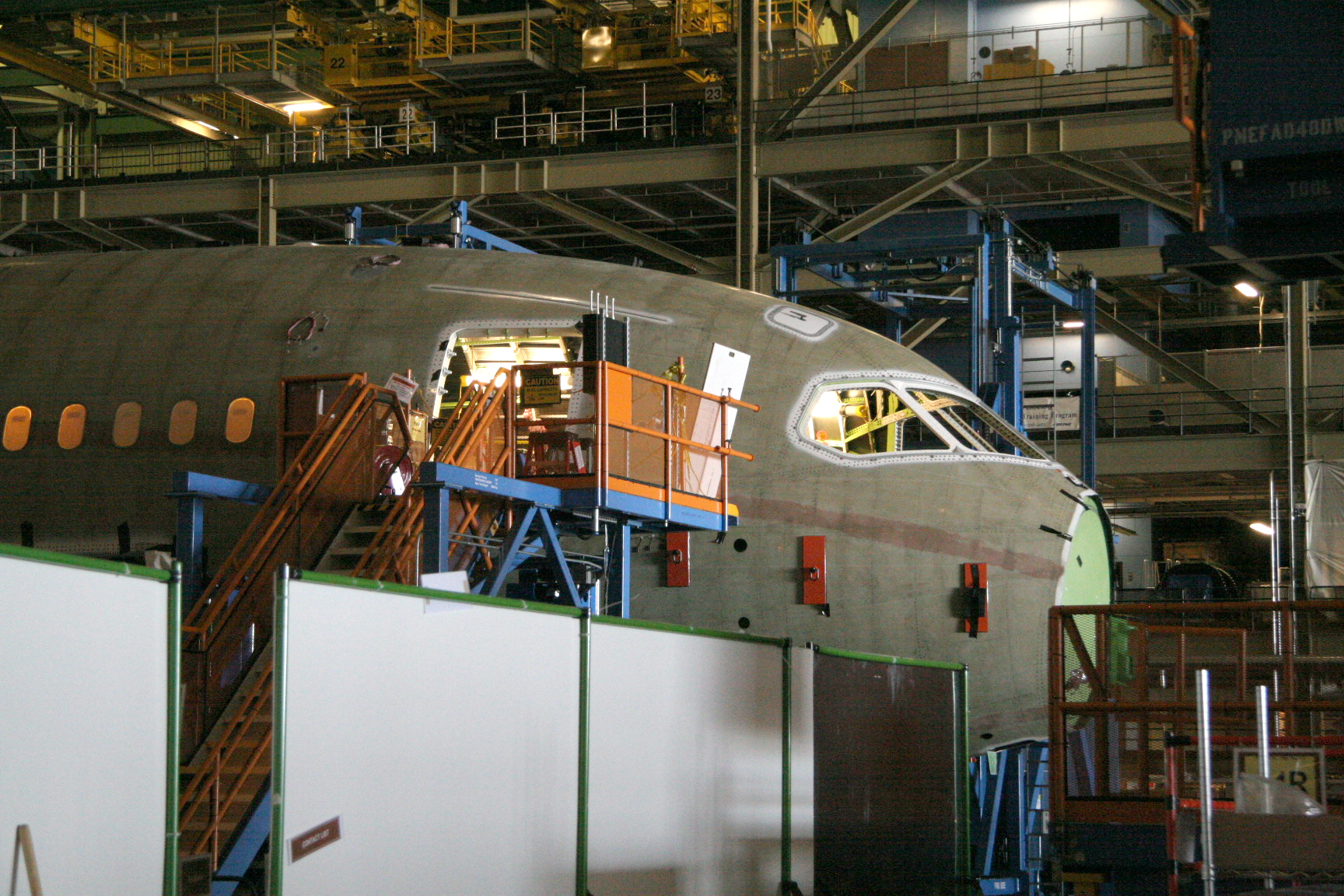
In 1960 an aeroplane was aluminium, riveted. Structural plastics reinforced with fibre were a curiosity, and the idea that a large aircraft’s wings and fuselage would be made of them was not a mainstream expectation.
Composite primary structure is now normal, and it changes everything upstream – no rivets, different tooling, different inspection methods, different repair, different skills. The riveting crews who defined the industry’s character for fifty years have no equivalent in a composite shop, and the craft that the whole trade was built on is the thing the material change removed.
The Jig Explains Why Aircraft Stopped Changing
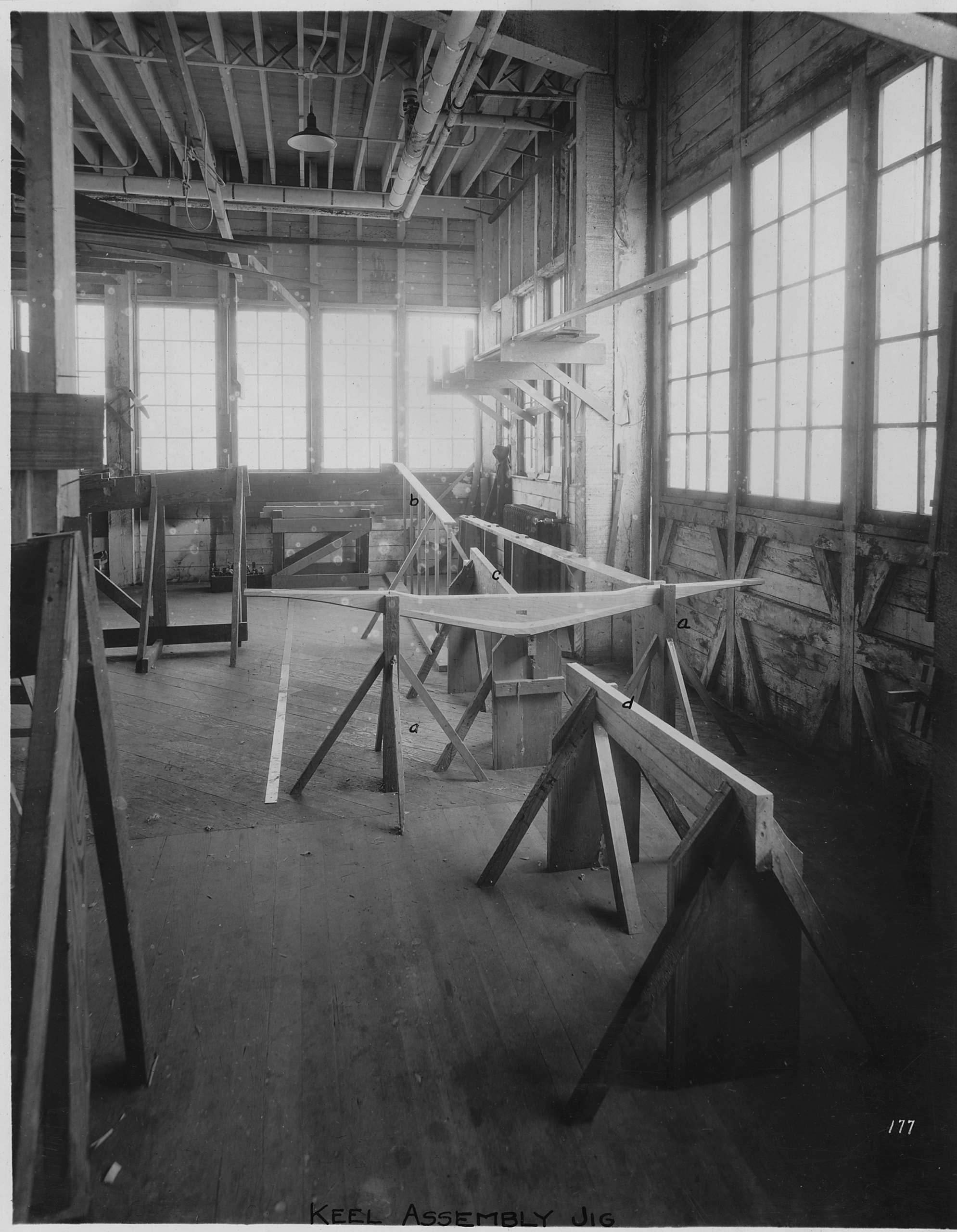
The most revealing item on this list is the jig, because it explains something about the industry that otherwise looks like excessive caution.
A jig is a fixture that holds every part of a structure in precisely the right place while it is fastened. In 1960 it was how accuracy was achieved, because individual components could not be made to tolerances tight enough to locate themselves. The jig did the locating, and the resulting aircraft was as accurate as the jig was.
Which meant the jig was the design, physically. The drawings described the aircraft, but the jig was what actually determined its shape, and it was built first, at enormous cost, and it could not easily be altered.
So a design change late in development did not mean redrawing a sheet. It meant modifying or rebuilding a structure the size of a house, and requalifying everything that came off it.
That is why aircraft designs were frozen early and defended fiercely, why modifications were batched into new marks rather than introduced continuously, and why a manufacturer would argue at length against a change that seemed sensible. The reluctance was not conservatism. It was a capital asset that embodied the old design and would have to be rebuilt.
Numerically controlled machining dissolved this, by making parts accurate enough to locate themselves. Once components can be trusted to fit without a fixture telling them where to be, the design stops being tied to a physical object, and changes become expensive rather than catastrophic.
Almost everything about how aircraft development now works follows from that.
It is also why the jigs themselves have almost entirely disappeared without trace. A press or a lathe from 1960 has resale value and turns up in a workshop somewhere. A jig is useful only for building one specific aircraft, so when the programme ended it was scrapped, and the largest and most expensive objects in the entire factory are the ones with no surviving examples.
What is left of these places is usually the building. Aircraft assembly halls are enormous clear-span structures with doors big enough to roll a finished aeroplane through, and that turns out to suit distribution warehousing almost perfectly – so a surprising number of them are still standing, still in use, and completely unrecognisable as to what they were for.
The airfield beside them is the giveaway. Look for a long straight road, or a business park with a peculiar amount of open ground on one side, and a runway is frequently underneath it.
If you worked in aircraft, you will know whether you were a riveter or a bucker and who you were paired with.
Which works was it, and is there still an airfield there?
Like our content? Follow us for more.