
Every summer, park pavilions, church halls, and grandma’s backyard fill with the great American family reunion — part feast, part census, part gentle competition — and while no two families are alike, the rulebook is somehow identical everywhere. Here are ten unwritten rules of the family reunion, whichever branch of the tree you’re on.
1. RSVP to the Organizer Like Your Inheritance Depends on It

One cousin does all the work. Answering her first message is the whole price of admission.
Every family has exactly one person — usually a cousin, aunt, or grandmother with a laminated folder — who books the pavilion, wrangles the group rate, and sends the messages everyone leaves on read until June. Rule one is simple: answer her the first time. Headcounts drive everything from burgers to T-shirt orders, and the reunion’s real guest of honor is whoever did the organizing. Thank her early, thank her often, and never, ever suggest “we should do this twice a year” unless you’re volunteering.
Like our content? Follow us for more.
2. Bring Your Assigned Dish — and Don’t Freelance the Legends

The potato salad has a rightful owner. Challenging it is how feuds start.
The food table is a map of seniority. Certain dishes belong to certain people — Aunt Ruth’s potato salad, Uncle Charles’s ribs, the banana pudding that one cousin has made since the Clinton administration — and showing up with a rival version of a legacy dish is not initiative, it’s an act of war. Bring what you were assigned, bring enough of it, label the dish with your name and any allergy landmines, and if you’re new to the family, bring ice. Ice is always safe. Ice makes you beloved.
3. Wear the Shirt

Yes, it’s neon. Yes, there’s a slogan. Put it on.
Somebody’s cousin designed a T-shirt — a family tree, a pun, a color visible from aircraft — and your feelings about wearing matching neon in public are irrelevant. The shirt is how the family finds each other at the park, how the group photo works, and how strangers at adjacent pavilions know exactly whose fried chicken smells best. Decades from now, those shirts surface in closets and stop people mid-motion with memory. Wear the shirt. Buy one for the baby.
4. Greet the Elders First — and Sit With Them on Purpose

The oldest generation is the reunion’s whole point. The folding chairs in the shade are the head table.
Before the horseshoes, before the buffet line, you make the rounds: the row of folding chairs in the best shade, where the oldest generation holds court, is the reunion’s true head table, and greeting it first is the family’s deepest law. Then — this is the part people forget — go back and actually sit awhile. Ask about the old house, the war years, how Grandpa really met Grandma. Those chairs are why everyone drove four hours, and the number of reunions where they’ll be occupied is not infinite.
5. Learn Names Before You Debate Whose Kid That Is
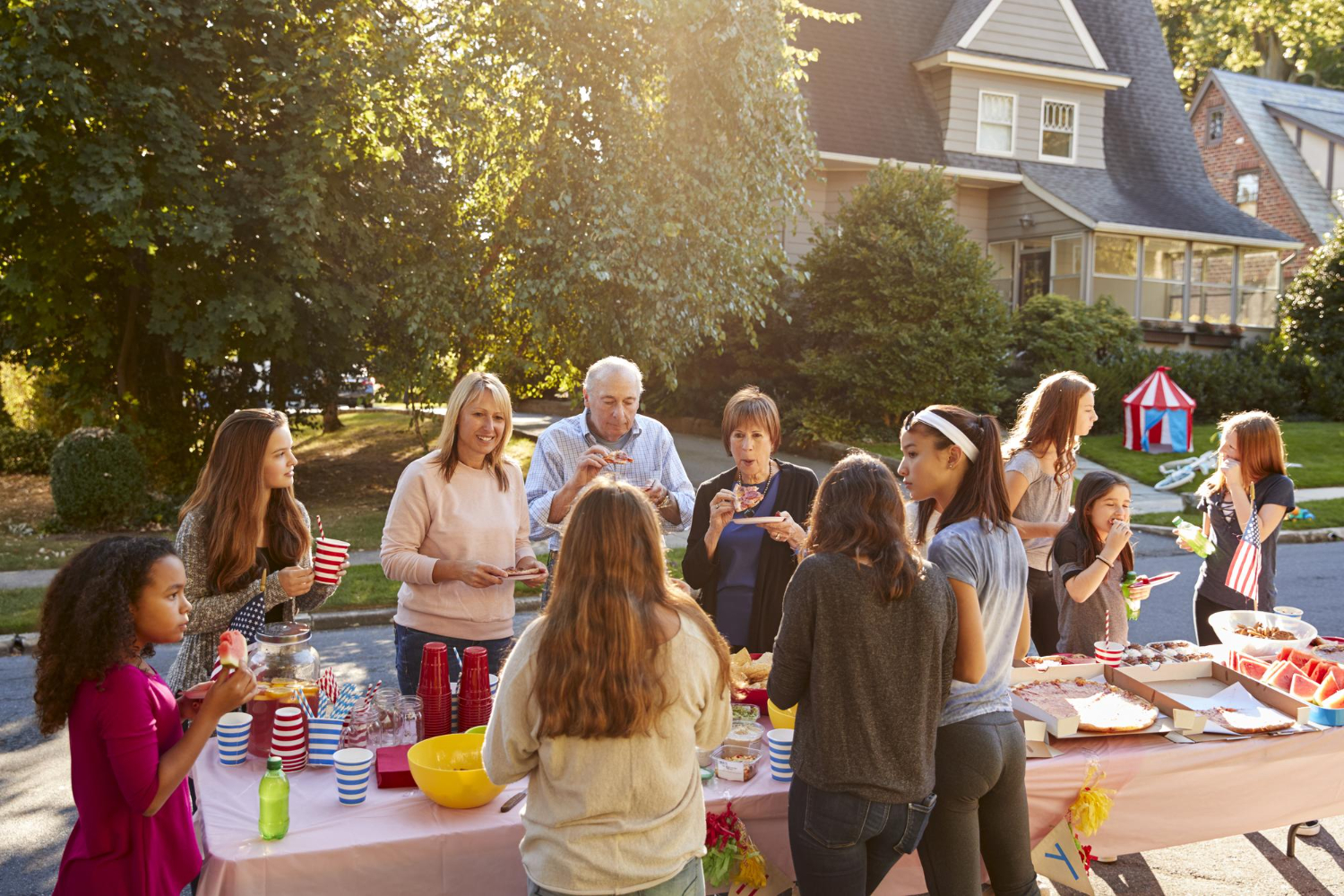
Half the crowd shares three first names. The cheat code is asking kids their parents.
Every reunion features four Michaels, a swarm of unattributed toddlers, and at least one adult you’ve hugged for thirty years whose exact position on the tree you could not diagram at gunpoint. Nobody expects mastery. The rules are gentler: wear the name tag if name tags happen, never guess a relationship out loud (“you must be the one who—” ends badly), and use the universal cheat code with children — “who’s your mama?” — which every reunion kid answers automatically, having been trained for exactly this.
6. The Group Photo Happens Once — Be There and Behave

Assembling ninety relatives is a military operation. Whoever’s on the ladder outranks everyone.
At some point an announcement goes out — after lunch, before the cake — and the entire family must assemble on a hillside in generational rows while one relative with a camera and a stepladder becomes, briefly, the supreme commander of the whole bloodline. The rules: come the first time they call, put the phone away, hold the squint, and keep the bunny ears to a tasteful minimum. That photo goes on walls for forty years. The people who wandered off to the horseshoe pit live in family infamy forever.
7. Ask Before You Post

Not everyone wants the reunion on the internet. The photo album and the feed are different rooms.
The modern amendment to the old rulebook: the reunion is a family space, and not every relative wants their kids, their health news, or their dance moves published to the general public. Shoot freely, share to the family group chat generously — and ask before anything goes wider, especially photos of children and elders. The family historian collecting shots for the album is doing sacred work; the cousin livestreaming Grandma’s toast is on thin ice, and everyone silently knows it.
8. Old Grievances Stay in the Parking Lot

Every family has a feud or two. The reunion is neutral territory, and everyone guards it.
Somewhere in every extended family sits an old quarrel — the inheritance, the business, the thing at the wedding in 1998 — and the reunion’s most sacred unwritten rule is that it does not attend. Neutral topics are infinite: the food, the kids, the drive, the score. Seating helps (the organizer already thought of it; see rule one), and if a spark does catch, the family’s designated peacemakers will materialize with dessert and a subject change. Three hours of peace, once a year, is an achievable diplomatic goal. Protect it.
9. Pitch In at Teardown — the Same Ten People Are Tired
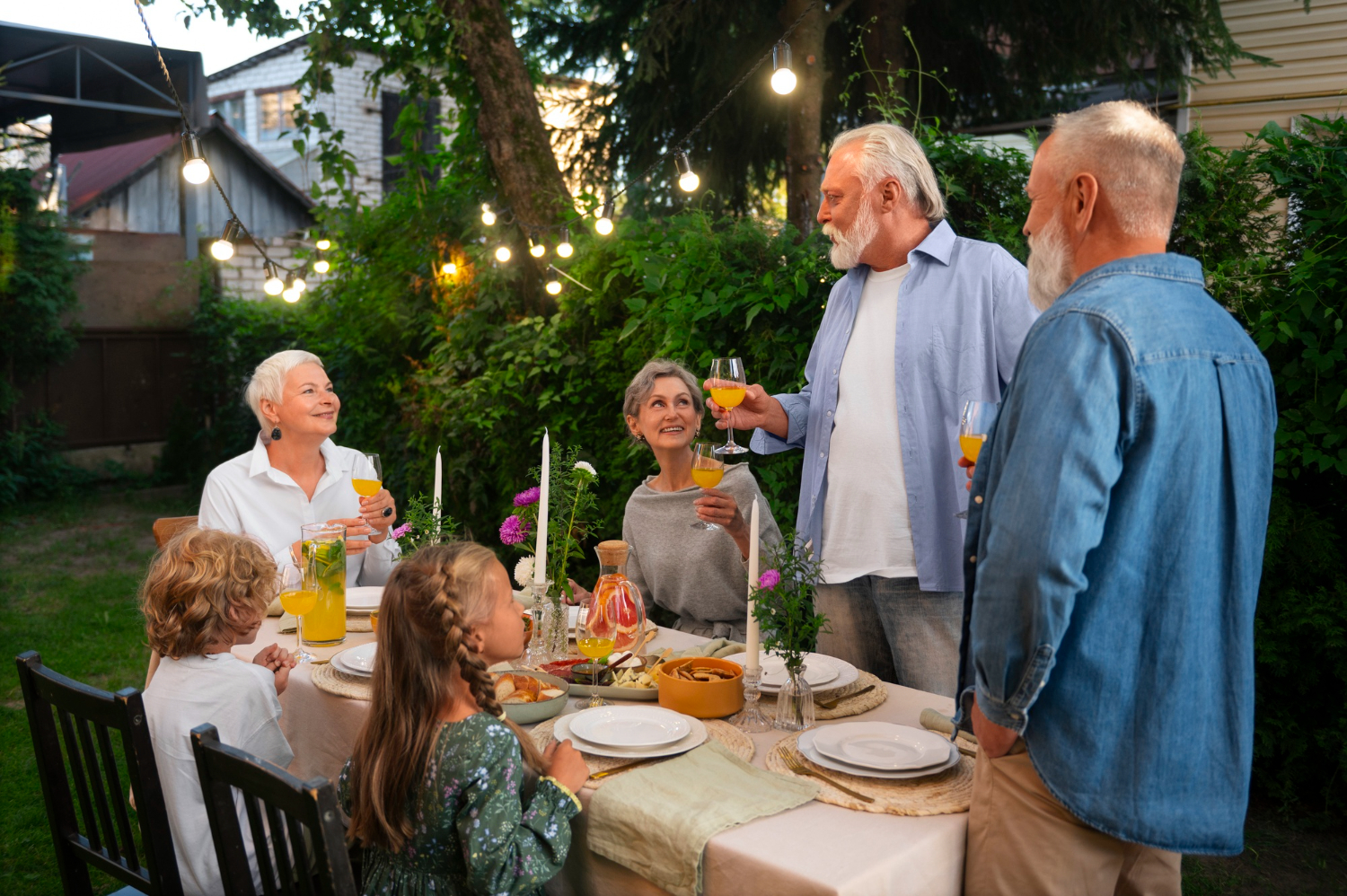
Setup and cleanup reveal everything. Folding chairs is how adults say thank you.
Reunions run on the labor of the same ten people every year — the early crew hauling coolers, the grill shift, the aunts boxing leftovers — and the fastest way to be remembered well is to join them without being asked. Stack chairs. Bag trash. Carry the third cooler. Claim no leftovers until the cooks have claimed theirs, and accept whatever plate is pressed on you at the end, because refusing a made plate is its own violation. The family notices who folds tables. The family remembers.
10. Leave With Addresses, Not Just Leftovers
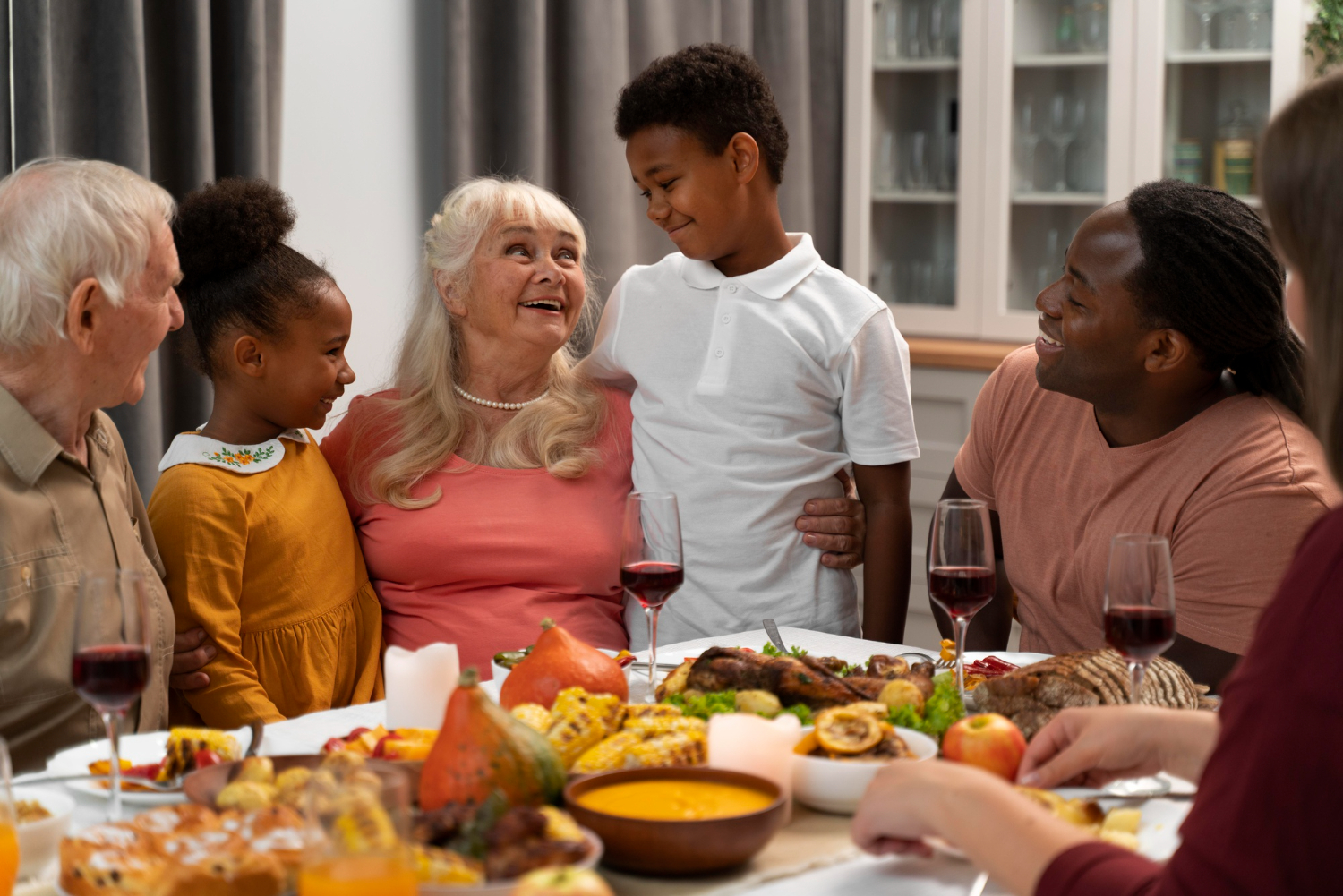
The reunion’s real product is the reconnection. Get the numbers before everyone scatters.
The last hour is the reunion’s harvest: the long goodbyes, the “we really should—” promises, the cousins you rediscovered over horseshoes. Close the loop before the caravan scatters — trade numbers, join the group chat, photograph the pages of the family history binder someone always brings, and write down the story Great-Uncle Ray told before you forget it, because that’s the version the next generation gets. And find the organizer one more time on the way out. Next year’s reunion starts with that thank-you.
The Whole Tree, One Afternoon a Year

Ten rules, one purpose: for a single afternoon, the scattered branches of a family stand in the same park, eat off the same table, and squint into the same camera — proof, renewed annually, that the tree is still one tree. The potato salad politics are just how families say it.
Reunions endure because nothing replaces them — no group chat holds a hundred people from four generations in one place with fried chicken. Families that keep the tradition going know the secret is lowering the bar: same park, same weekend, same shirts, and the machinery mostly runs itself, one laminated folder at a time. If your family’s reunion has lapsed, this is your sign — text the cousin with the folder. She’s been waiting.
Like our content? Follow us for more.