In 1964 a great many American farm households ran two enterprises that did not belong to the farm.
The hens belonged to the woman of the house, in a real and recognised sense – she managed them, did the work, made the decisions and kept the money. The cream, separated on the farm and hauled to a cream station in town in a tall metal can, frequently went the same way. Both were paid for in her hands, and both were hers to spend without asking anybody.
That money is remembered for exactly what it bought: the children’s shoes, a sewing machine, a piano, curtains, Christmas. Here are fifteen things every farm wife knew.
1. The Cream Went to Town in a Can
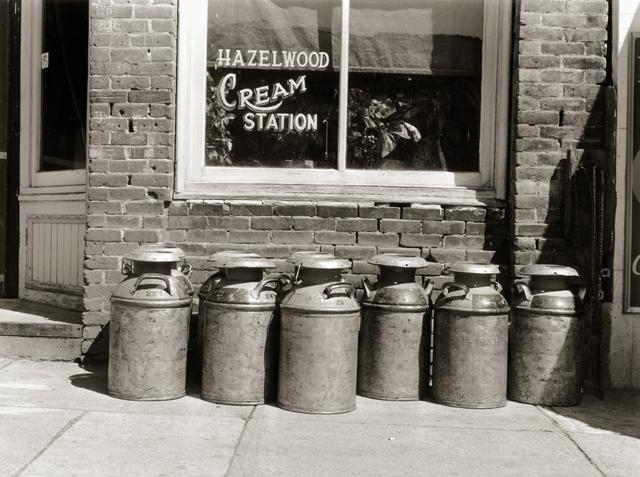
Cream separated out on the farm was collected in a tall metal cream can, held cool until there was enough, and hauled to a cream station in town – a small local business that bought it, tested it and shipped it on.
Bulk refrigerated farm tanks collected by tanker from licensed dairies, with cream stations gone entirely.
The cream station was a genuine small-town institution and it existed because farms shipped cream rather than milk. Separating at home meant the skim stayed on the farm for the stock and only the valuable fraction travelled, which is why a town needed a buying point rather than a dairy plant.
Like our content? Follow us for more.
2. The Price Depended on a Test, Not on the Volume
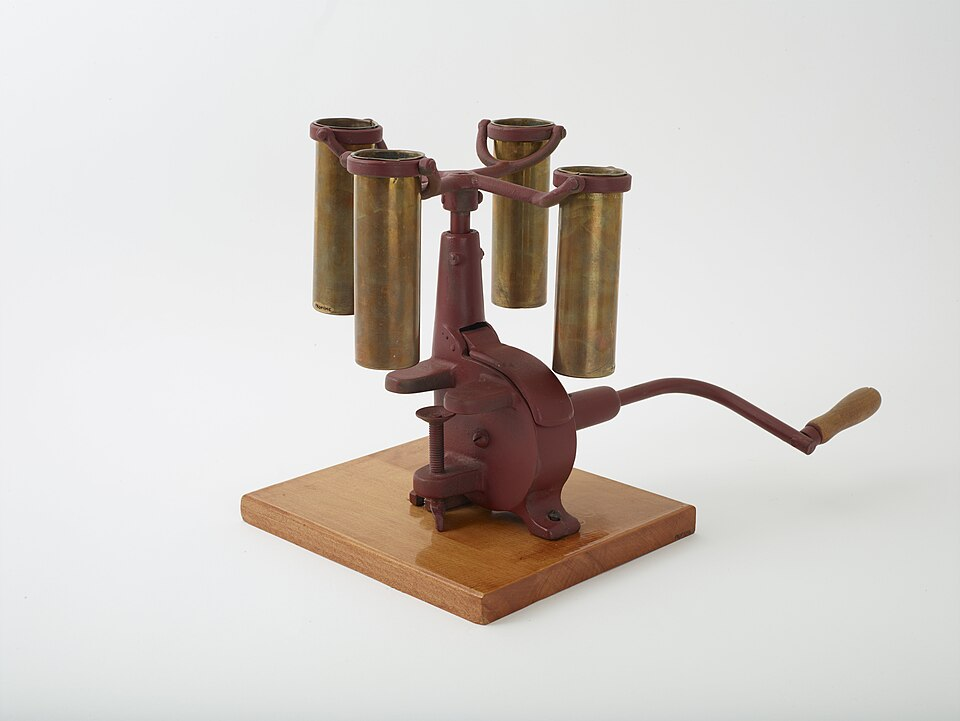
Cream was paid for by its butterfat content, measured by a laboratory test performed on a sample from every can, with the result determining the rate per pound of fat rather than per gallon of liquid.
The same principle, with automated testing of bulk tank samples and components priced separately under formal milk marketing arrangements.
Paying on a measured component rather than on volume was an early and genuinely important piece of agricultural standardisation. It meant a farmer could not improve a cheque by adding anything, and it rewarded the management of the herd rather than the handling of the product.
3. Sweet Cream and Sour Cream Were Different Products
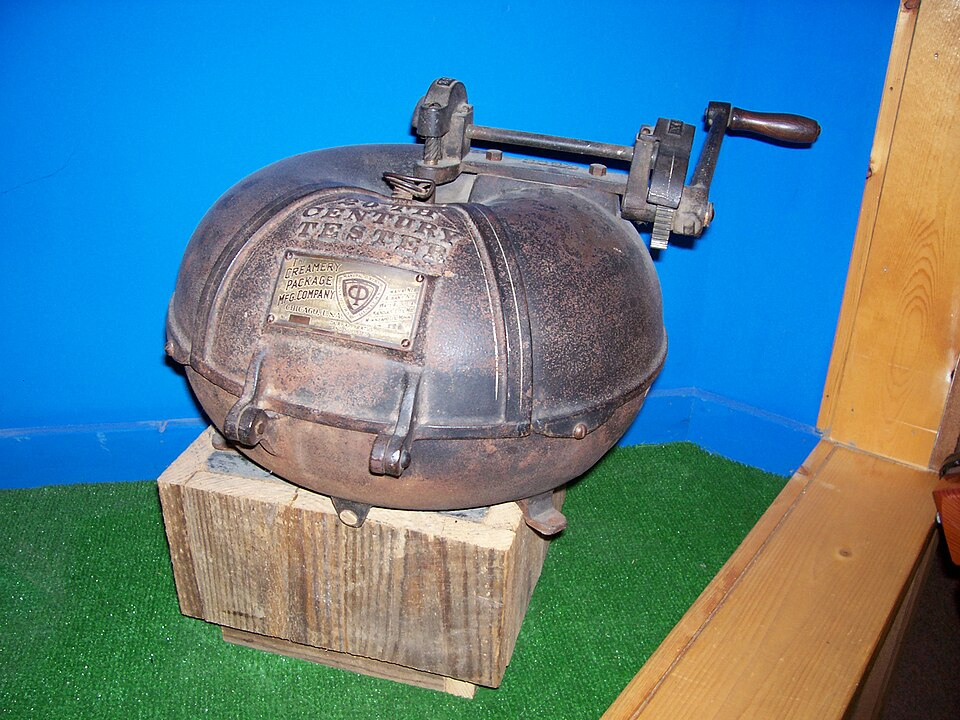
Cream delivered promptly and still sweet graded higher and was paid more; cream held too long on a farm without adequate cooling soured and was bought at a lower grade for manufacturing purposes.
Grading under formal standards with refrigerated collection on a schedule, which has largely eliminated the lower grades at farm level.
The grade difference was the whole argument for cooling, and it is one of the clearest examples of a price signal doing public health work. A farmer who kept his cream cold got paid more, which meant the economic incentive and the food safety incentive pointed in the same direction.
4. The Eggs Went in a Thirty-Dozen Case
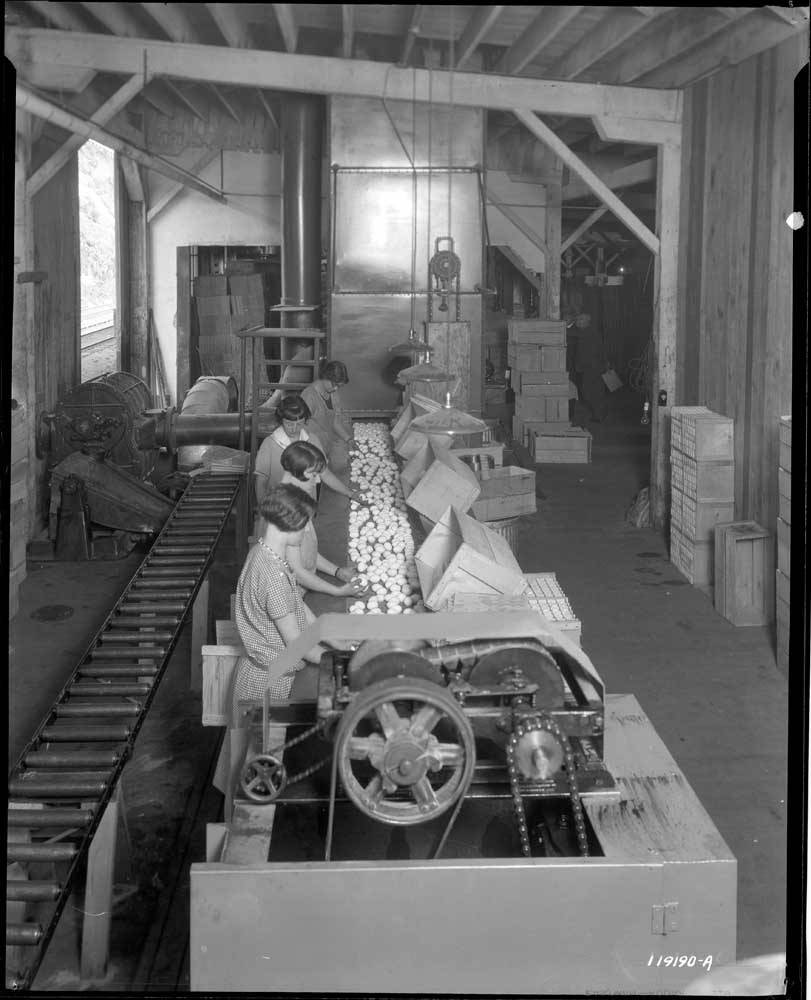
Eggs were gathered, cleaned, and packed into a wooden or heavy cardboard case holding thirty dozen in cardboard flats and fillers – which was the standard unit in which farm eggs moved to market.
Plastic flats and cartons in refrigerated distribution from large grading facilities, with the thirty-dozen wooden case now an antique.
That case was a universal standard and it shaped everything about the trade. A farm counted its production in cases, a store bought in cases, a huckster hauled cases, and the thirty-dozen unit persisted for decades because everybody in the chain had built their handling around it.
5. Somebody Came and Collected Them
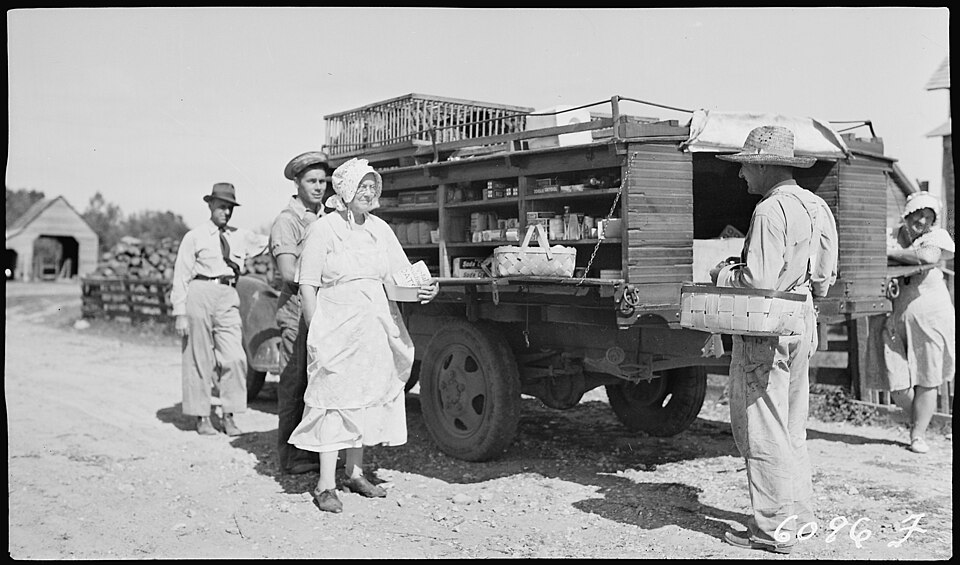
Eggs left the farm by huckster wagon or truck, by the farmer’s own trip to town, or by a produce dealer running a route – exchanged for cash or traded against groceries at the store.
Contract production for large processors collected by refrigerated truck, with no route, no trade and no household-scale seller.
Trading eggs against groceries is the detail that explains the whole economy. A farm with hens could walk into a store with a case of eggs and walk out with coffee, sugar, flour and cloth, having spent nothing – which made the hen house a kind of currency rather than a business.
6. The Hens Were Her Enterprise, Not the Farm’s
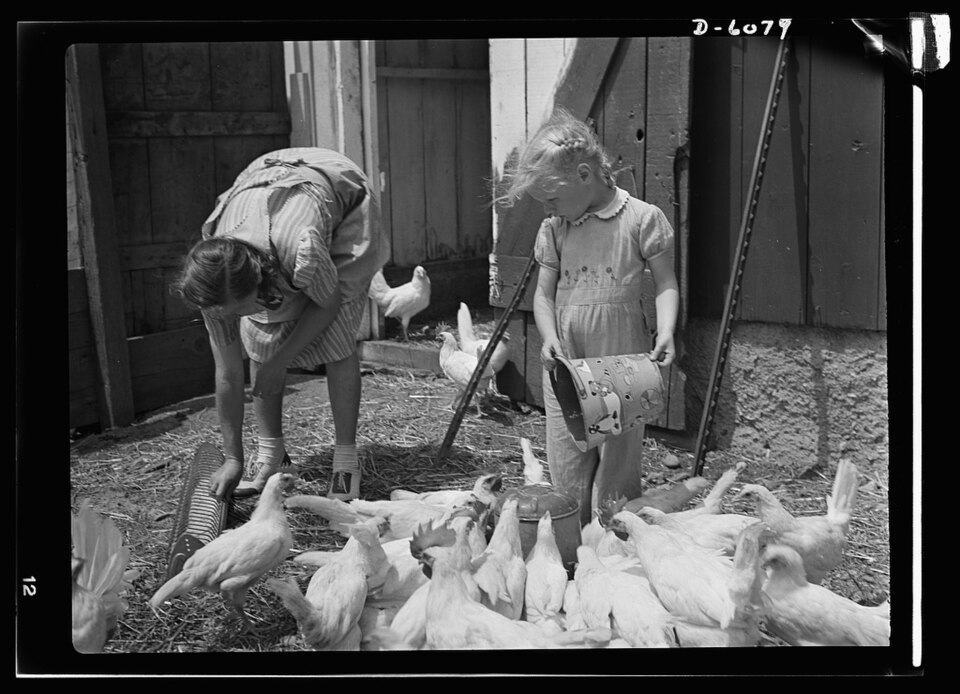
In a great many American farm households the poultry flock belonged to the woman of the house in a real and recognised sense – she managed it, made the decisions about it, did the work, and the money from it was hers.
No equivalent. Commercial poultry is a contract business and household flocks are a hobby that produces no income.
This is the single most important thing on this list and it is almost entirely absent from the way farm history gets told. A separate enterprise, run by a woman, whose proceeds came to her directly, inside a household economy where nearly everything else ran through the farm account, is a genuinely unusual arrangement – and it was completely normal.
7. The Egg Money Was Hers to Spend
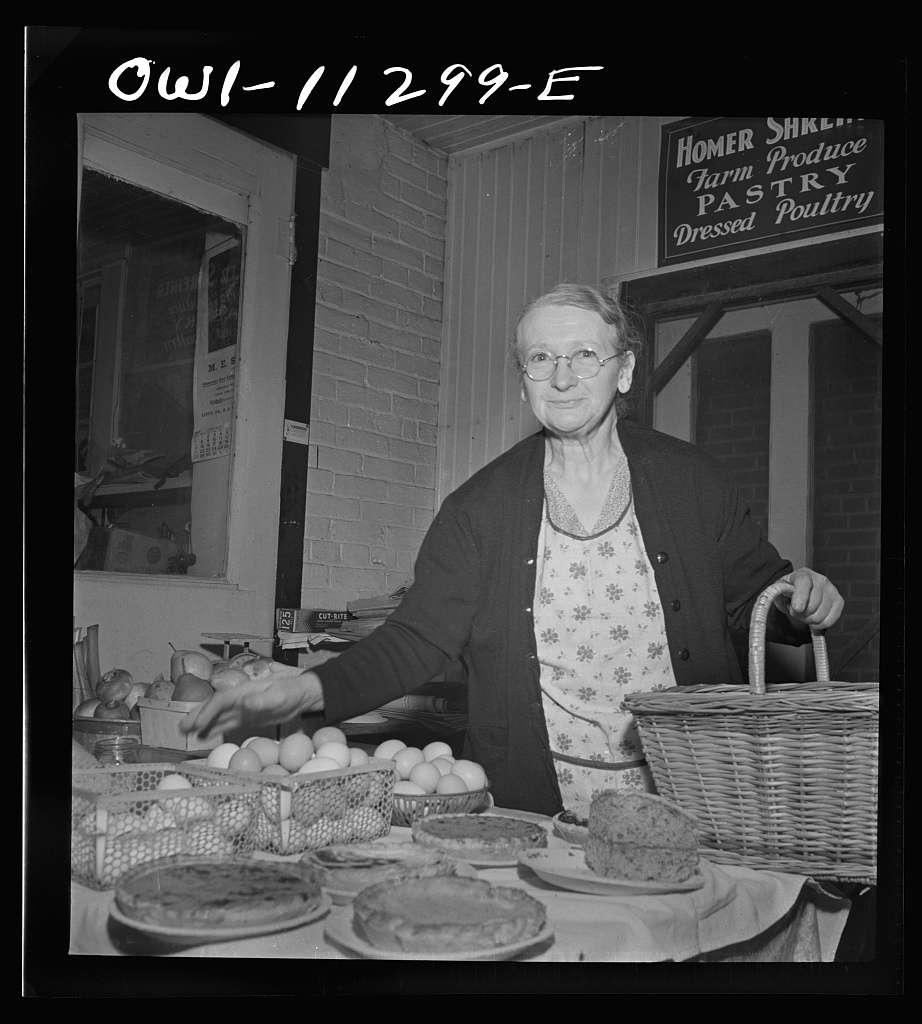
Proceeds from eggs and frequently from cream were understood to be the woman’s own – spent at her discretion on household needs, children’s clothing, furnishings, gifts, saving, and in a great many cases on things she simply wanted.
Household income pooled in joint accounts, with separate discretionary income depending entirely on individual employment.
The discretion is the part that mattered. Not merely income, but income she did not have to ask about or account for – which in a period when a great many American women had no independent earnings at all and limited access to credit in their own names was a position of real practical autonomy.
8. It Paid for Things the Farm Never Would Have Bought
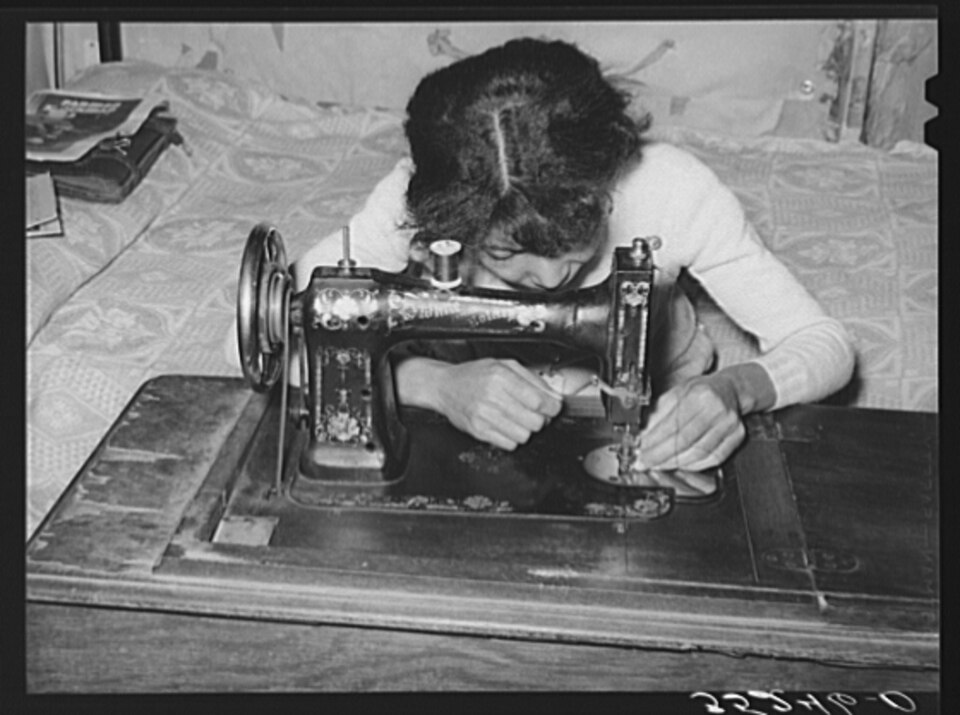
Egg and cream money is remembered specifically for what it bought: the children’s shoes, a sewing machine, a piano, curtains, a trip, schoolbooks, a washing machine, Christmas – categories that competed poorly against seed and machinery.
Not applicable, with household spending now negotiated or drawn from salaried income.
The pattern in those purchases is consistent and revealing. They are almost all things benefiting the house and the children rather than the farm’s production, which is exactly what you would expect from a fund controlled by the person responsible for the house and the children.
9. The Work Was Daily and It Was Real Work
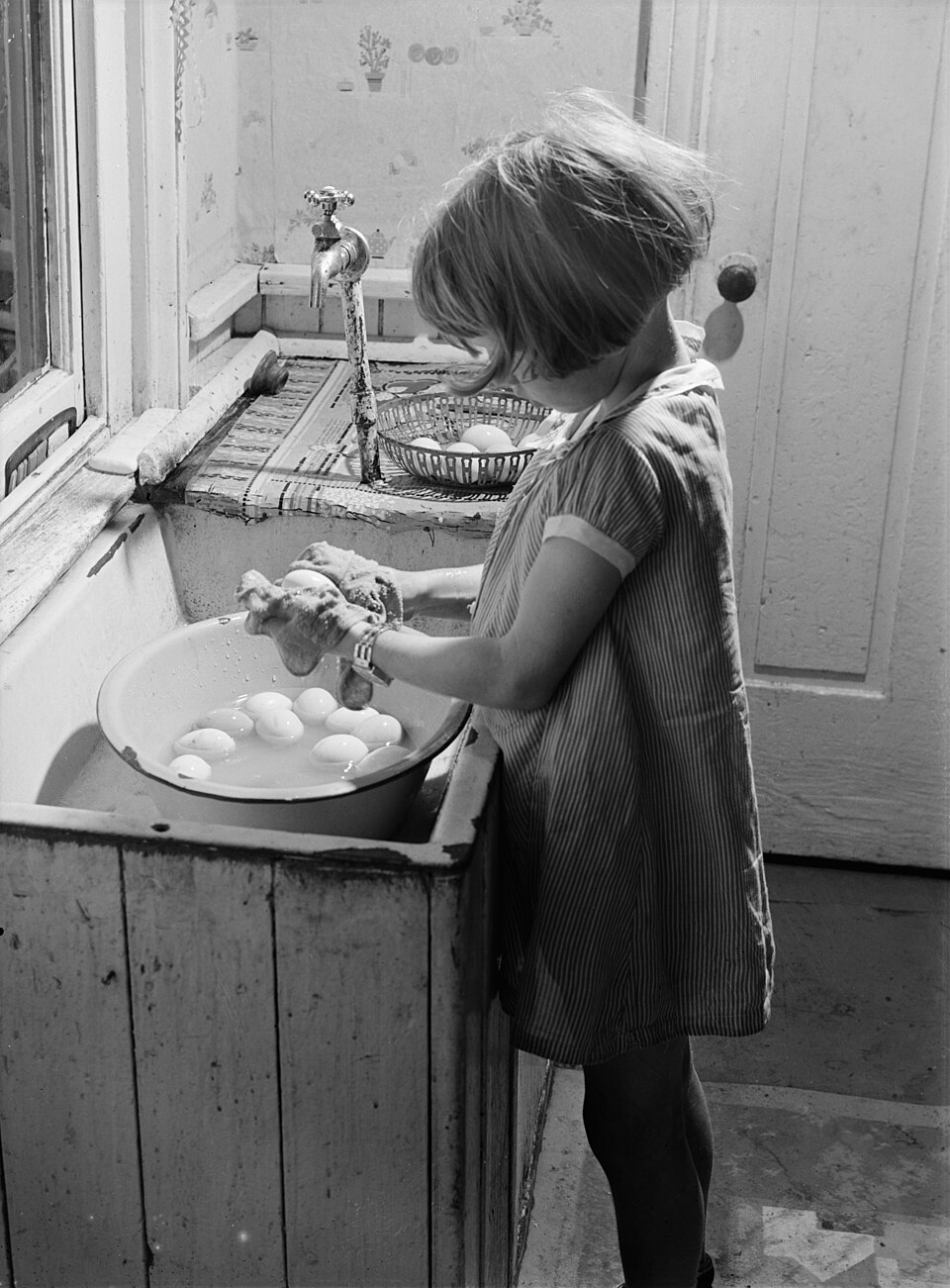
Feeding, watering, gathering twice a day, cleaning, culling, setting hens or managing a brooder, dealing with predators, and cleaning and packing the eggs – every day, on top of everything else a farm household required.
Commercial operations with automated feeding, watering, collection and climate control at a scale no household flock approaches.
Nobody should mistake this for a sideline hobby. A flock of a couple of hundred hens is a daily operation with real labour in it, and the income it produced was earned in a completely conventional sense – which is precisely why the woman who did it had a legitimate claim on the proceeds.
10. Quality Was Her Reputation
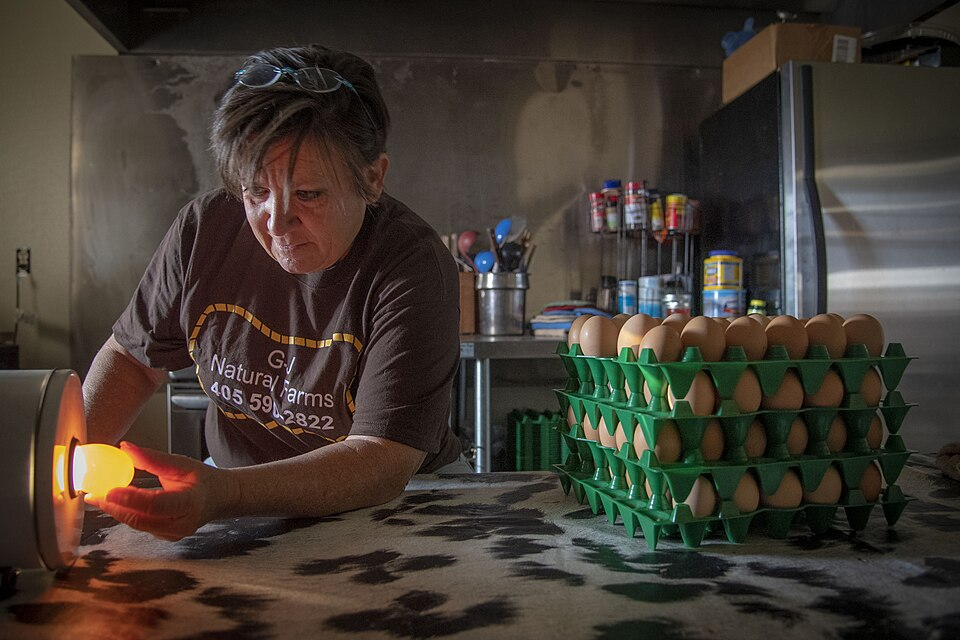
Clean, fresh, well-sized, properly packed eggs got a better price and a reliable buyer, and a producer who delivered poor cases got a worse one – so the standing of a household’s eggs was a known quantity in town.
Formal grading at scale under published standards, with the individual producer’s identity invisible to the buyer.
Being personally known for the quality of a product is a form of standing that the modern supply chain cannot provide. A woman whose eggs the store preferred had a commercial reputation in her own name, which was frequently the only such reputation she held anywhere.
11. The Separator Had to Be Washed Every Single Day
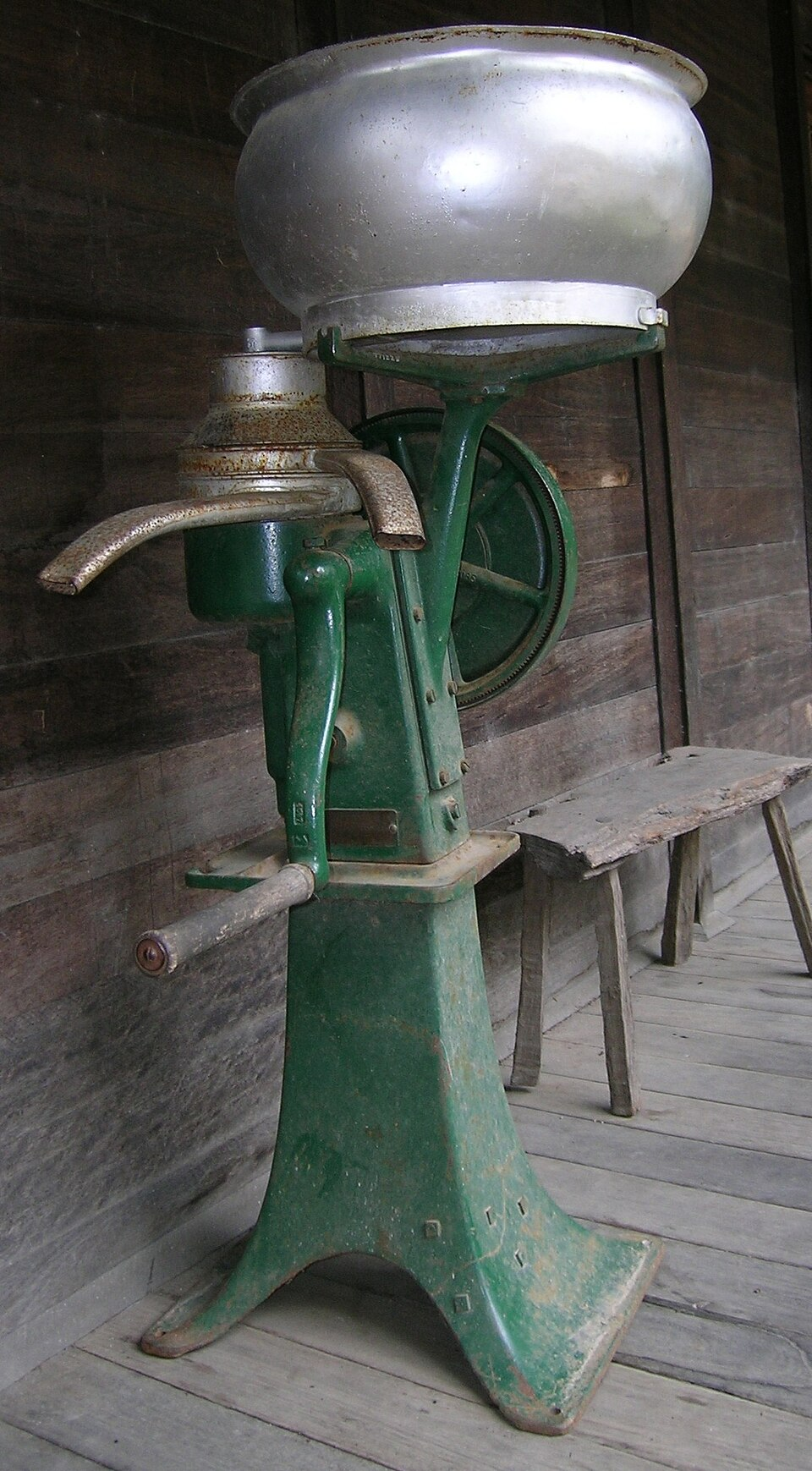
A cream separator taken apart, washed, scalded and reassembled daily was one of the most disliked recurring jobs in an American farm kitchen, and skipping it ruined the cream and the price.
Not applicable at farm level, since whole milk now leaves in a bulk tank and separation happens at a processing plant.
The daily washing is where the money was actually protected. Cream picks up off-flavours and spoils readily, and the single largest controllable factor was the cleanliness of the equipment – so a tedious kitchen chore was directly connected to the size of the cheque.
12. The Station Was a Social Fixture Too
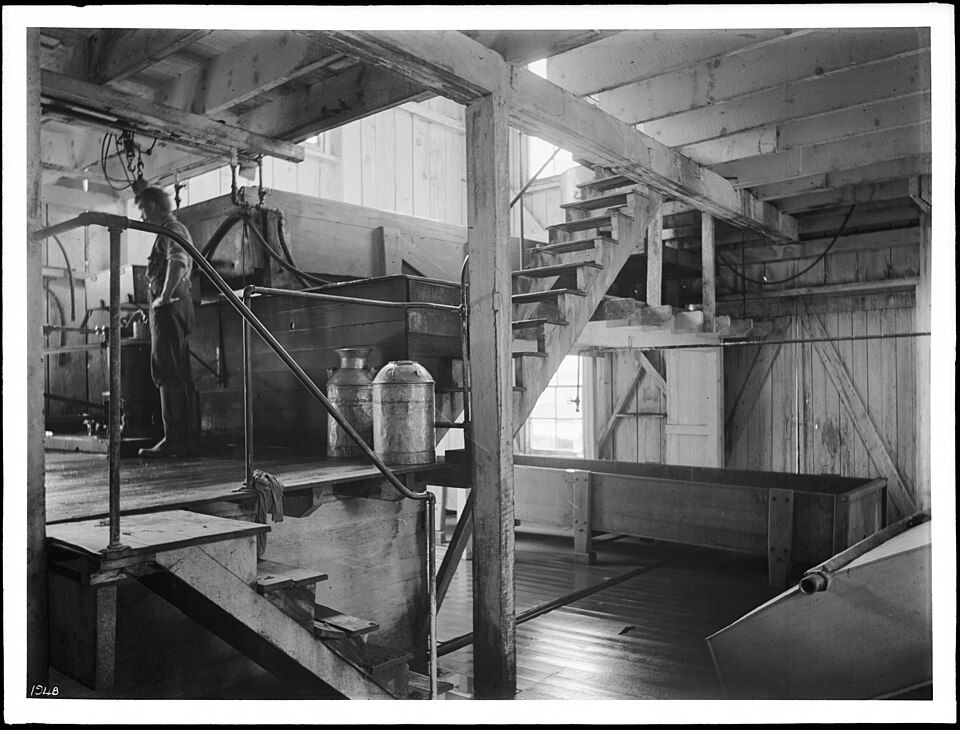
Hauling cream meant a weekly or twice-weekly trip to town with a specific errand, a reason to be at a counter, a conversation while the test ran, and a cheque or cash in hand at the end of it.
Not applicable. A tanker arrives, pumps, and leaves, with no trip, no counter and no conversation.
The errand was carrying social weight along with the cream. A regular trip to a specific business where you were known by name, with a transaction at the end of it, is an entirely different relationship with a town than a payment appearing in an account.
13. Grade A Changed the Rules Entirely
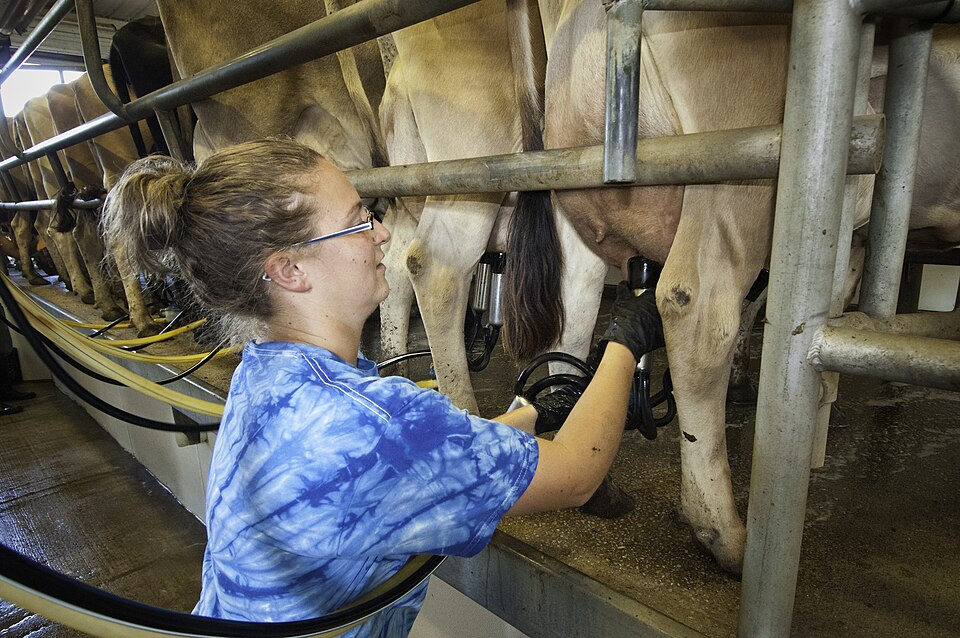
Shipping fluid milk for drinking rather than cream for manufacturing required facilities meeting formal sanitary standards – a milk house, approved equipment, cooling capacity, inspection – which was a substantial capital investment.
Universal across commercial dairying, with the standards considerably more rigorous and the required investment larger again.
This is the mechanism that ended farm separation, and it was a food safety measure that worked. Requiring sanitary facilities for drinking milk was straightforwardly right, and its unintended effect was that any farm wanting to stay in dairy had to invest at a scale that pushed the smallest producers out of the business altogether.
14. Confinement Poultry Ended the Farm Flock as a Business

Large specialised poultry operations with controlled housing, formulated feed, improved breeding and continuous production brought the cost of eggs down dramatically, and a household flock of two hundred hens could not compete at any price.
The dominant structure of American egg production, with household flocks surviving only as a hobby or for a farm’s own table.
The economics here were not close and that is worth stating plainly rather than resenting. A specialised operation producing eggs at a fraction of a household flock’s cost per dozen made eggs cheaper for everybody who buys them, including every family that no longer had to keep hens – which is a real gain for a very large number of people.
15. Then Her Separate Income Disappeared and Nobody Counted It
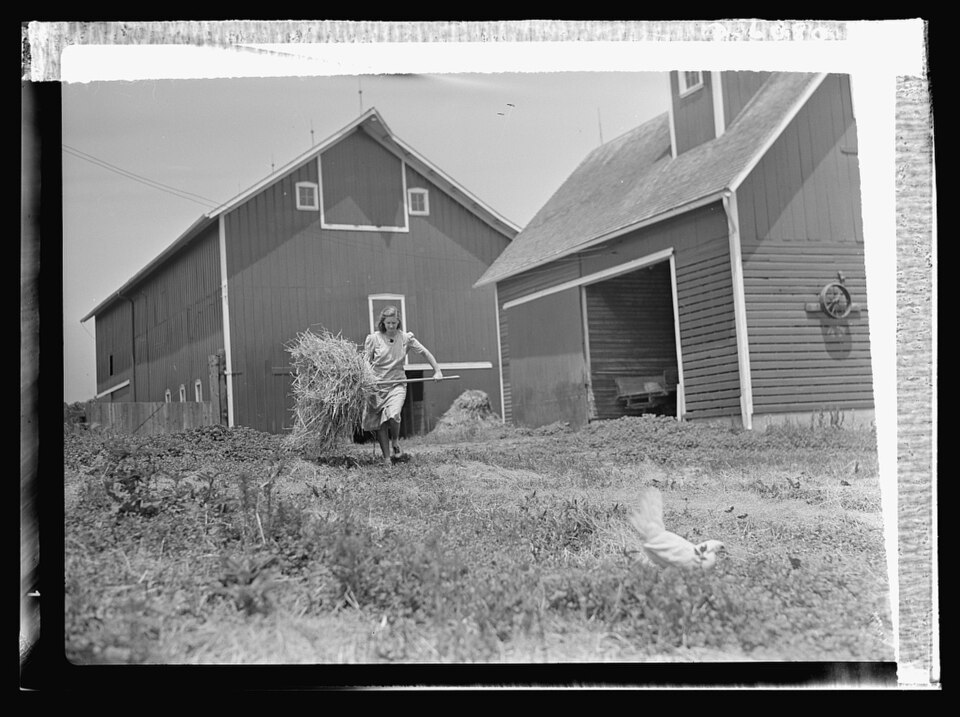
In 1964 a great many American farm women ran a flock and handled the cream, received the money for both in their own hands, and spent it at their own discretion on the house, the children and themselves – inside households where nearly every other dollar ran through the farm account.
Gone completely. Commercial poultry is contract production at a scale no household matches, fluid milk requires licensed facilities, cream stations do not exist, and there is no farm enterprise that produces independent income for the woman of the house.
And the thing worth sitting with is that every single change responsible for this was an improvement, which is exactly why nobody noticed what it cost. Requiring sanitary facilities for drinking milk was plainly right and it made milk safer. Refrigerated bulk collection is better than cans of cream held in a tank of well water. Formal grading and testing protect buyers. Specialised poultry production made eggs dramatically cheaper, which benefits every household in the country and particularly the poorest. Not one of those should be undone, and nobody arguing about this history should pretend otherwise. But add them up and the arithmetic is unambiguous: the two enterprises that had produced a farm woman’s own money both required either capital investment at a scale that excluded household operation, or competition against industrial efficiency that no household could survive. So both of them went, within roughly a generation, and with them went the thing they had quietly provided – a recognised separate income, earned by her own daily labour, paid into her own hands, spent without consultation. What replaced it was a joint account into which a husband’s income arrived, in a period when a great many American women still had limited access to credit in their own names and no employment of their own. That was a real loss of practical autonomy for a very large number of people and it appears in almost no account of agricultural modernisation, because it was not a line in anybody’s figures. The eggs got cheaper. The milk got safer. And the egg money stopped existing.
Every Change Was an Improvement, and the Egg Money Still Vanished
This is a history with no villain in it, which is what makes it difficult.
Start with what existed. In a great many American farm households through the middle of the twentieth century, there were two small enterprises that sat outside the farm’s main business. One was the poultry flock. One was the cream.
The hens were, in a real and widely recognised sense, the woman’s. She managed the flock, fed and watered it, gathered twice a day, cleaned and packed, dealt with predators, decided what to cull and what to set, and handled the selling. The cream was separated on the farm – which meant the skim stayed home for the stock and only the valuable fraction went to town – and hauled in a can to a cream station, where it was sampled, tested for butterfat and paid for on the measured fat rather than the volume.
And the proceeds of both came to her. Not into a pooled fund she could petition. Into her hands, as her money, to spend at her own discretion.
The record of what it bought is remarkably consistent across the whole country: children’s shoes and clothing, a sewing machine, a piano, curtains, furnishings, schoolbooks, a washing machine, Christmas, and occasionally something she simply wanted. All things that benefit a house and the children in it, and all things that compete badly against seed, fuel and machinery when the money is in one account and the farm needs something.
That arrangement mattered enormously, and for a reason that is easy to miss. It was not simply income. It was income she did not have to ask about, justify or account for – in a period when a great many American women had no independent earnings at all and limited access to credit in their own names. A woman with egg money had a sphere of genuine practical autonomy inside a household economy that otherwise ran entirely through the farm books.
Then it disappeared, and here is the uncomfortable part: every single thing that killed it was a good thing.
Requiring sanitary facilities for fluid milk was right. Milk intended for people to drink should come from premises with a proper milk house, approved equipment, adequate cooling and inspection, and the standards that imposed that made milk measurably safer. Nobody should want that reversed.
Refrigerated bulk collection is better than cans of cream standing in a tank of well water waiting for enough to accumulate. It is safer, it is less work, and it produces a better product.
Formal grading and laboratory testing protect buyers and reward good management rather than good handling, which is a fair system.
And specialised poultry production – controlled housing, formulated feed, improved breeding, continuous production – brought the cost of an egg down dramatically. That is a straightforward gain for every household in the country that buys eggs, and the gain is largest for the poorest households. A flock of two hundred hens could not come close to competing, and pretending otherwise would be sentimental nonsense.
Now add them up.
Dairying required capital investment at a scale that excluded the smallest producers entirely. Poultry required competing against industrial efficiency that no household could survive. Both of the woman’s enterprises therefore ended – not through any decision about women, and not through anybody’s intention, but as a side effect of two separate and entirely justified modernisations.
What replaced the arrangement was a single household account into which a husband’s income arrived.
That was a real reduction in a great many women’s practical independence, and it is almost completely absent from the standard account of agricultural modernisation – because it was never a line in anybody’s figures. No agency measured it. No programme addressed it. It showed up nowhere except in the fact that a woman who had spent thirty years deciding what to do with her own money stopped having any.
The eggs got cheaper. The milk got safer. And the egg money stopped existing.
If your grandmother kept hens, ask what the egg money paid for. She will know exactly.
And she will probably tell you the price she was getting, sixty years later, to the cent.
Like our content? Follow us for more.