

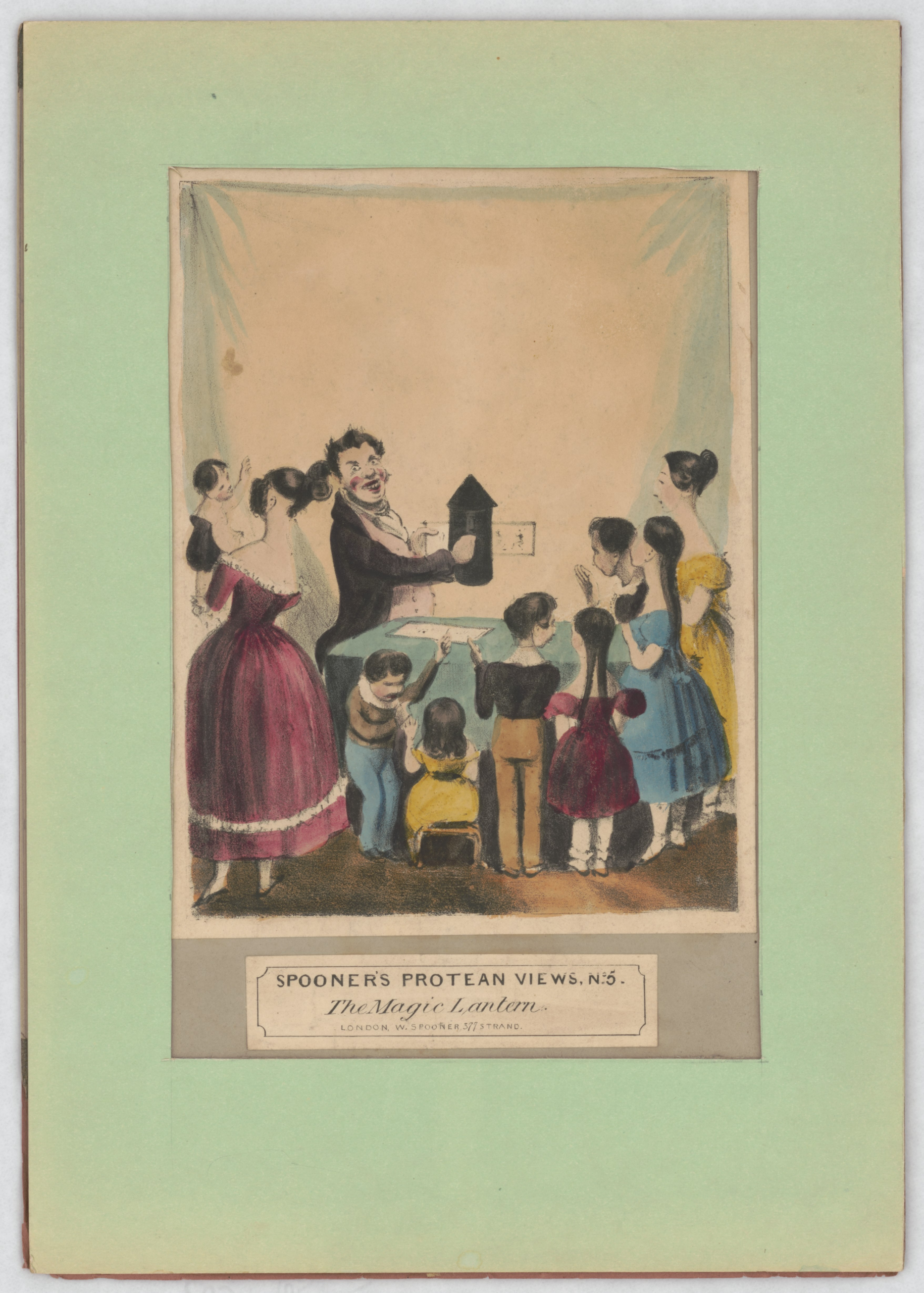
A magic lantern is a real projector, not a toy. A bright light, a condenser, a glass slide and a lens, throwing an enlarged image onto a wall – the same optics a film projector uses.
The hard part was the light. Before electricity it came from an oil lamp, from limelight produced by burning gases against a cylinder of lime, or later from an electric arc, each brighter and more troublesome than the last. That is why the operator was a professional: a big image needs an intense source, and every pre-electric way of making one involved open flame, fuel or pressurised gas and constant attention.
Showmen carried lantern, slides, light and screen round circuits of halls, schools and churches, and talked over the pictures – because the lecture was half the show. Here are sixteen things every town knew.
1. A Light, a Lens and a Painted Glass Slide
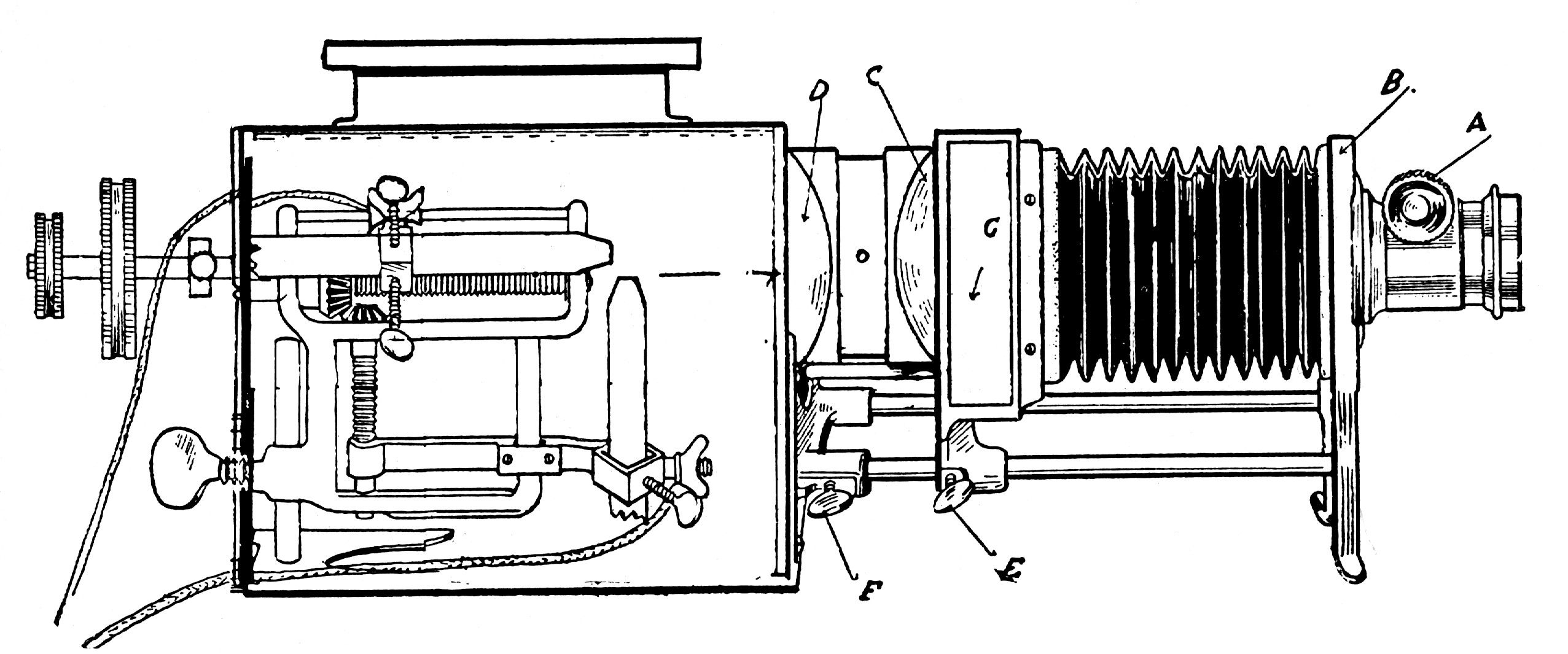
A magic lantern is a box containing a bright light source, a condenser, a holder for a glass slide and a projecting lens, which throws an enlarged image of the slide onto a wall or a sheet.
Projectors and screens of every kind, and the same optical principle running in cinemas.
It is worth establishing immediately that this is a real projector and not a toy. The optics are the same optics a film projector uses, the image is genuinely large and bright, and the only difference from a modern still projector is where the light comes from.
Like our content? Follow us for more.
2. Getting Enough Light Was the Entire Difficulty
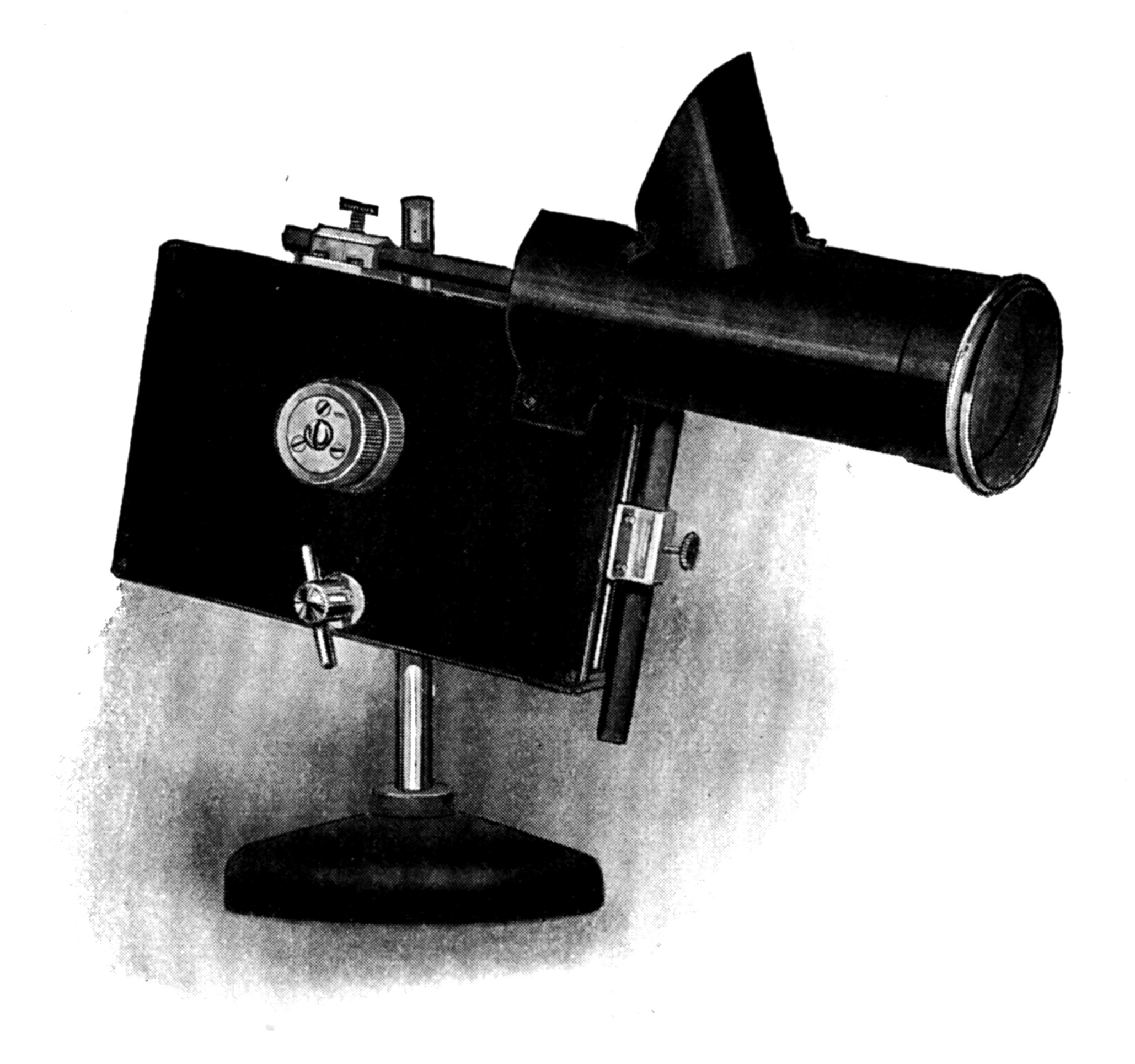
Before electricity, the light had to come from an oil lamp, a limelight produced by heating lime in a flame, or later an electric arc – each brighter and more troublesome than the last.
An electric bulb, which solves the whole problem invisibly.
Light is the governing constraint and everything about the showman’s craft follows from it. A big bright image needs a very intense small source, and before electricity every way of producing one involved an open flame, a supply of fuel or gas, and continuous attention from somebody who knew what they were doing.
3. Limelight Was Genuinely Dangerous
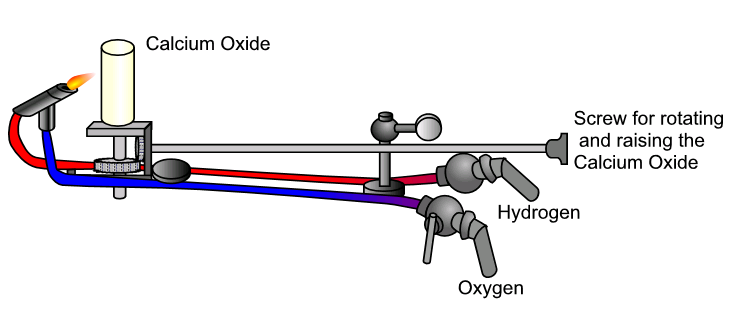
The brightest practical pre-electric source burned gases together to heat a cylinder of lime to incandescence, which meant an operator working with pressurised gas supplies beside a hot lamp.
Not applicable.
This deserves stating plainly rather than skipped over. Operating a limelight required skill and attention, the consequences of getting it wrong were serious, and the history of public entertainment of the period includes accidents involving exactly this equipment – which is why the operator was a professional.
4. The Slides Were Paintings, and Then Photographs
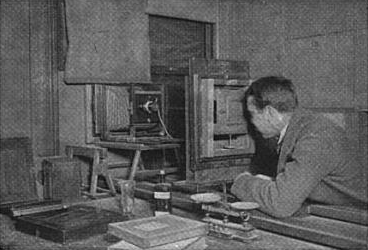
Early slides were hand-painted on glass by specialists, and later ones were photographic images on glass, published commercially in sets with printed titles.
Not applicable.
The shift from painted to photographic is the same shift that happened everywhere in the period, and it changed what the medium was for. A painted slide shows what somebody imagined; a photographic slide shows what was in front of a camera – which turns a show from illustration into evidence.
5. Some Slides Moved
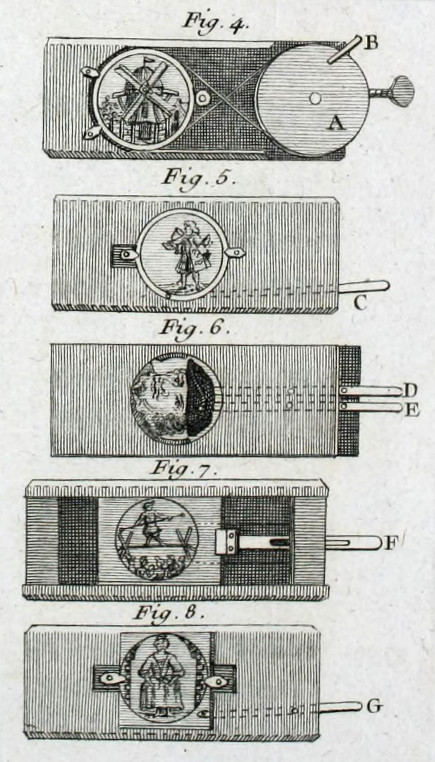
Mechanical slides used sliding, rotating or levered glass elements so that one part of the picture moved against another – producing a figure that raised an arm, a wheel that turned, a scene that changed.
Animation and film.
The mechanical slides are the direct ancestors of animation and they should be recognised as such. Somebody looked at a still image and worked out how to make part of it move, mechanically, in front of an audience – which is the entire idea that cinema later executed with a different method.
6. The Dissolving View Was the Famous Trick
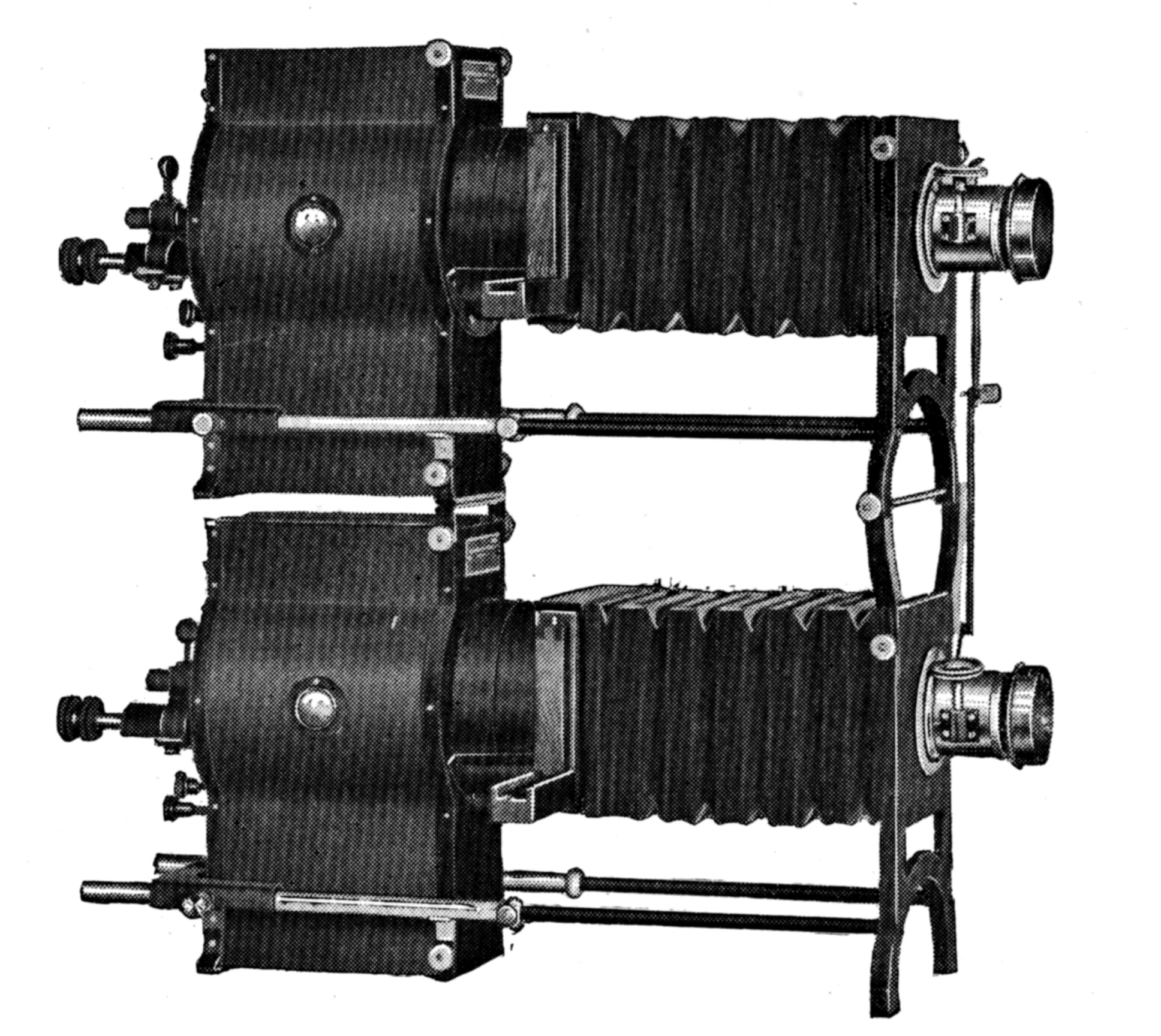
Two lanterns aimed at the same spot, with the light gradually taken from one and given to the other, made one image fade smoothly into another.
The cross-fade, used continuously in film, television and presentation software.
This is the effect everybody who saw these shows remembered, and it is still in use. A summer landscape dissolving into the same scene in winter, or a building into its ruin, is a genuinely striking thing to watch – and the technique survives unchanged in every slideshow transition on any screen today.
7. It Was a Travelling Business
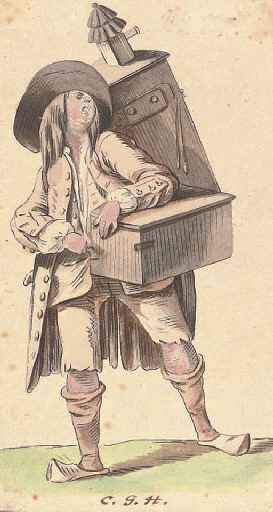
Showmen worked circuits of halls, schools, churches and lodge rooms, carrying lantern, slides, light source and screen, and charging admission or a fee.
Not applicable.
The itinerant model is what put these shows in small towns, and it worked for the same reason the tent circuits did. The equipment and the content came from outside, the venue was local, and a place with no theatre and no permanent attraction could have an evening’s entertainment once or twice a year.
8. The Lecture Was Half the Show
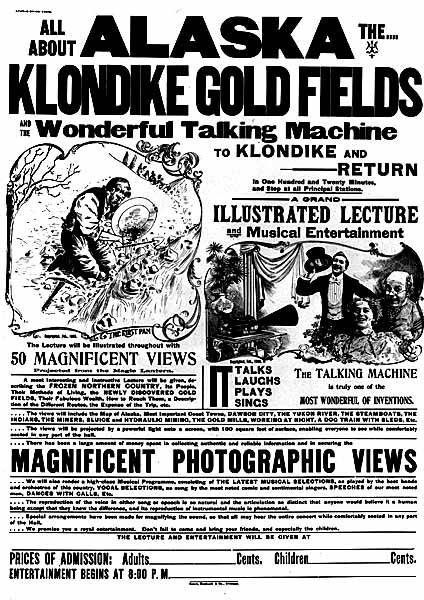
A lanternist did not simply project images – he talked over them, telling a story, describing places, making an argument or delivering a sermon.
Not applicable in that form.
The spoken element is the thing that distinguishes this from a modern slideshow and it is why the shows varied so much in quality. Two men with identical slide sets gave completely different evenings, because the performance was the talk and the pictures were the illustration.
9. Travel Was the Most Popular Subject
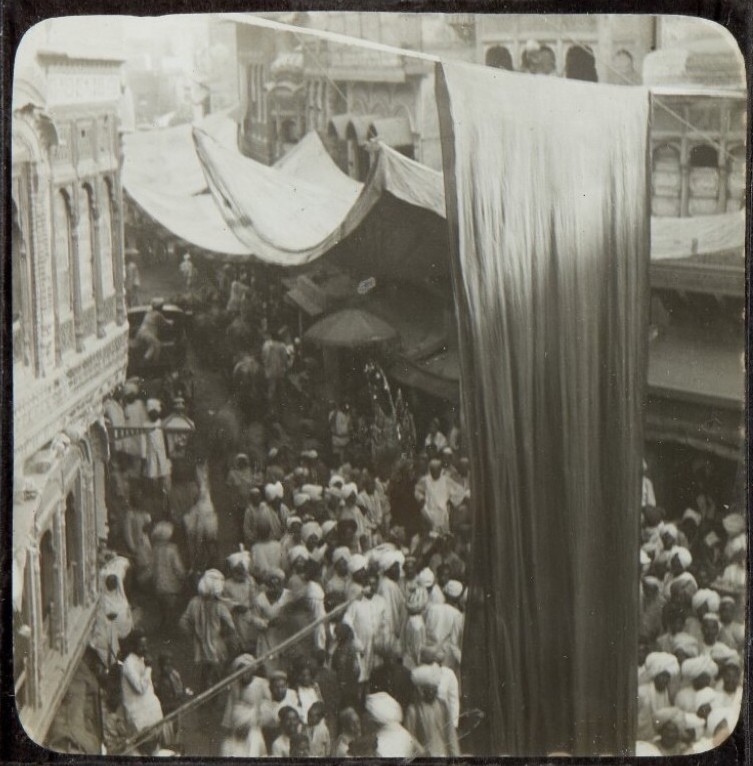
Sets of photographic views of distant places, delivered with a commentary, let an audience see somewhere they would never go.
Television, film and the internet, continuously and for nothing.
Access to images of elsewhere is the function, and it is the same one that made the stereoscope valuable. For a town where nobody had been further than the county seat, a photographic view of a foreign city on a wall ten feet across was a genuinely extraordinary thing.
10. Churches and Causes Used Them Heavily
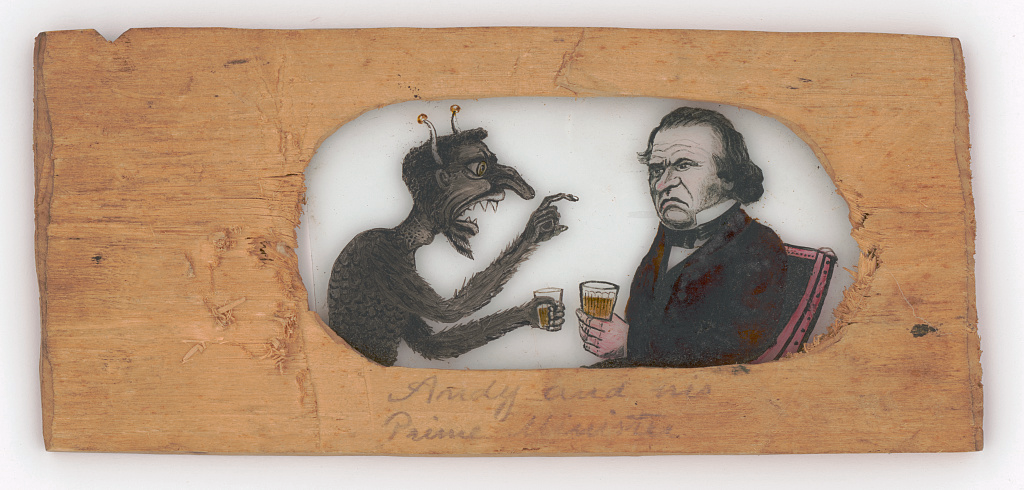
Religious organisations, temperance movements, missionary societies and reform campaigns all used lantern shows to draw an audience and make a case.
Not applicable in that form.
Worth noting because it shows what the medium was understood to be. A lantern show gathers a crowd, holds their attention in the dark and presents images with a voice explaining them – which is a persuasion technology, and organisations with something to persuade people of used it hard.
11. It Was Also a Home Entertainment
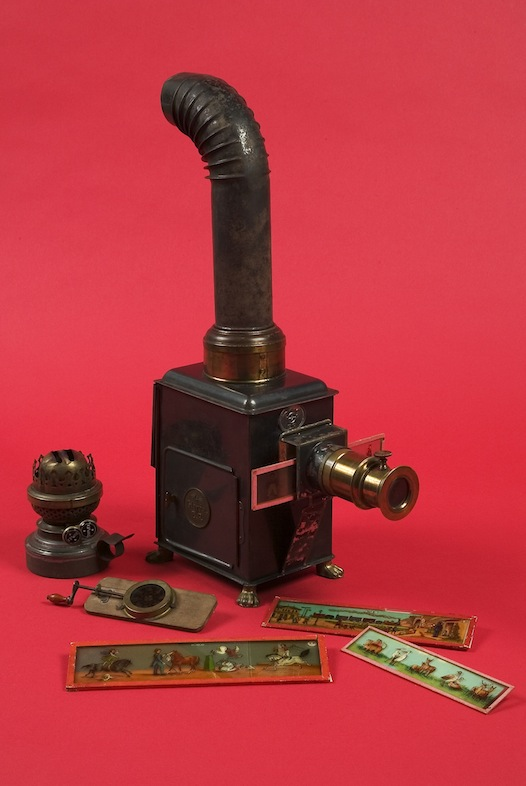
Small lanterns were sold for domestic use, with short slide sets of comic subjects, stories and nursery tales, and children operated them.
Not applicable.
The domestic version is the one most likely to turn up in an attic, and it changes the picture of the technology. This was not only a public spectacle – it was a product sold to families for use in a parlour, which is the same commercial path that later toys and projectors followed.
12. The Images Were Genuinely Large
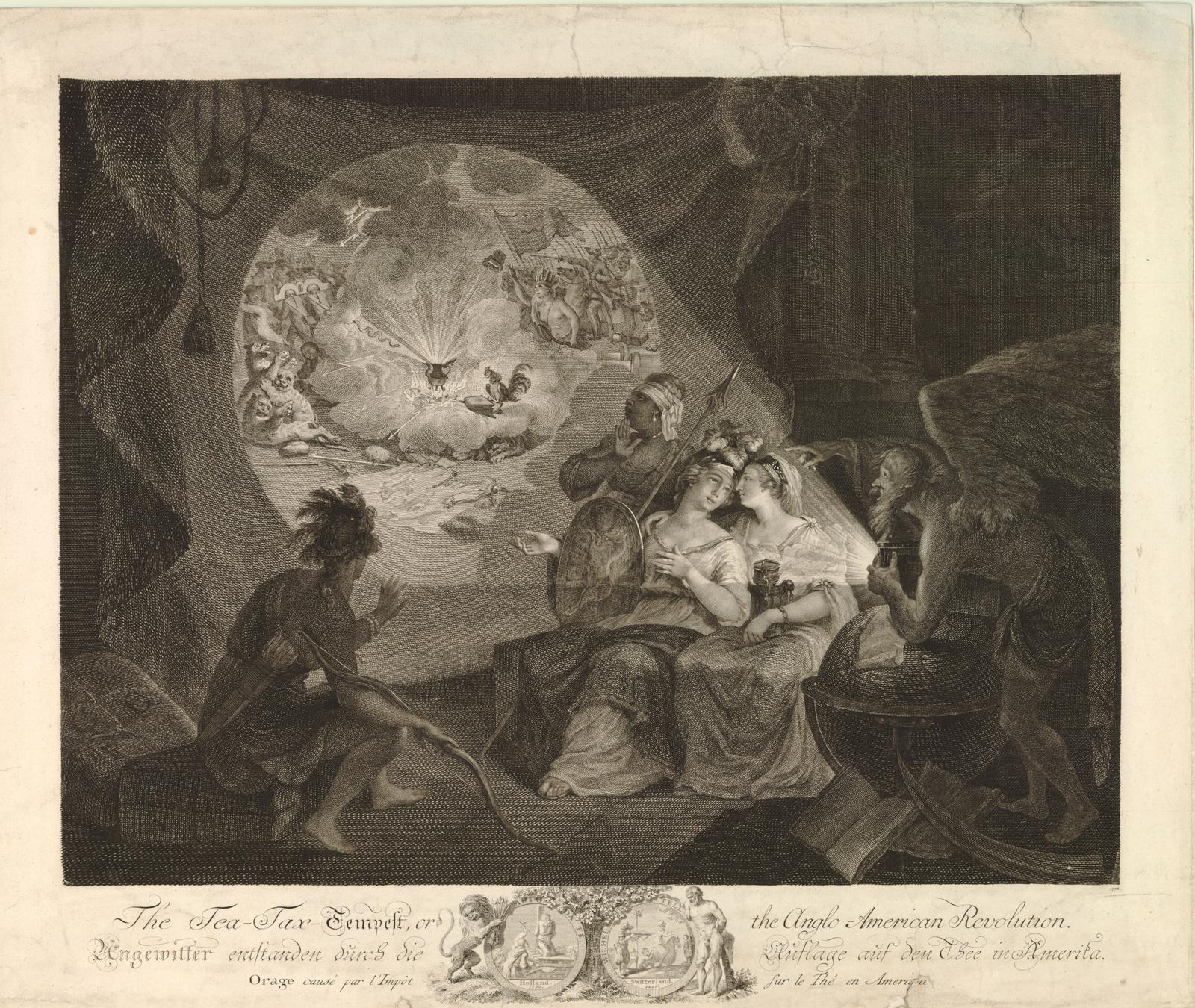
A lantern throws an image limited only by the light available, which in a hall meant a picture many feet across and visible to a large audience at once.
Standard.
Scale is the advantage the lantern had over every other visual medium of its time and it is worth stating against the stereoscope. One person at a time looked into a stereoscope; three hundred people at a time looked at the same lantern image, in the dark, together – which is a completely different experience.
13. Then Film Arrived and Did the Same Thing Moving
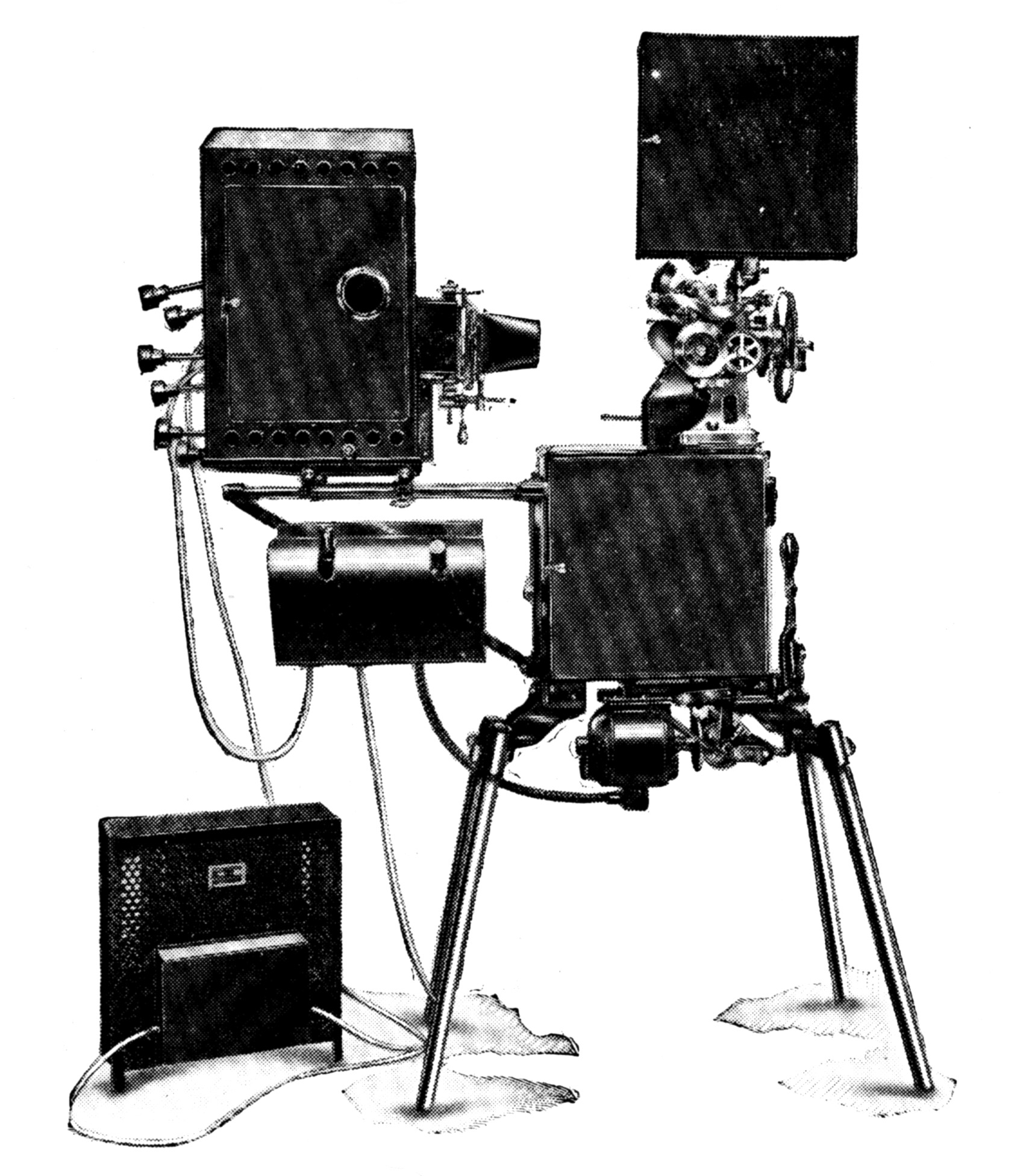
Projected motion pictures used the identical optical arrangement with a moving strip of images instead of a glass plate.
The basis of cinema.
The continuity is the key point and it is why the transition was so fast. A film projector is a magic lantern with a mechanism for changing the slide many times a second – the lens, the light and the screen are the same, and the showmen who ran lantern shows moved straight into running films.
14. Then the Lantern Became the Supporting Act
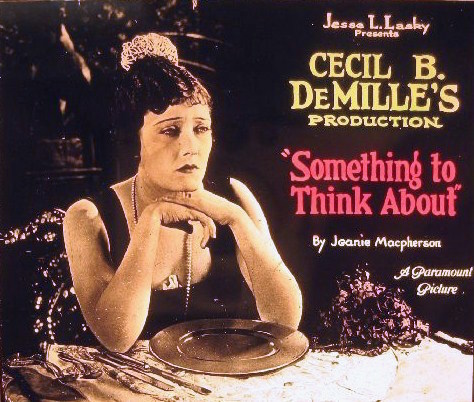
Lanterns continued alongside early film for years, projecting titles, song slides, advertisements and announcements between reels.
Not applicable.
The long tail is frequently forgotten. Lantern slides stayed useful in cinemas for decades doing jobs film was clumsy at – a still image with words on it, shown for as long as it was needed – which is exactly what a modern presentation slide does.
15. Then Electricity and the Smaller Format Took Over
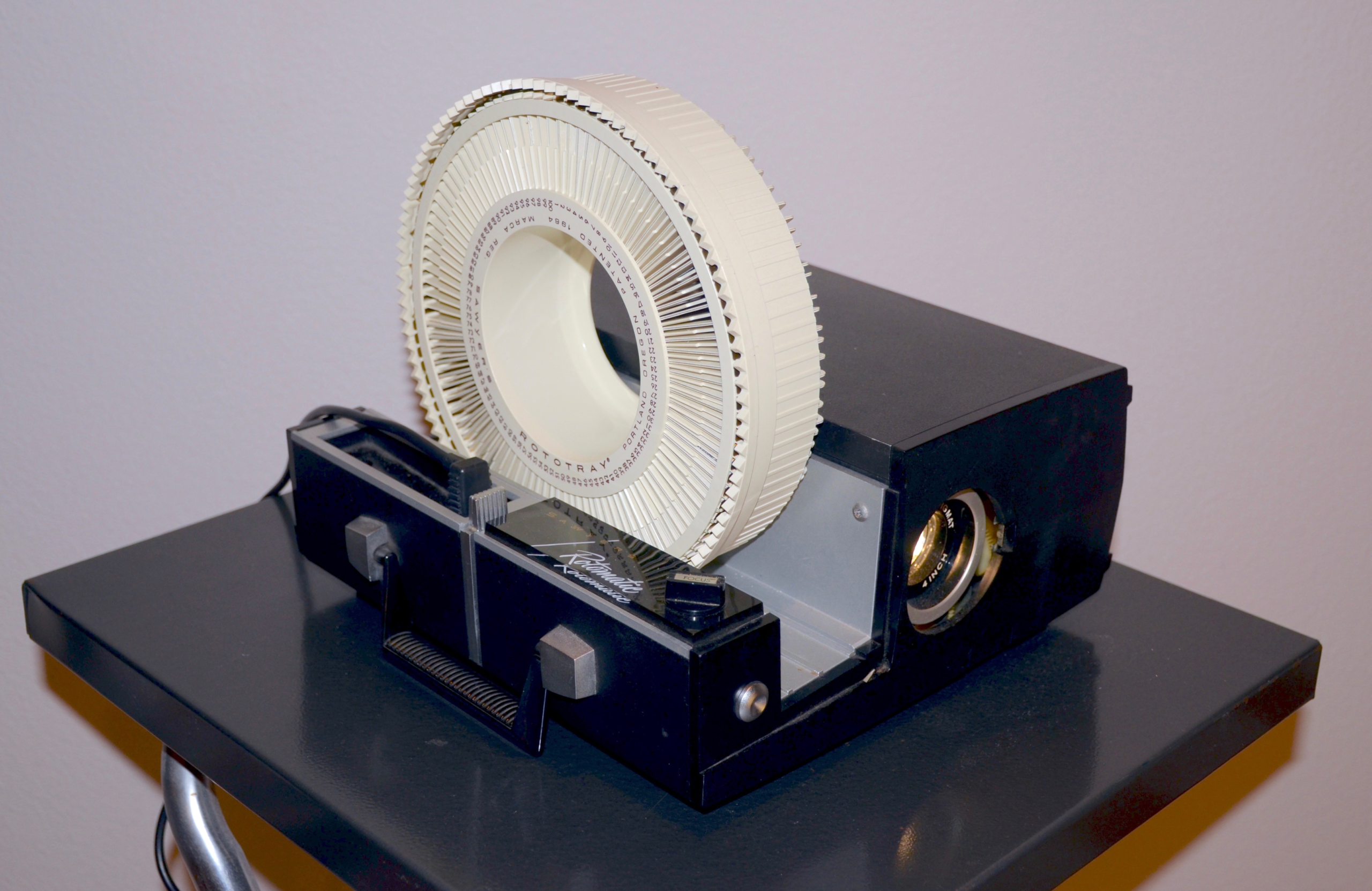
Electric lamps removed the danger and difficulty, and smaller slide formats on film rather than glass made projection a domestic and classroom technology rather than a professional one.
Standard, and then superseded in turn by digital projection.
The irony of the end is worth noticing. The thing that made the lantern a specialist occupation was the difficulty of producing light, and the moment that difficulty was solved the showman was unnecessary – anybody could project, which is precisely why nobody needed a lanternist.
16. Then the Glass Slides Went in a Box
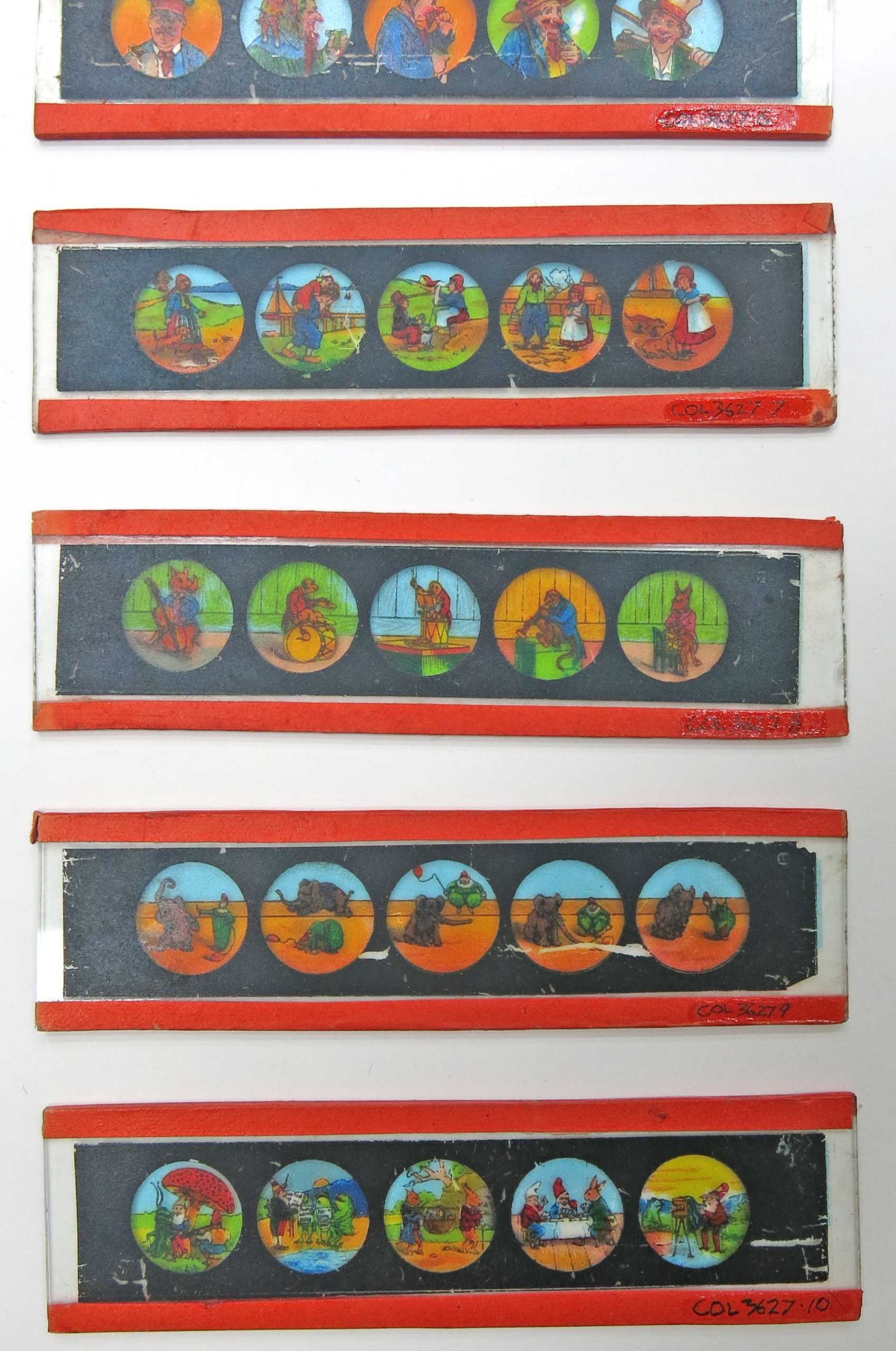
By 1964 the magic lantern was an antique and its glass slides were collectibles, while the thing it had become was a classroom slide projector in almost every American school.
Digital projection everywhere, with the lantern remembered only by collectors.
And the connection worth drawing is that nothing about this was ever superseded in principle. A light, a condenser, a transparent image and a lens throwing it onto a wall is still exactly how projection works, in a cinema, in a classroom and in a meeting room. What changed was the light source, which went from an oil flame to burning gas to an arc to a bulb to a semiconductor, and the image carrier, which went from hand-painted glass to photographic glass to film to a data file. The dissolve between two images, invented to be done with two lanterns and a pair of shutters by a man who had practised it, is a button on every piece of presentation software ever written. And the format – somebody standing beside a projected picture, talking over it, telling an audience what they are looking at – has not changed at all in a hundred and fifty years. Every meeting you have ever sat through is a magic lantern show with a different light source.
Nothing About It Was Ever Superseded in Principle
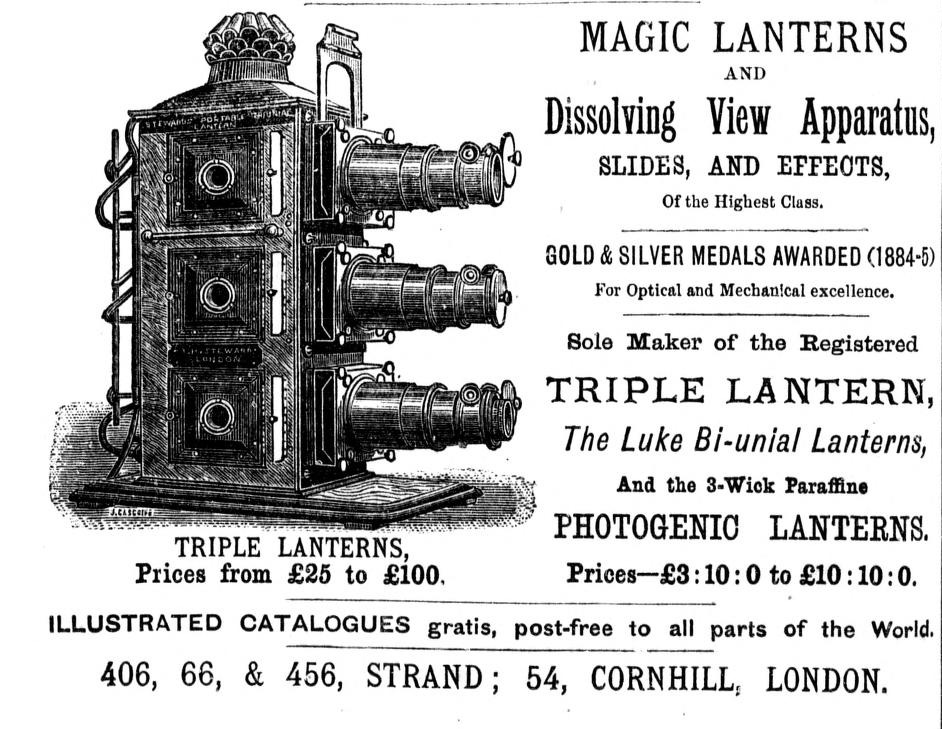
The magic lantern gets filed as a Victorian curiosity, and the accurate description is that it is the projector you used last week with a different lamp in it.
A light source, a condenser to gather the light, a transparent image and a lens to throw it onto a wall. That is projection, and it has not changed. What changed is the light – oil flame, then burning gases heating a cylinder of lime, then an electric arc, then a bulb, then a semiconductor – and the image carrier, which went from hand-painted glass to photographic glass to film to a data file.
The light was the whole difficulty and it is why this was a professional occupation. A big bright image needs a very intense small source, and before electricity every method involved an open flame, a gas supply or both. Limelight in particular required an operator working with pressurised gases beside a very hot lamp, which took skill, demanded attention, and had serious consequences when it went wrong – the history of public entertainment in the period includes accidents involving exactly this equipment.
So a lanternist was a tradesman, and his show was a performance rather than a sequence of pictures.
That is the second thing modern readers get wrong. He talked over the images – telling a story, describing places, making an argument, preaching. Two men with identical slide sets gave entirely different evenings, because the pictures were the illustration and the talk was the show.
The content tells you what it was for. Travel views were the most popular subject, which is the same function that made the stereoscope valuable: access to images of elsewhere, for people who would never go. But a lantern beat a stereoscope decisively on one point – scale. One person at a time looks into a stereoscope; three hundred people at a time sit in the dark looking at the same image many feet across, which is a completely different kind of experience and the reason churches, temperance movements, missionary societies and reform campaigns used lantern shows so heavily. A medium that gathers a crowd, holds them in the dark and presents images with a voice explaining them is a persuasion technology, and organisations with something to argue used it hard.
It was a domestic product too, with small lanterns and short comic or nursery slide sets sold for use in parlours and operated by children.
And two of its tricks survive exactly. The dissolving view – two lanterns on the same spot, with light gradually taken from one and given to the other – is the cross-fade, and it is a button in every piece of presentation software ever written. The mechanical slides, with sliding or levered glass making part of a picture move, are the direct ancestors of animation: somebody looked at a still image and worked out how to move part of it in front of an audience.
Film did not displace the lantern so much as continue it. A film projector is a magic lantern with a mechanism for changing the slide many times a second, using the same lens, light and screen – which is why the transition was fast and why lantern showmen moved straight into running films. Lanterns then stayed in cinemas for decades projecting titles, song slides and announcements between reels, doing a job film was clumsy at: a still image with words on it, held for as long as it was needed.
Which is exactly what a presentation slide does.
The occupation ended for an ironic reason. What made lanternists specialists was the difficulty of producing light – and once an electric bulb solved that, anybody could project, so nobody needed a professional.
But the format never went anywhere. Somebody standing beside a projected picture, talking over it, telling an audience what they are looking at, has not changed in a hundred and fifty years.
If your family has a box of painted glass slides, somebody charged admission with those.
And the dissolve between two of them is the same effect on your laptop.
Like our content? Follow us for more.
