From the UK ETA (now mandatory after Feb 25, 2026) to the EU’s long-delayed ETIAS (launching Q4 2026) to Brazil’s e-visa requirement (active since April 2025), the rules for American travelers have changed substantially. Here’s what’s actually required and what each one costs.
The international travel landscape for American citizens has changed more in the past 18 months than in the previous decade. After years of largely visa-free access to most popular tourist destinations, U.S. passport holders now face new pre-travel authorization requirements for several major destinations — with more changes scheduled for late 2026.
The good news: most of these requirements are not visas in the traditional sense. They’re electronic pre-travel authorizations — typically requiring a 10-15 minute online application, a small fee, and approval within minutes for the vast majority of applicants. The bad news: missing one of these authorizations means being denied boarding at the airport. There’s no longer flexibility to handle paperwork at the destination.
Here’s a current accounting of what’s changed and what’s coming.
1. United Kingdom: ETA now mandatory

Status: Active. Mandatory enforcement began February 25, 2026.
What it is: The UK Electronic Travel Authorisation (ETA) is the United Kingdom’s pre-travel authorization system, similar in concept to the U.S. ESTA. Americans have needed it since January 8, 2025, but enforcement was being phased in. Since February 25, 2026, airlines and other carriers face fines for boarding any American passenger without a valid ETA.
Cost: Currently £16 per person (~$20). Increasing to £20 (~$25) on April 8, 2026, per the Home Office announcement. Applications submitted before April 8 lock in the lower rate.
Validity: Two years or until passport expires, whichever comes first. Allows multiple visits of up to 6 months each.
How to apply: Through the official UK ETA app (available on both iOS and Android) or the gov.uk website. The application takes about 10 minutes. Most applications are approved automatically within minutes; some require additional review and can take up to 3 working days. The Home Office strongly advises applying at least 72 hours before travel.
What it covers: Tourism, business meetings, family visits, short-term study (under 6 months), and transit. Does not cover work, paid activities, or stays longer than 6 months.
Important note for dual citizens: If you hold both U.S. and UK citizenship, you must travel to the UK on your British passport (not your U.S. passport) since February 25, 2026. The UK does not allow dual British nationals to use ETAs — they must use their UK passport or a Certificate of Entitlement.
2. European Union (Schengen Area): ETIAS launching late 2026

Status: Not yet active. Launch date confirmed as Q4 2026 by the European Commission, with the exact date to be announced several months in advance.
What it is: The European Travel Information and Authorisation System (ETIAS) is the EU’s pre-travel authorization system, modeled loosely on the U.S. ESTA. It will be required for Americans (and citizens of approximately 60 visa-exempt countries) entering 30 European countries: all 27 EU member states plus Iceland, Liechtenstein, Norway, and Switzerland.
Cost: €20 per person (~$23.50), up from the originally proposed €7. Travelers under 18 or over 70 are exempt from the fee but still need to apply.
Validity: Three years or until passport expires, whichever comes first. Allows multiple visits of up to 90 days within any 180-day period.
How to apply: Through the official ETIAS website (europa.eu/etias) or the official ETIAS mobile app, both of which will become available when the system launches. Most applications are expected to be processed within minutes; complex cases can take up to 4 days, with possible extensions of up to 30 days for manual review.
What it covers: Tourism, business, transit, and short-term medical or family visits. Does not cover work, study longer than 90 days, or extended stays.
Critical warning: As of March 2026, the official EU ETIAS website states that “no action is required from travellers at this point.” Multiple unofficial websites are already collecting “ETIAS applications” and charging fees — these are scams. The system is not yet live, and no one can submit a valid application until the official launch later in 2026. Wait for the official launch announcement and apply through europa.eu/etias only.
Practical timeline planning: Even before the EU launches the application portal, Americans planning trips to Europe in late 2026 and beyond should ensure their passport has at least 3 months of validity beyond their planned departure date and was issued no more than 10 years before their entry to the EU.
3. EU Entry/Exit System (EES): biometric tracking starting April 2026
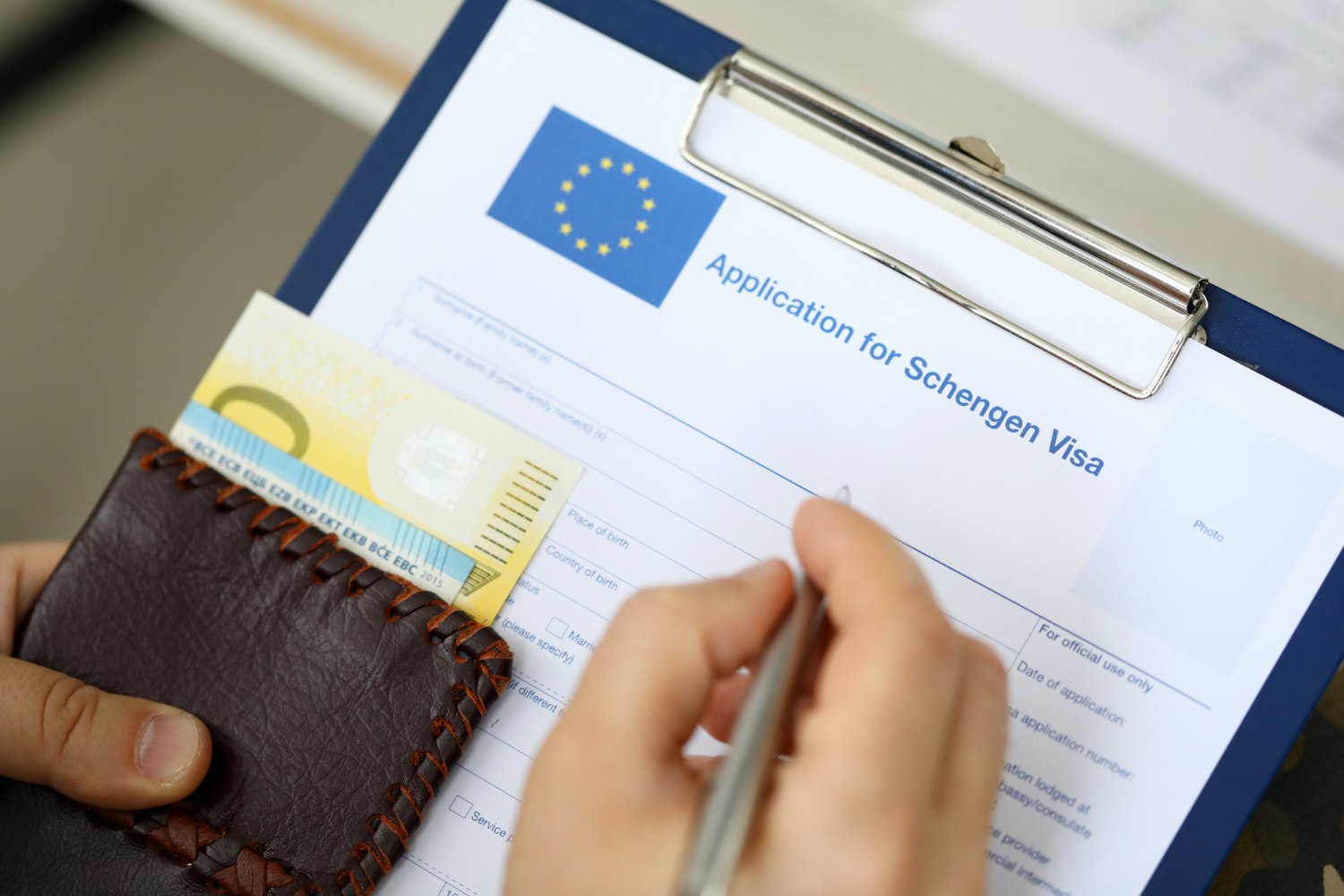
Status: Expected to launch by April 2026, several months before ETIAS becomes mandatory.
What it is: The Entry/Exit System (EES) is a biometric border tracking system that will replace passport stamps for non-EU travelers. Instead of physical stamps, your fingerprints and facial photo will be captured at first entry and your entries/exits will be tracked digitally.
Cost: No fee. EES is automatic at the border.
What changes for Americans: First entry to the EU after EES launches will take longer than current passport stamping, because biometric data must be captured. Subsequent entries will be faster than current procedures because the data is already on file. EES will eventually allow more accurate enforcement of the 90-in-180-day rule for EU stays.
Note: EES is separate from ETIAS. EES launches first; ETIAS launches several months later. Both will eventually be required.
4. Brazil: e-visa now required (since April 2025)

Status: Active. Required since April 10, 2025.
What it is: Americans (along with Australians and Canadians) now need an e-visa to enter Brazil, after Brazil restored the visa requirement that had been waived in 2019. The reciprocal nature of this — Brazil requiring visas because the U.S. requires visas of Brazilians — has been Brazil’s stated position throughout multiple delays.
Cost: Approximately $80.90 per person (varies slightly with current exchange rates), processed through VFS Global, the official Brazilian e-visa service provider.
Validity: Up to 10 years (varies by application), allowing multiple entries.
How to apply: Through brazil.vfsevisa.com (the official VFS Global site for Brazil e-visas). The application takes longer than the UK ETA or EU ETIAS — typically 5-15 business days for processing. Documentation requirements include passport scan, financial proof, travel itinerary, and other supporting documents.
What it covers: Tourism, business, artistic activities, sports activities, and transit. Stays of up to 90 days, extendable once for another 90 days (max 180 days within 12 months).
Critical for American travelers: Brazil’s e-visa requires significantly more documentation than the U.S. ESTA, UK ETA, or EU ETIAS. Plan for at least 2-3 weeks of lead time before travel.
5. China: 240-hour visa-free transit (expanded December 2024)

Status: Active. Expanded December 2024.
What it is: While not technically a new visa requirement, China dramatically expanded its visa-free transit policy in late 2024, allowing American (and citizens of 53 other countries) up to 240 hours (10 days) of visa-free transit through China. This is a significant expansion from previous 72-hour and 144-hour transit policies.
Cost: Free.
What it covers: Travelers transiting through China to a third country, who can now spend up to 10 days in any of 24 designated regions of China (up from previously limited geographic zones). Travelers must enter and exit through eligible ports of entry and have onward travel booked.
Important caveat: This is for transit only. American travelers planning to visit China for tourism (not as a transit point) still need a standard tourist visa, which involves an in-person consular appointment in the United States and significant documentation.
6. Multiple smaller countries with new authorizations

Several other countries have introduced or are implementing pre-travel authorizations for Americans:
Sri Lanka ETA: Required for all Americans visiting. Cost approximately $50, valid for 180 days, allows up to 30-day stays. Applications submitted within 90 days before arrival.
Kenya eTA: Required for all visitors as of January 2024. Cost $34.40, allows up to 90-day stays.
India e-visa: Long-standing requirement, but the system has been updated multiple times in recent years. Cost varies by stay length (typically $25-$100), with most American tourist applications approved within 72 hours.
Australia ETA: Long-standing requirement (predates most of the others on this list). Free for tourist applications submitted via the official ETA app; commercial websites charge unnecessary “service fees.”
New Zealand NZeTA: Required since 2019. Cost NZ$23 (~$14) plus a NZ$100 (~$60) International Visitor Conservation and Tourism Levy. Valid for 2 years.
What this overall pattern actually means

For American international travelers, the practical implications are significant:
Plan further ahead. The era of booking a flight to Europe a week in advance and just showing up is essentially over. Most trips now require pre-travel authorization that takes anywhere from minutes (UK ETA) to weeks (Brazil e-visa) to obtain.
Budget for the fees. While individually small, the authorizations add up. A family of four traveling to the UK and EU in 2026 will pay approximately £80 (UK ETAs) + €80 (ETIAS) = roughly $200 just in pre-travel authorization fees, on top of any visas required for other destinations.
Use only official channels. Multiple scam websites mimic government authorization portals, charging dramatically higher fees than the actual government cost (and sometimes stealing personal data). Always apply through:
- UK ETA: gov.uk or the official UK ETA app
- ETIAS: europa.eu/etias (when active)
- Brazil e-visa: brazil.vfsevisa.com
- Australia ETA: official Australian ETA app
- Other countries: their respective official government websites
Check passport validity carefully. Most of these authorizations require passport validity for some period (typically 3-6 months) beyond your planned departure. Some require passports issued within the last 10 years. Renewing a U.S. passport currently takes 4-6 weeks for routine processing or 2-3 weeks for expedited processing (with additional fees).
Be aware of the dual citizenship implications. If you hold dual citizenship with any country requiring authorization (particularly the UK), the rules for which passport you must use have tightened. Verify the specific requirements for your situation.
The shift from primarily visa-free access for American travelers to a system requiring pre-travel authorizations for most major destinations is part of a broader global pattern. The U.S. has long required pre-travel authorization (ESTA) from visa-waiver countries since 2009. Other countries have followed similar models in recent years. The convergence on digital pre-travel screening is driven by border security priorities, automation of immigration processing, and reciprocity considerations between countries.
For Americans, the practical effect is that international travel now requires more administrative preparation than it has in decades. The good news is that for the vast majority of travelers, the new authorizations are routine, inexpensive, and quickly approved. The bad news is that missing any of them — through ignorance, oversight, or applying through the wrong channel — produces immediate, concrete consequences at the airport.
For 2026 specifically: the UK ETA is mandatory now; the EU ETIAS will become mandatory in late 2026; Brazil’s e-visa has been required since April 2025; and the broader global pattern continues to shift toward pre-travel digital authorization. American travelers planning international trips in 2026 should research current requirements for their specific destinations 30-60 days before travel and apply through official channels only.