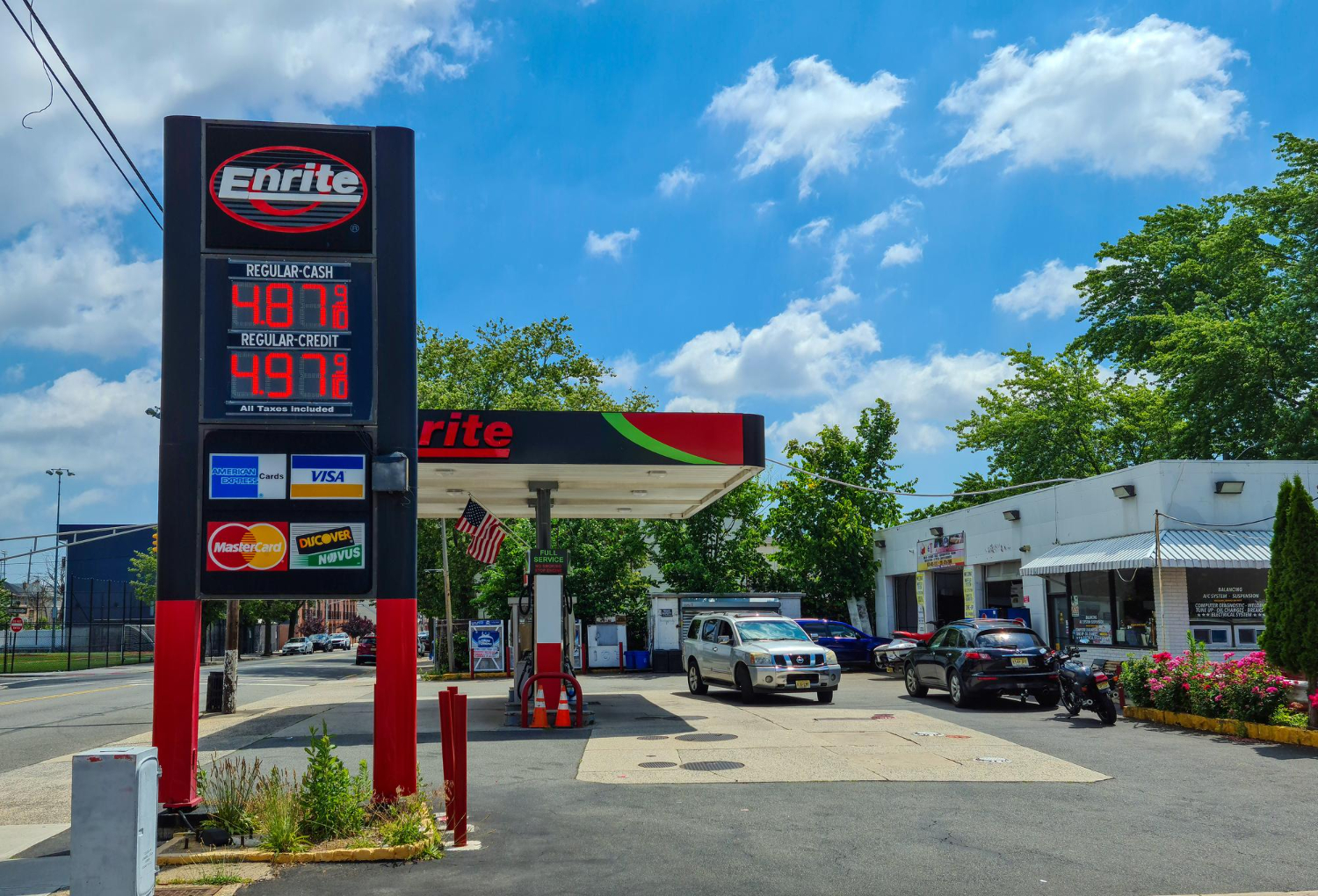
The American gasoline market is not a single market. It is approximately twelve distinct regional markets stitched together by an interstate pipeline system, layered with state and federal taxes, fuel-formulation requirements, and refinery capacity that varies dramatically by region. The current early-May 2026 spread between the highest and lowest U.S. average state retail prices is approximately $2.60 per gallon — the largest sustained spread in fifteen years. California sits at the top of the range, with a state average of approximately $5.40 per gallon according to the Energy Information Administration’s weekly retail price survey. Mississippi sits at the bottom, averaging approximately $2.81. The reasons for the spread are structural rather than political — and most American drivers do not understand the actual mechanics. Here is the May 2026 gasoline price map, state by state, with the specific reasons for the spread.
The May 2026 American gasoline pricing landscape can be summarized in five regional zones, each with its own pricing logic. The West Coast — California, Oregon, Washington, Nevada, and Arizona — runs the highest prices nationally. The Northeast — New York, New Jersey, Connecticut, Massachusetts, and Pennsylvania — runs the second-highest tier. The Midwest — Illinois, Wisconsin, Michigan, Ohio, and Indiana — runs mid-tier. The Mountain West and Plains — Wyoming, Montana, Idaho, Utah, Colorado, North Dakota, South Dakota, Nebraska, Kansas, Oklahoma — runs lower than the national average. The South — Mississippi, Alabama, Louisiana, Texas, Tennessee, Kentucky, the Carolinas, and Georgia — runs the lowest prices nationally. The reasons for each tier are specific and trace primarily to refinery infrastructure, fuel-formulation requirements, and tax structure rather than to retailer-level pricing decisions.
Why California Pays $5.40
California’s $5.40 per gallon average reflects four overlapping cost layers. First, the California Air Resources Board’s reformulated gasoline (CARB Phase 3) is a state-specific fuel formulation required by California law that costs approximately $0.20 to $0.30 more per gallon to produce than the standard EPA reformulated gasoline used in most other states. Second, California’s total state fuel tax — approximately $0.78 per gallon as of 2026 — is the highest in the United States. Third, California’s Low Carbon Fuel Standard program adds approximately $0.18 per gallon in compliance costs. Fourth, California’s six in-state refineries operate at near-capacity, and the state’s geographic isolation means it cannot quickly import lower-cost gasoline from other states when prices spike. The 2024 closure of the Phillips 66 Wilmington refinery and the announced 2025 closure of the Marathon Carson refinery have further tightened California’s in-state production capacity. The cumulative result is a sustained price premium of approximately $1.50 to $2.00 per gallon over the national average.
Why Mississippi Pays $2.81

Mississippi’s $2.81 per gallon average reflects the inverse of California’s structure. The state uses standard EPA conventional gasoline — no state-specific formulation requirements. Mississippi’s combined state and local fuel tax is approximately $0.37 per gallon, less than half of California’s and among the lowest in the United States. The state benefits enormously from proximity to the Gulf Coast refinery complex, where approximately 45 percent of all U.S. refining capacity is concentrated across Louisiana, Mississippi, Alabama, and Texas. Pipeline distribution from the Gulf refineries to Mississippi is short and inexpensive, with the Plantation Pipeline and Colonial Pipeline both serving the state directly. Mississippi has no carbon-pricing program and no low-carbon fuel standard adding compliance costs to the retail price. The cumulative result is gasoline pricing close to the wholesale cost from the Gulf refineries plus a thin retail margin. Alabama, Louisiana, and parts of east Texas show similar pricing dynamics, with Mississippi typically running $0.05 to $0.15 per gallon below its immediate neighbors due to its specific combination of low taxes and direct pipeline access.
The Pacific Northwest Surprise
Oregon and Washington both sit in the high-cost zone — approximately $4.85 and $4.60 per gallon respectively in May 2026 — despite not having California’s CARB-specific fuel formulation. The reasons are different. Washington has the second-highest state fuel tax in the United States at approximately $0.49 per gallon as of 2026, plus the state’s Climate Commitment Act cap-and-invest program adds approximately $0.20 to $0.30 per gallon. Oregon has its own Clean Fuels Program adding compliance costs and a state fuel tax of approximately $0.40 per gallon. Both states rely on pipeline gasoline from California refineries, which means California’s tighter supply directly drives Pacific Northwest prices upward. The Pacific Northwest is effectively a captive market of California’s refinery system.
The Northeast Pattern

New York, New Jersey, Connecticut, Massachusetts, and Pennsylvania all run prices in the $3.80 to $4.40 range. The Northeast is supplied primarily by the Colonial Pipeline from the Gulf Coast refineries plus some import via Northeast port terminals including the Bayway refinery in Linden, New Jersey and the Marcus Hook complex in suburban Philadelphia. The states require reformulated gasoline (RFG) under EPA Clean Air Act rules, which costs approximately $0.05 to $0.10 more per gallon than conventional gasoline. State fuel taxes vary substantially — Pennsylvania has the second-highest state gasoline tax in the nation at approximately $0.59 per gallon, while New Jersey’s is approximately $0.42 and Massachusetts runs approximately $0.32. Connecticut applies a separate gross-receipts tax that adds approximately $0.08 to $0.12 per gallon depending on wholesale conditions. The Northeast’s pricing is moderate, driven primarily by Colonial Pipeline supply costs, state tax variation, and the RFG requirement. The Northeast does not have the layered carbon-pricing programs that drive Pacific Coast prices upward, though New York’s Cap-and-Invest program, scheduled to take effect in 2027, is expected to add approximately $0.15 per gallon to New York retail prices.
The Midwest Refinery Belt

Illinois, Indiana, Ohio, Michigan, and Wisconsin all run in the $3.10 to $3.50 range. The region is served by the Whiting refinery complex in Northwest Indiana — the largest refinery in the Midwest, processing approximately 435,000 barrels per day — plus refineries in Toledo, Detroit, and Robinson, Illinois. The combination of nearby refining capacity, lower state fuel taxes than the coasts, and no major regional carbon-pricing programs produces moderate gasoline pricing. Chicago metropolitan area prices run higher than the broader Illinois average due to Cook County’s specific fuel taxes and the city’s Clean Air Reformulated Gasoline requirement. The rural Illinois price can run $0.40 to $0.60 below the Chicago city price for the same gasoline grade.
What Drives the Spread Going Forward
The 2026 American gasoline price spread is unlikely to compress in the near term. California’s refinery closures are continuing — two more announced for 2026 and 2027. Washington’s carbon pricing has not been repealed by the most recent election cycle. The Gulf Coast refinery complex continues to expand, with new capacity announced through 2028. The states with the lowest current gasoline prices — Mississippi, Alabama, Louisiana, Texas — have refinery infrastructure that is being expanded rather than retired. The states with the highest current prices — California, Oregon, Washington, Nevada — have refinery infrastructure that is being retired without replacement. The 2026 spread between the highest and lowest state averages is likely to grow rather than shrink through the rest of the decade.
The practical implication for American drivers is clear. The cost of a one-week, 1,500-mile road trip varies dramatically depending on the route. A trip across the lower South — Mississippi to Alabama to Georgia to South Carolina — costs approximately $185 in gasoline at current prices. The same 1,500-mile trip along the West Coast — California to Oregon to Washington — costs approximately $290. The $105 difference in gasoline cost is real, predictable, and increasingly persistent. The American gasoline market is fragmenting along regional lines, and the regional differences are now a significant factor in road-trip economics that pre-2020 budgeting did not need to account for.