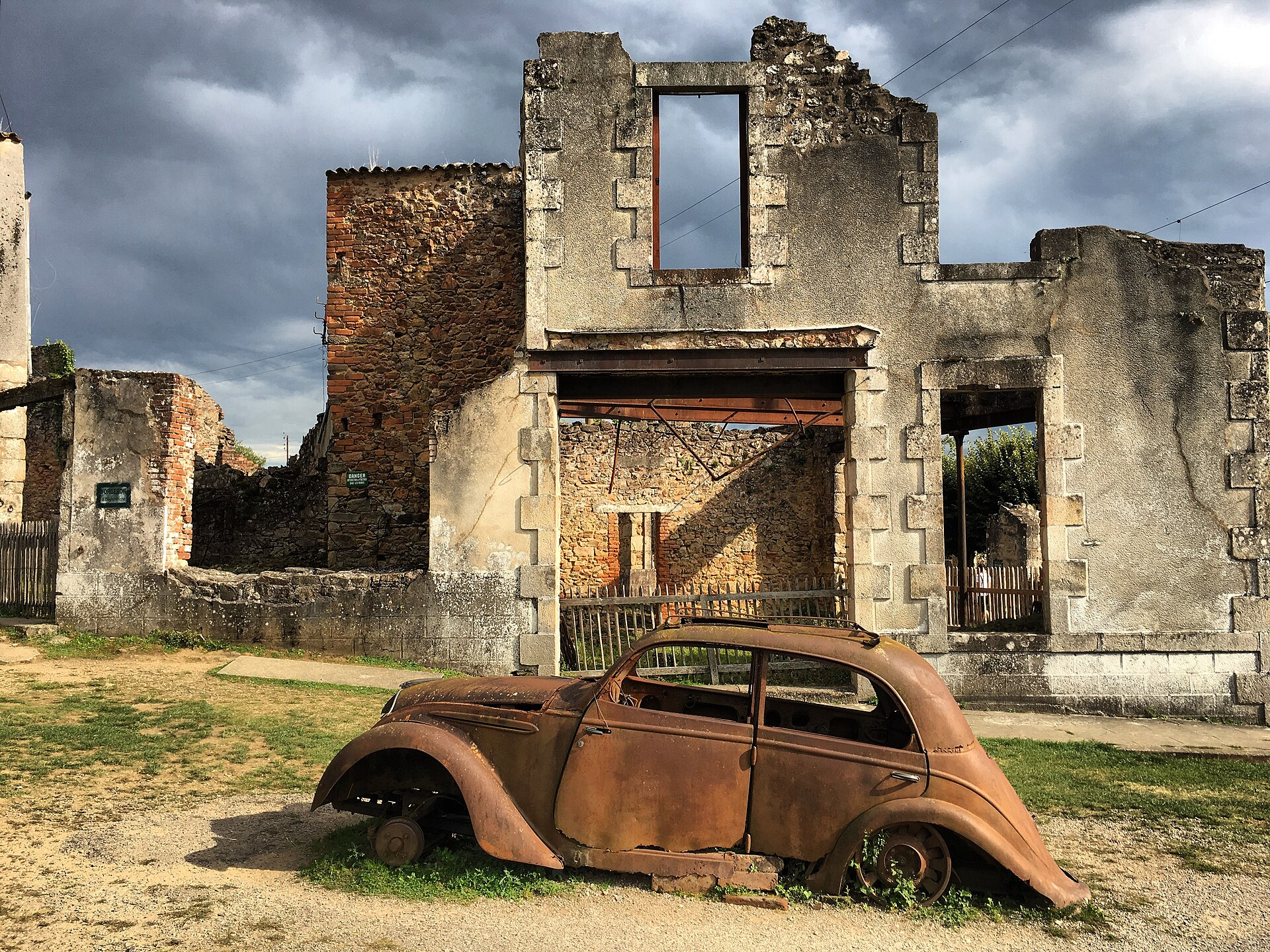
In the rolling countryside of central France, about 14 miles northwest of Limoges, stands one of Europe’s most solemn places of remembrance: the ruins of Oradour-sur-Glane. Unlike a typical historic site, this is a village deliberately left exactly as it was on a single tragic day in June 1944, its empty streets, gutted homes, and rusted remnants preserved as a permanent memorial. Today it stands as a place of quiet reflection, drawing visitors who come to remember and to bear witness to the human cost of war.
A Quiet Village Before the War
Before 1944, Oradour-sur-Glane was an ordinary, peaceful rural community in the Limousin region of central France. Its residents farmed and worked in small shops, cafés, and businesses along its modest streets, and a tramway connected it to nearby Limoges. Life there had the unremarkable rhythm of countless French villages, families, schoolchildren, market days, and Sunday gatherings. It was, by all accounts, an unlikely setting for one of the darkest events of the war in France, a place with no particular strategic importance and no known role in the armed resistance.
Like our content? Follow us for more.
A Day That Stopped Time
On June 10, 1944, just days after the D-Day landings, the village was destroyed and the overwhelming majority of its inhabitants killed by a unit of the German Waffen-SS. In a matter of hours, a thriving community of hundreds was wiped out, and the village was burned. The event stands as one of the worst massacres of civilians in Western Europe during the war. Out of respect for the victims, this account does not dwell on the details of that day; what matters for visitors today is the gravity of what happened and the way the site has been preserved to honor those who died. A small number of people survived, and their testimony later helped document the tragedy.
A Decision to Preserve, Not Rebuild
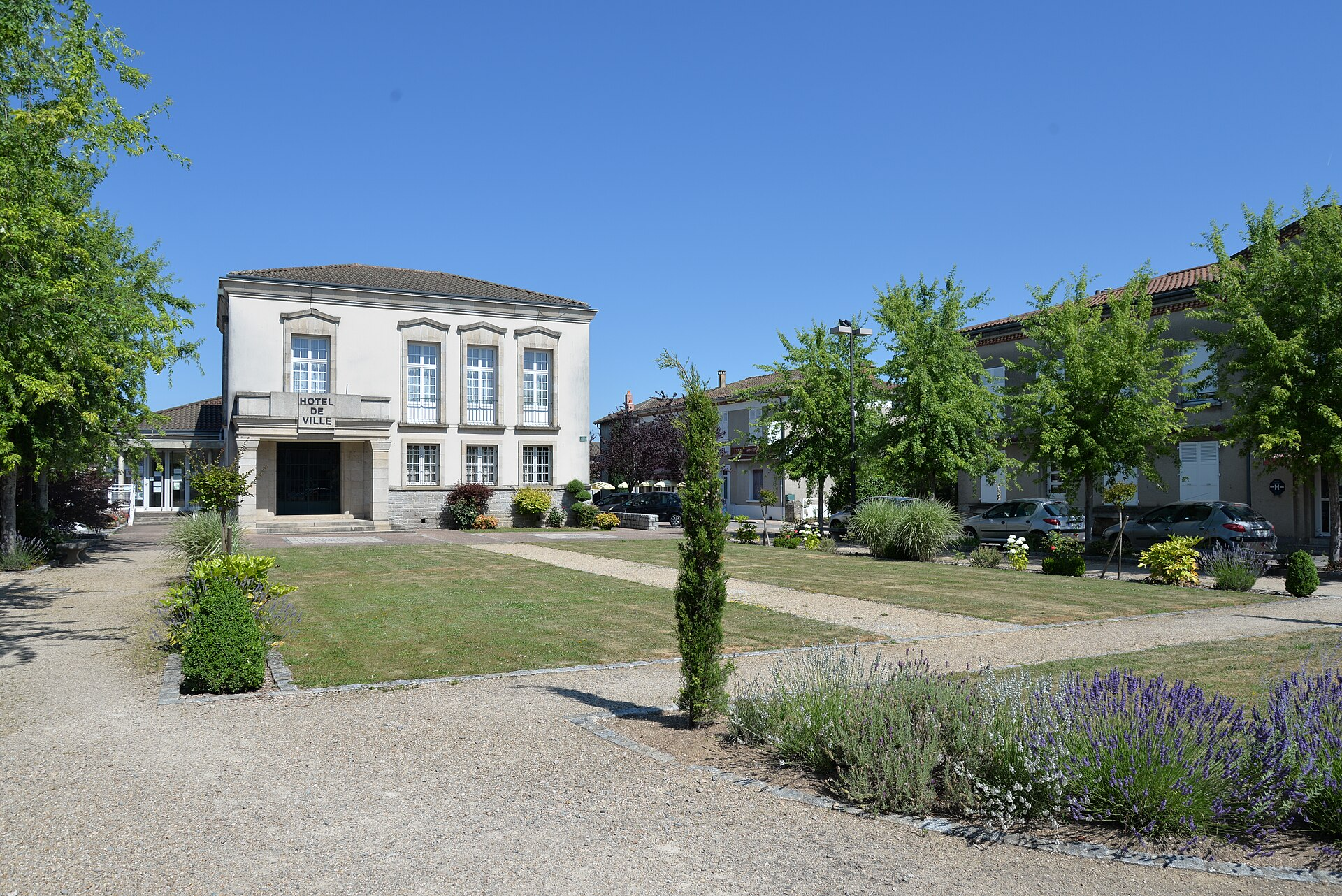
After the war, the French leader Charles de Gaulle made a momentous decision: the ruined village would never be rebuilt, but would be preserved in its destroyed state as a permanent memorial to the victims and to the brutality of the occupation. A new village of Oradour-sur-Glane was constructed nearby for the survivors and future residents, while the original site was left untouched. The ruins were formally classified as a historic monument, ensuring their protection. It was a powerful and unusual choice, to leave a wound visible rather than to heal it over, so that the memory could never fade.
Frozen in Time
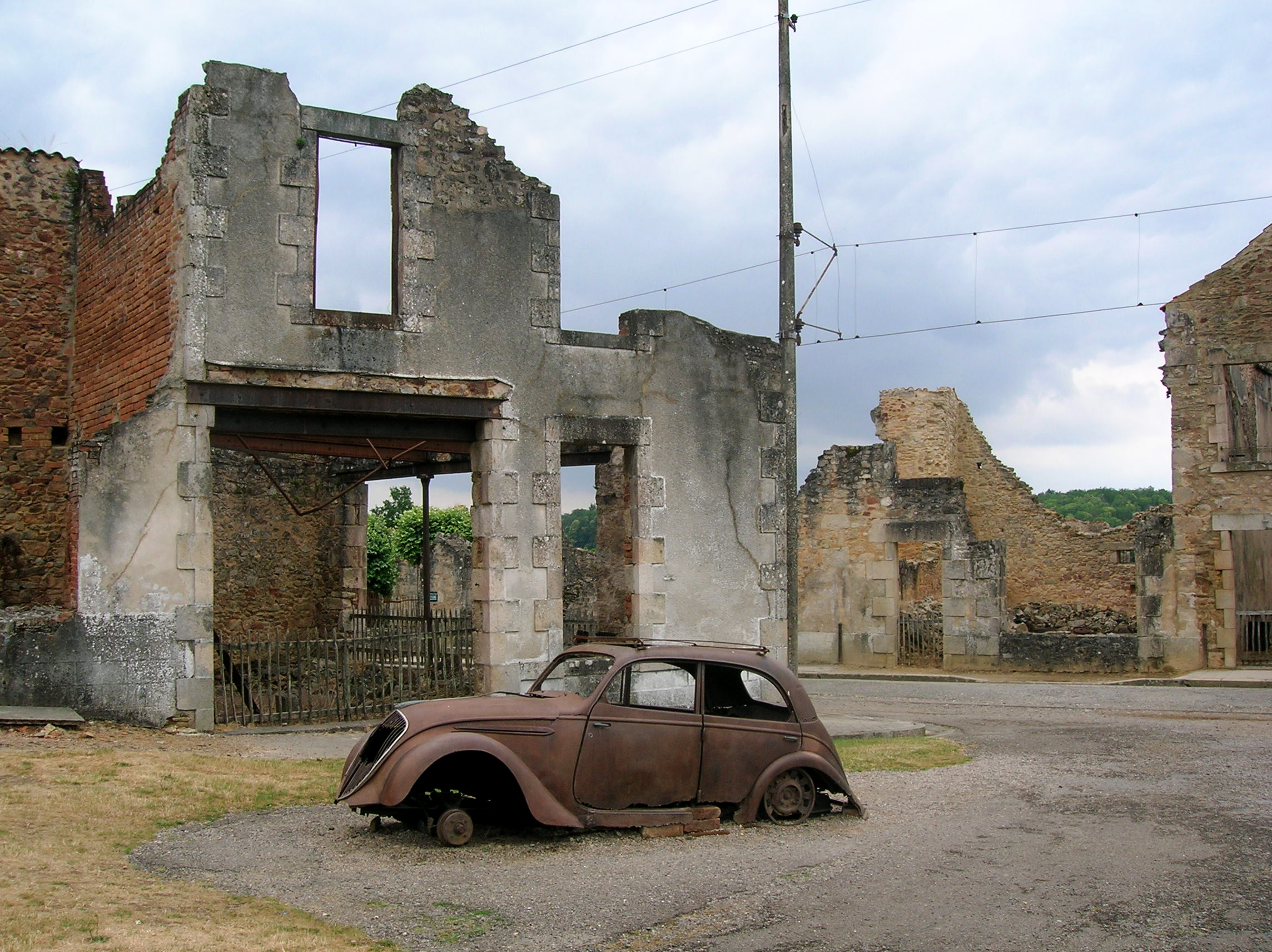
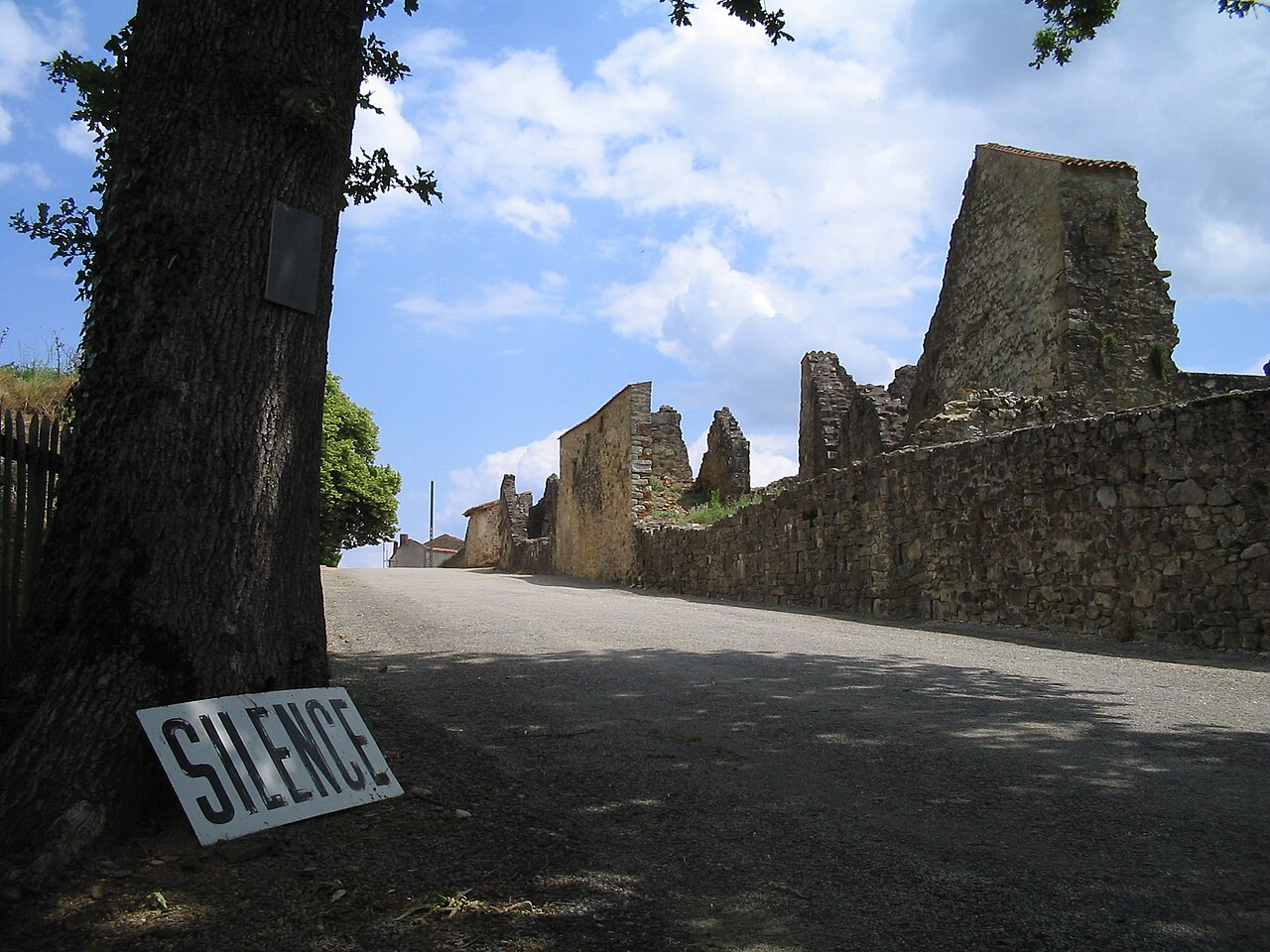
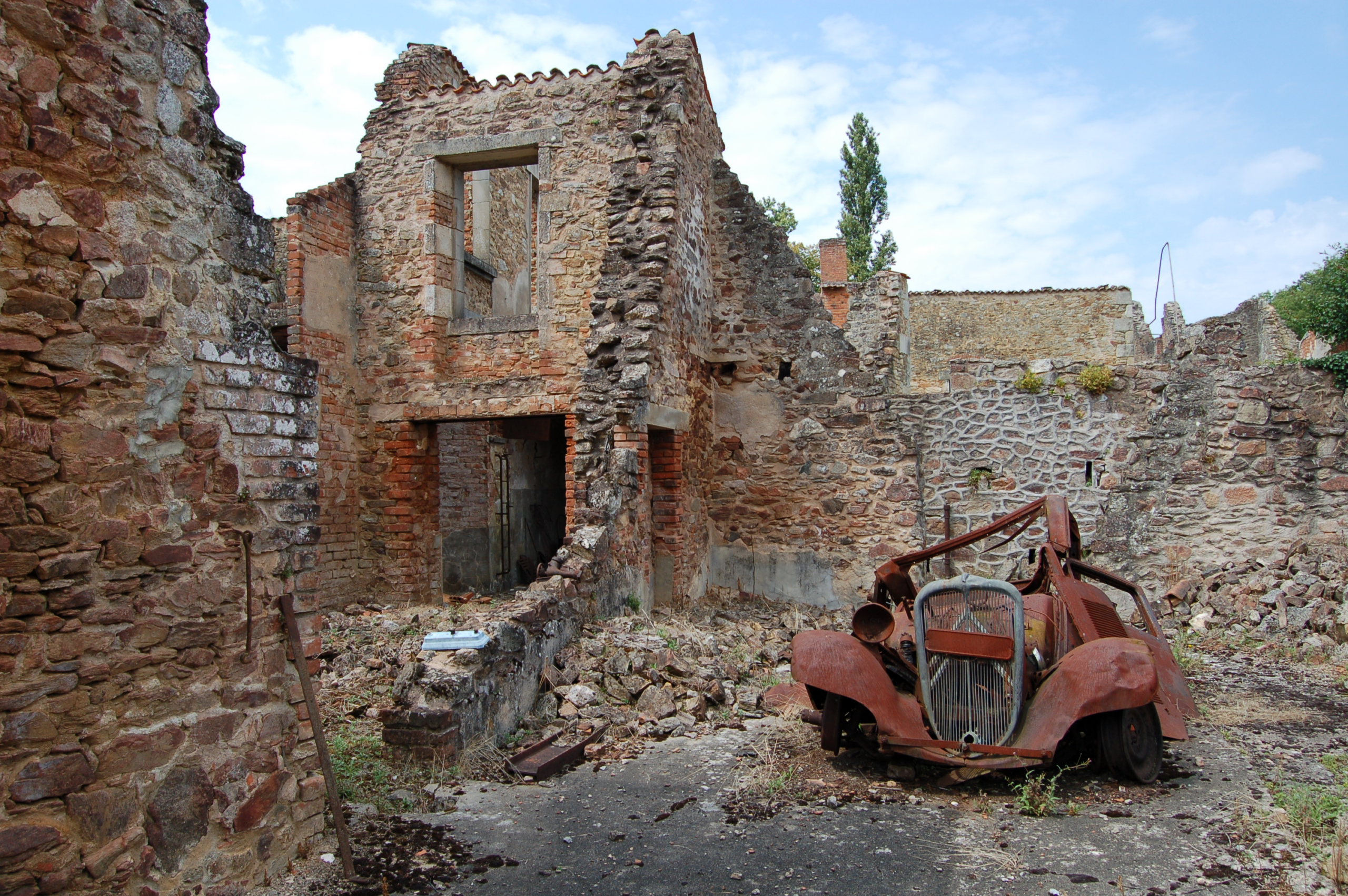
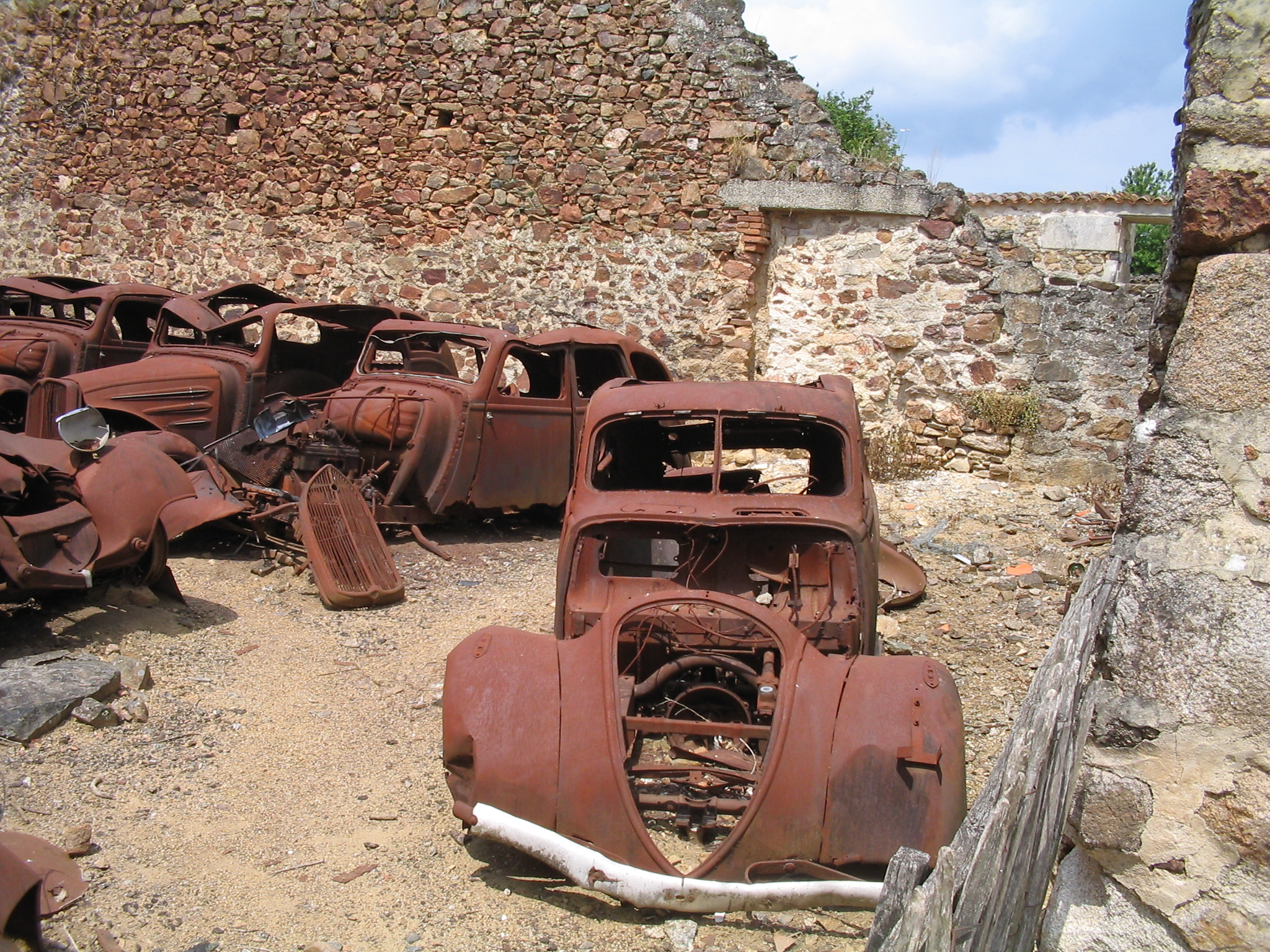
What makes Oradour so haunting is precisely how little has changed since 1944. Walking the length of its main street, visitors pass the shells of homes, cafés, and shops, their walls open to the sky. Rusted cars sit where they were left, decades of weather slowly claiming them. A sewing machine, a child’s belongings, tramway tracks, and other ordinary objects of daily life remain among the ruins, frozen mid-routine. The village church still stands, its walls bearing the marks of that day. Plaques note the names and trades of the people who lived and worked in each building, restoring a sense of the community that once filled these streets.
A Place of Remembrance
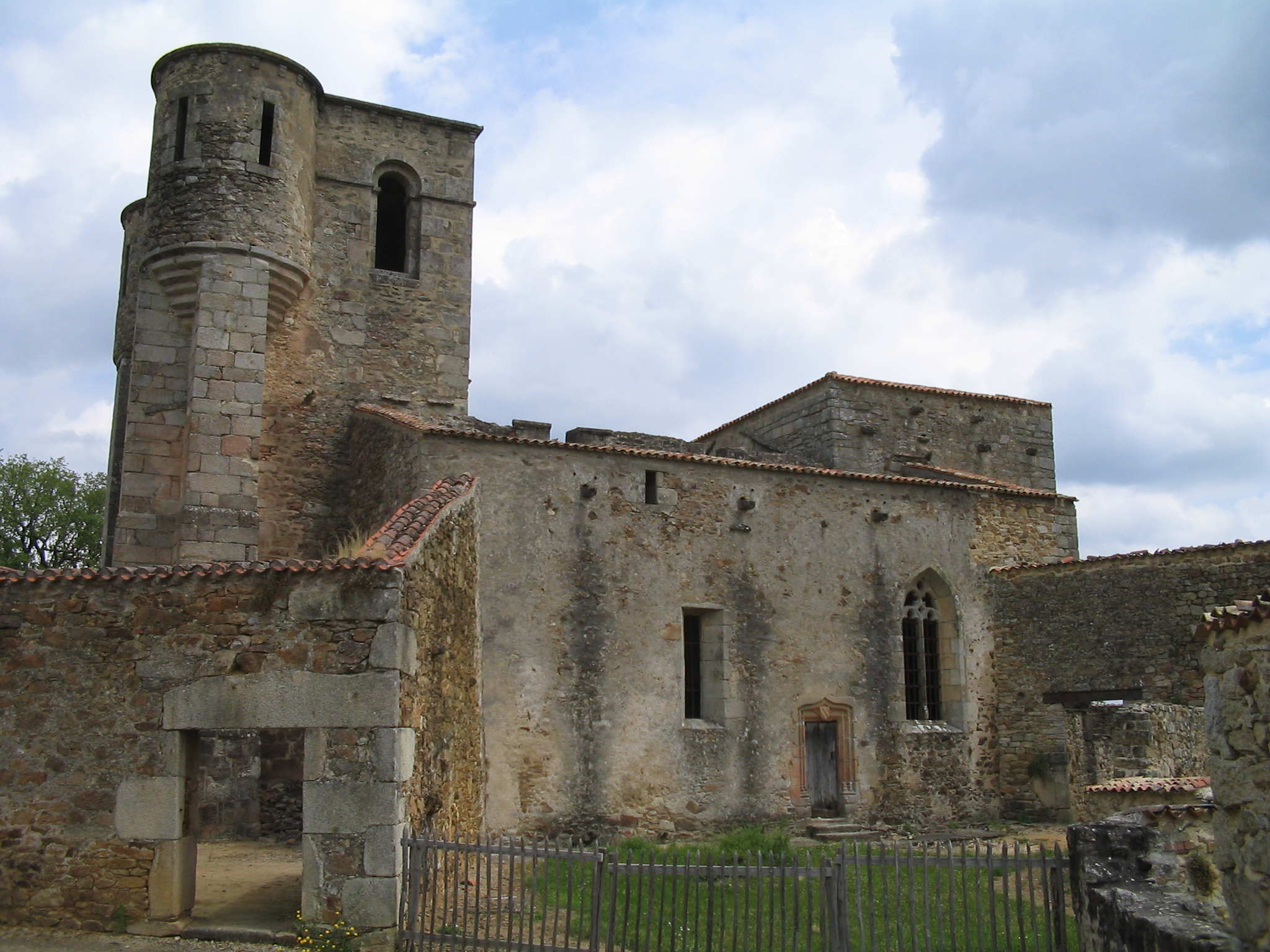
Today, Oradour-sur-Glane draws around 300,000 visitors a year, who come not as ordinary tourists but as witnesses. The site is approached with reverence; signs ask visitors for silence and to “remember.” Walking through the ruins is a quiet, often deeply moving experience, the scale of the empty village conveying the magnitude of the loss far more powerfully than any words. In the village cemetery, the names of those who died are inscribed on a memorial. The experience is somber by design, an invitation to reflect rather than simply to look.
The Centre de la Mémoire
To help visitors understand the historical context, a memorial museum, the Centre de la Mémoire, was opened near the entrance to the ruins in 1999. It uses archival materials, films, and personal accounts to explain the events and the wider period of the war and occupation. The center displays personal items recovered from the village, ordinary possessions that powerfully humanize the scale of the tragedy. (Note: the memory center has been closed for a major renovation, with the work expected to continue into 2027; during this period, a temporary reception point operates and the ruined village itself remains open to visitors, free of charge.)
Why Visitors Come
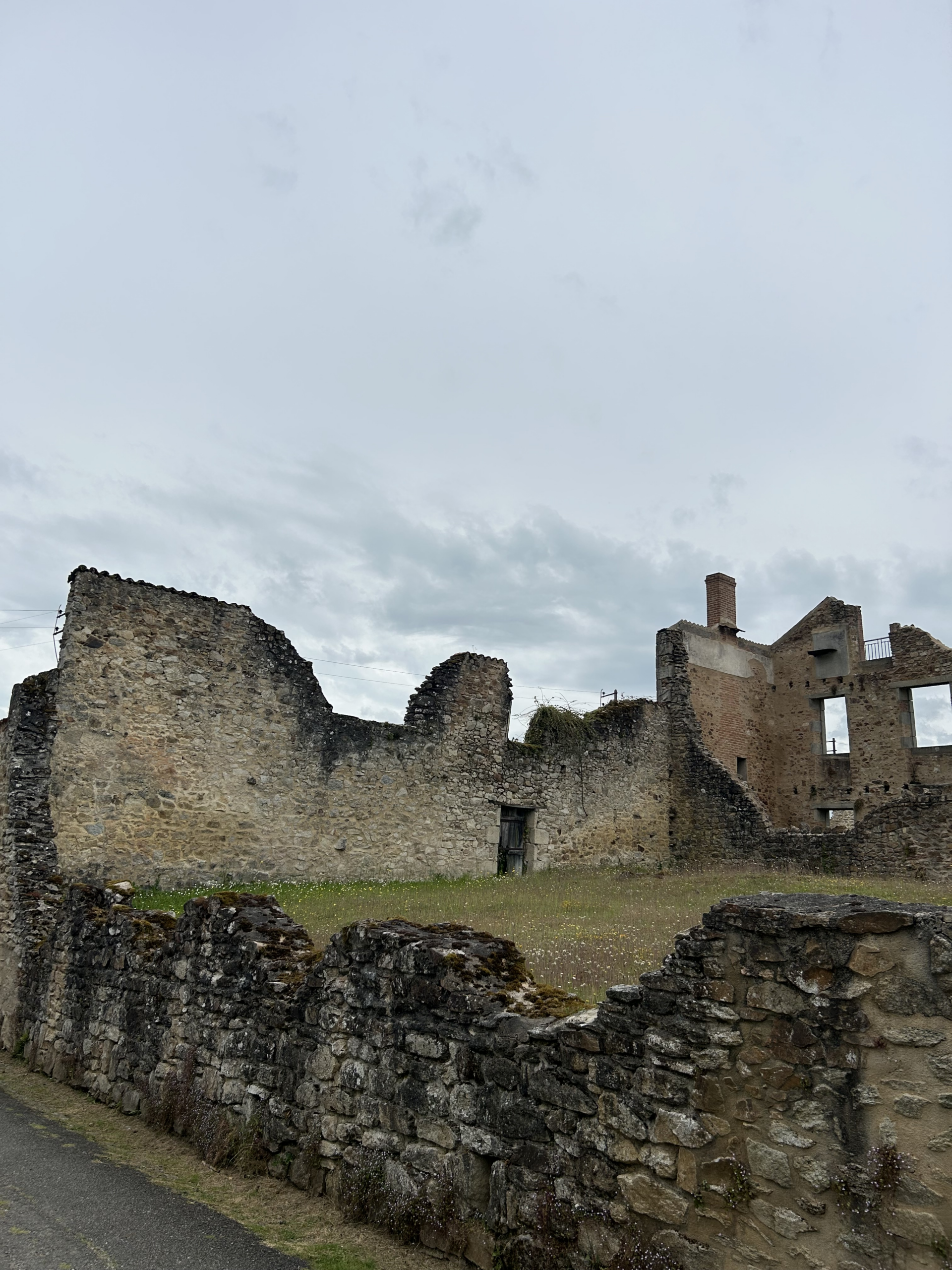
In an age of bucket-list travel, Oradour-sur-Glane offers something very different: not beauty or spectacle, but remembrance and reflection. For many visitors, it is among the most affecting places they will ever see, a stark, tangible reminder of the human cost of war and the importance of memory. It draws those with a connection to the history, students learning about the period, and travelers who believe such places must be visited precisely because they are difficult. The site stands as a tribute to a community lost and a deliberate act of remembrance meant to ensure it is never forgotten.
A Memorial for the Generations
Oradour-sur-Glane endures as one of France’s most significant memorials of the Second World War, a village frozen in time so that future generations might remember. Its preserved ruins, and the quiet reflection they invite, carry a message that transcends any single event: a plea to remember the victims of war and to recognize the value of peace. For those who make the journey, walking its silent streets is an experience that stays with them, a powerful, sobering encounter with history that honors the memory of all who were lost.
Like our content? Follow us for more.