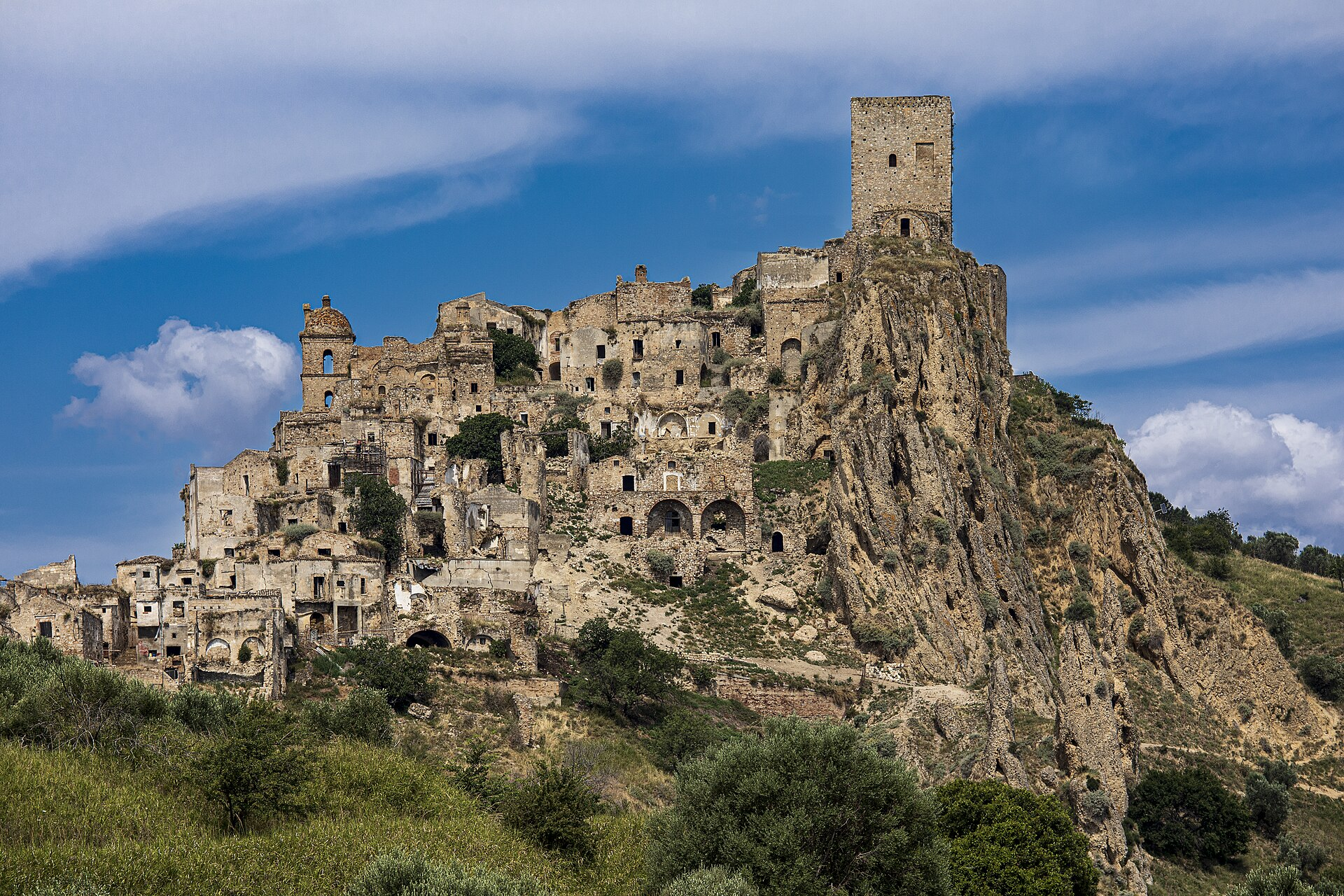
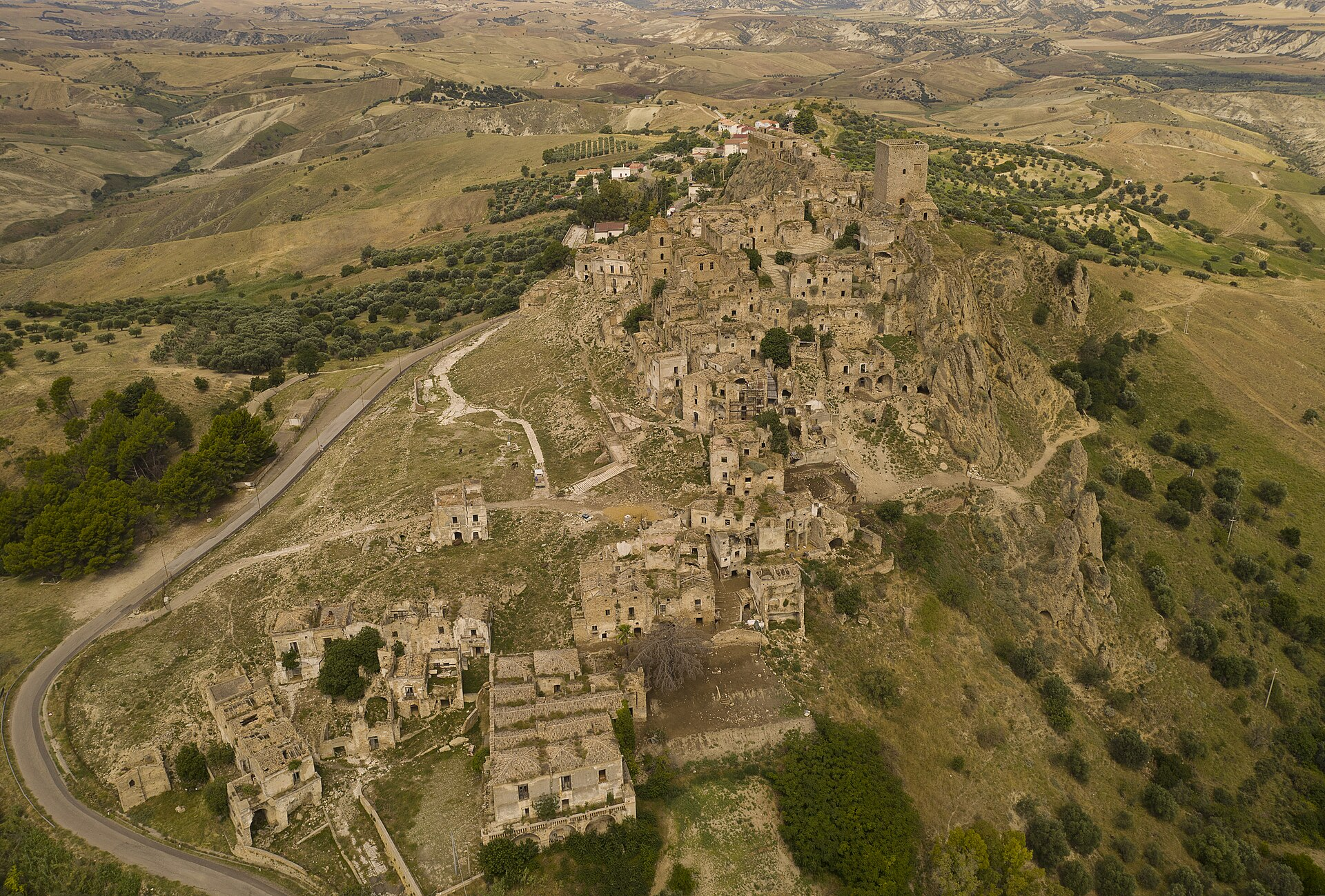
Rising dramatically from the arid hills of southern Italy, the abandoned town of Craco is one of Europe’s most striking ghost towns. Perched atop a steep clay cliff in the Basilicata region, about 25 miles inland from the Gulf of Taranto in the province of Matera, its silhouette of crumbling stone houses and a lone medieval tower stands silent against the landscape. Once a thriving community with roots stretching back more than a thousand years, Craco was ultimately defeated by the very ground it was built on, and today it offers travelers a hauntingly beautiful glimpse into a vanished way of life.
A Thousand Years of History
Craco’s story is remarkably long. Evidence of settlement in the area dates back to ancient times, with the site traditionally said to have been founded by Greek settlers who moved inland, when it was reportedly known as Montedoro. Over the centuries it grew into a fortified medieval hilltop town, gaining a Norman-era watchtower, and a university was established there in the 13th century. The town’s population climbed over the generations, reaching a peak of around 2,500 in the 16th century, sustained by farming the surrounding land. For centuries, Craco was a living, working community perched in its dramatic defensive position.
Like our content? Follow us for more.
Built on Unstable Ground
The very feature that made Craco striking, its perch atop a steep cliff, also sealed its fate. The hill is composed largely of clay-rich soil prone to erosion and instability, and the region has long been vulnerable to landslides and earthquakes. Over the centuries, the town weathered repeated challenges, but the geological pressures only grew, especially as the settlement expanded to its limits. The unstable terrain beneath its ancient streets and palaces would ultimately prove impossible to overcome, turning the town’s spectacular setting into the source of its undoing.
Emigration and Decline
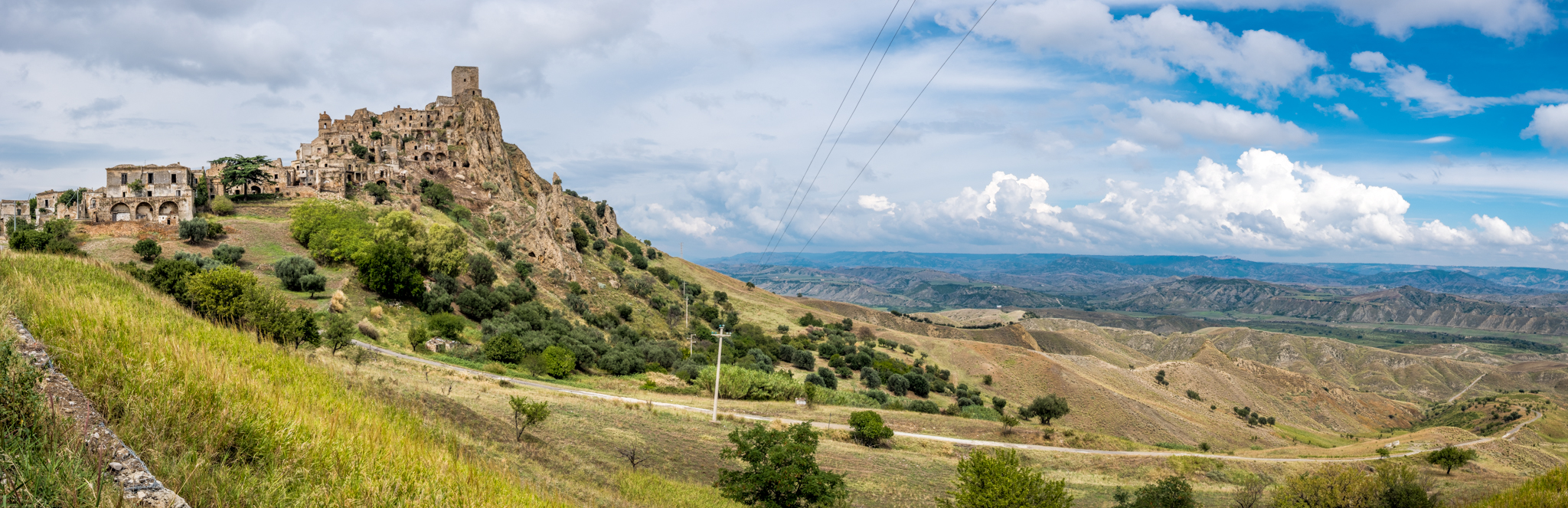
Even before disaster struck, Craco was emptying. Between the late 19th and early 20th centuries, poor agricultural conditions and hardship drove a mass emigration, with well over a thousand residents leaving for the Americas in search of better lives. This great wave of departure, echoing the broader story of southern Italian emigration, had already significantly reduced the town’s population before its final chapter. By the time the decisive disasters arrived, Craco was a shadow of what it had once been, its decline a combination of economic hardship and the looming geological threat.
The Disasters That Emptied the Town
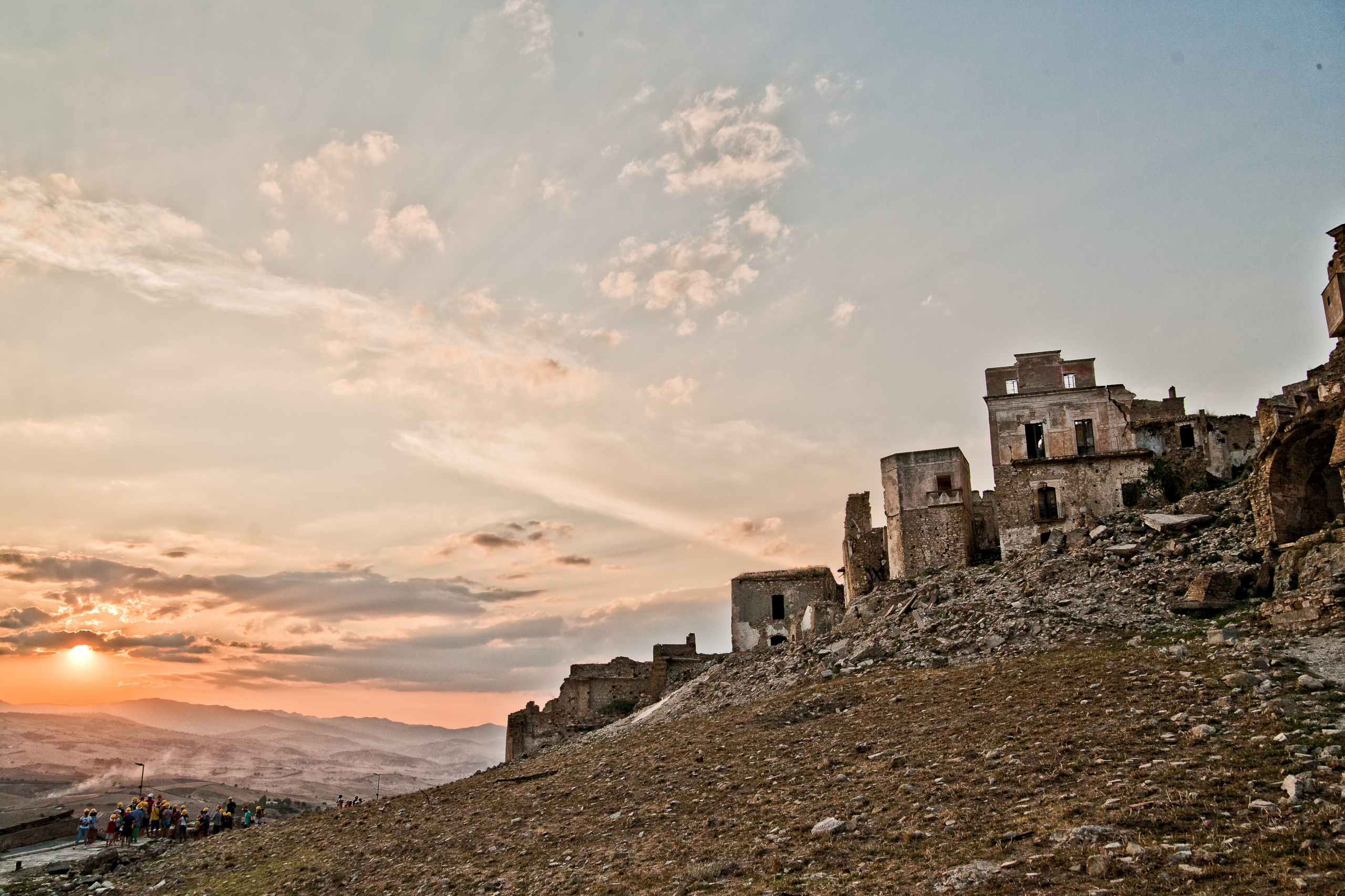
The town’s end came in stages. In 1963, a major landslide, reportedly linked in part to infrastructure work on sewer and water systems, forced the evacuation of the remaining residents, around 1,800 people, who were relocated to a new settlement called Craco Peschiera in the valley below. A flood in 1972 worsened the situation and prevented any return to the historic center. Finally, after a significant earthquake struck the region in 1980, the ancient town was abandoned completely. What had survived for a millennium was emptied within a couple of decades, leaving the old town to stand silent and deserted.
A Town Frozen in Place
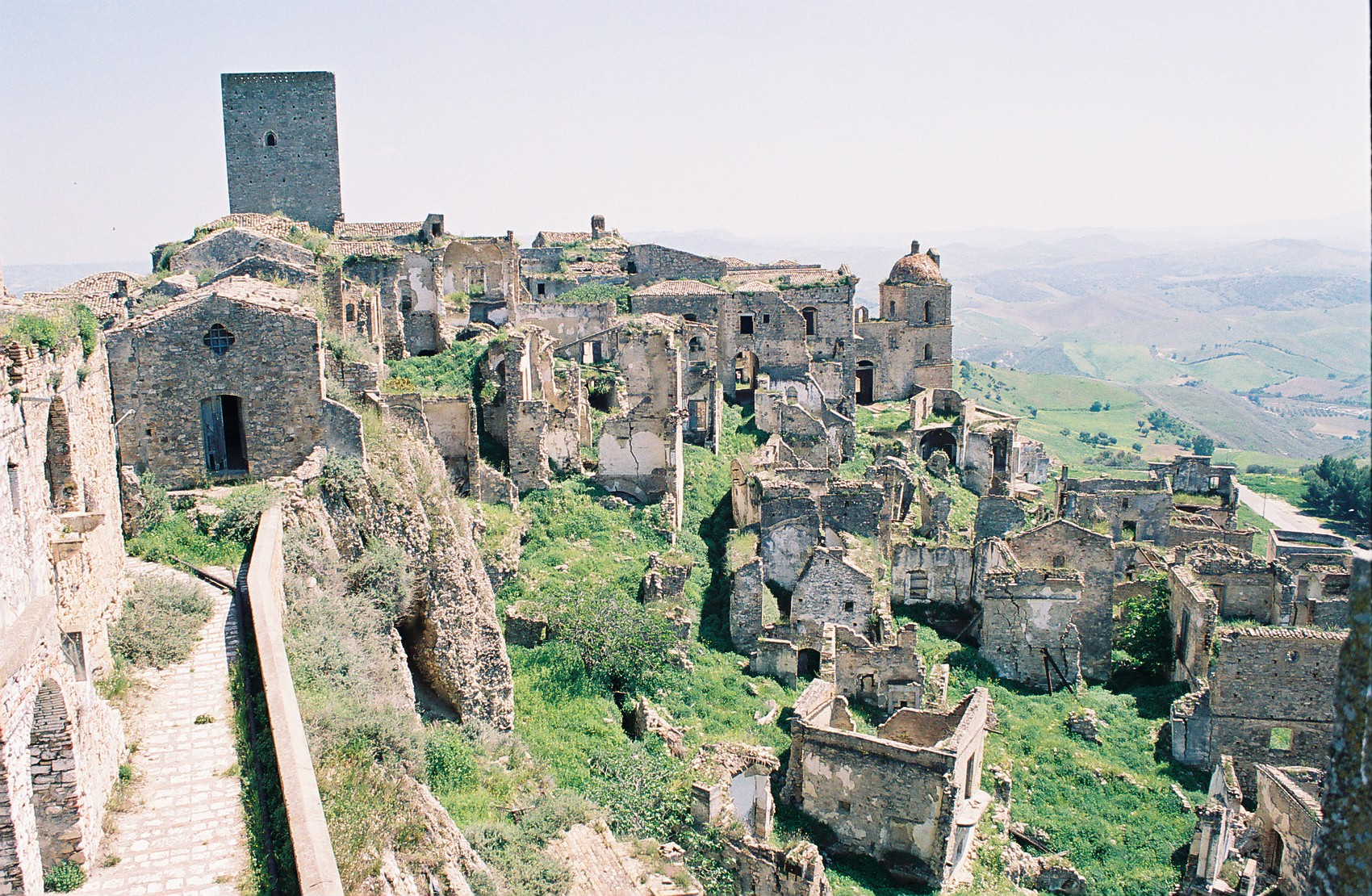
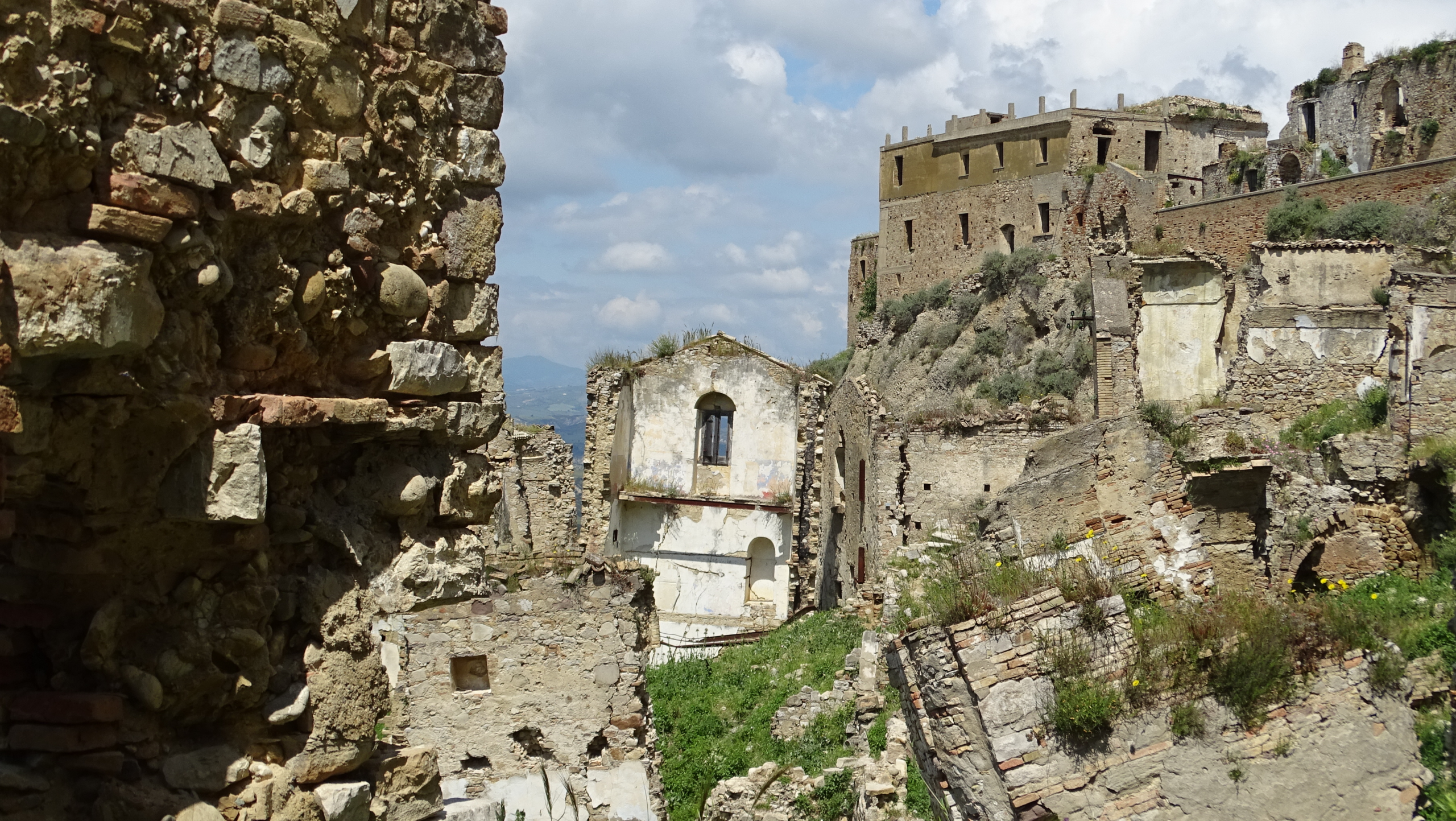
Today, Craco stands much as it was left, a remarkably complete medieval town slowly succumbing to time and the elements. Its narrow streets wind past the shells of stone houses, churches, and noble palazzi, all watched over by the surviving Norman tower. From a distance, the town can appear almost intact; up close, it reveals itself as a patchwork of ruined and decaying buildings. Nature and gravity continue their slow work, and the silence of the empty streets, set against sweeping views of the surrounding badlands, gives the place an unforgettable, melancholy atmosphere.
A Star on Screen
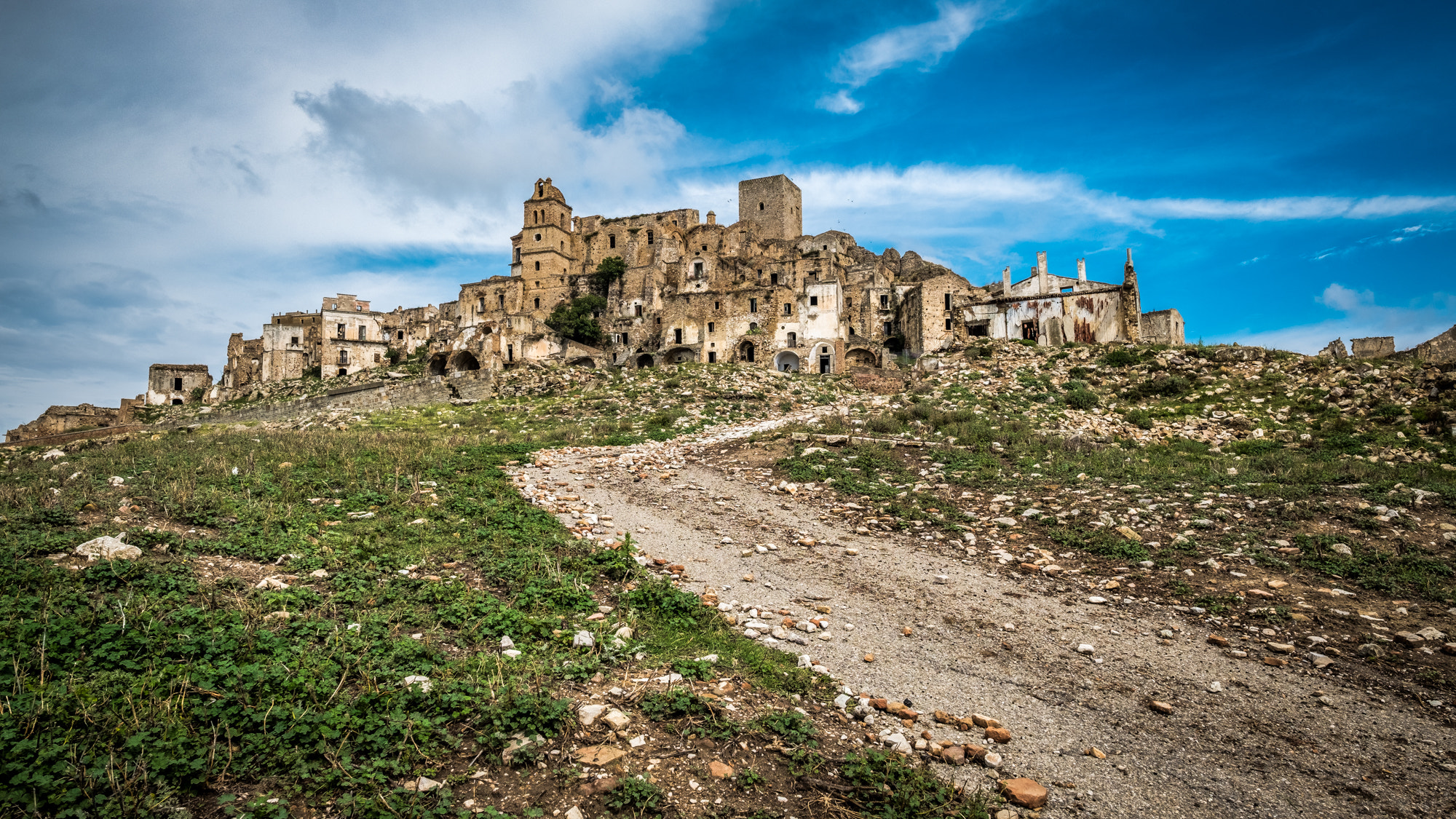
Craco’s dramatic, otherworldly appearance has made it a sought-after filming location. Its haunting ruins and striking setting have featured in a number of films over the years, including major international productions, which have used the abandoned town to evoke everything from ancient times to dramatic, desolate landscapes. This second life on screen has helped raise Craco’s profile, drawing the attention of travelers and film enthusiasts alike and cementing its reputation as one of Italy’s most cinematic ghost towns.
Visiting Craco Today
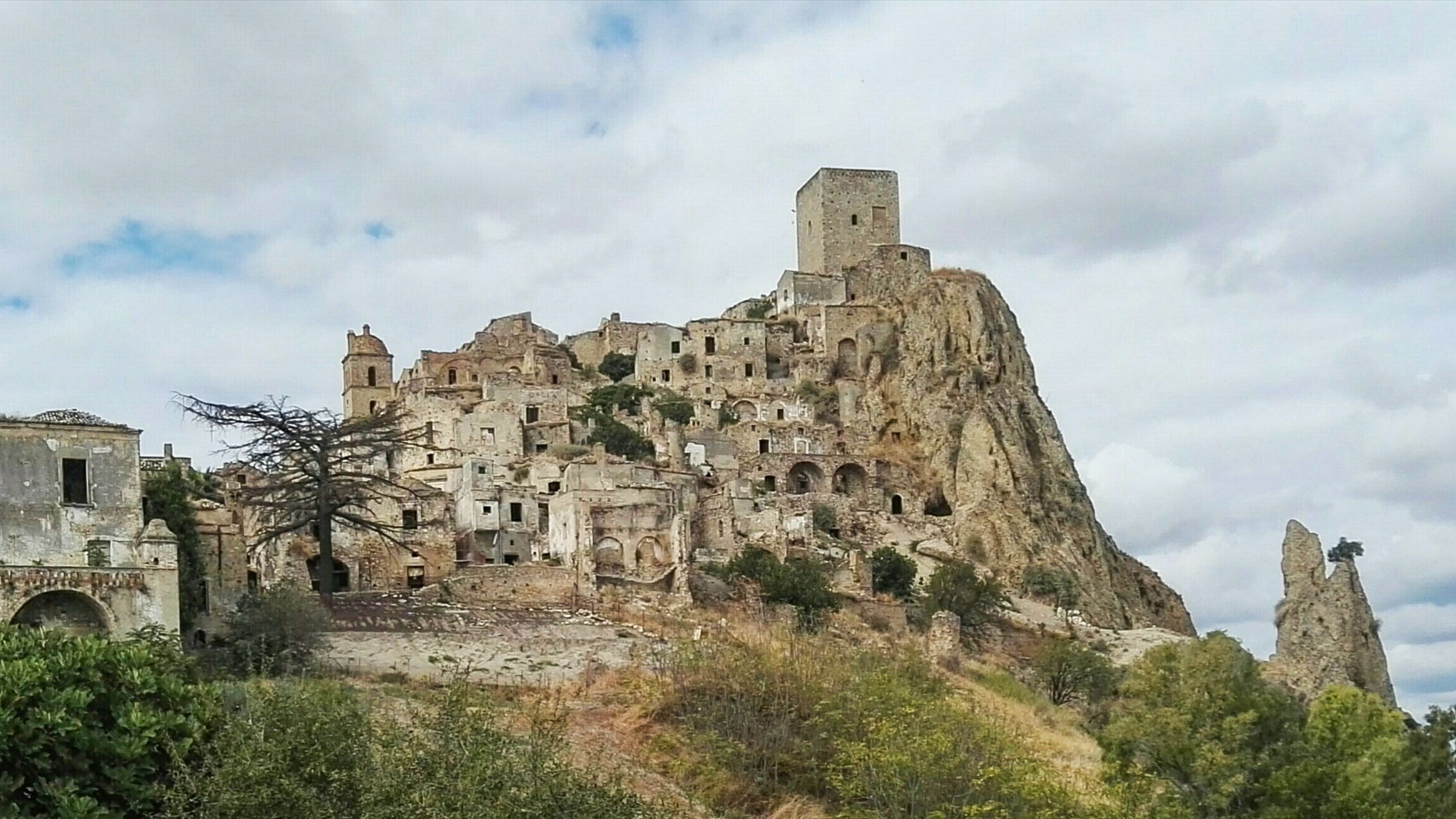
For travelers, Craco is now a carefully managed attraction. Because of the risk of collapse, visitors cannot wander the ruins freely; instead, the town is explored on guided tours, with guests typically wearing hard hats for safety. These walks, lasting around 90 minutes, lead along secured paths past the main thoroughfare, the principal piazza, a church, a noble palazzo, and the Norman tower, while guides recount the town’s long history and dramatic abandonment. Reaching Craco is easiest by car, with the visitor area located near the newer settlement at the foot of the old town; it sits within reach of the famous cave city of Matera, making the two a natural pairing.
A Haunting Monument to Resilience and Loss
Craco endures as a powerful monument to the forces, both natural and human, that can reshape a community’s fate. Its preserved streets tell a story of a town that survived a thousand years of plague, hardship, and change, only to be undone by the unstable ground beneath it. For visitors willing to venture off the beaten path in southern Italy, it offers a rare and moving experience: the chance to walk through a complete medieval town suspended in time, and to reflect on the long, layered history of the people who once called this dramatic hilltop home.
Like our content? Follow us for more.