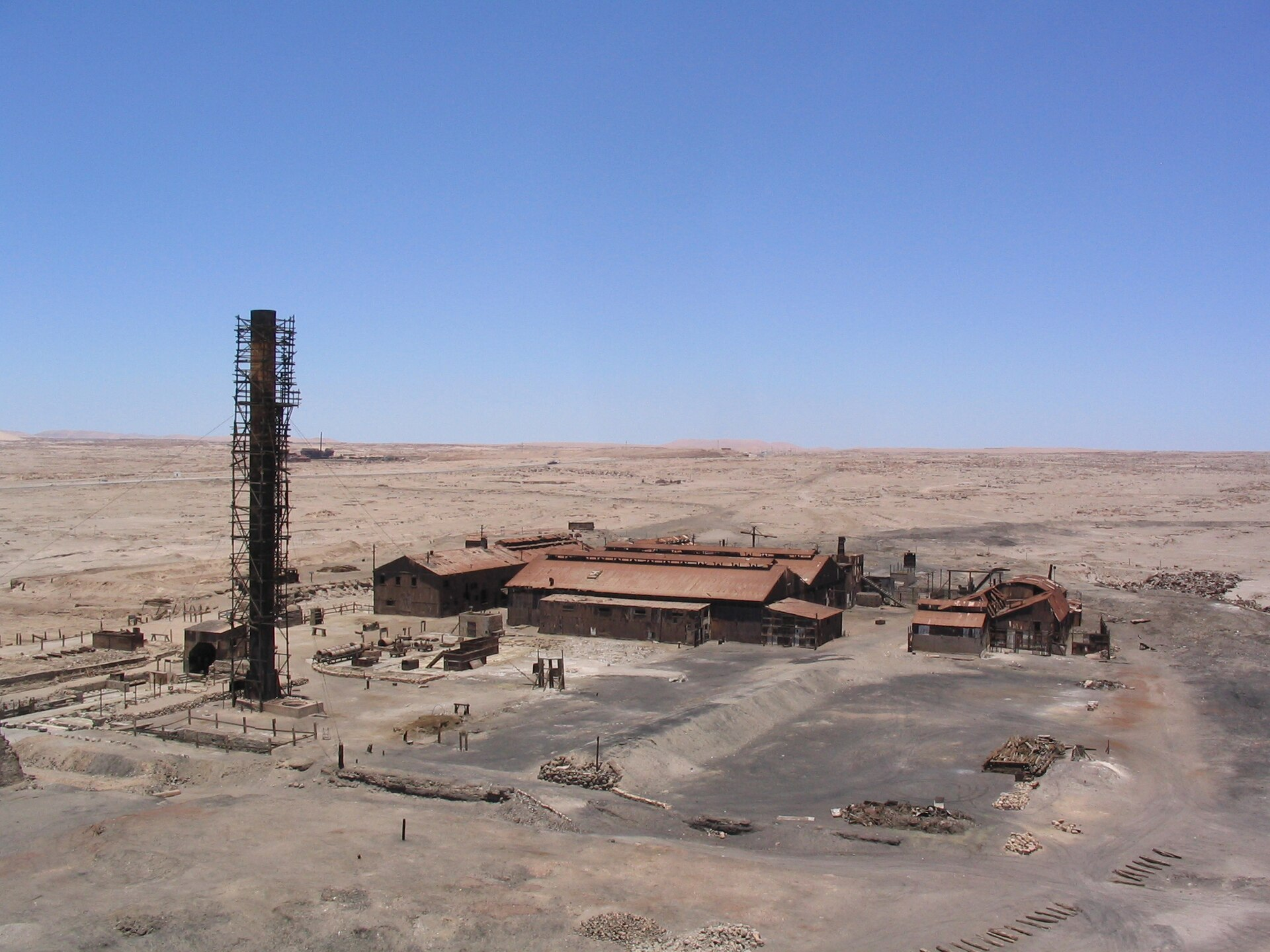
An hour inland from the Chilean port city of Iquique, across a plain of the driest desert on Earth, the road arrives at something impossible: an entire town, plaza, theater, church, school, hotel, rows of workers’ houses, and beyond it the rusting industrial skeleton of a second one, standing empty and nearly perfectly preserved under the Atacama sun. These are Humberstone and Santa Laura, the ghost capitals of an industry that once made this empty desert one of the most valuable places on the planet.
White Gold in the Driest Desert
The treasure was saltpeter, sodium nitrate, the world’s essential fertilizer and a key ingredient in explosives through the nineteenth and early twentieth centuries, and the Atacama held the largest natural deposits on Earth. From the 1870s onward, more than 200 mining settlements, known as oficinas, rose across the desert, and the nitrate trade grew so lucrative that it drove national fortunes, funded cities, and stood at the center of a war between Chile, Peru, and Bolivia that redrew all three countries’ borders.
Like our content? Follow us for more.
Company Towns With Theaters in the Sand
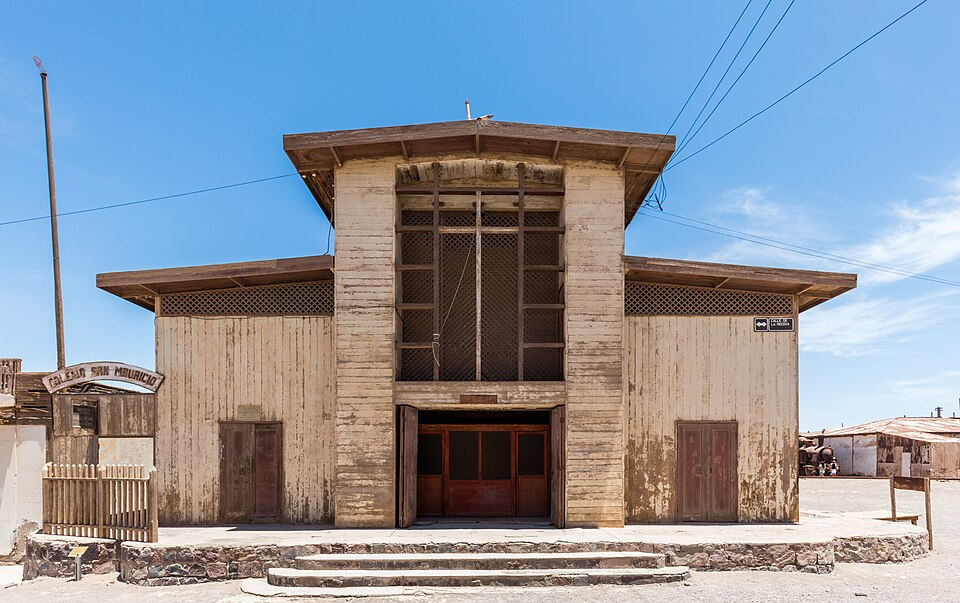
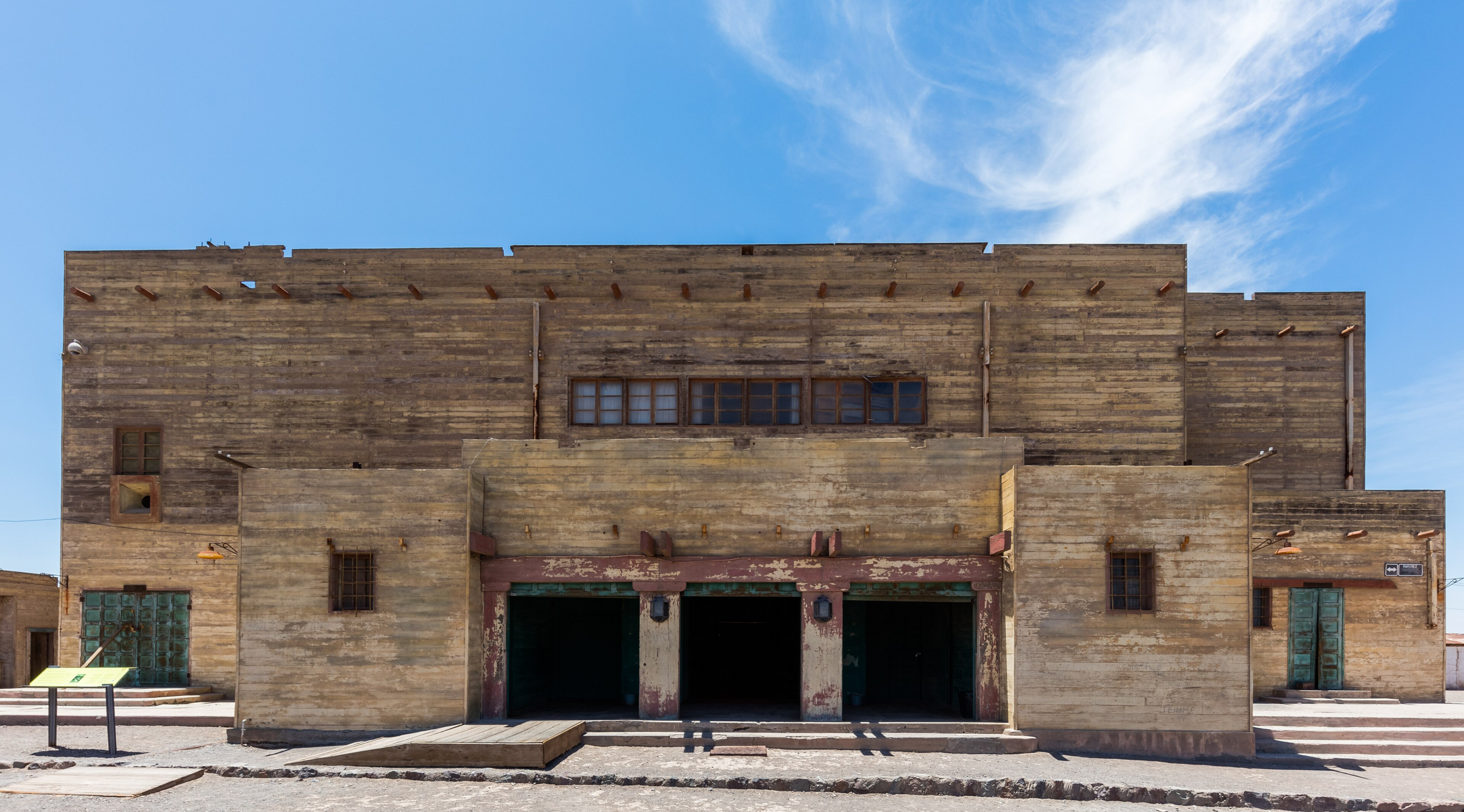
Humberstone, founded in 1872 and later renamed for a British nitrate engineer, grew into a full company town where thousands of workers, the pampinos, lived entire lives in the desert: children in the school, weekends at the theater with its imported seats, dances in the plaza, and swims in a pool famously built from the iron hull of a ship. The pampinos developed a distinctive culture, their own slang, songs, and solidarity forged by isolation and hard labor, and were paid partly in company tokens good only at the company store, a system that eventually helped fuel Chile’s early labor movement. Neighboring Santa Laura remained smaller and more industrial, and today its towering leaching plant and chimney form the site’s most photographed silhouette.
The Invention That Killed 200 Towns
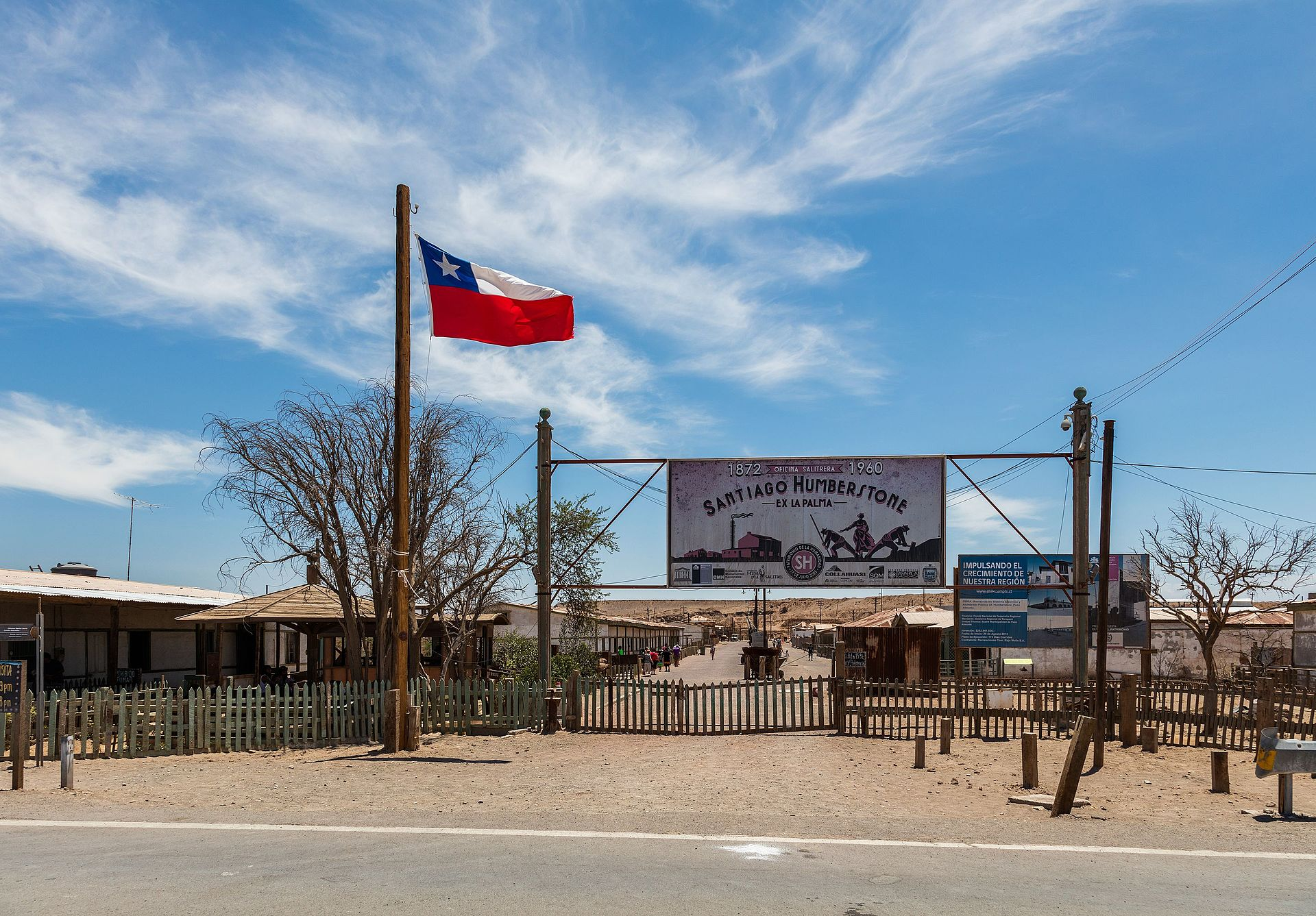
The end came not from the desert but from a laboratory. German chemists’ development of synthetic nitrate production in the early twentieth century, scaled up during and after World War I, meant the world no longer needed to dig its fertilizer from Chilean sand, and the natural nitrate market collapsed. The oficinas emptied one by one through the following decades; Humberstone and Santa Laura held on longer than most, but by 1960 the machines stopped, the last families left, and more than 200 desert towns fell silent, their populations scattering to the coastal cities.
Saved by the Same Desert That Built Them
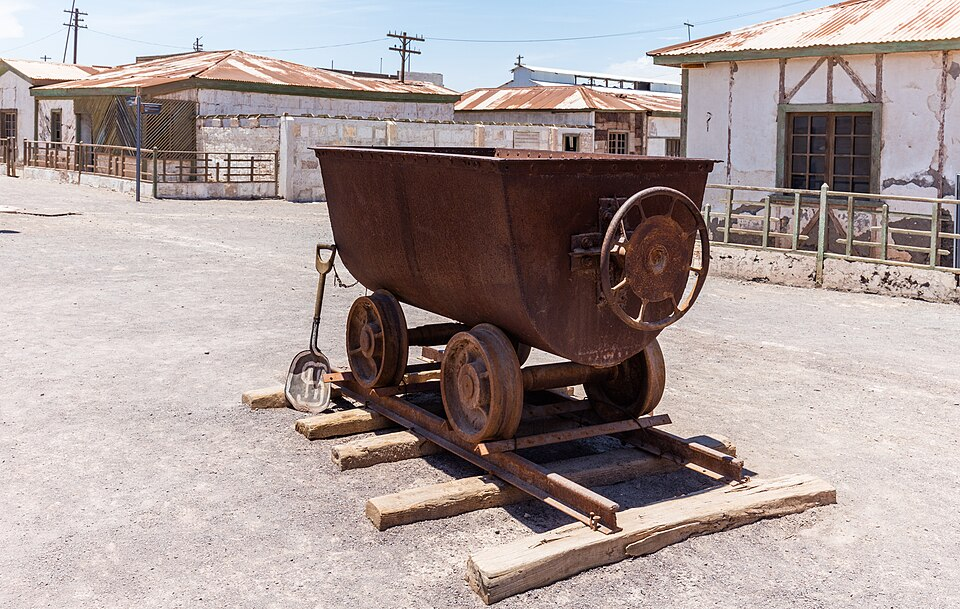
What makes Humberstone extraordinary today is how much of it remains, and the credit belongs to the Atacama itself: with almost no rain and no humidity, wood, iron, and paper that would have rotted anywhere else simply dried in place. Declared a national monument and then inscribed as a UNESCO World Heritage Site in 2005, the towns spent years on the endangered-heritage list before restoration work earned their removal from it in 2019, and today the theater, church, hotel, school, and rows of houses stand furnished with recovered artifacts, while Santa Laura’s industrial works rust magnificently a short walk away.
Walking Through 1960
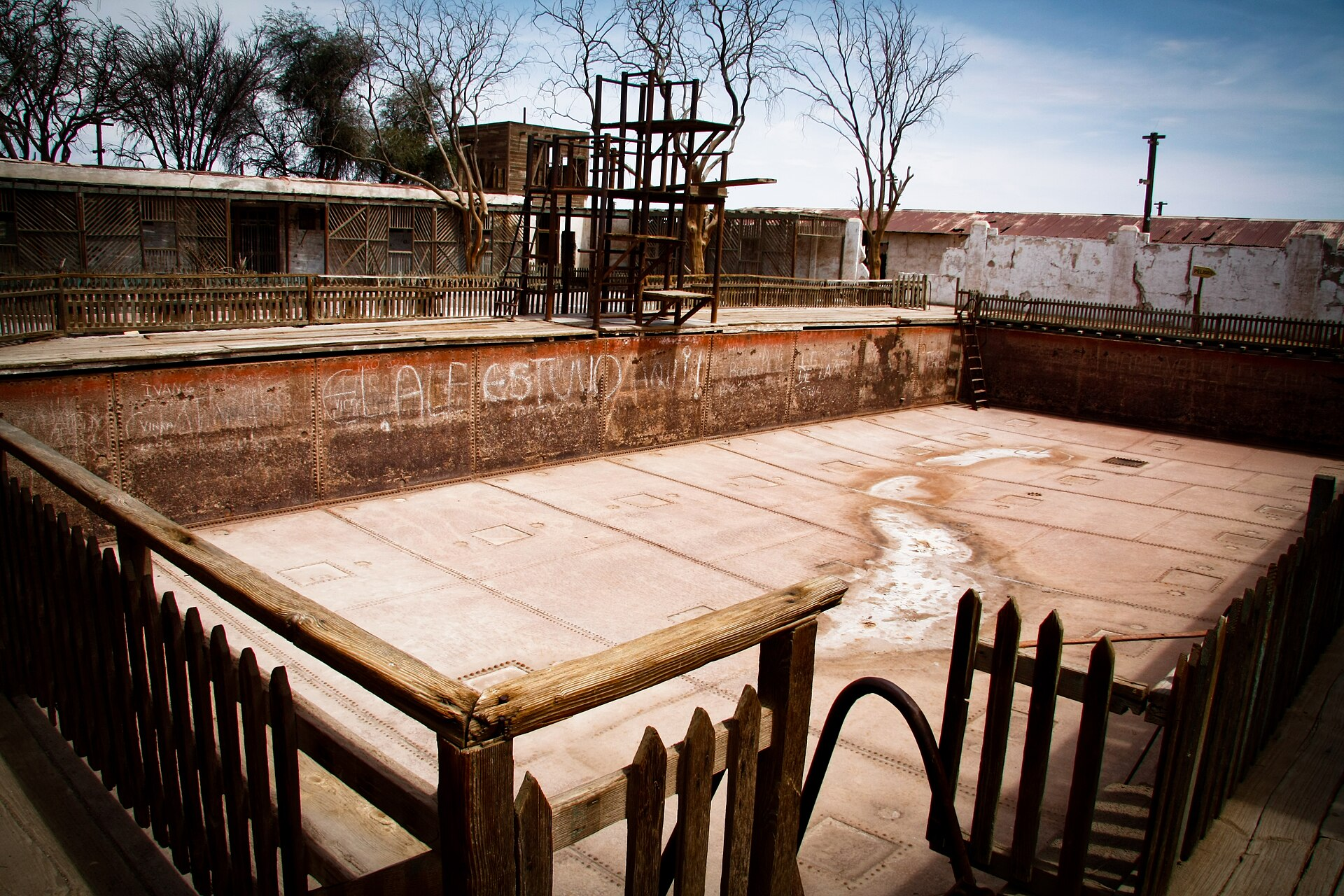
Visiting is straightforward: the site sits about 45 minutes from Iquique by car, taxi, or tour, charges a modest admission, and rewards two to three unhurried hours, wandering the plaza, climbing through the leaching plant’s shadowed ironwork, and reading the small museum displays assembled from what the pampinos left behind. Former residents and their descendants return each November for Saltpeter Week, when music and memory briefly refill the plaza, one of the details that keeps Humberstone from feeling like a ruin and closer to a town holding its breath.
Why It Stays With You
Plenty of ghost towns memorialize a gold rush; Humberstone memorializes something stranger, a global industry, a desert society, and a way of life erased not by disaster but by a chemistry breakthrough on the other side of the world. Bring water, sun protection, and sturdy shoes, go early before the heat, and budget time to simply stand in the empty theater, where the desert has preserved, seat by seat, the exact moment an entire world ended.
Like our content? Follow us for more.