


Every year, well over a billion people cross an international border for a trip, and the pattern of where they go is one of the more revealing snapshots of the world — a map of history, geography, marketing, and human desire. The latest global tourism figures, covering 2024, contain a real milestone: for the first time ever, a single country welcomed more than 100 million international visitors in one year, a threshold no nation had reached before.
That country is France, which drew 102 million foreign visitors in 2024, and its record caps a remarkable global recovery — worldwide international travel came roaring back past the disruptions of recent years to reach roughly 1.4 billion trips. But the headline number is only the start of the story. The full ranking of the world’s most visited countries is packed with surprises about who’s rising, who’s falling, and where the United States — a country most people assume dominates global tourism — actually sits. Here is what the data shows.
The Country That Broke 100 Million

France has been the most visited country on Earth for decades, and in 2024 it did something no country had ever done: it crossed 100 million international arrivals in a single year, finishing at 102 million. To put that in perspective, that’s more foreign visitors annually than the entire population of most countries on the planet.
The reasons France dominates are familiar but worth stating. Paris alone is one of the most visited cities in the world, anchored by the Eiffel Tower, the Louvre, and Notre-Dame, but the country’s appeal extends far beyond the capital — the French Riviera, the wine regions, the Alps, the châteaux, and the countryside all draw enormous crowds, and a great many of France’s visitors come from neighboring European countries for whom it’s an easy trip. France also benefits from geography, sitting at the crossroads of Western Europe with world-class transport links. A boost from hosting a major international sporting event in 2024 helped nudge the numbers up further. The result is a country that has held the global top spot for more than 30 years and has now planted a flag no one else has reached.
Like our content? Follow us for more.
Spain, in a Close Second

Just behind France sits Spain, which drew 93.8 million international visitors in 2024 — a national record, up roughly 10 percent on the previous year. Spain has been closing the gap on France for years, and on some measures of tourism it competes fiercely for the top spot.
Spain’s draw is the Mediterranean formula executed at scale: the coastlines and islands — the Balearics and the Canaries — pull the largest crowds, while Barcelona, Madrid, and Seville carry the cultural traffic, and the weather makes much of the country a year-round destination. That success has come with a cost that’s increasingly part of the story: the visitor volumes have grown large enough to spark protests against mass tourism in places like Barcelona and the Balearic Islands, where residents say the crowds are straining housing and daily life. Spain is, in a sense, a case study in tourism’s double edge — extraordinarily successful and increasingly grappling with the consequences of its own popularity.
The United States: Third, and Not Back to Its Peak

Here is the figure that surprises Americans. The United States ranked third in 2024, with 72.4 million international visitors — a very large number, but well behind France and Spain, and notably, still not recovered to its pre-pandemic peak.
The gap tells you something about how tourism works. The US is vast, its major destinations are far apart, and for most of the world it’s a long and expensive flight rather than a weekend trip — very different from France or Spain, which draw enormous volumes of short-haul European visitors crossing nearby borders. The busiest American gateways are New York, Los Angeles, Las Vegas, and Orlando, and by a wide margin the two countries sending the most visitors are the immediate neighbors, Canada and Mexico. There is, however, one ranking the US dominates outright: money. Foreign tourists spent around 215 billion dollars in the United States in 2024, more than any other country earns from tourism — meaning that while America gets fewer visitors than France or Spain, each one tends to stay longer and spend far more. The US leads the world in tourism revenue while placing third in tourism arrivals, which is a revealing split.
The Country That Jumped Past Italy
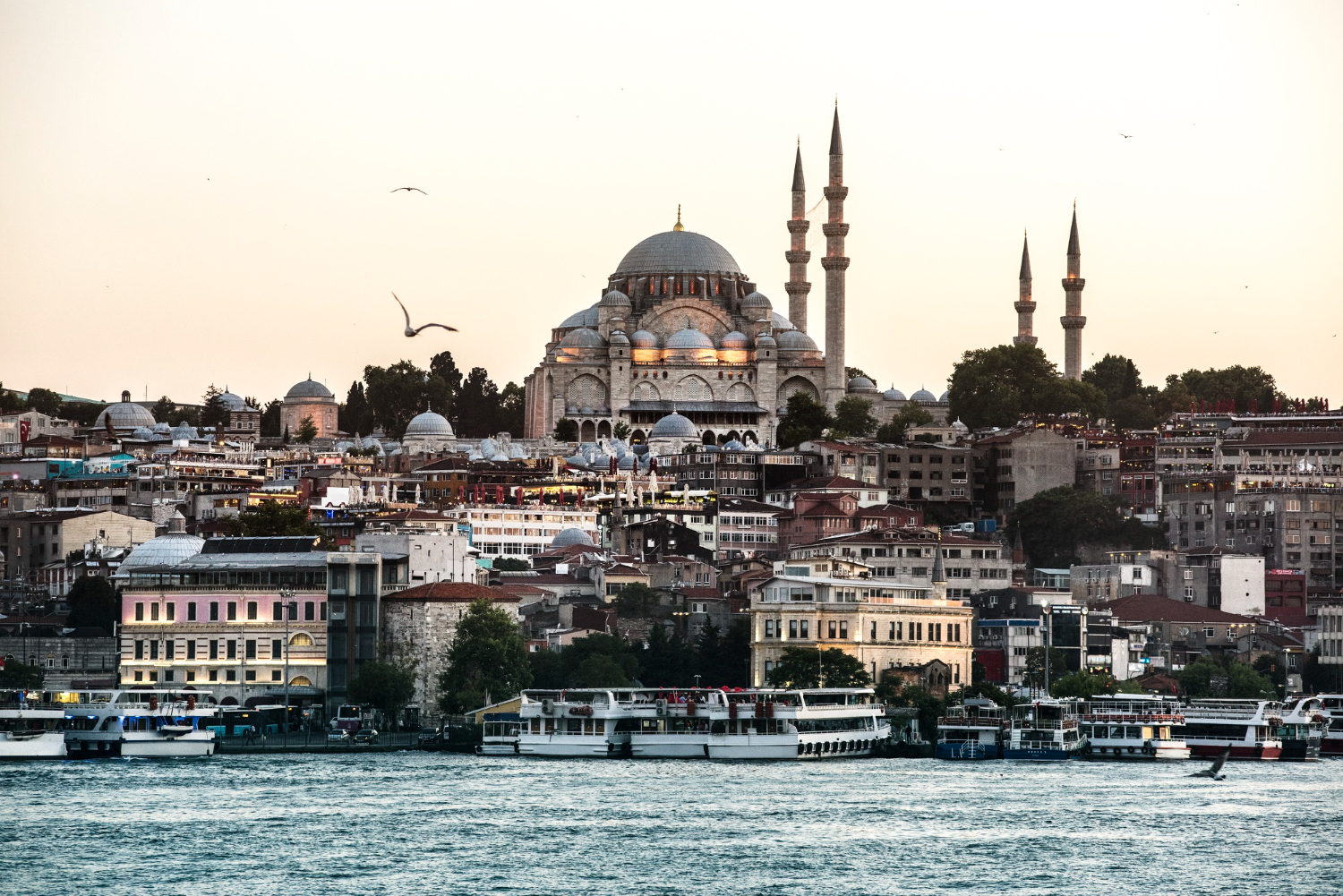
One of the notable movers in the 2024 data is Turkey, which climbed into fourth place with 60.6 million international arrivals, overtaking Italy. It’s a striking rise for a country that has invested heavily in tourism and positioned itself as a bridge between Europe and Asia.
Turkey’s appeal spans the historical and the coastal: Istanbul, straddling two continents across the Bosphorus, is the main gateway, while the Mediterranean and Aegean resort coasts draw sun-seekers, and the country’s ancient sites and landscapes fill out the offering. Italy, meanwhile, took fifth place with 57.8 million visitors — no small number for a country of Italy’s size, and one where the famous destinations of Rome, Venice, and Florence face their own well-documented pressures from overtourism. The Turkey-over-Italy result is a good example of how the rankings shift as newer destinations invest and rise while long-established ones hold steady or slip.
The Asian Comeback Story

Perhaps the most dramatic single story in the recent data is Japan, which came surging back to become Asia’s most visited country. After a long period of near-total closure and a slow reopening, Japan drew roughly 37 million international visitors in 2024 — a massive rebound, with arrivals surging dramatically year over year and, remarkably, surpassing its own pre-pandemic levels.
Japan’s boom has been driven by a combination of factors: pent-up demand after years of restricted access, a favorable exchange rate that made the country unusually affordable for foreign visitors, and the enduring pull of a destination that combines ancient temples, world-class food, distinctive culture, and famously efficient travel. The surge has been strong enough that Japan, like Spain and Italy, is now beginning to grapple with overtourism at its most popular sites — a sign of just how completely the recovery has taken hold. Rounding out the upper ranks of the global list are the likes of Mexico, Germany, Greece, and Thailand, each drawing tens of millions and each with its own regional draw.
What the Rankings Actually Measure

It’s worth a note of caution, because tourism figures are slipperier than they look. Different organizations count arrivals slightly differently, some countries include visitors who are merely passing through or crossing a border briefly, and the figures are periodically revised. Turkey’s own tourism ministry, for instance, counts the figure somewhat higher than the standard international ranking does, because it includes Turkish citizens living abroad who return to visit. So the precise numbers should be treated as strong estimates rather than exact counts.
The broad picture, though, is reliable and revealing. Europe utterly dominates global tourism, accounting for over half of all international arrivals, helped enormously by the density of countries and the ease of crossing between them — a European can visit several countries in a single trip in a way that’s simply not possible in North America or much of Asia. The Mediterranean is the single greatest concentration of tourism on Earth. And the destinations at the top are, overwhelmingly, places with a powerful combination of iconic sights, established infrastructure, easy access, and a long head start in the global imagination.
Where the World Goes
The 2024 rankings tell a clear story: France on top with a record no one had ever reached, Spain close behind and straining under its own popularity, the United States third in visitors but first in spending, Turkey rising past Italy, and Japan staging one of the great tourism comebacks. It’s a snapshot of a world that has enthusiastically returned to traveling, and of the handful of places that capture the largest share of that desire.
For the individual traveler, the ranking is worth reading two ways. It’s a reliable guide to the world’s greatest hits — these countries are at the top for good reasons, and their headline attractions truly deserve the crowds they draw. But it’s also, increasingly, a map of where those crowds are becoming a problem, and where a bit of strategy — visiting in the shoulder season, choosing the second city over the first, or picking one of the many superb countries just outside the top ranks — will get you the experience without the crush. The most visited countries earned their places. Whether you want to join a hundred million other people to see why is a different question entirely.
Like our content? Follow us for more.
