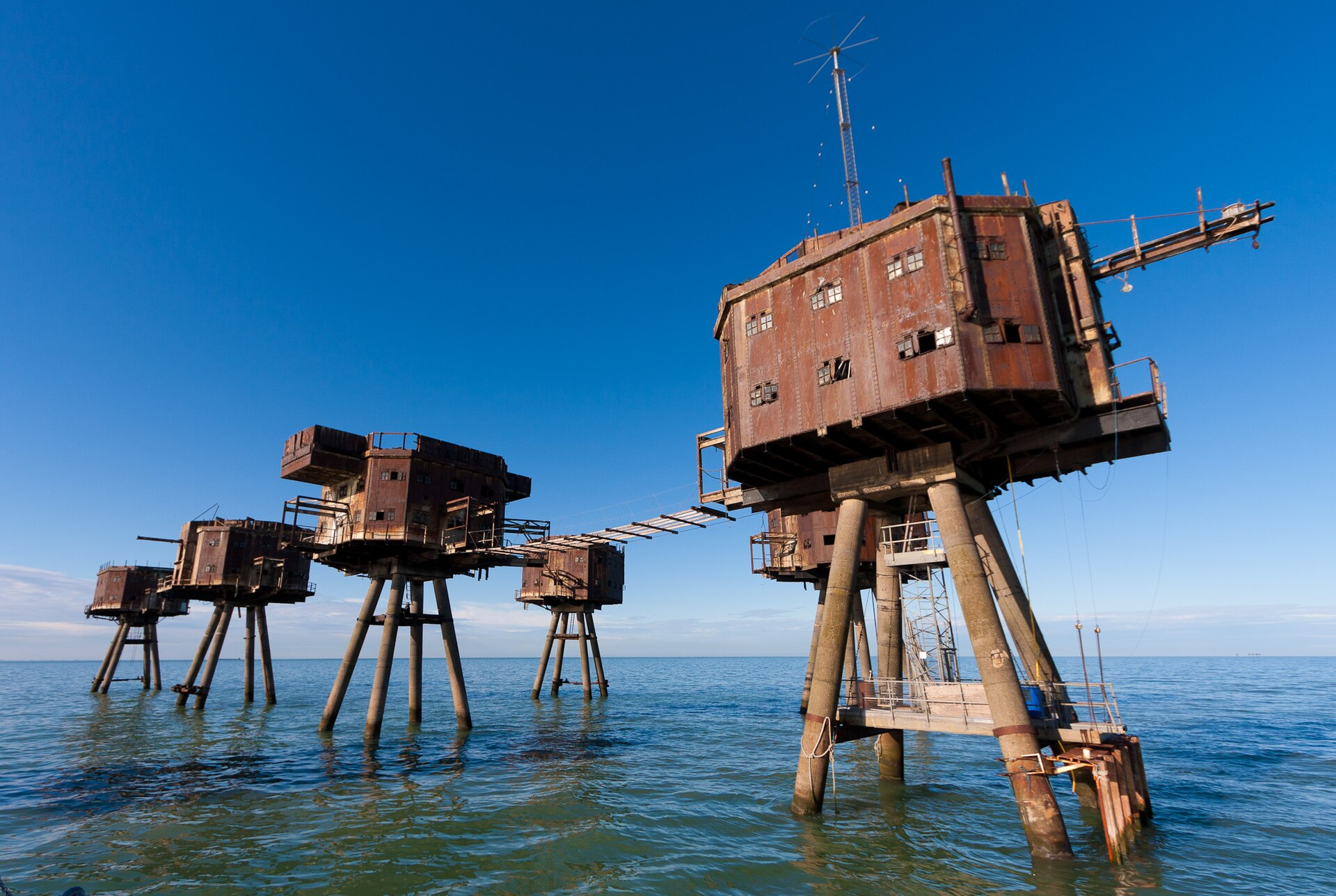
Rising strangely out of the flat, gray water of the Thames Estuary, a cluster of rusting steel towers has stood for more than eight decades, decades longer than anyone who built them ever intended. The Maunsell Sea Forts are among the most unusual surviving relics of World War II anywhere in Britain, and their story only grows stranger the longer they’ve been left standing.
Built to Defend London From the Air
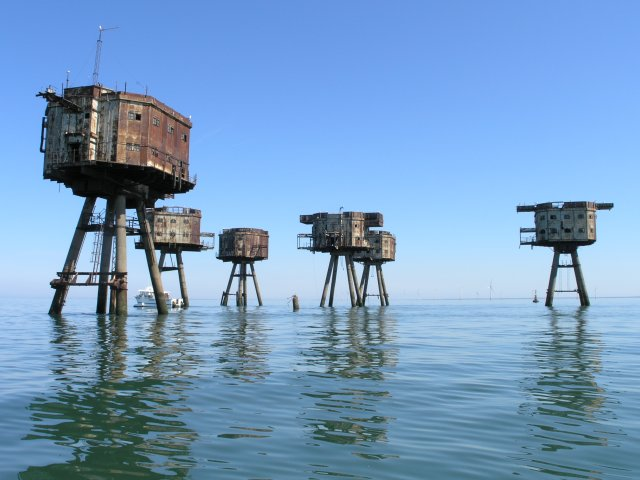
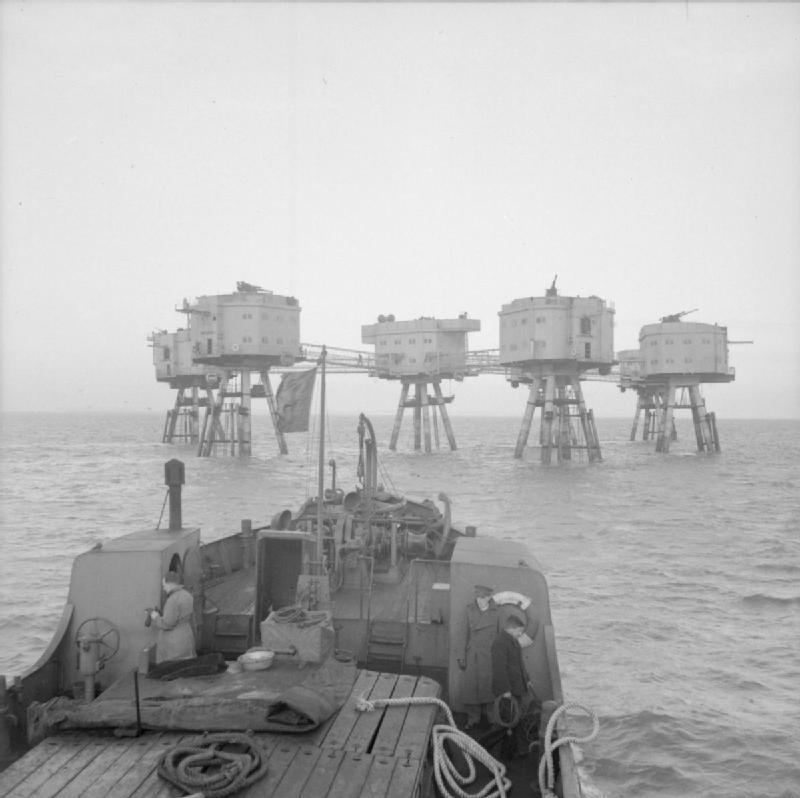
The forts take their name from Guy Maunsell, a British civil engineer who proposed an innovative solution to a genuine wartime problem: German bombers and mine-laying aircraft were using the Thames and Mersey estuaries as navigational landmarks on their way to bomb London, Liverpool, and other industrial centers. Maunsell’s design called for armed fortress towers, prefabricated on land and towed out to sea, where they would be sunk and anchored directly onto the seabed to intercept incoming raids before they ever reached the coast. Construction began in 1942, and both Army and Navy versions were ultimately built, four Navy forts and three Army fort clusters in the Thames Estuary alone, along with additional forts protecting Liverpool’s Mersey Estuary.
Like our content? Follow us for more.
An Effective, if Imperfect, Wartime Defense
Each fort bristled with anti-aircraft guns, and the Thames Estuary Navy forts alone were credited with helping destroy at least one German E-boat during the war. The Army forts, larger and more heavily armed, consisted of clusters of individual steel platforms connected by narrow catwalks high above the water, housing crews of two dozen men who lived and worked in genuinely isolated, exposed conditions for extended deployments. Whatever their precise tactical impact, the forts represented a remarkable feat of wartime engineering, among the earliest offshore platform structures ever built, predating the oil and gas platforms that would later become common around the world by decades.
Abandoned, Not Demolished
Once the war ended and the threat of aerial attack faded, the forts quickly became obsolete as radar and aircraft technology advanced. The military stripped their guns and equipment by 1956 and simply walked away, making no serious effort to dismantle or remove the structures themselves. Some fell victim to nature and accident: Nore Fort was struck by a ship and later demolished after a partial collapse, and Tongue Sands Fort finally toppled into the sea during a 1996 storm after decades of erosion had hollowed out its foundation. The Mersey forts near Liverpool were all demolished by 1955 after being deemed navigational hazards. But several Thames Estuary forts, remarkably, are still standing.
Pirate Radio Finds an Unlikely Home
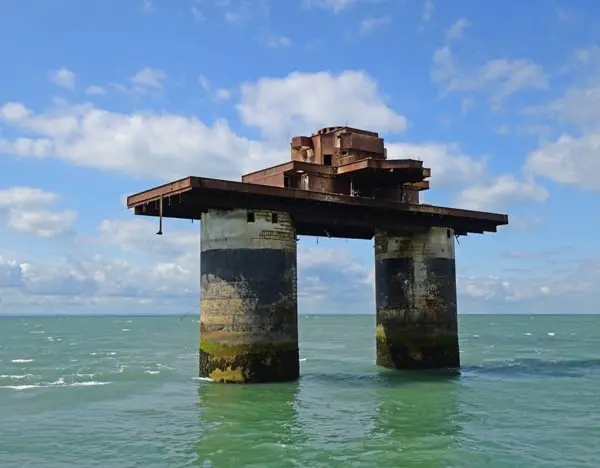
In the 1960s, the abandoned forts found an entirely unexpected second life. Enterprising broadcasters, most famously the rock musician and professional eccentric Screaming Lord Sutch, realized the structures offered everything an illegal radio station needed: physical infrastructure, distance from British jurisdiction, and just enough remoteness to keep the authorities at bay. Radio Sutch, broadcasting from Shivering Sands Fort in 1964, evolved into the considerably more professional Radio City, reaching listeners across London and southeast England for years before Britain extended its territorial waters specifically to shut the pirate stations down.
A Sea Fort Becomes a Nation
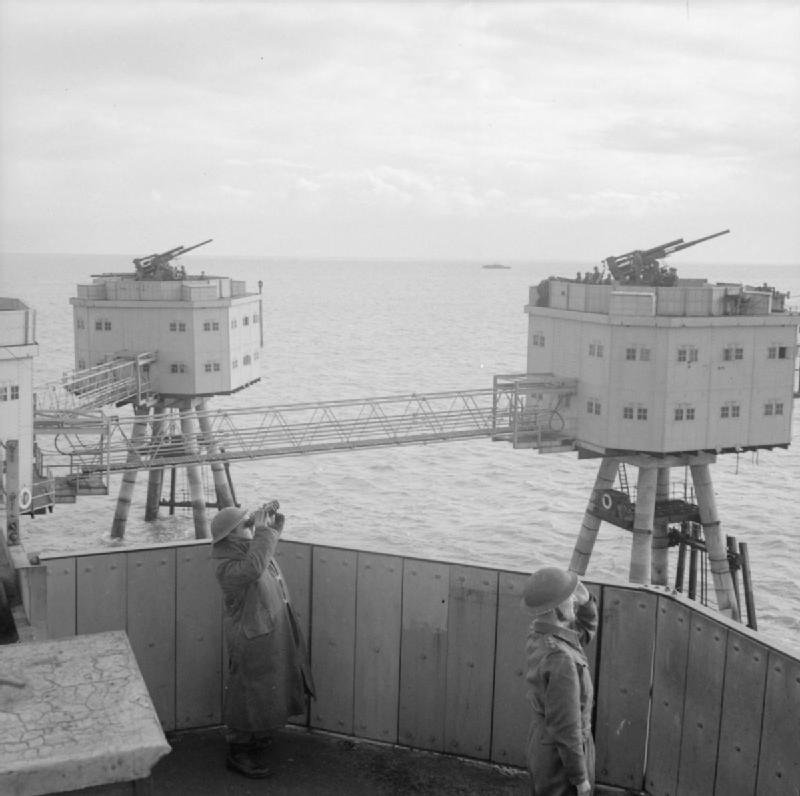
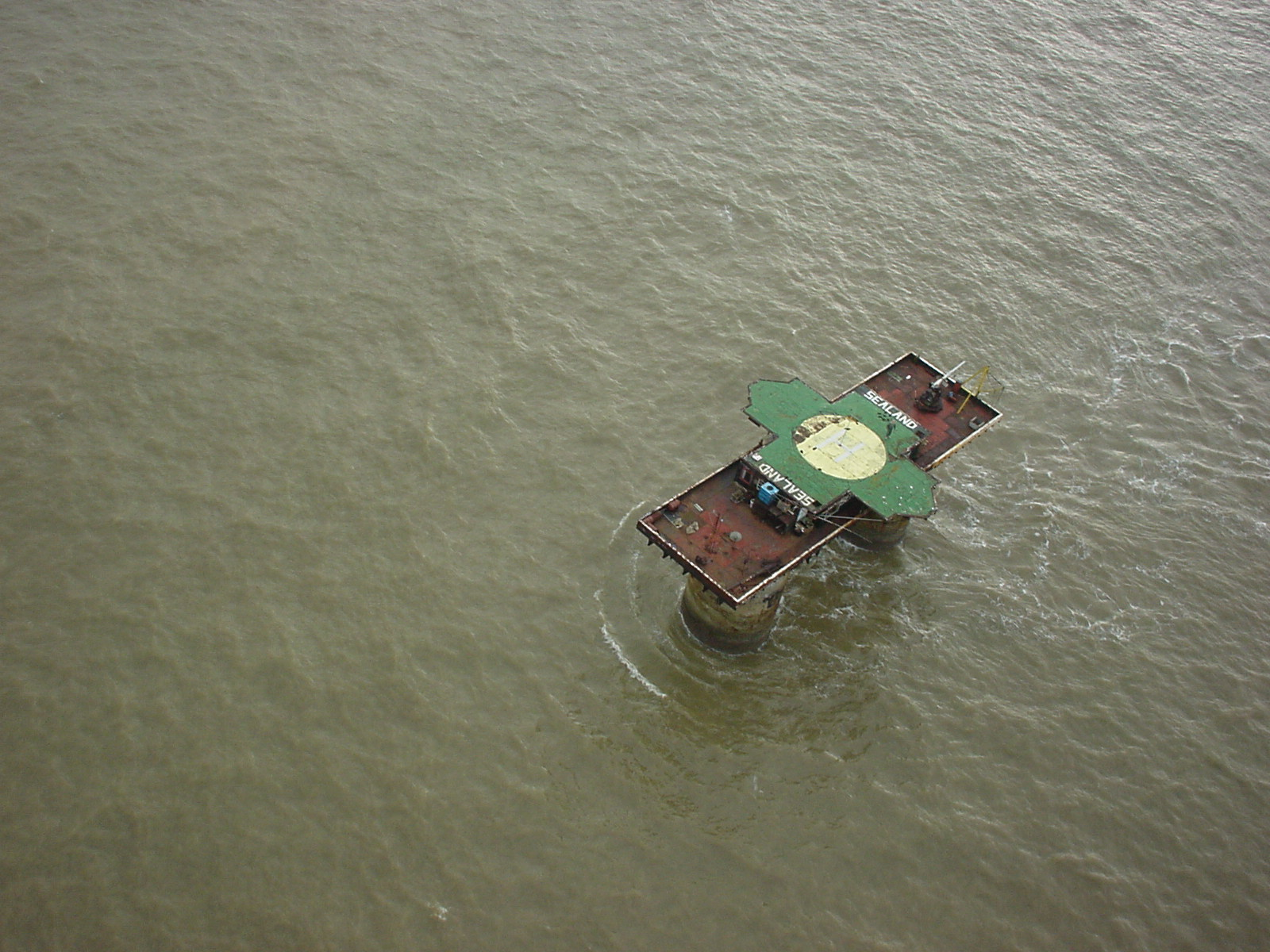
The most famous chapter in the forts’ strange afterlife began in 1967, when Major Paddy Roy Bates, another pirate radio operator, occupied HM Fort Roughs, one of the Navy forts sitting just outside British territorial waters at the time. Bates declared the fort an independent nation, the Principality of Sealand, complete with its own flag, currency, and passports. Though no country has ever formally recognized Sealand, it has persisted for decades as a genuine, if largely symbolic, micronation, occasionally making international headlines and remaining privately occupied to this day.
Structurally Unsafe and Legally Off-Limits
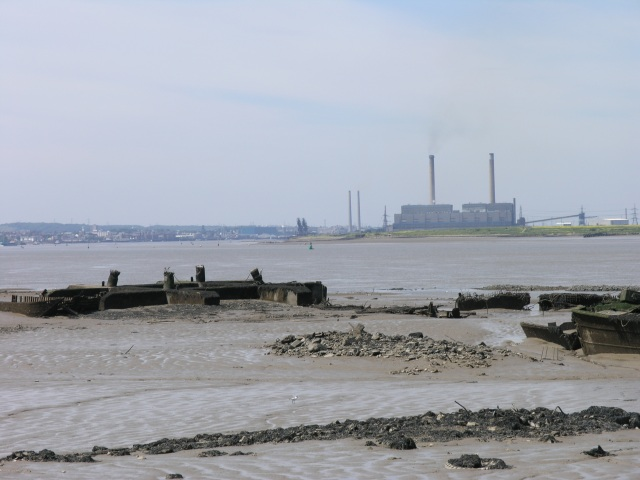
Today, the surviving forts are rusting and structurally compromised, Crown property that the British government has neither funded for preservation nor scheduled for demolition. The Red Sands and Shivering Sands Army fort clusters, along with Sealand, are not open to the public and cannot be legally boarded, a combination of safety hazards and property rights that make climbing aboard both dangerous and illegal. A volunteer group called Project Redsands has worked since 2003 to document and advocate for preserving the Red Sands cluster, considered the best-preserved of the surviving structures.
Seeing the Forts Without Setting Foot on Them
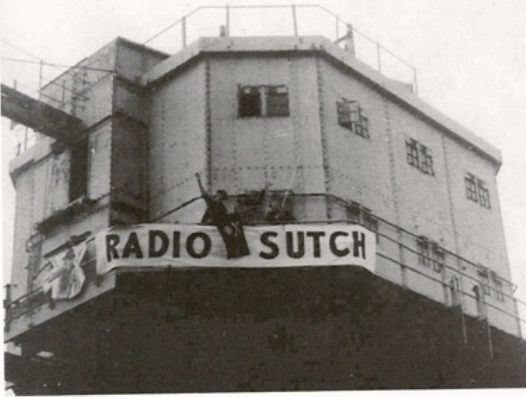
Despite being off-limits to boarding, the Maunsell Forts remain a genuinely popular and accessible sight for visitors willing to view them from the water. Several boat tour operators based in Whitstable, Herne Bay, and Queenborough on the Isle of Sheppey run trips out to the Red Sands and Shivering Sands clusters, approaching close enough for excellent photography without ever attempting to land. On a clear day, the forts are even visible as distant dark shapes on the horizon from the beaches at Herne Bay and Whitstable, best appreciated with a pair of binoculars.
An Accidental Monument to Wartime Ingenuity
More than eighty years after they were built to last just five, the Maunsell Sea Forts endure as one of Britain’s strangest and most evocative wartime relics, structures that outlived their original purpose by decades and went on to host pirate radio stations and an entire self-declared nation. For travelers drawn to unusual history, a boat trip out to see these rusting towers rising from the Thames offers a genuinely unforgettable glimpse of a very particular, very British kind of abandoned ingenuity.
Like our content? Follow us for more.