


Almost every design feature on an aircraft has a reason, and most of them are invisible to passengers. The window shape is the exception: it is the one piece of hard-won engineering that everybody can see and nobody notices.
The rounding looks like styling. Rectangles with rounded corners are a common design idiom, and it would be reasonable to assume someone thought curves looked friendlier.
They did not. The shape exists because of what happens to a pressurised metal tube at altitude, and because of an investigation in the 1950s that changed aircraft engineering permanently.
Here is why the corners are round.
What a Fuselage Is Doing

The starting point is that an airliner cabin is a pressure vessel.
At cruising altitude the outside air is far too thin to breathe, so the cabin is pressurised to something equivalent to a much lower altitude. That means the air inside is pushing outward against the fuselage skin substantially harder than the air outside is pushing in.
The structure is therefore under continuous tension, held in a state of stretch by the pressure difference, for every minute of every flight.
Crucially, this is not a constant load. It cycles. The aircraft pressurises on climb, holds pressure at altitude, and depressurises on descent, then does it again on the next flight. Over a service life that is tens of thousands of cycles of stretching and relaxing.
Materials behave differently under repeated cycling than under steady load. A structure can be entirely strong enough to hold a given stress indefinitely and still fail after enough repetitions, because cycling causes small cracks to initiate and grow. That is metal fatigue, and it is the central concern in the design of any pressurised aircraft.
Like our content? Follow us for more.
Why Corners Are the Problem

Now add a window, which is a hole in a structure under tension.
Stress in a loaded material does not distribute evenly around an opening. It flows around the hole in a way that concentrates near the edges, and how much it concentrates depends entirely on the shape.
A circular hole spreads the load around its circumference, and the maximum stress at the edge is a modest multiple of the stress elsewhere in the material.
A sharp corner does something quite different. The stress has to turn abruptly, and the concentration rises steeply as the corner gets sharper. In an idealised perfectly sharp corner the concentration becomes theoretically unbounded — which is engineering’s way of saying that whatever number you calculate, the real answer is that this is the place where it will fail.
Combine that with cycling. A point of high stress concentration, loaded and unloaded tens of thousands of times, is exactly where a fatigue crack will start. Once started, a crack in a pressurised skin has the pressure difference working continuously to open it further.
So the corner is not merely the weakest point. It is the place where a crack initiates and the place where it is then driven to grow.
What the Early Jets Revealed
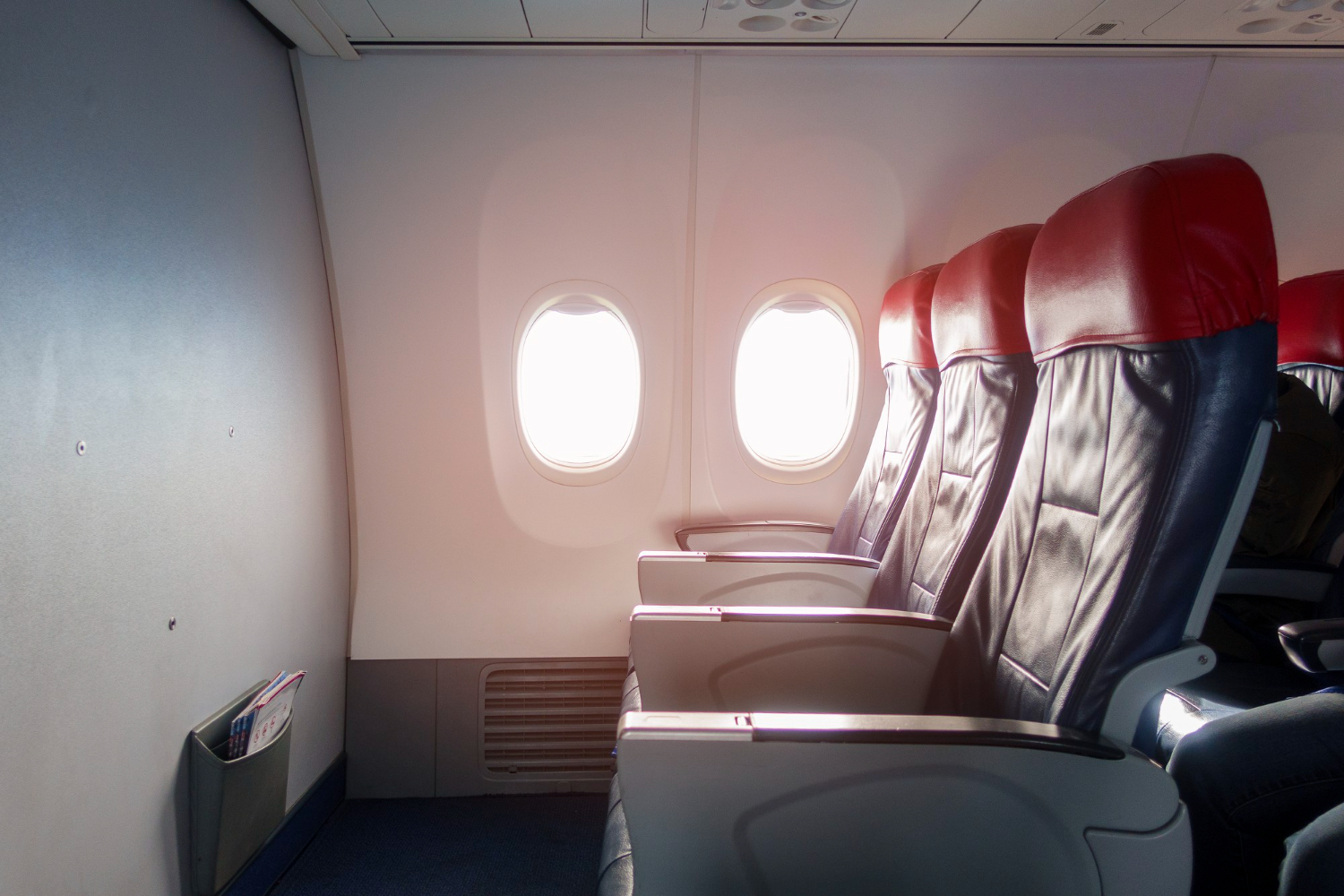
The theory of stress concentration was understood before commercial jet aviation. What was not adequately understood was how it combined with fatigue over a service life in a pressurised airframe.
The first generation of pressurised jet airliners entered service at the start of the 1950s, flying higher and faster than piston aircraft, with correspondingly larger pressure differences across the fuselage. Cabin windows on the early design were broadly rectangular.
After a series of structural failures, the aircraft type was withdrawn and one of the most thorough engineering investigations of the period was undertaken. A complete fuselage was placed in a water tank and pressurised and depressurised repeatedly to simulate thousands of flights, which allowed the failure to be reproduced and examined rather than inferred.
The investigation established that fatigue cracking had initiated at points of stress concentration around openings in the fuselage, and that the design assumptions about fatigue life had been substantially optimistic.
The consequences were extensive. Window and aperture shapes were changed to eliminate sharp corners; full-scale fatigue testing of pressurised fuselages became standard practice; and design philosophy shifted toward assuming that cracks will occur and ensuring the structure can tolerate them rather than assuming they will not.
This is stated here as engineering history. The events involved loss of life, and that is acknowledged without further detail, because the significance for this subject is what the investigation established about materials rather than the circumstances of the failures.
What a Modern Window Actually Is

The window you look through is more elaborate than it appears, and the shape is only part of it.
There are multiple panes rather than one. The outer pane carries the pressure load and is the structural element. An inner pane provides redundancy and protects the outer from damage inside the cabin.
Between them is a small hole, usually visible near the bottom of the inner pane, which is called the bleed or breather hole. It allows pressure to equalise between the gap and the cabin, ensuring the outer pane carries the load as intended and helping to prevent condensation and frost forming between the panes.
There is also a non-structural inner panel — the scratch pane — which is the one passengers actually touch, and which exists to protect the two that matter.
The panes are acrylic rather than glass, chosen for its strength-to-weight ratio and because it fails gradually rather than shattering.
The frame around the window is reinforced, and the fuselage structure is designed to carry load around the aperture rather than through it.
Why You Cannot Open Them
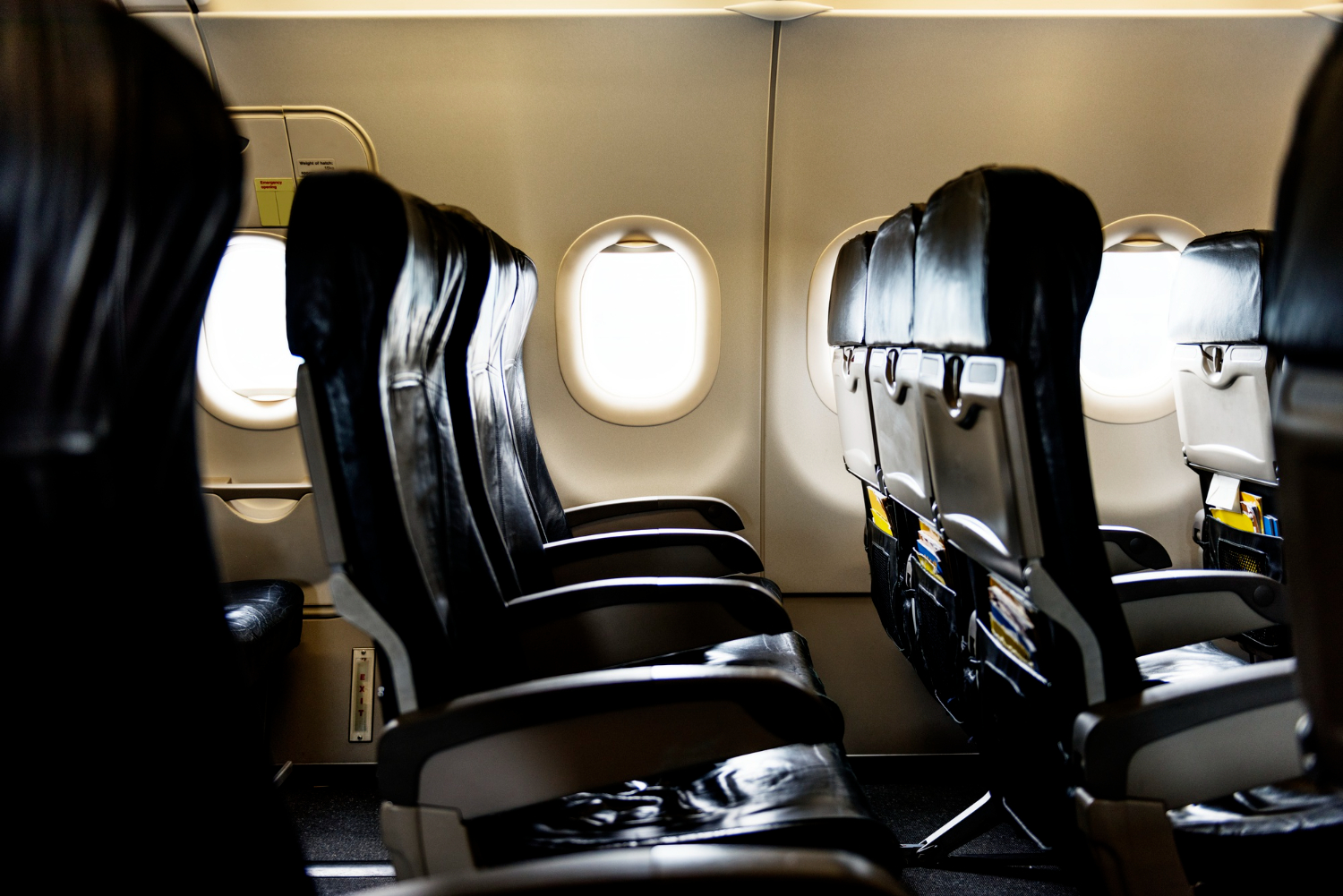
The other question passengers ask has the same root, and it is worth answering because the reasoning is not obvious.
At cruising altitude the pressure difference across the fuselage is substantial, and the skin is held in tension by it continuously. An opening window would be a moving joint in a pressure vessel, which is exactly what a pressure vessel should not contain.
Any opening mechanism introduces a seal that must hold under load, a mechanism that can fail, and a discontinuity in a structure that is being cycled tens of thousands of times. Every one of those is a place where fatigue can initiate.
The window is therefore fixed, bonded into a reinforced frame, and treated as part of the structure rather than as a fitting attached to it.
Small aircraft that fly unpressurised at low altitude frequently do have openable windows, which demonstrates that the constraint is pressurisation rather than anything about flight itself.
The same reasoning explains why cabin doors are designed as plug doors — shaped so that internal pressure pushes them more firmly into their frames rather than outward against a latch.
The Same Principle Everywhere Else
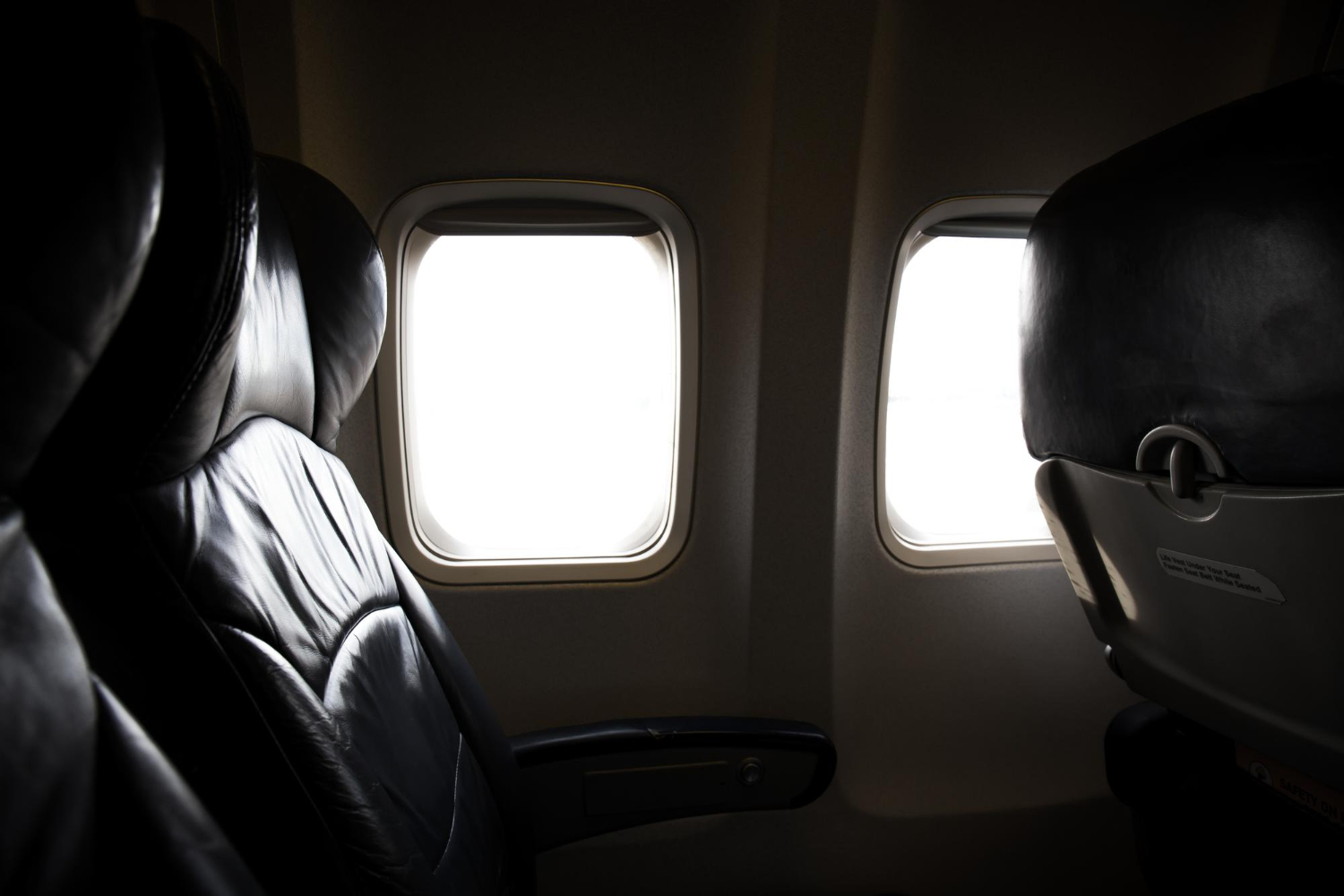
Once you know about stress concentration you begin noticing it in a great many places.
Aircraft doors and hatches have rounded corners for the same reason. So do the openings in ship hulls, which face comparable cycling from wave loading.
The reason a small nick in the edge of a sheet of material makes it dramatically easier to tear is the same principle: the notch concentrates stress at its tip. That is why packaging has a tear notch, why glass is scored before it is snapped, and why a scratch on a windscreen can propagate into a crack.
It is also why holes in structural members are drilled round and deburred, why fillets are used at internal corners in machined parts, and why a crack in a metal panel is sometimes stopped by drilling a round hole at its tip — converting a sharp crack tip into a rounded hole and reducing the concentration enough to arrest it.
A related question follows naturally, and the answer is the same physics applied differently.
Aircraft windows are noticeably small relative to the cabin, and passengers frequently wonder why they cannot be larger.
Every window is a hole in a pressure vessel, and a hole is a discontinuity that the surrounding structure has to carry load around. The larger the opening, the more material must be added around it to compensate, and added material is added weight.
There is also a spacing consideration. Fuselage skin is supported by a framework of circumferential frames and longitudinal stringers, and windows are fitted between them. That framework sets a practical limit on how wide an aperture can be without cutting through structure that is doing important work.
The trend has been toward larger windows as materials and analysis have improved, with composite fuselages in particular allowing bigger openings than aluminium construction did, because the load paths can be tailored differently.
The same logic governs why windows are positioned where they are, why doors require substantially heavier framing, and why some aircraft types have very few windows at all in sections where structural demands are highest.
The Visible Answer
There is something worth appreciating about the window shape specifically.
Aircraft are full of engineering derived from failures, and nearly all of it is buried in structure, procedure or software. The rounded window is one of the very few pieces of that knowledge visible to an ordinary passenger.
Every oval window on every airliner is a small monument to a specific problem — that a pressure vessel cycled tens of thousands of times will crack wherever the stress concentrates, and that a sharp corner is the most reliable way to guarantee where that will be.
The next time you look out of one, the shape you are looking through is the answer to a question that had to be asked the hard way, and the reason it has not needed asking again.
Like our content? Follow us for more.
