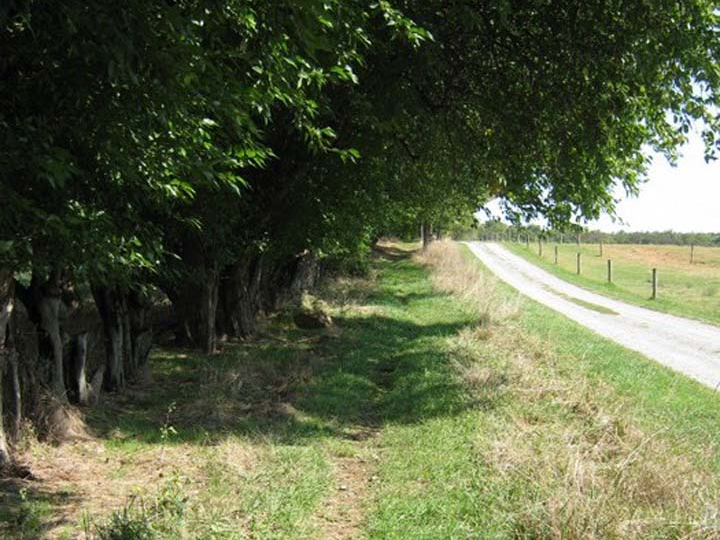
Drive the older farm country of the Midwest and you keep passing them without knowing it: a row of scruffy, thorny, badly shaped trees running dead straight along a field line, frequently with a wire fence threaded through them, frequently gapped where somebody has bulldozed a section.
They are not a windbreak and they were not planted for shade. They are a fence.
For a few decades in the middle of the nineteenth century, a very large number of American farms solved the fencing problem by growing one – and the reason is that on open prairie there was nothing else to make a fence out of.
The Prairie Had a Fencing Problem With No Solution
Start with why this was desperate rather than merely inconvenient.
A farm has to control where animals go. Stock out of a field will destroy a crop, wander onto a neighbour, get onto a road or be lost, and an unfenced farm on a landscape full of other people’s loose animals cannot grow anything at all.
In the eastern woodlands this was straightforward. Timber was everywhere, so fences were split rails stacked in a zigzag, posts and rails, or stump fences – all of them made from material a farmer had to clear off the land anyway.
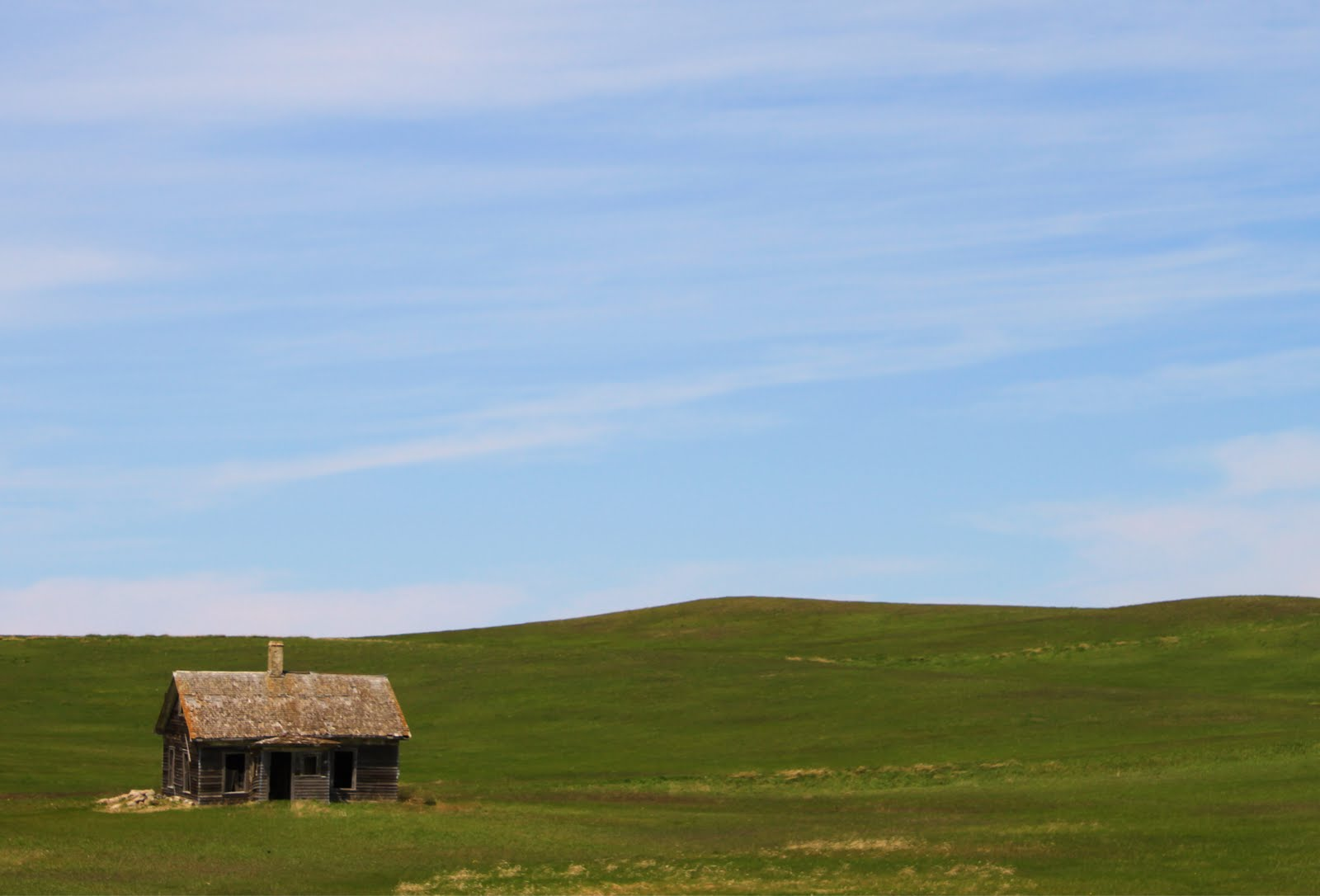
On the prairie there was no timber. None. A farm might be fifty miles from a tree worth cutting, which meant every rail, post and board had to be shipped in by wagon or rail at a cost that made fencing a quarter section more expensive than the land itself.
That is not an exaggeration and it was the central economic problem of settling the grassland. You could get the land cheaply. You could not afford to fence it, and without a fence you could not farm it.
Like our content? Follow us for more.
A Hedge Is a Fence That Grows Itself
The solution somebody arrived at is genuinely clever, and once stated it is obvious: plant the fence.
A hedge requires seed and labour, both of which a farm had, and no purchased material at all. It grows from nothing, it repairs itself, it gets stronger every year instead of weaker, and it cannot be stolen – which was a real consideration when rails and posts were valuable.
And unlike a built fence, it has no components to rot. A wooden post in prairie soil has a limited life and then the whole fence line has to be rebuilt; a hedge put in once was expected to serve indefinitely.
So from roughly the middle of the century, hedge planting was promoted hard – by agricultural papers, by state agencies, by nurserymen – as the answer to the prairie fencing problem. Farmers planted enormous mileages of it.
One Plant Beat Everything Else
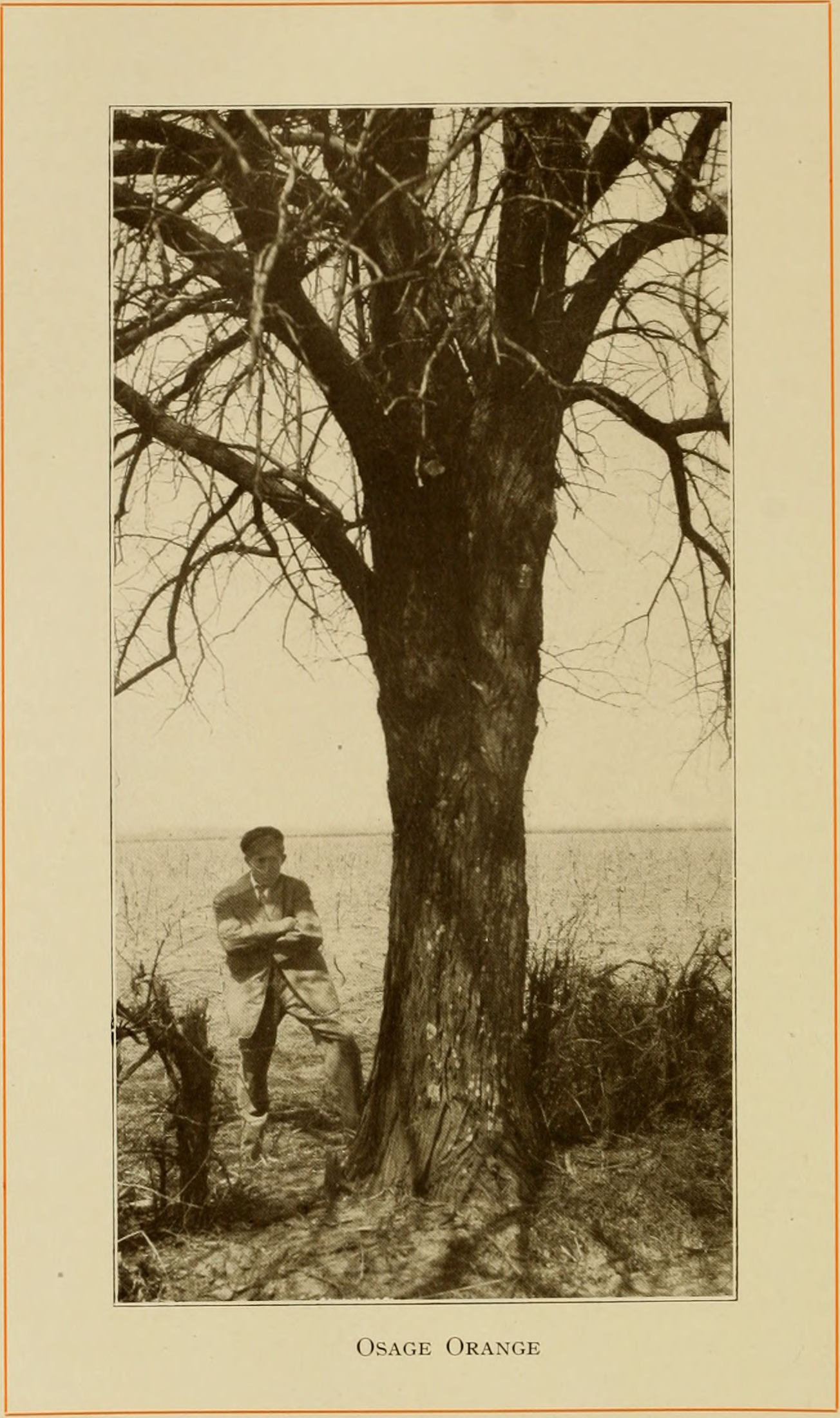
Several species were tried and one won decisively, for a combination of properties that no other American plant had all of.
Osage orange – also called hedge, hedge apple, bois d’arc and a dozen local names – is a small tree native to a limited area of the south-central United States. It is extremely thorny. It grows fast. It tolerates drought, cold, poor soil and wind. It sprouts vigorously when cut, which means pruning makes it thicker rather than killing it. And it can be grown from seed in enormous quantity cheaply.
Put those together and you have the ideal hedge plant: a fast-growing, drought-proof, thorn-covered thing that responds to being cut by becoming denser.
The standard description of a properly made hedge of it was that it should be horse high, bull strong and pig tight – tall enough that a horse would not jump it, solid enough that cattle could not push through, and dense enough at the bottom that pigs could not get under. A good one met all three, and nothing short of a bulldozer would get through it.
Making It Was Several Years of Work
This is the part that gets left out of the cheerful version, and it is why the hedge eventually lost.
Seed was planted in a nursery row, the young plants were set out along the fence line, and then the hedge had to be trained. Left alone, osage orange grows into a row of small trees with gaps underneath – which is useless as a fence, because the whole point is the bottom.
So it was cut back hard, repeatedly, to force branching low down. In some practice it was plashed or laid – partly cut through and bent over at an angle, woven along the line, so that the living stems grew horizontally and knitted into each other.
That took skill, it took several years before the hedge would turn stock at all, and it took continuous maintenance afterwards. An untrimmed hedge grows up and out, shades the crop beside it, takes moisture from the field, and stops being a fence.
A farmer planting a hedge was committing to four or five years of work before he had a fence, and permanent work thereafter to keep it one.
It Had Real Drawbacks
Worth setting out plainly, because they are the reason this is history rather than practice.
A hedge takes up space. A proper one occupies a strip several feet wide and shades a further strip either side, which on good cropland is a continuous loss of production along every fence line on the farm.
It takes water and nutrients from the adjacent ground, which in dry country matters a great deal.
It harbours weeds, brush and animals, and it spreads – osage orange seeds freely and suckers, so a hedge left alone becomes a thicket creeping into the field.
It catches snow, which is useful in a windbreak and a serious nuisance across a lane or a road.
And it cannot be moved. A fence line is a decision about field layout, and a hedge makes that decision permanent in a way a wire fence does not.
It Also Changed Who Owned What
One consequence of hedging is worth drawing out, because it had legal weight that a wire fence does not.
A hedge is a plant growing in the ground, which means it is part of the land rather than a thing standing on it. It has roots, it occupies a width, it casts shade, and it cannot be removed without destroying it. So a hedge on a boundary is a far more emphatic statement of a property line than a fence is – and it is a statement both neighbours are stuck with.
That produced its own arguments. Whose hedge was it when it stood on the line? Who was obliged to trim it, and which side? What happened when one neighbour wanted it out and the other did not? And who was responsible when an untrimmed hedge shaded a neighbour’s crop or filled his field with suckers?
Those questions turn up in local disputes of the period with some regularity, and they are the kind of thing wire simply does not generate. A wire fence has an owner, a cost and a location, and any of the three can be changed by agreement in an afternoon.
A hedge is a forty-year commitment made jointly by two parties, one of whom may not have been consulted.
Then Barbed Wire Arrived and Ended It in About a Decade
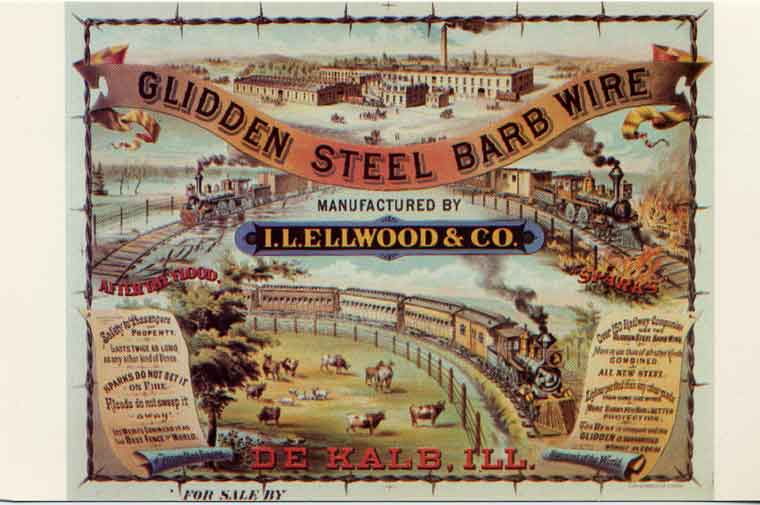
The hedge was a solution to a materials shortage, and barbed wire solved the materials shortage directly.
Wire is light, so it ships cheaply – which is the whole thing. The reason prairie fencing was impossible was transport cost, and a roll of wire delivers a quarter mile of fence in a package a wagon can carry. Posts were still needed but far fewer than rails, and the wire did the work.
It also goes up immediately. A farmer with wire has a fence this week rather than in five years, which against a hedge is not a close comparison at all.
It takes no maintenance beyond repair, occupies no ground, shades nothing, drinks nothing and spreads nowhere. It can be taken down and moved when a field layout changes.
Once wire was being manufactured in quantity and the price fell, hedge planting stopped almost completely – and it stopped fast, within roughly a decade of wire becoming generally available. The agricultural papers that had promoted hedges switched to promoting wire.
The Hedge Then Made the Posts for the Wire
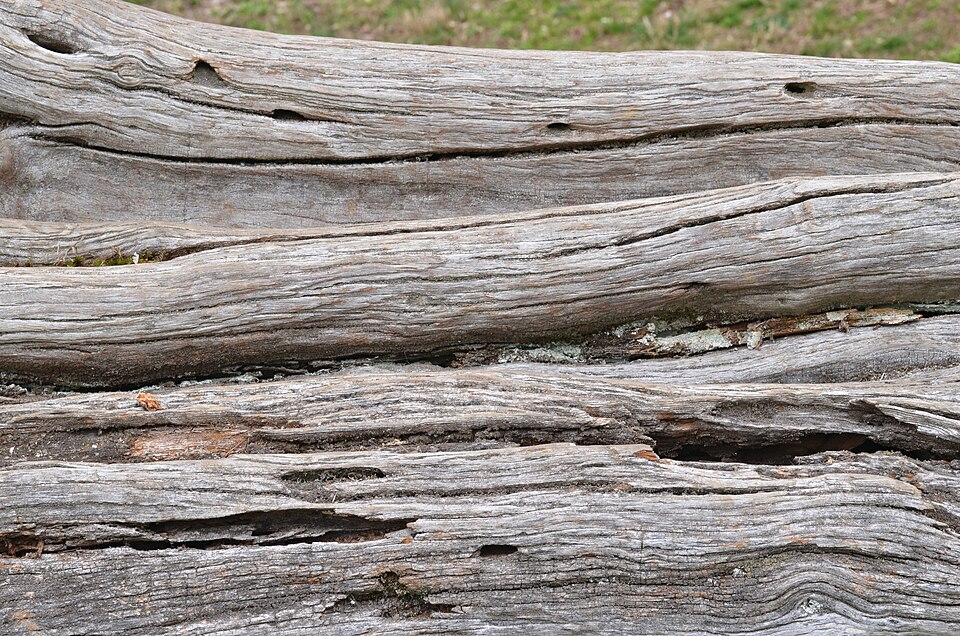
Here is the detail that makes the whole story satisfying, and it is not a coincidence.
Osage orange wood is one of the most rot-resistant timbers in North America. It is dense, hard, and a post made from it will stand in the ground for decades – considerably longer than most alternatives, and without any treatment.
So when farms stopped maintaining their hedges, they cut them for posts. The hedge that had been the fence became the posts that held up the wire that replaced it, which means a great many of the wire fences built across the Midwest were strung on the remains of the hedges they had made obsolete.
Those posts are still out there. A grey, twisted, impossibly hard post in an old fence line, which the auger will not touch and the staple will barely enter, is hedge – and it may well have been cut from a fence a century ago.
The Rows That Are Still Standing
What survives is the geometry. A hedge is planted in a line, and a line of trees persists long after anybody has stopped cutting it.
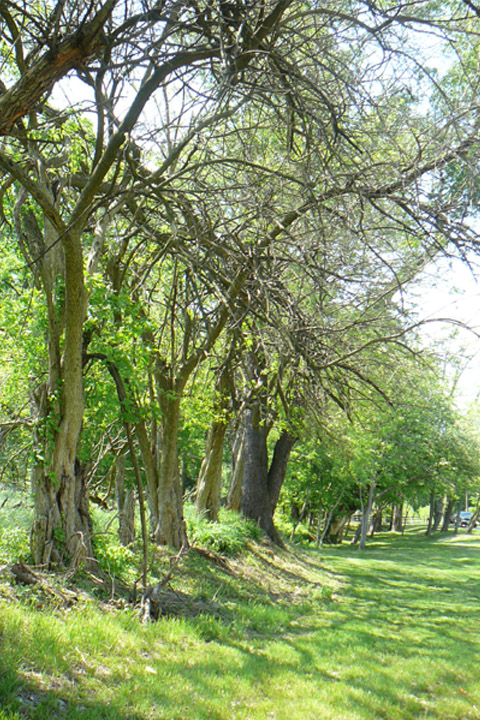
So the old hedge rows grew up into what they would have been all along – a ragged row of small thorny trees along a field edge, frequently with the wire fence that replaced them running through the middle of it. Some were taken out as fields were consolidated and machinery got wider. A great many are simply still there, doing nothing, having long since stopped being a fence.
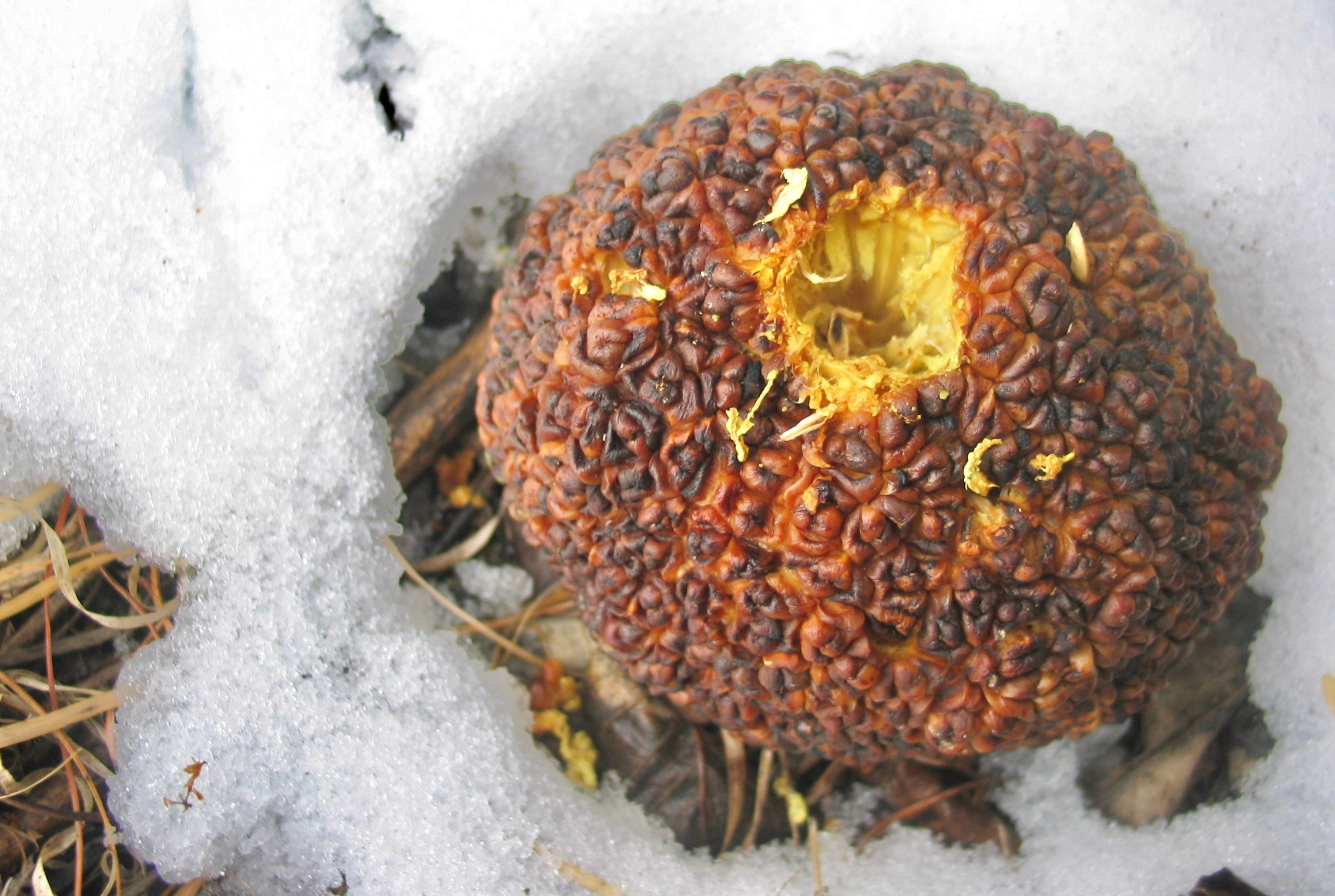
If there is a dead straight row of awkward thorny trees on a field line near you, with yellow-green fruit the size of a grapefruit lying under it in autumn, that is what it is.
Somebody planted that, by hand, from seed, and spent five years cutting it back – because the alternative was a fence that cost more than the farm.
Like our content? Follow us for more.