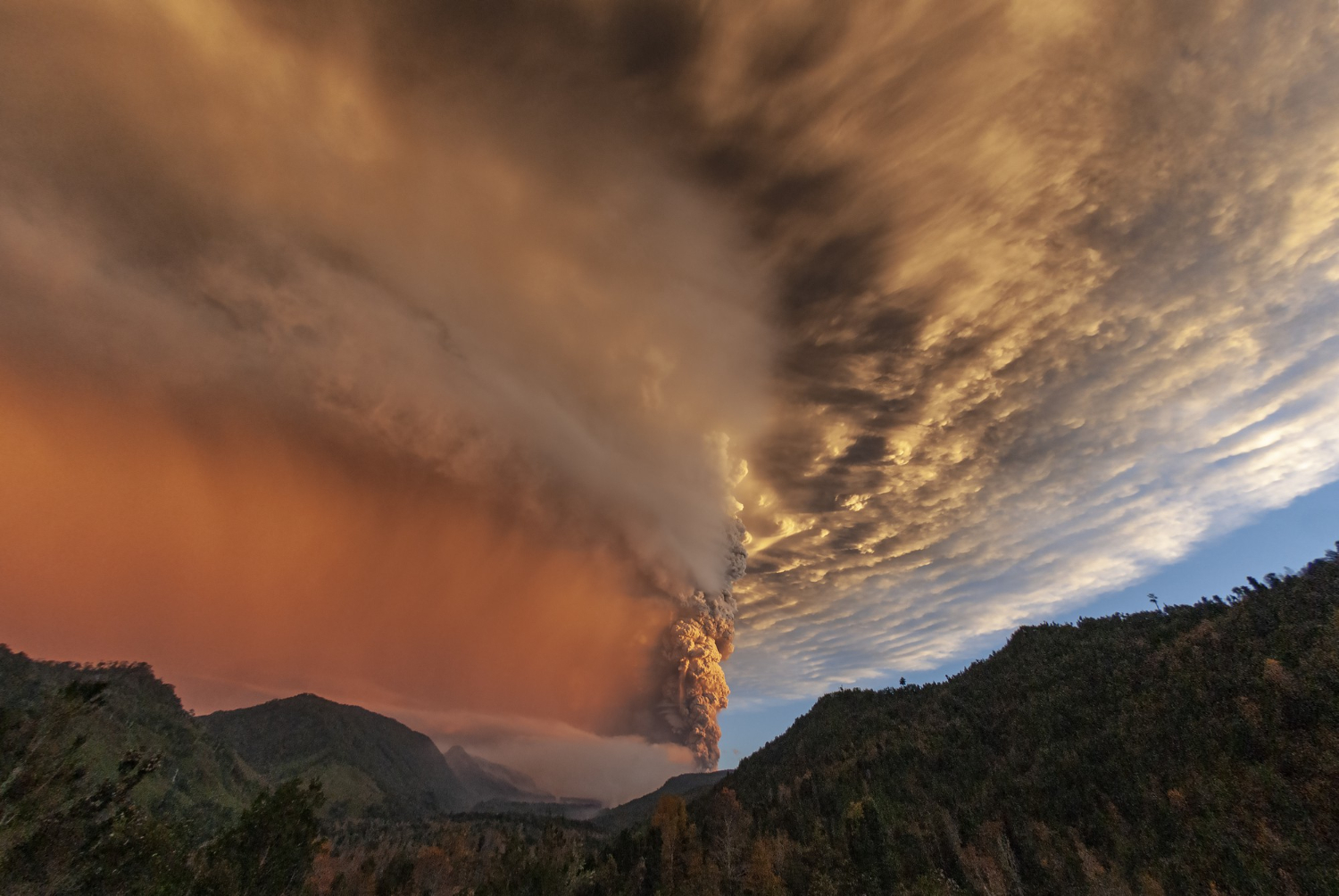
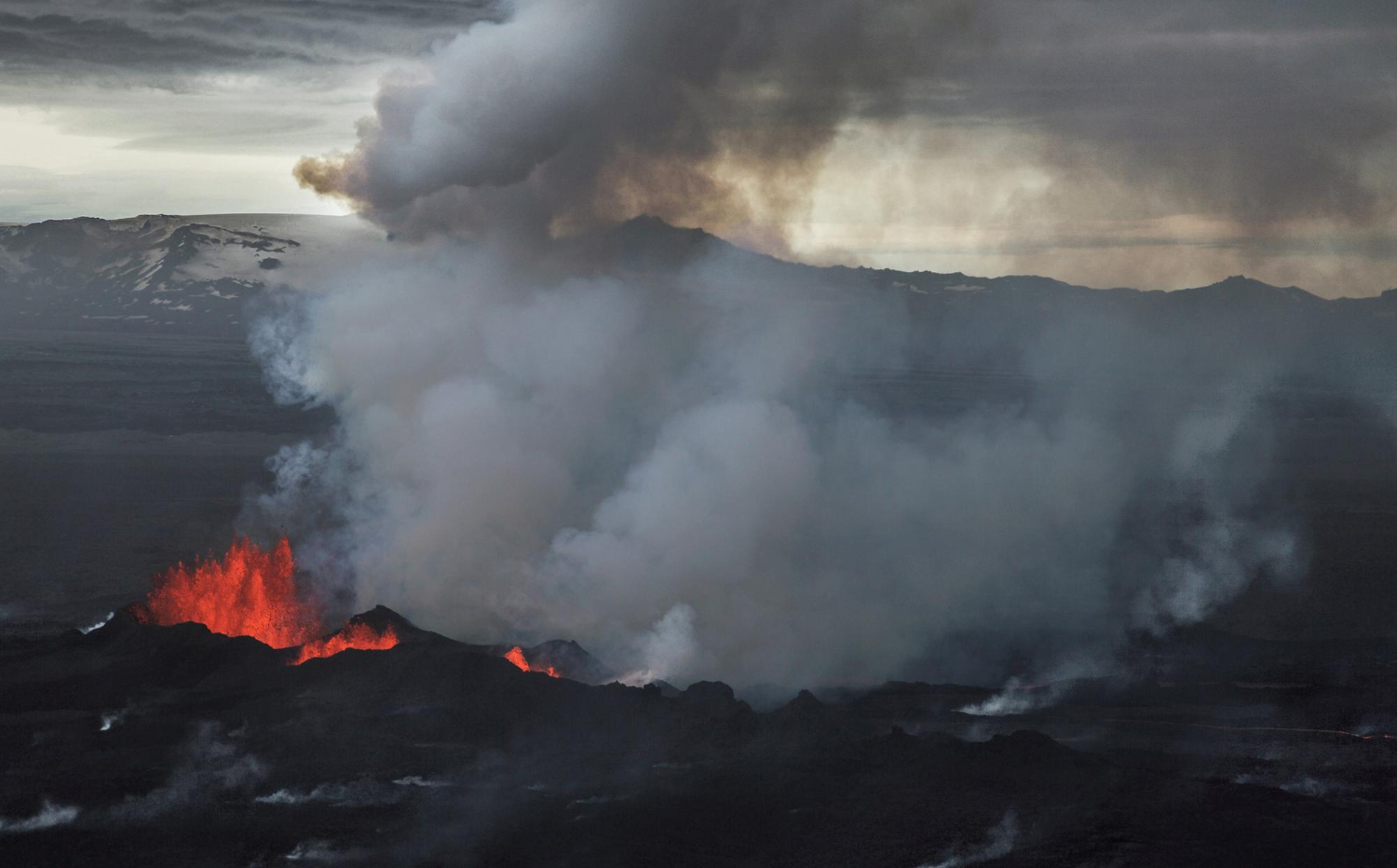
The photographs are among the most striking images in science: a column of ash rising into the dark, with lightning threading through it.
The informal name is a dirty thunderstorm, which distinguishes it from a clean one — the ash-laden plume generating the electricity rather than the water droplets and ice crystals of an ordinary storm. Researchers generally use the plainer term volcanic lightning.
The phenomenon has been known for a very long time and understood for a remarkably short one. The difficulty was that the standard explanation for lightning requires ice, and the obvious assumption about a column of superheated rock fragments is that ice is not involved.
The answer turned out to be that several different things are happening at once, in different parts of the same plume, and separating them required synchronised video, infrasound and electromagnetic measurement pointed at an active volcano. Here is what is going on.
How Ordinary Lightning Works
The comparison is necessary, so a brief version.
In a thunderstorm, ice particles of different sizes collide inside a cloud. Those collisions transfer electric charge between them, and because the particles differ in size they also differ in how fast they rise or fall.
That difference sorts the charge. Lighter particles carrying one charge are carried upward while heavier ones carrying the opposite charge descend, producing separated regions of positive and negative charge within the cloud.
When the difference becomes large enough to overcome the insulating resistance of the air between them, the charge equalises abruptly through a conducting channel. That is the flash.
Two things are required: a mechanism that transfers charge between particles, and a mechanism that separates the resulting charges spatially. Any process supplying both can produce lightning.
Like our content? Follow us for more.
Charging by Friction
The first volcanic mechanism replaces ice with ash and works close to the vent.
An eruption column contains an enormous quantity of silicate and mineral particles moving at very high speed in violent turbulence. Those particles collide constantly, and each collision transfers electrons between the surfaces involved.
This is triboelectric charging — the same effect behind the static shock from a carpet or the way a rubbed balloon sticks to a wall, occurring on a scale that is difficult to picture.
A 2016 study led by Corrado Cimarelli at Sakurajima in Japan documented this directly, using synchronised high-speed video, magnetotelluric measurements and infrasound to capture discharges near the vent and connect them to plume dynamics. The researchers found that turbulent jets cause ash charging and clustering, which promotes electrical discharge early in the plume’s development.
There is a second, related process operating at the vent itself. When magma fractures explosively, the breaking of the rock separates charge directly — a phenomenon called fractoemission. This does not require any collision at all; it is the fracture surface itself becoming charged.
Both processes depend on the eruption being explosive and ash-rich, which is why lightning is associated with particular kinds of eruption rather than with lava flows.
Reporting on this work has noted that finer ash and faster-rising plumes both increase electrification, which fits the mechanism: smaller particles mean more collisions and more surface area, and faster ejection means more violent contact.
Charging by Ice, After All
The second mechanism is the surprise, and it operates far higher up.
Large eruption columns carry enormous quantities of water vapour — from the magma itself, from groundwater, and from surrounding air drawn into the rising plume. Carried to high altitude, that water freezes.
At that point the plume contains ice, and the ordinary thunderstorm mechanism becomes available. Ice particles collide, transfer charge, separate by size, and produce lightning by exactly the process operating in a rain cloud.
Researchers tracked this during the 2015 eruption of Calbuco in Chile, and it has been documented at other eruptions since, including Bogoslof in Alaska and Anak Krakatau. Volcanic ash particles also act as nuclei on which ice forms, which is a further connection between the two systems.
One researcher involved described the finding as surprising precisely because it revealed truly different processes generating electrification inside a single eruption system.
So the plume behaves like two different machines at different altitudes: a friction machine near the vent, and a thunderstorm higher up where water has frozen.
The lightning behaves differently too. Near-vent discharges are short and occur early. Plume lightning develops minutes after the explosion in the drifting, convective part of the column and the spreading umbrella cloud, most closely resembles ordinary lightning, and can span many kilometres. The largest flashes tend to come late, once the charge in the plume has organised into broad horizontal layers.
Where the Charge Actually Separates
Charge transfer alone is not enough, and the separation step is the part that determines whether a plume produces lightning at all.
In a thunderstorm, gravity does the sorting: heavier particles carrying one charge fall relative to lighter particles carrying the other, and the cloud ends up with distinct charged regions.
An eruption plume is more violent and more structured. Near the vent, material is moving upward at enormous speed in a turbulent jet, and the charged particles are not yet organised into anything — which is why early discharges tend to be short and disordered.
As the plume rises and slows, it spreads into an umbrella cloud, and the charge structure organises into broad horizontal layers. That organisation is what permits the very large flashes that come late in an eruption, spanning kilometres.
Particle size matters throughout, because it determines both how much charge a grain carries and how fast it moves relative to its neighbours. Finer ash means more surface area, more collisions and a greater difference in behaviour between the smallest and largest particles.
Proximity to the ground adds a further factor: a charged jet close to the surface can discharge to the ground rather than within the cloud, which is why the discharge type differs between the vent region and the drifting plume above it.
The Glass Beads It Leaves Behind
One consequence of all this is a physical trace, and it is a truly elegant piece of evidence.
In 2015 Kimberly Genareau and colleagues described what are now called lightning-induced volcanic spherules. When a lightning channel rips through an ash plume, the heat melts nearby ash particles, and surface tension pulls the molten material into tiny spheres, which then cool into glass beads.
Those spheres end up in the ash deposit, which means volcanic lightning leaves a durable record in the rock. It also means the phenomenon can, in principle, be identified in ancient deposits from eruptions nobody observed.
Why It Is Not Only Spectacular
There is a practical dimension that explains why this is studied rather than merely photographed.
Volcanic lightning indicates the presence of ash in the atmosphere, and ash is a serious hazard to aircraft. Lightning detection networks already exist globally and operate continuously, in all weather, without needing a clear line of sight.
That makes lightning a useful remote signal. During the 2016 eruption of Pavlof in Alaska, researchers used lightning detection to track ash clouds drifting toward flight paths. Detection can also give an estimate of minimum plume height when radar and other observation methods are unavailable.
This matters most for volcanoes that are remote, poorly instrumented or obscured by cloud, where an eruption might otherwise go unnoticed until ash arrives somewhere it should not be.
Understanding which mechanism dominates in a given eruption is part of that work, since it affects what the lightning signal actually tells you about the plume producing it.
The observational side of this is worth describing, because the measurements are as interesting as the conclusions.
Studying lightning inside an ash plume presents an obvious problem: the plume is opaque, dangerous, and located wherever the volcano happens to be rather than wherever the instruments are.
Researchers therefore combine several methods that each see something different. High-speed video captures the discharges themselves and where in the plume they occur. Infrasound — sound below the range of human hearing — travels long distances and records the explosion dynamics driving the plume. Electromagnetic instruments detect the discharges directly, including flashes hidden inside the ash where nothing is visible.
Lightning mapping arrays add a further dimension, locating discharges in three dimensions and allowing the charge structure of a plume to be reconstructed as it develops.
Synchronising all of that is what allowed the Sakurajima work to connect specific electrical behaviour to specific plume dynamics rather than simply noting that lightning occurred.
There is also the laboratory route. Experiments generating charge in flows of volcanic ash under controlled conditions allow the charging mechanisms to be isolated, which is impossible at an erupting volcano where all of them are operating simultaneously.
Still Not Finished
The honest position is that this is an active field rather than a solved problem.
Three mechanisms have been identified — fractoemission at the vent, triboelectric charging in the ash column, and ice-based charging at altitude — and they operate at different heights and different times within the same event.
What remains unclear is their relative importance. Understanding which dominates under which conditions is necessary to explain the observations, and in particular to explain why some eruptions produce spectacular lightning and others produce none at all despite appearing similar.
Ash plumes are also substantially harder to study than thunderstorms. They are unpredictable, dangerous to approach, and cannot be produced on demand, which means research depends on having instruments in place when a volcano happens to erupt.
Which is part of why Sakurajima features so heavily in the literature: it erupts frequently enough that researchers can install equipment and wait with reasonable confidence.
The overall picture is a phenomenon that was photographed for centuries, explained only recently, turned out to have several explanations rather than one, and is now being used to watch for ash clouds from thousands of kilometres away. Which is a substantially better outcome than simply having a striking photograph.
Like our content? Follow us for more.