It is one of the most absurd confrontations in the history of two great nations: a standoff that brought the United States and the British Empire to the edge of war, complete with infantry, artillery, and warships, and that dragged on for more than thirteen years — all touched off by the death of a single pig rooting in a potato patch. It’s called the Pig War, and despite the name, its remarkable distinction is that nobody died in it. Nobody, that is, except the pig, which remains, to this day, the only casualty of the entire affair.
The Pig War is a truly true story, thoroughly documented, and it unfolded on San Juan Island, in the beautiful waters between what is now Washington State and Vancouver Island. It’s a tale that manages to be both a comedy of escalation — hotheaded officers, wounded pride, a trivial spark blown wildly out of proportion — and a case study in how great-power disputes can be resolved without bloodshed when cooler heads eventually prevail. And the island where it happened is now a national historical park you can visit, where the flag of a foreign nation is still raised each day. Here is how a pig nearly started a war.
An Ambiguous Border
The root of the trouble was a badly drawn boundary. In 1846, the United States and Britain signed the Oregon Treaty, which settled the long-disputed border between American territory and British holdings in the Pacific Northwest, establishing the line along the 49th parallel. The treaty specified that the boundary would run west along that parallel and then turn south through the channel separating the mainland from Vancouver Island, which Britain retained.
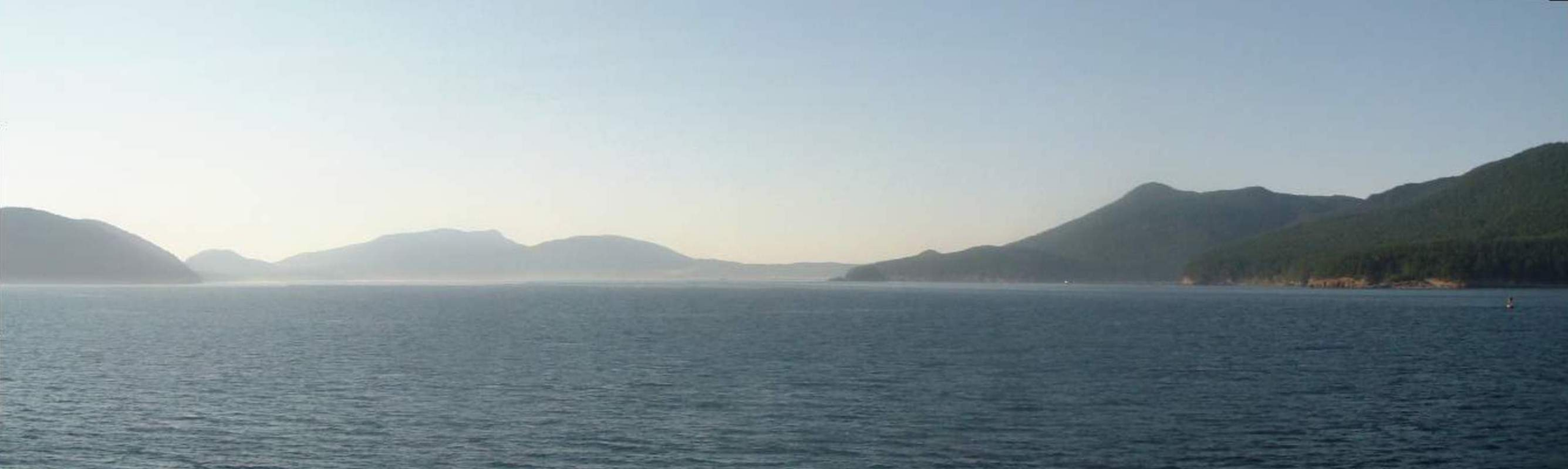
The problem was that there was more than one channel, and the treaty didn’t say which one. Between the mainland and Vancouver Island lay the San Juan Islands, and depending on which strait you considered the boundary, the islands belonged either to the United States or to Britain. Both nations claimed them, and by the late 1850s both had citizens living there — American settlers who had come to farm, and the British Hudson’s Bay Company, which operated a sheep ranch on San Juan Island. The two groups coexisted uneasily on an island that each nation was convinced was its own sovereign territory, a small powder keg waiting for a spark. The spark, when it came, had four legs.
Like our content? Follow us for more.
The Pig and the Potatoes
On June 15, 1859, an American settler named Lyman Cutlar looked out and saw a pig rooting in his garden, eating his potatoes. This was not the first time; the pig, which belonged to the British Hudson’s Bay Company and was tended by a company employee, had been a repeat nuisance. Fed up, Cutlar took his gun and shot the pig dead.
That single shot set everything in motion. Cutlar reportedly offered to pay for the animal, but the two sides couldn’t agree — by one account he offered a modest sum and the pig’s owner demanded far more — and the dispute turned bitter. When British authorities threatened to arrest Cutlar and asserted British jurisdiction over the island, the American settlers were alarmed, and they petitioned for military protection from the United States. The matter of one dead pig had suddenly become a question of national sovereignty, and it landed on the desk of exactly the wrong man to keep things calm.
The Escalation
The American military commander for the region was General William Harney, an officer with well-known anti-British views and little inclination to let an opportunity for confrontation pass. Rather than defusing the situation, Harney escalated it, dispatching a company of American infantry — numbering around sixty-odd soldiers, under the command of Captain George Pickett, later famous in the American Civil War — to San Juan Island to protect the American settlers and assert United States authority.
The British response was to send warships. The governor of the nearby British colony, alarmed by the American troop deployment on an island Britain claimed, ordered Royal Navy vessels to the waters off San Juan Island. Over the following weeks, the standoff intensified as both sides poured in reinforcements. The American force on the island grew from dozens to hundreds of soldiers, digging in and building fortifications, while the British massed a really overwhelming naval presence offshore — multiple warships carrying many guns and a large complement of Royal Marines, vastly outnumbering the American troops on land. At the peak of the crisis, there were hundreds of American soldiers with artillery facing thousands of British personnel aboard warships whose guns could have flattened the American position. Two of the most powerful nations on Earth had brought themselves to the brink of war over a hog.
The Shot That Was Never Fired
And then, remarkably, nothing happened. For all the troops and guns and bluster, no one fired. The critical restraint came from the British side. The senior British naval officer who arrived to take command of the situation, reportedly reluctant to start a war over what he recognized as a trivial and absurd pretext, declined to order his marines to land and force the Americans off the island, despite pressure to do so. He is said to have refused to involve two great nations in a war over a squabble about a pig — a moment of good sense that may have been the true turning point of the whole affair.
When word of the standoff finally reached the national capitals, the leaders of both countries were astonished and dismayed. In Washington, the confrontation was seen as an unwelcome and dangerous distraction, particularly with the United States itself sliding toward the catastrophe of civil war. The American government dispatched a senior general to the scene to calm things down, and General Harney, whose belligerence had inflamed the crisis, was rebuked and eventually reassigned for having let a dead pig escalate into an international incident. Both sides agreed to stand down from the brink and to a peaceful joint arrangement while the underlying question of ownership was sorted out through proper channels.
Thirteen Years of Peaceful Occupation
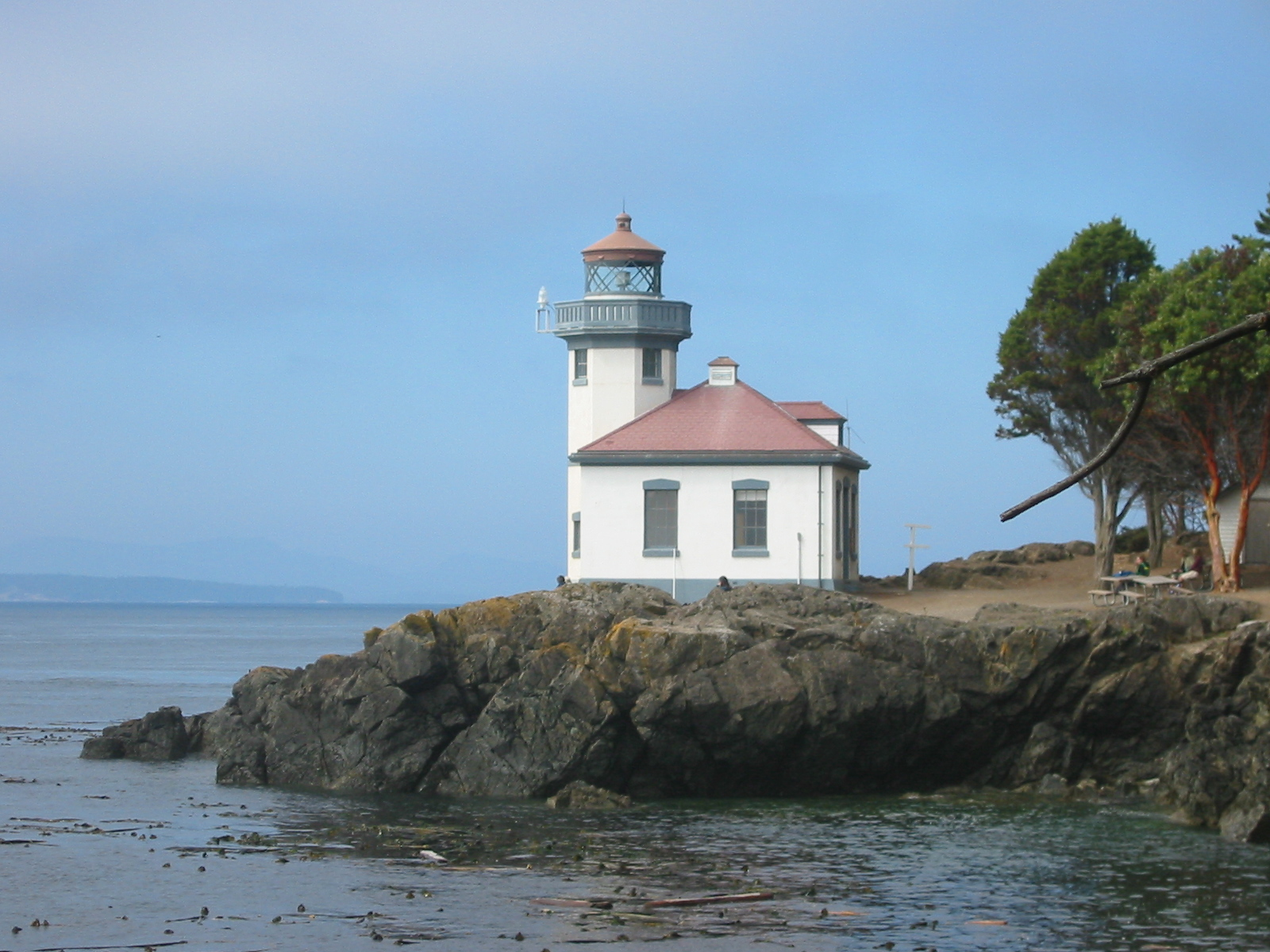
The resolution of the immediate crisis led to one of the more charming arrangements in military history. Rather than fight, the two nations agreed to jointly occupy San Juan Island while diplomats worked out who actually owned it. Each side would station a small force of around a hundred troops at opposite ends of the island — the Americans at what became known as American Camp on the south end, the British at English Camp on the north.
For thirteen years, from 1859 until 1872, this arrangement held, and it was remarkably peaceful and even cordial. The two garrisons, stationed at opposite ends of a small island, reportedly got along well, visiting each other’s camps, sharing meals and holidays, and competing in athletic contests rather than combat. The great “war” settled into more than a decade of two friendly military camps coexisting on a beautiful island, waiting for their governments to decide the border. It’s one of the more delightful footnotes in the history of Anglo-American relations, and a striking contrast to the way such disputes so often end.
The final resolution came, oddly enough, from Germany. Unable to agree between themselves on which channel constituted the treaty boundary, the United States and Britain agreed to submit the dispute to international arbitration, and they chose a neutral party to decide: Kaiser Wilhelm I of Germany. In 1872, an arbitration commission acting under the Kaiser ruled in favor of the American interpretation, placing the boundary through the strait that assigned the San Juan Islands to the United States.
The decision was accepted peacefully. The British steadily withdrew their forces from English Camp, lowering their flag and departing the island, and the San Juan Islands became, and remain, part of the United States. The Pig War was over, concluded not with a battle but with a foreign monarch’s ruling, thirteen years after an American farmer shot a pig in his potato patch. In all that time, across all that military buildup and international tension, the death toll of the conflict stood, and still stands, at one pig.
Visiting the Battlefield Without a Battle
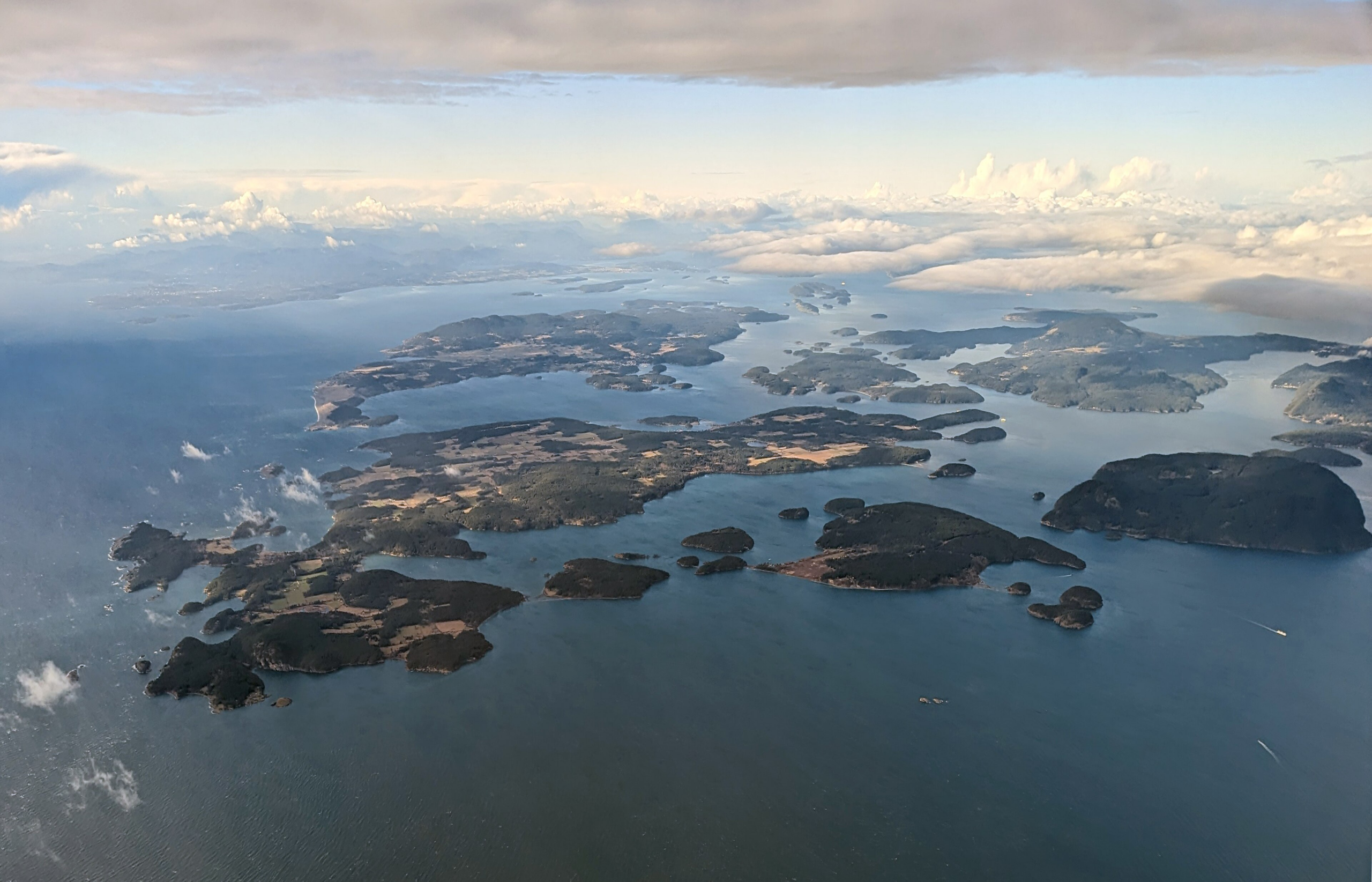
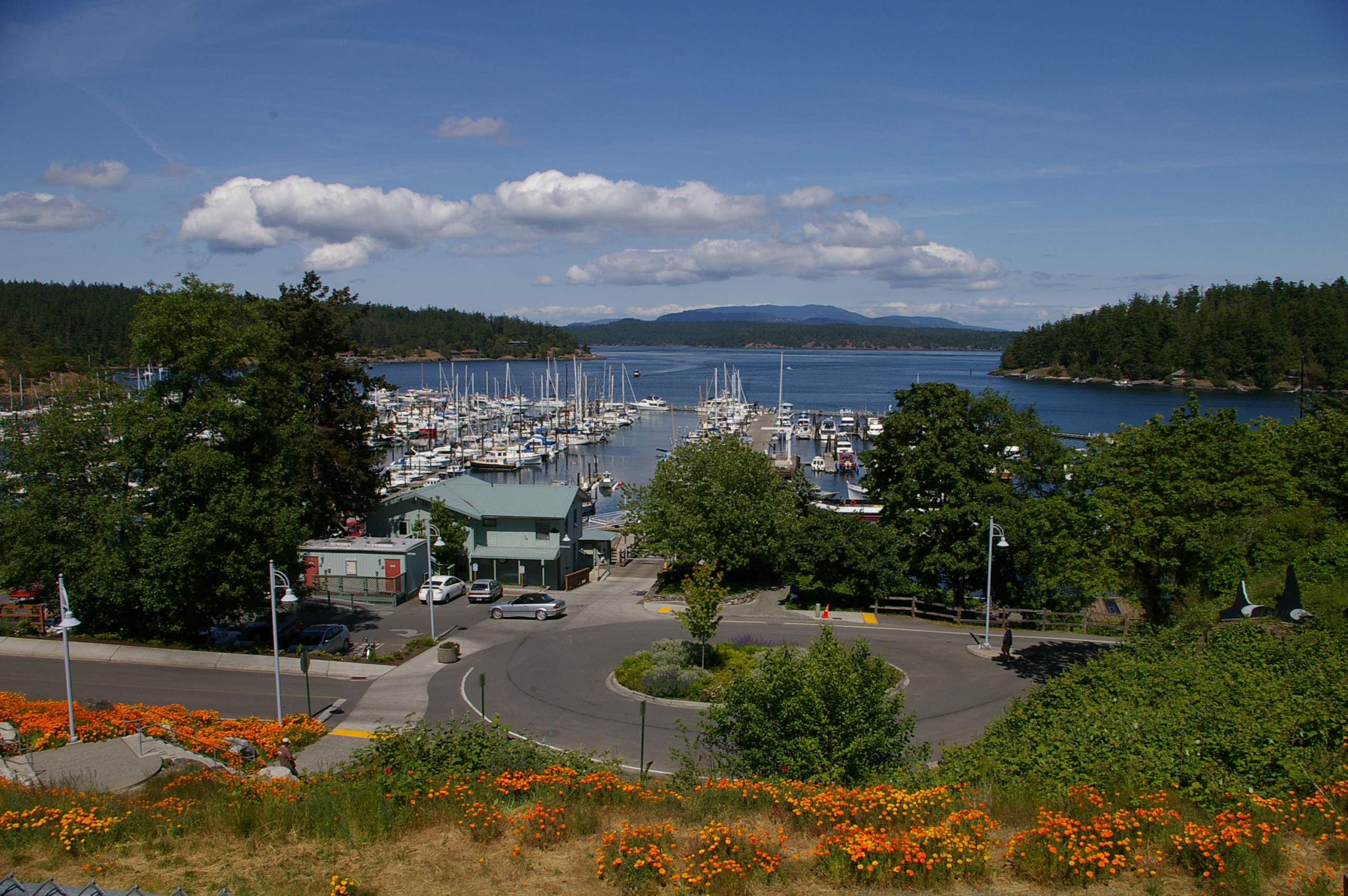
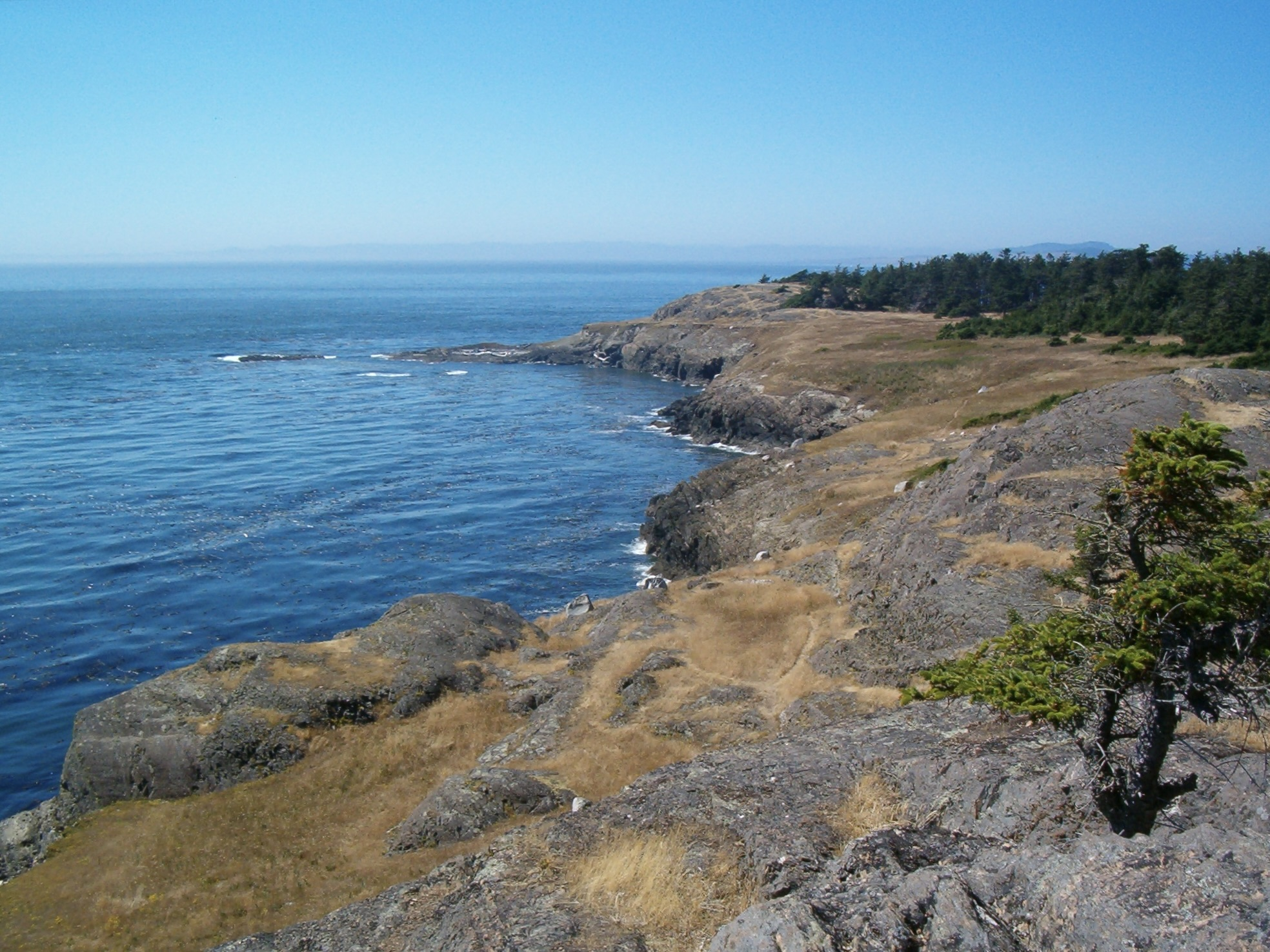
Today, San Juan Island is a lovely destination in the San Juan archipelago, reachable by ferry, and the sites of the Pig War are preserved as San Juan Island National Historical Park. Both American Camp and English Camp are open to visitors, with their historic buildings, fortifications, and grounds maintained by the National Park Service, and the park interprets the whole strange story for the many people who arrive never having heard of it.
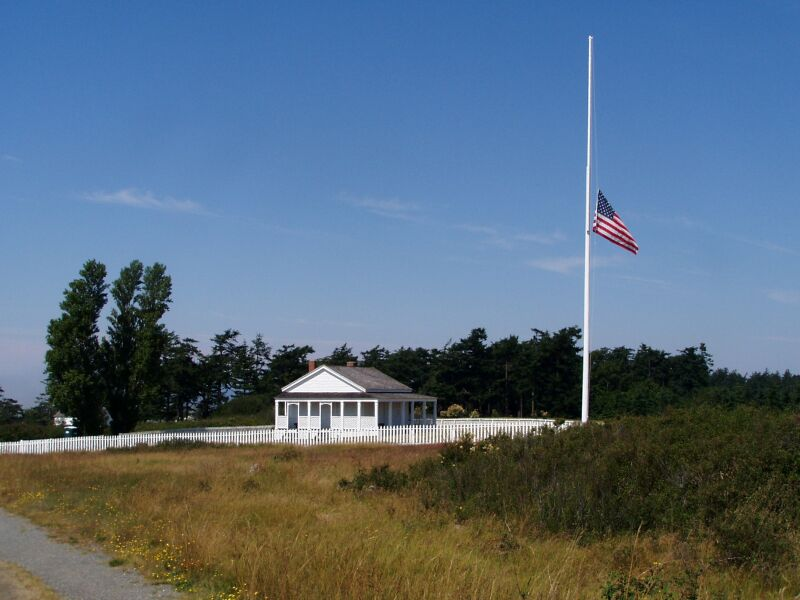
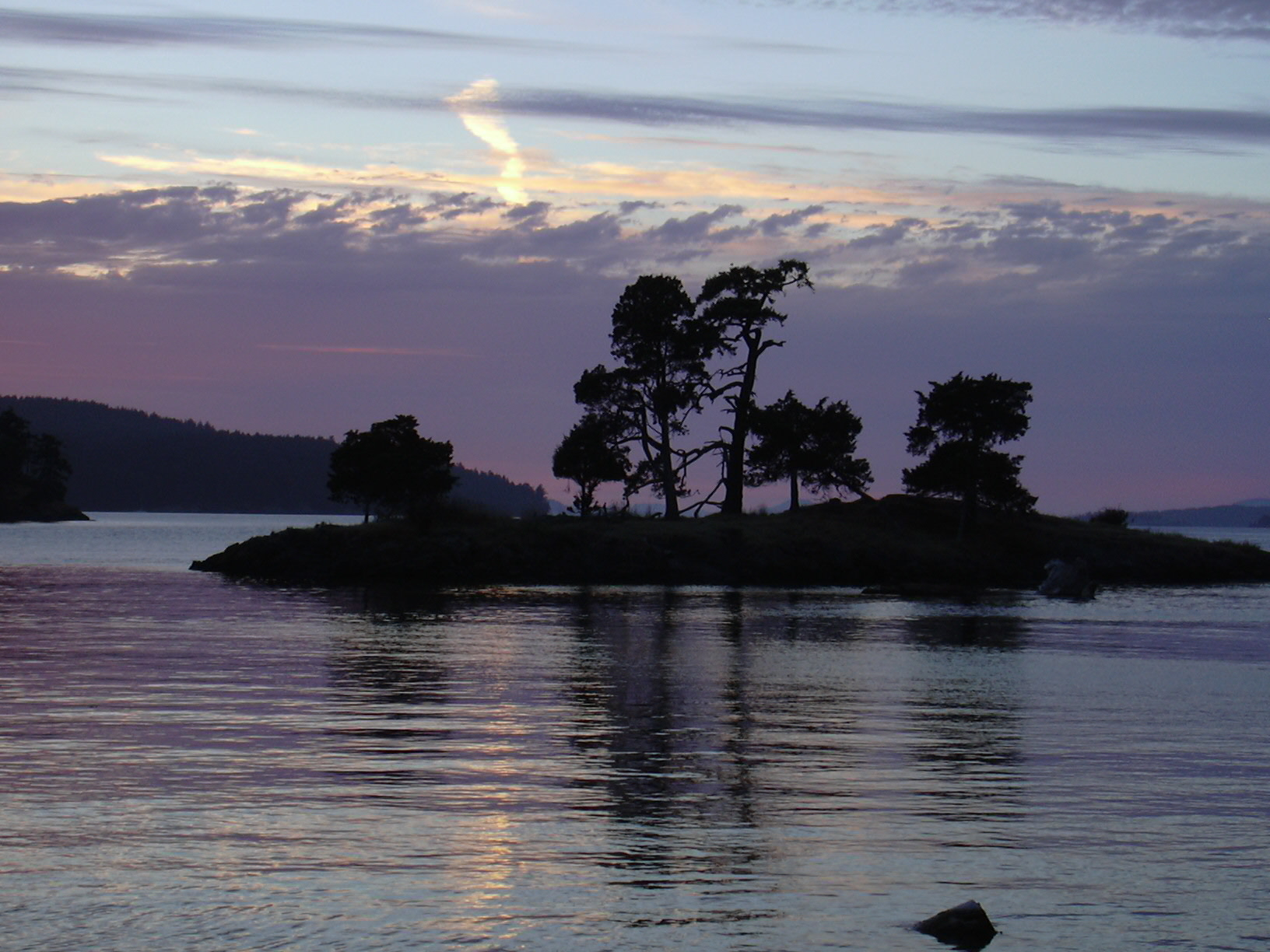
There’s a wonderful detail that captures the spirit of the place: at the former English Camp, the British Union Jack is still raised and lowered each day, one of the few places outside of official diplomatic sites where the flag of the United Kingdom flies on American soil, maintained as a gesture of respect for the shared history. Visitors can walk the peaceful meadows and woodlands where hundreds of troops once faced off, take in the beautiful views across the water toward Canada, and contemplate the absurdity of it all. The island is also a superb spot for whale watching, hiking, and taking in the scenery of the Pacific Northwest, making the Pig War sites part of a honestly rewarding trip rather than a mere historical curiosity.
The War That Wasn’t
The Pig War endures as a favorite piece of history because it’s both plainly absurd and steadily profound. On the surface, it’s pure comedy: two empires, thousands of troops, warships and artillery, all mobilized over a pig eating potatoes, with a cast of hotheaded officers escalating a barnyard dispute into an international crisis. It’s the kind of thing that sounds made up, and yet every bit of it is documented fact.
But underneath the comedy is something worth remembering. The Pig War is celebrated precisely because it didn’t become a war — because at the crucial moment, individuals on both sides chose restraint over pride, and their governments chose arbitration over arms. In an age when great powers so often stumbled into catastrophe over trivial slights, two nations found a way to spend thirteen years not fighting, to turn a standoff into a friendly co-occupation, and to settle a real territorial dispute by asking a third party to decide. The only casualty was a pig. In the long, bloody history of international conflict, that may be the most civilized outcome any war ever had — which is perhaps why it’s remembered so fondly, on an island where the old enemy’s flag still flies each morning over the ground where the shooting never started.
Like our content? Follow us for more.