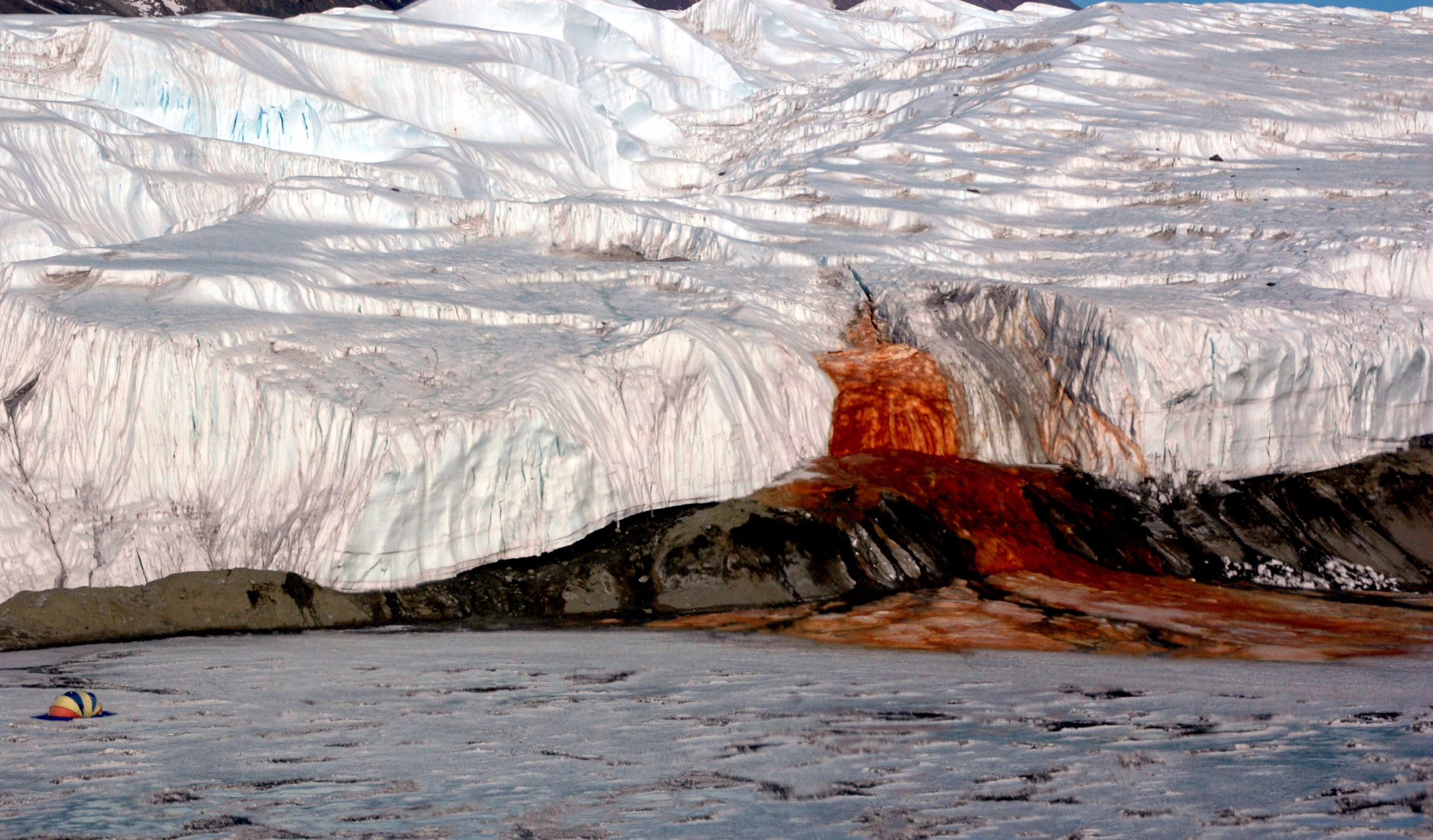
In the frozen heart of Antarctica, in a stark region of ice and bare rock, there is a sight so startling it seems to belong in a horror film: a glacier that appears to bleed. From a crack in the white face of the ice, a vivid, rust-red liquid seeps and flows, staining the glacier and the ice below it a deep, gory crimson, as though the great mass of ice had suffered a terrible wound. This is Blood Falls, one of the strangest and most visually arresting natural phenomena on the entire planet.
For more than a century after it was first discovered by explorers, the cause of Blood Falls’ eerie red color remained a real scientific puzzle. What could possibly produce such a shocking crimson flow in the middle of the frozen Antarctic wasteland? Early guesses proved wrong, and unraveling the real answer required years of difficult research in one of the most remote and inhospitable environments on Earth. When the truth finally emerged, it proved to be even more fascinating than the mystery: a story of ancient trapped seawater, bizarre chemistry, and a hidden community of living things that has thrived in perpetual darkness for over a million years. Here is the strange and wonderful science of Antarctica’s bleeding glacier.
A Bleeding Glacier
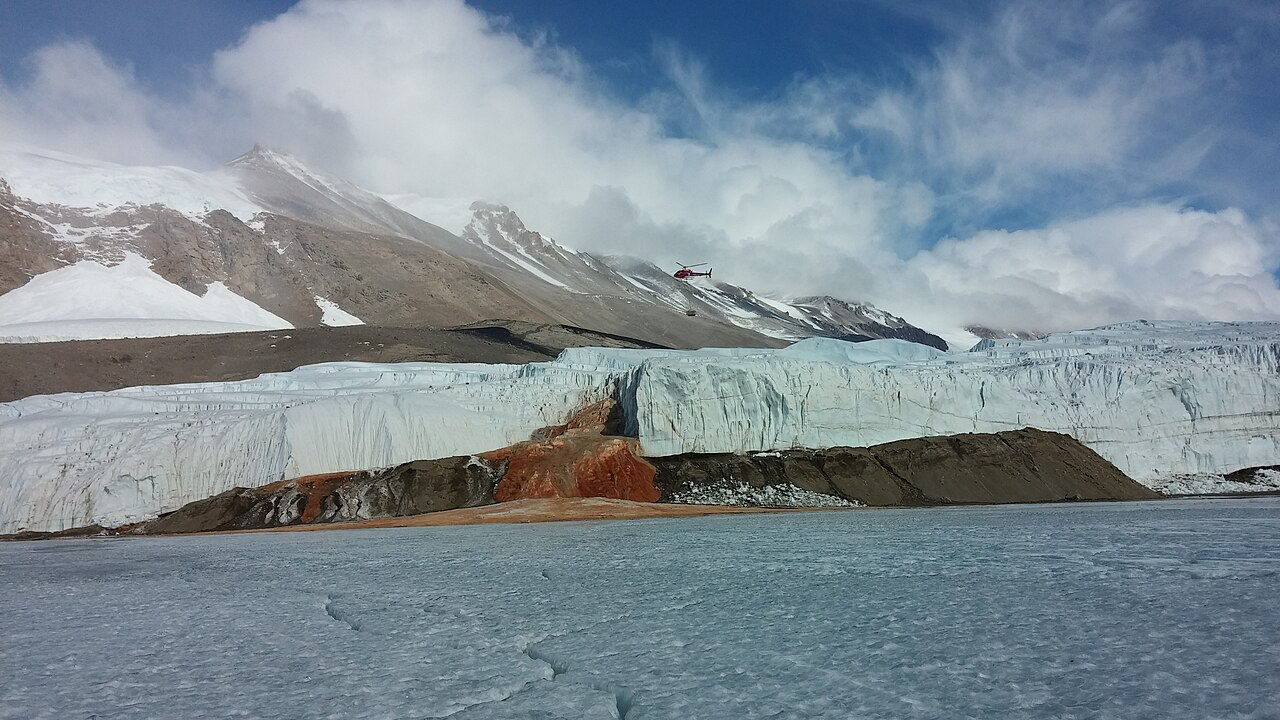
Blood Falls is located in one of Antarctica’s most unusual regions, an area of ice-free valleys known as the Dry Valleys, where a peculiar combination of conditions has left the landscape largely bare of snow and ice, a cold desert of rock and wind. There, at the end of a glacier, the startling red flow emerges, pouring out from the ice and creating its famous bloody appearance.
The falls were discovered in the early twentieth century by a member of an early Antarctic expedition, a geologist who came upon the astonishing sight of red-stained ice. At first glance, the obvious assumption might be that the color came from some form of life, and indeed the earliest explanation proposed that the red hue was caused by red algae growing in the water, similar to the algae that can tint snow and ice pink or red in other parts of the world. It seemed a reasonable guess for such a biologically tinged color. But this explanation, it would turn out, was incorrect, and the true source of the redness would prove far stranger and more interesting than mere algae. For decades, the bleeding glacier kept the real secret of its color hidden beneath the ice.
Like our content? Follow us for more.
An Ancient Trapped Sea
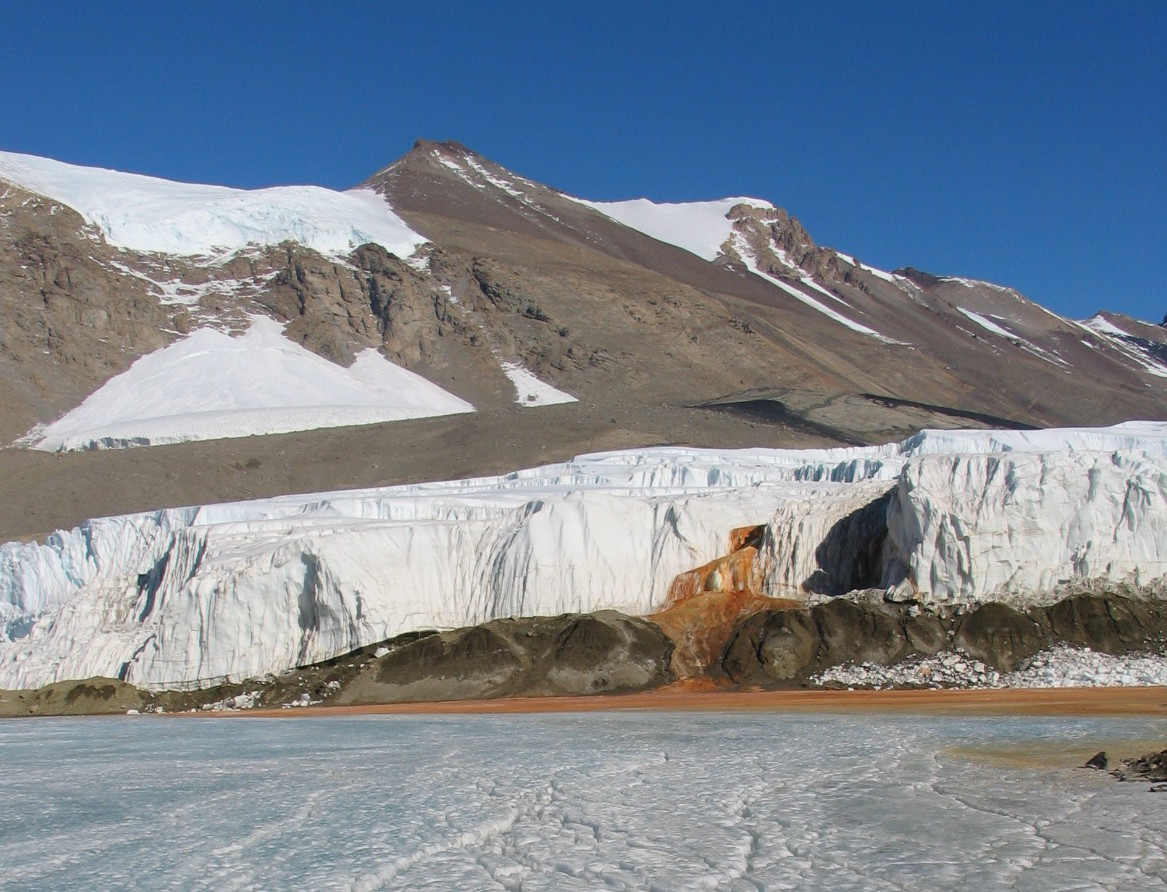
The key to Blood Falls lies hidden deep beneath the glacier from which it flows. Over many years of study, scientists came to understand that the source of the red water is a reservoir of extremely salty water, a brine, trapped in a hidden pocket far below the surface of the ice. This subglacial brine is thought to be the remnant of an ancient body of seawater that became sealed off and buried beneath the glacier an extraordinarily long time ago, on the order of well over a million years, when the advancing glacier trapped it and cut it off from the outside world.
Sealed away beneath the ice for such an immense span of time, this trapped seawater underwent a remarkable transformation. As some of its water gradually froze or was otherwise lost over the ages, the remaining water became more and more concentrated with salt, until it turned into a brine far saltier than ordinary seawater. This extreme saltiness has a crucial consequence: it dramatically lowers the freezing point of the water, allowing the brine to remain liquid even at the frigid subzero temperatures found beneath an Antarctic glacier, where ordinary water would freeze solid. The result is a hidden reservoir of ancient, super-salty, liquid seawater, buried beneath the ice, waiting to find a way to the surface. And when it does escape, it produces the phenomenon that so mystifies onlookers.
The Secret of the Red
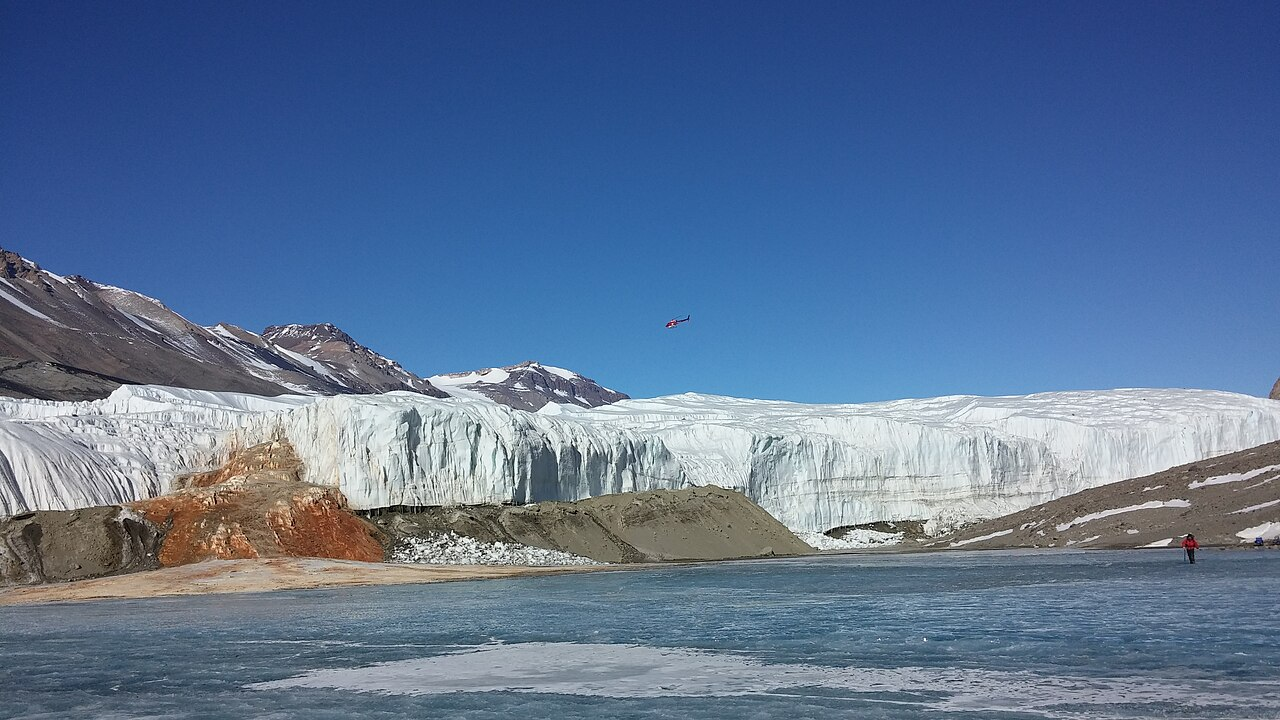
So why is the water red? The answer lies in what else the ancient brine contains besides salt. Over its long imprisonment beneath the glacier, in contact with the underlying rock, the trapped seawater became rich in dissolved iron. As long as this iron-laden brine remains sealed beneath the ice, cut off from the air, it stays clear and colorless. But everything changes at the moment it reaches the surface.
When the pressurized brine finally finds its way up through cracks and channels in the glacier and emerges into the open air, the dissolved iron it carries suddenly comes into contact with oxygen for the first time. And when iron meets oxygen, it does exactly what iron always does in that situation: it oxidizes. It rusts. The iron in the brine rapidly reacts with the oxygen in the air, forming reddish iron oxides, the same compounds that give rust its characteristic color, and these tint the emerging water and stain the ice a deep blood red. In other words, Blood Falls is essentially rusting as it flows. The dramatic crimson color that looks so much like blood is nothing more, and nothing less, than iron turning to rust the instant an ancient, hidden brine tastes the open air after more than a million years in the dark. It’s a strikingly simple chemical explanation for such a shocking sight.
A Hidden World of Life
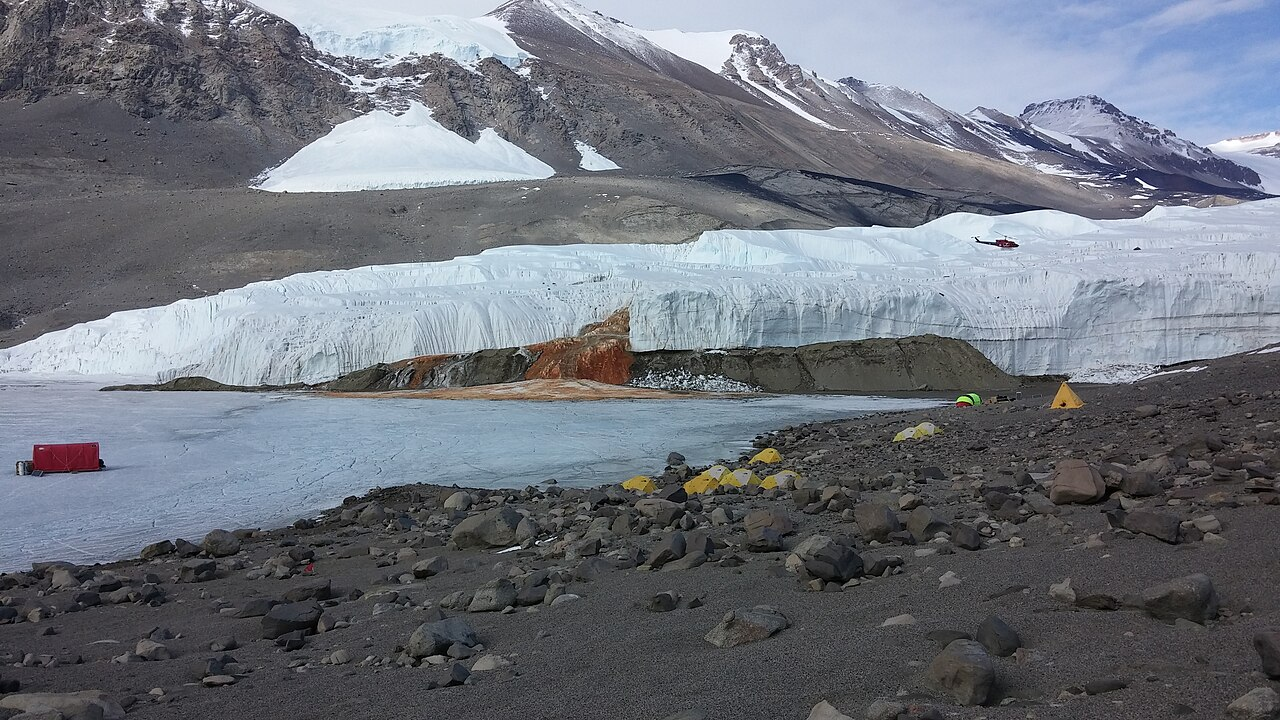
As remarkable as the chemistry of Blood Falls is, the story took an even more astonishing turn when scientists investigated what lives in the hidden brine. Retrieving and analyzing samples of the water was extraordinarily difficult, given the remote and frozen setting, but when researchers finally managed it, they made a stunning discovery: the ancient, sealed-off reservoir beneath the glacier is not lifeless at all. It is home to a thriving community of microscopic organisms, microbes that have somehow survived and sustained themselves in this dark, cold, salty, oxygen-free environment for an immense span of time.
These microbes live in conditions that would seem utterly hostile to life. Sealed beneath hundreds of feet of ice, they have no access to sunlight and no oxygen, cut off from the surface world for perhaps more than a million years. Unable to rely on sunlight for energy as most life on Earth does, they have adapted to survive by drawing energy from the chemistry of their surroundings, using the iron and sulfur compounds in the brine and the surrounding rock in a remarkable feat of biological ingenuity. This hidden ecosystem, surviving against all odds in one of the most extreme environments imaginable, has captured the fascination of scientists for a profound reason: it offers a real-world model for how life might exist in similar hidden, ice-covered environments elsewhere in our solar system, such as beneath the frozen surfaces of certain moons of Jupiter and Saturn. Blood Falls, it turns out, is not just a geological curiosity but a window into the possibilities of life in the universe’s coldest, darkest corners.
A Window Into Other Worlds
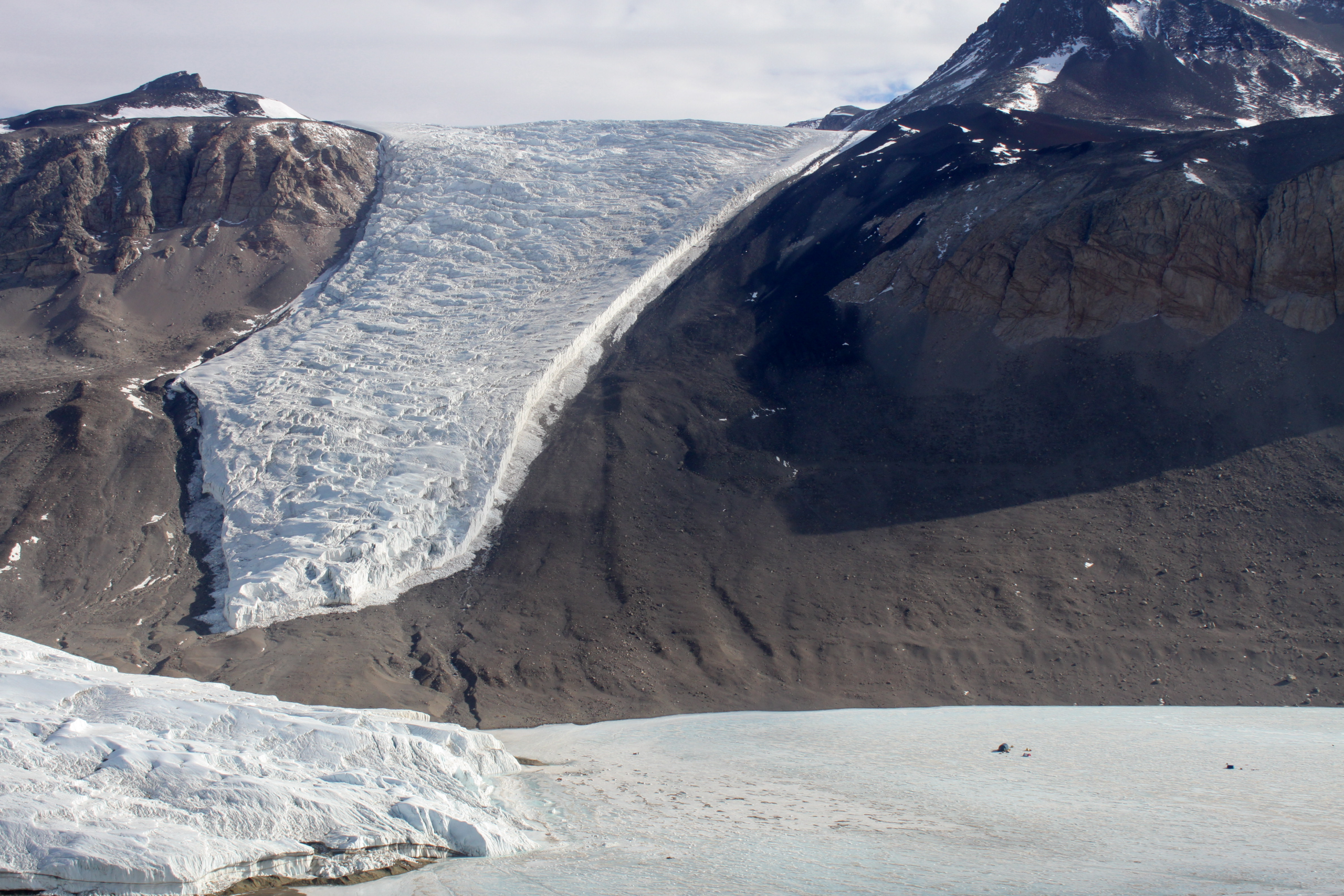
The full picture of Blood Falls, assembled over more than a century of scientific effort, has transformed it from a baffling oddity into one of the most scientifically valuable sites in Antarctica. What began as an inexplicable red stain on the ice has become a portal into multiple hidden realms: an ancient sea preserved beneath the glacier, the strange chemistry of iron and brine and rust, and an isolated ecosystem of hardy microbes surviving in perpetual darkness.
Ongoing research continues to refine our understanding of exactly how the brine makes its way to the surface and how the whole system works, with recent studies shedding light on the pressures and processes that drive the periodic red flows. But the essential mystery has been solved, and the answer connects the frozen Antarctic to some of the biggest questions in science, including the search for life beyond Earth. Because if microbes can survive sealed beneath an Antarctic glacier for over a million years, drawing energy from rock and brine in total darkness, then perhaps life could persist in the hidden oceans beneath the ice of distant moons as well. Blood Falls stands today as a reminder that even the most alien and forbidding-looking phenomena often have explanations rooted in elegant natural processes, and that the coldest, most lifeless-seeming places on Earth can harbor secrets, and even life, beyond anything we might expect.
The Beauty in the Mystery Solved
Blood Falls endures as one of Antarctica’s most captivating sights, and its story is a perfect illustration of how science can take something that appears frightening or supernatural and reveal the wonder of the natural reality behind it. The glacier does not bleed, of course; it weeps an ancient, iron-rich brine that rusts red in the air, drawn from a buried sea older than our species, carrying with it living things that have endured in the dark since before human history began.
There is something poetic in the full explanation, a reminder that nature’s strangest spectacles are often built from simple ingredients, salt and iron and time, combined in extraordinary ways. From a mysterious red stain that puzzled explorers for a century, Blood Falls has become a celebrated natural wonder and a scientific treasure, teaching us about ancient climates, extreme chemistry, and the astonishing resilience of life. The next time you picture Antarctica as a barren, empty wasteland of ice, remember the bleeding glacier and the hidden world beneath it, steadily persisting in the dark, and consider how much wonder can lie beneath even the most desolate and forbidding surface.
Like our content? Follow us for more.