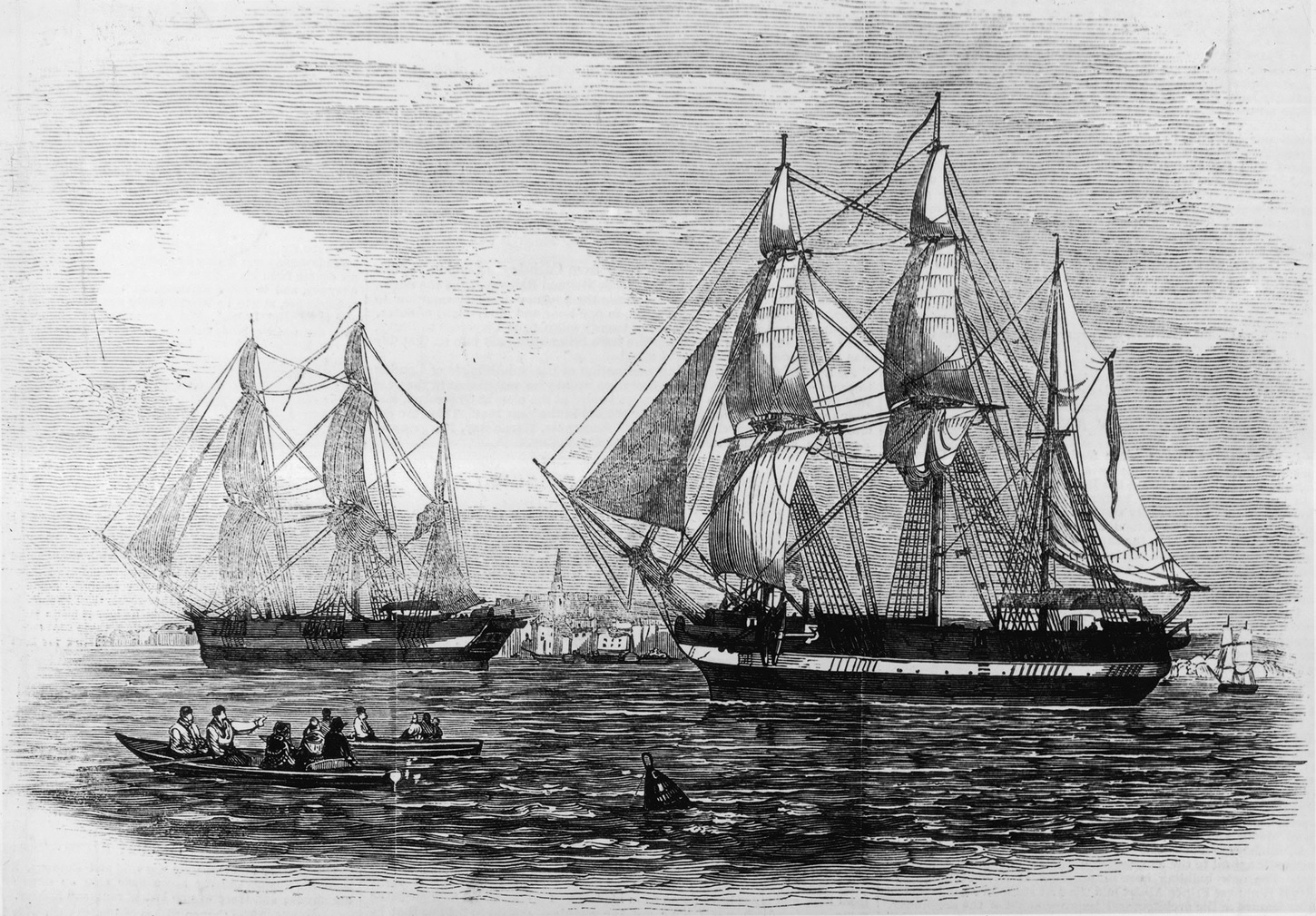
In the summer of 1845, two sturdy British ships sailed out of England and into the icy waters of the Canadian Arctic, carrying 129 officers and men on a mission to achieve one of the great prizes of the age of exploration: the discovery of the Northwest Passage, the fabled sea route through the Arctic connecting the Atlantic and Pacific oceans. The expedition was led by an experienced polar explorer, well equipped, and confident of success. It was last seen by European eyes late that summer, moored to an iceberg, waiting for a chance to press on into the ice.
And then the Franklin Expedition, ships and men alike, simply vanished. Not one of the 129 men aboard the two vessels would ever be seen alive again. Their disappearance became one of the most haunting mysteries in the history of exploration, launching an unprecedented series of search expeditions and gripping the public imagination for generations. What had become of them? The full, grim story would take an astonishing amount of time to piece together, drawing on scattered clues, forensic science, the long-dismissed testimony of the region’s Indigenous people, and, finally, the discovery of the lost ships themselves more than a century and a half later. Here is the story of the Franklin Expedition and its long-hidden fate.
An Ambitious Voyage
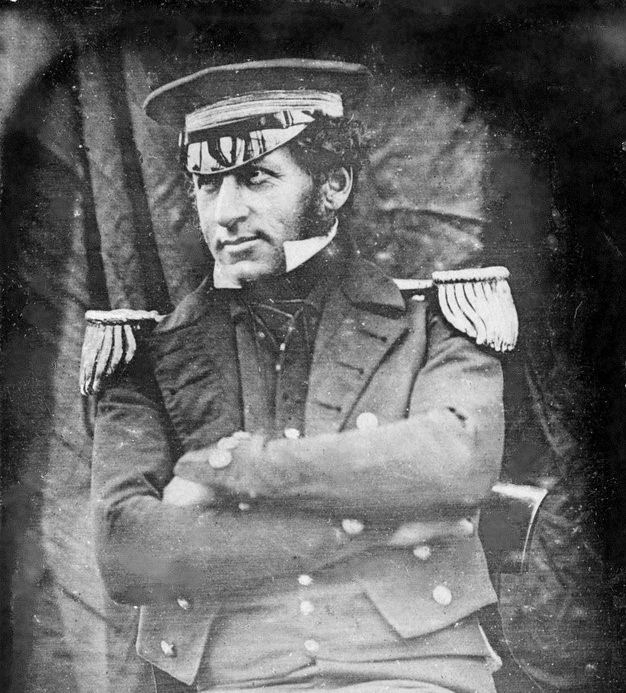
The expedition was led by Sir John Franklin, a seasoned naval officer and Arctic explorer who had already undertaken previous journeys in the polar regions. It was mounted by the British Royal Navy at a time when finding the Northwest Passage was a matter of national prestige and scientific ambition, a goal that had eluded explorers for centuries. Alongside the search for the passage, the expedition also aimed to gather scientific data, including measurements of the Earth’s magnetism to aid future navigation.
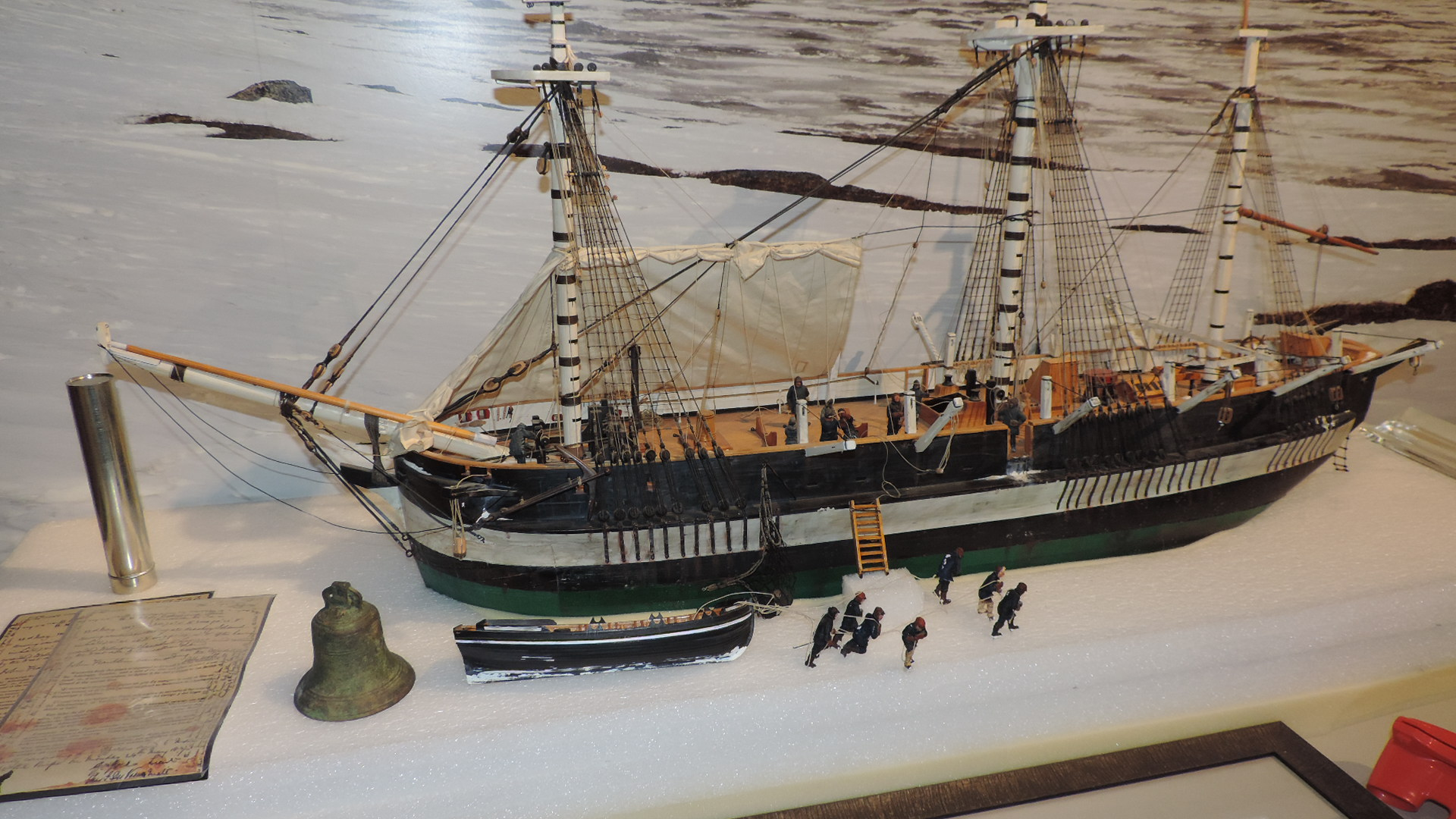
For the journey, the navy provided two ships that were considered exceptionally well suited to the task. These were former warships that had been specially reinforced and refitted for polar exploration, with strengthened hulls to withstand the crushing pressure of the ice, along with then-modern conveniences intended to help the crews survive the extreme Arctic conditions. The ships were stocked with several years’ worth of provisions, including a large supply of food preserved in tin cans, a relatively new technology at the time. Everything about the expedition suggested careful preparation and confidence. When the ships departed England in 1845 with their 129 men, there was every expectation that they would succeed where others had failed, or at the very least return safely home. The public followed their departure with great interest, unaware that they were watching these men sail off to a doom from which none would return.
Like our content? Follow us for more.
Into the Ice and Silence
After leaving England, the expedition sailed across the North Atlantic and into the Arctic. The ships were last seen by others, a couple of European whaling vessels, in the waters of Baffin Bay in the late summer of 1845, waiting for conditions to allow them to proceed westward into the labyrinth of Arctic channels and islands. After that sighting, the Franklin Expedition sailed on into the ice and was never seen by outsiders again.
As months turned into years with no word from the expedition, concern in Britain grew into alarm. It became clear that something had gone terribly wrong. Under mounting public pressure, and driven especially by the determined efforts of Franklin’s wife, the British navy and others launched a vast series of search expeditions to find the missing men, or at least to discover their fate. Over the following years and decades, numerous missions combed the Arctic, and this enormous search effort, while failing to find survivors, gradually turned up clues, and in the process contributed enormously to the mapping and exploration of the Canadian Arctic. Piece by piece, a grim picture began to emerge from the frozen wilderness, though it would remain frustratingly incomplete for a very long time.
The Clues in the Ice
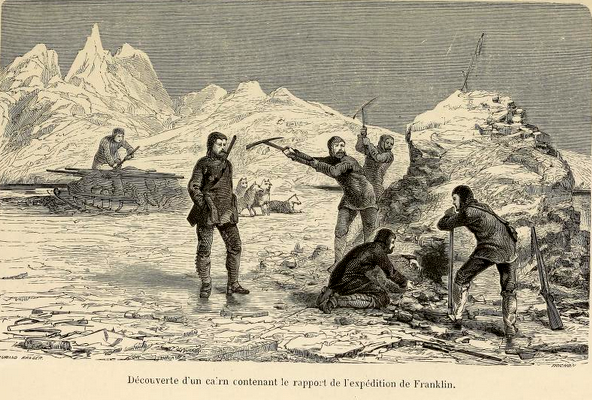
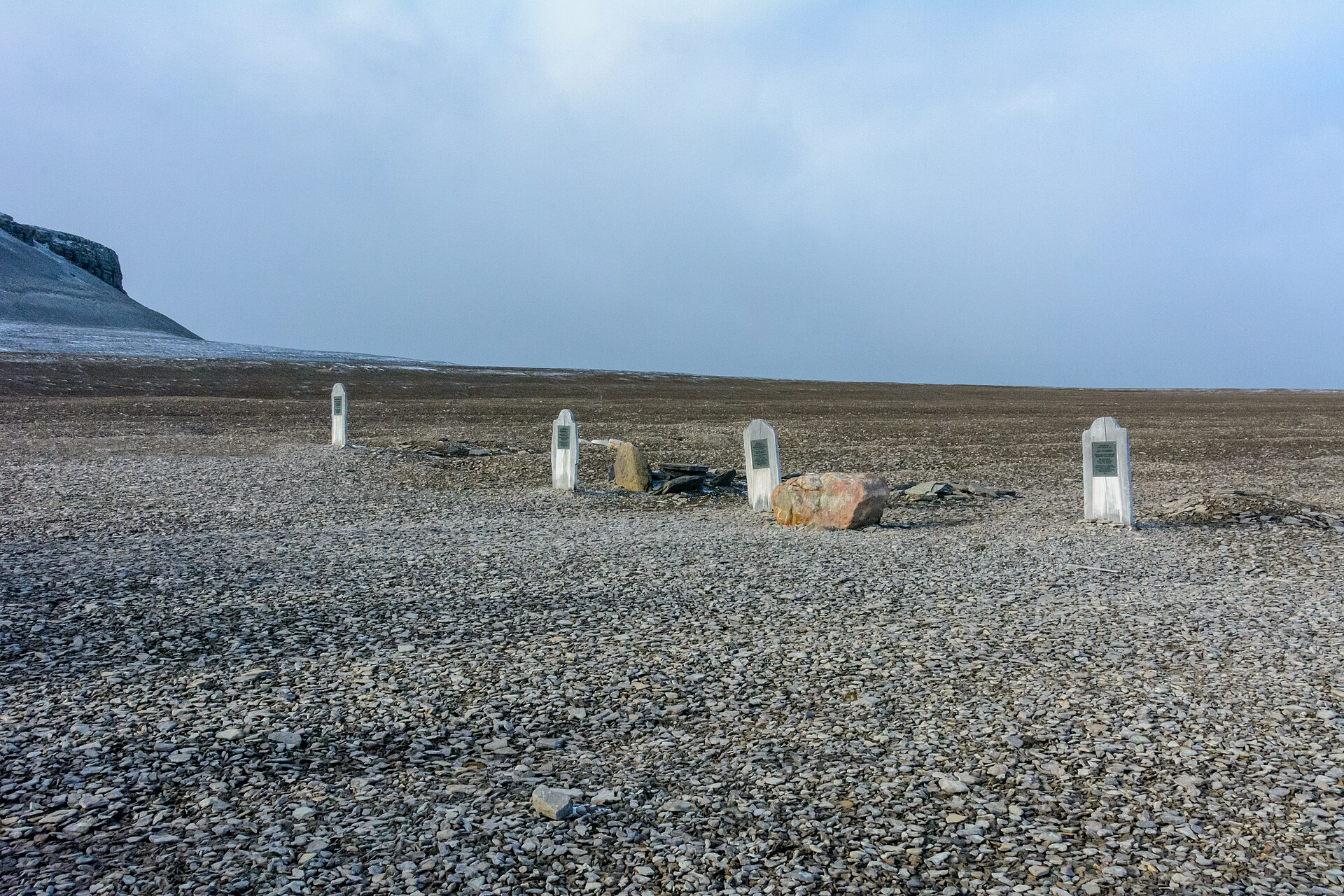
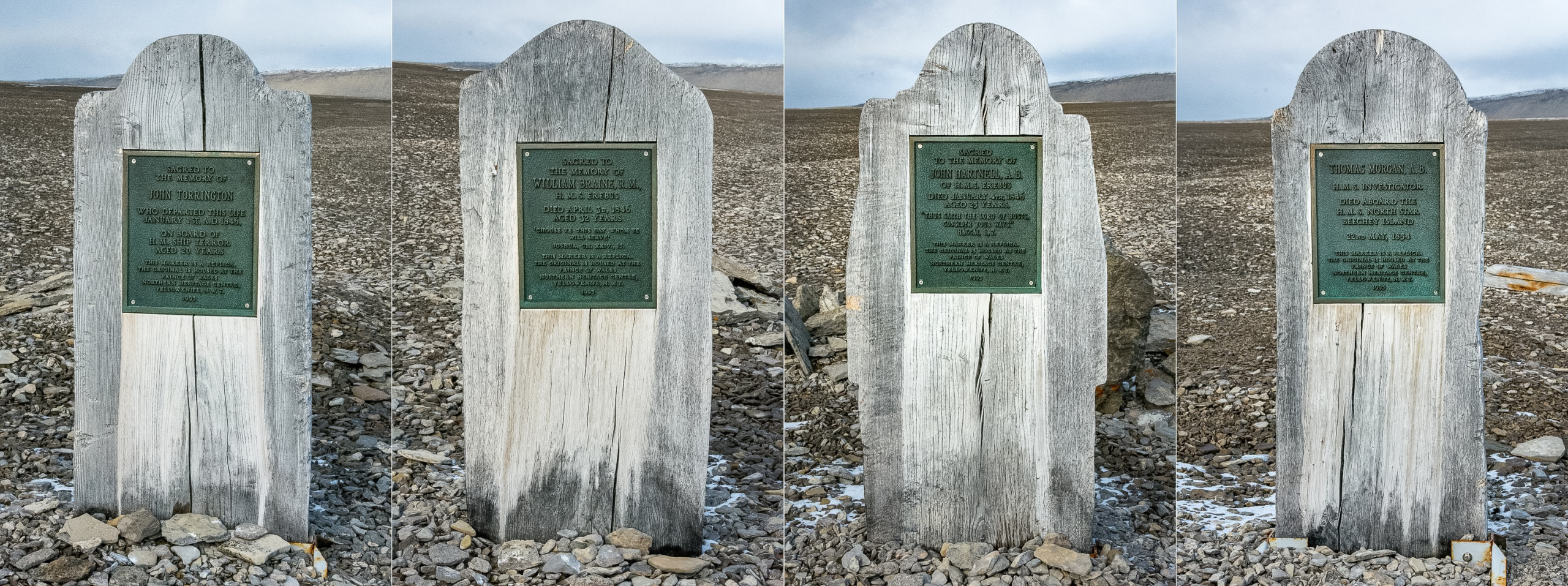
The searches slowly recovered fragments of the story. On a barren Arctic island, searchers found the graves of three crew members who had died early in the expedition and been buried during its first winter. Elsewhere, they discovered scattered human remains, abandoned equipment, and, crucially, a single written document, a note left by the expedition’s officers. This note provided the only direct written account of what had happened, recording that the ships had become trapped in the ice, that Franklin himself had died, and that the surviving crew, by then reduced in number, had abandoned the ice-bound ships to attempt a desperate journey on foot toward the North American mainland.
That doomed overland trek was the crews’ final gamble, and it failed utterly. The men who set out from the ships, already weakened and sick, perished along the way, their bodies and belongings left scattered across the frozen landscape. The evidence gathered by searchers, and later by scientific expeditions, painted a picture of a slow-motion catastrophe: ships imprisoned by ice for years, dwindling supplies, the death of the commander, and finally a hopeless march by starving, ailing men across one of the most hostile environments on Earth. Yet many of the specifics, exactly why the expedition failed so completely, what afflicted the men, and where the ships themselves had ended up, remained unknown, tantalizing questions that would await modern science.
What Science Revealed
In the twentieth and twenty-first centuries, researchers applied modern forensic techniques to the remains and artifacts of the Franklin Expedition, and slowly assembled a fuller understanding of the disaster. Examination of the recovered bones and the preserved bodies of the crew members buried during that first winter revealed a combination of afflictions that had beset the men. Evidence pointed to starvation and to scurvy, the debilitating disease caused by a lack of vitamin C, a common scourge of long voyages.
Forensic analysis also found strikingly high levels of lead in the remains, leading to a widely discussed theory that lead poisoning had contributed to the men’s decline, potentially impairing their health and judgment. Suspicion initially fell on the expedition’s tinned food, which may have been sealed with lead solder, though later research has questioned whether the tins were the sole source and has pointed to other possibilities, such as the ships’ own water systems. The likely truth is that no single cause doomed the expedition, but rather a devastating combination of factors: the relentless cold, the years trapped in the ice, dwindling and possibly contaminated food, scurvy, lead exposure, exhaustion, and disease all compounding one another. Forensic evidence, including marks on some of the bones, also grimly confirmed that the final, starving survivors had, in their desperation, resorted to cannibalism, a horrifying detail that had once been reported but long refused belief.
The Testimony That Was Ignored
One of the most important and sobering aspects of the Franklin story concerns the Inuit, the Indigenous people of the Arctic, whose knowledge proved crucial to eventually understanding what happened. During the years of searching, various searchers gathered testimony from local Inuit who had encountered members of the expedition or their remains, and who described what they had seen: starving men struggling across the ice, and evidence of the desperate measures the crew had resorted to in their final days.
At the time, much of this Inuit testimony was met with skepticism or outright rejection in Britain, particularly the accounts of cannibalism, which many in Victorian society found too disturbing to accept and dismissed as unreliable. But the Inuit accounts, it turned out, were remarkably accurate, and modern evidence has repeatedly confirmed the truth of what they reported. This long-overdue vindication of Inuit knowledge is an important part of the story, a reminder of the value of Indigenous testimony that European searchers were too quick to discount. Indeed, it was Inuit knowledge, passed down and shared with modern searchers, that ultimately proved essential to solving the greatest remaining piece of the puzzle: the location of the lost ships themselves.
Finding the Lost Ships
For more than a century and a half, the final resting places of the expedition’s two ships remained unknown, the last great missing piece of the mystery. Then, in a pair of remarkable discoveries, modern search teams, guided in significant part by Inuit knowledge and using advanced sonar and underwater technology, finally located the wrecks. One ship was found in 2014, and the second in 2016, resting on the floor of the Arctic waters where they had gone down after being abandoned.
The discovery of the two wrecks, remarkably well preserved in the cold Arctic waters, was a landmark achievement, and the sites are now protected as places of enormous historical importance. The ships have since become the focus of ongoing underwater archaeological investigation, with divers carefully exploring the wrecks in the hope of recovering artifacts and, perhaps, documents that could shed further light on the expedition’s final days. After 170 years, the Franklin Expedition had at last given up the location of its lost vessels, and the mystery that had haunted the world for generations was, if not completely solved, finally brought closer to resolution than ever before. The story of the Franklin Expedition endures as one of the most haunting episodes in the history of exploration, a tale of ambition and catastrophe in the frozen north, and of the long, patient effort, aided at last by the very Indigenous knowledge once ignored, to uncover the truth of what happened to 129 men who sailed into the Arctic and never came home.
Like our content? Follow us for more.