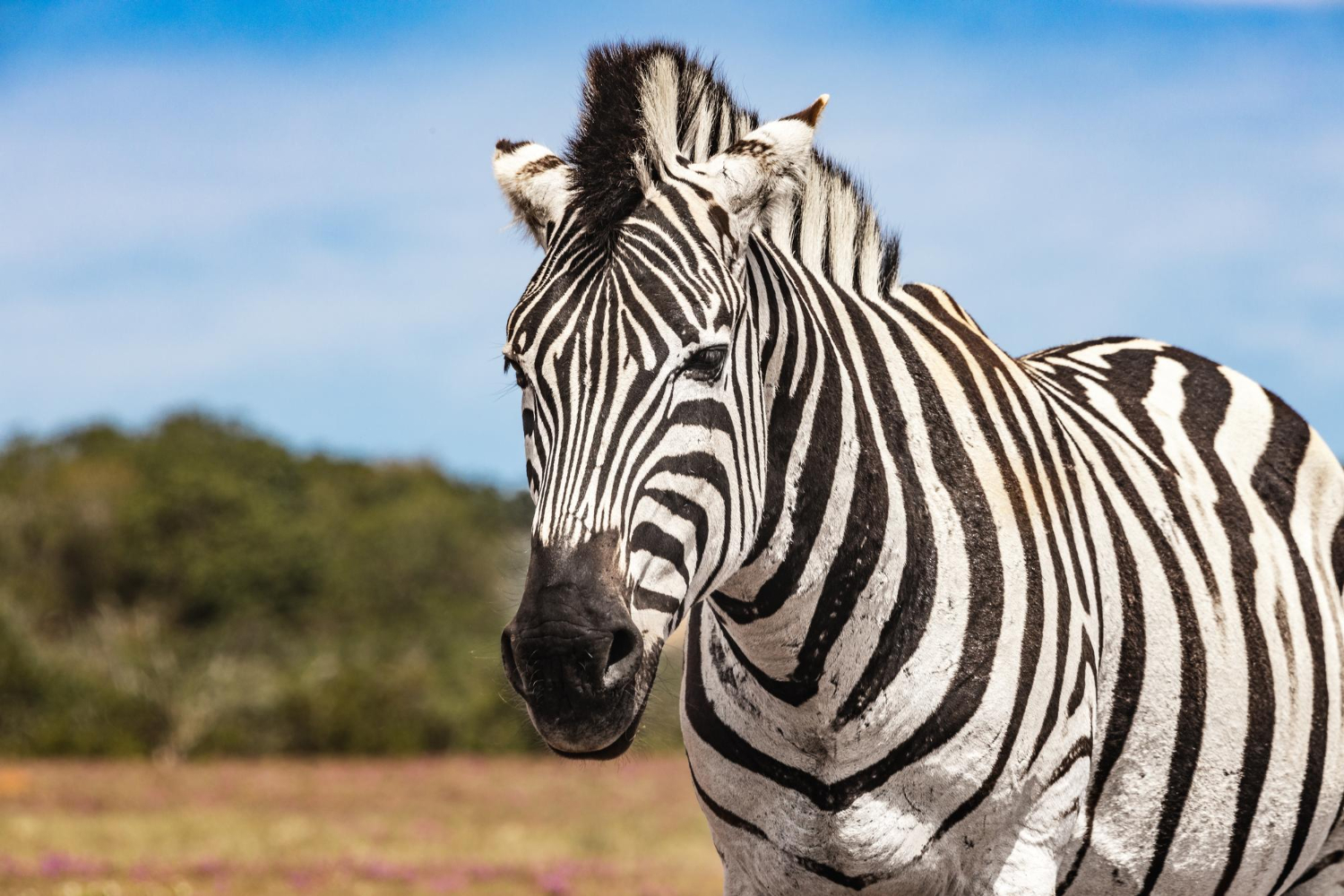
Some scientific questions are hard because the subject is inaccessible. Others are hard because the subject is so familiar that everyone assumes it must already be settled. The zebra falls firmly into the second category. It is one of the most recognizable animals on Earth, its striped pattern so iconic that it appears on everything from children’s books to crosswalk markings. Ask most people why zebras have stripes and they will offer an answer with reasonable confidence, usually something involving camouflage or confusing predators.
That confidence is not shared by biologists, who spent roughly a hundred and fifty years arguing about it without resolution. The debate goes back to the Victorian era, with Charles Darwin and Alfred Russel Wallace, the two architects of evolutionary theory, disagreeing about it in the 1870s. Over the following century, four broad families of explanation were proposed, each with respectable arguments and none with decisive evidence. Rudyard Kipling offered his own playful version, attributing the stripes to the slippery, sliding shadows of trees falling across the animal. It was, remarkably, one of the longest-running unresolved questions about a common animal in all of biology. And the experiment that finally cracked it involved putting coats on horses. Here is how the zebra’s stripes were explained at last.
Four Competing Explanations
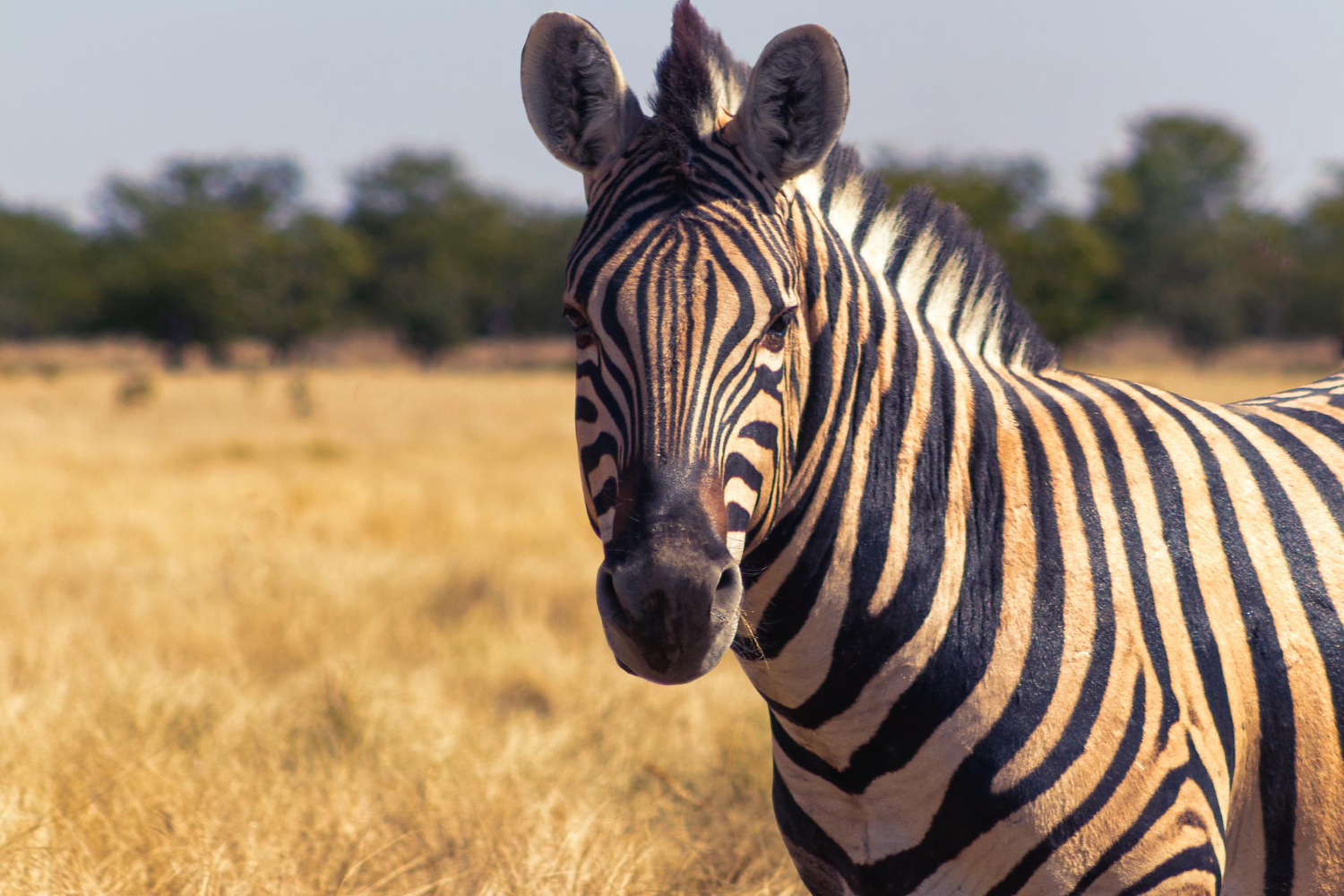
Before getting to the answer, it is worth laying out the contenders, because each is plausible enough that you can see why the argument lasted as long as it did. The proposed explanations fall into four main categories.
The first is predator evasion. Stripes might make a zebra harder to see, particularly in tall grass or poor light, or they might create a dazzling, confusing effect when a herd scatters, making it difficult for a lion to lock onto a single animal. This is the explanation most people reach for instinctively. The second is a social function. Stripe patterns are individually distinctive, rather like fingerprints, so they might help zebras recognize one another, or reinforce herd bonding, or signal fitness to potential mates. The third is temperature regulation. Black surfaces absorb more heat than white ones, so alternating stripes might set up small-scale differences in surface heating that generate air currents across the animal’s coat, helping it stay cool under the African sun. The fourth is protection from biting insects. There had long been anecdotal reports and experiments with inanimate models suggesting that flies are reluctant to land on striped surfaces.
For decades these explanations coexisted, each supported by argument and intuition, none by rigorous testing. As one review of the field noted, only in the last few years have there been serious attempts to actually test them.
Like our content? Follow us for more.
The Map That Changed the Odds
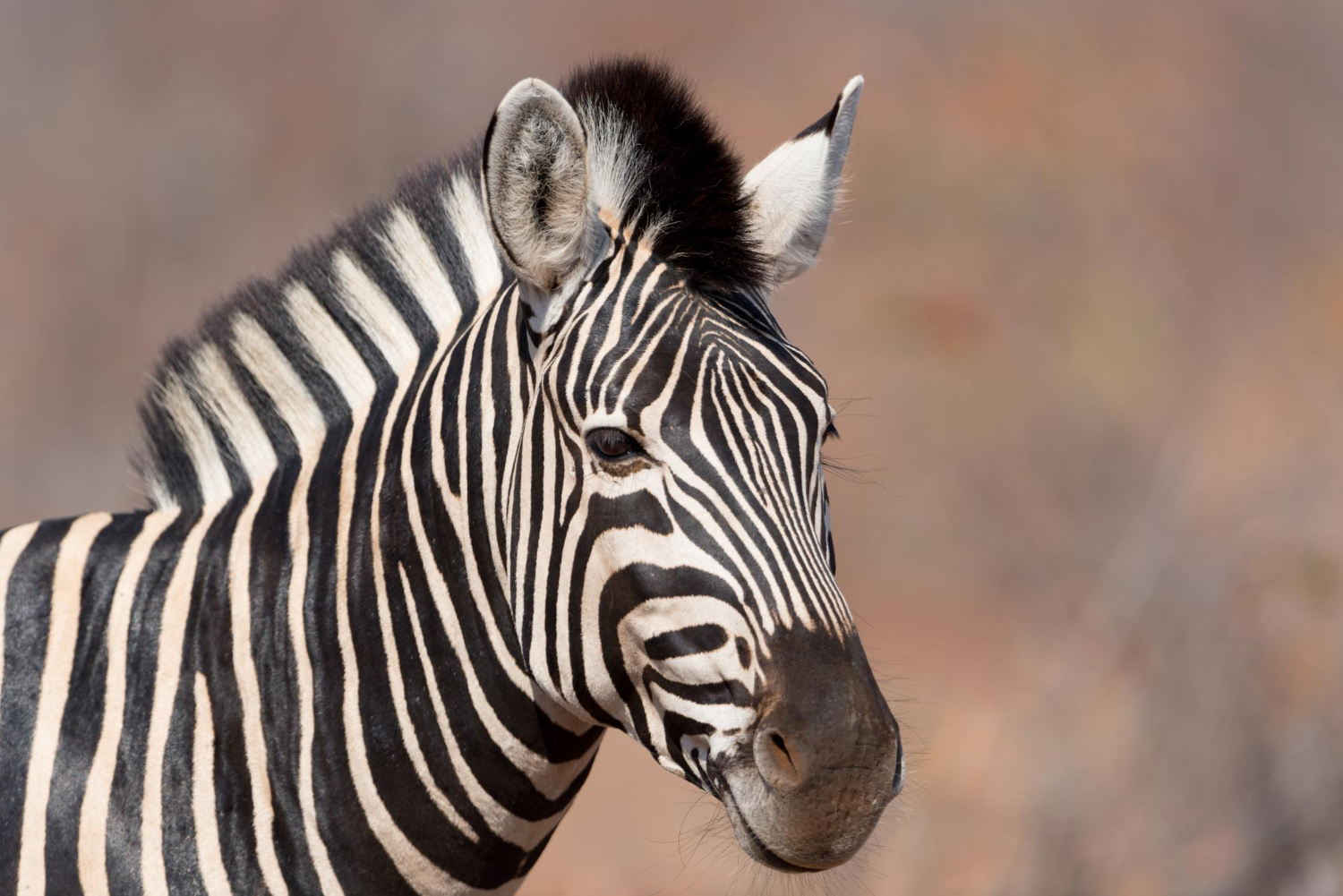
The first major push toward an answer came not from watching zebras but from making maps. In 2014, a research team led by Tim Caro, then at the University of California, Davis, took a large-scale statistical approach to the problem. If one of the four explanations is correct, they reasoned, then the degree of striping across different zebra species and subspecies should correlate with whatever environmental factor drives it.
So they built detailed maps. They charted where striped and less-striped horse relatives live across Africa. Then they overlaid maps of the things the various theories predicted should matter: the presence and abundance of lions, the temperature and humidity conditions of each region, herd sizes and social structures, and the environmental conditions that favor biting flies, specifically tabanid horseflies and tsetse flies. Then they looked for statistical associations.
The result was striking and, for the researchers, unexpected in its clarity. Striping showed a significant association with the regions where biting flies could be active for several months at a stretch. Heavier striping occurred in environments that favor horseflies. And, as Caro put it, they found no support at all for the other hypotheses. Predator ranges did not explain the pattern. Temperature did not explain it. Social factors did not explain it. Biting flies did. It was a powerful result, but it was still a correlation, and correlation invites the obvious question: what is the actual mechanism? Why would a striped coat deter a fly?
Horses in Striped Coats
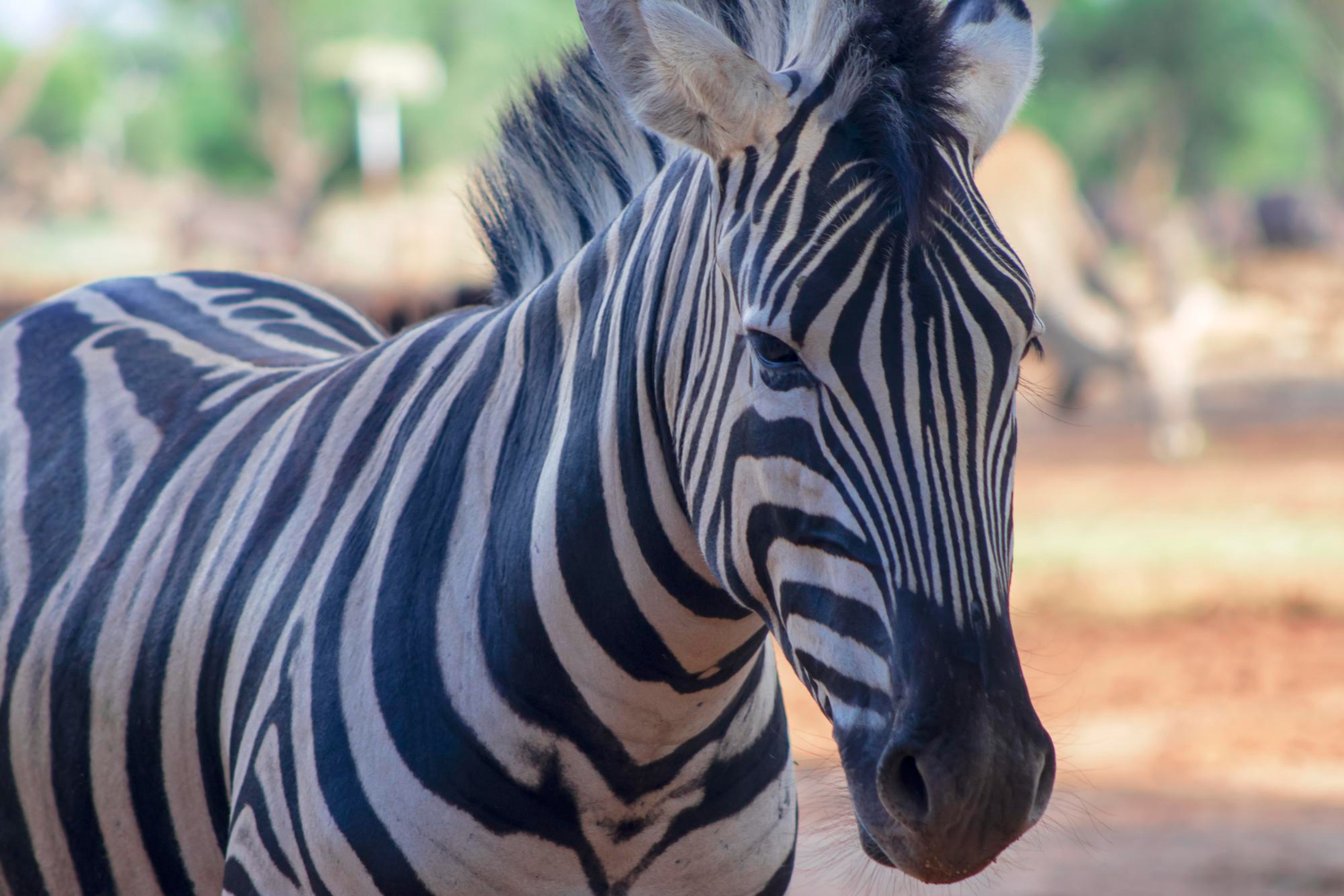
The answer to that came from one of the more charming experimental setups in recent biology. In early 2019, researchers from the University of California, Davis and the University of Bristol went to a livery yard in England where zebras, domestic horses, and plenty of horseflies could all be found in the same place, and ran a direct comparison.
They observed fly behavior around the zebras and around the horses. Crucially, they also dressed the horses in coats: an all-black coat, an all-white coat, and a black-and-white zebra-striped coat, and rotated them, so that the same animal could be compared with and without stripes. This design is elegant because it isolates the stripe pattern from everything else about being a zebra: same animal, same smell, same size, same field, only the pattern changes. If the flies responded differently to the striped coat on the same horse, the stripes themselves must be doing the work. The team filmed everything with video cameras so that individual flight paths could be reconstructed and reviewed frame by frame.
What the Slow Motion Revealed
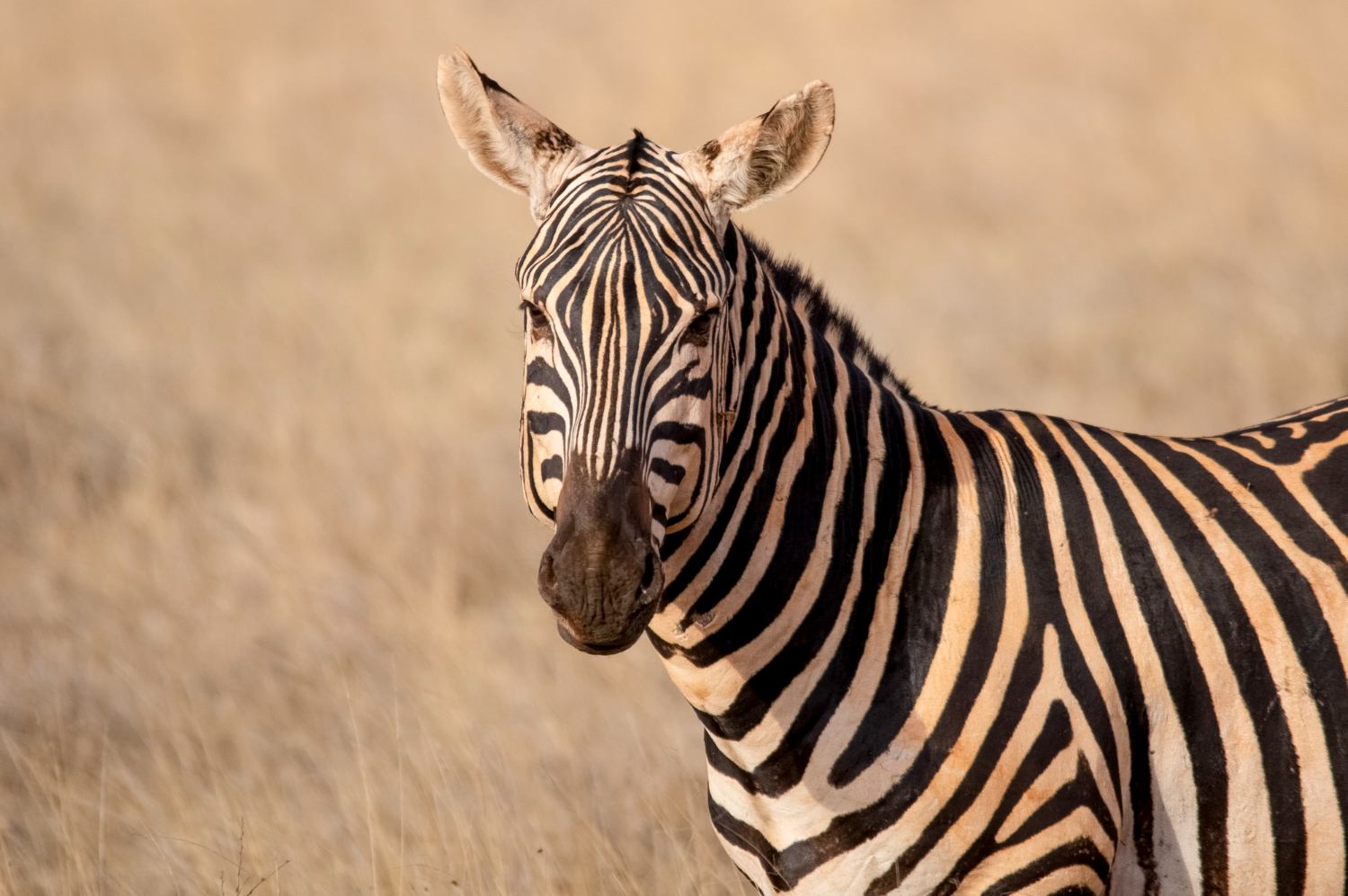
At normal speed, the initial observations were puzzling and seemed to undercut the theory. From a distance, horseflies were attracted to zebras and horses in roughly equal numbers. Similar quantities of flies hovered around both. If stripes were a fly deterrent, why were the flies showing up at all?
The answer emerged only when the footage was slowed down and examined closely, and it turned out the stripes work at the very last moment. When a horsefly approaches an unstriped horse, it does what you would expect: it decelerates smoothly on final approach and extends its legs to land. When the same fly approaches a zebra, or a horse wearing the striped coat, it does not slow down. It flies straight past, or it simply collides with the animal and bounces off. As Caro described it, the flies appear unable to recognize the black-and-white surface as a good landing spot. The consequence, measured across the trials, was that far fewer flies successfully landed on zebras or on striped-coated horses than on plain ones. The stripes were not keeping flies away. They were breaking the landing.
Why the Trick Works
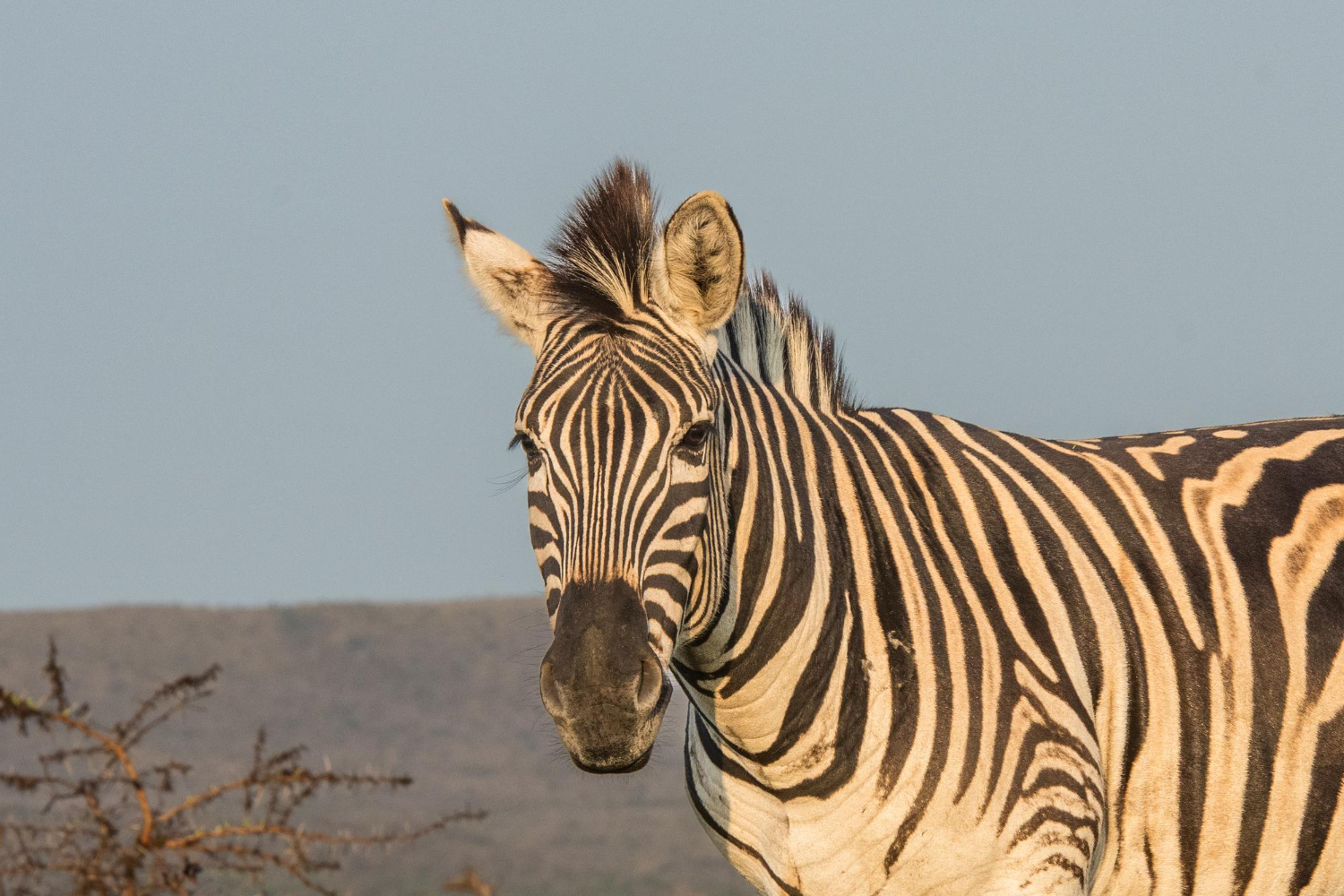
Exactly how stripes disrupt a fly’s landing is still being worked out, and researchers are careful to present the mechanism as an area of active investigation rather than settled fact. Several ideas are on the table, all revolving around the limitations of insect vision.
Horseflies have low-resolution eyes, and one proposal is that at close range the high-contrast stripes effectively dazzle them, disrupting the visual system in the final moments of approach so the fly cannot judge distance and speed correctly. A related idea holds that stripes interfere with optic flow, the pattern of apparent motion across an animal’s visual field as it moves, which many flying insects rely on to gauge how fast a surface is approaching. If the stripes scramble that signal, the fly never gets the cue to decelerate. Another suggestion is that the fly may not perceive the zebra as a single solid body at all, but as a series of separate thin dark objects, only realizing at the last instant that it is about to hit something solid, at which point it veers off. There is also earlier work on polarized light, suggesting that flies are drawn to dark surfaces because these reflect polarized light in a way reminiscent of the water and mud where the insects breed, and that striped patterns confuse this navigational cue.
The mechanism is truly not yet pinned down. But the effect is well documented, and there is a reason it matters so much to the animals themselves.
Why It Matters More Than It Sounds
Deterring flies might seem like a modest evolutionary benefit, hardly enough to drive the development of such a dramatic coat. In fact, the stakes for a zebra are substantially higher than mild annoyance. African horseflies and tsetse flies carry a range of diseases that are extremely dangerous to horses and their relatives, and zebras are particularly vulnerable because their coats are unusually short, meaning a fly’s mouthparts can more easily reach the skin. In a region where these insects are active for months on end, an adaptation that substantially reduces successful fly landings is a serious survival advantage.
That also answers a natural objection: if stripes are so useful, why isn’t every horse striped? The mapping work addressed exactly this. Striping is concentrated where biting-fly pressure is high and sustained; where it is not, the benefit does not outweigh whatever costs the pattern carries, and the pattern does not appear.
There is a practical footnote too. The findings have real implications for the horse industry, and striped horse coats are now sold commercially, offering a non-chemical way to reduce fly harassment for animals that have to stand outdoors in fly season. A century and a half of theoretical argument about African wildlife ended up producing a useful product for horse owners in temperate countries, which is a nice illustration of how basic curiosity-driven research tends to pay out in directions nobody anticipated.
The zebra question is worth remembering the next time some fact about the natural world seems too obvious to need investigating. The answer everyone assumed, camouflage from predators, turned out to be wrong. The real explanation involved an insect most people never think about, a mechanism operating in the final inches of an approach, and an experiment that required nothing more exotic than a few coats, a farm in England, and a camera capable of slow motion.
Like our content? Follow us for more.