Almost nothing in the animal world does what this does.
A great many animals signal. They warn, threaten, court and call, and the signal refers to the here and now — a predator present, a territory occupied, a willingness to mate.
What honeybees do is different in kind. A forager who has found flowers returns to the hive and communicates the location of something that is not present, that the audience cannot see or smell from where they are standing, in a code that specifies both a direction and a distance.
That is displaced reference — communicating about something remote in space — and outside human language it is truly rare. Here is how the code works and what is still being learned about it.
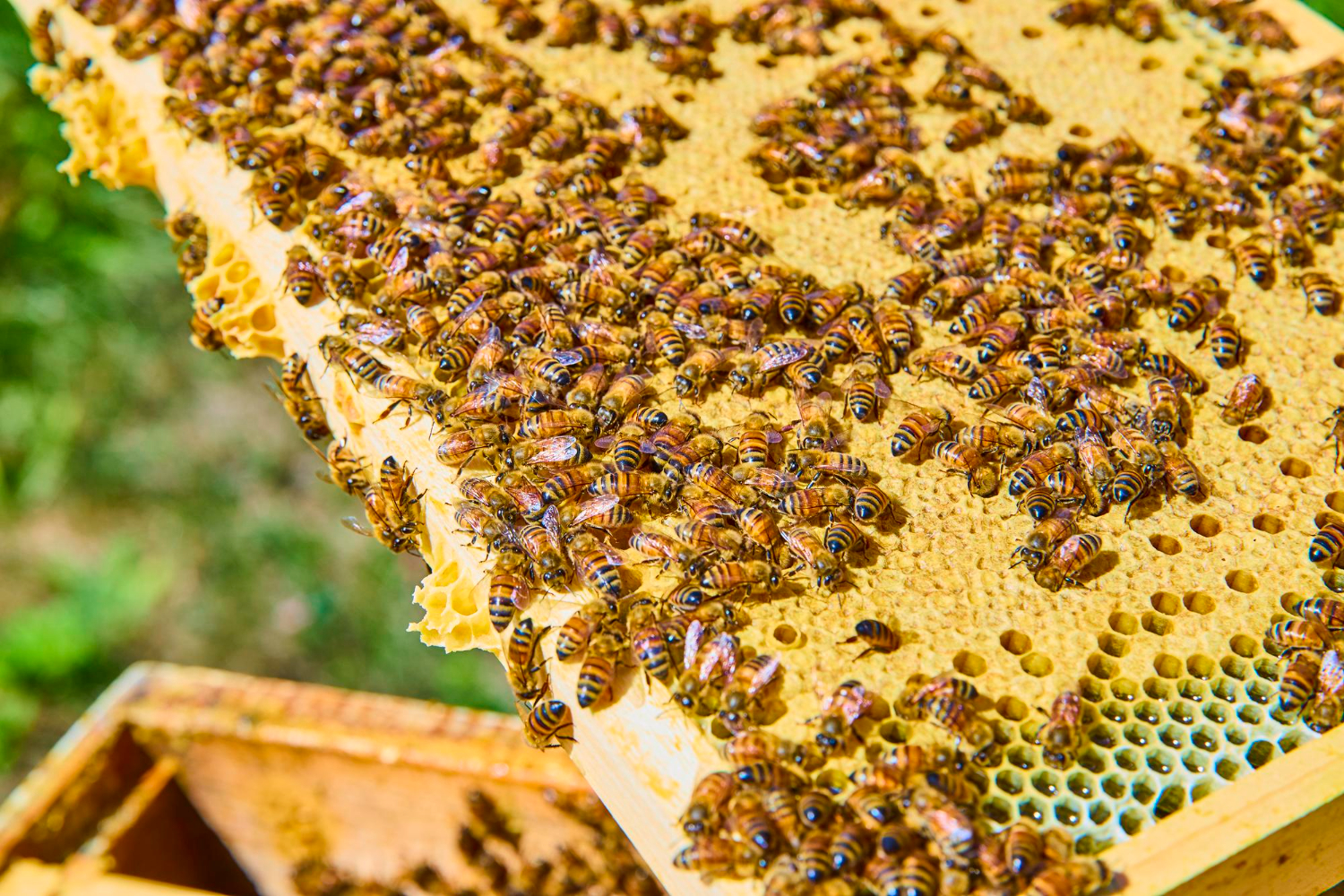
The dance is performed on the vertical face of the comb, inside the hive, in complete darkness.
The bee walks forward in a straight line while vibrating her body rapidly from side to side. This is the waggle run, and it is the part carrying the information. At the end she stops, loops back to the start, and runs it again — alternating loops to the left and to the right, so the overall path traces a figure of eight.
The straight run is repeated many times, and followers cluster around the dancer, keeping close contact with her body as she moves.
A separate, simpler behaviour is performed when food is very close to the hive: the bee circles rather than running straight, and the round dance conveys that something is nearby without specifying a direction. As distance increases, the round dance grades into the waggle dance.
Direction, Encoded as an Angle
The directional code is the elegant part, and it involves a substitution that is difficult to believe an insect performs.
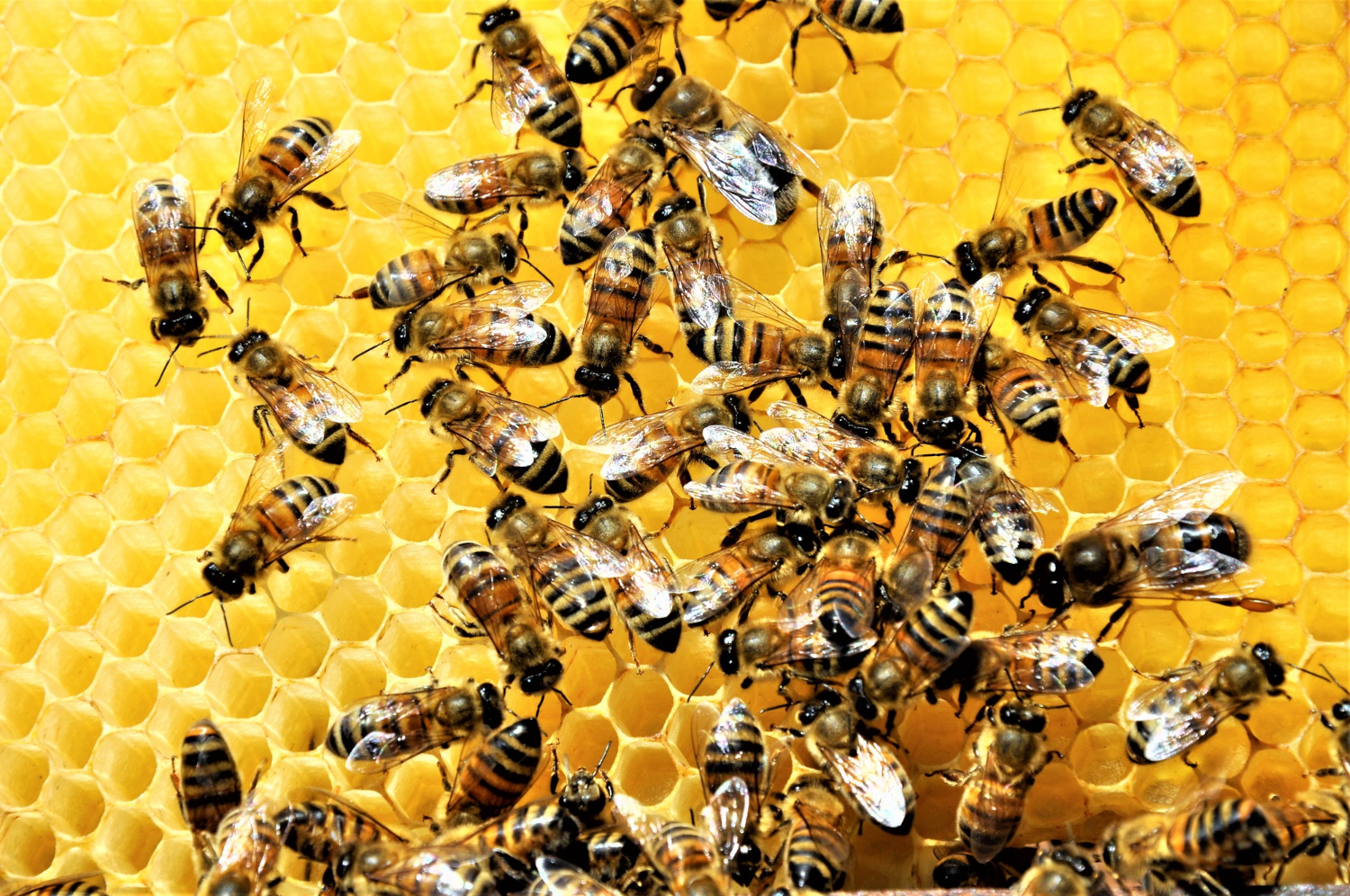
Outside the hive, the bee navigates relative to the sun — specifically to the sun’s azimuth, which is the direction of the sun projected down onto the horizon.
Inside the hive it is dark, the sun is not visible, and the comb is vertical. So the bee substitutes gravity for the sun. Straight up on the comb represents the direction of the sun’s azimuth.
If the food lies directly toward the sun, she waggles straight up. If it lies ninety degrees to the left of the sun, she waggles at ninety degrees to the left of vertical. If it lies directly away from the sun, she waggles straight down.
That is a coordinate transformation: a bearing measured against a light source in the open air, converted into an angle measured against gravity on a vertical surface in the dark, and then converted back again by whoever is following.
There is a further complication the bee handles automatically. The sun moves across the sky, so a bearing relative to it is only valid at a particular moment. A bee dancing some time after returning adjusts the angle to account for how far the sun has moved in the interim, which requires an internal clock running alongside the spatial memory.
Like our content? Follow us for more.
Distance, Encoded as Duration
The distance code is simpler in form and stranger in mechanism.
The longer the waggle run lasts, the further away the food is. Duration maps onto distance directly.
The question is how a bee measures distance in the first place, and the answer is not by counting anything or by timing the flight. It uses optic flow — the rate at which the visual scene streams past the eyes on the way out.
The evidence for this is a truly clever experiment. Bees were trained to fly to a feeder through a narrow tunnel with patterned walls. In a tunnel, the walls rush past very close to the eye, so the optic flow is far greater than it would be over open ground for the same distance.
Those bees came back and danced for a much longer distance than they had actually flown. Their odometer had been fooled, exactly as the optic flow hypothesis predicts.
Follow-up work established that the motion detection involved is colourblind, relying on one class of photoreceptor, and more recent research has found that bees which have thoroughly explored an area use their landscape memory as well, and the tunnel effect diminishes accordingly. So the odometer is not purely optic flow; it is optic flow embedded in a memory of the landscape.
How Anyone Proved the Bees Understood It
There is an obvious objection, and it took decades to close.
Karl von Frisch worked the code out by observing dancers and correlating their behaviour with where he had placed feeders. But demonstrating that the dance carries information is not the same as demonstrating that the other bees read it. The recruits might simply have been following the smell of the food, or the scent on the dancer.
Von Frisch and his colleagues lacked the methods to exclude odour entirely, and the argument ran for a long time.
It is now settled. Later work established that recruits fly out along the vector the dance specifies, and modern techniques including radar tracking of individual bees have followed recruits leaving the hive and confirmed they set off on the indicated heading and distance.
The Part Nobody Expected
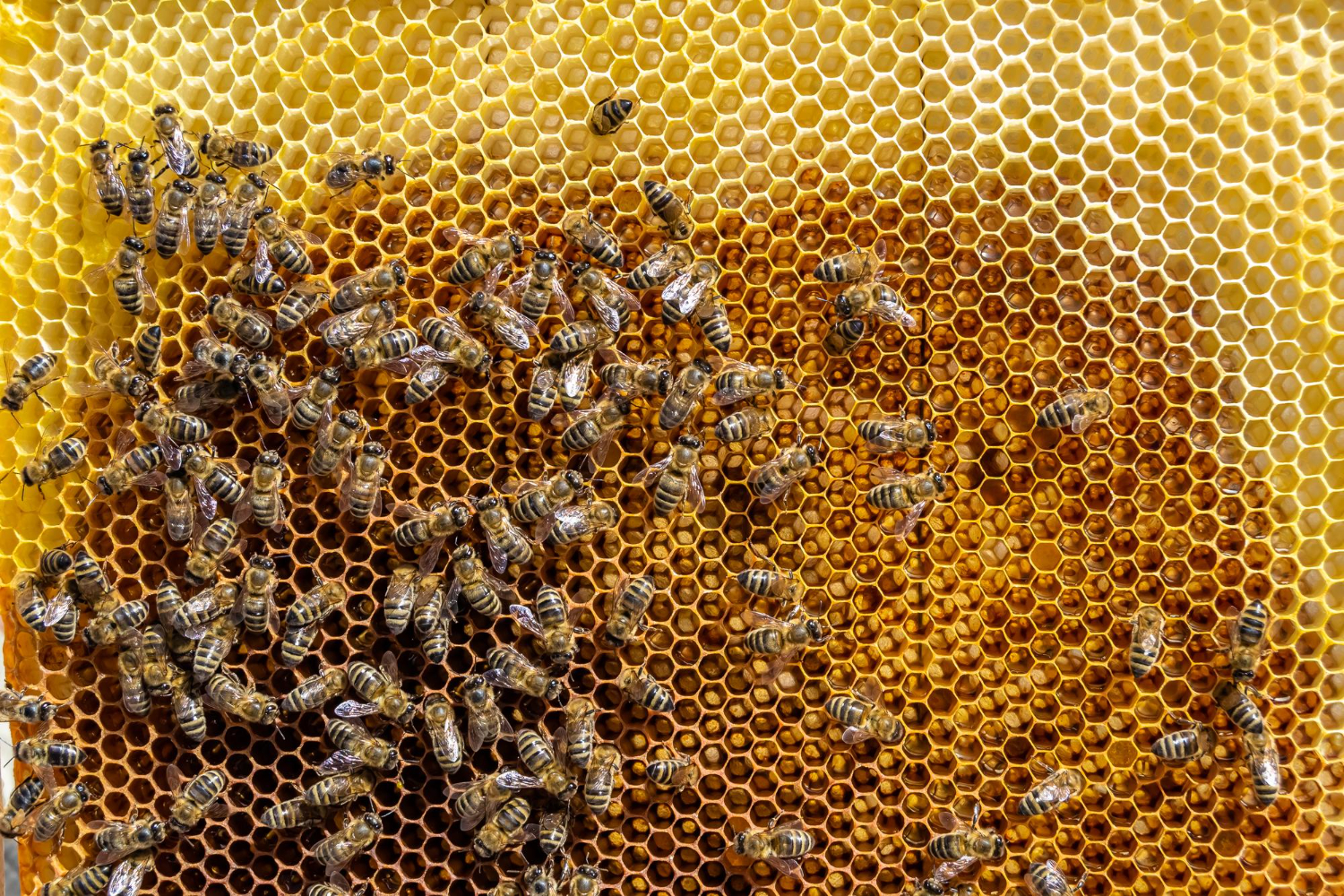
The most recent surprise concerns whether the dance is innate, and the answer appears to be: not entirely.
A study published in Science examined bees raised without any older dancers to observe. Those bees still danced — the behaviour is not learned from scratch — but they made significantly more errors in both angle and distance than bees that had watched experienced dancers.
With practice, the untutored bees improved their directional accuracy. What they never fully recovered was accurate distance coding.
That places honeybees alongside songbirds and humans in a small category: species where a communication system has an innate foundation and a socially learned component, and where growing up without a tutor leaves a permanent deficit.
Other work has found the dance is not a simple broadcast either. Dancers appear sensitive to their audience, and the precision of both the directional and distance components varies with how many followers are actually present — which suggests something closer to a two-way interaction than a recording being played.
What It Is Reasonable to Conclude
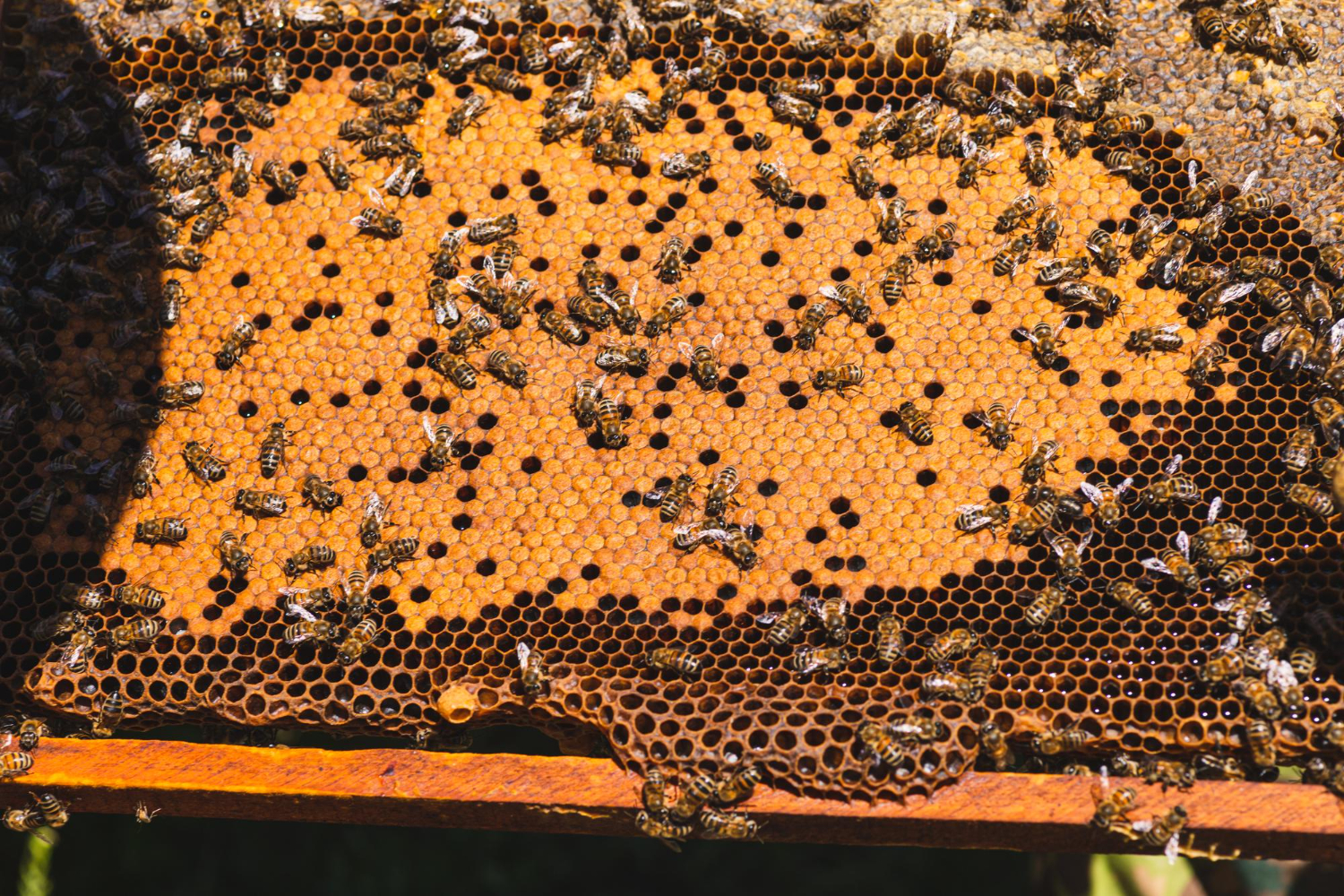
A note of caution belongs here, because this subject invites overstatement.
The dance is not a language. It has no grammar, no combination of elements into new meanings, and it communicates one class of thing: the vector to a resource, plus some indication of quality.
Nor should anyone conclude that a bee understands what it is doing in the sense a person would. The mechanism is a set of behaviours shaped by natural selection, and the internal experience — if any — is not accessible.
What is fair to say is substantially more interesting than a language claim. An animal with a brain the size of a sesame seed measures a distance using the flow of images across its eyes, remembers a bearing relative to a moving celestial object, corrects that bearing for the passage of time, converts it into an angle against gravity, performs it in the dark, and is understood accurately enough that another bee can fly to a specific patch of flowers.
And a young bee that has never watched an experienced one do it will get the distance wrong for the rest of her life.
What Else the Dance Decides
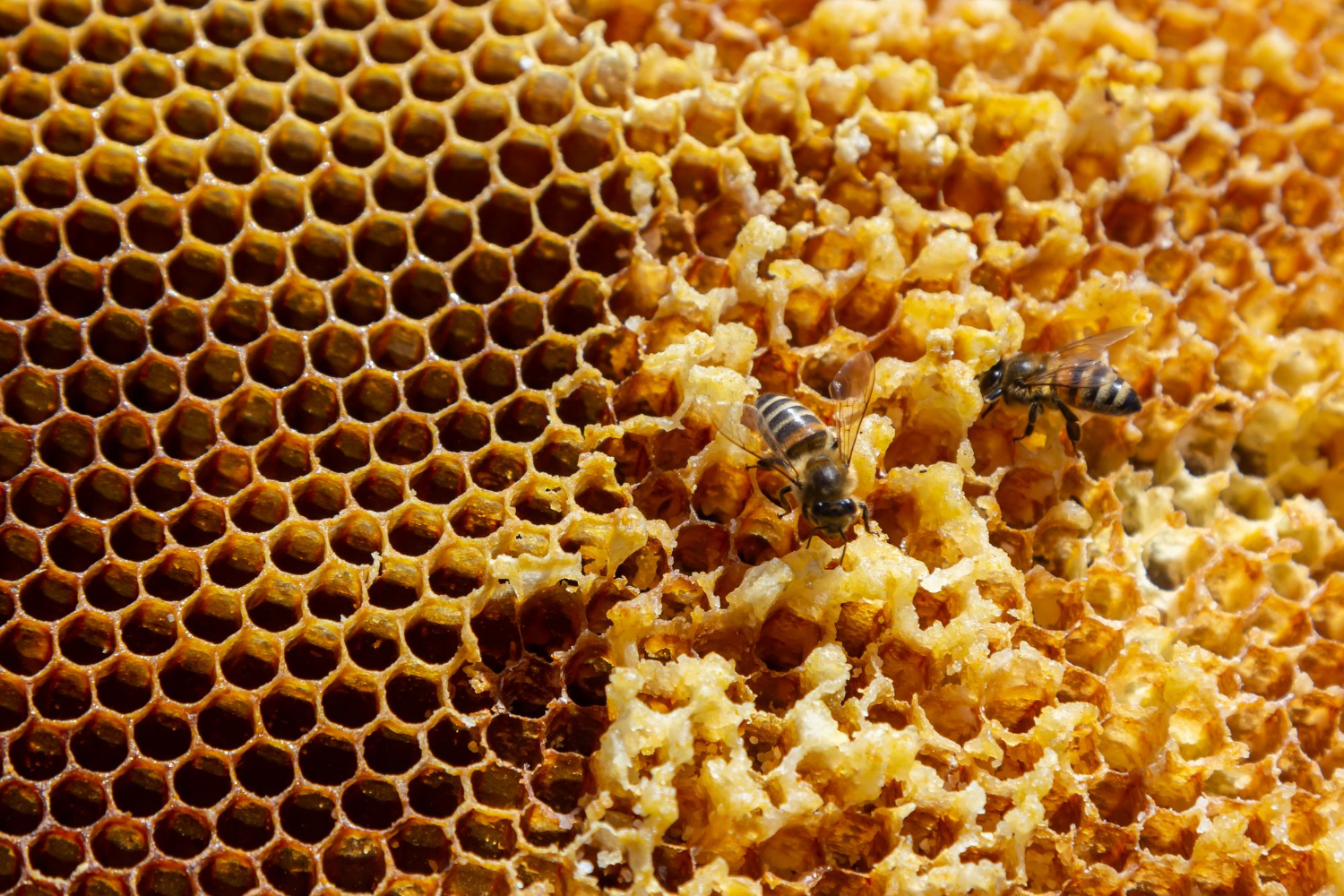
The waggle dance does more than direct individual foragers, and the collective consequence is arguably more impressive than the signal itself.
A colony has a limited workforce and a landscape containing many possible food sources of varying quality and distance. Somehow it has to allocate foragers efficiently across all of them, without any central coordination and without any individual bee having an overview.
The dance solves this through a simple weighting. A forager returning from a richer or closer source dances more vigorously and for more circuits, so more followers encounter that dance and set off in that direction. A poorer source produces a shorter, less enthusiastic performance and recruits fewer bees.
The result is that the colony’s foraging effort distributes itself across the landscape roughly in proportion to the value of what is out there, and reallocates automatically as flowers open, close and are exhausted.
Nothing decides this. There is no assessment of the options and no comparison being made anywhere. The distribution emerges from thousands of individual decisions about which dance to follow.
The same mechanism operates when a swarm chooses a new nest site, with scouts dancing for candidate locations and the colony converging on one — which means the dance is not only a set of directions but the mechanism by which a colony makes up its mind.
A Code Performed in the Dark
There is something worth appreciating in where all this happens.
The dance is not visible to the bees following it. The hive is dark, and followers track the dancer by contact and by the vibrations she produces, keeping their antennae against her as she moves.
So the whole transaction — a bearing, a distance, an adjustment for elapsed time, transmitted from one individual to several others — occurs by touch, on a vertical wall, among thousands of moving bodies.
Von Frisch described the discovery as the most remarkable he had encountered, which is a substantial claim from someone who spent a career on animal behaviour. Nearly eight decades later, researchers are still working out how the odometer functions, how much is learned, and what the audience contributes.
Which is a reasonable position for a phenomenon that consists of an insect shaking for a few seconds and thereby telling several hundred others where to go.
Like our content? Follow us for more.