There is a problem in intelligence work that has no clean solution and recurs constantly.
Information obtained secretly is only useful if it is acted upon. Acting on it reveals that you have it. Revealing that you have it destroys the source that provided it, and everything that source would have provided afterwards.
That tension is permanent, and one episode in 1917 is the textbook illustration — a case where a single decrypted message was enormously valuable, and where extracting that value without destroying the capability required an elaborate operation of its own.
The message itself is well known. The problem it created is the more interesting half and is much less discussed.
The Position Before It
The situation is worth establishing briefly, without going into the conflict itself.
A major war had been running in Europe since 1914. The United States had remained neutral, and public opinion there was substantially against involvement.
Britain had, at the start of the war, cut the transatlantic telegraph cables belonging to its opponent. That forced diplomatic traffic onto other routes — including, through diplomatic arrangements, cables that ran through Britain.
Britain had also established a codebreaking operation which had, over two years, made substantial progress against several diplomatic cipher systems.
Those two facts together produced the situation: an adversary’s confidential diplomatic communications passing through a country capable of reading them.
Like our content? Follow us for more.
The Message and the Problem
In January 1917 a coded telegram was intercepted and partially decrypted. Its contents were, from the American perspective, extremely serious.
Publishing it would almost certainly shift American opinion decisively. That was the entire value of the intercept.
But publication created three linked difficulties.
It would reveal that Britain was reading that cipher, so the codes would be changed and the source would end.
It would reveal that Britain was intercepting traffic on cables carrying another country’s diplomatic messages, which was diplomatically embarrassing in a way that could damage relations with the very government being warned.
And it risked the message being dismissed as a fabrication, since a country with an obvious interest in ending American neutrality producing a document that conveniently required exactly that was going to face scepticism.
Any one of those could have wasted the intelligence entirely.
There is a point about the recipient worth making. A government being handed intelligence by a foreign power with an obvious interest in the outcome has every reason to examine it sceptically, and the American administration did.
That scepticism is why the independent verification mattered as much as the document. Intelligence delivered by an interested party is worth very little unless the recipient can check it, which is a constraint that applies to the whole business.
The Solution
The approach taken was to obtain the same message by a route that could be admitted.
The telegram had been relayed onward from one location to another after arrival, and a copy of that onward transmission existed in a commercial telegraph office. An agent obtained it.
That gave a version of the document whose acquisition could be described without reference to interception of the original traffic. The cover story was that the message had been obtained abroad, from a copy, by ordinary means.
It also solved the authentication problem, because the copy could be verified independently through channels the recipient trusted.
The final element resolved the fabrication risk in the most economical way available: the sender publicly confirmed the message was real. That single admission removed the strongest argument against it and settled the question completely.
There is a further element that made the cover story hold. The version obtained from the commercial office was in a different cipher from the original transmission – re-encrypted for the onward leg – which meant that even the fact of it being decrypted pointed at a system other than the one Britain most wanted to protect.
That detail is easy to miss and did a substantial amount of the work. The story was not merely plausible; the physical evidence available to the other side was consistent with it.
Why the Concealment Worked
The success of the deception is the part with lasting relevance.
The codes were not changed, because the sender had no reason to believe the original encrypted transmission had been read. The apparent explanation — a stolen copy at the far end — was entirely plausible and involved no cryptographic failure.
That meant the capability survived, and continued producing intelligence.
The technique established a pattern that recurs throughout the following century: where secret information must be used, construct an alternative explanation for how it was obtained, ideally one that is true in some limited sense, and act on that.
The general principle is that protecting a source frequently costs more effort than acquiring the information, and organisations that fail to think about it lose capabilities they spent years building.
It is worth noting how narrow the window was. Once the decision to publish was taken, the message was released within a short period, because intelligence of this kind has a shelf life – the proposal it described would either be acted upon or abandoned, and either would reduce its impact.
That time pressure sat directly against the need to construct a cover story carefully, which is the practical version of the dilemma the whole episode illustrates.
What Is Frequently Overstated
Some caution is required, because this episode attracts an unusually tidy narrative.
The message is regularly described as the cause of American entry into the war. The honest position is that it was a significant factor among several, arriving alongside other developments that were pushing in the same direction, and that attributing a national decision to one document is a simplification.
The decryption is sometimes described as complete and immediate. It was partial at first, improved over subsequent weeks, and depended on material and progress accumulated over a long prior period rather than on a single insight.
And the operation was not flawless. There was internal disagreement about whether to use the intercept at all, precisely because of the source-protection problem, and the decision took time.
The reason the episode is taught is not that it went perfectly. It is that the source-protection problem was recognised, addressed deliberately, and solved — which is unusual enough to be worth studying.
Why the Codes Were Breakable
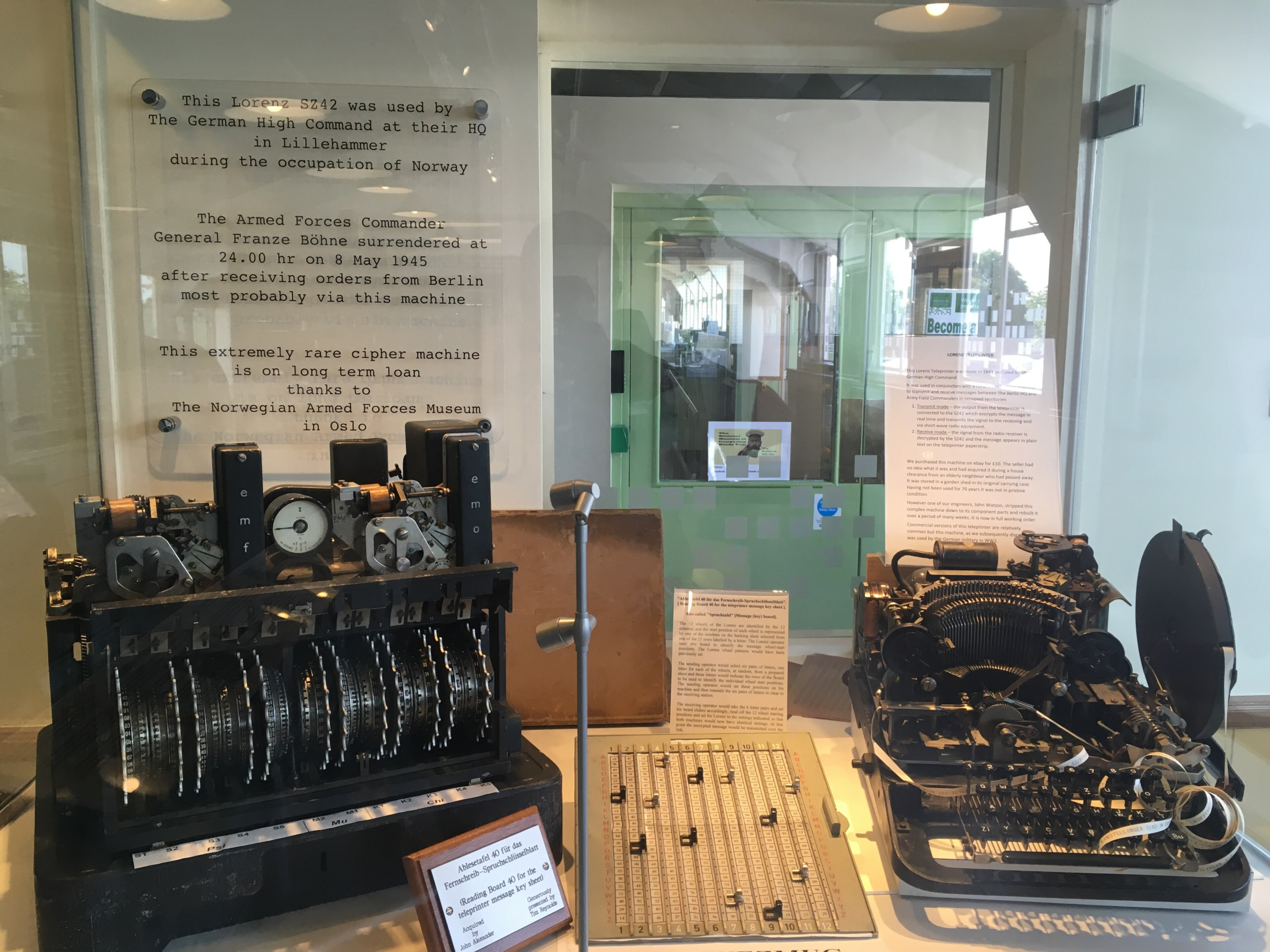
The cryptographic side deserves a brief explanation, because it accounts for why the intelligence existed at all.
Diplomatic ciphers of the period generally worked by substituting code groups for words and phrases from a codebook, then sometimes applying a further layer of encryption to the resulting groups.
That is reasonably secure against casual interception and has a specific vulnerability: the codebook is fixed, and every message using it provides more material for analysis. Repeated phrases, standard diplomatic formulae, predictable openings and closings, and the sheer volume of traffic all give an analyst footholds.
The system also depended on physical books, which had to be distributed to every station that would use them — which creates opportunities for a copy to be obtained.
Over an extended period, an organisation reading large volumes of traffic can reconstruct a substantial portion of a codebook from context alone, particularly where the same information appears in messages sent under different systems.
That is what had been accumulating for two years before January 1917. The decryption of one telegram was not an isolated success; it was the point at which a long accumulation of partial knowledge became sufficient to read something that mattered.
Which is the usual shape of such work. The dramatic result is a single moment and the capability behind it is years of unglamorous accumulation — and that is precisely why protecting it was worth so much effort.
The Permanent Version of the Problem
The wider point outlasts the specific case entirely.
Any system that gains information covertly faces the same structure. Using what you know reveals that you know it. The more valuable a piece of information, the more consequential acting on it, and the more likely the source is exposed.
That produces a permanent conflict between two things an organisation wants: to act on what it knows, and to keep knowing things.
The available solutions are the ones used in 1917 — obtain the same information by an admissible route, construct a plausible alternative explanation, or accept the loss of the source because the information is worth more than everything that would follow.
None of those is satisfactory and all of them are still in use.
Which makes a hundred-year-old telegram a reasonable illustration of something structural rather than a historical curiosity: that the difficult part of secret knowledge is rarely obtaining it, and almost always deciding what can be done with it without giving it away.
The telegram is remembered for what it said. The part worth remembering is what had to be arranged before anybody could be told.
Like our content? Follow us for more.